
Journal of Traditional Chinese Medicine ›› 2026, Vol. 46 ›› Issue (3): 605-616.DOI: 10.19852/j.cnki.jtcm.2026.03.006
• Original Articles • Previous Articles Next Articles
Effect of “Tongdu Yupi Tiaoshen” electroacupuncture on behavioral performance and hippocampal structure and function in chronic fatigue syndrome rats
QU Yuanyuan1,2, FENG Chuwen1,2, SUN Weibo3, SHAO Yuying1, LU Jing4, GUO Shuhao4, LI Binbin1, YANG Tiansong1,2( )
)
- 1
Rehabilitation Department Ⅱ ,the First Affiliated Hospital of Heilongjiang University of Traditional Chinese Medicine Harbin 150040, China
2Traditional Chinese Medicine Informatics Key Laboratory of Heilongjiang Province Harbin 150040, China
3Department of Breast Surgery ,Harbin Medical University Affiliated Cancer Hospital Harbin 150076, China
4Graduate School of Heilongjiang University of Chinese Medicine Harbin 150040, China
-
Received:2025-11-24Accepted:2026-03-28Online:2026-06-15Published:2026-06-08 -
Contact:Prof. YANG Tiansong, Department of Rehabilitation, the First Affiliated Hospital of Heilongjiang University of Traditional Chinese Medicine, and Traditional Chinese Medicine Informatics Key Laboratory of Heilongjiang Province, Harbin 150040, China. yangtiansong2006@163.com -
Supported by:National Natural Science Foundation of China (General Program): Mechanism of Electroacupuncture Regulating Mouse Double Minute 2 Ubiquitination of Postsynaptic Density protein-95 to Remodel Hippocampal Synaptic Structure and Improve Cognitive Dysfunction in Chronic Fatigue Syndrome(82074539);National Natural Science Foundation of China (Young Scientists Program): Role and Mechanism of Nuclear Factor Kappa B in Electroacupuncture Against Chronic Fatigue Syndrome Based on the Transforming Growth Factor-beta/Smad Signaling Pathway(81704170);Natural Science Foundation of Heilongjiang Province (General Program): Mechanism of Electroacupuncture Regulating Mitochondrial Dynamics to Promote Synaptic Remodeling in Chronic Fatigue Syndrome Rats with Cognitive Impairment(LH2024H050);Heilongjiang Province Postdoctoral Research Funding Program: Mechanism of Electroacupuncture Regulating p-T19 Postsynaptic Density protein-95 and Modulating Mitophagy in Synaptic Reconstruction to Improve Cognitive Impairment in Chronic Fatigue Syndrome Rats(LBH-Z24291);National Natural Science Foundation Cultivation Support Program (Young Scientists) of the First Affiliated Hospital of Heilongjiang University of Chinese Medicine: Mechanism of Electroacupuncture Intervention in the Butyrate Gut-brain Axis Affecting p-T19 Postsynaptic Density Protein-95 to Promote Autophagy and Improve Cognitive Impairment in Chronic Fatigue Syndrome Rats(PYQN202501002);National Natural Science Foundation of China (Young Scientists Program): Mechanism of Moxibustion Activating Calcium-calmodulin-dependent Protein Kinase II Phosphorylation-mediated Long-term Potentiation to Regulate Synaptic Plasticity in Treating Chronic Fatigue Syndrome Cognitive Impairment(82305394);Ministry of Education “Chunhui Program” Collaborative Research Project: Mechanism of the “Tongdu Yupi Tiaoshen” Acupuncture Technique in Improving Hippocampal Synaptic Plasticity in Chronic Fatigue Syndrome Cognitive Dysfunction(HZKY20220308-202201357);Heilongjiang Provincial Traditional Chinese Medicine Research Project: Mechanism of Electroacupuncture in Regulating Hippocampal Synaptic Plasticity in Chronic Fatigue Syndrome Rats with Cognitive Dysfunction(ZHY2022-136);China Association of Chinese Medicine: Chinese Medicine Young Talent Support Project(CACM-2023-QNRC2-A04);Heilongjiang Provincial Association of Chinese Medicine Young Talent Support Project (2022-2024): Mechanism of the “Tongdu Yupi Tiaoshen” Acupuncture Technique in Improving Hippocampal Synaptic Plasticity in Chronic Fatigue Syndrome Cognitive Dysfunction(2022-QNRC1-05);Heilongjiang Provincial Key Research and Development Program Project (Directed Commission): Development of a Central-peripheral closed-loop Regulation Rehabilitation Robot for Post-stroke Cognitive Impairment Based on Traditional Chinese Medicine Acupuncture Theory(2024ZXDXC50)

Cite this article
QU Yuanyuan, FENG Chuwen, SUN Weibo, SHAO Yuying, LU Jing, GUO Shuhao, LI Binbin, YANG Tiansong. Effect of “Tongdu Yupi Tiaoshen” electroacupuncture on behavioral performance and hippocampal structure and function in chronic fatigue syndrome rats[J]. Journal of Traditional Chinese Medicine, 2026, 46(3): 605-616.
share this article
Table 1 Comparison of GSQS in treatment phase ($\bar{x}$ ± s)
| Group | n | Day 1 | Day 8 | Day 15 |
|---|---|---|---|---|
| Con | 12 | 0.8±0.4 | 0.8±0.4 | 1.1±0.7 |
| Mod | 12 | 5.7±0.8a | 6.2±0.7a | 7.1±0.7a |
| EA | 12 | 5.9±0.8 | 4. 7±0.5b | 3.0±0.6b |
Table 1 Comparison of GSQS in treatment phase ($\bar{x}$ ± s)
| Group | n | Day 1 | Day 8 | Day 15 |
|---|---|---|---|---|
| Con | 12 | 0.8±0.4 | 0.8±0.4 | 1.1±0.7 |
| Mod | 12 | 5.7±0.8a | 6.2±0.7a | 7.1±0.7a |
| EA | 12 | 5.9±0.8 | 4. 7±0.5b | 3.0±0.6b |
Table 2 Post-treatment MWMT results ($\bar{x}$ ± s)
| Group | n | Escape latency | Target platform crossings | |||
|---|---|---|---|---|---|---|
| Day 1 | Day 2 | Day 3 | Day 4 | |||
| Con | 12 | 29.7±2.8 | 19.9±4.8 | 12.8±4.6 | 11.3±5.1 | 3.8±0.9 |
| Mod | 12 | 44.0±2.5a | 30.5±4.4a | 28.7±5.8a | 27.1±6.0a | 1.8±1.0a |
| EA | 12 | 30.3±5.6b | 12.9±5.5b | 14.7±5.5b | 13.4±7.4b | 3.5±0.5b |
Table 2 Post-treatment MWMT results ($\bar{x}$ ± s)
| Group | n | Escape latency | Target platform crossings | |||
|---|---|---|---|---|---|---|
| Day 1 | Day 2 | Day 3 | Day 4 | |||
| Con | 12 | 29.7±2.8 | 19.9±4.8 | 12.8±4.6 | 11.3±5.1 | 3.8±0.9 |
| Mod | 12 | 44.0±2.5a | 30.5±4.4a | 28.7±5.8a | 27.1±6.0a | 1.8±1.0a |
| EA | 12 | 30.3±5.6b | 12.9±5.5b | 14.7±5.5b | 13.4±7.4b | 3.5±0.5b |
Table 3 Post-treatment results of OFT and exhaustive treadmill running time ($\bar{x}$ ± s)
| Group | n | OFT | Exhaustive treadmill running time | |
|---|---|---|---|---|
| Grid crossings | Central area entries | |||
| Con | 12 | 30.2±15.8 | 3.7±1.2 | 101.6±8.6 |
| Mod | 12 | 66.2±25.3a | 9.4±2.5a | 73.4±7.9a |
| EA | 12 | 40.6±24.2b | 5.9±1.2b | 92.1±8.5b |
Table 3 Post-treatment results of OFT and exhaustive treadmill running time ($\bar{x}$ ± s)
| Group | n | OFT | Exhaustive treadmill running time | |
|---|---|---|---|---|
| Grid crossings | Central area entries | |||
| Con | 12 | 30.2±15.8 | 3.7±1.2 | 101.6±8.6 |
| Mod | 12 | 66.2±25.3a | 9.4±2.5a | 73.4±7.9a |
| EA | 12 | 40.6±24.2b | 5.9±1.2b | 92.1±8.5b |
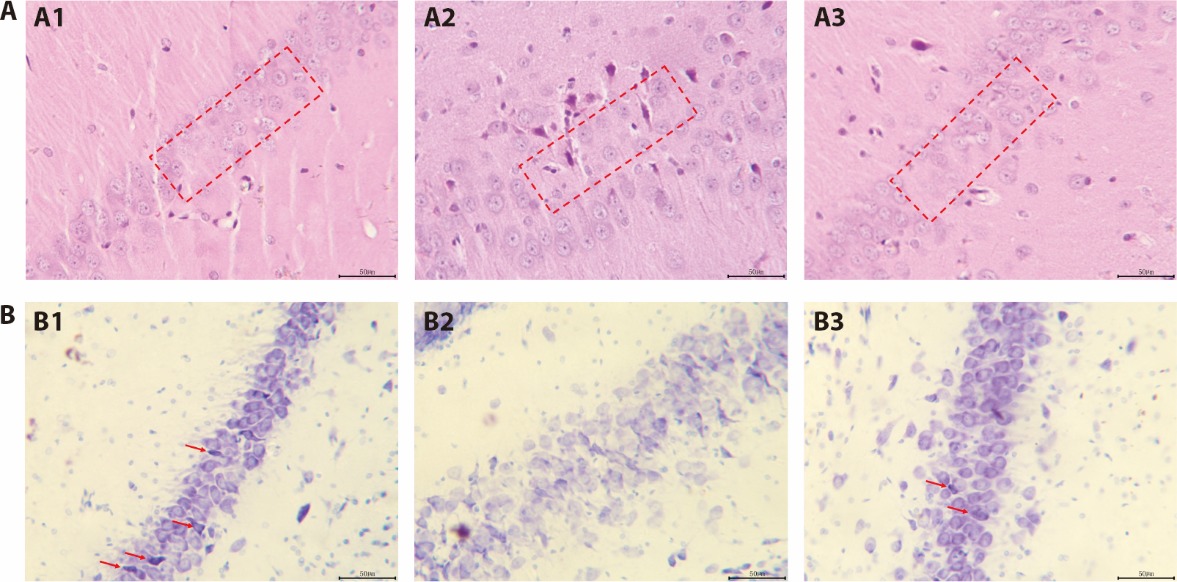
Figure 1 Structural changes in the hippocampal CA1 region (n = 3) A: hematoxylin-eosin staining results of hippocampal CA1 region; B: Nissl staining results of hippocampal CA1 region; Scale bar = 50 μm. A1, B1: Con group; A2, B2: Mod group; A3, B3: EA group. Con: normal control group, with routine feeding and sham restraint; Mod: chronic fatigue syndrome model group, with 14-d continuous stress stimulation; EA: electroacupuncture treatment group, with 14-d “Tongdu Yupi Tiaoshen” electroacupuncture intervention. CA1: cornu ammonis 1. The red box highlights sparse neuronal arrangement in the hippocampal CA1 region; arrows indicate Nissl bodies.
Figure 1 Structural changes in the hippocampal CA1 region (n = 3) A: hematoxylin-eosin staining results of hippocampal CA1 region; B: Nissl staining results of hippocampal CA1 region; Scale bar = 50 μm. A1, B1: Con group; A2, B2: Mod group; A3, B3: EA group. Con: normal control group, with routine feeding and sham restraint; Mod: chronic fatigue syndrome model group, with 14-d continuous stress stimulation; EA: electroacupuncture treatment group, with 14-d “Tongdu Yupi Tiaoshen” electroacupuncture intervention. CA1: cornu ammonis 1. The red box highlights sparse neuronal arrangement in the hippocampal CA1 region; arrows indicate Nissl bodies.
Table 4 Hippocampal 18F-FDG PET/CT imaging results (%ID/g, $\bar{x}$ ± s)
| Group | n | SUV | Anterior-dorsal hippocampus (L) | Anterior-dorsal hippocampus (R) | Posterior hippocampus (L) | Posterior hippocampus (R) |
|---|---|---|---|---|---|---|
| Con | 3 | Mean | 0.429±0.092 | 0.423±0.082 | 0.452±0.060 | 0.436±0.068 |
| Max | 0.526±0.080 | 0.508±0.084 | 0.538±0.077 | 0.513±0.064 | ||
| Mod | 3 | Mean | 0.239±0.056a | 0.242±0.072a | 0.252±0.075a | 0.256±0.080a |
| Max | 0.326±0.064a | 0.307±0.080a | 0.310±0.079a | 0.299±0.083a | ||
| EA | 3 | Mean | 0.381±0.015b | 0.372±0.009b | 0.400±0.011b | 0.407±0.012b |
| Max | 0.513±0.013b | 0.470±0.012b | 0.486±0.018b | 0.481±0.018b |
Table 4 Hippocampal 18F-FDG PET/CT imaging results (%ID/g, $\bar{x}$ ± s)
| Group | n | SUV | Anterior-dorsal hippocampus (L) | Anterior-dorsal hippocampus (R) | Posterior hippocampus (L) | Posterior hippocampus (R) |
|---|---|---|---|---|---|---|
| Con | 3 | Mean | 0.429±0.092 | 0.423±0.082 | 0.452±0.060 | 0.436±0.068 |
| Max | 0.526±0.080 | 0.508±0.084 | 0.538±0.077 | 0.513±0.064 | ||
| Mod | 3 | Mean | 0.239±0.056a | 0.242±0.072a | 0.252±0.075a | 0.256±0.080a |
| Max | 0.326±0.064a | 0.307±0.080a | 0.310±0.079a | 0.299±0.083a | ||
| EA | 3 | Mean | 0.381±0.015b | 0.372±0.009b | 0.400±0.011b | 0.407±0.012b |
| Max | 0.513±0.013b | 0.470±0.012b | 0.486±0.018b | 0.481±0.018b |
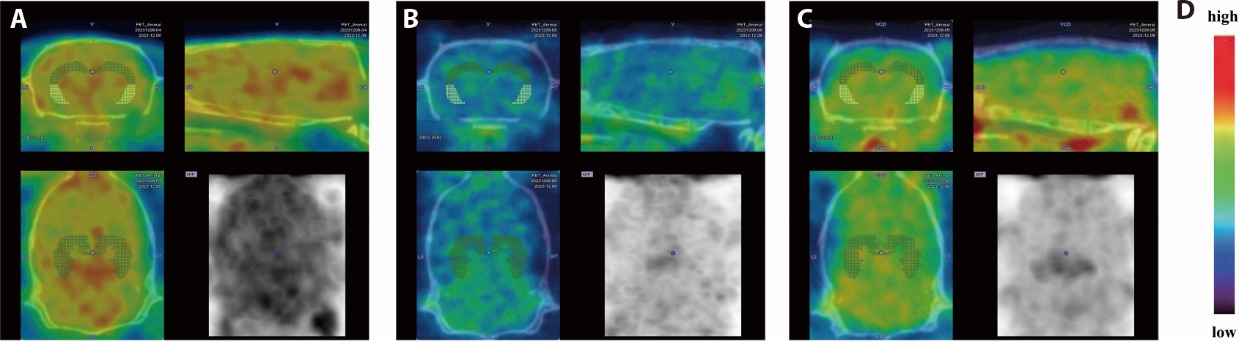
Figure 2 Hippocampal 18F-FDG PET/CT imaging results (n = 3) Three-view diagram of brain sections. A: Con group; B: Mod group; C: EA group; D: the color bar on the right indicates high, medium, and low glucose metabolism levels from top to bottom. Con: normal control group, with routine feeding and sham restraint; Mod: chronic fatigue syndrome model group, with 14-d continuous stress stimulation; EA: electroacupuncture treatment group, with 14-d “Tongdu Yupi Tiaoshen” electroacupuncture intervention. 18F-FDG PET/CT: 1;⁸F‑fluorodeoxyglucose positron emission tomography/computed tomography.
Figure 2 Hippocampal 18F-FDG PET/CT imaging results (n = 3) Three-view diagram of brain sections. A: Con group; B: Mod group; C: EA group; D: the color bar on the right indicates high, medium, and low glucose metabolism levels from top to bottom. Con: normal control group, with routine feeding and sham restraint; Mod: chronic fatigue syndrome model group, with 14-d continuous stress stimulation; EA: electroacupuncture treatment group, with 14-d “Tongdu Yupi Tiaoshen” electroacupuncture intervention. 18F-FDG PET/CT: 1;⁸F‑fluorodeoxyglucose positron emission tomography/computed tomography.
| 1. |
Bateman L, Bested AC, Bonilla HF, et al. Myalgic encephalomyelitis/chronic fatigue syndrome: essentials of diagnosis and management. Mayo Clin Proc 2021; 96: 2861-78.
DOI URL |
| 2. | National Guideline Centre (UK). Pharmacological interventions: myalgic encephalomyelitis (or encephalopathy) / chronic fatigue syndrome: diagnosis and management. London: National Institute for Health and Care Excellence (NICE), 2021: 6, 99-101. |
| 3. |
Lim EJ, Ahn YC, Jang ES, Lee SW, Lee SH, Son CG. Systematic review and Meta-analysis of the prevalence of chronic fatigue syndrome/myalgic encephalomyelitis (CFS/ME). J Transl Med 2020; 18: 100.
DOI |
| 4. |
Eaton-Fitch N, Johnston SC, Zalewski P, Staines D, Marshall-Gradisnik S. Health-related quality of life in patients with myalgic encephalomyelitis/chronic fatigue syndrome: an Australian cross-sectional study. Qual Life Res 2020; 29: 1521-31.
DOI PMID |
| 5. |
Liu T, Sun W, Guo S, et al. Research progress on pathogenesis of chronic fatigue syndrome and treatment of Traditional Chinese and Western Medicine. Auton Neurosci 2024; 255: 103198.
DOI URL |
| 6. | Wang TG, Sun ZR, Yang TS, et al. Improvement on cognitive function of Sun Shen-Tian scalp acupuncture and abdominal acupuncture in chronic fatigue syndrome patients. Shen Jing Sun Shang Yu Gong Neng Chong Jian 2023; 18: 259-63. |
| 7. | Li ZX, Zhang Y, Yan LD, et al. Effect of electroacupuncture at back-shu points of five Zang on fatigue status and cortical excitability in chronic fatigue syndrome. Zhong Guo Zhen Jiu 2022; 42: 1205-10. |
| 8. | Ma TT, Zheng R, Tan J, Wu J. Predictors of response to modified long-snake moxibustion combined with acupuncture for chronic fatigue syndrome with spleen-kidney Yang deficiency. Yunnan Zhong Yi Zhong Yao 2022; 43: 56-60. |
| 9. | Zhang M, Song LY, Wang B, Yang TS. Clinical study of electro - acupuncture combined with herbal moxibustion at CV 8 in treatment of CFS of Qi deficiency. Zhen Jiu Lin Chuang 2019; 35: 19-22. |
| 10. | Guo WH, Li ZX, Jin Z, Li HT, Chen J, Jiang SS. Clinical study of point-to-point needling back-shu points with elongated needle in the treatment of CFS. Zhen Jiu Lin Chuang 2019; 35: 41-4. |
| 11. | Yang Y, Li CR, Wang DL, et al. Effect of electroacupuncture on learning and memory and secretion of serum cytokine in rats with chronic fatigue syndrome. Shen Jing Sun Shang Yu Gong Neng Chong Jian 2019; 14: 541-3. |
| 12. | Feng CW, Qu YY, Sun ZR, et al. Electroacupuncture improves cognitive function by inhibiting NF-kappa B activity in rats with chronic fatigue syndrome. Zhen Ci Yan Jiu 2021; 46: 775-81. |
| 13. | Qu YY, Feng CW, Sun ZR, et al. Effect of electroacupuncture on behavior and hippocampal inflammatory factors in rats with chronic fatigue syndrome. Zhen Ci Yan Jiu 2024; 49: 274-82. |
| 14. |
Flannery JC, Tirrell PS, Baumgartner NE, Daniel JM. Neuroestrogens, the hippocampus, and female cognitive aging. Horm Behav 2025; 170: 105710.
DOI URL |
| 15. | Tomas C, Elson JL, Strassheim V, Newton JL, Walker M. The effect of myalgic encephalomyelitis/chronic fatigue syndrome (ME/CFS) severity on cellular bioenergetic function. PLoS One 2020; 15: e0231136. |
| 16. |
China Association of Acupuncture and Moxibustion. Nomenclature and location of acupuncture points for laboratory animals Part 2: rat. World J Acupunct Moxibustion 2025; 35: 163-9.
DOI URL |
| 17. |
Vandenbulcke L, Erard M, Van Assche D, De Langhe E. The effect of physical exercise on fatigue in systemic lupus erythematosus: a systematic review. Acta Clin Belg 2023; 78: 342-57.
DOI URL |
| 18. | Bahalayothin P, Nagaviroj K, Anothaisintawee T. Impact of different types of physical exercise on sleep quality in older population with insomnia: a systematic review and network Meta-analysis of randomised controlled trials. Fam Med Community Health 2025; 13: e003056. |
| 19. |
Amodeo G, Galimberti G, Ceruti S, Riboldi B, Franchi S, Sacerdote P. Physical exercise ameliorates pain, mood alterations and neuroinflammation in a murine model of osteoarthritis. Life Sci 2025; 374: 123710.
DOI URL |
| 20. |
Pastor D, Ballester-Ferrer JA, Carbonell-Hernandez L, Baladzhaeva S, Cervello E. Physical exercise and cognitive function. Int J Environ Res Public Health 2022; 19: 9564.
DOI URL |
| 21. |
Cook DB, Light AR, Light KC, et al. Neural consequences of post-exertion malaise in myalgic encephalomyelitis/chronic fatigue syndrome. Brain Behav Immun 2017; 62: 87-99.
DOI PMID |
| 22. |
Keller BA, Pryor JL, Giloteaux L. Inability of myalgic encephalomyelitis/chronic fatigue syndrome patients to reproduce VO(2)peak indicates functional impairment. J Transl Med 2014; 12: 104.
DOI PMID |
| 23. |
Braam AW, de Haan SN, Vorselaars AD, et al. Influence of repeated maximal exercise testing on biomarkers and fatigue in sarcoidosis. Brain Behav Immun 2013; 33: 57-64.
DOI PMID |
| 24. |
Hodges LD, Nielsen T, Baken D. Physiological measures in participants with chronic fatigue syndrome, multiple sclerosis and healthy controls following repeated exercise: a pilot study. Clin Physiol Funct Imaging 2018; 38: 639-44.
DOI URL |
| 25. |
Vermeulen RC, Vermeulen van Eck IW. Decreased oxygen extraction during cardiopulmonary exercise test in patients with chronic fatigue syndrome. J Transl Med 2014; 12: 20.
DOI PMID |
| 26. |
Snell CR, Stevens SR, Davenport TE, Van Ness JM. Discriminative validity of metabolic and workload measurements for identifying people with chronic fatigue syndrome. Phys Ther 2013; 93: 1484-92.
DOI PMID |
| 27. |
Nelson MJ, Buckley JD, Thomson RL, Clark D, Kwiatek R, Davison K. Diagnostic sensitivity of 2-d cardiopulmonary exercise testing in myalgic encephalomyelitis/chronic fatigue syndrome. J Transl Med 2019; 17: 80.
DOI |
| 28. | Fluge O, Mella O, Bruland O, et al. Metabolic profiling indicates impaired pyruvate dehydrogenase function in myalgic encephalopathy/chronic fatigue syndrome. JCI Insight 2016; 1: e89376. |
| 29. |
Mathew SJ, Mao X, Keegan KA, et al. Ventricular cerebrospinal fluid lactate is increased in chronic fatigue syndrome compared with generalized anxiety disorder: an in vivo 3.0 T (1)H MRS imaging study. NMR Biomed 2009; 22: 251-8.
DOI URL |
| 30. |
Murrough JW, Mao X, Collins KA, et al. Increased ventricular lactate in chronic fatigue syndrome measured by 1H MRS imaging at 3.0 T. II: comparison with major depressive disorder. NMR Biomed 2010; 23: 643-50.
DOI PMID |
| 31. |
Jones DE, Hollingsworth KG, Jakovljevic DG, et al. Loss of capacity to recover from acidosis on repeat exercise in chronic fatigue syndrome: a case-control study. Eur J Clin Invest 2012; 42: 186-94.
DOI PMID |
| 32. |
Jones DE, Hollingsworth KG, Taylor R, Blamire AM, Newton JL. Abnormalities in pH handling by peripheral muscle and potential regulation by the autonomic nervous system in chronic fatigue syndrome. J Intern Med 2010; 267: 394-401.
DOI PMID |
| 33. | Lien K, Johansen B, Veierod MB, et al. Abnormal blood lactate accumulation during repeated exercise testing in myalgic encephalo-myelitis/chronic fatigue syndrome. Physiol Rep 2019; 7: e14138. |
| 34. |
de Almeida LS, Cunha-Rodrigues MC, Araujo PC, de Almeida OM, Barradas PC. Effects of prenatal hypoxia-ischemia on male rat periaqueductal gray matter: hyperalgesia, astrogliosis and nitrergic system impairment. Neurochem Int 2023; 164: 105500.
DOI URL |
| 35. |
Hwang JJ, Bini J, Belfort-DeAguiar R. Measurement of brain glucose metabolism in obesity and diabetes. Diabetologia 2025; 68: 1879-88.
DOI |
| 36. |
Shen H, Pei H, Zhai L, Guan Q, Wang G. Salvianolic acid C improves cerebral ischemia reperfusion injury through suppressing microglial cell M1 polarization and promoting cerebral angiogenesis. Int Immunopharmacol 2022; 110: 109021.
DOI URL |
| 37. |
Magistretti PJ, Allaman I. Lactate in the brain: from metabolic end-product to signalling molecule. Nat Rev Neurosci 2018; 19: 235-49.
DOI PMID |
| 38. |
Li B, Zhang B, Li Z, et al. Ginkgolide C attenuates cerebral ischemia/reperfusion-induced inflammatory impairments by suppressing CD40/NF-kappa B pathway. J Ethnopharmacol 2023; 312: 116537.
DOI URL |
| 39. |
Erfani S, Moghimi A, Aboutaleb N, Khaksari M. Protective effects of nesfatin-1 peptide on cerebral ischemia reperfusion injury via inhibition of neuronal cell death and enhancement of antioxidant defenses. Metab Brain Dis 2019; 34: 79-85.
DOI |
| 40. |
Krell-Roesch J, Syrjanen JA, Vassilaki M, et al. Brain regional glucose metabolism, neuropsychiatric symptoms, and the risk of incident mild cognitive impairment: the mayo clinic study of aging. Am J Geriatr Psychiatry 2021; 29: 179-91.
DOI PMID |
| 41. |
An Y, Varma VR, Varma S, et al. Evidence for brain glucose dysregulation in Alzheimer's disease. Alzheimers Dement 2018; 14: 318-29.
DOI PMID |
| 42. |
Xue M, Xu W, Ou YN, et al. Diabetes mellitus and risks of cognitive impairment and dementia: a systematic review and Meta-analysis of 144 prospective studies. Ageing Res Rev 2019; 55: 100944.
DOI URL |
| 43. |
Beeri MS, Bendlin BB. The link between type 2 diabetes and dementia: from biomarkers to treatment. Lancet Diabetes Endocrinol 2020; 8: 736-8.
DOI URL |
| 44. |
Chen NC, Chen CL, Shen FC. The risk factors of severe hypoglycemia in older patients with dementia and type 2 diabetes mellitus. J Pers Med 2022; 12: 67.
DOI URL |
| 45. | Momcilovic M, Bailey ST, Lee JT, et al. Utilizing 18F-FDG PET/CT imaging and quantitative histology to measure dynamic changes in the glucose metabolism in mouse models of lung cancer. J Vis Exp 2018: 57167. |
| 46. |
Dienel GA. Brain Glucose Metabolism: integration of energetics with function. Physiol Rev 2019; 99: 949-1045.
DOI PMID |
| 47. |
Rodriguez-Vieitez E, Kumar A, Malarte ML, Ioannou K, Rocha FM, Chiotis K. Imaging neuroinflammation: quantification of astrocytosis in a multitracer PET approach. Methods Mol Biol 2024; 2785: 195-218.
DOI PMID |
| 48. |
Schar MO, Ma R, Demange M, et al. Use of small animal PET-CT imaging for in vivo assessment of tendon-to-bone healing: a pilot study. J Orthop Surg (Hong Kong) 2022; 30: 23094990221076654.
DOI URL |
| 49. |
Kato T, Inui Y, Nakamura A, Ito K. Brain fluorodeoxyglucose (FDG) PET in dementia. Ageing Res Rev 2016; 30: 73-84.
DOI PMID |
| 50. |
Zhang XJ, Sun TC, Liu ZW, Wang FJ, Wang YD, Liu J. Effects of Tianmagouteng particles on brain cognitive function in spontaneously hypertensive rats with hyperactivity of liver-Yang: a [F-18] FDG micro-PET imaging study. Biomed Pharmacother 2017; 95: 1838-43.
DOI URL |
| 51. | Gao HL, Wu YL, Zhu HM, et al. Establishment of animal model with chronic fatigue syndrome and its influence on functions of blood vessel endothelium. Zhong Guo Zhong Yi Ji Chu Yi Xue 2009; 15: 904-6. |
| 52. | Zhong XL, Tong BY, Yang YH, et al. Effect of transcutaneous electrical acupoint stimulation on learning and memory ability of chronic fatigue syndrome rats and its mechanisms. Zhen Ci Yan Jiu 2023; 48: 317-24. |
| 53. |
Zhang Y, Zhou Q, Lu L, et al. Copper induces cognitive impairment in mice via modulation of cuproptosis and CREB signaling. Nutrients 2023; 15: 972.
DOI URL |
| 54. | Feng J, Teng Z, Yang Y, Liu J, Chen S. Effects of semaglutide on gut microbiota, cognitive function and inflammation in obese mice. PeerJ 2024; 12: e17891. |
| 55. | Liu R, Zhang K, Wang WL, et al. Study on mechanisms of acupuncture underlying improvement of CUMS-induced depression in rats based on tandem mass spectrometry proteomics technique. Zhen Ci Yan Jiu 2023; 48: 533-40. |
| 56. |
Zhang JY, Liu TH, He Y, et al. Chronic stress remodels synapses in an amygdala circuit-specific manner. Biol Psychiatry 2019; 85: 189-201.
DOI URL |
| 57. |
Lee JS, Kang JY, Park SY, Hwang SJ, Bae SJ, Son CG. Central 5-HTergic hyperactivity induces myalgic encephalomyelitis/chronic fatigue syndrome (ME/CFS)-like pathophysiology. J Transl Med 2024; 22: 34.
DOI |
| 58. |
Gerald MC. Effects of (+)-amphetamine on the treadmill endurance performance of rats. Neuropharmacology 1978; 17: 703-4.
PMID |
| 59. | Xiao MZ, Guo QF. The effect of different type of stimulation on the glycogen metabolism during treadmill exercise induced fatigue and recovery period in rats. Zhong Guo Yun Dong Yi Xue 1998: 334-8. |
| 60. | Cui JM, Yao HL, Liu HY, Xue JJ. Effects of Xuefurong capsule on the sports ability and c-fos expression within NAc in overload training rats. Beijing Ti Yu Da Xue Xue Bao 2012; 35: 52-7. |
| 61. |
He C, Bassik MC, Moresi V, et al. Exercise-induced BCL2-regulated autophagy is required for muscle glucose homeostasis. Nature 2012; 481: 511-5.
DOI |
| 62. | Fujikawa T, Castorena CM, Pearson M, et al. SF-1 expression in the hypothalamus is required for beneficial metabolic effects of exercise. Elife 2016; 5: e18206. |
| 63. | Singh O, Ogden SB, Varshney S, et al. Ghrelin-responsive mediobasal hypothalamic neurons mediate exercise-associated food intake and exercise endurance. JCI Insight 2023; 8: e172549. |
| 64. |
Zhang M, Feng J, Xie C, et al. Assembly and architecture of endogenous NMDA receptors in adult cerebral cortex and hippocampus. Cell 2025; 188: 1198-207.e13.
DOI URL |
| 65. |
Wang X, Zhou H, Yan CQ, et al. Cognitive and hippocampal changes in older adults with subjective cognitive decline after acupuncture intervention. Am J Geriatr Psychiatry 2024; 32: 1014-27.
DOI PMID |
| 66. |
Wang L, Bi L, Qiu Y, et al. Effectiveness of electro-acupuncture for cognitive improvement on Alzheimer's disease quantified via PET imaging of sphingosine-1-phosphate receptor 1. Alzheimers Dement 2024; 20: 8331-45.
DOI PMID |
| 67. |
Feng CW, Li CR, Yang Y, et al. Identifying potential biomarkers in the hippocampus of chronic fatigue syndrome rats treated with moxibustion at Zusanli (ST36): a proteomics study. J Tradit Chin Med 2025; 45: 571-85.
DOI |
| 68. | Yang Y, Sun ZR, Li CR, et al. Effect of electroacupuncture on fecal metabolism in rats with chronic fatigue syndrome. Liaoning Zhong Yi 2024; 51: 187-92+227-8. |
| 69. |
Choi H, Choi Y, Lee EJ, et al. Hippocampal glucose uptake as a surrogate of metabolic change of microglia in Alzheimer's disease. J Neuroinflammation 2021; 18: 190.
DOI |
| 70. | Liu W, Zhuo P, Li L, et al. Activation of brain glucose metabolism ameliorating cognitive impairment in APP/PS1 transgenic mice by electroacupuncture. Free Radic Biol Med 2017; 112: 174-90. |
| 71. |
Wang M, Pu X, Feng B, et al. Alterations of glucose uptake and protein expression related to the insulin signaling pathway in the brain of phenobarbital-addictive rats by (18)F-FDG PET/CT and proteomic Analysis. J Proteome Res 2021; 20: 950-9.
DOI URL |
| 72. |
Miranda A, Glorie D, Bertoglio D, et al. Awake (18)F-FDG PET imaging of memantine-induced brain activation and test-retest in freely running mice. J Nucl Med 2019; 60: 844-50.
DOI URL |
| 73. |
Xi W, Su D, Nie B, et al. 18F-FDG PET study reveals brain functional changes during attention in rats. J Nucl Med 2013; 54: 1969-73.
DOI URL |
| 74. | Bolcaen J, Descamps B, Deblaere K, et al. Assessment of the effect of therapy in a rat model of glioblastoma using [18F]FDG and [18F]FCho PET compared to contrast-enhanced MRI. PLoS One 2021; 16: e0248193. |
| 75. |
Shah D, Deleye S, Verhoye M, Staelens S, Van der Linden A. Resting-state functional MRI and [18F]-FDG PET demonstrate differences in neuronal activity between commonly used mouse strains. Neuroimage 2016; 125: 571-7.
DOI PMID |
| 76. |
Mairal E, Barberon B, Laine N, Coulange M, Guedj E. Reversible widespread brain (18)F-FDG PET hypometabolism in chronic fatigue syndrome treated by hyperbaric oxygen therapy. Eur J Nucl Med Mol Imaging 2021; 48: 1680-1.
DOI |
| 77. |
Sahbai S, Kauv P, Abrivard M, et al. Severe posterior hypometabolism but normal perfusion in a patient with chronic fatigue syndrome/myalgic encephalomyelitis revealed by PET/MRI. Eur J Nucl Med Mol Imaging 2019; 46: 531-2.
DOI |
| 78. |
Siessmeier T, Nix WA, Hardt J, Schreckenberger M, Egle UT, Bartenstein P. Observer independent analysis of cerebral glucose metabolism in patients with chronic fatigue syndrome. J Neurol Neurosurg Psychiatry 2003; 74: 922-8.
DOI URL |
| 79. |
Tirelli U, Chierichetti F, Tavio M, et al. Brain positron emission tomography (PET) in chronic fatigue syndrome: preliminary data. Am J Med 1998; 105: 54S-8S.
PMID |
| 80. | Liu H, Wang S, Wang J, et al. Energy metabolism in health and diseases. Signal Transduct Target Ther 2025; 10: 69. |
| [1] | SHOU Yin, JIANG Juntao, HU Jianlin, JI Wei, CHEN Chunyan, HU Li, MA Yuhang, ZHANG Bimeng. Electroacupuncture alleviates type 2 diabetes mellitus by promoting plasma-derived exosomal circular RNA of enhancer of zeste homolog 1 expression [J]. Journal of Traditional Chinese Medicine, 2025, 45(6): 1228-1237. |
| [2] | LIU Xin, YANG Shuning, XU Yun. Effect of Yang-deficiency constitution on cognitive impairment in cerebral small vessel disease and its neuroimaging mechanism [J]. Journal of Traditional Chinese Medicine, 2025, 45(5): 1144-1151. |
| [3] | ZHAO Ping, HE Xingbo, HAN Xudong, CHEN Xinyue, LI Zhanglong, SONG Jike, XING Wenjia, WU Jiangfeng, GUO Bin, BI Hongsheng. Mechanism of electroacupuncture involve in lens-induced myopia guinea pigs by inhibiting wnt/β-catenin signaling pathway [J]. Journal of Traditional Chinese Medicine, 2025, 45(4): 796-805. |
| [4] | ZHENG Ruwen, DONG Xu, WANG Tianyi, FENG Liyuan, ZHANG Hongyan, HUO Hong, ZHANG Ying, ZHANG Qianshi, ZHU Xingyan, WANG Dongyan. Electroacupuncture versus conventional acupuncture of scalp motor area for post-stroke wrist dyskinesia and its effect on muscle function: a randomized, controlled clinical trial [J]. Journal of Traditional Chinese Medicine, 2025, 45(4): 852-859. |
| [5] | SUN Jiao, WANG Yueming, LYU Jian, LIU Xin, YUE Bingnan, LI Yinyin, LIU Jipeng, SUN Yize, LIU Qingguo, YAN Liu. Effect of electroacupuncture on hypertensive and sympathetic excitability mechanism mediated by the paraventricular nucleus of the hypothalamus in spontaneous hypertensive rats [J]. Journal of Traditional Chinese Medicine, 2025, 45(3): 586-596. |
| [6] | LI Yongfeng, CHEN Xinyi, REN Wei, QIAO Haifa. Electroacupuncture stimulation of auricular concha region improves loss of control over stress induced depression-like behavior by modulating 5-hydroxytryptamine 1A receptor [J]. Journal of Traditional Chinese Medicine, 2025, 45(2): 326-334. |
| [7] | HU Junwei, FENG Jiwei, LI Wen, LIU Lumin, LI Xu, XU Ge, LIU Jiandang, CHEN Yuelai. Electroacupuncture improves cyclophosphamide-induced bladder overactivity by reducing mechanotransduction in the rat urothelium [J]. Journal of Traditional Chinese Medicine, 2025, 45(2): 348-358. |
| [8] | LI Siting, WANG Shaojun, YIN Yehui, DE Gejing, LI Caicai, WANG Ziyan, CAO Wenjie. Electroacupuncture alleviates zymosan-induced colorectal hypersensitivity [J]. Journal of Traditional Chinese Medicine, 2025, 45(1): 32-38. |
| [9] | Emre Bulut, Didem Özkal Eminoğlu, Yasemin Çayır. Effect of electroacupuncture on pain after periodontal flap surgery: a randomized controlled trial [J]. Journal of Traditional Chinese Medicine, 2025, 45(1): 184-191. |
| [10] | ZHANG Boyang, ZHOU Yang, FENG Liyuan, SUI Dan, HE Lei, TONG Dan, WANG Ruoyu, SUI Xue, SONG Jing, WANG Dongyan. A neural regulation mechanism of head electroacupuncture on brain network of patients with stroke related sleep disorders [J]. Journal of Traditional Chinese Medicine, 2024, 44(6): 1268-1276. |
| [11] | XU Yingshan, WU Chunxiao, YU Wei, GUO Hongji, LU Liming, XU Nenggui, TANG Chunzhi. Systematic review and Meta-analysis of brain plasticity associated with electroacupuncture in experimental ischemic stroke [J]. Journal of Traditional Chinese Medicine, 2024, 44(5): 859-870. |
| [12] | ZHANG Fang, YAN Cuina, WENG Zhijun, WU Luyi, QI Li, ZHAO Min, XIN Yuhu, WU Huangan, LIU Huirong. Regulatory role of electroacupuncture on satellite glial cell activity in the colon and dorsal root ganglion of rats with irritable bowel syndrome [J]. Journal of Traditional Chinese Medicine, 2024, 44(5): 981-990. |
| [13] | CHEN Yonglin, OUYANG Ling, MENG Lingling, WU Bufan, PENG Rou, LIU Sitong, HOU Dan, WANG Yaling, JING Xinyue, LU Shengfeng, FU Shuping. Electroacupuncture ameliorates blood-brain barrier disruption after ischemic stroke through histone acetylation regulation at the matrix metalloproteinase 9 and tissue inhibitor of metalloproteinase 2 genes [J]. Journal of Traditional Chinese Medicine, 2024, 44(4): 734-744. |
| [14] | WANG Shaosong, SUN Jingqing, FENG Qingyin, LI Bin, WANG Xin, YUAN Fan, CUI Yingxue. Effectivenss of electroacupuncture for skeletal muscle pain in Parkinson's disease: a Clinical randomized controlled trial [J]. Journal of Traditional Chinese Medicine, 2024, 44(2): 388-395. |
| [15] | LI Zhenxuan, WANG Xuerui, Luis Ulloa, Ayman Youssef, BAI Yunjing, XU Xiaolong, LIU Qingquan. Complementary and alternative medicine on cognitive defects and neuroinflammation after sepsis [J]. Journal of Traditional Chinese Medicine, 2024, 44(2): 408-416. |
| Viewed | ||||||
|
Full text |
|
|||||
|
Abstract |
|
|||||