
Journal of Traditional Chinese Medicine ›› 2026, Vol. 46 ›› Issue (3): 617-628.DOI: 10.19852/j.cnki.jtcm.2026.03.007
• Original Articles • Previous Articles Next Articles
Active components and potential mechanisms of Wuzhuyu decoction (吴茱萸汤) in the treatment of ethanol-induced acute gastric mucosal injury: a network pharmacology and experimental verification
HUANG Huahua1,2,3( ), TU Mengzhen1,2,3, XU Jie1,2,3, WU Xuebing1,2,3, CHEN Qiaofeng1,2,3
- 1
School of Pharmacy ,Xiamen Medical College Xiamen 361023, China
2Research Center for Delayed and Controlled Release Formulations ,Xiamen Medical College Xiamen 361023, China
3Xiamen Key Laboratory of Traditional Chinese Medicine Bioengineering Xiamen 361023, China
-
Received:2025-04-25Accepted:2025-10-10Online:2026-06-15Published:2026-06-08 -
Contact:Prof. HUANG Huahua, School of Pharmacy, Xiamen Medical College, Xiamen 361023, China. huahua033@163.com, Telephone: +86-18205971103 -
Supported by:Fujian Provincial Natural Science Foundation: Research on the Gastric Mucosal Protective Effects of Wuzhuyu decoction and the Construction and Evaluation of Its Long-acting Drug Delivery System(2024D009);Xiamen Medical College: Research on the Preparation Technology and Evaluation of Wuzhuyu Decoction Gastric Floating Tablets(K2022-09);Technology Innovation Center for Exploitation of Marine Biological Resources: Preliminary Exploration of the Gastric Mucosal Protective Effects of Sargassum Fusiforme Fucoidan and Its Structure-activity Relationship(TICMBR202303)

Cite this article
HUANG Huahua, TU Mengzhen, XU Jie, WU Xuebing, CHEN Qiaofeng. Active components and potential mechanisms of Wuzhuyu decoction (吴茱萸汤) in the treatment of ethanol-induced acute gastric mucosal injury: a network pharmacology and experimental verification[J]. Journal of Traditional Chinese Medicine, 2026, 46(3): 617-628.
share this article
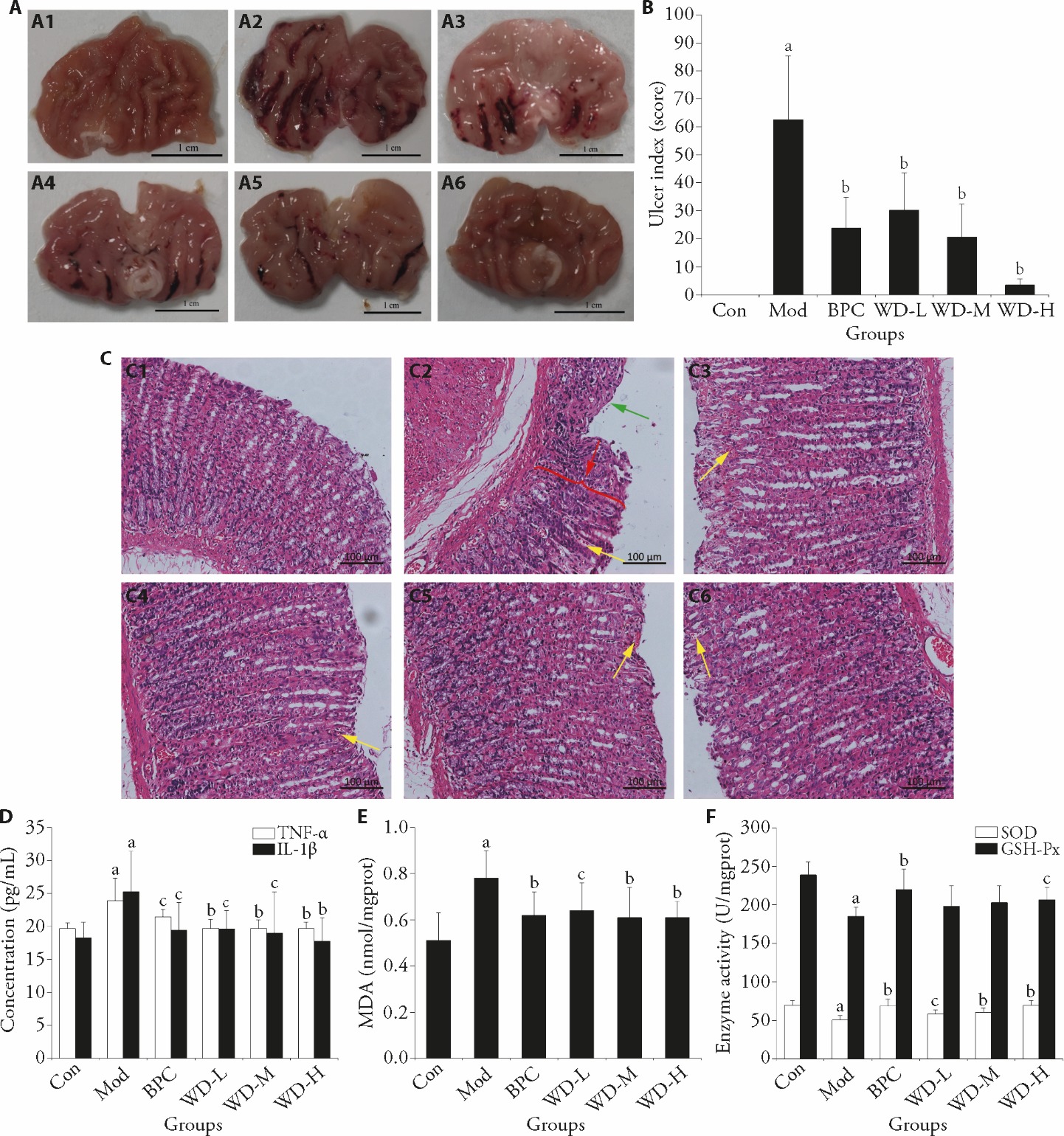
Figure 1 Protective effects of WD on ethanol-induced GMI A: macroscopic observation of gastric mucosal tissue; B: comparison of the gastric mucosal damage index; C: histopathological changes in gastric mucosa observed via HE staining (× 100): local defects (green arrow), atrophy of glands in the lamina propria (red arrow), and capillary dilation and congestion (yellow arrow); D: comparison of TNF-α and IL-1β; E: comparison of MDA; F: comparison of SOD, and GSH-Px; A1, C1: Con ; A2, C2: Mod; A3, C3: BPC; A4, C4: WD-L; A5, C5: WD-M; A6, C6: WD-H. Con and Mod groups treated with distilled water; BPC group treated with bismuth potassium citrate (0.36 g/kg); WD-L, WD-M, and WD-H groups treated with WD decoctions 4.5, 9 and 18 g/kg, respectively. Administration was performed once daily for 7 consecutive days. Con: control; Mod: model; BPC: bismuth potassium citrate; WD-L: WD at low doses; WD-M: WD at medium doses; WD-H: WD at high doses; HE: hematoxylin and eosin; TNF-α: tumor necrosis factor-alpha; IL-1β: interleukin-1 beta; MDA: malondialdehyde; SOD: superoxide dismutase; GSH-Px: glutathione peroxidase. Data are presented as mean ± standard deviation (n = 8). Group comparisons were performed using one-way analysis of variance. aP < 0.01, vs the Con group; bP < 0.01, cP < 0.05, vs the Mod group.
Figure 1 Protective effects of WD on ethanol-induced GMI A: macroscopic observation of gastric mucosal tissue; B: comparison of the gastric mucosal damage index; C: histopathological changes in gastric mucosa observed via HE staining (× 100): local defects (green arrow), atrophy of glands in the lamina propria (red arrow), and capillary dilation and congestion (yellow arrow); D: comparison of TNF-α and IL-1β; E: comparison of MDA; F: comparison of SOD, and GSH-Px; A1, C1: Con ; A2, C2: Mod; A3, C3: BPC; A4, C4: WD-L; A5, C5: WD-M; A6, C6: WD-H. Con and Mod groups treated with distilled water; BPC group treated with bismuth potassium citrate (0.36 g/kg); WD-L, WD-M, and WD-H groups treated with WD decoctions 4.5, 9 and 18 g/kg, respectively. Administration was performed once daily for 7 consecutive days. Con: control; Mod: model; BPC: bismuth potassium citrate; WD-L: WD at low doses; WD-M: WD at medium doses; WD-H: WD at high doses; HE: hematoxylin and eosin; TNF-α: tumor necrosis factor-alpha; IL-1β: interleukin-1 beta; MDA: malondialdehyde; SOD: superoxide dismutase; GSH-Px: glutathione peroxidase. Data are presented as mean ± standard deviation (n = 8). Group comparisons were performed using one-way analysis of variance. aP < 0.01, vs the Con group; bP < 0.01, cP < 0.05, vs the Mod group.
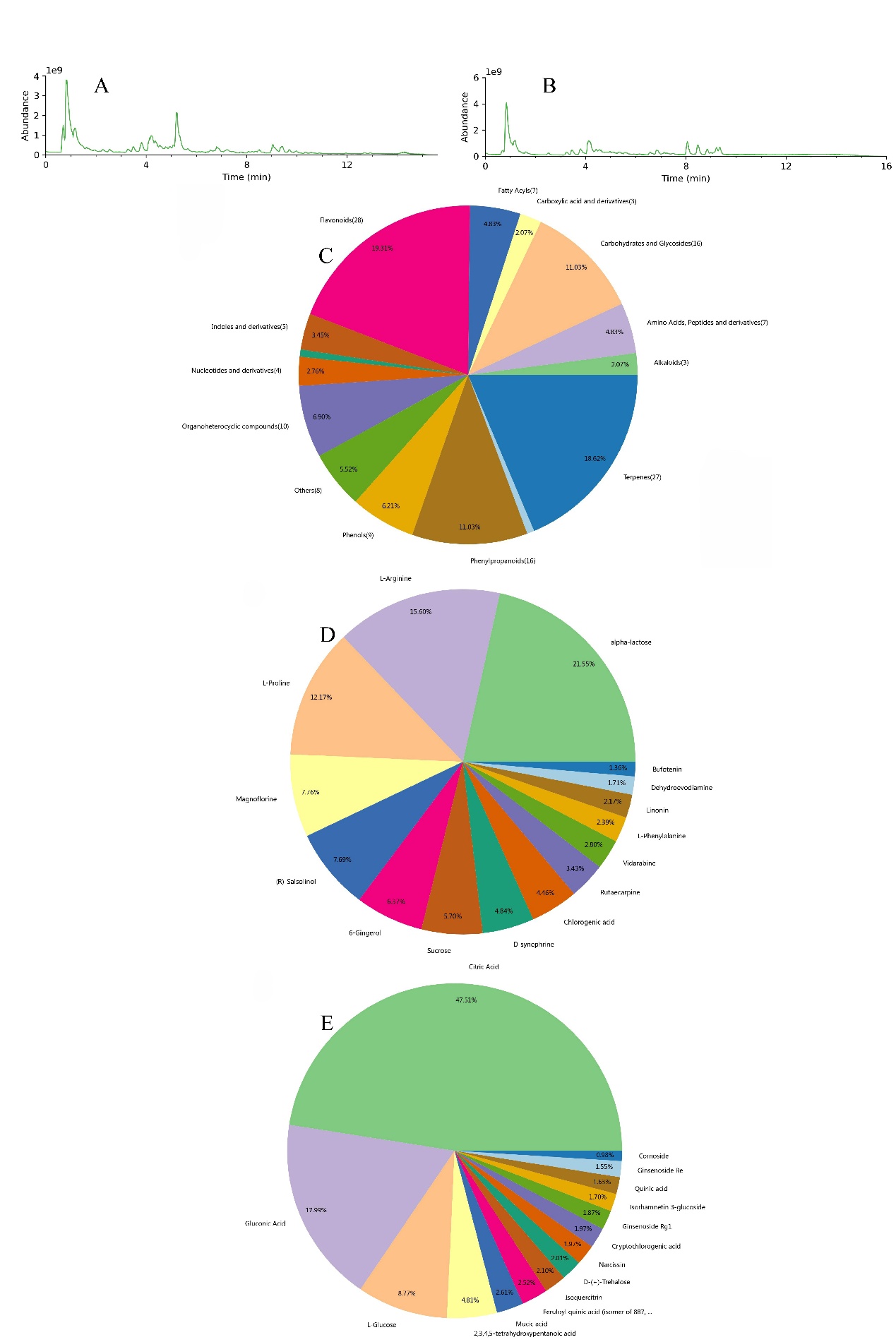
Figure 2 Results of the UPLC-MS/MS A: TIC in positive ion mode (n = 3); B: TIC in negative ion mode (n = 3); C: distribution chart of component classifications; D: top 15 component content in positive ion mode; E: top 15 component content in negative ion mode. UPLC-MS/MS: ultra-performance liquid chromatography-tandem mass spectrometry; TIC: total ion chromatogram.
Figure 2 Results of the UPLC-MS/MS A: TIC in positive ion mode (n = 3); B: TIC in negative ion mode (n = 3); C: distribution chart of component classifications; D: top 15 component content in positive ion mode; E: top 15 component content in negative ion mode. UPLC-MS/MS: ultra-performance liquid chromatography-tandem mass spectrometry; TIC: total ion chromatogram.
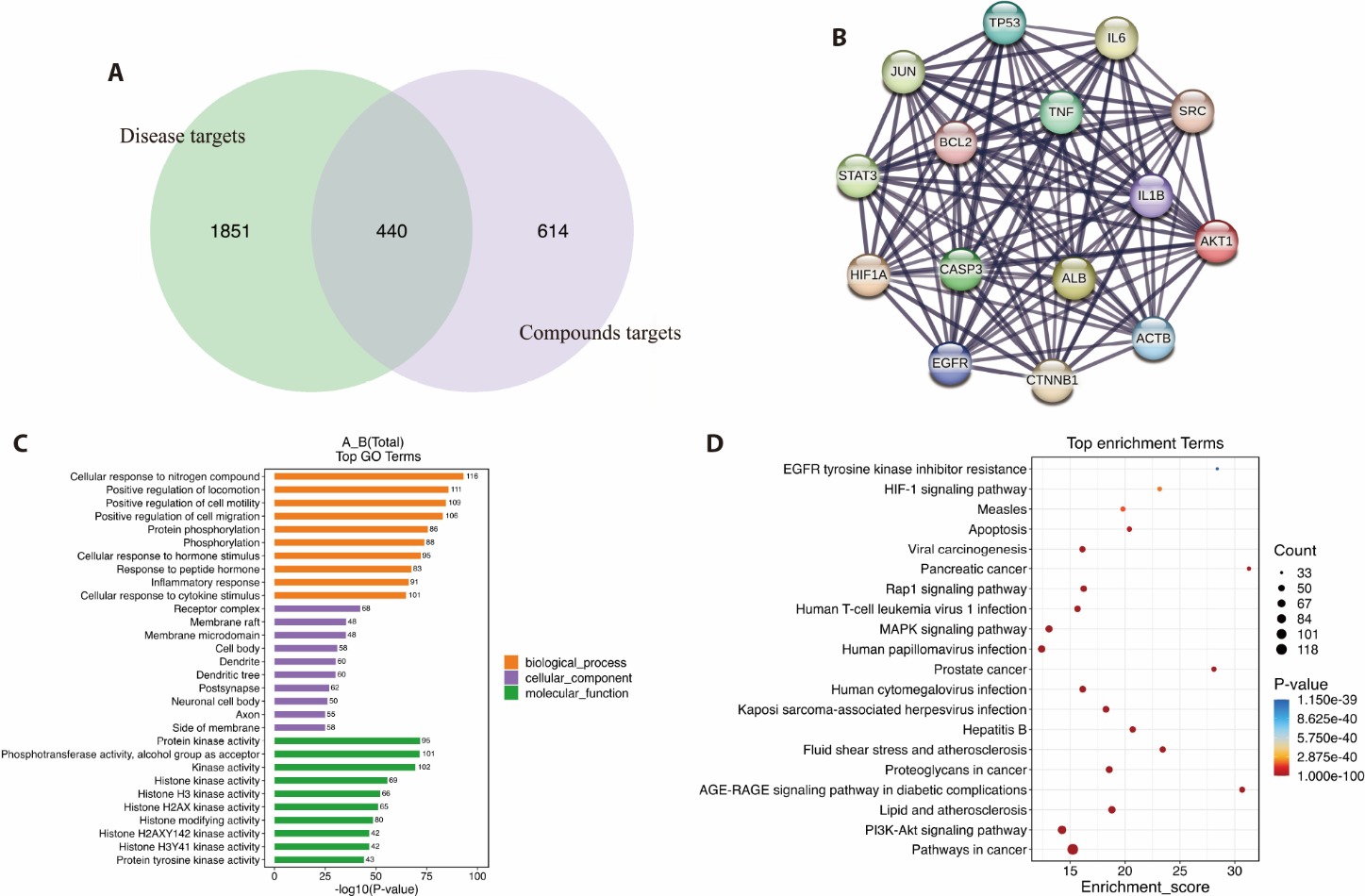
Figure 3 Results of network analysis A: Venn diagram; B: Top 15 targets; C: GO enrichment analysis; D: KEGG enrichment analysis. AKT1: AKT serine/threonine kinase 1; IL6: interleukin 6; TNF: tumor necrosis factor; ACTB: actin beta; TP53: tumor protein p53; ALB: albumin; IL1B: interleukin 1 beta; STAT3: signal transducer and activator of transcription 3; EGFR: epidermal growth factor receptor; CTNNB1: catenin beta 1; BCL2: B-cell lymphoma 2; CASP3: Caspase-3; HIF1A: hypoxia inducible factor 1 subunit alpha; SRC: SRC proto-oncogene, non-receptor tyrosine kinase; JUN: Jun proto-oncogene, AP-1 transcription factor subunit; GO: gene ontology; KEGG: kyoto encyclopedia of genes and genomes.
Figure 3 Results of network analysis A: Venn diagram; B: Top 15 targets; C: GO enrichment analysis; D: KEGG enrichment analysis. AKT1: AKT serine/threonine kinase 1; IL6: interleukin 6; TNF: tumor necrosis factor; ACTB: actin beta; TP53: tumor protein p53; ALB: albumin; IL1B: interleukin 1 beta; STAT3: signal transducer and activator of transcription 3; EGFR: epidermal growth factor receptor; CTNNB1: catenin beta 1; BCL2: B-cell lymphoma 2; CASP3: Caspase-3; HIF1A: hypoxia inducible factor 1 subunit alpha; SRC: SRC proto-oncogene, non-receptor tyrosine kinase; JUN: Jun proto-oncogene, AP-1 transcription factor subunit; GO: gene ontology; KEGG: kyoto encyclopedia of genes and genomes.
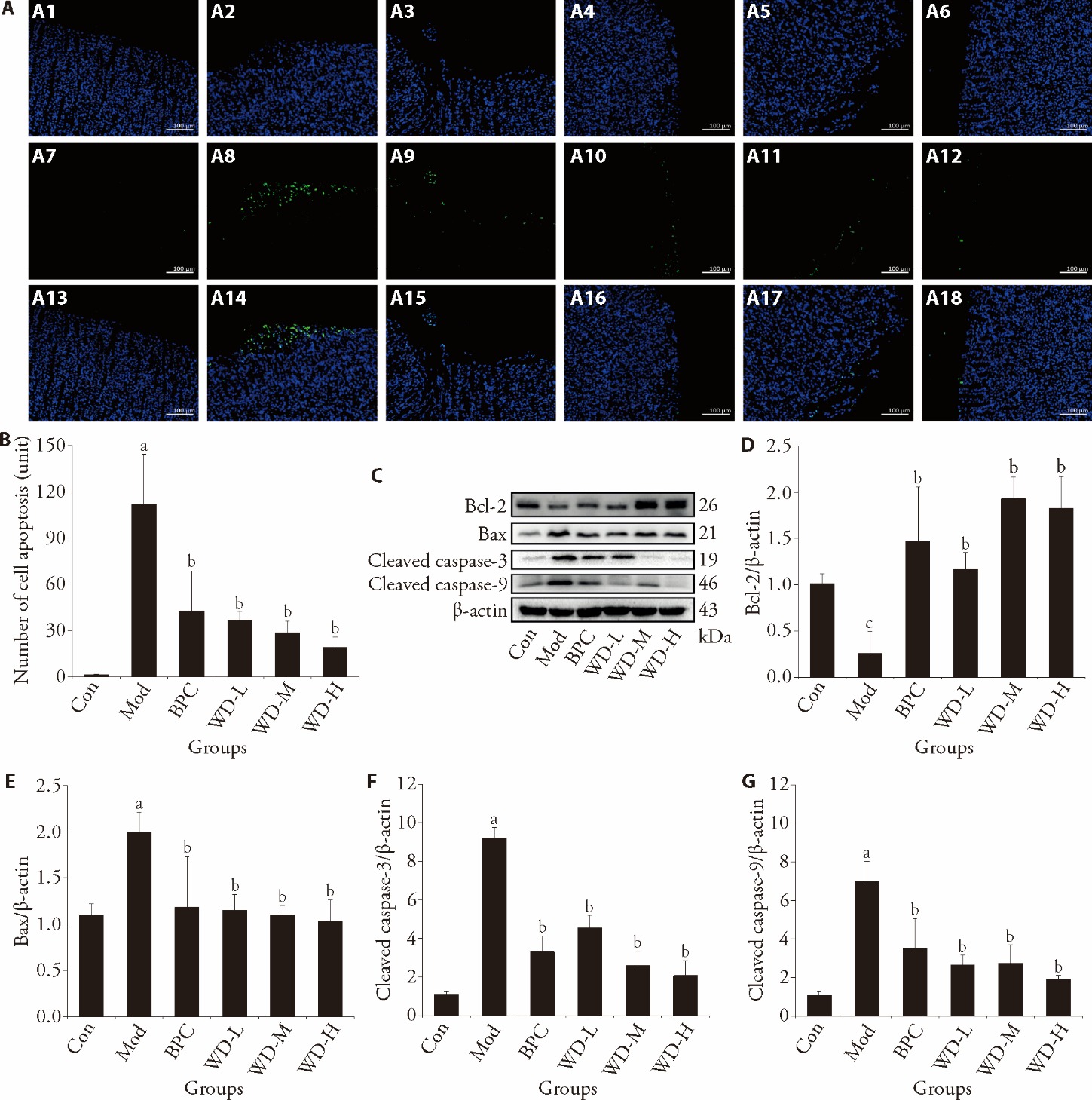
Figure 4 Apoptosis of gastric mucosal cells and expression of relevant proteins A: TUNEL staining of gastric mucosal cells (×100); A1-A6: nuclear staining images; A7-A12: apoptotic cell labeling images; A13-A18: merged images; A1, A7, A13: Con; A2, A8, A14: Mod; A3, A9, A15: BPC; A4, A10, A16: WD-L; A5, A11, A17: WD-M; A6, A12, A18: WD-H; B: effects of WD on gastric mucosal cell apoptosis; C: Western blot bands of relevant proteins; D: expression of Bcl-2; E: expression of Bax; F: expression of Cleaved Caspase-3; G: expression of Cleaved Caspase-9. Con and Mod groups treated with distilled water; BPC group treated with bismuth potassium citrate (0.36 g/kg); WD-L, WD-M, and WD-H groups treated with WD decoctions 4.5, 9 and 18 g/kg, respectively. Administration was performed once daily for 7 consecutive days. Con: control; Mod: model; BPC: bismuth potassium citrate; WD-L: WD at low doses; WD-M: WD at medium doses; WD-H: WD at high doses; TUNEL: terminal deoxynucleotidyl transferase dUTP nick end labeling; Bcl-2: B-cell lymphoma-2; Bax: Bcl-2-associated X protein. Data are presented as mean ± standard deviation (n = 8). Group comparisons were performed using one-way analysis of variance. aP < 0.01, cP < 0.05, vs the Con group; bP < 0.01, vs the Mod group.
Figure 4 Apoptosis of gastric mucosal cells and expression of relevant proteins A: TUNEL staining of gastric mucosal cells (×100); A1-A6: nuclear staining images; A7-A12: apoptotic cell labeling images; A13-A18: merged images; A1, A7, A13: Con; A2, A8, A14: Mod; A3, A9, A15: BPC; A4, A10, A16: WD-L; A5, A11, A17: WD-M; A6, A12, A18: WD-H; B: effects of WD on gastric mucosal cell apoptosis; C: Western blot bands of relevant proteins; D: expression of Bcl-2; E: expression of Bax; F: expression of Cleaved Caspase-3; G: expression of Cleaved Caspase-9. Con and Mod groups treated with distilled water; BPC group treated with bismuth potassium citrate (0.36 g/kg); WD-L, WD-M, and WD-H groups treated with WD decoctions 4.5, 9 and 18 g/kg, respectively. Administration was performed once daily for 7 consecutive days. Con: control; Mod: model; BPC: bismuth potassium citrate; WD-L: WD at low doses; WD-M: WD at medium doses; WD-H: WD at high doses; TUNEL: terminal deoxynucleotidyl transferase dUTP nick end labeling; Bcl-2: B-cell lymphoma-2; Bax: Bcl-2-associated X protein. Data are presented as mean ± standard deviation (n = 8). Group comparisons were performed using one-way analysis of variance. aP < 0.01, cP < 0.05, vs the Con group; bP < 0.01, vs the Mod group.
Table 1 Pocket coordinates and grid box sizes
| Target gene | PDB ID | Protein pocket coordinates | Grid box size |
|---|---|---|---|
| BCL2 | 8HTS | center_x = 7.647, center_y = 11.371, center_z = 14.514 | size_x = 41.0, size_y = 31.0, size_z = 38.0 |
| CASP3 | 2DKO | center_x = 30.952, center_y = 19.826, center_z = 49.131 | size_x = 51.0, size_y = 52.0, size_z = 59.0 |
Table 1 Pocket coordinates and grid box sizes
| Target gene | PDB ID | Protein pocket coordinates | Grid box size |
|---|---|---|---|
| BCL2 | 8HTS | center_x = 7.647, center_y = 11.371, center_z = 14.514 | size_x = 41.0, size_y = 31.0, size_z = 38.0 |
| CASP3 | 2DKO | center_x = 30.952, center_y = 19.826, center_z = 49.131 | size_x = 51.0, size_y = 52.0, size_z = 59.0 |
Table 2 Results of molecular docking
| PubChem CID | Compound | Target protein | PDB ID | Affinity (kcal/mol) |
|---|---|---|---|---|
| 445858 | (E)-ferulic acid | BCL2 | 8HTS | -6.2 |
| CASP3 | 2DKO | -5.7 | ||
| 168114 | [8]-gingerol | BCL2 | 8HTS | -6.1 |
| CASP3 | 2DKO | -6.2 | ||
| 5317587 | [6]-gingerdiol 3,5-diacetate | BCL2 | 8HTS | -5.9 |
| CASP3 | 2DKO | -5.6 | ||
| 73337 | Magnoflorine | BCL2 | 8HTS | -6.9 |
| CASP3 | 2DKO | -6.8 | ||
| 5281654 | Isorhamnetin | BCL2 | 8HTS | -7.5 |
| CASP3 | 2DKO | -6.9 | ||
| 9796015 | [6]-dehydrogingerdione | BCL2 | 8HTS | -5.9 |
| CASP3 | 2DKO | -5.8 | ||
| 5318039 | Hexahydrocurcumin | BCL2 | 8HTS | -6.5 |
| CASP3 | 2DKO | -7.5 | ||
| 11068834 | Octahydrocurcumin | BCL2 | 8HTS | -6.4 |
| CASP3 | 2DKO | -7.3 | ||
| 932 | Naringenin | BCL2 | 8HTS | -7.0 |
| CASP3 | 2DKO | -6.7 | ||
| 442793 | [6]-gingerol | BCL2 | 8HTS | -6.0 |
| CASP3 | 2DKO | -5.8 | ||
| 1548943 | Capsaicin | BCL2 | 8HTS | -7.2 |
| CASP3 | 2DKO | -6.6 | ||
| 107982 | Dihydrocapsaicin | BCL2 | 8HTS | -6.9 |
| CASP3 | 2DKO | -6.2 | ||
| 65752 | Rutaecarpine | BCL2 | 8HTS | -8.4 |
| CASP3 | 2DKO | -7.7 | ||
| 442088 | Evodiamine | BCL2 | 8HTS | -8.1 |
| CASP3 | 2DKO | -7.8 | ||
| 9817839 | Dehydroevodiamine | BCL2 | 8HTS | -8.5 |
| CASP3 | 2DKO | -7.7 |
Table 2 Results of molecular docking
| PubChem CID | Compound | Target protein | PDB ID | Affinity (kcal/mol) |
|---|---|---|---|---|
| 445858 | (E)-ferulic acid | BCL2 | 8HTS | -6.2 |
| CASP3 | 2DKO | -5.7 | ||
| 168114 | [8]-gingerol | BCL2 | 8HTS | -6.1 |
| CASP3 | 2DKO | -6.2 | ||
| 5317587 | [6]-gingerdiol 3,5-diacetate | BCL2 | 8HTS | -5.9 |
| CASP3 | 2DKO | -5.6 | ||
| 73337 | Magnoflorine | BCL2 | 8HTS | -6.9 |
| CASP3 | 2DKO | -6.8 | ||
| 5281654 | Isorhamnetin | BCL2 | 8HTS | -7.5 |
| CASP3 | 2DKO | -6.9 | ||
| 9796015 | [6]-dehydrogingerdione | BCL2 | 8HTS | -5.9 |
| CASP3 | 2DKO | -5.8 | ||
| 5318039 | Hexahydrocurcumin | BCL2 | 8HTS | -6.5 |
| CASP3 | 2DKO | -7.5 | ||
| 11068834 | Octahydrocurcumin | BCL2 | 8HTS | -6.4 |
| CASP3 | 2DKO | -7.3 | ||
| 932 | Naringenin | BCL2 | 8HTS | -7.0 |
| CASP3 | 2DKO | -6.7 | ||
| 442793 | [6]-gingerol | BCL2 | 8HTS | -6.0 |
| CASP3 | 2DKO | -5.8 | ||
| 1548943 | Capsaicin | BCL2 | 8HTS | -7.2 |
| CASP3 | 2DKO | -6.6 | ||
| 107982 | Dihydrocapsaicin | BCL2 | 8HTS | -6.9 |
| CASP3 | 2DKO | -6.2 | ||
| 65752 | Rutaecarpine | BCL2 | 8HTS | -8.4 |
| CASP3 | 2DKO | -7.7 | ||
| 442088 | Evodiamine | BCL2 | 8HTS | -8.1 |
| CASP3 | 2DKO | -7.8 | ||
| 9817839 | Dehydroevodiamine | BCL2 | 8HTS | -8.5 |
| CASP3 | 2DKO | -7.7 |
| 1. |
Hagen SJ. Mucosal defense: gastroduodenal injury and repair mechanisms. Curr Opin Gastroenterol 2021; 37: 609-14.
DOI URL |
| 2. | Organization WH. Global status report on alcohol and health. 2018-09-27, cited 2025-04-24;75-6. Available from URL: https://www.who.int/publications/i/item/9789241565639. |
| 3. |
Chang W, Bai J, Tian S, et al. Autophagy protects gastric mucosal epithelial cells from ethanol-induced oxidative damage via mTOR signaling pathway. Exp Biol Med (Maywood) 2017; 242: 1025-33.
DOI URL |
| 4. | Ahmed MAE, Mohanad M, Ahmed AAE, Aboulhoda BE, El-Awdan SA. Mechanistic insights into the protective effects of chlorogenic acid against indomethacin-induced gastric ulcer in rats: Modulation of the cross talk between autophagy and apoptosis signaling. Life Sci 2021; 275: 119370. |
| 5. |
Kuna L, Jakab J, Smolic R, Raguz-Lucic N, Vcev A, Smolic M. Peptic ulcer disease: a brief review of conventional therapy and herbal treatment options. J Clin Med 2019; 8: 179.
DOI URL |
| 6. | Lai HL, Chen X, Wen LT, Hu YN, Wu WR. Research status of Traditional Chinese Medicine in the treatment of ethanol-induced acute gastric mucosal injury. Guang Ming Zhong Yi 2023; 38: 2849-52. |
| 7. | Zhang ZJ(Late eastern Han). Treatise on cold damage in the series of clinical classics of Traditional Chinese Medicine. Xi’an: Shanxi Science and Technology Press; 2018: 54-5. |
| 8. | Chen MZ, Gao QL, Xie JL. Application of Wuzhuyu decoction in chronic arophic gastritis. J North Pharm 2022; 19: 81-3. |
| 9. |
Hu Q, Zeng J, Zhang X, et al. Metabolomics profiles reveal the efficacy of Wuzhuyu decoction on patients with chronic non-atrophic gastritis. Drug Des Devel Ther 2023; 17: 3269-80.
DOI URL |
| 10. | Xiang L. Analysis of the effect of Wuzhuyu decoction in treating gastritis due to cold invading the liver and stomach. Yi Xue Shi Liao Yu Jian Kang 2022; 20: 13-5+26. |
| 11. | Li Y. Treatment of 29 cases of gastroesophageal reflux disease of spleen and stomach deficiency-cold type with Wuzhuyu decoction combined with acupoint application. Jiangxi Zhong Yi Yao 2019; 50: 54-6. |
| 12. | Chen J, Huang R, Qian YD, Xu TW, Huang YH, Lou XJ. Efficacy of modified Fuzi Lizhong decoction and Wuzhuyu decoction on reflux esophagitis of spleen and stomach deficiency-cold type and its influence on serum related hormones. Zhong Guo Zhong Xi Yi Jie He Xiao Hua Za Zhi 2023; 31: 463-8. |
| 13. | Zhang J. Clinical observation on Si-Huang-Wuzhuyu decoction in the treatment of bile reflux gastritis. Hubei Zhong Yi Za Zhi 2015; 37: 41. |
| 14. |
Hamedi S, Arian AA, Farzaei MH. Gastroprotective effect of aqueous stem bark extract of Ziziphus jujuba L. against HCl/Ethanol-induced gastric mucosal injury in rats. J Tradit Chin Med 2015; 35: 666-70.
PMID |
| 15. | Li YL, Zhang BL, Huo CY, Zhu HH. Protective effect of evodiamine on gastric mucosal epithelial cells in rats with alcoholic gastric ulcer. Med Sci J Central South Chin 2022; 50: 184-9. |
| 16. | Li Z, Rao X, Li WQ, Chen F. Rutaecarpin inhibits cold stress-induced gastric mucosa injury via activating TRPV1/CGRP signaling. Zhong Nan Yao Xue 2020; 18: 910-3. |
| 17. | Wan J, Bao QC. Protective effect of dehydroevodiamine on gastric mucosa of rats with experimental gastric ulcer and its mechanism. Zhong Cao Yao 2020; 51: 4698-703. |
| 18. |
Zhang K, Liu Y, Wang C, et al. Evaluation of the gastroprotective effects of 20 (S)-ginsenoside Rg3 on gastric ulcer models in mice. J Ginseng Res 2019; 43: 550-61.
DOI PMID |
| 19. | Wang X, Chen L, Chang L, et al. Mechanism of Wuzhuyu decoction on alcohol-induced gastric ulcers using integrated network analysis and metabolomics. Front Pharmacol 2023; 14: 1308995. |
| 20. | Commission CP. Chinese Pharmacopoeia. Beijing: China Medical Science and Technology Press; 2025: 184+9+107+24. |
| 21. | Du MB. Discussion on drug dosage in treatise on febrile diseases. Zhong Guo Zhong Yao Za Zhi 2019; 44: 5012-16. |
| 22. | Li J, Zuo ZY. Formula study. Beijing: China Tradit Chin Med Press; 2021: 101-2. |
| 23. | Nan N, Gong MX, Wang Q, et al. Wuzhuyu decoction relieves hyperalgesia by regulating central and peripheral 5-HT in chronic migraine model rats. Phytomedicine 2022; 96: 153905. |
| 24. | Yuan X, Yang T, Yao J, Ou S, Xu Y, Zuo X. Clinical efficacy of diet intervention combined with bismuth potassium citrate in helicobacter pylori-related chronic atrophic gastritis. Altern Ther Health Med 2023; 29: 846-9. |
| 25. | Ye HY, Shang ZZ, Zhang FY, Zha XQ, Li QM, Luo JP. Dendrobium huoshanense stem polysaccharide ameliorates alcohol-induced gastric ulcer in rats through Nrf2-mediated strengthening of gastric mucosal barrier. Int J Biol Macromol 2023; 236: 124001. |
| 26. | Wen J, Liu W, Song SY, et al. Evaluation of targeting effect and protective effect of evodiamine phospholipid complex self-emulsifying drug delivery system on gastric ulcer. Zhong Cao Yao 2024; 55: 171-80. |
| 27. |
Yan S, Bao S, Chen T, et al. Cinnamaldehyde alleviates aspirin-induced gastric mucosal injury by regulating PI3K/AKT pathway-mediated apoptosis, autophagy and ferroptosis. Phytomedicine 2024; 132: 155791.
DOI URL |
| 28. |
Wei Y, Wang R, Ren S, et al. Zuojin Pill ameliorates inflammation in indomethacin-induced gastric injury via inhibition of MAPK pathway. J Ethnopharmacol 2021; 275: 114103.
DOI URL |
| 29. | Jiao YF, Chen RF, Li XH, Yu Y. Mechanism and treatment progress of gastric mucosal injury. Lin Chuang Yi Xue Yan Jiu Yu Shi Jian 2023; 8: 195-8. |
| 30. | Song XJ, Han B, Liu CX, Wang L. Effect of Qingwei Xiexin decoction on immunoglobulin, inflammatory factors, and oxidative stress in rats with acute gastric ulcer. Zhong Guo Zhong Yi Ji Zheng 2020; 29: 657-61. |
| 31. | Zhou Z, Li JJ. Acute toxicity of total polymethoxyflavones from Bauhinia championii in mice and its effects on gastric ulcer. Zhong Cao Yao 2018; 49: 2942-5. |
| 32. | Wang F, Li J, Zhang Z, et al. Baicalin reduced vandetanib induced myocardial injury by regulating redox balance and NLRP 3 inflammasome pathway. Tissue Cell 2025; 94: 102795. |
| 33. |
Lei Y, Xu T, Sun W, Wang X, Gao M, Lin H. Evodiamine alleviates DEHP-induced hepatocyte pyroptosis, necroptosis and immunosuppression in grass carp through ROS-regulated TLR4/ MyD88/NF-κB pathway. Fish Shellfish Immunol 2023; 140: 108995.
DOI URL |
| 34. |
Zhang Y, Zhang Y, Zhao Y, et al. Protection against ulcerative colitis and colorectal cancer by evodiamine via anti‑inflammatory effects. Mol Med Rep 2022; 25: 188.
DOI URL |
| 35. |
Ren S, Wei Y, Wang R, et al. Rutaecarpine ameliorates ethanol-induced gastric mucosal injury in mice by modulating genes related to inflammation, oxidative stress and apoptosis. Front Pharmacol 2020; 11: 600295.
DOI URL |
| 36. |
Ma X, Hu Q, Jiang T, Chen Y, et al. Dehydroevodiamine alleviates ulcerative colitis by inhibiting the PI3K/AKT/NF-κB signaling pathway via targeting AKT1 and regulating gut microbes and serum metabolism. Molecules 2024; 29: 4031.
DOI URL |
| 37. |
Xu X, Wu Q, Pei K, et al. Ginsenoside Rg1 reduces cardiac inflammation against myocardial ischemia/reperfusion injury by inhibiting macrophage polarization. J Ginseng Res 2024; 48: 570-80.
DOI PMID |
| 38. |
Zhong X, Sun Y, Lin Y, et al. Ginsenoside Rd protects against acute liver injury by regulating the autophagy NLRP 3 inflammasome pathway. Sci Rep 2025; 15: 3569.
DOI |
| 39. |
Ayinla MT, Asuku AO. The neurotoxic effects of lead acetate and the abrogating actions of 6-gingerol-rich extract of ginger via modulation of antioxidant defence system, pro-inflammatory markers, and apoptotic cascade. Naunyn Schmiedebergs Arch Pharmacol 2025; 398: 9341-56.
DOI |
| 40. | Huang XR, Ye Y, Wang K, et al. Mechanism of oxidative stress and Cyt-C/Caspase-9/Caspase-3 signaling pathway in rat kidney induced by cadmium. Chin Vet Sci 2022; 52: 661-70. |
| 41. |
Wang X, Chang L, Chen L, et al. Integrated network pharmacology and metabolomics to investigate the effects and possible mechanisms of Dehydroevodiamine against ethanol-induced gastric ulcers. J Ethnopharmacol 2024; 319: 117340.
DOI URL |
| 42. | Wicha P, Tocharus J, Janyou A, et al. Hexahydrocurcumin protects against cerebral ischemia/reperfusion injury, attenuates inflammation, and improves antioxidant defenses in a rat stroke model. PLoS One 2017; 12: e0189211. |
| 43. | Li X, Cheng J, Yao Q, et al. Isorhamnetin improves oocyte maturation by activating the Pi3k/Akt signaling pathway. Mol Nutr Food Res 2024; 68: e2300904. |
| Viewed | ||||||
|
Full text |
|
|||||
|
Abstract |
|
|||||