
Journal of Traditional Chinese Medicine ›› 2025, Vol. 45 ›› Issue (5): 1078-1086.DOI: 10.19852/j.cnki.jtcm.2025.05.014
• Original Articles • Previous Articles Next Articles
Systematic understanding of mechanism of Shenfu decoction (参附汤) improve the prognosis of ischemic stroke using a network pharmacology and animal experiment approach
ZHANG Wei1,2,3, REN Changhong2, GAO Chen2, XU Jun2, WU Xiaodan1( ), YANG Yong1()
- 1 School of Chinese Medicine, Beijing University of Chinese Medicine, Beijing 100029, China
2 Beijing Key Laboratory of Hypoxia Translational Medicine, Xuanwu Hospital, Capital Medical University, Beijing 100053, China
3 Department of Pathology, Shanghai University of Medicine & Health Sciences, Shanghai 201318, China
-
Received:2024-09-22Accepted:2025-01-14Online:2025-10-15Published:2025-09-15 -
Contact:YANG Yong, School of Chinese Medicine, Beijing University of Chinese Medicine, Beijing 100029, China. yymark@aliyun.com;
WU Xiaodan, School of Chinese Medicine, Beijing University of Chinese Medicine, Beijing 100029, China. wutun3182@163.com, Telephone: +86-18611760859 -
Supported by:National Natural Science Foundation of China: Study on the Mechanism of Action of Angelica Sinensis and Paeonia Lactiflora Powder in Activating Blood and Inducing Diuresis by Interfering with Microglia Polarization to Promote the Repair of White Matter Injury after Stroke(82274401);Regulation of Calcium Homeostasis in Myocardial Ischemia/reperfusion Injury by Effective Components of Ginseng and Sorbus Soup and Its Mechanisms(81473591)

Cite this article
ZHANG Wei, REN Changhong, GAO Chen, XU Jun, WU Xiaodan, YANG Yong. Systematic understanding of mechanism of Shenfu decoction (参附汤) improve the prognosis of ischemic stroke using a network pharmacology and animal experiment approach[J]. Journal of Traditional Chinese Medicine, 2025, 45(5): 1078-1086.
share this article
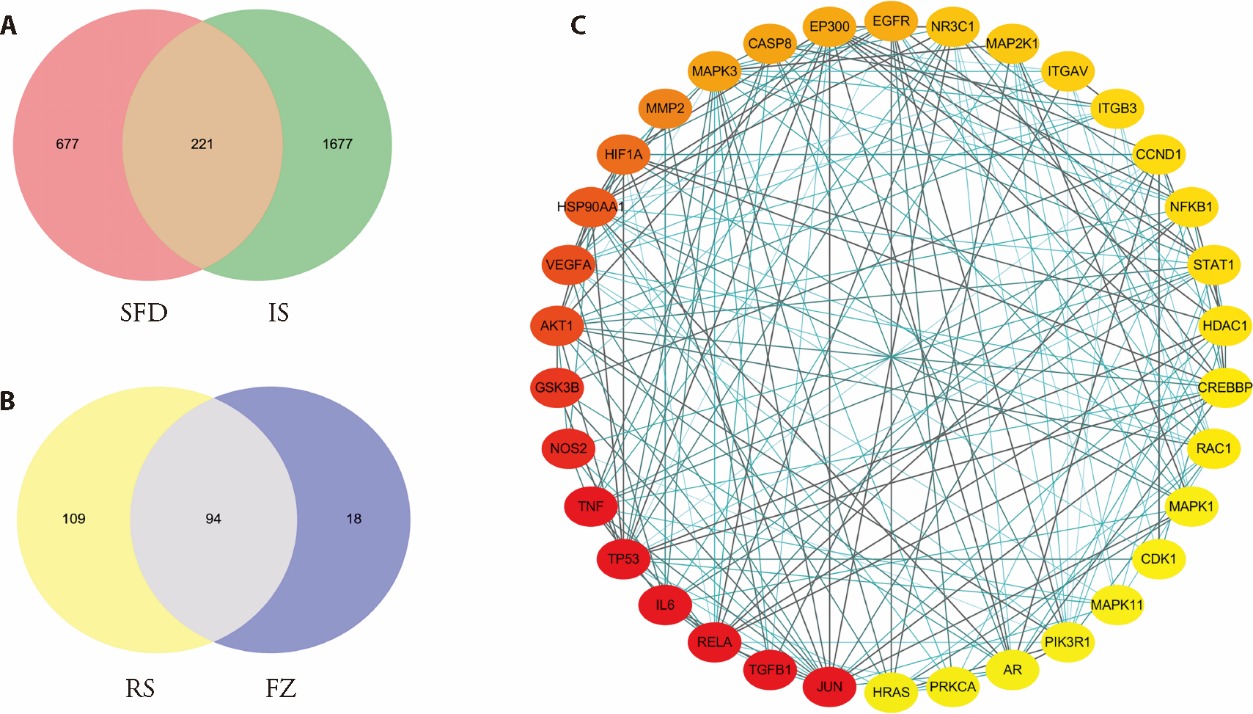
Figure 1 Network pharmacology analysis of the core target of SFD in the treatment of IS A: venn diagram, 221 represents that SFD acts on 221 IS targets; B: venn diagram, 94 represents that there are 94 targets in common for RS and FZ; C: pivot targets for SFD anti-IS activity are highlighted, with darker colors indicating stronger relationships between proteins. AKT1: AKT serine/threonine kinase 1; AR: androgen receptor; CASP8: caspase 8; CCND1: cyclin D1; CDK1: cyclin dependent kinase 1; CREBBP: CREB binding protein; EGFR: epidermal growth factor receptor; EP300: E1A binding protein p300; FZ: Fuzi (Radix Aconiti Lateralis Preparata); GSK3B: glycogen synthase kinase 3 beta; HDAC1: histone deacetylase 1; HIF1A: hypoxia inducible factor 1 subunit alpha; HRAS: hras proto-oncogene; HSP90AA1: heat shock protein 90 alpha family class A member 1; IL6: interleukin 6; IS: ischemic stroke; ITGAV: integrin subunit alpha V; ITGB3: integrin subunit beta 3; JUN: jun proto-oncogene; MAP2K1: mitogen-activated protein kinase kinase 1; MAPK1: mitogen-activated protein kinase 1; MAPK11: mitogen-activated protein kinase 11; MAPK3: mitogen-activated protein kinase 3; MMP2: matrix metallopeptidase 2; NFKB1: nuclear factor kappa B subunit 1; NOS2: nitric oxide synthase 2; NR3C1: nuclear receptor subfamily 3 group C member 1; PIK3R1: phosphoinositide-3-kinase regulatory subunit 1; PRKCA: protein kinase C alpha; RAC1: rac family small gtpase 1; RELA: RELA proto-oncogene; RS: Renshen (Radix Ginseng); RXRA: retinoid X receptor alpha; SFD: Shenfu decoction; STAT1: signal transducer and activator of transcription 1; TGFB1: transforming growth factor beta 1; TNF: tumor necrosis factor; Tp53: tumor protein p53; VEGFA: vascular endothelial growth factor A.
Figure 1 Network pharmacology analysis of the core target of SFD in the treatment of IS A: venn diagram, 221 represents that SFD acts on 221 IS targets; B: venn diagram, 94 represents that there are 94 targets in common for RS and FZ; C: pivot targets for SFD anti-IS activity are highlighted, with darker colors indicating stronger relationships between proteins. AKT1: AKT serine/threonine kinase 1; AR: androgen receptor; CASP8: caspase 8; CCND1: cyclin D1; CDK1: cyclin dependent kinase 1; CREBBP: CREB binding protein; EGFR: epidermal growth factor receptor; EP300: E1A binding protein p300; FZ: Fuzi (Radix Aconiti Lateralis Preparata); GSK3B: glycogen synthase kinase 3 beta; HDAC1: histone deacetylase 1; HIF1A: hypoxia inducible factor 1 subunit alpha; HRAS: hras proto-oncogene; HSP90AA1: heat shock protein 90 alpha family class A member 1; IL6: interleukin 6; IS: ischemic stroke; ITGAV: integrin subunit alpha V; ITGB3: integrin subunit beta 3; JUN: jun proto-oncogene; MAP2K1: mitogen-activated protein kinase kinase 1; MAPK1: mitogen-activated protein kinase 1; MAPK11: mitogen-activated protein kinase 11; MAPK3: mitogen-activated protein kinase 3; MMP2: matrix metallopeptidase 2; NFKB1: nuclear factor kappa B subunit 1; NOS2: nitric oxide synthase 2; NR3C1: nuclear receptor subfamily 3 group C member 1; PIK3R1: phosphoinositide-3-kinase regulatory subunit 1; PRKCA: protein kinase C alpha; RAC1: rac family small gtpase 1; RELA: RELA proto-oncogene; RS: Renshen (Radix Ginseng); RXRA: retinoid X receptor alpha; SFD: Shenfu decoction; STAT1: signal transducer and activator of transcription 1; TGFB1: transforming growth factor beta 1; TNF: tumor necrosis factor; Tp53: tumor protein p53; VEGFA: vascular endothelial growth factor A.
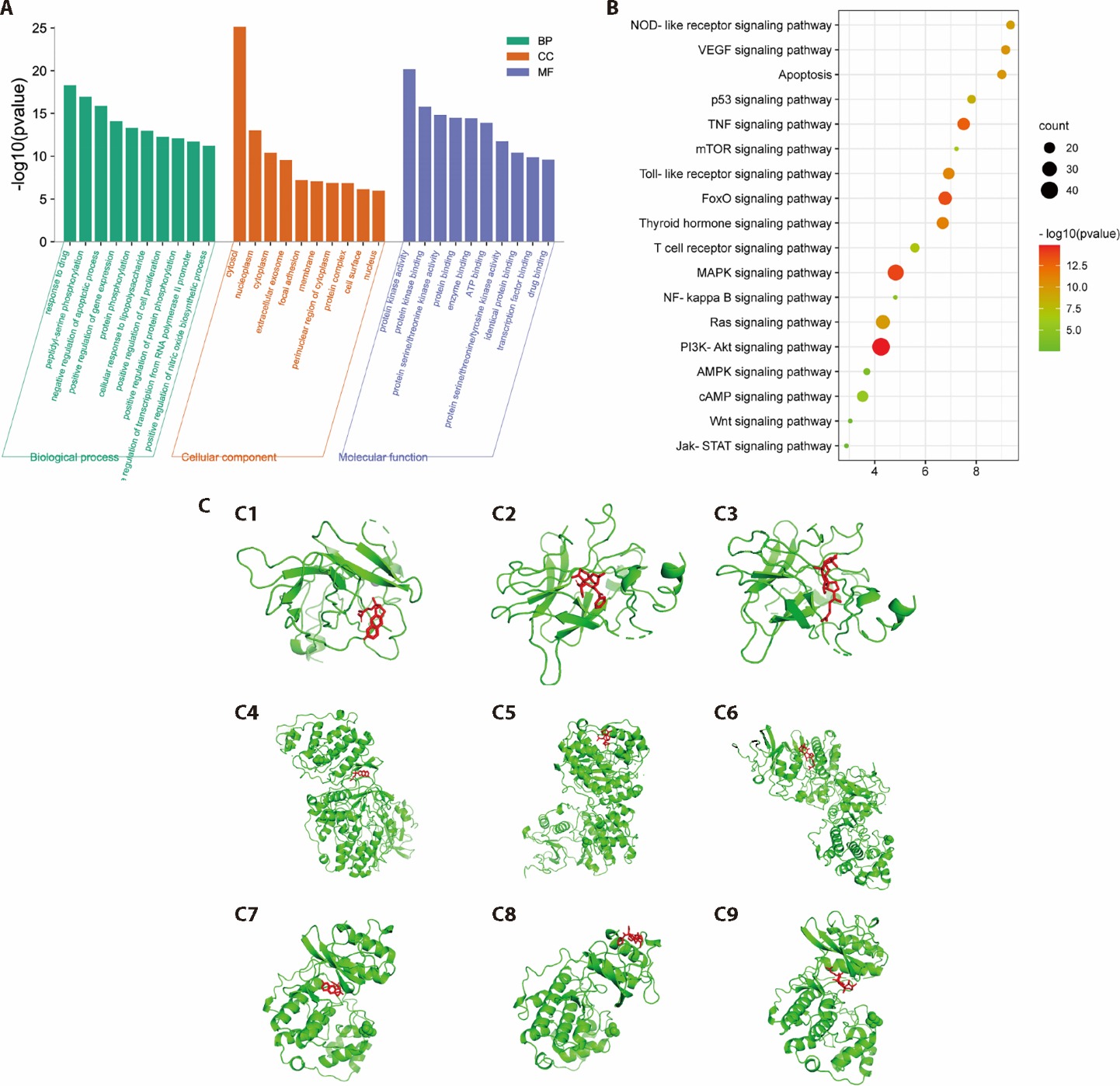
Figure 2 Network pharmacology analysis of the mechanisms of SFD in the treatment of IS A: GO function enrichment analysis. GO analysis includes three parts: BP, CC and MF; B: KEGG signal pathway screening analysis. “Rich factor” represents the ratio of the number of target genes belonging to a pathway and the number of the annotated genes located in the pathway. The color of the dot reflects the different P values. The size of the dot indicates the number of target genes in the pathway; C: docking results of the top three key compounds with the top three key targets; C1: interactions between Tp53 and Deltoin; C2: interactions between Tp53 and Malkangunin; C3: interactions between Tp53 and Ginsenoside Rg5; C4: interactions between MAPK3 and Deltoin; C5: interactions between MAPK3 and Malkangunin; C6: interactions between MAPK3 and Ginsenoside Rg5; C7: interactions between MAPK1 and Deltoin; C8: interactions between MAPK1 and Malkangunin; C9: interactions between MAPK1 and Ginsenoside Rg5. AKT: protein kinase B; AMPK: 5′-AMP-activated protein kinase; BP: biological process; cAMP: cyclic adenosine monophosphate; CC: cellular component; FoxO: forkhead box class O transcription factor; GO: enrichment analysis of gene ontology; JAK: janus kinase; KEGG: kyoto encyclopedia of genes and genomes; MAPK: mitogen-activated protein kinase; MF: molecular function; mTOR: mechanistic target of rapamycin; NF-κB: nuclear factor kappa-light-chain-enhancer of activated B cells; NOD: nucleotide-binding oligomerization domain (protein); p53: tumor protein p53; PI3K: phosphoinositide 3-kinase; Ras: rat sarcoma viral oncogene homolog; SFD: Shenfu decoction; STAT: signal transducer and activator of transcription; TNF: tumor necrosis factor; VEGF: vascular endothelial growth factor; Wnt: wingless and int-1 signaling.
Figure 2 Network pharmacology analysis of the mechanisms of SFD in the treatment of IS A: GO function enrichment analysis. GO analysis includes three parts: BP, CC and MF; B: KEGG signal pathway screening analysis. “Rich factor” represents the ratio of the number of target genes belonging to a pathway and the number of the annotated genes located in the pathway. The color of the dot reflects the different P values. The size of the dot indicates the number of target genes in the pathway; C: docking results of the top three key compounds with the top three key targets; C1: interactions between Tp53 and Deltoin; C2: interactions between Tp53 and Malkangunin; C3: interactions between Tp53 and Ginsenoside Rg5; C4: interactions between MAPK3 and Deltoin; C5: interactions between MAPK3 and Malkangunin; C6: interactions between MAPK3 and Ginsenoside Rg5; C7: interactions between MAPK1 and Deltoin; C8: interactions between MAPK1 and Malkangunin; C9: interactions between MAPK1 and Ginsenoside Rg5. AKT: protein kinase B; AMPK: 5′-AMP-activated protein kinase; BP: biological process; cAMP: cyclic adenosine monophosphate; CC: cellular component; FoxO: forkhead box class O transcription factor; GO: enrichment analysis of gene ontology; JAK: janus kinase; KEGG: kyoto encyclopedia of genes and genomes; MAPK: mitogen-activated protein kinase; MF: molecular function; mTOR: mechanistic target of rapamycin; NF-κB: nuclear factor kappa-light-chain-enhancer of activated B cells; NOD: nucleotide-binding oligomerization domain (protein); p53: tumor protein p53; PI3K: phosphoinositide 3-kinase; Ras: rat sarcoma viral oncogene homolog; SFD: Shenfu decoction; STAT: signal transducer and activator of transcription; TNF: tumor necrosis factor; VEGF: vascular endothelial growth factor; Wnt: wingless and int-1 signaling.
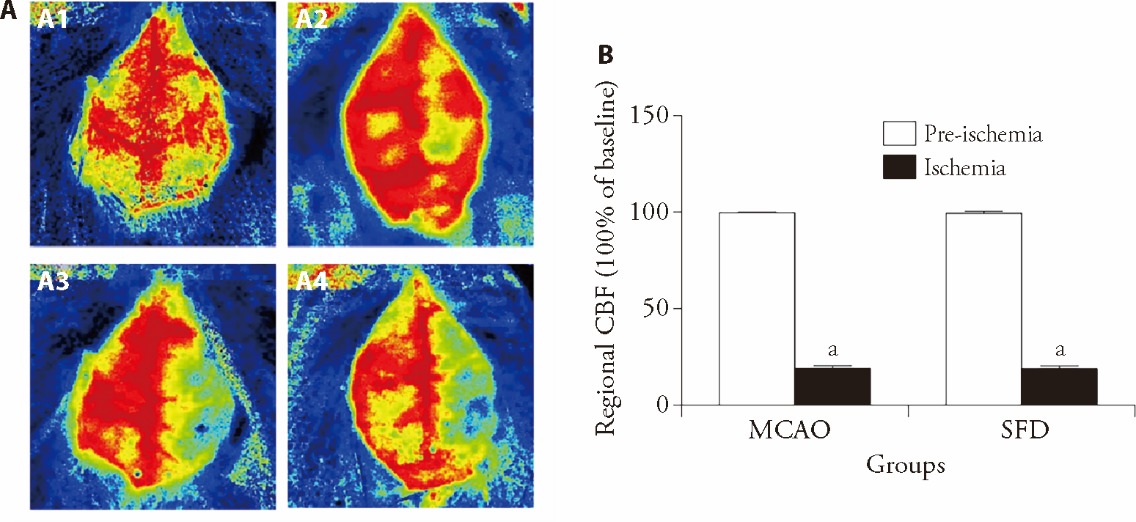
Figure 3 Blood flow of the mice brain detected by laser speckle imaging A: the change of cerebral blood flow before and after MCAO molding was detected by two-dimensional laser speckle imaging technology; A1: cerebral blood flow in the MCAO group at pre-ischemia; A2: cerebral blood flow in the SFD group at pre-ischemia; A3: cerebral blood flow in the MCAO group at ischemia; A4: cerebral blood flow in the SFD group at ischemia; B: the ratio of two cerebral hemispheres (right/left) less than 20% was considered the MCAO model is successful. MCAO group: MCAO model; SFD group: treated with 2.8 g/mL SFD after MCAO model. ANOVA: analysis of variance; CBF: cerebral blood flow; MCAO: middle cerebral artery occlusion; SFD: Shenfu decoction. Statistical analysis was performed using one-way ANOVA followed by Tukey’s post hoc test. Values are mean ± standard deviation (n = 5). aP < 0.001 vs pre-ischemia.
Figure 3 Blood flow of the mice brain detected by laser speckle imaging A: the change of cerebral blood flow before and after MCAO molding was detected by two-dimensional laser speckle imaging technology; A1: cerebral blood flow in the MCAO group at pre-ischemia; A2: cerebral blood flow in the SFD group at pre-ischemia; A3: cerebral blood flow in the MCAO group at ischemia; A4: cerebral blood flow in the SFD group at ischemia; B: the ratio of two cerebral hemispheres (right/left) less than 20% was considered the MCAO model is successful. MCAO group: MCAO model; SFD group: treated with 2.8 g/mL SFD after MCAO model. ANOVA: analysis of variance; CBF: cerebral blood flow; MCAO: middle cerebral artery occlusion; SFD: Shenfu decoction. Statistical analysis was performed using one-way ANOVA followed by Tukey’s post hoc test. Values are mean ± standard deviation (n = 5). aP < 0.001 vs pre-ischemia.
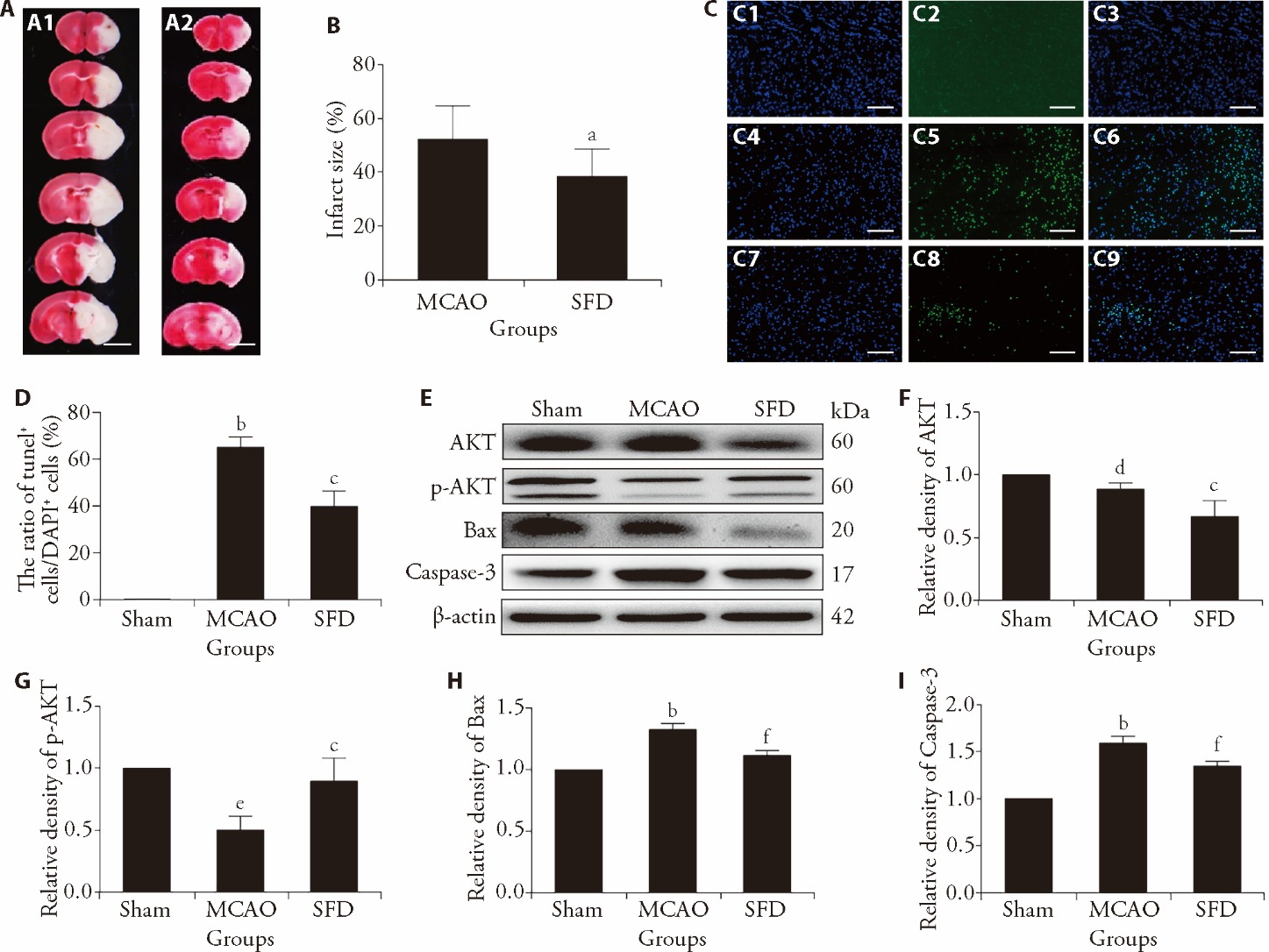
Figure 4 SFD treatment reduces cell apoptosis after MCAO through the AKT/Bax/Caspase-3 pathway A: the white in the figure indicates the infarct area (the scale is 10 000 μm); A1: TTC staining results of the MCAO group; A2: TTC staining results of the SFD group; B: histogram quantifies the infarct area; C: blue represents all cells and green represents TUNEL-positive apoptotic cells (the scale is 200 μm). C1: DAPI staining of the sham group; C2: TUNEL staining of the sham group. C3: merged image in the sham group; C4: DAPI staining of the MCAO group; C5: TUNEL staining of the MCAO group; C6: merged image in the MCAO group; C7: DAPI staining of the SFD group; C8: TUNEL staining of the SFD group. C9: merged image in the SFD group; D: ratio of TUNEL+ cells / DAPI+cell; E: representative WB bands; F: quantitative analysis of AKT; G: quantitative analysis of p-AKT; H: quantitative analysis of Bax; I: quantitative analysis of Caspase-3. Sham group: sham-operated group without treatment; MCAO group: MCAO model; SFD group: treated with 2.8 g/mL SFD after MCAO model. AKT: protein kinase B; ANOVA: analysis of variance; Bax: BCL2 associated X; Caspase-3: cysteine-aspartic acid protease 3; DAPI: 4',6-diamidino-2-phenylindole; MCAO: middle cerebral artery occlusion; SFD: Shenfu decoction; TTC: 2,3,5-triphenyltetrazolium chloride; WB: Western blot; TUNEL: terminal deoxynucleotidyl transferase-mediated nick end labeling. Statistical analysis was performed using one-way ANOVA followed by Tukey’s post hoc test. Values are mean ± standard deviation (n = 5). aP < 0.001, cP < 0.05, and fP < 0.01 vs MCAO; bP < 0.001, dP < 0.05, and eP < 0.01 vs Sham.
Figure 4 SFD treatment reduces cell apoptosis after MCAO through the AKT/Bax/Caspase-3 pathway A: the white in the figure indicates the infarct area (the scale is 10 000 μm); A1: TTC staining results of the MCAO group; A2: TTC staining results of the SFD group; B: histogram quantifies the infarct area; C: blue represents all cells and green represents TUNEL-positive apoptotic cells (the scale is 200 μm). C1: DAPI staining of the sham group; C2: TUNEL staining of the sham group. C3: merged image in the sham group; C4: DAPI staining of the MCAO group; C5: TUNEL staining of the MCAO group; C6: merged image in the MCAO group; C7: DAPI staining of the SFD group; C8: TUNEL staining of the SFD group. C9: merged image in the SFD group; D: ratio of TUNEL+ cells / DAPI+cell; E: representative WB bands; F: quantitative analysis of AKT; G: quantitative analysis of p-AKT; H: quantitative analysis of Bax; I: quantitative analysis of Caspase-3. Sham group: sham-operated group without treatment; MCAO group: MCAO model; SFD group: treated with 2.8 g/mL SFD after MCAO model. AKT: protein kinase B; ANOVA: analysis of variance; Bax: BCL2 associated X; Caspase-3: cysteine-aspartic acid protease 3; DAPI: 4',6-diamidino-2-phenylindole; MCAO: middle cerebral artery occlusion; SFD: Shenfu decoction; TTC: 2,3,5-triphenyltetrazolium chloride; WB: Western blot; TUNEL: terminal deoxynucleotidyl transferase-mediated nick end labeling. Statistical analysis was performed using one-way ANOVA followed by Tukey’s post hoc test. Values are mean ± standard deviation (n = 5). aP < 0.001, cP < 0.05, and fP < 0.01 vs MCAO; bP < 0.001, dP < 0.05, and eP < 0.01 vs Sham.
| 1. |
Saini V, Guada L, Yavagal DR. Global epidemiology of stroke and access to acute ischemic stroke interventions. Neurology 2021; 97: S6-16.
DOI PMID |
| 2. | Collaborators GS. Global, regional, and national burden of stroke and its risk factors, 1990-2019: a systematic analysis for the Global Burden of Disease Study 2019. Lancet 2021; 20: 795-820. |
| 3. |
Pu L, Wang L, Zhang R, et al. Projected global trends in ischemic stroke incidence, deaths and disability-adjusted life years from 2020 to 2030. Stroke 2023; 54: 1330-9.
DOI PMID |
| 4. | Benjamin EJ, Blaha MJ, Chiuve SE, et al. Heart disease and stroke statistics-2017 update: a report from the american heart association. Circulation 2017; 135: e146-603. |
| 5. | Zheng L, Meng L, Liang H, Yang J. Sanhua decoction: current understanding of a traditional herbal recipe for stroke. Front Neurosci 2023; 17: 1149833. |
| 6. | Zhang W, Ren C, Yang Y, et al. Ginseng aconitum decoction (Shenfu Tang) provides neuroprotection by ameliorating impairment of blood-brain barrier in cerebral ischemia-reperfusion injury. Brain Res 2024; 1842: 149098. |
| 7. |
Zhang J, Liu M, Huang M, et al. Ginsenoside F1 promotes angiogenesis by activating the IGF-1/IGF1R pathway. Pharmacol Res 2019; 144: 292-305.
DOI PMID |
| 8. | Chu S-F, Zhang Z, Zhou X, et al. Ginsenoside Rg1 protects against ischemic/reperfusion-induced neuronal injury through miR-144/Nrf2/ARE pathway. Acta Pharmacol Sin 2019; 40: 13-25. |
| 9. | Hao DC, Xiao PG. Network pharmacology: a rosetta stone for Traditional Chinese Medicine. Drug Dev Res 2014; 75: 299-312. |
| 10. | Guo B, Zhao C, Zhang C, et al. Elucidation of the anti-inflammatory mechanism of Ermiao San by integrative approach of network pharmacology and experimental verification. Pharmacol Res 2022; 175: 106000. |
| 11. | Yan W, Fanying D, Shiqi L, Yingli W. Network pharmacology and experimental validation to reveal the pharmacological mechanisms of Sini decoction against renal fibrosis. J Tradit Chin Med 2024; 44: 362-72. |
| 12. | Chi X, Wang L, Liu H, Zhang Y, Shen W. Post-stroke cognitive impairment and synaptic plasticity: a review about the mechanisms and Chinese herbal drugs strategies. Front Neurosci 2023; 17: 1123817. |
| 13. |
Kibble M, Saarinen N, Tang J, et al. Network pharmacology applications to map the unexplored target space and therapeutic potential of natural products. Nat Prod Rep 2015; 32: 1249-66.
DOI PMID |
| 14. | Ru J, Li P, Wang J, et al. TCMSP: a database of systems pharmacology for drug discovery from herbal medicines. J Cheminform 2014; 6: 13. |
| 15. | Wang X, Shen Y, Wang S, et al. PharmMapper 2017 update: a web server for potential drug target identification with a comprehensive target pharmacophore database. Nucleic Acids Res 2017; 45: W356-60. |
| 16. | Daina A, Michielin O, Zoete V. Swiss Target Prediction: updated data and new features for efficient prediction of protein targets of small molecules. Nucleic Acids Res 2019; 47: W357-64. |
| 17. | Davis AP, Wiegers TC, Wiegers J, et al. CTD Anatomy: analyzing chemical-induced phenotypes and exposures from an anatomical perspective, with implications for environmental health studies. Curr Res Toxicol 2021; 2: 128-39. |
| 18. | Wang Y, Zhang S, Li F, et al. Therapeutic target database 2020:enriched resource for facilitating research and early development of targeted therapeutics. Nucleic Acids Res 2020; 48: D1031-41. |
| 19. |
Jiao X, Sherman BT, Huang DW, et al. DAVID-WS: a stateful web service to facilitate gene/protein list analysis. Bioinformatics 2012; 28: 1805-6.
DOI PMID |
| 20. |
Ren C, Li S, Liu K, et al. Enhanced oxidative stress response and neuroprotection of combined limb remote ischemic conditioning and atorvastatin after transient ischemic stroke in rats. Brain Circ 2017; 3: 204-12.
DOI PMID |
| 21. | Herpich F, Rincon F. Management of acute ischemic stroke. Crit Care Med 2020; 48: 1654-63. |
| 22. | Marin MC, Jost CA, Brooks LA, et al. A common polymorphism acts as an intragenic modifier of mutant p 53 behaviour. Nat Genet 2000; 25: 47-54. |
| 23. |
Rodríguez C, Sobrino T, Agulla J, et al. Neovascularization and functional recovery after intracerebral hemorrhage is conditioned by the Tp53 Arg72Pro single-nucleotide polymorphism. Cell Death Differ 2017; 24: 144-54.
DOI PMID |
| 24. | Gomez-Sanchez JC, Delgado-Esteban M, Rodriguez-Hernandez I, et al. The human Tp53 Arg72Pro polymorphism explains different functional prognosis in stroke. J Exp Med 2011; 208: 429-37. |
| 25. |
Jiang S, Li T, Yang Z, et al. AMPK orchestrates an elaborate cascade protecting tissue from fibrosis and aging. Ageing Res Rev 2017; 38: 18-27.
DOI PMID |
| 26. |
Jiang T, Yu JT, Zhu XC, et al. Ischemic preconditioning provides neuroprotection by induction of AMP-activated protein kinase-dependent autophagy in a rat model of ischemic stroke. Mol Neurobiol 2015; 51: 220-9.
DOI PMID |
| 27. | Finka A, Goloubinoff P. Proteomic data from human cell cultures refine mechanisms of chaperone-mediated protein homeostasis. Cell Stress Chaperones 2013; 18: 591-605. |
| 28. | Su J, Zhang J, Bao R, et al. Mitochondrial dysfunction and apoptosis are attenuated through activation of AMPK/GSK-3β/PP2A pathway in Parkinson's disease. Eur J Pharmacol 2021; 907: 174202. |
| 29. |
Xiao X, Wang W, Li Y, et al. HSP90AA1-mediated autophagy promotes drug resistance in osteosarcoma. J Exp Clin Cancer Res 2018; 37: 201.
DOI PMID |
| 30. |
Franke TF, Hornik CP, Segev L, Shostak GA, Sugimoto C. PI3K/Akt and apoptosis: size matters. Oncogene 2003; 22: 8983-98.
DOI PMID |
| 31. | Li J, Lang J, Zeng Z, McCullough LD. Akt 1 gene deletion and stroke. J Neurol Sci 2008; 269: 105-12. |
| 32. |
Yang J, Pan Y, Li X, Wang X. Atorvastatin attenuates cognitive deficits through Akt1/caspase-3 signaling pathway in ischemic stroke. Brain Res 2015; 1629: 231-9.
DOI PMID |
| 33. |
Blum D, Torch S, Lambeng N, et al. Molecular pathways involved in the neurotoxicity of 6-OHDA, dopamine and MPTP: contribution to the apoptotic theory in Parkinson's disease. Prog Neurobiol 2001; 65: 135-72.
DOI PMID |
| 34. | Li Z, Xiao G, Wang H, He S, Zhu Y. A preparation of Ginkgo biloba L. leaves extract inhibits the apoptosis of hippocampal neurons in post-stroke mice via regulating the expression of Bax/Bcl-2 and caspase-3. J Ethnopharmacol 2021; 280: 114481. |
| 35. | Khalilzadeh B, Shadjou N, Kanberoglu GS, et al. Advances in nanomaterial based optical biosensing and bioimaging of apoptosis via caspase-3 activity: a review. Microchim Acta 2018; 185: 434. |
| 36. | Yang L, Huang GY, Wang YG, et al. Efficacy of Renshen (Radix Ginseng) plus Fuzi (Radix Aconiti Lateralis Preparata) on myocardial infarction by enhancing autophagy in rat. J Tradit Chin Med 2021; 41: 909-18. |
| 37. | El-Demerdash FM, El-Magd MA, El-Sayed RA. Panax ginseng modulates oxidative stress, DNA damage, apoptosis, and inflammations induced by silicon dioxide nanoparticles in rats. Environ Toxicol 2021; 36: 1362-74. |
| 38. | Liu W, Leng J, Hou JG, et al. Saponins derived from the stems and leaves of Panax ginseng attenuate scrotal heat-induced spermatogenic damage via inhibiting the MAPK mediated oxidative stress and apoptosis in mice. Phytother Res 2021; 35: 311-23. |
| 39. | Wu MP, Zhang YS, Zhou QM, et al. Higenamine protects ischemia/reperfusion induced cardiac injury and myocyte apoptosis through activation of β2-AR/PI3K/AKT signaling pathway. Pharmacol Res 2016; 104: 115-23. |
| 40. | Broughton BRS, Reutens DC, Sobey CG. Apoptotic mechanisms after cerebral ischemia. Stroke 2009; 40: e331-9. |
| 41. | Greenberg DA, Jin K. From angiogenesis to neuropathology. Nature 2005; 438: 954-9. |
| 42. |
Ruan L, Wang B, ZhuGe Q, Jin K. Coupling of neurogenesis and angiogenesis after ischemic stroke. Brain Res 2015; 1623: 166-73.
DOI PMID |
| [1] | PEI Ke, LI Yong, LIN Zhe, LYU Guangfu. Mechanisms of Baishao (Radix Paeoniae Alba) and Gancao (Radix Glycyrrhizae) on major depressive disorder: network pharmacology and in vivo validation [J]. Journal of Traditional Chinese Medicine, 2025, 45(5): 1067-1077. |
| [2] | QI Yafeng, LIU Yu, LIU Yeyuan, LI Yangyang, ZHANG Shangzu, CHEN Yaping, XU Qian, HAO Guoxiong, LIU Yongqi, ZHANG Liying, ZHANG Zhiming. Therapeutic potential of Traditional Chinese Medicine Yisui Shengxue pills (益髓生血丸) to inhibit hypoxia-inducible factor-1alpha and general control nonderepressible 2 to regulate the post-chemotherapy immune response: integrating network pharmacology and experimental validation [J]. Journal of Traditional Chinese Medicine, 2025, 45(5): 1087-1097. |
| [3] | CHOI You Yeon, JIN Seong chul, KIM Mi Hye, BAEK Hee Kyung, KIM Dong Hyun, OH Sung Hyuk, YANG Woong Mo. Exploring the therapeutic potential of Morus alba Linne extract in targeting localized adiposity [J]. Journal of Traditional Chinese Medicine, 2025, 45(5): 970-978. |
| [4] | NI Shuang, LIU Xiaofei, GUO Xiaoyan, GU Zuxi, WU Panqing, CONG Chao, LI Shengnan, GAO Xianwei, XU Lianwei. Mechanism of Tiaogeng decoction (调更汤) in a cognitive dysfunction mouse model [J]. Journal of Traditional Chinese Medicine, 2025, 45(5): 987-997. |
| [5] | WU Haoyang, Liu Yuan, CHEN Yuzhou, XIE Yizhou, ZHONG Lei, YU Yang, FAN Xiaohong. Effect of pestle needle therapy on the posterior cervical muscle in a rabbit model of cervical spondylosis [J]. Journal of Traditional Chinese Medicine, 2025, 45(4): 786-795. |
| [6] | SONG Mingming, MEN Bo, CHEN Mei, LIU Rui, MO Hongping, ZHANG Da, PAN Tao, WEN Xudong. Exploration of the mechanism of Danggui Buxue decoction (当归补血汤) for the treatment of gastric ulcer based on network pharmacology, molecular docking, and in vivo experiment [J]. Journal of Traditional Chinese Medicine, 2025, 45(4): 806-816. |
| [7] | LI Weijia, LU Jing, MA Chao, LIU Mengmeng, PEI Ke, CHEN Hongyan, LIN Zhe, LYU Guangfu. Hamayou (Oviductus Ranae) protein hydrolysate ameliorates depression by regulating the mitogen-activated protein kinase pathway [J]. Journal of Traditional Chinese Medicine, 2025, 45(3): 493-507. |
| [8] | LI Yue, DENG Jinyan, PI Shanshan, ZHANG Yingjuan, ZHAO Dan, GUO Yi, YE Yong’an, ZAO Xiaobin, DU Hongbo. Weifuchun (胃复春 ) exerts therapeutic effects on gastric fundic gland polyps by promoting ferroptosis [J]. Journal of Traditional Chinese Medicine, 2025, 45(3): 618-627. |
| [9] | YUAN Jiayao, WU Suhui, MENG Yufan, LI Hanbing, LI Genlin, XU Jiangyan. Yishen Tongluo formula (益肾通络方) ameliorates kidney injury via modulating inflammation and apoptosis in streptozotocin-induced diabetic kidney disease mice [J]. Journal of Traditional Chinese Medicine, 2025, 45(2): 254-265. |
| [10] | HUANG Jiaen, LUO Qing, DONG Gengting, PENG Weiwen, HE Jianhong, DAI Weibo. Xiahuo Pingwei San (夏藿平胃散) attenuated intestinal inflammation in dextran sulfate sodium-induced ulcerative colitis mice through inhibiting the receptor for advanced glycation end-products signaling pathway [J]. Journal of Traditional Chinese Medicine, 2025, 45(2): 311-325. |
| [11] | HAN Shuai, Du Zhikang, WANG Zirui, HUANG Tianfeng, GE Yali, SHI Jianwen, GAO Ju. Network pharmacology approach to unveiling the mechanism of berberine in the amelioration of morphine tolerance [J]. Journal of Traditional Chinese Medicine, 2025, 45(2): 376-384. |
| [12] | TAN Xiying, GU Ruxin, TAO Jing, ZHANG Yu, SUN RuiQian, YIN Gang, ZHANG Shuo, TANG Decai. Integrating network pharmacology and experimental validation to uncover the synergistic effects of Huangqi (Radix Astragali Mongolici)-Ezhu (Rhizoma Curcumae Phaeocaulis) with 5-fluorouracil in colorectal cancer models [J]. Journal of Traditional Chinese Medicine, 2025, 45(2): 385-398. |
| [13] | SHI Jinyu, PAN Fuwei, GE Haiya, YANG Zongrui, ZHAN Hongsheng. Mechanism of Qigu capsule (芪骨胶囊) as a treatment for sarcopenia based on network pharmacology and experimental validation [J]. Journal of Traditional Chinese Medicine, 2025, 45(2): 399-407. |
| [14] | HU Huiming, WENG Jiajun, TANG Fangrui, WANG Yaqi, FAN Shengxian, WANG Xuecheng, CUI Can, SHAO Feng, ZHU Yanchen. Hypolipidemic effect and mechanism of Hedan tablet (荷丹片) based on network pharmacology [J]. Journal of Traditional Chinese Medicine, 2025, 45(2): 408-421. |
| [15] | YUAN Jianan, CHENG Kunming, LI Chao, ZHANG Xiang, DING Zeyu, LI Bing, ZHENG Yongqiu. Atractylenolide I ameliorates post-infectious irritable bowel syndrome by inhibiting the polymerase I and transcript release factor and c-Jun N-terminal kinase/inducible nitric oxide synthase pathway [J]. Journal of Traditional Chinese Medicine, 2025, 45(1): 57-65. |
| Viewed | ||||||
|
Full text |
|
|||||
|
Abstract |
|
|||||