
Journal of Traditional Chinese Medicine ›› 2026, Vol. 46 ›› Issue (5): 1096-1105.DOI: 10.19852/j.cnki.jtcm.2026.05.004
• Original Articles • Previous Articles Next Articles
Xiaoyao San (逍遥散) enhances the sensitivity of hepatocellular carcinoma to 5-fluorouracil via autophagy modulation
SONG Yulin1, YE Jinhua2, XIAO Jingyang2, FU Liang2, LI Yixiu2( )
- 1
Department of Orthopedics ,the Second Affiliated Hospital of Nanchang University Nanchang 330006, China
2Department of Pharmacy ,the Second Affiliated Hospital of Nanchang University Nanchang 330006, China
-
Received:2024-12-22Accepted:2025-11-20Online:2026-10-15Published:2026-10-09 -
Contact:LI Yixiu, Department of Pharmacy, the Second Affiliated Hospital of Nanchang University, Nanchang 330006, China. 396112445@qq.com,Telephone: +86-15870634829 -
About author:SONG Yulin and YE Jinhua are co-first authors and contributed equally to this work
-
Supported by:Jiangxi Province Natural Science Foundation of China: Study on the Mechanism of Xiaoyao San Inhibiting Autophagy of Cancer Stem-like Cells to Reverse 5-Fu-induced Resistance in Hepatocellular Carcinoma(20212BAB206054)

Cite this article
SONG Yulin, YE Jinhua, XIAO Jingyang, FU Liang, LI Yixiu. Xiaoyao San (逍遥散) enhances the sensitivity of hepatocellular carcinoma to 5-fluorouracil via autophagy modulation[J]. Journal of Traditional Chinese Medicine, 2026, 46(5): 1096-1105.
share this article
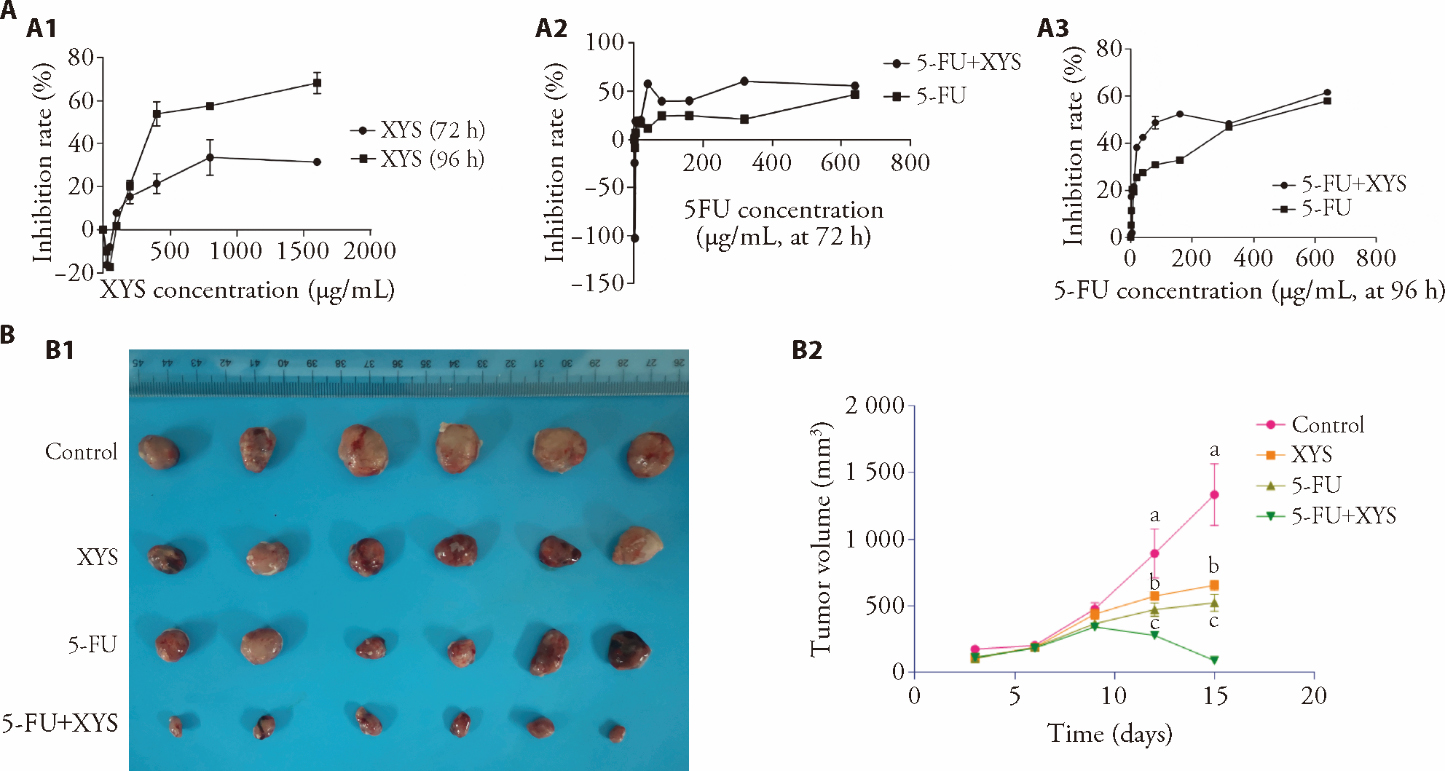
Figure 1 XYS inhibits HCC in vitro and in vivo A: direct cytotoxic impact of XYS on Bel-7402/5-FU cell; A1: effect of XYS (0-1600 μg/mL) on BEL-7402/5-FU cells at 72 or 96 h; A2-A3: effects of XYS (150 μg/mL) on the cytotoxicity induced by 5-FU (0-640 μg/mL) at 72 or 96 h; B: XYS diminished subcutaneous tumor growth capacity; B1: images of isolated tumor tissues derived from tumorigenic nude mice; B2: tumor growth curves. Control group: drink and eat + the same volume of normal saline was given by gavage (n = 6); XYS group: 33.3 g·kg-1·d-1, gavage, once daily, pretreated with for 72 h (n = 6); 5-FU group:15 mg·kg-1·d-1, ip., once daily (n = 6); 5-FU + XYS group: 5-FU 15 mg·kg-1·d-1, ip., once daily + XYS 33.3 g·kg-1·d-1, gavage, once daily, pretreated with for 72 h (n = 6). All interventions were for another 7 d. HCC: hepatocellular carcinoma; XYS: Xiaoyao San; 5-FU: 5-fluorouracil. Statistical analyses were measured using one-way analysis of variance. Data are provided as mean ± standard deviation (n = 3). aP < 0.01, 5-FU + XYS versus control; bP < 0.01, 5-FU + XYS versus XYS alone; cP < 0.01, 5-FU + XYS versus 5-Fu.
Figure 1 XYS inhibits HCC in vitro and in vivo A: direct cytotoxic impact of XYS on Bel-7402/5-FU cell; A1: effect of XYS (0-1600 μg/mL) on BEL-7402/5-FU cells at 72 or 96 h; A2-A3: effects of XYS (150 μg/mL) on the cytotoxicity induced by 5-FU (0-640 μg/mL) at 72 or 96 h; B: XYS diminished subcutaneous tumor growth capacity; B1: images of isolated tumor tissues derived from tumorigenic nude mice; B2: tumor growth curves. Control group: drink and eat + the same volume of normal saline was given by gavage (n = 6); XYS group: 33.3 g·kg-1·d-1, gavage, once daily, pretreated with for 72 h (n = 6); 5-FU group:15 mg·kg-1·d-1, ip., once daily (n = 6); 5-FU + XYS group: 5-FU 15 mg·kg-1·d-1, ip., once daily + XYS 33.3 g·kg-1·d-1, gavage, once daily, pretreated with for 72 h (n = 6). All interventions were for another 7 d. HCC: hepatocellular carcinoma; XYS: Xiaoyao San; 5-FU: 5-fluorouracil. Statistical analyses were measured using one-way analysis of variance. Data are provided as mean ± standard deviation (n = 3). aP < 0.01, 5-FU + XYS versus control; bP < 0.01, 5-FU + XYS versus XYS alone; cP < 0.01, 5-FU + XYS versus 5-Fu.
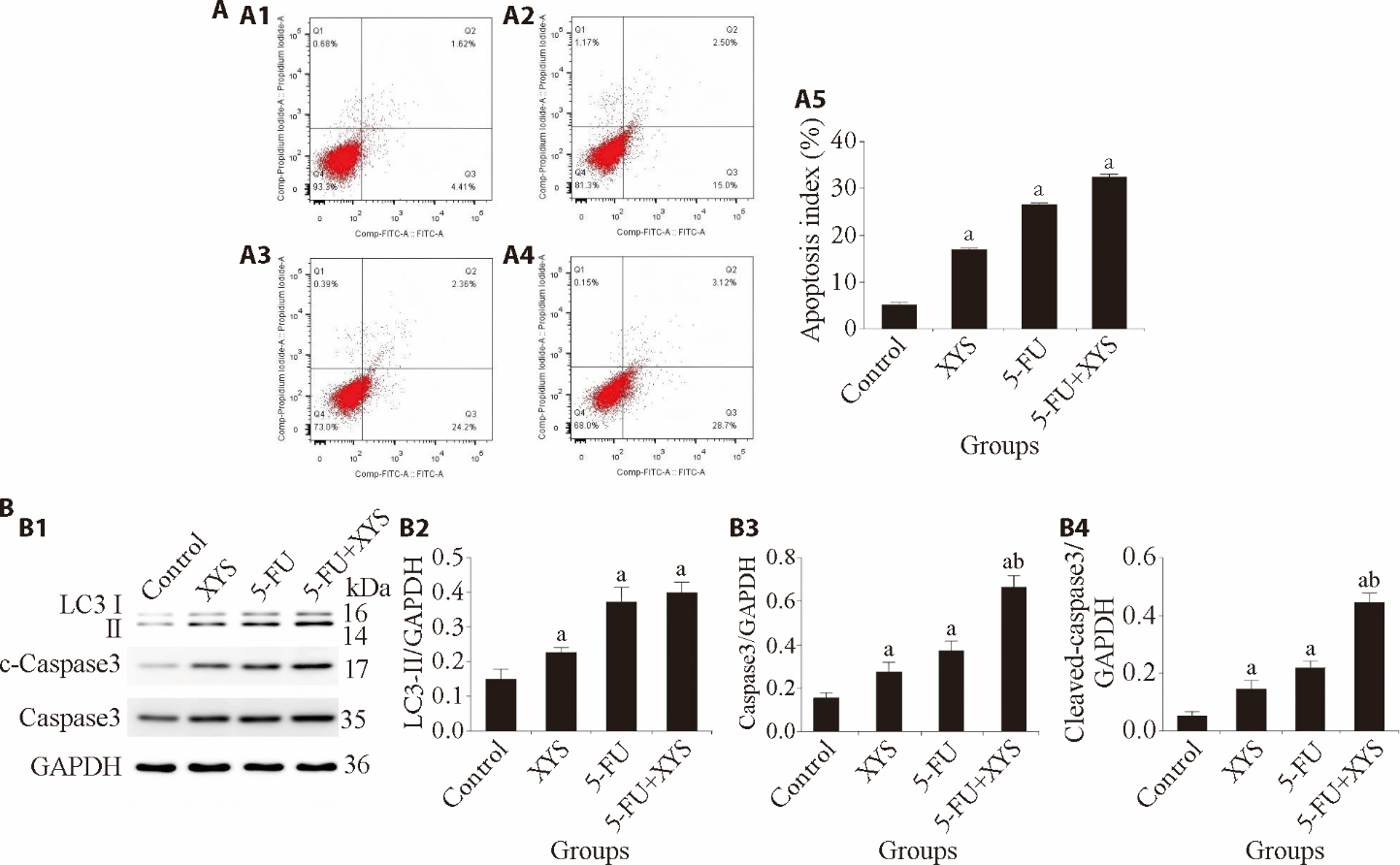
Figure 2 XYS induces HCC apoptosis after 5-FU treatment A: BEL-7402/5-FU cells were treated with 5-FU alone or in combination with XYS, and apoptosis ratios were determined by Annexin-V/PI double staining; A1: control group; A2: XYS group; A3: 5-FU group; A4: XYS + 5-FU group; A5: apoptosis rate of quantitative analysis; B1: immunoblotting analysis of LC3-II, c-Caspase 3, and Caspase 3 in samples from xenograft mice treated with saline solution as a control XYS, 5-FU or the combination of the two; B2: quantification of LC3-II; B3: quantification of c-Caspase 3; B4: quantification of Caspase 3. For A: control group: cells was given by the same volume of normal saline for 72 h; XYS group: cells received XYS at a dose of 150 μg/mL once every day for 72 h; 5-FU: cells received 5-fluorouracil at a dose of 40 μg/mL once every day for 72 h; XYS PLUS 5-FU: cells were first treated with XYS at a dose of 150μg/mL once daily for 72 h, and then were co-treated with 5-fluorouracil at a dose of 150 μg/mL. All interventions were for 72 h; For B: control group: drink and eat + the same volume of normal saline was given by gavage (n = 6); XYS group: 33.3 g·kg-1·d-1, gavage, once daily, pretreated with for 72 h (n = 6); 5-FU group:15 mg·kg-1·d-1, ip., once daily (n = 6); 5-FU + XYS group: 5-FU 15 mg·kg-1·d-1, ip., once daily + XYS 33.3 g·kg-1·d-1, gavage, once daily, pretreated with for 72 h (n = 6). All interventions were for another 7 d. HCC: hepatocellular carcinoma; XYS: Xiaoyao San; 5-FU: 5-fluorouracil; c-Caspase 3: cleaved-caspase 3. Statistical analyses were measured using one-way analysis of variance. Data are provided as mean ± standard deviation (n = 3). Compared with control group, a P < 0.01; compared with 5-Fu group, bP < 0.01.
Figure 2 XYS induces HCC apoptosis after 5-FU treatment A: BEL-7402/5-FU cells were treated with 5-FU alone or in combination with XYS, and apoptosis ratios were determined by Annexin-V/PI double staining; A1: control group; A2: XYS group; A3: 5-FU group; A4: XYS + 5-FU group; A5: apoptosis rate of quantitative analysis; B1: immunoblotting analysis of LC3-II, c-Caspase 3, and Caspase 3 in samples from xenograft mice treated with saline solution as a control XYS, 5-FU or the combination of the two; B2: quantification of LC3-II; B3: quantification of c-Caspase 3; B4: quantification of Caspase 3. For A: control group: cells was given by the same volume of normal saline for 72 h; XYS group: cells received XYS at a dose of 150 μg/mL once every day for 72 h; 5-FU: cells received 5-fluorouracil at a dose of 40 μg/mL once every day for 72 h; XYS PLUS 5-FU: cells were first treated with XYS at a dose of 150μg/mL once daily for 72 h, and then were co-treated with 5-fluorouracil at a dose of 150 μg/mL. All interventions were for 72 h; For B: control group: drink and eat + the same volume of normal saline was given by gavage (n = 6); XYS group: 33.3 g·kg-1·d-1, gavage, once daily, pretreated with for 72 h (n = 6); 5-FU group:15 mg·kg-1·d-1, ip., once daily (n = 6); 5-FU + XYS group: 5-FU 15 mg·kg-1·d-1, ip., once daily + XYS 33.3 g·kg-1·d-1, gavage, once daily, pretreated with for 72 h (n = 6). All interventions were for another 7 d. HCC: hepatocellular carcinoma; XYS: Xiaoyao San; 5-FU: 5-fluorouracil; c-Caspase 3: cleaved-caspase 3. Statistical analyses were measured using one-way analysis of variance. Data are provided as mean ± standard deviation (n = 3). Compared with control group, a P < 0.01; compared with 5-Fu group, bP < 0.01.

Figure 3 XYS inhibits HCC autophagy after 5-FU treatment A1: immunoblotting analysis of autophagy-related genes P62 and LC3-II expression in parental BEL-7402 cell, BEL-7402/5-FU cells; A2: quantification of LC3-II in parental BEL-7402 cell, BEL-7402/5-FU cells. A3: immunoblotting analysis of genes LC3-II expression in BEL-7402/5-FU cells treated with 5-FU alone or in combination with XYS, and quantification of LC3-II immunoblotting analysis were shown. B1: immunoblotting analysis genes ATG-5 and Beclin1 in BEL-7402/5-FU cells treated with 5-FU/5-FU + XYS; B2: quantification of ATG-5; B3: quantification of Beclin1; C1: immunoblotting analysis of P62, LC3-II, and caspase3 in Bel-7402/5-FU cells treated with 5-Fu/5-Fu + XYS or in combination with 3-MA or CQ; C2: quantification of LC3-II; C3: quantification of caspase3. For A: BEL-7402 cell group: BEL-7402 cells was given by the same volume of normal saline; BEL-7402/5-FU cell group: BEL-7402/5-FU was given by the same volume of normal saline; For B: Control group: cells was given by the same volume of normal saline; XYS group: cells received XYS at a dose of 150 μg/mL once every day; 5-FU: cells received 5-fluorouracil at a dose of 40 μg/mL once every day; XYS + 5-FU: cells were first treated with XYS at a dose of 150μg/mL once daily for 72 h, and then were co-treated with 5-fluorouracil at a dose of 150 μg/mL. For C: The first four groups are the same as B; 5-FU + CQ group: cells received 5-fluorouracil at a dose of 40 μg/mL once every day in the presence of CQ (10 μM); 5-FU + 3-MA group: cells received 5-fluorouracil at a dose of 40 μg/mL once every day in the presence of MA(5 mM); 5-FU + 3-MA + XYS group: cells were first treated with XYS at a dose of 150 μg/mL once daily for 72 h, and then were co-treated with 5-fluorouracil at a dose of 150 μg/mL in the presence of MA (5 mM).All interventions were for 72 h; XYS: Xiaoyao San; 5-FU: 5-fluorouracil; CQ: chloroquine; 3-MA: 3-methyladenine. Statistical analyses were measured using one-way analysis of variance. Data are provided as mean ± standard deviation (n = 3). Compared with BEL-7402 cells were designated as aP < 0.01; compared with the 0 μg in the 5-Fu group, bP < 0.01; compared with only 20 μg/mL, cP < 0.01; compared with only 40 μg, dP < 0.01; compared with only 80 μg, eP < 0.01; compared with only 160 μg, fP < 0.01; compared with control group, gP < 0.01, compared with 5-Fu group, hP < 0.01.
Figure 3 XYS inhibits HCC autophagy after 5-FU treatment A1: immunoblotting analysis of autophagy-related genes P62 and LC3-II expression in parental BEL-7402 cell, BEL-7402/5-FU cells; A2: quantification of LC3-II in parental BEL-7402 cell, BEL-7402/5-FU cells. A3: immunoblotting analysis of genes LC3-II expression in BEL-7402/5-FU cells treated with 5-FU alone or in combination with XYS, and quantification of LC3-II immunoblotting analysis were shown. B1: immunoblotting analysis genes ATG-5 and Beclin1 in BEL-7402/5-FU cells treated with 5-FU/5-FU + XYS; B2: quantification of ATG-5; B3: quantification of Beclin1; C1: immunoblotting analysis of P62, LC3-II, and caspase3 in Bel-7402/5-FU cells treated with 5-Fu/5-Fu + XYS or in combination with 3-MA or CQ; C2: quantification of LC3-II; C3: quantification of caspase3. For A: BEL-7402 cell group: BEL-7402 cells was given by the same volume of normal saline; BEL-7402/5-FU cell group: BEL-7402/5-FU was given by the same volume of normal saline; For B: Control group: cells was given by the same volume of normal saline; XYS group: cells received XYS at a dose of 150 μg/mL once every day; 5-FU: cells received 5-fluorouracil at a dose of 40 μg/mL once every day; XYS + 5-FU: cells were first treated with XYS at a dose of 150μg/mL once daily for 72 h, and then were co-treated with 5-fluorouracil at a dose of 150 μg/mL. For C: The first four groups are the same as B; 5-FU + CQ group: cells received 5-fluorouracil at a dose of 40 μg/mL once every day in the presence of CQ (10 μM); 5-FU + 3-MA group: cells received 5-fluorouracil at a dose of 40 μg/mL once every day in the presence of MA(5 mM); 5-FU + 3-MA + XYS group: cells were first treated with XYS at a dose of 150 μg/mL once daily for 72 h, and then were co-treated with 5-fluorouracil at a dose of 150 μg/mL in the presence of MA (5 mM).All interventions were for 72 h; XYS: Xiaoyao San; 5-FU: 5-fluorouracil; CQ: chloroquine; 3-MA: 3-methyladenine. Statistical analyses were measured using one-way analysis of variance. Data are provided as mean ± standard deviation (n = 3). Compared with BEL-7402 cells were designated as aP < 0.01; compared with the 0 μg in the 5-Fu group, bP < 0.01; compared with only 20 μg/mL, cP < 0.01; compared with only 40 μg, dP < 0.01; compared with only 80 μg, eP < 0.01; compared with only 160 μg, fP < 0.01; compared with control group, gP < 0.01, compared with 5-Fu group, hP < 0.01.
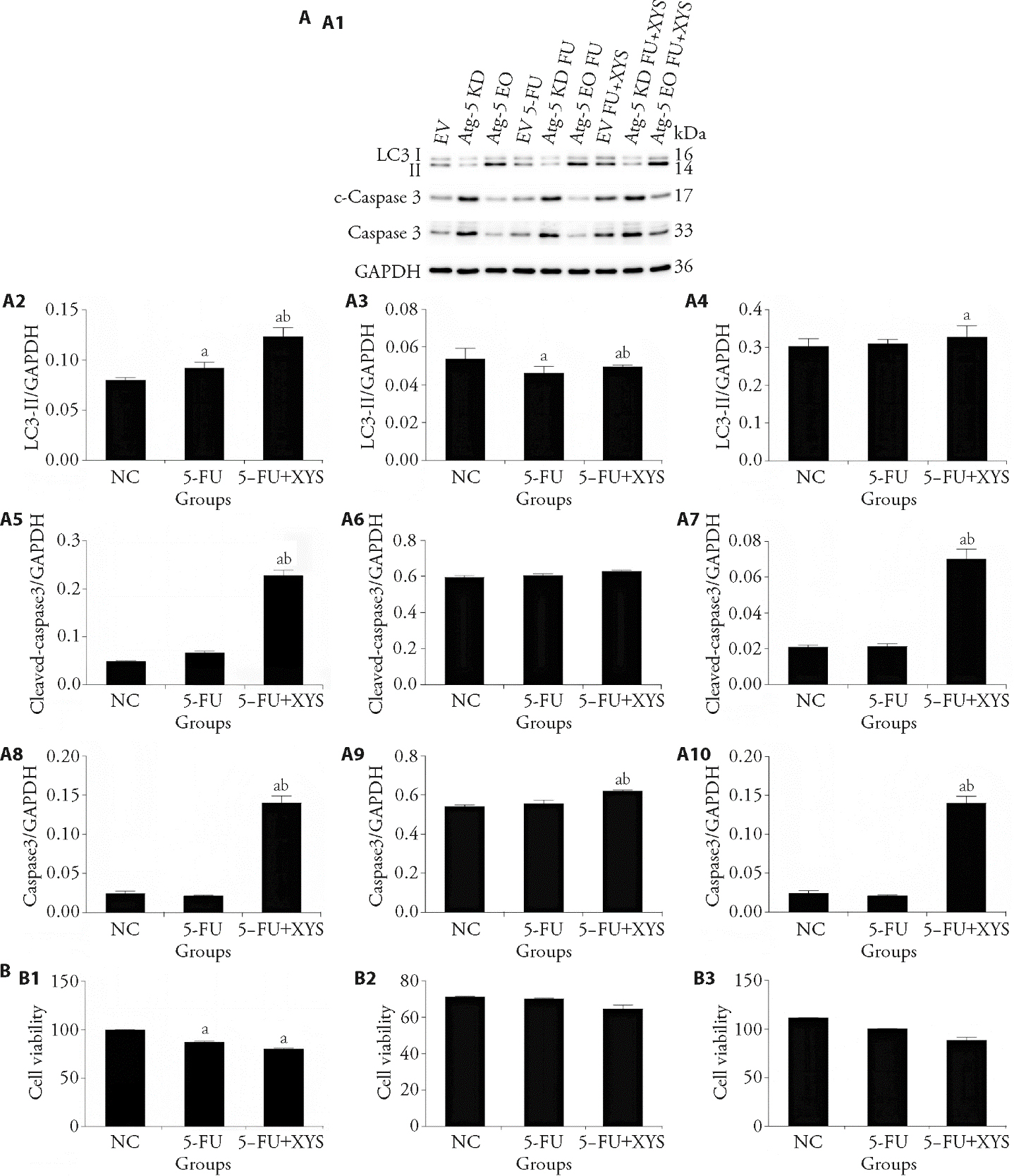
Figure 4 Autophagy blockade induces apoptosis in liver cancer A1: immunoblotting analysis of LC3-II, cleaved caspase 3, and caspase 3; A2-A4: quantification of LC3-II immunoblotting analysis; A5-A7: quantification of cleaved caspase 3 immunoblotting analysis; A8-A10: quantification of caspase 3 immunoblotting analysis; B: cell viabilities were measured by CCK8 assay; A2, A5, A8, B1: EV group; A3, A6, A9, B2: ATG-5KD group; A4, A7, A10, B3: ATG-5 EO group. EV group: Bel-7402/5-FU cells transduced with EV were pretreated with XYS and then treated with/without 5-FU; ATG-5KD group: cells knocked out the autophagy gene-5 by lentivirus-mediated technique were pretreated with XYS and then treated with/without 5-FU; ATG-5 EO group: cells with ATG5 overexpression obtained by transfection were pretreated with XYS and then treated with/without 5-FU. NC groups: cells was given by the same volume of normal saline; 5-FU: cells received 5-fluorouracil at a dose of 40 μg/mL once every day, pretreated with for 72 h; XYS PLUS 5-FU: cells received XYS at a dose of 150 μg/mL once every (pretreated with for 72 h) and 5-fluorouracil at a dose of 40 μg/mL once every day, all interventions were for another 48 h. NC: negative control; XYS: Xiaoyao San; 5-FU: 5-fluorouracil; LC3-II: microtubule-associated protein light chain 3-II; EV: empty vector; ATG-5KD: autophagy-related gene-5-knockout; ATG-5 EO: autophagy-related gene-5-overexpression. Statistical analyses were measured using one-way analysis of variance. Data are provided as mean ± standard deviation (n = 3). Compared with NC group, aP < 0.01; compared with 5-FU group, bP < 0.01.
Figure 4 Autophagy blockade induces apoptosis in liver cancer A1: immunoblotting analysis of LC3-II, cleaved caspase 3, and caspase 3; A2-A4: quantification of LC3-II immunoblotting analysis; A5-A7: quantification of cleaved caspase 3 immunoblotting analysis; A8-A10: quantification of caspase 3 immunoblotting analysis; B: cell viabilities were measured by CCK8 assay; A2, A5, A8, B1: EV group; A3, A6, A9, B2: ATG-5KD group; A4, A7, A10, B3: ATG-5 EO group. EV group: Bel-7402/5-FU cells transduced with EV were pretreated with XYS and then treated with/without 5-FU; ATG-5KD group: cells knocked out the autophagy gene-5 by lentivirus-mediated technique were pretreated with XYS and then treated with/without 5-FU; ATG-5 EO group: cells with ATG5 overexpression obtained by transfection were pretreated with XYS and then treated with/without 5-FU. NC groups: cells was given by the same volume of normal saline; 5-FU: cells received 5-fluorouracil at a dose of 40 μg/mL once every day, pretreated with for 72 h; XYS PLUS 5-FU: cells received XYS at a dose of 150 μg/mL once every (pretreated with for 72 h) and 5-fluorouracil at a dose of 40 μg/mL once every day, all interventions were for another 48 h. NC: negative control; XYS: Xiaoyao San; 5-FU: 5-fluorouracil; LC3-II: microtubule-associated protein light chain 3-II; EV: empty vector; ATG-5KD: autophagy-related gene-5-knockout; ATG-5 EO: autophagy-related gene-5-overexpression. Statistical analyses were measured using one-way analysis of variance. Data are provided as mean ± standard deviation (n = 3). Compared with NC group, aP < 0.01; compared with 5-FU group, bP < 0.01.
| [1] | Sung H, Ferlay J, Siegel RL, et al. Global cancer statistics 2020: GLOBOCAN estimates of incidence and mortality worldwide for 36 cancers in 185 countries. CA Cancer J Clin 2021; 71: 209-49. |
| [2] | Cao W, Chen HD, Yu YW, Li N, Chen WQ. Changing profiles of cancer burden worldwide and in China: a secondary analysis of the global cancer statistics 2020. Chin Med J (Engl) 2021; 134: 783-91. |
| [3] | Hou Z, Liu J, Jin Z, et al. Use of chemotherapy to treat hepatocellular carcinoma. Biosci Trends 2022; 16: 31-45. |
| [4] | Xie D, Shi J, Zhou J, Fan J, Gao Q. Clinical practice guidelines and real-life practice in hepatocellular carcinoma: a Chinese perspective. Clin Mol Hepatol 2023; 29: 206-16. |
| [5] | Dutta A, Chakraborty A, Ghosh T, Kumar A. 5-fluorouracil induces apoptosis in nutritional deprived hepatocellular carcinoma through mitochondrial damage. Sci Rep 2024; 14: 23387. |
| [6] | Mohammed WH, Sulaiman GM, Abomughaid MM, Klionsky DJ, Abu-Alghayth MH. The dual role of autophagy in suppressing and promoting hepatocellular carcinoma. Front Cell Dev Biol 2024; 12: 1472574. |
| [7] | Wang M, Huang C, Su Y, Yang C, Xia Q, Xu DJ. Astragaloside II sensitizes human hepatocellular carcinoma cells to 5-fluorouracil via suppression of autophagy. J Pharm Pharmacol 2017; 69: 743-52. |
| [8] | Tong H, Li T, Qiu W, Zhu Z. Claudin-1 silencing increases sensitivity of liver cancer HepG2 cells to 5-fluorouracil by inhibiting autophagy. Oncol Lett 2019; 18: 5709-16. |
| [9] | Zhang Y, Lou Y, Wang J, Yu C, Shen W. Research status and molecular mechanism of the Traditional Chinese Medicine and antitumor therapy combined strategy based on tumor microenvironment. Front Immunol 2021; 11: 609705. |
| [10] | Tang Q, Xu M, Long S, et al. FZKA reverses gefitinib resistance by regulating EZH2/Snail/EGFR signaling pathway in lung adenocarcinoma. J Ethnopharmacol 2024; 318: 116646. |
| [11] | Ni Q (Chief Editor). Tai Ping Hui Ming He Ji Ju Fang. Beijing: Traditional Chinese Medicine Management of Endocrine and Metabolic Diseases: Clinical Guidelines for the Selection and Application of Chinese Herbal Formulas, 2024: 117. |
| [12] | Liu X, Li N. Regularity analysis on clinical treatment in primary liver cancer by Traditional Chinese Medicine. Zhong Guo Zhong Yao Za Zhi 2012; 37: 1327-31. |
| [13] | Lu Y, Li M, Zhou Q, et al. Dynamic network biomarker analysis and system pharmacology methods to explore the therapeutic effects and targets of Xiaoyaosan against liver cirrhosis. J Ethnopharmacol 2022; 294: 115324. |
| [14] | Chen WF, Xu L, Yu CH, et al. The in vivo therapeutic effect of free Wanderer powder on mice with 4T1 cell induced breast cancer model. J Tradit Complement Med 2012; 2: 67-75. |
| [15] | Zhao L, Zhu X, Ni Y, You J, Li A. Xiaoyaosan, a Traditional Chinese Medicine, inhibits the chronic restraint stress-induced liver metastasis of colon cancer in vivo. Pharm Biol 2020; 58: 1085-91. |
| [16] | Shi Y, Ma J, Chen KE, Chen B. Konjac glucomannan enhances 5-FU-induced cytotoxicity of hepatocellular carcinoma cells via TLR4/PERK/CHOP signaling to induce endoplasmic reticulum stress. Oncol Res 2023; 30: 201-10. |
| [17] | Sun S, Hu H, Li F, et al. Salidroside enhances 5-fluorouracil sensitivity against hepatocellular carcinoma via YIPF5-induced mitophagy. Front Pharmacol 2025; 15: 1503490. |
| [18] | Shao H, Chen J, Li A, et al. Salvigenin suppresses hepatocellular carcinoma glycolysis and chemoresistance through inactivating the PI3K/AKT/GSK-3β pathway. Appl Biochem Biotechnol 2023; 195: 5217-37. |
| [19] | Lin XH, Liu HH, Hsu SJ, et al. Norepinephrine-stimulated HSCs secrete sFRP1 to promote HCC progression following chronic stress via augmentation of a Wnt16B/β-catenin positive feedback loop. J Exp Clin Cancer Res 2020; 39: 64. |
| [20] | Yang J, Wei W, Zhang S, Jiang W. Chronic stress influences the macrophage M1-M2 polarization balance through β-adrenergic signaling in hepatoma mice. Int Immunopharmacol 2024; 138: 112568. |
| [21] | Jing J, Huang HQ, Wang X, Jing J, Chen B. Clinical observation on Xiaoyao powder combined with intervention of hepatocellular carcinoma of liver-depression and spleen-deficiency syndrome. Liaoning Zhong Yi Yao Da Xue Xue Bao 2012; 14: 80-2. |
| [22] | Seydi H, Nouri K, Rezaei N, et al. Autophagy orchestrates resistance in hepatocellular carcinoma cells. Biomed Pharmacother 2023; 161: 114487. |
| [23] | kkoç Y, Gözüaçık D. Autophagy and liver cancer. Turk J Gastroenterol 2018; 29: 270-82. |
| [24] | Chen J, Lei C, Li X, et al. Research progress on classical Traditional Chinese Medicine formula Xiaoyaosan in the treatment of depression. Front Pharmacol 2022; 13: 925514. |
| [25] | Otomo C, Metlagel Z, Takaesu G, Otomo T. Structure of the human ATG12-ATG5 conjugate required for LC3 lipidation in autophagy. Nat Struct Mol Biol 2013; 20: 59-66. |
| [26] | Yuan J, Li Y, Liao J, Liu M, Zhu L, Liao K. MicroRNA-7 inhibits hepatocellular carcinoma cell invasion and metastasis by regulating Atg5-mediated autophagy. Transl Cancer Res 2020; 9: 3965-72. |
| [27] | Wang X, Dong FL, Wang YQ, Wei HL, Li T, Li J. Exosomal circTGFBR2 promotes hepatocellular carcinoma progression via enhancing ATG5 mediated protective autophagy. Cell Death Dis 2023; 14: 451. |
| [28] | Shen P, Deng X, Chen Z, et al. SIRT1: a potential therapeutic target in autoimmune diseases. Front Immunol 2021; 12: 779177. |
| [29] | Yousafzai NA, Jin H, Ullah M, Wang X. Recent advances of SIRT1 and implications in chemotherapeutics resistance in cancer. Am J Cancer Res 2021; 11: 5233-48. |
| [30] | Lee J, Kim J, Lee JH, et al. SIRT1 Promotes host protective immunity against toxoplasma gondii by controlling the FoxO-autophagy axis via the AMPK and PI3K/AKT signalling pathways. Int J Mol Sci 2022; 23: 13578. |
| [31] | Li M, Zhang W, Yang L, et al. The mechanism of Xiaoyao San in the treatment of ovarian cancer by network pharmacology and the effect of stigmasterol on the PI3K/Akt pathway. Dis Markers 2021; 2021: 4304507. |
| [32] | Yao J, Wang J, Xu Y, et al. CDK9 inhibition blocks the initiation of PINK1-PRKN-mediated mitophagy by regulating the SIRT1-FOXO3-BNIP3 axis and enhances the therapeutic effects involving mitochondrial dysfunction in hepatocellular carcinoma. Autophagy 2022; 18: 1879-97. |
| Viewed | ||||||
|
Full text |
|
|||||
|
Abstract |
|
|||||