
Journal of Traditional Chinese Medicine ›› 2025, Vol. 45 ›› Issue (5): 1152-1163.DOI: 10.19852/j.cnki.jtcm.20250319.001
• Original Articles • Previous Articles Next Articles
Study on subtyping and Traditional Chinese Medicine treatment of depression based on machine learning and text mining
FAN Mengyue1, YAO Lin1, ZHANG Guoqing2, WANG Ruixue1, CHEN Kexin1, FAN Yujing1, WANG Ziming1, FU Jia1, CHEN Yongjun1( ), WANG Taiyi1()
- 1 Innovation Research Institute of Chinese Medicine, Shandong University of Traditional Chinese Medicine, Jinan 250355, China
2 Graduate School of Informatics, Kyoto University, Kyoto 6068501, Japan
-
Received:2024-08-03Accepted:2024-12-22Online:2025-10-15Published:2025-03-19 -
Contact:Prof. WANG Taiyi, Innovation Research Institute of Chinese Medicine, Shandong University of Traditional Chinese Medicine, Jinan 250355, China. wangtaiyi@sdutcm.edu.cn;
Prof. CHEN Yongjun, Innovation Research Institute of Chinese Medicine, Shandong University of Traditional Chinese Medicine, Jinan 250355, China. chenyongjun@sdutcm.edu.cn, Telephone: +86-18615605032, +86-15002006186 -
Supported by:National Key Research and Development Plan: Regulatory Pathways and Mechanisms of Conception and Governor Vessels Surface Stimulation in the Treatment of “Uterus and Brain” Disorders(2022YFC3500405);Taishan Scholar Youth Project of Shandong Province(tsqn202306188);National Natural Science Foundation of China: Epigenetic Regulation of Vascular Neural Unit Function by Vascular Endothelial Histone Deacetylase: a New Antidepressant Application and Mechanism of Huangqi Guizhi Wuwu Decoction(82274128);National Natural Science Foundation of China: Study on the Anti-depression Mechanism of Electroacupuncture based on the Regulation of Biological Clock Gene in Prefrontal Cortex(81973948);Joint Fund of Shandong Provincial Natural Science Foundation: High-Throughput Screening and Key Target Validation of Traditional Chinese Medicine Blood-Activating and Stasis-Resolving Components using a Vascular Microenvironment Simulation Chip(ZR2021LZY020);Student Research Training Program of Shandong University of Traditional Chinese Medicine: the Therapeutic Mechanism of Huangqi Guizhi Wuwu Decoction on Chronic Unpredictable Mild Stress Model Mice Based on the Endothelial Nitric Oxide Synthase-Nitric oxide Pathway Research of Vascular Endothelial Eells(202210441008)

Cite this article
FAN Mengyue, YAO Lin, ZHANG Guoqing, WANG Ruixue, CHEN Kexin, FAN Yujing, WANG Ziming, FU Jia, CHEN Yongjun, WANG Taiyi. Study on subtyping and Traditional Chinese Medicine treatment of depression based on machine learning and text mining[J]. Journal of Traditional Chinese Medicine, 2025, 45(5): 1152-1163.
share this article
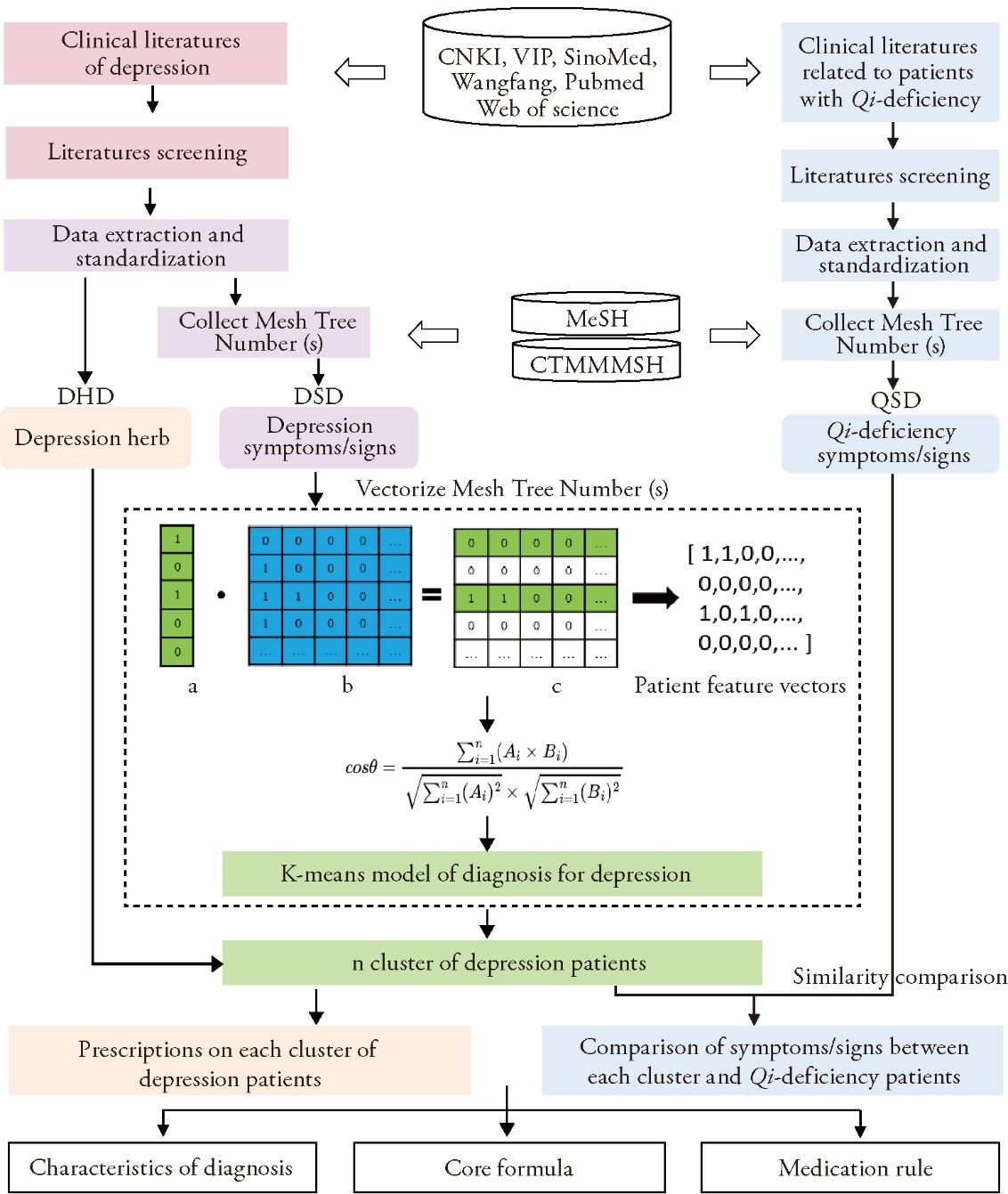
Figure 1 Schematic diagram illustrating the process for establishing a diagnostic and treatment model for depression Modules were shown in different colors. The pink color represents module 1. The purple color represents module 2. The green color represents module 3. The yellow color represents module 4. The blue color represents module 5. CNKI: China National Knowledge Infrastructure Database; VIP: China Science and Technology Journal Database; MeSH: Medical Subject Headings; CTMMMSH: Chinese traditional medicine and materia medica subject headings; DSD: depression-symptoms/signs dataset; DHD: depression-herb dataset; QSD: Qi-deficiency-symptoms/signs dataset. a: phenotype vector of each depression patient. b: symptoms/signs hierarchical relationship matrix. c: hierarchical information of depression patients. For detailed information on the construction process of the matrices, please refer to the data and methods section.
Figure 1 Schematic diagram illustrating the process for establishing a diagnostic and treatment model for depression Modules were shown in different colors. The pink color represents module 1. The purple color represents module 2. The green color represents module 3. The yellow color represents module 4. The blue color represents module 5. CNKI: China National Knowledge Infrastructure Database; VIP: China Science and Technology Journal Database; MeSH: Medical Subject Headings; CTMMMSH: Chinese traditional medicine and materia medica subject headings; DSD: depression-symptoms/signs dataset; DHD: depression-herb dataset; QSD: Qi-deficiency-symptoms/signs dataset. a: phenotype vector of each depression patient. b: symptoms/signs hierarchical relationship matrix. c: hierarchical information of depression patients. For detailed information on the construction process of the matrices, please refer to the data and methods section.
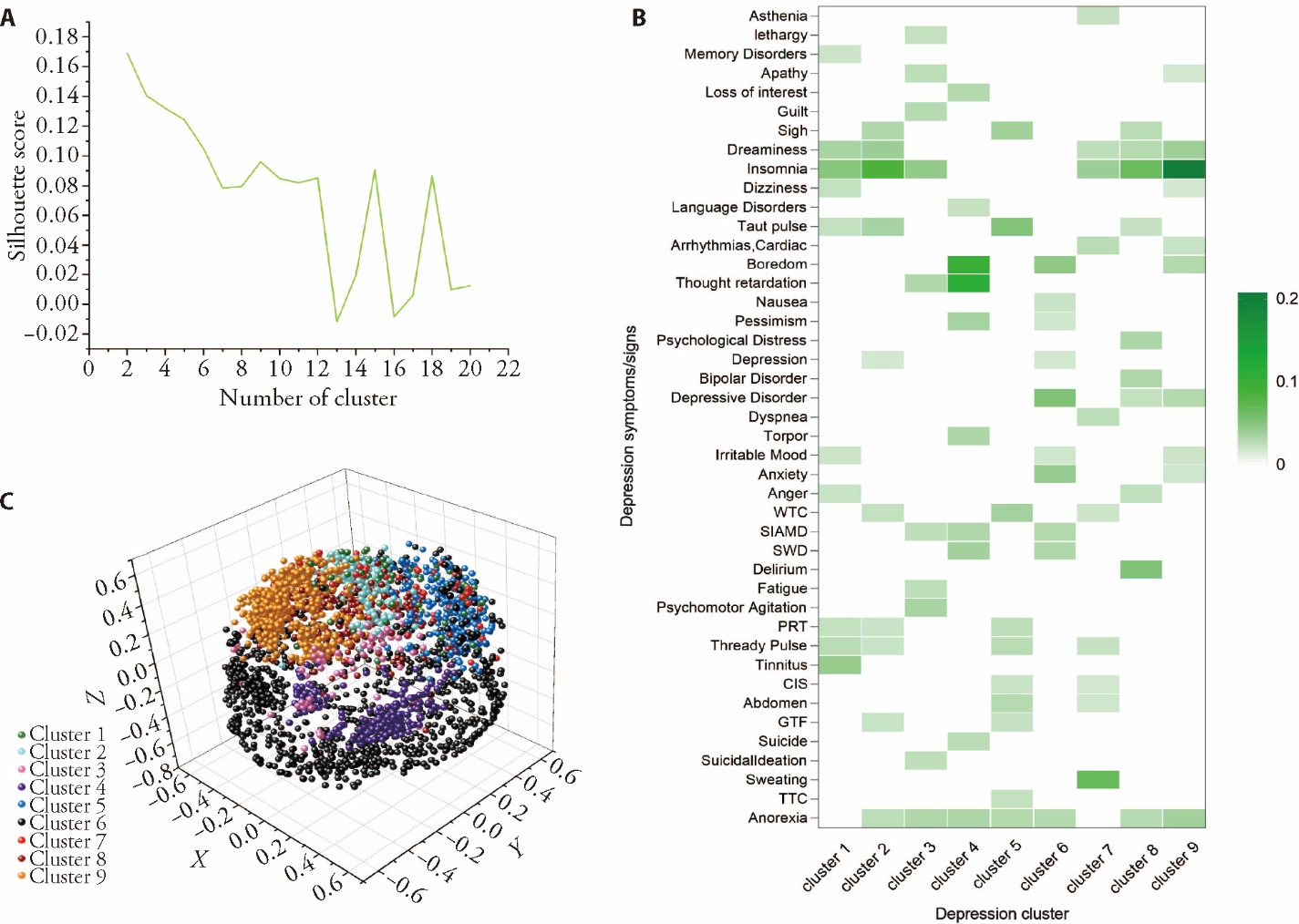
Figure 2 Unsupervised clustering of depression patients A: Silhouette Score analysis for K-Means clustering on sample data; B: top 10 symptoms/signs of 9 subtypes of depression patients; C: spatial distribution map of unsupervised clustering for depression samples. WTC: white tongue coating; SIAMD: sleep initiation and maintenance disorders; SWD: sleep wake disorders; PRT: purple-red tongue; CLS: chest lumpy stiffness; GTC: greasy tongue coating; TTC: thin tongue coating. The color intensity represents the contribution of various symptoms/signs.
Figure 2 Unsupervised clustering of depression patients A: Silhouette Score analysis for K-Means clustering on sample data; B: top 10 symptoms/signs of 9 subtypes of depression patients; C: spatial distribution map of unsupervised clustering for depression samples. WTC: white tongue coating; SIAMD: sleep initiation and maintenance disorders; SWD: sleep wake disorders; PRT: purple-red tongue; CLS: chest lumpy stiffness; GTC: greasy tongue coating; TTC: thin tongue coating. The color intensity represents the contribution of various symptoms/signs.

Figure 3 Medication rules of 9 subtypes of depression patients A1-A9: Cluster 1 (A1), Cluster 2 (A2), Cluster 3 (A3), Cluster 4 (A4), Cluster 5 (A5), Cluster 6 (A6), Cluster 7 (A7), Cluster 8 (A8), Cluster 9 (A9)-formula/herb networks of depression constructed with the top 20 herbs and core formulas. The size of the circle/rectangle represents the contribution of the herbs/formulas, with smaller sizes indicating smaller contributions. The square shape represents the core formula. DSP: Danggui Shaoyao powder; LDP: Liuwei Dihuang pill; SP: Sini powder; LJZD: Liu-Jun-Zi decoction. Latin name for herbs: Chaihu: Radix Bupleuri Chinensis; Gancao: Radix Glycyrrhizae; Baishao: Radix Paeoniae Alba; Chuanxiong: Rhizoma Chuanxiong; Yujin: Radix Curcumae Wenyujin; Danggui: Radix Angelicae Sinensis; Fuling: Poria; Banxia: Rhizoma Pinelliae; Xiangfu: Rhizoma Cyperi; Shichangpu: Rhizoma Acori Tatarinowii; Chenpi: Pericarpium Citri Reticulatae; Baizhu: Rhizoma Atractylodis Macrocephalae; Yuanzhi: Radix Palygalae; Zhiqiao: Fructus Aurantii Submaturus; Danshen: Radix Salviae Miltiorrhizae; Suanzaoren: Semen Ziziphi Spinosae; Dazao: Fructus Jujubae; Zhishi: Fructus Aurantii Immaturus; Huangqin: Radix Astragali Mongolici; Baihe: Bulbus Lilii Lancifolii; Huangqi: Radix Astragali Mongolici; Huanglian: Radix Astragali Mongolici; Dangshen: Radix Salviae Miltiorrhizae; Hehuanpi: Cortex Albiziae; Zhizi: Fructus Gardeniae; Zhuru: Caulis Bambusae in Taeniam; Shanyao: Rhizoma Dioscoreae Oppositae; Fuxiaomai: Fructus Tritici Levis; Shengjiang: Rhizoma Zingiberis Recens; Mudanpi: Cortex Moutan Radicis; Shudihuang: Radix Rehmanniae Praeparata; Muxiang: Radix Aucklandiae; Houpo: Cortex Magnoliae Officinalis; Guizhi: Ramulus Cinnamomi; Longgu: Os Draconis; Shanzhuyu: Fructus Corni; Sharen: Fructus Amomi; Zexie: Rhizoma Alismatis; Jineijin: Endothelium Coreneum Gigeriae Galli; Ezhu: Rhizoma Curcumae Phaeocaulis; Wuzhuyu: Fructus Evodiae Rutaecarpae. B: efficacy attribution of the top 1 herb used in 9 subtypes of depression patients.
Figure 3 Medication rules of 9 subtypes of depression patients A1-A9: Cluster 1 (A1), Cluster 2 (A2), Cluster 3 (A3), Cluster 4 (A4), Cluster 5 (A5), Cluster 6 (A6), Cluster 7 (A7), Cluster 8 (A8), Cluster 9 (A9)-formula/herb networks of depression constructed with the top 20 herbs and core formulas. The size of the circle/rectangle represents the contribution of the herbs/formulas, with smaller sizes indicating smaller contributions. The square shape represents the core formula. DSP: Danggui Shaoyao powder; LDP: Liuwei Dihuang pill; SP: Sini powder; LJZD: Liu-Jun-Zi decoction. Latin name for herbs: Chaihu: Radix Bupleuri Chinensis; Gancao: Radix Glycyrrhizae; Baishao: Radix Paeoniae Alba; Chuanxiong: Rhizoma Chuanxiong; Yujin: Radix Curcumae Wenyujin; Danggui: Radix Angelicae Sinensis; Fuling: Poria; Banxia: Rhizoma Pinelliae; Xiangfu: Rhizoma Cyperi; Shichangpu: Rhizoma Acori Tatarinowii; Chenpi: Pericarpium Citri Reticulatae; Baizhu: Rhizoma Atractylodis Macrocephalae; Yuanzhi: Radix Palygalae; Zhiqiao: Fructus Aurantii Submaturus; Danshen: Radix Salviae Miltiorrhizae; Suanzaoren: Semen Ziziphi Spinosae; Dazao: Fructus Jujubae; Zhishi: Fructus Aurantii Immaturus; Huangqin: Radix Astragali Mongolici; Baihe: Bulbus Lilii Lancifolii; Huangqi: Radix Astragali Mongolici; Huanglian: Radix Astragali Mongolici; Dangshen: Radix Salviae Miltiorrhizae; Hehuanpi: Cortex Albiziae; Zhizi: Fructus Gardeniae; Zhuru: Caulis Bambusae in Taeniam; Shanyao: Rhizoma Dioscoreae Oppositae; Fuxiaomai: Fructus Tritici Levis; Shengjiang: Rhizoma Zingiberis Recens; Mudanpi: Cortex Moutan Radicis; Shudihuang: Radix Rehmanniae Praeparata; Muxiang: Radix Aucklandiae; Houpo: Cortex Magnoliae Officinalis; Guizhi: Ramulus Cinnamomi; Longgu: Os Draconis; Shanzhuyu: Fructus Corni; Sharen: Fructus Amomi; Zexie: Rhizoma Alismatis; Jineijin: Endothelium Coreneum Gigeriae Galli; Ezhu: Rhizoma Curcumae Phaeocaulis; Wuzhuyu: Fructus Evodiae Rutaecarpae. B: efficacy attribution of the top 1 herb used in 9 subtypes of depression patients.
Table 1 Efficacy attribution of the top 1 herb used in 9 subtypes of depression patients
| Cluster | Classification of herb | Herb proportion (%) |
|---|---|---|
| Cluster 1 | Blood-activating and stasis-resolving medicine | 9.09 |
| Cluster 2 | Blood-activating and stasis-resolving medicine | 10.33 |
| Cluster 3 | Qi-regulating Medicine | 10.53 |
| Cluster 4 | Qi-regulating Medicine | 9.47 |
| Cluster 5 | Qi-regulating Medicine | 8.96 |
| Cluster 6 | Blood-activating and stasis-resolving medicine | 8.12 |
| Cluster 7 | Qi-tonifying Medicine | 10.17 |
| Cluster 8 | Qi-regulating Medicine | 8.92 |
| Cluster 9 | Qi-regulating Medicine | 7.98 |
Table 1 Efficacy attribution of the top 1 herb used in 9 subtypes of depression patients
| Cluster | Classification of herb | Herb proportion (%) |
|---|---|---|
| Cluster 1 | Blood-activating and stasis-resolving medicine | 9.09 |
| Cluster 2 | Blood-activating and stasis-resolving medicine | 10.33 |
| Cluster 3 | Qi-regulating Medicine | 10.53 |
| Cluster 4 | Qi-regulating Medicine | 9.47 |
| Cluster 5 | Qi-regulating Medicine | 8.96 |
| Cluster 6 | Blood-activating and stasis-resolving medicine | 8.12 |
| Cluster 7 | Qi-tonifying Medicine | 10.17 |
| Cluster 8 | Qi-regulating Medicine | 8.92 |
| Cluster 9 | Qi-regulating Medicine | 7.98 |

Figure 4 Symptoms/signs of 9 subtypes of depression patients compared with Qi-deficiency patients A: comparison of the first 30 symptoms/signs between Qi-deficiency patients and each subtype of depression patients; B: VSD values between symptoms/signs of Qi-deficiency and 9 subtypes of depression patients. WTC: White tongue coating; CLS: chest lumpy stiffness; TTC: thin tongue coating; GTC: greasy tongue coating; VSD: value square deviation. The color intensity represents the contribution of symptoms/signs.
Figure 4 Symptoms/signs of 9 subtypes of depression patients compared with Qi-deficiency patients A: comparison of the first 30 symptoms/signs between Qi-deficiency patients and each subtype of depression patients; B: VSD values between symptoms/signs of Qi-deficiency and 9 subtypes of depression patients. WTC: White tongue coating; CLS: chest lumpy stiffness; TTC: thin tongue coating; GTC: greasy tongue coating; VSD: value square deviation. The color intensity represents the contribution of symptoms/signs.
| 1. |
Herrman H, Patel V, Kieling C, et al. Time for united action on depression: a Lancet-World Psychiatric Association Commission. Lancet 2022; 399: 957-1022.
DOI PMID |
| 2. |
Dong M, Zeng LN, Lu L, et al. Prevalence of suicide attempt in individuals with major depressive disorder: a Meta-analysis of observational surveys. Psychol Med 2019; 49: 1691-704.
DOI PMID |
| 3. | Lee Y, Brietzke E, Cao B et al. Development and implementation of guidelines for the management of depression: a systematic review. Bull World Health Organ 2020; 98: 683-97H. |
| 4. |
Tóth B, Hegyi P, Lantos T, et al. The Efficacy of saffron in the treatment of mild to moderate depression: a Meta-analysis. Planta Med 2019; 85: 24-31.
DOI PMID |
| 5. | Ramanuj P, Ferenchick EK, Pincus HA. Depression in primary care: part 2 — management. BMJ 2019; 365: l835. |
| 6. |
Cipriani A, Furukawa TA, Salanti G et al. Comparative efficacy and acceptability of 21 antidepressant drugs for the acute treatment of adults with major depressive disorder: a systematic review and network Meta-analysis. Lancet 2018; 391: 1357-66.
DOI PMID |
| 7. | Lewis G, Marston L, Duffy L, et al. Maintenance or discontinuation of antidepressants in primary care. N Engl J Med 2021; 385: 1257-67. |
| 8. | Leichsenring F, Steinert C, Rabung S, Ioannidis JPA. The efficacy of psychotherapies and pharmacotherapies for mental disorders in adults: an umbrella review and Meta-analytic evaluation of recent Meta-analyses. World Psychiatry 2022; 21: 133-45. |
| 9. |
Zhang X, Kang D, Zhang L, Peng L. Shuganjieyu capsule for major depressive disorder (MDD) in adults: a systematic review. Aging Ment Health 2014; 18: 941-53.
DOI PMID |
| 10. | Wang L, Fan Y, He J, et al. Efficacy and safety of Shuganjieyu Capsule alone or in combination with other antidepressants in the treatment of postpartum depression: a Meta-analysis. Evid-Based Complement Altern Med 2022; 2022: 5260235. |
| 11. | Wang XL, Feng ST, Wang YT, Zhang NN, Wang ZZ, Zhang Y. Canonical Chinese medicine formula Danzhi-Xiaoyao-San for treating depression: a systematic review and Meta-analysis. J Ethnopharmacol 2022; 287: 114960. |
| 12. |
Man C, Li C, Gong D, Xu J, Fan Y. Meta-analysis of Chinese herbal Xiaoyao formula as an adjuvant treatment in relieving depression in Chinese patients. Complement Ther Med 2014; 22: 362-70.
DOI PMID |
| 13. | Jin X, Jiang M, Gong D, Chen Y, Fan Y. Efficacy and Safety of Xiaoyao formula as an adjuvant treatment for post-stroke depression: a Meta-analysis. Explore 2018; 14: 224-9. |
| 14. |
Ho D, Quake SR, McCabe ERB, et al. Enabling technologies for personalized and precision medicine. Trends Biotechnol 2020; 38: 497-518.
DOI PMID |
| 15. |
Li L, Wang Z, Wang J, Zheng Y, Li Y, Wang Q. Enlightenment about using TCM constitutions for individualized medicine and construction of Chinese-style precision medicine: research progress with TCM constitutions. Sci China Life Sci 2021; 64: 2092-9.
DOI PMID |
| 16. | Zhou X, Li Y, Peng Y, et al. Clinical phenotype network: the underlying mechanism for personalized diagnosis and treatment of Traditional Chinese Medicine. Front Med 2014; 8: 337-46. |
| 17. |
Nero C, Vizzielli G, Lorusso D, et al. Patient-derived organoids and high grade serous ovarian cancer: from disease modeling to personalized medicine. J Exp Clin Cancer Res 2021; 40: 116.
DOI PMID |
| 18. |
Pamarthy S, Sabaawy HE. Patient derived organoids in prostate cancer: improving therapeutic efficacy in precision medicine. Mol Cancer 2021; 20: 125.
DOI PMID |
| 19. |
Beitler JR, Goligher EC, Schmidt M, et al. Personalized medicine for ARDS: the 2035 research agenda. Intensive Care Med 2016; 42: 756-67.
DOI PMID |
| 20. | Wang J, Duan L, Li H, Liu J, Chen H. Construction of an artificial intelligence Traditional Chinese Medicine diagnosis and treatment model based on syndrome elements and small-sample data. Engineering 2022; 8: 29-32. |
| 21. |
Pan LG, Qi CH, Shen XB, Huang YX, Yang XR, Sun XJ. Traditional Chinese Medicine syndrome analysis on oxaliplatin-induced peripheral neuropathy and clinical efficacy of Bushen Yiqi formula (补肾益气方): a prospective randomized controlled study. J Tradit Chin Med 2023; 43: 1234-42.
DOI |
| 22. | Wang Y, Shi X, Li L, Efferth T, Shang D. The impact of artificial intelligence on Traditional Chinese Medicine. Am J Chin Med 2021; 49: 1297-314. |
| 23. |
Li XY, Yang YH, Sun J, et al. Effectiveness and safety of Jiawei Xiaoyao pill (加味逍遥丸) in the treatment of premenstrual syndrome (liver depression, spleen deficiency, and blood-heat syndrome): a multi-center, randomized, placebo-controlled trial. J Tradit Chin Med 2024; 44: 373-80.
DOI |
| 24. | Liu LY, Xu XP, Luo LY, et al. Brain connectomic associations with Traditional Chinese Medicine diagnostic classification of major depressive disorder: a diffusion tensor imaging study. Chin Med 2019; 14: 15. |
| 25. | Zhao A, Qiu W, Mao L, et al. The efficacy and safety of Jiedu Tongluo granules for treating post-stroke depression with Qi deficiency and blood stasis syndrome: study protocol for a randomized controlled trial. Trials 2018; 19: 275. |
| 26. | Chen Z, Cao Y, He S, Qiao Y. Development of models for classification of action between heat-clearing herbs and blood-activating stasis-resolving herbs based on theory of Traditional Chinese Medicine. Chin Med 2018; 13: 12. |
| 27. | Kanawong R, Obafemi-Ajayi T, Ma T, Xu D, Li S, Duan Y. Automated tongue feature extraction for ZHENG classification in Traditional Chinese Medicine. Evid Based Complement Alternat Med 2012; 2012: 1-14. |
| 28. | Tang Y, Li Z, Yang D, et al. Research of insomnia on Traditional Chinese Medicine diagnosis and treatment based on machine learning. Chin Med 2021; 16: 2. |
| 29. | Chen H, He Y. Machine learning approaches in Traditional Chinese Medicine: a systematic review. Am J Chin Med 2022; 50: 91-131. |
| 30. | Wu X, Jiang R, Zhang MQ, Li S. Network-based global inference of human disease genes. Mol Syst Biol 2008; 4: 1-11. |
| 31. | Gan X, Shu Z, Wang X, et al. Network medicine framework reveals generic herb-symptom effectiveness of Traditional Chinese Medicine. Sci Adv 2023; 9: 1-15. |
| 32. | Niu Q, Li H, Tong L, et al. TCMFP: a novel herbal formula prediction method based on network target’s score integrated with semi-supervised learning genetic algorithms. Brief Bioinform 2023; 24: bbad102. |
| 33. | Shang H, Zhang L, Xiao T, et al. Study on the differences of gut microbiota composition between phlegm-dampness syndrome and Qi-Yin deficiency syndrome in patients with metabolic syndrome. Front Endocrinol 2022; 13: 1063579. |
| 34. |
Yu G. Using meshes for MeSH term enrichment and semantic analyses. Bioinformatics 2018; 34: 3766-7.
DOI PMID |
| 35. | Guo ZH, You ZH, Huang DS, et al. MeSHHeading2vec: a new method for representing MeSH headings as vectors based on graph embedding algorithm. Brief Bioinform 2021; 22: 2085-95. |
| 36. | Kim S, Yeganova L, Wilbur WJ. Meshable : searching PubMed abstracts by utilizing MeSH and MeSH-derived topical terms. Bioinformatics 2016; 32: 3044-6. |
| 37. | Arji G, Safdari R, Rezaeizadeh H, Abbassian A, Mokhtaran M, Hossein Ayati M. A systematic literature review and classification of knowledge discovery in traditional medicine. Comput Methods Programs Biomed 2019; 168: 39-57. |
| 38. |
Deng YS, Han SY, Xi H, et al. Traditional Chinese Medicine in the treatment of recurrent respiratory tract infections in children: an overview of systematic reviews and Meta-analyses. J Tradit Chin Med 2024, 44: 871-84.
DOI |
| 39. | Song J, Liu X, Deng Q, et al. A network-based approach to investigate the pattern of syndrome in depression. Evid Based Complement Alternat Med 2015; 2015: 1-11. |
| 40. | Dou Z, Xia Y, Zhang J, et al. Syndrome differentiation and treatment regularity in Traditional Chinese Medicine for type 2 diabetes: a text mining analysis. Front Endocrinol 2021; 12: 728032. |
| 41. | Hu Q, Yu T, Li J, Yu Q, Zhu L, Gu Y. End-to-End syndrome differentiation of Yin deficiency and Yang deficiency in Traditional Chinese Medicine. Comput Methods Programs Biomed 2019; 174: 9-15. |
| 42. | Yang H, Lee HJ. Research trend visualization by MeSH terms from PubMed. Int J Environ Res Public Health 2018; 15: 1113. |
| 43. |
Karim MR, Beyan O, Zappa A, et al. Deep learning-based clustering approaches for bioinformatics. Brief Bioinform 2021; 22: 393-415.
DOI PMID |
| 44. | Zhang Y, Kiryu H. MODEC: an unsupervised clustering method integrating omics data for identifying cancer subtypes. Brief Bioinform 2022; 23: bbac372. |
| 45. | Tang JL, Liu BY, Ma KW. Traditional Chinese Medicine. The Lancet 2008; 372: 1938-40. |
| 46. |
Lyu M, Fan G, Xiao G, et al. Traditional Chinese medicine in COVID-19. Acta Pharm Sin B 2021; 11: 3337-63.
DOI PMID |
| 47. | Zhuang W, Liu SL, Xi SY, et al. Traditional Chinese Medicine decoctions and Chinese patent medicines for the treatment of depression: efficacies and mechanisms. J Ethnopharmacol 2023; 307: 116272. |
| 48. | Dai J, Fang J, Sun S, et al. ZHENG-omics application in ZHENG classification and treatment: Chinese personalized medicine. Evid-Based Complement Altern Med ECAM 2013; 2013: 235969. |
| 49. | Lu C, Zha Q, Chang A, He Y, Lu A. Pattern differentiation in Traditional Chinese Medicine can help define specific indications for biomedical therapy in the treatment of rheumatoid arthritis. J Altern Complement Med N Y N 2009; 15: 1021-5. |
| 50. |
He Y, Lu A, Zha Y, Tsang I. Differential effect on symptoms treated with Traditional Chinese Medicine and western combination therapy in RA patients. Complement Ther Med 2008; 16: 206-11.
DOI PMID |
| 51. | Wu G, Zhao J, Zhao J, et al. Exploring biological basis of syndrome differentiation in coronary heart disease patients with two distinct syndromes by integrated multi-omics and network pharmacology strategy. Chin Med 2021; 16: 109. |
| 52. |
Deussing JM, Arzt E. P2X7 receptor: a potential therapeutic target for depression? Trends Mol Med 2018; 24: 736-47.
DOI PMID |
| 53. |
Cruz-Pereira JS, Rea K, Nolan YM, O’Leary OF, Dinan TG, Cryan JF. Depression’s unholy trinity: dysregulated stress, immunity, and the microbiome. Annu Rev Psychol 2020; 71: 49-78.
DOI PMID |
| 54. | Borbély É, Simon M, Fuchs E, Wiborg O, Czéh B, Helyes Z. Novel drug developmental strategies for treatment-resistant depression. Br J Pharmacol 2022; 179: 1146-86. |
| 55. | Peciña M, Karp JF, Mathew S, Todtenkopf MS, Ehrich EW, Zubieta JK. Endogenous opioid system dysregulation in depression: implications for new therapeutic approaches. Mol Psychiatry 2019; 24: 576-87. |
| 56. | Nguyen TD, Harder A, Xiong Y, et al. Genetic heterogeneity and subtypes of major depression. Mol Psychiatry 2022; 27: 1667-75. |
| 57. | Olivier M, Asmis R, Hawkins GA, Howard TD, Cox LA. The need for multi-omics biomarker signatures in precision medicine. Int J Mol Sci 2019; 20: 4781. |
| 58. | Howes OD, Thase ME, Pillinger T. Treatment resistance in psychiatry: state of the art and new directions. Mol Psychiatry 2022; 27: 58-72. |
| 59. | Zhang S, Zhao L, Wang H, et al. Efficacy of modified Liujunzi decoction on functional dyspepsia of spleen-deficiency and Qi-stagnation syndrome: a randomized controlled trial. BMC Complement Altern Med 2013; 13: 54. |
| 60. | Ha Y, Huang P, Yan Y, et al. A systematic review and Meta-analysis on a disease in TCM: astragalus injection for gathering Qi depression. Evid-Based Complement Altern Med ECAM 2020; 2020: 2803478. |
| 61. | Wang YS, Shen CY, Jiang JG. Antidepressant active ingredients from herbs and nutraceuticals used in TCM: pharmacological mechanisms and prospects for drug discovery. Pharmacol Res 2019; 150: 104520. |
| 62. | Fu J, Wang Z, Huang L, et al. Review of the botanical characteristics, phytochemistry, and pharmacology of Astragalus membranaceus (Huangqi): botany, phytochemistry, pharmacology of A. Membranaceus. Phytother Res 2014; 28: 1275-283. |
| 63. |
Wang Y, Zhang L, Pan Y, et al. Investigation of invigorating Qi and activating blood circulation prescriptions in treating Qi deficiency and blood stasis syndrome of ischemic stroke patients: study protocol for a randomized controlled trial. Front Pharmacol 2020; 11: 892.
DOI PMID |
| 64. | Yao W, Yang H, Ding G. Mechanisms of Qi-blood circulation and Qi deficiency syndrome in view of blood and interstitial fluid circulation. J Tradit Chin Med 2013; 33: 538-44. |
| 65. | Han JY, Li Q, Ma ZZ, Fan JY. Effects and mechanisms of compound Chinese medicine and major ingredients on microcirculatory dysfunction and organ injury induced by ischemia/reperfusion. Pharmacol Ther 2017; 177: 146-73. |
| 66. |
Zhang H, Wan Z, Yan X, et al. Protective effect of Shenfu injection preconditioning on lung ischemia-reperfusion injury. Exp Ther Med 2016; 12: 1663-70.
PMID |
| 67. | Yu L, Li Q, Yu B, et al. Berberine attenuates myocardial ischemia/reperfusion injury by reducing oxidative stress and inflammation response: role of silent information regulator 1. Oxid Med Cell Longev 2016; 2016: 1-16. |
| 68. | Ma C, Zhang J, Yang S, et al. Astragalus flavone ameliorates atherosclerosis and hepatic steatosis via inhibiting lipid-disorder and inflammation in apoE-/- mice. Front Pharmacol 2020; 11: 610550. |
| 69. | Lin S, Huang L, Luo ZC, et al. The ATP level in the medial prefrontal cortex regulates depressive-like behavior via the medial prefrontal cortex-lateral habenula pathway. Biol Psychiatry 2022; 92: 179-92. |
| 70. |
Cao X, Li LP, Wang Q, et al. Astrocyte-derived ATP modulates depressive-like behaviors. Nat Med 2013; 19: 773-77.
DOI PMID |
| 71. | Wang XL, Feng ST, Wang YT, Chen NH, Wang ZZ, Zhang Y. Paeoniflorin: a neuroprotective monoterpenoid glycoside with promising anti-depressive properties. Phytomedicine 2021; 90: 153669. |
| 72. | Luan F, Ji Y, Peng L, et al. Extraction, purification, structural characteristics and biological properties of the polysaccharides from Codonopsis pilosula: a review. Carbohydr Polym 2021; 261: 117863. |
| 73. | Zuo C, Cao H, Song Y, et al. Nrf2: an all-rounder in depression. Redox Biol 2022; 58: 102522. |
| 74. |
Park MK, Ji J, Haam K, et al. Licochalcone A inhibits hypoxia-inducible factor-1α accumulation by suppressing mitochondrial respiration in hypoxic cancer cells. Biomed Pharmacother 2021; 133: 111082.
DOI PMID |
| 75. |
Zhao Z, Wang W, Guo H, Zhou D. Antidepressant-like effect of liquiritin from Glycyrrhiza uralensis in chronic variable stress induced depression model rats. Behav Brain Res 2008; 194: 108-13.
DOI PMID |
| [1] | SONG Tianli, LI Haixia, LIU Li'an. Clinical observation of white eye distribution in patients with hyperlipidemia: an artificial intelligence digital visual examination technique [J]. Journal of Traditional Chinese Medicine, 2025, 45(5): 1135-1143. |
| [2] | LI Weijia, LU Jing, MA Chao, LIU Mengmeng, PEI Ke, CHEN Hongyan, LIN Zhe, LYU Guangfu. Hamayou (Oviductus Ranae) protein hydrolysate ameliorates depression by regulating the mitogen-activated protein kinase pathway [J]. Journal of Traditional Chinese Medicine, 2025, 45(3): 493-507. |
| [3] | ZHANG Yang, LYU Wang, XU Xin, LI Jie, HU Shengli, WANG Ying. Clinical effect of Shugan Jieyu San (疏肝解郁散) for improving liver function and alleviating depression in patients with triple negative breast cancer [J]. Journal of Traditional Chinese Medicine, 2025, 45(3): 633-638. |
| [4] | LI Yajing, WANG Baoying, SHAO Wenxue, LU Shuaifei, SU Pan, BAI Ming, XU Erping, LI Yucheng. Quantitative proteomic analysis of the brain reveals the potential antidepressant mechanism of Jiawei Danzhi Xiaoyao San (加味丹栀逍遥散) in a chronic unpredictable mild stress mouse model of depression [J]. Journal of Traditional Chinese Medicine, 2025, 45(1): 22-31. |
| [5] | Faiq Amin, Saara Ahmad, Muhammad Wasim, Asra Khan, Fazal Manzoor Arain, Zehra Batool, Saiqa Tabassum, Saima Khaliq, Noreen Samad, Saida Haider. Antidepressive and anxiolytic effects of a combination of Saffron and Chamomile in rats and their relationship with serotonin using in vivo methods [J]. Journal of Traditional Chinese Medicine, 2025, 45(1): 49-56. |
| [6] | CHE Qianzi, LIU Dasheng, XIANG Xinghua, TIAN Yaxin, XIE Feibiao, XU Wenyuan, LIU Jian, WANG Xuejie, WANG Liying, BAI Weiguo, HAN Xuejie, YANG Wei. Integrating machine learning and human use experience to identify personalized pharmacotherapy in Traditional Chinese Medicine: a case study on resistant hypertension [J]. Journal of Traditional Chinese Medicine, 2025, 45(1): 192-200. |
| [7] | LIU Tongtong, ZHANG Xi, YANG Hui, LIN Xiaoyuan, LIU Jian, ZHANG Xiuli, GUO Dongwei, ZHAO Hongqing, ZOU Manshu, LEI Chang, LONG Hongping, LUO Yan, XIANG Yun, GE Jinwen, WANG Yuhong, MENG Pan. Luteolin promotes neuronogenesis in hippocampus of chronic unpredictable mild stress rats and primary hippocampus of fetal rats [J]. Journal of Traditional Chinese Medicine, 2024, 44(4): 670-679. |
| [8] | WANG Yaqi, ZHAO Weibo, WANG Yixing, ZHAO Haihong, ZHOU Yaoyao, YAN Yun, WU Taotao, LUO Bin, WANG Ji. Traditional Chinese Medicine constitution among patients with allergic rhinitis and its correlation with anxiety and depression [J]. Journal of Traditional Chinese Medicine, 2023, 43(6): 1252-1258. |
| [9] | MA Fangfang, ZHANG Hewei, LI Bingxue, CHENG Peiyu, YU Mingwei, WANG Xiaomin. Acupuncture and moxibustion for malignant tumor patients with psychological symptoms of insomnia, anxiety and depression: a systematic review and Meta-analysis [J]. Journal of Traditional Chinese Medicine, 2023, 43(3): 441-456. |
| [10] | WANG Bochuan, ZHANG Yong, ZHANG Qiuyun, ZHANG Zhiqiang, LUO Changyong, WANG Zhendong, BAI Chen, WANG Yuhan, GE Xueyi, QIAN Ying, YU He, GU Xiaohong. Reveal the mechanisms of prescriptions for liver cancer' treatment based on two illustrious senior TCM physicians [J]. Journal of Traditional Chinese Medicine, 2023, 43(1): 188-197. |
| [11] | ZOU Xinshuang, SHI Lei, YIN Hailong, LI Haiping, WANG Mengheng, SONG Wanci, LUO Laichun, WU Hezhen, YANG Yanfang, ZAN Junfeng, LIU Yanwen, DAN Hanxiong, YIN Qiang, YOU Pengtao. Compound Gaoziban tablet (复方高滋斑片) alleviates depression via toll-like receptor 4/myeloid differentiation factor 88/nuclear factor-kappa B pathway [J]. Journal of Traditional Chinese Medicine, 2022, 42(6): 956-964. |
| [12] | CHEN Limei, SUN Jifei, GUO Chunlei, LI Xiaojiao, WANG Zhi, Hong Yang, FANG Jiliang. Preliminary single-arm study of brain effects during transcutaneous auricular vagus nerve stimulation treatment of recurrent depression by resting-state functional magnetic resonance imaging [J]. Journal of Traditional Chinese Medicine, 2022, 42(5): 818-824. |
| [13] | LI Ganggang, LU Ye, HE Pei, ZHANG Shiyue, CHENG Yating, ZHANG Shaodan, PEI Lin. Target prediction and activity verification for the antidepressant action of Huangqin(Radix Scutellariae Baicalensis) [J]. Journal of Traditional Chinese Medicine, 2021, 41(6): 845-852. |
| [14] | WANG Xue, XIONG Jun, YANG Jun, YUAN Ting, JIANG Yunfeng, ZHOU Xiaohong, LIAO Kai, XU Lingling. Meta-analysis of the clinical effectiveness of combined acupuncture and Western Medicine to treat post-stroke depression [J]. Journal of Traditional Chinese Medicine, 2021, 41(1): 6-16. |
| [15] | You Yanli, Zhang Tianfang, Shu Shi, Qian Xiaolu, Zhou Shuang, Yao Fei. Wrist-ankle acupuncture and Fluoxetine in the treatment of post-stroke depression: a randomized controlled clinical trial [J]. Journal of Traditional Chinese Medicine, 2020, 40(3): 455-460. |
| Viewed | ||||||
|
Full text |
|
|||||
|
Abstract |
|
|||||
