
Journal of Traditional Chinese Medicine ›› 2025, Vol. 45 ›› Issue (1): 22-31.DOI: 10.19852/j.cnki.jtcm.2025.01.003
Previous Articles Next Articles
Quantitative proteomic analysis of the brain reveals the potential antidepressant mechanism of Jiawei Danzhi Xiaoyao San (加味丹栀逍遥散) in a chronic unpredictable mild stress mouse model of depression
LI Yajing1,2, WANG Baoying1,2, SHAO Wenxue3,4, LU Shuaifei3,5, SU Pan1,2, BAI Ming1,2, XU Erping3,4( ), LI Yucheng1,2()
- 1 Collaborative Innovation Center of Research and Development on the Whole Industry Chain of Yu-Yao, Henan Province, Zhengzhou 450046, China
2 Academy of Chinese Medicine Sciences, Henan University of Chinese Medicine, Zhengzhou 450046, China
3 Henan Collaborative Innovation Center for Research and Development on the Whole Industry Chain of Yu-Yao, Zhengzhou 450046, China
4 School of Chinese Medicine, Henan University of Chinese Medicine, Zhengzhou 450046, China
5 School of Pharmacy, Henan University of Chinese Medicine, Zhengzhou 450046, China
-
Received:2023-12-22Accepted:2024-04-15Online:2025-02-15Published:2025-01-10 -
Contact:XU Erping, Henan Collaborative Innovation Center for Research and Development on the Whole Industry Chain of Yu-Yao, Zhengzhou 450046, China; School of Chinese Medicine, Henan University of Chinese Medicine, Zhengzhou 450046, China.xuerping0371@163.com ; LI Yucheng, Henan Collaborative Innovation Center for Research and Development on the Whole Industry Chain of Yu-Yao, Zhengzhou 450046, China; Academy of Chinese Medicine Sciences, Henan University of Chinese Medicine, Zhengzhou 450046, China.liyucheng@hactcm. edu.cn, Telephone: +86-13633836165; +86-13938231459 -
Supported by:the National Natural Science Foundation of China: Study on the Biological Basis of Jiawei Danzhi Xiaoyaosan in Treatment of Depression based on Network Pharmacology and Proteomics(81973739);Natural Science Excellent Youth Fund of Henan Province: the Mechanism of Baicalin Regulates the GSK3B-Mediated Axoplasmic Transport in the Treatment of Depression(202300410249);Science and Technology Research Project of Henan Province: Study on the Antidepressant Mechanism of Jiawei Danzhi Xiaoyaosan based on the NOD-like Receptor Thermal Protein Domain-associated Protein and Tripartite Motif-containing Protein 31 Ubiquitination Pathway(222102310233);Study on the Mechanism of Jiawei Danzhi Xiaoyaosan in the Treatment of Depression by Regulating M1/M2 Polarization and Microglia Autophagy(232102310419)

Cite this article
LI Yajing, WANG Baoying, SHAO Wenxue, LU Shuaifei, SU Pan, BAI Ming, XU Erping, LI Yucheng. Quantitative proteomic analysis of the brain reveals the potential antidepressant mechanism of Jiawei Danzhi Xiaoyao San (加味丹栀逍遥散) in a chronic unpredictable mild stress mouse model of depression[J]. Journal of Traditional Chinese Medicine, 2025, 45(1): 22-31.
share this article

Figure 1 The quality control of aqueous decoction of JD A: BPC diagram of mixed standards (positive ions); B: BPC diagram of mixed standards (negative ions); C: BPC diagram of Chinese medicine decoction about JD (positive ions); D: BPC diagram of Chinese medicine decoction about JD (negative ions).1: N-acetylglucosamine; 2: paeoniflorin; 3: quercetin; 4: naringin; 5: kaempferol; 6: formononetin; 7: licoricchalcone-A. The black numbers in the figure correspond to the substances detected in the mixed standards, while the red numbers represent the substances detected in the JD decoction. JD: Jiawei Danzhi Xiaoyaosan; BPC: business process chart.
Figure 1 The quality control of aqueous decoction of JD A: BPC diagram of mixed standards (positive ions); B: BPC diagram of mixed standards (negative ions); C: BPC diagram of Chinese medicine decoction about JD (positive ions); D: BPC diagram of Chinese medicine decoction about JD (negative ions).1: N-acetylglucosamine; 2: paeoniflorin; 3: quercetin; 4: naringin; 5: kaempferol; 6: formononetin; 7: licoricchalcone-A. The black numbers in the figure correspond to the substances detected in the mixed standards, while the red numbers represent the substances detected in the JD decoction. JD: Jiawei Danzhi Xiaoyaosan; BPC: business process chart.
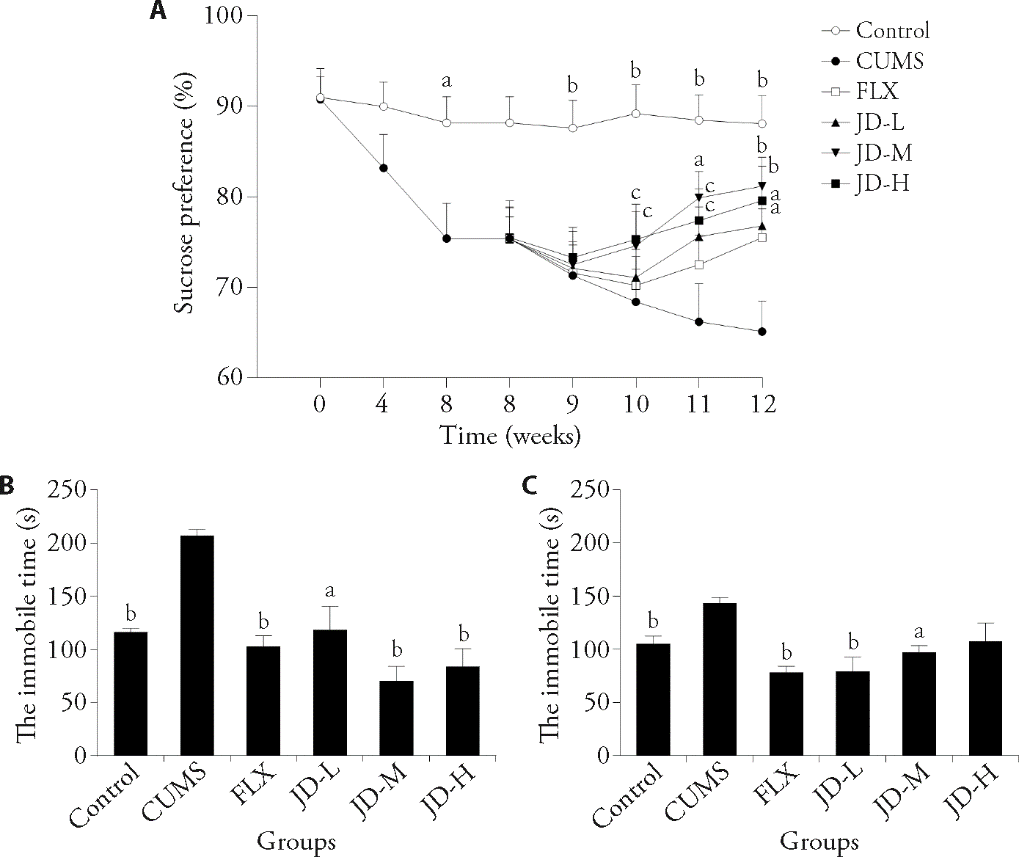
Figure 2 Effects of JD on the depression-like behaviors in CUMS mice A: sucrose preference test; B: forced swimming test; C: tail suspension test. Control: normal healthy mice were given an equal volume of normal saline by gavage once daily from weeks 9 to 12; CUMS: mice subjected to chronic unpredictable mild stress for 12 weeks to induce a depression model were administered an equal volume of normal saline once daily from weeks 9 to 12; FLX: depression model mice treated with fluoxetine at dose of 20 mg/kg once daily from weeks 9 to 12; JD-L: depression model mice treated with Jiawei Danzhi Xiaoyaosan at dose of 17.6 mg/kg once daily from weeks 9 to 12; JD-M: depression model mice treated with Jiawei Danzhi Xiaoyaosan at dose of 35.2 mg/kg once daily from weeks 9 to 12; JD-H: depression model mice treated with Jiawei Danzhi Xiaoyaosan at dose of 52.8 mg/kg once daily from weeks 9 to 12. CUMS: chronic unpredictable mild stress; FLX: fluoxetine; JD-L: Jiawei Danzhi Xiaoyaosan low dose; JD-M: Jiawei Danzhi Xiaoyaosan medium dose; JD-H: Jiawei Danzhi Xiaoyaosan high dose; LSD: least significant difference. The data were expressed as the mean ± standard error of the mean (n = 8 for each group) and analyzed by one-way analysis of variance followed by Fisher’s LSD post hoc test. Compared to the CUMS group, aP < 0.01, bP < 0.001, and cP < 0.05.
Figure 2 Effects of JD on the depression-like behaviors in CUMS mice A: sucrose preference test; B: forced swimming test; C: tail suspension test. Control: normal healthy mice were given an equal volume of normal saline by gavage once daily from weeks 9 to 12; CUMS: mice subjected to chronic unpredictable mild stress for 12 weeks to induce a depression model were administered an equal volume of normal saline once daily from weeks 9 to 12; FLX: depression model mice treated with fluoxetine at dose of 20 mg/kg once daily from weeks 9 to 12; JD-L: depression model mice treated with Jiawei Danzhi Xiaoyaosan at dose of 17.6 mg/kg once daily from weeks 9 to 12; JD-M: depression model mice treated with Jiawei Danzhi Xiaoyaosan at dose of 35.2 mg/kg once daily from weeks 9 to 12; JD-H: depression model mice treated with Jiawei Danzhi Xiaoyaosan at dose of 52.8 mg/kg once daily from weeks 9 to 12. CUMS: chronic unpredictable mild stress; FLX: fluoxetine; JD-L: Jiawei Danzhi Xiaoyaosan low dose; JD-M: Jiawei Danzhi Xiaoyaosan medium dose; JD-H: Jiawei Danzhi Xiaoyaosan high dose; LSD: least significant difference. The data were expressed as the mean ± standard error of the mean (n = 8 for each group) and analyzed by one-way analysis of variance followed by Fisher’s LSD post hoc test. Compared to the CUMS group, aP < 0.01, bP < 0.001, and cP < 0.05.
Table 1 The detailed information of 59 differentially expressed proteins
| No. | ID | Protein name | FC | P value |
|---|---|---|---|---|
| 1 | P19246 | Neurofilament heavy polypeptide | 1.6 | 0.010 |
| 2 | P60202 | Myelin proteolipid protein | 1.5 | 0.032 |
| 3 | Q9WVT6 | Carbonic anhydrase 14 | 1.5 | 0.033 |
| 4 | P04370 | Myelin basic protein | 1.5 | 0.029 |
| 5 | Q921C1 | Gap junction gamma-3 protein | 1.4 | 0.004 |
| 6 | Q6PHZ8 | Kv channel-interacting protein 4 | 1.4 | 0.021 |
| 7 | P08553 | Neurofilament medium polypeptide | 1.4 | 0.040 |
| 8 | P20917 | Myelin-associated glycoprotein | 1.4 | 0.044 |
| 9 | Q8BGN3 | Glycerophosphocholine cholinephosphodiesterase ENPP6 | 1.4 | 0.030 |
| 10 | P08551 | Neurofilament light polypeptide | 1.4 | 0.020 |
| 11 | Q9JL62 | Glycolipid transfer protein | 1.4 | 0.039 |
| 12 | Q8K298 | Anillin | 1.4 | 0.027 |
| 13 | P61953 | Guanine nucleotide-binding protein G(I)/G(S)/G(O) subunit gamma-11 | 1.3 | 0.031 |
| 14 | P28661 | Septin-4 | 1.3 | 0.020 |
| 15 | Q8K406 | Leucine-rich repeat LGI family member 3 | 1.3 | 0.014 |
| 16 | P46660 | Alpha-internexin | 1.3 | 0.023 |
| 17 | P51910 | Apolipoprotein D | 1.3 | 0.035 |
| 18 | Q3UH99 | Protein shisa-6 | 1.3 | 0.036 |
| 19 | Q0VGY8 | Protein TANC1 | 1.3 | 0.003 |
| 20 | Q5NCI0 | Up-regulator of cell proliferation | 1.3 | 0.034 |
| 21 | P55012 | Solute carrier family 12 member 2 | 1.3 | 0.008 |
| 22 | Q9QYB1 | Chloride intracellular channel protein 4 | 1.3 | 0.047 |
| 23 | Q8BM92 | Cadherin-7 | 1.3 | 0.040 |
| 24 | P26350 | Prothymosin alpha | 1.2 | 0.033 |
| 25 | Q9ESM3 | Hyaluronan and proteoglycan link protein 2 | 1.2 | 0.005 |
| 26 | Q6P8J2 | Diamine acetyltransferase 2 | 1.2 | 0.022 |
| 27 | Q9D154 | Leukocyte elastase inhibitor A | 1.2 | 0.029 |
| 28 | Q62442 | Vesicle-associated membrane protein 1 | 1.2 | 0.013 |
| 29 | Q8BWC0 | Two pore calcium channel protein 2 | 1.2 | 0.038 |
| 30 | Q91YE5 | Bromodomain adjacent to zinc finger domain protein 2A | 1.2 | 0.022 |
| 31 | O54991 | Contactin-associated protein 1 | 1.2 | 0.019 |
| 32 | P00920 | Carbonic anhydrase 2 | 1.2 | 0.050 |
| 33 | Q3V0K9 | Plastin-1 | 1.2 | 0.035 |
| 34 | P20357 | Microtubule-associated protein 2 | 0.8 | 0.014 |
| 35 | Q8CG79 | Apoptosis-stimulating of p53 protein | 0.8 | 0.020 |
| 36 | P70392 | Ras-specific guanine nucleotide-releasing factor 2 | 0.8 | 0.032 |
| 37 | Q6PGF2 | MORN repeat-containing protein 4 | 0.8 | 0.040 |
| 38 | Q61810 | Latent-transforming growth factor beta-binding protein 3 | 0.8 | 0.008 |
| 39 | Q5ND34 | WD repeat-containing protein 81 | 0.8 | 0.047 |
| 40 | O35710 | Nocturnin | 0.8 | 0.032 |
| 41 | Q80Z24 | Neuronal growth regulator 1 | 0.8 | 0.006 |
| 42 | P16390 | Potassium voltage-gated channel subfamily A member 3 | 0.8 | 0.036 |
| 43 | Q922S4 | cGMP-dependent 3',5'-cyclic phosphodiesterase | 0.8 | 0.042 |
| 44 | P49813 | Tropomodulin-1 | 0.8 | 0.020 |
| 45 | Q3UH93 | Plexin-D1 | 0.8 | 0.024 |
| 46 | Q8CHT1 | Ephexin-1 | 0.8 | 0.036 |
| 47 | Q99J85 | Neuronal pentraxin receptor | 0.8 | 0.017 |
| 48 | Q8K3Z0 | Nucleotide-binding oligomerization domain-containing protein 2 | 0.8 | 0.008 |
| 49 | Q6NS52 | Diacylglycerol kinase beta | 0.8 | 0.028 |
| 50 | Q9JJ69 | Kv channel-interacting protein 2 | 0.8 | 0.043 |
| 51 | Q9R111 | Guanine deaminase | 0.8 | 0.031 |
| 52 | Q9QZB1 | Regulator of G-protein signaling 20 | 0.8 | 0.009 |
| 53 | Q7TPR4 | Alpha-actinin-1 | 0.8 | 0.029 |
| 54 | P60764 | Ras-related C3 botulinum toxin substrate 3 | 0.8 | 0.044 |
| 55 | P97441 | Zinc transporter 3 | 0.7 | 0.027 |
| 56 | Q8BGZ1 | Hippocalcin-like protein 4 | 0.7 | 0.025 |
| 57 | Q8K012 | Formin-binding protein 1-like | 0.7 | 0.026 |
| 58 | Q8JZW4 | Copine-5 | 0.7 | 0.022 |
| 59 | D3YVF0 | A-kinase anchor protein 5 | 0.7 | 0.040 |
Table 1 The detailed information of 59 differentially expressed proteins
| No. | ID | Protein name | FC | P value |
|---|---|---|---|---|
| 1 | P19246 | Neurofilament heavy polypeptide | 1.6 | 0.010 |
| 2 | P60202 | Myelin proteolipid protein | 1.5 | 0.032 |
| 3 | Q9WVT6 | Carbonic anhydrase 14 | 1.5 | 0.033 |
| 4 | P04370 | Myelin basic protein | 1.5 | 0.029 |
| 5 | Q921C1 | Gap junction gamma-3 protein | 1.4 | 0.004 |
| 6 | Q6PHZ8 | Kv channel-interacting protein 4 | 1.4 | 0.021 |
| 7 | P08553 | Neurofilament medium polypeptide | 1.4 | 0.040 |
| 8 | P20917 | Myelin-associated glycoprotein | 1.4 | 0.044 |
| 9 | Q8BGN3 | Glycerophosphocholine cholinephosphodiesterase ENPP6 | 1.4 | 0.030 |
| 10 | P08551 | Neurofilament light polypeptide | 1.4 | 0.020 |
| 11 | Q9JL62 | Glycolipid transfer protein | 1.4 | 0.039 |
| 12 | Q8K298 | Anillin | 1.4 | 0.027 |
| 13 | P61953 | Guanine nucleotide-binding protein G(I)/G(S)/G(O) subunit gamma-11 | 1.3 | 0.031 |
| 14 | P28661 | Septin-4 | 1.3 | 0.020 |
| 15 | Q8K406 | Leucine-rich repeat LGI family member 3 | 1.3 | 0.014 |
| 16 | P46660 | Alpha-internexin | 1.3 | 0.023 |
| 17 | P51910 | Apolipoprotein D | 1.3 | 0.035 |
| 18 | Q3UH99 | Protein shisa-6 | 1.3 | 0.036 |
| 19 | Q0VGY8 | Protein TANC1 | 1.3 | 0.003 |
| 20 | Q5NCI0 | Up-regulator of cell proliferation | 1.3 | 0.034 |
| 21 | P55012 | Solute carrier family 12 member 2 | 1.3 | 0.008 |
| 22 | Q9QYB1 | Chloride intracellular channel protein 4 | 1.3 | 0.047 |
| 23 | Q8BM92 | Cadherin-7 | 1.3 | 0.040 |
| 24 | P26350 | Prothymosin alpha | 1.2 | 0.033 |
| 25 | Q9ESM3 | Hyaluronan and proteoglycan link protein 2 | 1.2 | 0.005 |
| 26 | Q6P8J2 | Diamine acetyltransferase 2 | 1.2 | 0.022 |
| 27 | Q9D154 | Leukocyte elastase inhibitor A | 1.2 | 0.029 |
| 28 | Q62442 | Vesicle-associated membrane protein 1 | 1.2 | 0.013 |
| 29 | Q8BWC0 | Two pore calcium channel protein 2 | 1.2 | 0.038 |
| 30 | Q91YE5 | Bromodomain adjacent to zinc finger domain protein 2A | 1.2 | 0.022 |
| 31 | O54991 | Contactin-associated protein 1 | 1.2 | 0.019 |
| 32 | P00920 | Carbonic anhydrase 2 | 1.2 | 0.050 |
| 33 | Q3V0K9 | Plastin-1 | 1.2 | 0.035 |
| 34 | P20357 | Microtubule-associated protein 2 | 0.8 | 0.014 |
| 35 | Q8CG79 | Apoptosis-stimulating of p53 protein | 0.8 | 0.020 |
| 36 | P70392 | Ras-specific guanine nucleotide-releasing factor 2 | 0.8 | 0.032 |
| 37 | Q6PGF2 | MORN repeat-containing protein 4 | 0.8 | 0.040 |
| 38 | Q61810 | Latent-transforming growth factor beta-binding protein 3 | 0.8 | 0.008 |
| 39 | Q5ND34 | WD repeat-containing protein 81 | 0.8 | 0.047 |
| 40 | O35710 | Nocturnin | 0.8 | 0.032 |
| 41 | Q80Z24 | Neuronal growth regulator 1 | 0.8 | 0.006 |
| 42 | P16390 | Potassium voltage-gated channel subfamily A member 3 | 0.8 | 0.036 |
| 43 | Q922S4 | cGMP-dependent 3',5'-cyclic phosphodiesterase | 0.8 | 0.042 |
| 44 | P49813 | Tropomodulin-1 | 0.8 | 0.020 |
| 45 | Q3UH93 | Plexin-D1 | 0.8 | 0.024 |
| 46 | Q8CHT1 | Ephexin-1 | 0.8 | 0.036 |
| 47 | Q99J85 | Neuronal pentraxin receptor | 0.8 | 0.017 |
| 48 | Q8K3Z0 | Nucleotide-binding oligomerization domain-containing protein 2 | 0.8 | 0.008 |
| 49 | Q6NS52 | Diacylglycerol kinase beta | 0.8 | 0.028 |
| 50 | Q9JJ69 | Kv channel-interacting protein 2 | 0.8 | 0.043 |
| 51 | Q9R111 | Guanine deaminase | 0.8 | 0.031 |
| 52 | Q9QZB1 | Regulator of G-protein signaling 20 | 0.8 | 0.009 |
| 53 | Q7TPR4 | Alpha-actinin-1 | 0.8 | 0.029 |
| 54 | P60764 | Ras-related C3 botulinum toxin substrate 3 | 0.8 | 0.044 |
| 55 | P97441 | Zinc transporter 3 | 0.7 | 0.027 |
| 56 | Q8BGZ1 | Hippocalcin-like protein 4 | 0.7 | 0.025 |
| 57 | Q8K012 | Formin-binding protein 1-like | 0.7 | 0.026 |
| 58 | Q8JZW4 | Copine-5 | 0.7 | 0.022 |
| 59 | D3YVF0 | A-kinase anchor protein 5 | 0.7 | 0.040 |
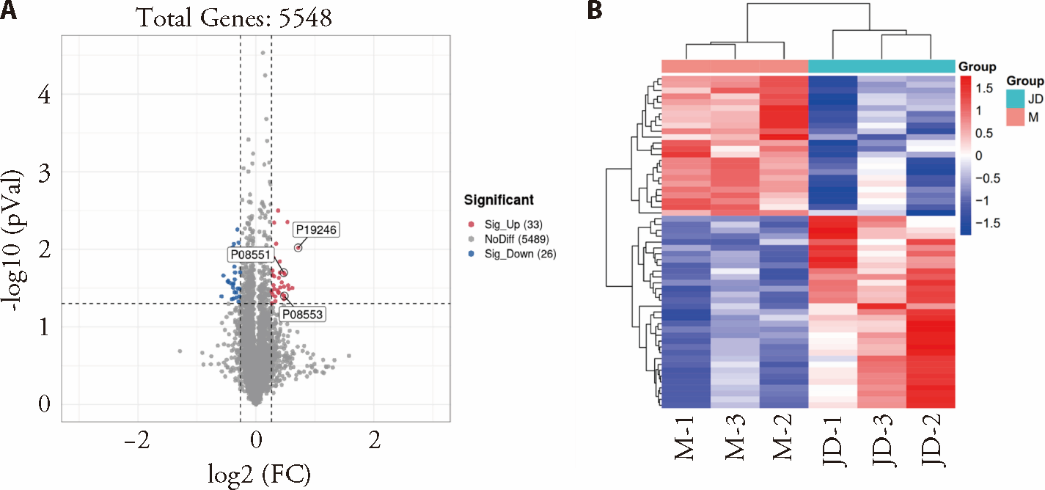
Figure 3 Proteomic analysis of mouse brains from the CUMS and JD groups A: volcano plots for the distribution of DEPs; B: heatmap of 59 DEPs between the CUMS and JD groups. M: model group, mice subjected to CUMS for 12 weeks to induce a depression model were administered an equal volume of saline once daily from weeks 9 to 12; JD: JD group, depression model mice treated with Jiawei Danzhi Xiaoyaosan at dose of 35.2 mg/kg once daily from weeks 9 to 12. Blue dots represent down-regulation of expression, red dots represent up-regulation and gray dots represent no significant change compared to the model group. P19246, P08553, and P08551 represented NEFH, NEFM, and NEFL, respectively. Blue squares represent down-regulation of expression and red squares represent up-regulation when compared to the model group. CUMS: chronic unpredictable mild stress; JD: Jiawei Danzhi Xiaoyaosan; DEPs: differentially expressed proteins; NEFH: neurofilament heavy polypeptide; NEFM: neurofilament medium polypeptide; NEFL: neurofilament light polypeptide. P-values were calculated between the JD and M groups followed by independent samples t-test. Changes ratios > 1.2 or < 0.83 and P-values < 0.05 were considered to be DEPs. n = 3 for each group.
Figure 3 Proteomic analysis of mouse brains from the CUMS and JD groups A: volcano plots for the distribution of DEPs; B: heatmap of 59 DEPs between the CUMS and JD groups. M: model group, mice subjected to CUMS for 12 weeks to induce a depression model were administered an equal volume of saline once daily from weeks 9 to 12; JD: JD group, depression model mice treated with Jiawei Danzhi Xiaoyaosan at dose of 35.2 mg/kg once daily from weeks 9 to 12. Blue dots represent down-regulation of expression, red dots represent up-regulation and gray dots represent no significant change compared to the model group. P19246, P08553, and P08551 represented NEFH, NEFM, and NEFL, respectively. Blue squares represent down-regulation of expression and red squares represent up-regulation when compared to the model group. CUMS: chronic unpredictable mild stress; JD: Jiawei Danzhi Xiaoyaosan; DEPs: differentially expressed proteins; NEFH: neurofilament heavy polypeptide; NEFM: neurofilament medium polypeptide; NEFL: neurofilament light polypeptide. P-values were calculated between the JD and M groups followed by independent samples t-test. Changes ratios > 1.2 or < 0.83 and P-values < 0.05 were considered to be DEPs. n = 3 for each group.
Table 2 The score of protein-protein interaction
| Protein1 | Protein2 | Protein-Protein interaction score |
|---|---|---|
| Nefm | Nefl | 0.989 |
| Plp1 | Mbp | 0.952 |
| Plp1 | Mag | 0.934 |
| Mbp | Mag | 0.914 |
| Rac3 | Ngef | 0.889 |
| Nefl | Nefh | 0.821 |
| Nefm | Nefh | 0.819 |
| Mbp | Cntnap1 | 0.812 |
| Nefl | Map2 | 0.786 |
| Rac3 | Gng11 | 0.774 |
Table 2 The score of protein-protein interaction
| Protein1 | Protein2 | Protein-Protein interaction score |
|---|---|---|
| Nefm | Nefl | 0.989 |
| Plp1 | Mbp | 0.952 |
| Plp1 | Mag | 0.934 |
| Mbp | Mag | 0.914 |
| Rac3 | Ngef | 0.889 |
| Nefl | Nefh | 0.821 |
| Nefm | Nefh | 0.819 |
| Mbp | Cntnap1 | 0.812 |
| Nefl | Map2 | 0.786 |
| Rac3 | Gng11 | 0.774 |
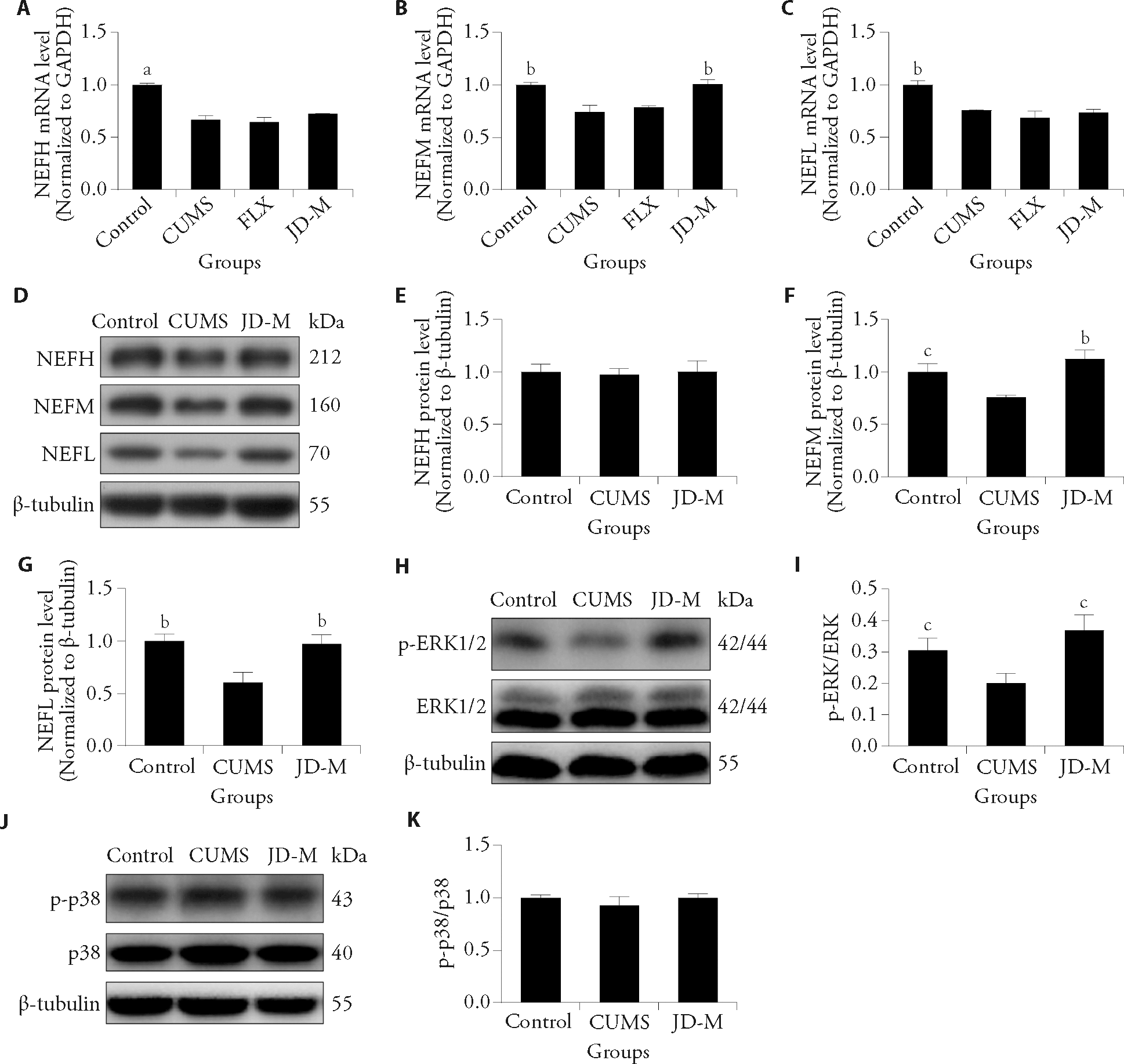
Figure 4 Effects of JD on the mRNA and protein expression of NEFH, NEFM and NEFL, and the protein expression of ERK1/2 and p38 MAPK in CUMS mice A: mRNA levels of NEFH; B: mRNA levels of NEFM; C: mRNA levels of NEFL; D: immunoblot bands for NEFH, NEFM, and NEFL; E: relative protein levels of NEFH; F: relative protein levels of NEFM; G: relative protein levels of NEFL; H: immunoblot bands for ERK1/2 and p-ERK1/2; I: rate of p-ERK1/2/ ERK1/2; J: immunoblot bands for p-p38 and p38; K: rate of p-p38/p38. Control: normal healthy mice; CUMS: mice subjected to chronic unpredictable mild stress for 12 weeks to induce depression model; JD-M: depression model mice treated with Jiawei Danzhi Xiaoyaosan at dose of 35.2 mg/kg from weeks 9-12, once daily. CUMS: chronic unpredictable mild stress; FLX: fluoxetine; JD-L: Jiawei Danzhi Xiaoyaosan low dose; JD-M: Jiawei Danzhi Xiaoyaosan medium dose; JD-H: Jiawei Danzhi Xiaoyaosan high dose; NEFH: neurofilament heavy polypeptide; NEFM: neurofilament medium polypeptide; NEFL: neurofilament light polypeptide; ERK1/2: extracellular signal-regulated kinase 1/2; p-ERK1/2: phospho-ERK1/2; p38 MAPK: p38 mitogen-activated protein kinase; p-p38: phospho-p38; qPCR: real-time quantitative polymerase chain reaction; WB: Western blot. The data were expressed as the mean ± standard error of the mean (n = 5 in qPCR; n = 3 in WB). Compared to the CUMS group, aP < 0.001, bP < 0.01, and cP < 0.05.
Figure 4 Effects of JD on the mRNA and protein expression of NEFH, NEFM and NEFL, and the protein expression of ERK1/2 and p38 MAPK in CUMS mice A: mRNA levels of NEFH; B: mRNA levels of NEFM; C: mRNA levels of NEFL; D: immunoblot bands for NEFH, NEFM, and NEFL; E: relative protein levels of NEFH; F: relative protein levels of NEFM; G: relative protein levels of NEFL; H: immunoblot bands for ERK1/2 and p-ERK1/2; I: rate of p-ERK1/2/ ERK1/2; J: immunoblot bands for p-p38 and p38; K: rate of p-p38/p38. Control: normal healthy mice; CUMS: mice subjected to chronic unpredictable mild stress for 12 weeks to induce depression model; JD-M: depression model mice treated with Jiawei Danzhi Xiaoyaosan at dose of 35.2 mg/kg from weeks 9-12, once daily. CUMS: chronic unpredictable mild stress; FLX: fluoxetine; JD-L: Jiawei Danzhi Xiaoyaosan low dose; JD-M: Jiawei Danzhi Xiaoyaosan medium dose; JD-H: Jiawei Danzhi Xiaoyaosan high dose; NEFH: neurofilament heavy polypeptide; NEFM: neurofilament medium polypeptide; NEFL: neurofilament light polypeptide; ERK1/2: extracellular signal-regulated kinase 1/2; p-ERK1/2: phospho-ERK1/2; p38 MAPK: p38 mitogen-activated protein kinase; p-p38: phospho-p38; qPCR: real-time quantitative polymerase chain reaction; WB: Western blot. The data were expressed as the mean ± standard error of the mean (n = 5 in qPCR; n = 3 in WB). Compared to the CUMS group, aP < 0.001, bP < 0.01, and cP < 0.05.
| 1. | König H, König HH, Konnopka A. The excess costs of depression: a systematic review and Meta-analysis. Epidemiol Psychiatr Sci 2019; 29: e30. |
| 2. |
Huang Y, Wang Y, Wang H, et al. Prevalence of mental disorders in China: a cross-sectional epidemiological study. Lancet Psychiatry 2019; 6: 211-24.
DOI PMID |
| 3. | Marwaha S, Palmer E, Suppes T, et al. Novel and emerging treatments for major depression. Lancet 2023; 401: 141-53. |
| 4. | Voican CS, Corruble E, Naveau S, et al. Antidepressant-induced liver injury: a review for clinicians. Am J Psychiatry 2014; 171: 404-15. |
| 5. |
Rothmore J. Antidepressant-induced sexual dysfunction. Med J Aust 2020; 212: 329-34.
DOI PMID |
| 6. | Zhuang W, Liu SL, Xi SY, et al. Traditional Chinese Medicine decoctions and Chinese patent medicines for the treatment of depression: efficacies and mechanisms. J Ethnopharmacol 2023; 307: 116272. |
| 7. | Feng L, Xing H, Zhang K. The therapeutic potential of Traditional Chinese Medicine in depression: targeting adult hippocampal neurogenesis. Phytomedicine 2022; 98: 153980. |
| 8. | Ruan J, Chen S, Liang J, et al. Traditional Chinese Medicine-based integrated health interventions for depression: a systematic review and Meta-analysis. J Clin Nurs 2023; 32: 5632-51. |
| 9. | Xue Ji (Ming dynasty). Lei Ke Zhai Yao. Beijing: China Medical Science and Technology Publishing House, 2012: 12. |
| 10. | Wang XL, Feng ST, Wang YT, et al. Canonical Chinese medicine formula Danzhi-Xiaoyao-San for treating depression: a systematic review and Meta-analysis. J Ethnopharmacol 2022; 287: 114960. |
| 11. | Zhu X, Wu S, Zhou Y, et al. The pharmacological actions of Danzhi-xiaoyao-San on depression involve lysophosphatidic acid and microbiota-gut-brain axis: novel insights from a systems pharmacology analysis of a double-blind, randomized, placebo-controlled clinical trial. J Biomol Struct Dyn 2024;42: 9309-24. |
| 12. | Ding C, Xu M, Gao L, et al. Clinical efficacy of Danzhi Xiaoyao powder in the treatment of post-stroke depression: a protocol for randomized, double-blind clinical study. Medicine (Baltimore) 2021; 100: e27318. |
| 13. |
Su R, Fan J, Li T, et al. Jiawei Xiaoyao capsule treatment for mild to moderate major depression with anxiety symptoms: a randomized, double-blind, double-dummy, controlled, multicenter, parallel-treatment trial. J Tradit Chin Med 2019; 39: 410-7.
PMID |
| 14. | Kou MJ, Chen JX. Integrated Traditional and Western Medicine for treatment of depression based on syndrome differentiation: a Meta-analysis of randomized controlled trials based on the Hamilton depression scale. J Tradit Chin Med 2012; 32: 1-5. |
| 15. | Tran DNH, Hwang IH, Chen FJ, et al. Core prescription pattern of Chinese herbal medicine for depressive disorders in Taiwan: a nationwide population-based study. Integr Med Res 2021; 10: 100707. |
| 16. | Su P, Wu M, Yin X, et al. Modified Xiaoyao San reverses lipopolysaccharide-induced depression-like behavior through suppressing microglia M1 polarization via enhancing autophagy involved in PI3K/Akt/mTOR pathway in mice. J Ethnopharmacol 2023; 315: 116659. |
| 17. | Tang XM, Guo JL, Chen L, et al. Application for proteomics analysis technology in studying animal-derived Traditional Chinese Medicine: a review. J Pharm Biomed Anal 2020; 191: 113609. |
| 18. | Willner P, Towell A, Sampson D, et al. Reduction of sucrose preference by chronic unpredictable mild stress, and its restoration by a tricyclic antidepressant. Psychopharmacology (Berl) 1987; 93: 358-64. |
| 19. |
Wiśniewski JR, Zougman A, Nagaraj N, et al. Universal sample preparation method for proteome analysis. Nat Methods 2009; 6: 359-62.
DOI PMID |
| 20. |
Götz S, García-Gómez JM, Terol J, et al. High-throughput functional annotation and data mining with the Blast2GO suite. Nucleic Acids Res 2008; 36: 3420-35.
DOI PMID |
| 21. | Kanehisa M, Goto S, Sato Y, et al. KEGG for integration and interpretation of large-scale molecular data sets. Nucleic Acids Res 2012; 40: D109-14. |
| 22. |
Bomont P. The dazzling rise of neurofilaments: physiological functions and roles as biomarkers. Curr Opin Cell Biol 2021; 68: 181-91.
DOI PMID |
| 23. |
Bott CJ, Winckler B. Intermediate filaments in developing neurons: beyond structure. Cytoskeleton (Hoboken) 2020; 77: 110-28.
DOI PMID |
| 24. | Thebault S, Booth RA, Freedman MS. Blood neurofilament light chain: the neurologist's troponin? Biomedicines 2020; 8: 523. |
| 25. |
Gaetani L, Blennow K, Calabresi P, et al. Neurofilament light chain as a biomarker in neurological disorders. J Neurol Neurosurg Psychiatry 2019; 90: 870-81.
DOI PMID |
| 26. |
Liu Y, Tang X. Depressive syndromes in autoimmune disorders of the nervous system: prevalence, etiology, and influence. Front Psychiatry 2018; 9: 451.
DOI PMID |
| 27. | Guedes VA, Kenney K, Shahim P, et al. Exosomal neurofilament light: a prognostic biomarker for remote symptoms after mild traumatic brain injury? Neurology 2020; 94: e2412-23. |
| 28. | Chen MH, Liu YL, Kuo HW, et al. Neurofilament light chain is a novel biomarker for major depression and related executive dysfunction. Int J Neuropsychopharmacol 2022; 25: 99-105. |
| 29. | Travica N, Berk M, Marx W. Neurofilament light protein as a biomarker in depression and cognitive function. Curr Opin Psychiatry 2022; 35: 30-7. |
| 30. |
Maller JJ, Thomson RH, Lewis PM, et al. Traumatic brain injury, major depression, and diffusion tensor imaging: making connections. Brain Res Rev 2010; 64: 213-40.
DOI PMID |
| 31. | Chen Y, Xie HQ, Sha R, et al. 2,3,7,8-Tetrachlorodibenzo-p-dioxin and up-regulation of neurofilament expression in neuronal cells: evaluation of AhR and MAPK pathways. Environ Int 2020; 134: 105193. |
| 32. |
Wang JQ, Mao L. The ERK pathway: molecular mechanisms and treatment of depression. Mol Neurobiol 2019; 56: 6197-205.
DOI PMID |
| 33. | Jia W, Liu R, Shi J, et al. Differential regulation of MAPK phosphorylation in the dorsal hippocampus in response to prolonged morphine withdrawal-induced depressive-like symptoms in mice. PLoS One 2013; 8: e66111. |
| 34. | Liu W, Ge T, Leng Y, et al. The role of neural plasticity in depression: from hippocampus to prefrontal cortex. Neural Plast 2017; 2017: 6871089. |
| 35. |
Galeotti N, Ghelardini C. Regionally selective activation and differential regulation of ERK, JNK and p38 MAP kinase signalling pathway by protein kinase C in mood modulation. Int J Neuropsychopharmacol 2012; 15: 781-93.
DOI PMID |
| 36. | Li X, Liu Z, Li W, et al. PTPRR regulates ERK dephosphorylation in depression mice model. J Affect Disord 2016; 193: 233-41. |
| 37. | Yao W, Cao Q, Luo S, et al. Microglial ERK-NRBP1-CREB-BDNF signaling in sustained antidepressant actions of (R)-ketamine. Mol Psychiatry 2022; 27: 1618-29. |
| 38. |
Guan L, Jia N, Zhao X, et al. The involvement of ERK/CREB/Bcl-2 in depression-like behavior in prenatally stressed offspring rats. Brain Res Bull 2013; 99: 1-8.
DOI PMID |
| 39. |
Zentrich E, Han SY, Pessoa-Brandao L, et al. Collaboration of JNKs and ERKs in nerve growth factor regulation of the neurofilament light chain promoter in PC12 cells. J Biol Chem 2002; 277: 4110-8.
DOI PMID |
| 40. | Han Q, Lin Q, Huang P, et al. Microglia-derived IL-1β contributes to axon development disorders and synaptic deficit through p38-MAPK signal pathway in septic neonatal rats. J Neuroinflammation 2017; 14: 52. |
| [1] | Faiq Amin, Saara Ahmad, Muhammad Wasim, Asra Khan, Fazal Manzoor Arain, Zehra Batool, Saiqa Tabassum, Saima Khaliq, Noreen Samad, Saida Haider. Antidepressive and anxiolytic effects of a combination of Saffron and Chamomile in rats and their relationship with serotonin using in vivo methods [J]. Journal of Traditional Chinese Medicine, 2025, 45(1): 49-56. |
| [2] | LIU Tongtong, ZHANG Xi, YANG Hui, LIN Xiaoyuan, LIU Jian, ZHANG Xiuli, GUO Dongwei, ZHAO Hongqing, ZOU Manshu, LEI Chang, LONG Hongping, LUO Yan, XIANG Yun, GE Jinwen, WANG Yuhong, MENG Pan. Luteolin promotes neuronogenesis in hippocampus of chronic unpredictable mild stress rats and primary hippocampus of fetal rats [J]. Journal of Traditional Chinese Medicine, 2024, 44(4): 670-679. |
| [3] | ZHANG Zeyu, JIA Zhuangzhuang, SONG Yuwei, ZHANG Xuan, WANG Ci, WANG Shuai, ZHANG Peipei, REN Qiuan, WANG Xianliang, MAO Jingyuan. Optimized new Shengmai powder (优化新生脉散方) inhibits myocardial fibrosis in heart failure by regulating the rat sarcoma/rapidly accelerated fibrosarcoma/mitogen-activated protein kinase kinase/extracellular regulated protein kinases signaling pathway [J]. Journal of Traditional Chinese Medicine, 2024, 44(3): 448-457. |
| [4] | WANG Zhibo, LI Ying, WANG Daoping, MA Bo, MIAO Lan, REN Junguo, LIU Jinghua, LIU Jianxun. Proteomics analysis of coronary atherosclerotic heart disease with different Traditional Chinese Medicine syndrome types before and after percutaneous coronary intervention [J]. Journal of Traditional Chinese Medicine, 2024, 44(3): 554-563. |
| [5] | HENG Xianpei, WANG Zhita, LI Liang, YANG Liuqing, HUANG Suping, JIN Lang, HE Weidong. Mechanisms of Dangua Fang (丹瓜方) in multi-target and multi-method regulation of glycolipid metabolism based on phosphoproteomics [J]. Journal of Traditional Chinese Medicine, 2024, 44(2): 334-344. |
| [6] | DU Zhongheng, CONG Wenjie, TANG Kejing, ZHENG Qiqi, SONG Zhiwei, CHEN Yong, YANG Su, ZHANG Chunwu, YE Tianshen. Electroacupuncture stimulating Zusanli (ST36), Sanyinjiao (SP6) in mice with collagen-induced arthritis leads to adenosine A2A receptor-mediated alteration of p38α mitogen-activated protein kinase signaling and inhibition of osteoclastogenesis [J]. Journal of Traditional Chinese Medicine, 2023, 43(6): 1103-1109. |
| [7] | WANG Yaqi, ZHAO Weibo, WANG Yixing, ZHAO Haihong, ZHOU Yaoyao, YAN Yun, WU Taotao, LUO Bin, WANG Ji. Traditional Chinese Medicine constitution among patients with allergic rhinitis and its correlation with anxiety and depression [J]. Journal of Traditional Chinese Medicine, 2023, 43(6): 1252-1258. |
| [8] | ZHANG Xiaoying, WANG Ruixuan, WANG Yiqing, XU Fanxing, YAN Tingxu, WU Bo, ZHANG Ming, JIA Ying. Spinosin protects Neuro-2a/APP695 cells from oxidative stress damage by inactivating p38 [J]. Journal of Traditional Chinese Medicine, 2023, 43(5): 868-875. |
| [9] | MA Fangfang, ZHANG Hewei, LI Bingxue, CHENG Peiyu, YU Mingwei, WANG Xiaomin. Acupuncture and moxibustion for malignant tumor patients with psychological symptoms of insomnia, anxiety and depression: a systematic review and Meta-analysis [J]. Journal of Traditional Chinese Medicine, 2023, 43(3): 441-456. |
| [10] | ZOU Xinshuang, SHI Lei, YIN Hailong, LI Haiping, WANG Mengheng, SONG Wanci, LUO Laichun, WU Hezhen, YANG Yanfang, ZAN Junfeng, LIU Yanwen, DAN Hanxiong, YIN Qiang, YOU Pengtao. Compound Gaoziban tablet (复方高滋斑片) alleviates depression via toll-like receptor 4/myeloid differentiation factor 88/nuclear factor-kappa B pathway [J]. Journal of Traditional Chinese Medicine, 2022, 42(6): 956-964. |
| [11] | ZHAO Jie, WANG Li, CAO Ai-li, WANG Yun-man, CHI Yang-feng, WANG Yi, WANG Hao, PENG Wen. Huangqi decoction (黄芪汤) attenuates renal interstitial fibrosis via transforming growth factor-β1/mitogen-activated protein kinase signaling pathways in 5/6 nephrectomy mice [J]. Journal of Traditional Chinese Medicine, 2022, 42(5): 723-731. |
| [12] | CHEN Limei, SUN Jifei, GUO Chunlei, LI Xiaojiao, WANG Zhi, Hong Yang, FANG Jiliang. Preliminary single-arm study of brain effects during transcutaneous auricular vagus nerve stimulation treatment of recurrent depression by resting-state functional magnetic resonance imaging [J]. Journal of Traditional Chinese Medicine, 2022, 42(5): 818-824. |
| [13] | WEI Lexin, LI Weiyi, TIAN Ting, ZHANG Ning, YANG Shijing, YANG Dongqing, LI Guochun, YE Fang. Identification of novel biomarkers and therapeutic target candidates for stasis-heat symptom pattern of acute intracerebral hemorrhage by quantitative plasma proteomics [J]. Journal of Traditional Chinese Medicine, 2022, 42(4): 622-632. |
| [14] | HU Xijiao, LI Shuoxi, YANG Dongxia, GU Na, LIU Jinzhe, WANG Yawen, LIU Li, SUN Yiming. Modified Gexiazhuyu decoction (膈下逐瘀汤加减方) alleviates chronic salpingitis via p38 signaling pathway [J]. Journal of Traditional Chinese Medicine, 2022, 42(2): 213-220. |
| [15] | Jiaru LIN, Li WANG, Bo CHEN, Santao OU, Jianhua QIN, Junming FAN. Shenweifang-containing serum inhibits transforming growth factor-β1-induced myofibroblast differentiation in normal rat kidney interstitial fibroblast cells [J]. Journal of Traditional Chinese Medicine, 2022, 42(1): 39-48. |
| Viewed | ||||||
|
Full text |
|
|||||
|
Abstract |
|
|||||