
Journal of Traditional Chinese Medicine ›› 2025, Vol. 45 ›› Issue (1): 140-151.DOI: 10.19852/j.cnki.jtcm.2025.01.013
Previous Articles Next Articles
Gut microbial characteristics of the damp-heat constitution: a population-based multicenter cross-sectional study
LI Tianxing1,2, ZHU Linghui1,2, WANG Xueke3, TANG Jun4, YANG Lingling5, PANG Guoming6, LI Huang7, WANG Liying8, DONG Yang1,2, ZHAO Shipeng9, LI Yingshuai2, LI Lingru2( )
)
- 1 Institute of Basic Theory for Chinese Medicine, China Academy of Chinese Medical Sciences, Beijing 100700, China
2 National Institute of TCM Constitution and Preventive Medicine, Beijing University of Chinese Medicine, Beijing 100029, China
3 the Second Clinical Medical College, Henan University of Chinese Medicine, Zhengzhou 450046, China
4 Department of Hepatobiliary Spleen and Stomach, the First Affiliated Hospital of Zhejiang Chinese Medical University, Hangzhou 310006, China
5 Henna Province Hospital of Traditional Chinese Medicine, Henan 450002, China
6 Department of Endocrinology, Kaifeng Hospital of traditional Chinese Medicine, Kaifeng 475001, China
7 State Key Laboratory of Dampness Syndrome of Chinese Medicine, the Second Affiliated Hospital of Guangzhou University of Chinese Medicine, Guangzhou 510120, China
8 College of Chinese Medicine, Beijing University of Chinese Medicine, Beijing 100029, China
9 Graduate School of China Academy of Chinese Medical Sciences, Beijing 100700, China
-
Received:2023-12-22Accepted:2024-03-11Online:2025-02-15Published:2025-01-10 -
Contact:Prof. LI Lingru, National Institute of TCM Constitution and Preventive Medicine, Beijing University of Chinese Medicine, Beijing 100029, China.Lilingru912@163.com Telephone: +86-13718230332 -
Supported by:National Nonprofit Institute Research Grant for the Institute of Basic Theory for Chinese Medicine, China Academy of Chinese Medical Sciences: Mechanism of Regulating Phlegm-Dampness Constitution to Prevent Metabolic Diseases based on Gut Microbiota-host DNA Methylation(YZ-202151)

Cite this article
LI Tianxing, ZHU Linghui, WANG Xueke, TANG Jun, YANG Lingling, PANG Guoming, LI Huang, WANG Liying, DONG Yang, ZHAO Shipeng, LI Yingshuai, LI Lingru. Gut microbial characteristics of the damp-heat constitution: a population-based multicenter cross-sectional study[J]. Journal of Traditional Chinese Medicine, 2025, 45(1): 140-151.
share this article

Figure 1 Flow diagram of the enrollment process of the DHC and BC volunteers TCMC: Traditional Chinese Medicine constitution; BC: balanced constitution; DHC: damp-heat constitution.
Figure 1 Flow diagram of the enrollment process of the DHC and BC volunteers TCMC: Traditional Chinese Medicine constitution; BC: balanced constitution; DHC: damp-heat constitution.
Table 1 Demographic information of the participants
| Characteristic | BC (n = 146) | DHC (n = 103) | P valuea |
|---|---|---|---|
| Age (years) | 30.0±6.6 | 29.4±5.0 | 0.818 |
| Sex (n) | 0.327 | ||
| Male | 52 | 43 | / |
| Female | 94 | 60 | / |
| Weight (kg) | 60.1±10.7 | 62.1±11.7 | 0.096 |
| Height (cm) | 165.7±7.8 | 167.2±7.4 | 0.172 |
| BMI (kg/m2) | 21.7±2.4 | 22.1±3.1 | 0.442 |
Table 1 Demographic information of the participants
| Characteristic | BC (n = 146) | DHC (n = 103) | P valuea |
|---|---|---|---|
| Age (years) | 30.0±6.6 | 29.4±5.0 | 0.818 |
| Sex (n) | 0.327 | ||
| Male | 52 | 43 | / |
| Female | 94 | 60 | / |
| Weight (kg) | 60.1±10.7 | 62.1±11.7 | 0.096 |
| Height (cm) | 165.7±7.8 | 167.2±7.4 | 0.172 |
| BMI (kg/m2) | 21.7±2.4 | 22.1±3.1 | 0.442 |

Figure 2 Gut microbiome diversity and structure analysis A: the observed ASVs differences between the DHC and BC groups; B: Shannon index indicating diversity differences between the DHC and BC groups; C: PCoA with Bray-Curtis distance showing that the overall microbial composition of DHC deviated from the BC (P = 0.006, permutational multivariate analysis of variance (PERMANOVA) by Adonis); D: PCoA with unweighted UniFrac distance shows that the overall microbial composition of DHC deviated from the BC (P = 0.034, PERMANOVAR by Adonis). BC group (red dots); DHC group (blue dots) represent individual samples. E: associated factors with gut microbiome in the BC and DHC cohort. Red bars indicate statistical significance (P < 0.05); F: associated factors with gut microbiome in the BC cohort. Red bars indicate statistical significance (P < 0.05); G: associated factors with gut microbiome in the DHC cohort. Red bars indicate statistical significance (P < 0.05); H: PCoA analysis of BC in different regions based on Bray-Curtis distances; I: PCoA analysis of DHC in different regions based on Bray-Curtis distances. Compared with the DHC group, aP < 0.001; compared with the BC group, bP < 0.001, Wilcoxon rank-sum test. BC: balanced constitution group; DHC: damp-heat constitution group; GZ: Guanzghou, China; HZ: Huangzhou, China; ZZ: Zhengzhou, China; KF: Kaifeng, China; BJ: Beijing, China.
Figure 2 Gut microbiome diversity and structure analysis A: the observed ASVs differences between the DHC and BC groups; B: Shannon index indicating diversity differences between the DHC and BC groups; C: PCoA with Bray-Curtis distance showing that the overall microbial composition of DHC deviated from the BC (P = 0.006, permutational multivariate analysis of variance (PERMANOVA) by Adonis); D: PCoA with unweighted UniFrac distance shows that the overall microbial composition of DHC deviated from the BC (P = 0.034, PERMANOVAR by Adonis). BC group (red dots); DHC group (blue dots) represent individual samples. E: associated factors with gut microbiome in the BC and DHC cohort. Red bars indicate statistical significance (P < 0.05); F: associated factors with gut microbiome in the BC cohort. Red bars indicate statistical significance (P < 0.05); G: associated factors with gut microbiome in the DHC cohort. Red bars indicate statistical significance (P < 0.05); H: PCoA analysis of BC in different regions based on Bray-Curtis distances; I: PCoA analysis of DHC in different regions based on Bray-Curtis distances. Compared with the DHC group, aP < 0.001; compared with the BC group, bP < 0.001, Wilcoxon rank-sum test. BC: balanced constitution group; DHC: damp-heat constitution group; GZ: Guanzghou, China; HZ: Huangzhou, China; ZZ: Zhengzhou, China; KF: Kaifeng, China; BJ: Beijing, China.
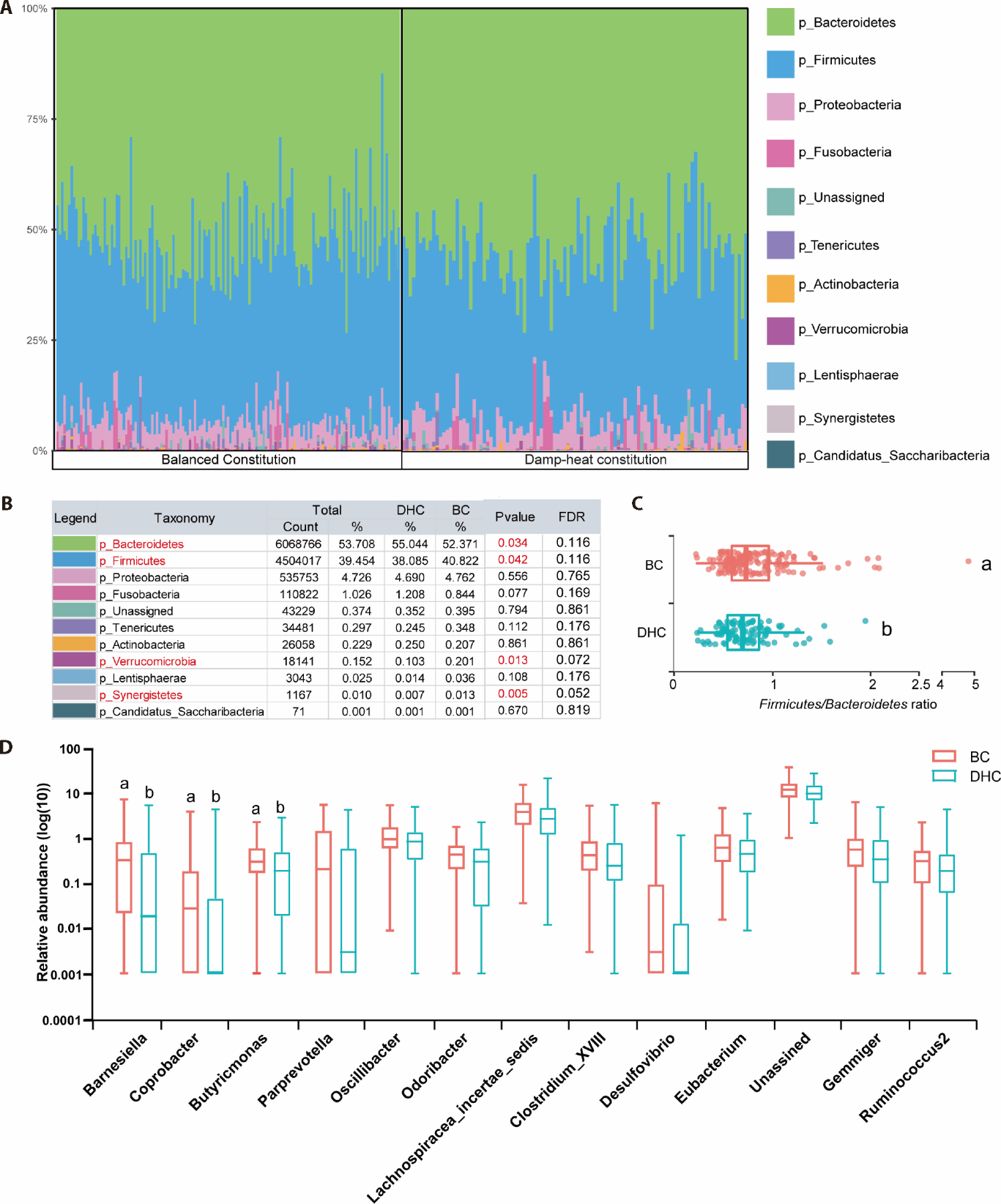
Figure 3 Differences in bacterial species between DHC and BC A: bar plot of bacterial phylum distribution in each group. n = 146 for the BC group and n = 103 for the DHC group; B: component proportion data of bacterial phylum in each group. n = 146 for the BC group and n = 103 for the DHC group; C: the ratio of Firmicutes/Bacteroidetes of DHC showed significantly lower than that of BC; D: genera were strikingly different between DHC and BC. Compared with the DHC group, aP < 0.001; compared with the BC group, bP < 0.001, Wilcoxon rank-sum test. Relative abundance of the significantly different genera across groups at the criteria of P <0.05 (Wilcoxon rank-sum test) and adjust P < 0.2 (FDR) (display of genera with relative abundance greater than 0.1%). BC: balanced constitution; DHC: damp-heat constitution. Boxes represent the interquartile ranges; lines inside the boxes denote medians. Three genera colored in red according to FDR adjusted P < 0.05.
Figure 3 Differences in bacterial species between DHC and BC A: bar plot of bacterial phylum distribution in each group. n = 146 for the BC group and n = 103 for the DHC group; B: component proportion data of bacterial phylum in each group. n = 146 for the BC group and n = 103 for the DHC group; C: the ratio of Firmicutes/Bacteroidetes of DHC showed significantly lower than that of BC; D: genera were strikingly different between DHC and BC. Compared with the DHC group, aP < 0.001; compared with the BC group, bP < 0.001, Wilcoxon rank-sum test. Relative abundance of the significantly different genera across groups at the criteria of P <0.05 (Wilcoxon rank-sum test) and adjust P < 0.2 (FDR) (display of genera with relative abundance greater than 0.1%). BC: balanced constitution; DHC: damp-heat constitution. Boxes represent the interquartile ranges; lines inside the boxes denote medians. Three genera colored in red according to FDR adjusted P < 0.05.
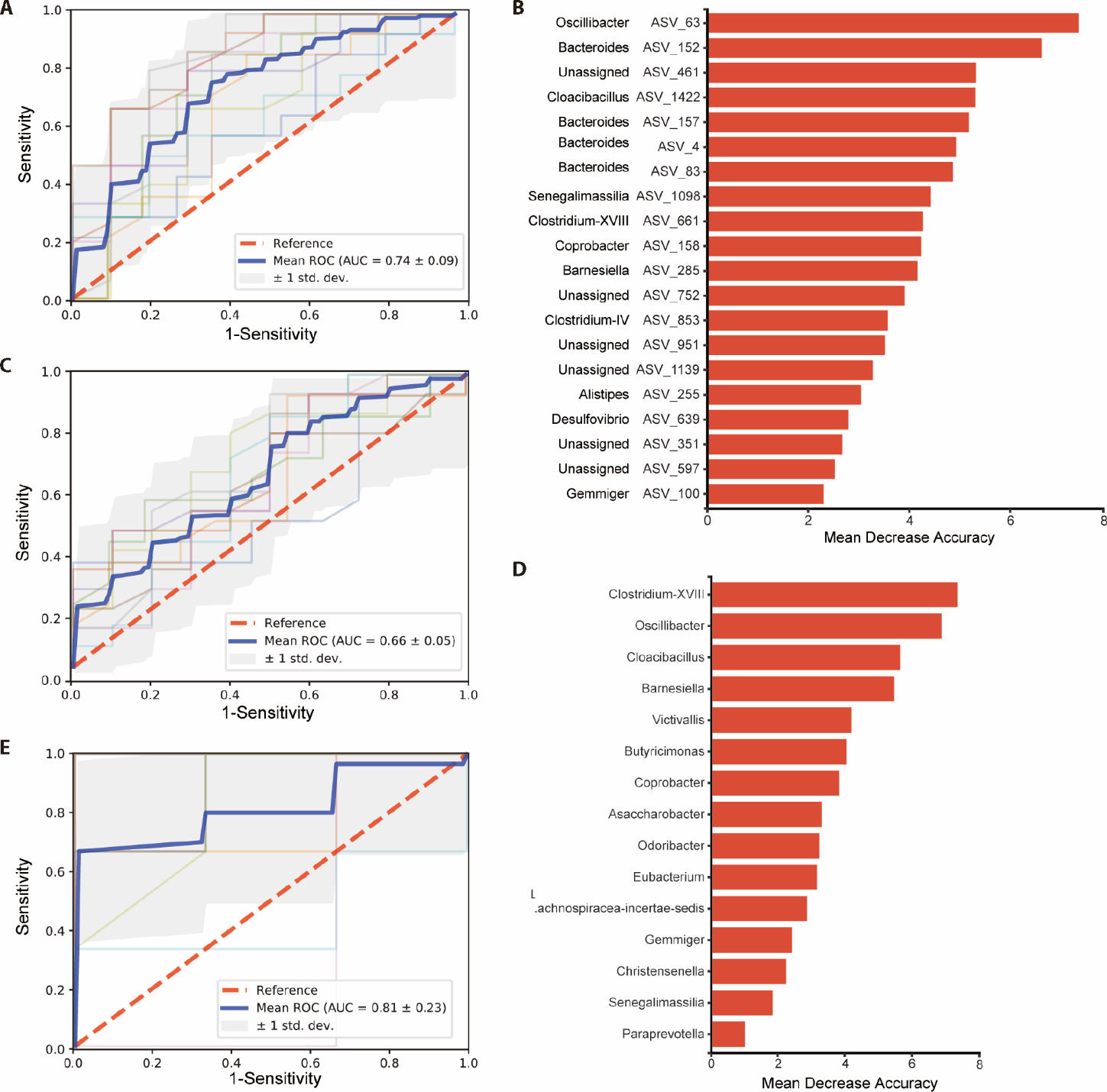
Figure 4 Diagnostic outcomes are shown via ROC curves for DHC and BC A: random Forest models constructed using explanatory variables of ASVs; B: detailed explanatory variables of the random forest model based on ASVs. The lengths of the bars in the histogram represent the mean decrease accuracy, which indicates the importance of the ASV for classification; C: random Forest models constructed using explanatory variables of species; D: detailed explanatory variables of the random forest model based on species. The lengths of the bars in the histogram represent the mean decrease accuracy, which indicates the importance of the species for classification; E: ROC of the cross-validated random forest classifier using the most important explanatory variables in the validation cohort. BC: balanced constitution; DHC: damp-heat constitution; ROC: receiver operating characteristic; ASV: amplicon sequence variant.
Figure 4 Diagnostic outcomes are shown via ROC curves for DHC and BC A: random Forest models constructed using explanatory variables of ASVs; B: detailed explanatory variables of the random forest model based on ASVs. The lengths of the bars in the histogram represent the mean decrease accuracy, which indicates the importance of the ASV for classification; C: random Forest models constructed using explanatory variables of species; D: detailed explanatory variables of the random forest model based on species. The lengths of the bars in the histogram represent the mean decrease accuracy, which indicates the importance of the species for classification; E: ROC of the cross-validated random forest classifier using the most important explanatory variables in the validation cohort. BC: balanced constitution; DHC: damp-heat constitution; ROC: receiver operating characteristic; ASV: amplicon sequence variant.
| 1. |
Goetz LH, Schork NJ. Personalized medicine: motivation, challenges, and progress. Fertil Steril 2018; 109: 952-63.
DOI PMID |
| 2. | Merlin C, Ronald B, Sandro G. "Precision" public health - between novelty and hype. N Eng J Med 2018; 379: 1398-400. |
| 3. |
Li LR, Wang ZY, Wang J, Zheng YF, Li YS, Wang Q. Enlightenment about using TCM constitutions for individualized medicine and construction of Chinese-style precision medicine: research progress with TCM constitutions. Sci China Life Sci 2021; 64: 2092-9.
DOI PMID |
| 4. | Wang Q. The classification of nine kinds of basic TCM constitution and the basis of diagnosis. Beijing Zhong Yi Yao Da Xue Xue Bao 2005; 4: 1-8. |
| 5. | Wang Q. On 3 key issues in the study of constitution of Traditional Chinese Medicine (Part Two). Zhong Yi Za Zhi 2006; 47: 329-32. |
| 6. | Wang Q. On 3 key issues in the study of constitution of Traditional Chinese Medicine (Part One). Zhong Yi Za Zhi 2006; 47: 250-2. |
| 7. | Wang Q, Zhu YB, Wu CY, et al. Correlation between constitution in Chinese medicine and health-related quality of life. J Clin Rehab Tissue Eng Res 2007; 11: 9946-50. |
| 8. | Yan S, Wang Q, Zhang LL, et al. Diagnosis and treatment of ulcerative colitis with differentiation-constitution. Tianjin Zhong Yi Yao 2020; 37: 1100-3. |
| 9. | Yang J, Cui BN, Jiang GX. A study on the distribution pattern of TCM constitution in 179 adult acne patients. Zhong Guo Zhong Xi Yi Jie He Pi Fu Xing Bing Xue Za Zhi 2021; 20: 214-6. |
| 10. |
Liang X, Wang Q, Jiang ZQ, et al. Clinical research linking Traditional Chinese Medicine constitution types with diseases: a literature review of 1639 observational studies. J Tradit Chin Med 2020; 40: 690-702.
DOI |
| 11. | Xia XF, Wu J, Lou GQ, Xu W, Ye XP, Yang WJ. Research on correlation between constitution of Traditional Chinese Medicine of patients with chronic hepatitis B and expression of CD4+ and CD8+ in peripheral blood and liver tissue. Zhong Hua Zhong Yi Yao Za Zhi 2015; 30: 1219-21. |
| 12. | You H, Zhang T, Feng W, Gai Y. Association of TCM body constitution with insulin resistance and risk of diabetes in impaired glucose regulation patients. BMC Complement Altern Med 2017; 17: 459. |
| 13. | Zheng YQ, Chen RF, Yang XQ. Analysis of TCM constitutional tendency in high-risk group of type 2 diabetes mellitus. Jiangxi Zhong Yi Yao 2019; 50: 31-4. |
| 14. | Sheng H, Li K. Current status of clinical research on TCM physical characteristics of pre-diabetic population. Xinjiang Zhong Yi Yao 2019; 37: 154-6. |
| 15. | Luo H, Wang Q. Correlation between TCM constitution and metabolic syndrome: a systematic review and Meta-analysis. Beijing Zhong Yi Yao Da Xue Xue Bao 2016; 39: 325-34. |
| 16. | Tanya Y, Federico ER, Mark JM, et al. Human gut microbiome viewed across age and geography. Nature 2012; 486: 222-7. |
| 17. |
Julia KG, Jillian LW, Angela CP, et al. Human genetics shape the gut microbiome. Cell 2014; 159: 789-99.
DOI PMID |
| 18. |
Julia KG, Emily RD, Michelle B, et al. Genetic determinants of the gut microbiome in UK twins. Cell Host Microbe 2016; 19: 731-43.
DOI PMID |
| 19. |
Francisco G, Juan-RM. Gut flora in health and disease. Lancet 2003; 361: 512-9.
DOI PMID |
| 20. | Bäckhed F, Ding H, Wang T, et al. The gut microbiota as an environmental factor that regulates fat storage. Proc Natl Acad Sci U S A 2004; 101: 15718-23. |
| 21. | Wang J, Li YS, Li LR, et al. Genomics study on nine types of TCM constitution. Zhong Hua Zhong Yi Yao Za Zhi 2014; 29: 3871-3. |
| 22. | Cheng J. The clinical trail on ermiao pill intervene wet-heat constitution and its metabonomic characteristics, Guangzhou: Southern Medical University, 2015: 98-115. |
| 23. |
Deepak R, Shegdar QT, Cyd K, Jennifer AF, Jeffry DS, Joung JK. FLASH assembly of TALENs for high-throughput genome editing. Nat Biotechnol 2012; 30: 460-5.
DOI PMID |
| 24. |
Caporaso JG, Kuczynski J, Stombaugh J, et al. QIIME allows analysis of high-throughput community sequencing data. Nat Methods 2010; 7: 335-6.
DOI PMID |
| 25. | Torbjorn R, Tomas F, Ben N, Christopher Q, Frederic M. VSEARCH: a versatile open source tool for metagenomics. Peer J 2016; 4: e2584. |
| 26. |
Robert CE. Search and clustering orders of magnitude faster than BLAST. Bioinformatics 2010; 26: 2460-1.
DOI PMID |
| 27. | James RC, Wang Q, Jordan AF, et al. Ribosomal database project: data and tools for high throughput rRNA analysis. Nucleic Acids Res 2014; 42: D633-42. |
| 28. |
Morgan GIL, Jesse Z, J GC, et al. Predictive functional profiling of microbial communities using 16S rRNA marker gene sequences. Nat Biotechnol 2013; 31: 814-21.
DOI PMID |
| 29. | Catherine AL, Jesse IS, Jeffrey IG, Janet KJ, Rob K. Diversity, stability and resilience of the human gut microbiota. Nature 2012; 489: 220-30. |
| 30. | Chen YF, Guo J, Qian GR, et al. Gut dysbiosis in acute-on-chronic liver failure and its predictive value for mortality. J Gastroenterol Hepatol 2015; 30: 1429-37. |
| 31. | Ludovic G, Julia KG, William AW, Susan ML, Ruth EL, Maoreen RH. Reduced diversity and altered composition of the gut microbiome in individuals with myalgic encephalomyelitis/ chronic fatigue syndrome. Microbiome 2016; 4: 30. |
| 32. | Kristoffer F, Falk H, Trine N, et al. Disentangling type 2 diabetes and metformin treatment signatures in the human gut microbiota. Nature 2015; 528: 262-6. |
| 33. | Zhang W, Han N, Zhang TT, et al. The spatial features and temporal changes in the gut microbiota of a healthy chinese population. Microbiol Spectr 2022; 10: e0131022. |
| 34. | Shin JH, Sim MJ, Lee JY, Shin DM. Lifestyle and geographic insights into the distinct gut microbiota in elderly women from two different geographic locations. J Physiol Anthropol 2016; 35: 31. |
| 35. | Hillary SH, Alexander E, Christopher EP, et al. Fecal dysbiosis in infants with cystic fibrosis is associated with early linear growth failure. Nat Med 2020; 26: 215-21. |
| 36. |
Richard PS, Julie AKM, Julian RM, Thomas BC. Commensal bacteroidetes protect against Klebsiella pneumoniae colonization and transmission through IL-36 signalling. Nat Microbiol 2020; 5: 304-13.
DOI PMID |
| 37. | Javier F, Saul RB, Ignacio GR, Elisa MM, Claudio JV, Felipe L. Colon microbiota fermentation of dietary prebiotics towards short-chain fatty acids and their roles as anti-inflammatory and antitumour agents: a review. J Funct Foods 2016; 25: 511-22. |
| 38. |
Wen J, Cynthia R, Xu HX, Zheng XJ. Gut microbiota alterations are distinct for primary colorectal cancer and hepatocellular carcinoma. Protein cell 2021; 12: 374-93.
DOI |
| 39. |
Luisella S, Maria GW, Tatiane FC, et al. An oxidative central metabolism enables salmonella to utilize microbiota-derived succinate. Cell Host Microbe 2017; 22: 291-301.
DOI PMID |
| 40. | Elise B, Alexander JW. The ambivalent role of Bacteroides in enteric infections. Trends Microbiol 2022; 30: 104-8. |
| 41. | Chang CJ, Lin CS, Lu CC, et al. Ganoderma lucidum reduces obesity in mice by modulating the composition of the gut microbiota. Nat Commun 2015; 6: 7489. |
| 42. |
Li J, Zhao FQ, Wang YD, et al. Gut microbiota dysbiosis contributes to the development of hypertension. Microbiome 2017; 5: 14.
DOI PMID |
| 43. |
Zhou D, Mao XH, Liu QS, et al. Altered gut microbial profile is associated with abnormal metabolism activity of autism spectrum disorder. Gut Microbes 2020; 11: 1246-67.
DOI PMID |
| 44. |
Shao T, Zhao CQ, Li FY, et al. Intestinal HIF-1α deletion exacerbates alcoholic liver disease by inducing intestinal dysbiosis and barrier dysfunction. J Hepatol 2018; 69: 886-95.
DOI PMID |
| 45. | Lin WX, Du X, Yang LL, et al. Differences in the composition of vaginal microbiota between women exhibiting spleen-deficiency syndrome and women with damp-heat syndrome, two of the most common syndromes of vaginitis in Traditional Chinese Medicine. Evid Based Complement Alternat Med 2019; 24: 5456379. |
| 46. |
Liu BH, Piao XH, Niu W, et al. Kuijieyuan decoction improved intestinal barrier injury of ulcerative colitis by affecting TLR4-dependent PI3K/AKT/NF-κB oxidative and inflammatory signaling and gut microbiota. Front Pharmacol 2020; 11: 1036.
DOI PMID |
| 47. | Mitsuo S, Akiko T, Kohei M, Yuko K, Keiichi G, Yoshimi B. Butyricimonas synergistica gen. nov., sp. nov. and Butyricimonas virosa sp. nov., butyric acid-producing bacteria in the family 'Porphyromonadaceae' isolated from rat faeces. Int J Syst Evol Microbiol 2009; 59: 1748-53. |
| 48. |
Loris RL, Franco S, Valentina P, Antonio G. Commensal Clostridia: leading players in the maintenance of gut homeostasis. Gut Pathog 2013; 5: 23.
DOI PMID |
| 49. | Kristine MW, Revecca MT, Thomas JS, et al. Novel bacterial taxa in the human microbiome. PLoS One 2012; 7: e35294. |
| 50. | Gisela AW, Chrisophe C, Thierry H. Selective proliferation of intestinal Barnesiella under fucosyllactose supplementation in mice. Br J Nutr 2014; 111: 1602-10. |
| 51. |
Liu SM, Li EY, Sun ZY, et al. Altered gut microbiota and short chain fatty acids in Chinese children with autism spectrum disorder. Sci Rep 2019; 9: 287.
DOI PMID |
| 52. | Gryaznova MV, Solodskikh SA, Panevina AV, et al. Study of microbiome changes in patients with ulcerative colitis in the Central European part of Russia. Heliyon 2021; 7: e06432. |
| 53. |
Wang C, Yue SQ, Hao ZL, et al. Pubertal exposure to the endocrine disruptor mono-2-ethylhexyl ester at body burden level caused cholesterol imbalance in mice. Environ Pollut 2019; 244: 657-66.
DOI PMID |
| 54. | Kong LL, Wang ZH, Xiao CP, Zhu QD, Song ZG. Glycerol monolaurate ameliorated intestinal barrier and immunity in broilers by regulating intestinal inflammation, antioxidant balance, and intestinal microbiota. Front Immunol 2021; 12: 713485. |
| 55. |
Oteiza PI, Fraga CG, Mills DA, Taft DH. Flavonoids and the gastrointestinal tract: local and systemic effects. Mol Aspects Med 2018; 61: 41-4.
DOI PMID |
| 56. |
Zehra EI, Pawel L, Natalie T, Denise JR, Dana MC, Melissa MHK. Deciphering the complex interplay between microbiota, HPV, inflammation and cancer through cervicovaginal metabolic profiling. EBioMedicine 2019; 44: 675-90.
DOI PMID |
| 57. |
Jiang BP, Le L, Wan WT, et al. The flower tea coreopsis tinctoria increases insulin sensitivity and regulates hepatic metabolism in rats fed a high-fat diet. Endocrinology 2015; 156: 2006-18.
DOI PMID |
| 58. | Wan WT, Jiang BP, Sun L, Xu LJ, Xiao PG. Metabolomics reveals that vine tea (Ampelopsis grossedentata) prevents high-fat-diet-induced metabolism disorder by improving glucose homeostasis in rats. PLoS One 2017; 12: e0182830. |
| 59. | Zhu MZ, Li M, Zhou WJ, Ge GB, Zhang L, Ji G. Metabolomic analysis identifies glycometabolism pathways as potential targets of Qianggan extract in hyperglycemia rats. Front Pharmacol 2020; 11: 671. |
| 60. |
Lisa M, Felix G, Julian S, et al. Dietary lipids fuel GPX4-restricted enteritis resembling Crohn's disease. Nat Commun 2020; 11: 1775.
DOI PMID |
| 61. | Sun SS, Wang K, Sun L, et al. Therapeutic manipulation of gut microbiota by polysaccharides of Wolfiporia cocos reveals the contribution of the gut fungi-induced PGE(2) to alcoholic hepatic steatosis. Gut Microbes 2020; 12: 1830693. |
| 62. |
Junki M, Miki I, Keita W, et al. Gut microbiota confers host resistance to obesity by metabolizing dietary polyunsaturated fatty acids. Nat Commun 2019; 10: 4007.
DOI PMID |
| 63. |
Bijaya U, Lacey M, Ali RFK, et al. Impact of dietary resistant starch type 4 on human gut microbiota and immunometabolic functions. Sci Rep 2016; 6: 28797.
DOI PMID |
| 64. |
Fiona MG, Frank R. Function and mechanisms of enteroendocrine cells and gut hormones in metabolism. Nat Rev Endocrinol 2019; 15: 226-37.
DOI PMID |
| 65. | Lena G, Rocco L, Stephen V, Brian LS, Nigel WB. Targeting G protein-coupled receptors for the treatment of chronic pain in the digestive system. Gut 2021; 70: 970-81. |
| Viewed | ||||||
|
Full text |
|
|||||
|
Abstract |
|
|||||