
Journal of Traditional Chinese Medicine ›› 2026, Vol. 46 ›› Issue (4): 894-906.DOI: 10.19852/j.cnki.jtcm.2026.04.010
• Original Articles • Previous Articles Next Articles
Electroacupuncture alleviates intestinal inflammation in rats with ulcerative colitis by regulating colonic cell autophagy and gut microbiota
XU Huichao, HAO Jianheng, CHANG Boya, WANG Danni, LI Rangqian, CAO Yuxia, WANG Haijun( ), JI Laixi()
the Second Clinical College ,Shanxi University of Chinese Medicine Jinzhong 030619, China
-
Received:2025-06-17Accepted:2025-11-18Online:2026-08-15Published:2026-08-08 -
Contact:Prof. JI Laixi, Prof. WANG Haijun, the Second Clinical College, Shanxi University of Chinese Medicine, Jinzhong 030619, China. jlx@sxtcm.edu.cn; whjdavid@163.com,Telephone: +86-18635855529
-
Supported by:National Natural Science Foundation of China: Study on the Regulatory Mechanism of Cellular Autophagy of Acupoint Prescription for Intestinal Diseases in Regulating Intestinal Flora Dysbiosis in Ulcerative Colitis(82074549)

Cite this article
XU Huichao, HAO Jianheng, CHANG Boya, WANG Danni, LI Rangqian, CAO Yuxia, WANG Haijun, JI Laixi. Electroacupuncture alleviates intestinal inflammation in rats with ulcerative colitis by regulating colonic cell autophagy and gut microbiota[J]. Journal of Traditional Chinese Medicine, 2026, 46(4): 894-906.
share this article
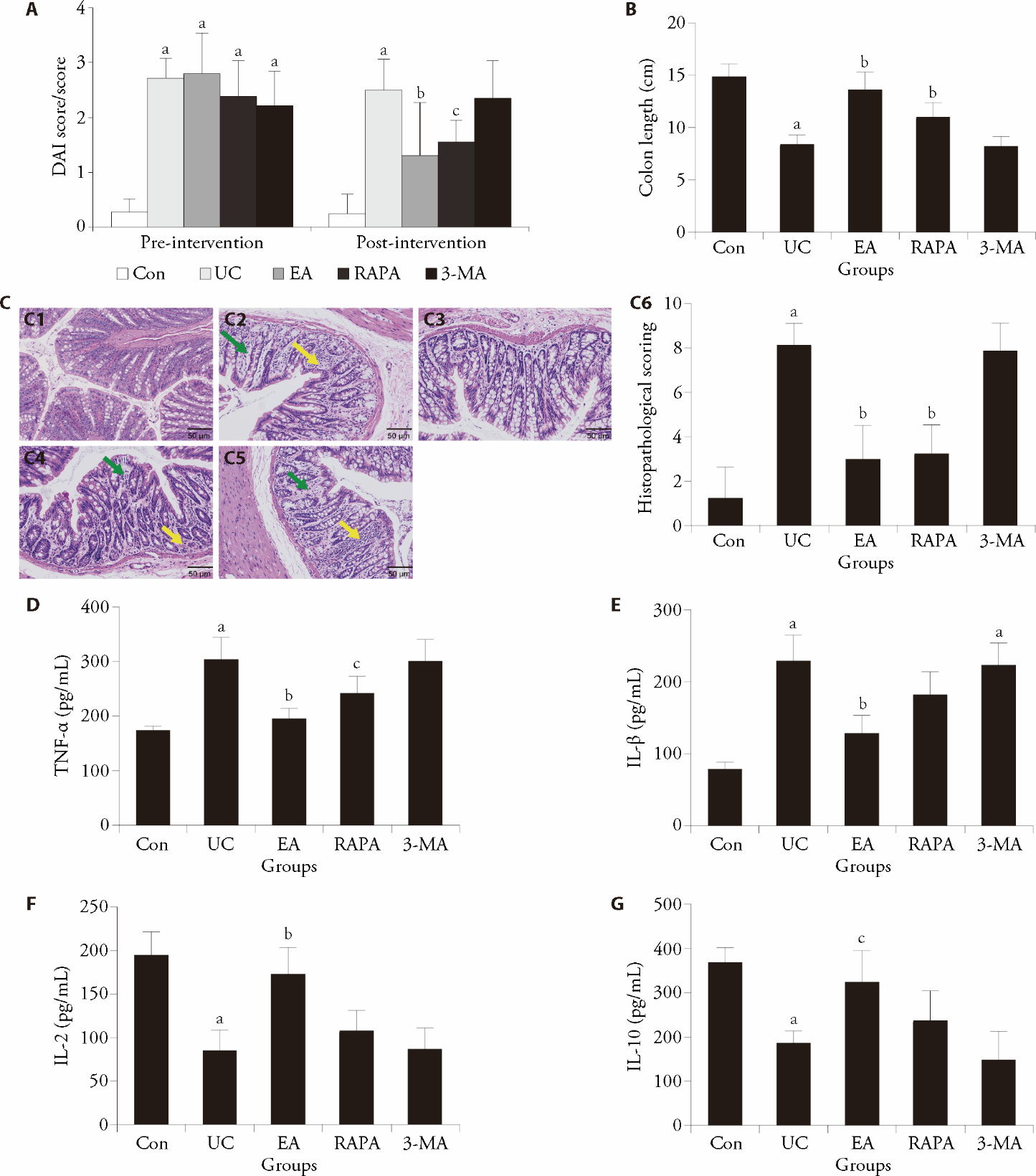
Figure 1 EA intervention improved colonic injury in UC rats A: comparison of DAI scores; B: comparison of colon length; C: comparison of colon histopathology assessed by HE staining. Green arrows indicate crypt structural damage, whereas yellow arrows indicate inflammatory cell infiltration; C1: Con group; C2: UC group; C3: EA group; C4: RAPA group; C5: 3-MA group; D: comparison of inflammatory cytokine levels; D1: TNF-α; D2: IL-β; D3: IL-2; D4: IL-10. Con group: rats were allowed free access to distilled water without UC induction and received intraperitoneal injections of an equal volume of 0.9% saline; UC group: Rats were allowed free access to a 5% DSS solution for 7 consecutive days to establish the UC model. After successful model establishment, they received intraperitoneal injections of an equal volume of 0.9% saline once daily for 3 consecutive days; EA group: after UC model establishment, rats received electroacupuncture at Zhongwan (CV12), bilateral Tianshu (ST25), and bilateral Shangjuxu (ST37), using alternating sparse-dense waves at 10/50 Hz for 20 min once daily for 3 consecutive days. They also received intraperitoneal injections of an equal volume of 0.9% saline; RAPA group: after UC model establishment, rats received intraperitoneal injections of RAPA at 2 mg/kg once daily for 3 consecutive days; 3-MA group: after UC model establishment, rats received intraperitoneal injections of 3-MA at 1.5 mg/100 g once daily for 3 consecutive days. DAI: disease activity index; HE: hematoxylin and eosin; TNF-α: tumor necrosis factor-α; IL-1β: interleukin-1β; DSS: dextran sulfate sodium; UC: ulcerative colitis; EA: electroacupuncture; RAPA: rapamycin; 3-MA: 3-methyladenine. The results were analyzed using one-way analysis of variance. Data are presented as mean ± standard deviation (n = 8). Compared with the Con group, aP < 0.01; compared with the UC group, bP < 0.01, cP < 0.05.
Figure 1 EA intervention improved colonic injury in UC rats A: comparison of DAI scores; B: comparison of colon length; C: comparison of colon histopathology assessed by HE staining. Green arrows indicate crypt structural damage, whereas yellow arrows indicate inflammatory cell infiltration; C1: Con group; C2: UC group; C3: EA group; C4: RAPA group; C5: 3-MA group; D: comparison of inflammatory cytokine levels; D1: TNF-α; D2: IL-β; D3: IL-2; D4: IL-10. Con group: rats were allowed free access to distilled water without UC induction and received intraperitoneal injections of an equal volume of 0.9% saline; UC group: Rats were allowed free access to a 5% DSS solution for 7 consecutive days to establish the UC model. After successful model establishment, they received intraperitoneal injections of an equal volume of 0.9% saline once daily for 3 consecutive days; EA group: after UC model establishment, rats received electroacupuncture at Zhongwan (CV12), bilateral Tianshu (ST25), and bilateral Shangjuxu (ST37), using alternating sparse-dense waves at 10/50 Hz for 20 min once daily for 3 consecutive days. They also received intraperitoneal injections of an equal volume of 0.9% saline; RAPA group: after UC model establishment, rats received intraperitoneal injections of RAPA at 2 mg/kg once daily for 3 consecutive days; 3-MA group: after UC model establishment, rats received intraperitoneal injections of 3-MA at 1.5 mg/100 g once daily for 3 consecutive days. DAI: disease activity index; HE: hematoxylin and eosin; TNF-α: tumor necrosis factor-α; IL-1β: interleukin-1β; DSS: dextran sulfate sodium; UC: ulcerative colitis; EA: electroacupuncture; RAPA: rapamycin; 3-MA: 3-methyladenine. The results were analyzed using one-way analysis of variance. Data are presented as mean ± standard deviation (n = 8). Compared with the Con group, aP < 0.01; compared with the UC group, bP < 0.01, cP < 0.05.

Figure 2 EA intervention promotes autophagy levels in the colons of UC rats A: representative transmission electron microscopy images showing the ultrastructure of colon tissues. Yellow arrows indicate autolysosomes; A1-A5: TEM images of colon tissues; A6-A10: magnified views of the corresponding regions in A1-A5; A1, A6: Con group; A2, A7: UC group; A3, A8: EA group; A4, A9: RAPA group; A5, A10: 3-MA group; B: comparison of ATG5, ATG12, LC3-II/LC3-I, and p62 protein expression levels; B1: Western blot bands of each sample; B2: relative expression level of ATG5 protein; B3: relative expression level of ATG12 protein; B4: relative expression level of LC3 protein; B5: relative expression level of p62 protein; C: comparison of ATG5, ATG12, LC3, and p62 mRNA expression levels; C1: relative expression level of ATG5 Mrna; C2: relative expression level of ATG12 mRNA; C3: relative expression level of LC3 mRNA; C4: relative expression level of p62 mRNA; D: comparison of PI3K, p-AKT/AKT, and p-mTOR/mTOR protein expression levels; D1: Western blot bands of each sample; D2: relative expression level of PI3K protein; D3: relative expression level of AKT protein; D4: relative expression level of mTOR protein. Con group: rats were allowed free access to distilled water without UC induction and received intraperitoneal injections of an equal volume of 0.9% saline; UC group: Rats were allowed free access to a 5% DSS solution for 7 consecutive days to establish the UC model. After successful model establishment, they received intraperitoneal injections of an equal volume of 0.9% saline once daily for 3 consecutive days; EA group: after UC model establishment, rats received electroacupuncture at Zhongwan (CV12), bilateral Tianshu (ST25), and bilateral Shangjuxu (ST37), using alternating sparse-dense waves at 10/50 Hz for 20 min once daily for 3 consecutive days. They also received intraperitoneal injections of an equal volume of 0.9% saline; RAPA group: after UC model establishment, rats received intraperitoneal injections of RAPA at 2 mg/kg once daily for 3 consecutive days; 3-MA group: after UC model establishment, rats received intraperitoneal injections of 3-MA at 1.5 mg/100 g once daily for 3 consecutive days. TEM: transmission electron microscopy; ATG5: autophagy related 5; ATG12: autophagy related 12; LC3-Ⅰ: microtubule-associated protein 1 light chain 3-Ⅰ; LC3-Ⅱ: microtubule-associated protein 1 light chain 3-Ⅱ; p62: sequestosome 1; PI3K: phosphatidylinositol 3-kinase; AKT: protein kinase B; p-AKT: phosphorylated protein kinase B; mTOR: mechanistic target of rapamycin; p-mTOR: phosphorylated mechanistic target of rapamycin; DSS: dextran sulfate sodium; UC: ulcerative colitis; EA: electroacupuncture; RAPA: rapamycin; 3-MA: 3-methyladenine. The results were analyzed using one-way analysis of variance. Data are presented as mean ± standard deviation (n = 8). Compared with the Con group, aP < 0.05, cP < 0.01; compared with the UC group, bP < 0.05, dP < 0.01.
Figure 2 EA intervention promotes autophagy levels in the colons of UC rats A: representative transmission electron microscopy images showing the ultrastructure of colon tissues. Yellow arrows indicate autolysosomes; A1-A5: TEM images of colon tissues; A6-A10: magnified views of the corresponding regions in A1-A5; A1, A6: Con group; A2, A7: UC group; A3, A8: EA group; A4, A9: RAPA group; A5, A10: 3-MA group; B: comparison of ATG5, ATG12, LC3-II/LC3-I, and p62 protein expression levels; B1: Western blot bands of each sample; B2: relative expression level of ATG5 protein; B3: relative expression level of ATG12 protein; B4: relative expression level of LC3 protein; B5: relative expression level of p62 protein; C: comparison of ATG5, ATG12, LC3, and p62 mRNA expression levels; C1: relative expression level of ATG5 Mrna; C2: relative expression level of ATG12 mRNA; C3: relative expression level of LC3 mRNA; C4: relative expression level of p62 mRNA; D: comparison of PI3K, p-AKT/AKT, and p-mTOR/mTOR protein expression levels; D1: Western blot bands of each sample; D2: relative expression level of PI3K protein; D3: relative expression level of AKT protein; D4: relative expression level of mTOR protein. Con group: rats were allowed free access to distilled water without UC induction and received intraperitoneal injections of an equal volume of 0.9% saline; UC group: Rats were allowed free access to a 5% DSS solution for 7 consecutive days to establish the UC model. After successful model establishment, they received intraperitoneal injections of an equal volume of 0.9% saline once daily for 3 consecutive days; EA group: after UC model establishment, rats received electroacupuncture at Zhongwan (CV12), bilateral Tianshu (ST25), and bilateral Shangjuxu (ST37), using alternating sparse-dense waves at 10/50 Hz for 20 min once daily for 3 consecutive days. They also received intraperitoneal injections of an equal volume of 0.9% saline; RAPA group: after UC model establishment, rats received intraperitoneal injections of RAPA at 2 mg/kg once daily for 3 consecutive days; 3-MA group: after UC model establishment, rats received intraperitoneal injections of 3-MA at 1.5 mg/100 g once daily for 3 consecutive days. TEM: transmission electron microscopy; ATG5: autophagy related 5; ATG12: autophagy related 12; LC3-Ⅰ: microtubule-associated protein 1 light chain 3-Ⅰ; LC3-Ⅱ: microtubule-associated protein 1 light chain 3-Ⅱ; p62: sequestosome 1; PI3K: phosphatidylinositol 3-kinase; AKT: protein kinase B; p-AKT: phosphorylated protein kinase B; mTOR: mechanistic target of rapamycin; p-mTOR: phosphorylated mechanistic target of rapamycin; DSS: dextran sulfate sodium; UC: ulcerative colitis; EA: electroacupuncture; RAPA: rapamycin; 3-MA: 3-methyladenine. The results were analyzed using one-way analysis of variance. Data are presented as mean ± standard deviation (n = 8). Compared with the Con group, aP < 0.05, cP < 0.01; compared with the UC group, bP < 0.05, dP < 0.01.
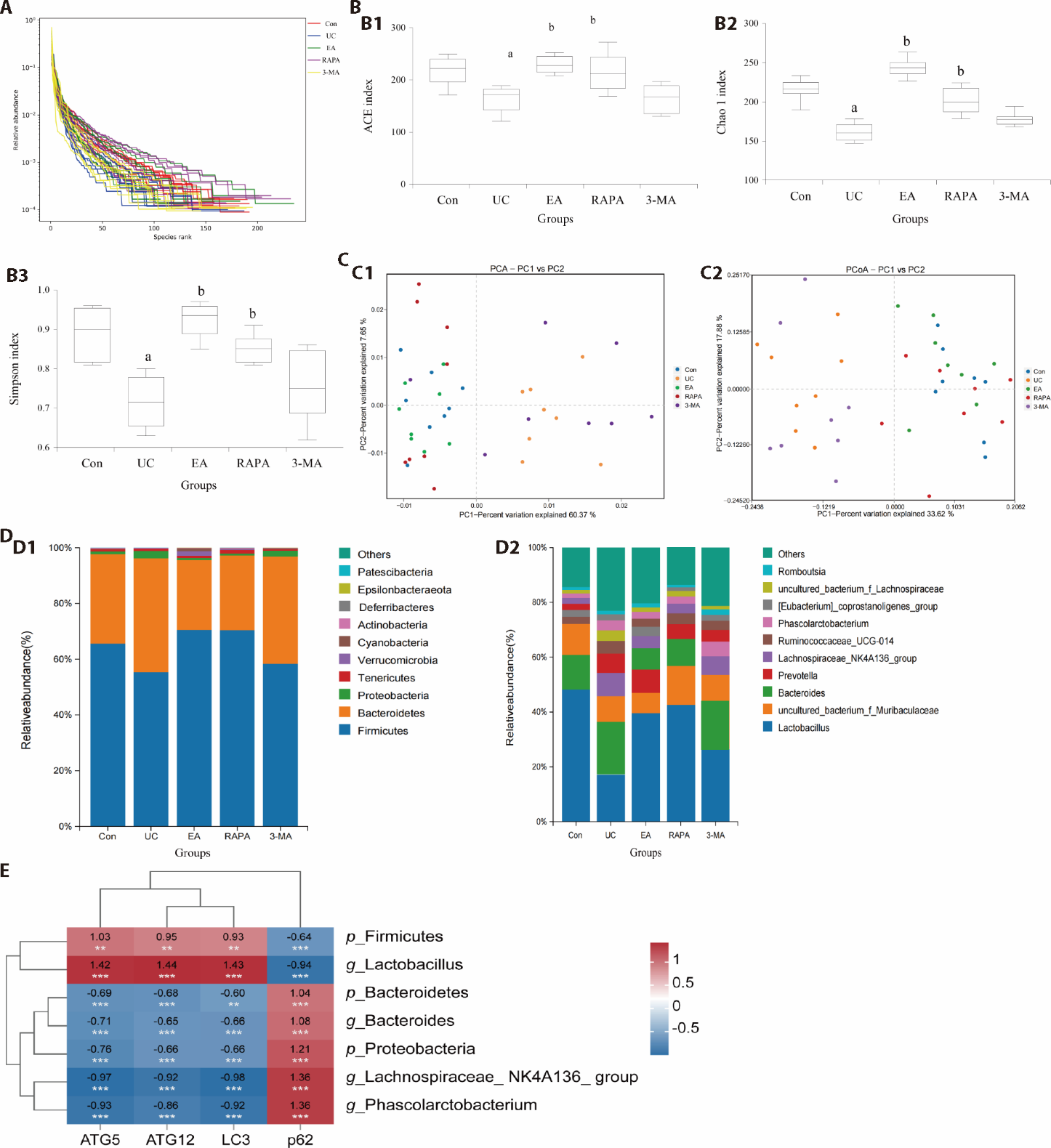
Figure 3 EA intervention regulated the structure and composition of gut microbiota in UC rats A: comparison of rank abundance curves; B: comparison of Alpha diversity. B1 ACE; B2: Chao1; B3: Simpson; C: comparison of Beta diversity; C1: PCA; C2: PCoA; D: comparison of differences in the gut microbiota; D1: phylum levels; D2: genus levels; E: Spearman correlation analysis. Con group: rats were allowed free access to distilled water without UC induction and received intraperitoneal injections of an equal volume of 0.9% saline; UC group: Rats were allowed free access to a 5% DSS solution for 7 consecutive days to establish the UC model. After successful model establishment, they received intraperitoneal injections of an equal volume of 0.9% saline once daily for 3 consecutive days; EA group: after UC model establishment, rats received electroacupuncture at Zhongwan (CV12), bilateral Tianshu (ST25), and bilateral Shangjuxu (ST37), using alternating sparse-dense waves at 10/50 Hz for 20 min once daily for 3 consecutive days. They also received intraperitoneal injections of an equal volume of 0.9% saline; RAPA group: after UC model establishment, rats received intraperitoneal injections of RAPA at 2 mg/kg once daily for 3 consecutive days; 3-MA group: after UC model establishment, rats received intraperitoneal injections of 3-MA at 1.5 mg/100 g once daily for 3 consecutive days. ACE: abundance-based coverage estimator; Chao1: Chao1 richness estimator; PCA: principal component analysis; PCoA: principal coordinates analysis. The results were analyzed using one-way analysis of variance and Spearman correlation analysis. Data are presented as mean ± standard deviation (n = 8). Compared with the Con group, aP < 0.01; compared with the UC group, bP < 0.01.
Figure 3 EA intervention regulated the structure and composition of gut microbiota in UC rats A: comparison of rank abundance curves; B: comparison of Alpha diversity. B1 ACE; B2: Chao1; B3: Simpson; C: comparison of Beta diversity; C1: PCA; C2: PCoA; D: comparison of differences in the gut microbiota; D1: phylum levels; D2: genus levels; E: Spearman correlation analysis. Con group: rats were allowed free access to distilled water without UC induction and received intraperitoneal injections of an equal volume of 0.9% saline; UC group: Rats were allowed free access to a 5% DSS solution for 7 consecutive days to establish the UC model. After successful model establishment, they received intraperitoneal injections of an equal volume of 0.9% saline once daily for 3 consecutive days; EA group: after UC model establishment, rats received electroacupuncture at Zhongwan (CV12), bilateral Tianshu (ST25), and bilateral Shangjuxu (ST37), using alternating sparse-dense waves at 10/50 Hz for 20 min once daily for 3 consecutive days. They also received intraperitoneal injections of an equal volume of 0.9% saline; RAPA group: after UC model establishment, rats received intraperitoneal injections of RAPA at 2 mg/kg once daily for 3 consecutive days; 3-MA group: after UC model establishment, rats received intraperitoneal injections of 3-MA at 1.5 mg/100 g once daily for 3 consecutive days. ACE: abundance-based coverage estimator; Chao1: Chao1 richness estimator; PCA: principal component analysis; PCoA: principal coordinates analysis. The results were analyzed using one-way analysis of variance and Spearman correlation analysis. Data are presented as mean ± standard deviation (n = 8). Compared with the Con group, aP < 0.01; compared with the UC group, bP < 0.01.

Figure 4 FMT improved colonic injury in UC rats A: comparison of DAI scores; B: comparison of colon length; C: comparison of colon histopathology assessed by HE staining. Green arrows indicate crypt structural damage, and yellow arrows denote inflammatory cell infiltration. C1: FMT-EA group; C2: FMT-UC group; D: comparison of inflammatory cytokine levels; D1: TNF-α; D2: IL-β; D3: IL-2; D4: IL-10; E: comparison of protein expression levels of ATG5, ATG12, LC3-II/LC3-I and p62; E1: Western blot bands of each sample; E2: ATG5 protein; E3: ATG12 protein; E4: LC3 protein; E5: p62 protein; F: comparison of protein expression levels of PI3K, p-AKT/AKT and p-mTOR/mTOR; F1: Western blot bands of each sample; F2: PI3K protein; F3: m-TOR protein; F4: AKT protein. FMT-UC group: UC rats received fecal microbiota from UC donor rats by oral gavage for 7 consecutive days; FMT-EA group: UC rats received fecal microbiota from EA-treated donor rats by oral gavage for 7 consecutive days. DAI: disease activity index; HE: hematoxylin and eosin; FMT: fecal microbiota transplantation; UC: ulcerative colitis; EA: electroacupuncture; ATG5: autophagy-related protein 5; ATG12: autophagy-related protein 12; LC3: microtubule-associated protein 1 light chain 3; p62: sequestosome 1; PI3K: phosphoinositide 3-kinase; AKT: protein kinase B; p-AKT: phosphorylated AKT; mTOR: mechanistic target of rapamycin; p-mTOR: phosphorylated mTOR. Differences between two groups were analyzed using a Student t test. Data are presented as mean ± standard deviation (n = 8). Compared with the FMT-UC group, aP < 0.01, bP < 0.05.
Figure 4 FMT improved colonic injury in UC rats A: comparison of DAI scores; B: comparison of colon length; C: comparison of colon histopathology assessed by HE staining. Green arrows indicate crypt structural damage, and yellow arrows denote inflammatory cell infiltration. C1: FMT-EA group; C2: FMT-UC group; D: comparison of inflammatory cytokine levels; D1: TNF-α; D2: IL-β; D3: IL-2; D4: IL-10; E: comparison of protein expression levels of ATG5, ATG12, LC3-II/LC3-I and p62; E1: Western blot bands of each sample; E2: ATG5 protein; E3: ATG12 protein; E4: LC3 protein; E5: p62 protein; F: comparison of protein expression levels of PI3K, p-AKT/AKT and p-mTOR/mTOR; F1: Western blot bands of each sample; F2: PI3K protein; F3: m-TOR protein; F4: AKT protein. FMT-UC group: UC rats received fecal microbiota from UC donor rats by oral gavage for 7 consecutive days; FMT-EA group: UC rats received fecal microbiota from EA-treated donor rats by oral gavage for 7 consecutive days. DAI: disease activity index; HE: hematoxylin and eosin; FMT: fecal microbiota transplantation; UC: ulcerative colitis; EA: electroacupuncture; ATG5: autophagy-related protein 5; ATG12: autophagy-related protein 12; LC3: microtubule-associated protein 1 light chain 3; p62: sequestosome 1; PI3K: phosphoinositide 3-kinase; AKT: protein kinase B; p-AKT: phosphorylated AKT; mTOR: mechanistic target of rapamycin; p-mTOR: phosphorylated mTOR. Differences between two groups were analyzed using a Student t test. Data are presented as mean ± standard deviation (n = 8). Compared with the FMT-UC group, aP < 0.01, bP < 0.05.
| 1. |
Kucharzik T, Koletzko S, Kannengiesser K, Dignass A. Ulcerative colitis-diagnostic and therapeutic algorithms. Dtsch Arztebl Int 2020; 117: 564-74.
DOI PMID |
| 2. |
Gros B, Kaplan GG. Ulcerative colitis in adults: a review. JAMA 2023; 330: 951-65.
DOI PMID |
| 3. |
Du L, Ha C. Epidemiology and pathogenesis of ulcerative colitis. Gastroenterol Clin North Am 2020; 49: 643-54.
DOI URL |
| 4. |
Wei SC, Sollano J, Hui YT, et al. Epidemiology, burden of disease, and unmet needs in the treatment of ulcerative colitis in Asia. Expert Rev Gastroenterol Hepatol 2021; 15: 275-89.
DOI URL |
| 5. | Yamazaki M, Chung H, Xu Y, Qiu H. Trends in the prevalence and incidence of ulcerative colitis in Japan and the US. Int J Colorectal Dis 2023; 38: 135. |
| 6. |
Buie MJ, Quan J, Windsor JW, et al. Global hospitalization trends for Crohn's disease and ulcerative colitis in the 21st century: a systematic review with temporal analyses. Clin Gastroenterol Hepatol 2023; 21: 2211-21.
DOI URL |
| 7. |
Conrad K, Roggenbuck D, Laass MW. Diagnosis and classification of ulcerative colitis. Autoimmun Rev 2014; 13: 463-6.
DOI PMID |
| 8. | Porter RJ, Kalla R, Ho GT. Ulcerative colitis: recent advances in the understanding of disease pathogenesis. F1000Res 2020; 9: F1000 Faculty Rev-294. |
| 9. |
Kałużna A, Olczyk P, Komosińska-Vassev K. The role of innate and adaptive immune cells in the pathogenesis and development of the inflammatory response in ulcerative colitis. J Clin Med 2022; 11: 400.
DOI URL |
| 10. |
Guo XY, Liu XJ, Hao JY. Gut microbiota in ulcerative colitis: Insights on pathogenesis and treatment. J Dig Dis 2020; 21: 147-59.
DOI URL |
| 11. |
Pei LY, Ke YS, Zhao HH, et al. Role of colonic microbiota in the pathogenesis of ulcerative colitis. BMC Gastroenterol 2019; 19: 10.
DOI |
| 12. |
Larabi A, Barnich N, Nguyen HTT. New insights into the interplay between autophagy, gut microbiota and inflammatory responses in IBD. Autophagy 2020; 16: 38-51.
DOI PMID |
| 13. |
Shao BZ, Yao Y, Zhai JS, Zhu JH, Li JP, Wu K. The role of autophagy in inflammatory bowel disease. Front Physiol 2021; 12: 621132.
DOI URL |
| 14. |
Raine T, Bonovas S, Burisch J, et al. ECCO guidelines on therapeutics in ulcerative colitis: medical treatment. J Crohns Colitis 2022; 16: 2-17.
DOI URL |
| 15. | Tripathi K, Feuerstein JD. New developments in ulcerative colitis: latest evidence on management, treatment, and maintenance. Drugs Context 2019; 8: 212572. |
| 16. |
Liu S, Huang Q, Huang Q, et al. The protective effects of electroacupuncture on intestinal barrier lesions in IBS and UC model. Sci Rep 2023; 13: 7276.
DOI PMID |
| 17. |
Wang L, An J, Song S, et al. Electroacupuncture preserves intestinal barrier integrity through modulating the gut microbiota in DSS-induced chronic colitis. Life Sci 2020; 261: 118473.
DOI URL |
| 18. | Xu HC, Wu RL, Jiang ZW, et al. Study on the mechanism of electroacupuncture regulating macrophage polarization to improve ulcerative colitis in rats. Zhen Ci Yan Jiu 2023; 48: 1033-40. |
| 19. |
Martin JC, Bériou G, Josien R. Dextran sulfate sodium (DSS)-induced acute colitis in the rat. Methods Mol Biol 2016; 1371: 197-203.
DOI PMID |
| 20. |
China Association of Acupuncture and Moxibustion. Nomenclature and location of acupuncture points for laboratory animals part 2: rat. World J Acupunct Moxibustion 2024; 35: 163-5.
DOI URL |
| 21. |
Liu JL, Chen LJ, Liu Y, et al. The gut microbiota contributes to methamphetamine-induced reproductive toxicity in male mice. Ecotoxicol Environ Saf 2024; 279: 116457.
DOI URL |
| 22. |
Murthy SN, Cooper HS, Shim H, Shah RS, Ibrahim SA, Sedergran DJ. Treatment of dextran sulfate sodium-induced murine colitis by intracolonic cyclosporin. Dig Dis Sci 1993; 38: 1722-34.
DOI URL |
| 23. |
Wirtz S, Popp V, Kindermann M, et al. Chemically induced mouse models of acute and chronic intestinal inflammation. Nat Protoc 2017; 12: 1295-1309.
DOI PMID |
| 24. |
Liu Y, Li BG, Su YH, et al. Potential activity of Traditional Chinese Medicine against ulcerative colitis: a review. J Ethnopharmacol 2022; 289: 115084.
DOI URL |
| 25. |
Lin YY, Zhao JM, Ji YJ, et al. Typical ulcerative colitis treated by herbs-partitioned moxibustion: a case report. World J Clin Cases 2020; 8: 1515-24.
DOI URL |
| 26. | Qi Q, Im H, Li KS, et al. Influence of herb-partitioned moxibustion at Qihai (CV6) and bilateral Tianshu (ST25) and Shangjuxu (ST37) acupoints on toll-like receptors 4 signaling pathways in patients with ulcerative colitis. J Tradit Chin Med 2021; 41: 479-85. |
| 27. | Cao QR, Ling C, Liu MJ, Zhang H, Deng SF. Electroacupuncture of "Shangjuxu" (ST37) and "Tianshu" (ST25) reduces colonic injury by suppressing NF-κB/NLRP3 signaling in rats with ulcerative colitis. Zhen Ci Yan Jiu 2022; 47: 314-20. |
| 28. |
Wu HG, Liu HR, Tan LY, et al. Electroacupuncture and moxibustion promote neutrophil apoptosis and improve ulcerative colitis in rats. Dig Dis Sci 2007; 52: 379-84.
DOI URL |
| 29. |
Sun J, Zhang H, Wang C, et al. Regulating the balance of Th17/Treg via electroacupuncture and moxibustion: an ulcerative colitis mice model based study. Evid Based Complement Alternat Med 2017; 2017: 7296353.
DOI URL |
| 30. |
Qiu P, Liu L, Fang J, et al. Identification of pharmacological autophagy regulators of active ulcerative colitis. Front Pharmacol 2021; 12: 769718.
DOI URL |
| 31. |
Gong ZZ, Li T, Yan H, et al. Exploring the autophagy-related pathogenesis of active ulcerative colitis. World J Clin Cases 2024; 12: 1622-33.
DOI URL |
| 32. |
Cao W, Li J, Yang K, Cao D. An overview of autophagy: Mechanism, regulation and research progress. Bull Cancer 2021; 108: 304-22.
DOI PMID |
| 33. |
Lystad AH, Carlsson SR, Simonsen A. Toward the function of mammalian ATG12-ATG5-ATG16L1 complex in autophagy and related processes. Autophagy 2019; 15: 1485-6.
DOI PMID |
| 34. |
Tanida I, Ueno T, Kominami E. LC3 and autophagy. Methods Mol Biol 2008; 445: 77-88.
DOI PMID |
| 35. |
Komatsu M, Ichimura Y. Physiological significance of selective degradation of p62 by autophagy. FEBS Lett 2010; 584: 1374-8.
DOI PMID |
| 36. | Hong J. Protective effects of curcumin-regulated intestinal epithelial autophagy on inflammatory bowel disease in mice. Gastroenterol Res Pract 2022; 2022: 2163931. |
| 37. |
Qiao D, Zhang Z, Zhang Y, et al. Regulation of endoplasmic reticulum stress-autophagy: a potential therapeutic target for ulcerative colitis. Front Pharmacol 2021; 12: 697360.
DOI URL |
| 38. |
Afzal O, Altamimi ASA, Mubeen B, et al. mTOR as a potential target for the treatment of microbial infections, inflammatory bowel diseases, and colorectal cancer. Int J Mol Sci 2022; 23: 12470.
DOI URL |
| 39. |
Chen Q, Duan X, Fan H, et al. Oxymatrine protects against DSS-induced colitis via inhibiting the PI3K/AKT signaling pathway. Int Immunopharmacol 2017; 53: 149-57.
DOI URL |
| 40. |
Liu Y, Deng S, Sun L, et al. Compound sophorae decoction mitigates DSS-induced ulcerative colitis by activating autophagy through PI3K-AKT pathway: a integrative research combining network pharmacology and in vivo animal model validation. J Ethnopharmacol 2025; 337: 118885.
DOI URL |
| 41. |
Ohkusa T, Koido S. Intestinal microbiota and ulcerative colitis. J Infect Chemother 2015; 21: 761-8.
DOI PMID |
| 42. |
Dai ZF, Ma XY, Yang RL, et al. Intestinal flora alterations in patients with ulcerative colitis and their association with inflammation. Exp Ther Med 2021; 22: 1322.
DOI PMID |
| 43. |
Noor SO, Ridgway K, Scovell L, et al. Ulcerative colitis and irritable bowel patients exhibit distinct abnormalities of the gut microbiota. BMC Gastroenterol 2010; 10: 134.
DOI PMID |
| 44. |
Stojanov S, Berlec A, Štrukelj B. The influence of probiotics on the firmicutes/bacteroidetes ratio in the treatment of obesity and inflammatory bowel disease. Microorganisms 2020; 8: 1715.
DOI URL |
| 45. |
Tsai YC, Tai WC, Liang CM, et al. Alterations of the gut microbiota and the firmicutes/bacteroidetes ratio after biologic treatment in inflammatory bowel disease. J Microbiol Immunol Infect 2025; 58: 62-9.
DOI URL |
| 46. |
Zhu S, Han M, Liu S, Fan L, Shi H, Li P. Composition and diverse differences of intestinal microbiota in ulcerative colitis patients. Front Cell Infect Microbiol 2022; 12: 953962.
DOI URL |
| 47. | Wang YN, Meng XC, Dong YF, et al. Effects of probiotics and prebiotics on intestinal microbiota in mice with acute colitis based on 16S rRNA gene sequencing. Chin Med J (Engl) 2019; 132: 1833-42. |
| 48. |
Huang Z, Zhao Y, Yang W, et al. Amomum tsaoko flavonoids attenuate ulcerative colitis by inhibiting TLR4/NF-κB/NLRP3 signaling pathway and modulating gut microbiota in mice. Front Microbiol 2025; 16: 1557778.
DOI URL |
| 49. |
Guo S, Geng W, Chen S, et al. Ginger alleviates DSS-induced ulcerative colitis severity by improving the diversity and function of gut microbiota. Front Pharmacol 2021; 12: 632569.
DOI URL |
| 50. | Wang C, Xiao Y, Yu L, et al. Protective effects of different Bacteroides vulgatus strains against lipopolysaccharide-induced acute intestinal injury, and their underlying functional genes. J Adv Res 2021; 36: 27-37. |
| 51. |
Lapaquette P, Bizeau JB, Acar N, Bringer MA. Reciprocal interactions between gut microbiota and autophagy. World J Gastroenterol 2021; 27: 8283-301.
DOI URL |
| 52. |
Subramanian A, J A, T T, et al. Exploring the connections: autophagy, gut microbiota, and inflammatory bowel disease pathogenesis. J Inflamm Res 2024; 17: 10453-70.
DOI PMID |
| 53. |
Li S, Qian Q, Yang H, et al. Fucoidan alleviated dextran sulfate sodium-induced ulcerative colitis with improved intestinal barrier, reshaped gut microbiota composition, and promoted autophagy in male C57BL/6 mice. Nutr Res 2024; 122: 1-18.
DOI URL |
| 54. |
Xiao J, Xie L, Zheng B, et al. Polygonatum cyrtonema saponin supplementation ameliorated DSS-induced intestinal barrier injury via targeting the PI3K/AKT/mTOR-mediated autophagy/microbiota axis. Food Biosci 2024; 61: 104727.
DOI URL |
| 55. | Dong L, Du H, Zhang M, et al. Anti-inflammatory effect of Rhein on ulcerative colitis via inhibiting PI3K/Akt/mTOR signaling pathway and regulating gut microbiota. Phytother Res 2022; 36: 2081-94. |
| 56. |
Shen ZH, Zhu CX, Quan YS, et al. Relationship between intestinal microbiota and ulcerative colitis: mechanisms and clinical application of probiotics and fecal microbiota transplantation. World J Gastroenterol 2018; 24: 5-14.
DOI URL |
| 57. |
Li Q, Ding X, Liu K, et al. Fecal microbiota transplantation for ulcerative colitis: the optimum timing and gut microbiota as predictors for long-term clinical outcomes. Clin Transl Gastroenterol 2020; 11: e00224.
DOI URL |
| 58. |
Costello SP, Soo W, Bryant RV, et al. Systematic review with meta-analysis: faecal microbiota transplantation for the induction of remission for active ulcerative colitis. Aliment Pharmacol Ther 2017; 46: 213-24.
DOI URL |
| 59. |
Zhang W, Zou G, Li B, et al. Fecal microbiota transplantation (FMT) alleviates experimental colitis in mice by gut microbiota regulation. J Microbiol Biotechnol 2020; 30: 1132-41.
DOI URL |
| [1] | TIAN Yehong, ZHANG Qiaoli, ZHANG Rui, GAO Tao, LI Nanzhi, HUANG Jinchang, JIANG Xin, QIU Xiaowei. Electroacupuncture enhances CD8+ T cells recruitment via modulating sympathetic nervous system to suppress tumor growth in mice bearing triple-negative breast cancer [J]. Journal of Traditional Chinese Medicine, 2026, 46(4): 832-843. |
| [2] | LIU Yutong, YANG Yan, XU Huiying, LI Lei, GE Fei, CHEN Meijuan. Jianchang No. 1 (健肠1号) formula alleviates irritable bowel syndrome with diarrhea via improving gut microbiota and regulating toll-like receptors/nuclear factor-kappa B signaling pathway in bowel syndrome with diarrhea rats [J]. Journal of Traditional Chinese Medicine, 2026, 46(4): 883-893. |
| [3] | ZHENG Jie, DING Zhimin, CHEN Tingyu, LÜ Zhuan, ZHANG Lihong, LIU Yongtao, ZHANG Yasu, JIN Xiaoqin, WANG Xinyu, LIU Bin, FENG Xiaodong. Antihypertensive effect of acupuncture involve reshaping gut microbiota and alleviating gut inflammation in spontaneously hypertensive rats [J]. Journal of Traditional Chinese Medicine, 2026, 46(4): 907-915. |
| [4] | CHEN Ying, QIAO Jiajun, LU Yuyuan, XUE Chongxiang, XIA Zhongyuan. Mechanism of Buzhong Yiqi decoction (补中益气汤) for Hashimoto's thyroiditis: insights from gut microbiota and metabolomics [J]. Journal of Traditional Chinese Medicine, 2026, 46(3): 571-583. |
| [5] | QU Yuanyuan, FENG Chuwen, SUN Weibo, SHAO Yuying, LU Jing, GUO Shuhao, LI Binbin, YANG Tiansong. Effect of “Tongdu Yupi Tiaoshen” electroacupuncture on behavioral performance and hippocampal structure and function in chronic fatigue syndrome rats [J]. Journal of Traditional Chinese Medicine, 2026, 46(3): 605-616. |
| [6] | GAO Bing, LIU Pan, LI Lan, GONG Tiantian, ZHU Ling, LI Lingji, XIA Ran, MA Qiang, HU Jing, WANG Jing. Moxibustion alleviates autophagy and inhibits ferroptosis to improve cardiac function in rats with post-myocardial infarction heart failure [J]. Journal of Traditional Chinese Medicine, 2026, 46(2): 339-349. |
| [7] | YUAN Menghua, SHAO Jianbin, YANG Yawei, ZHAO Yan, HU Xingang. Combined acupuncture and herb treatment improves intestinal flora inabdominally obese subjects based on 16s rRNA sequencing: a randomized controlled trial [J]. Journal of Traditional Chinese Medicine, 2026, 46(1): 205-210. |
| [8] | LI Jiazheng, ZHOU Bo. Alleviation of nitroglycerin-induced migraine in rats: inhibition of central sensitization by optimizing Qinggan Jieyu decoction (清肝解郁方) via regulation of purinergic receptor P2X ligand-gated ion channel 7 and autophagy [J]. Journal of Traditional Chinese Medicine, 2026, 46(1): 85-94. |
| [9] | SHOU Yin, JIANG Juntao, HU Jianlin, JI Wei, CHEN Chunyan, HU Li, MA Yuhang, ZHANG Bimeng. Electroacupuncture alleviates type 2 diabetes mellitus by promoting plasma-derived exosomal circular RNA of enhancer of zeste homolog 1 expression [J]. Journal of Traditional Chinese Medicine, 2025, 45(6): 1228-1237. |
| [10] | WANG Raoqiong, HAO Linyao, LU Ye, WANG Lingxue, LI Jianrong, PENG Yan, TANG Hongmei, LI Shuangyang, BAI Xue. Mechanism analysis of Tongqiao Yizhi decoction (通窍益智颗粒) in treating vascular dementia rats by brain tissue untargeted metabonomics and fecal 16S rRNA gene sequencing [J]. Journal of Traditional Chinese Medicine, 2025, 45(4): 759-769. |
| [11] | WU Haoyang, Liu Yuan, CHEN Yuzhou, XIE Yizhou, ZHONG Lei, YU Yang, FAN Xiaohong. Effect of pestle needle therapy on the posterior cervical muscle in a rabbit model of cervical spondylosis [J]. Journal of Traditional Chinese Medicine, 2025, 45(4): 786-795. |
| [12] | ZHAO Ping, HE Xingbo, HAN Xudong, CHEN Xinyue, LI Zhanglong, SONG Jike, XING Wenjia, WU Jiangfeng, GUO Bin, BI Hongsheng. Mechanism of electroacupuncture involve in lens-induced myopia guinea pigs by inhibiting wnt/β-catenin signaling pathway [J]. Journal of Traditional Chinese Medicine, 2025, 45(4): 796-805. |
| [13] | ZHANG Lina, LIN Xiu, ZHAO Xin, LI Wenjuan, ZHAO Ye. Study on the mechanism of Fuzi Lizhong decoction (附子理中汤) in the treatment of colorectal cancer of spleen kidney Yang deficiency from the perspective of intestinal flora and hypoxia inducible factor-1α signalling pathway [J]. Journal of Traditional Chinese Medicine, 2025, 45(4): 845-851. |
| [14] | ZHENG Ruwen, DONG Xu, WANG Tianyi, FENG Liyuan, ZHANG Hongyan, HUO Hong, ZHANG Ying, ZHANG Qianshi, ZHU Xingyan, WANG Dongyan. Electroacupuncture versus conventional acupuncture of scalp motor area for post-stroke wrist dyskinesia and its effect on muscle function: a randomized, controlled clinical trial [J]. Journal of Traditional Chinese Medicine, 2025, 45(4): 852-859. |
| [15] | LIU Qian, XIAO Liuchen, YUAN Yue, DANG Xiaopeng, WEN Jie, TAN Moye, LIU Yuxin, GU Hongfeng, XIE Xuejiao. Xiong's Shiwei Wendan decoction (熊氏十味温胆汤) attenuates plaque lesions and balances gut microbiota dysbiosis in ApoE-/- mice with high-fat diet [J]. Journal of Traditional Chinese Medicine, 2025, 45(3): 508-517. |
| Viewed | ||||||
|
Full text |
|
|||||
|
Abstract |
|
|||||
