
Journal of Traditional Chinese Medicine ›› 2026, Vol. 46 ›› Issue (3): 571-583.DOI: 10.19852/j.cnki.jtcm.2026.03.005
• Original Articles • Previous Articles Next Articles
Mechanism of Buzhong Yiqi decoction (补中益气汤) for Hashimoto's thyroiditis: insights from gut microbiota and metabolomics
CHEN Ying1, QIAO Jiajun2, LU Yuyuan1, XUE Chongxiang3, XIA Zhongyuan2( )
)
- 1
Graduate School ,Beijing University of Chinese Medicine, Beijing 100029, China; Surgery of Traditional Chinese Medicine, China-Japan Friendship Hospital Beijing 100029, China
2Surgery of Traditional Chinese Medicine ,China-Japan Friendship Hospital Beijing 100029, China
3Department of Endocrinology ,the Second Affiliated Hospital, Zhejiang University School of Medicine Hangzhou 310009, China
-
Received:2024-12-19Accepted:2025-09-12Online:2026-06-15Published:2026-06-08 -
Contact:Prof. XIA Zhongyuan, Department of Surgery of Traditional Chinese Medicine, China-Japan Friendship Hospital, Beijing 100029, China. zryhyy1961@163.com, Telephone: +86-10-84205309 -
About author:First author contact:CHEN Ying and QIAO Jiajun are co-first authors and contributed equally to this work
-
Supported by:National High Level Hospital Clinical Research Funding: Study on the Mechanism of the Gut Microbiota Participating in the Metabolic Regulation Therapy of Hashimoto's Thyroiditis by Buzhong Yiqi decoction(2023-NHLHCRF-BQ-28);Tongchuan Thyroid Disease Prevention Center 2023 Research Special Youth Project: Study on the Mechanism of Buzhong Yiqi decoction in Treating Hashimoto's Thyroiditis by Improving Gut Mucosal Barrier(TJF-QN-2023-06);National Natural Science Foundation of China: Action Mechanism of Buzhong Yiqi decoction in Treating Hashimoto's Thyroiditis Based on Transforming Growth Factor β/Smad Signaling Pathway and the Balance between Treg and Th17 Cells(81973855)

Cite this article
CHEN Ying, QIAO Jiajun, LU Yuyuan, XUE Chongxiang, XIA Zhongyuan. Mechanism of Buzhong Yiqi decoction (补中益气汤) for Hashimoto's thyroiditis: insights from gut microbiota and metabolomics[J]. Journal of Traditional Chinese Medicine, 2026, 46(3): 571-583.
share this article
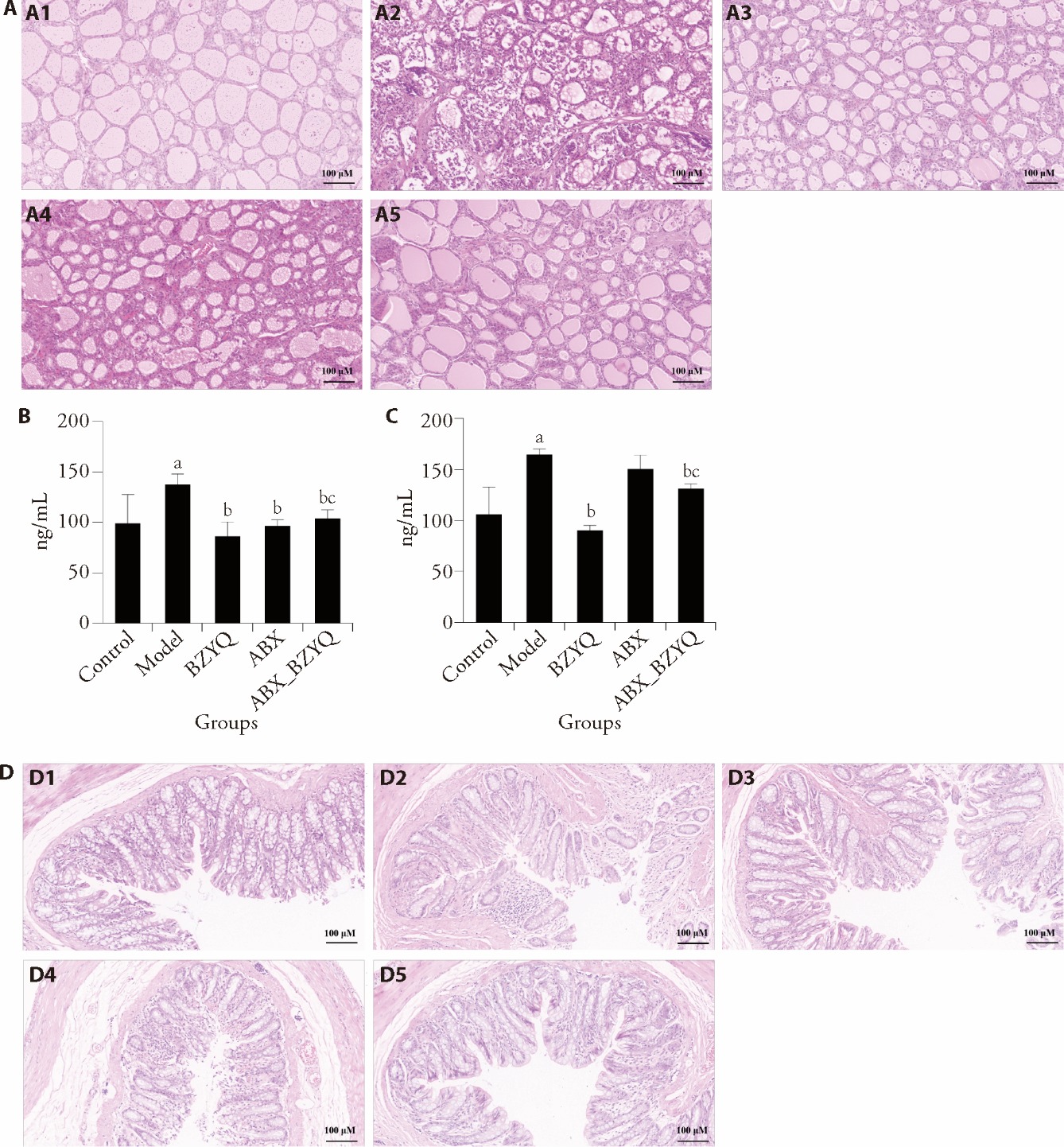
Figure 1 Therapeutic effects of BZYQ on AIT rats A: thyroid tissue HE staining sections (× 20); B: serum TPOAb by ELISA detection; C: serum TGAb by ELISA detection; D: colon tissue HE staining sections (× 20); A1, D1: control group; A2, D2: model group; A3, D3: BZYQ group; A4, D4: ABX group; A5, D5: ABX_BZYQ group. BZYQ group: the AIT received BZYQ at a rate of 1 mL·g-1;·d-1;, once daily for 8 consecutive weeks; ABX group: the AIT received ceftriaxone sodium (350 mg/kg) and gentamicin sulfate (126mg/kg) at a rate of 1 mL·g-1;·d-1;, administered twice daily for 6 consecutive days, to deplete the gut microbiota; ABX_BZYQ group: After deplete the gut microbiota, the AIT received BZYQ at a rate of 1 mL·g-1;·d-1;, once daily for 8 consecutive weeks. BZYQ: Buzhong Yiqi decoction; ABX: antibiotics; AIT: autoimmune thyroiditis; TPOAb: thyroid peroxidase antibody; TGAb: thyroglobulin antibody; HE: hematoxylin and eosin; ELISA: enzyme linked immunosorbent assay; The data were expressed as mean ± standard deviation (n = 6) and analyzed using one-way analysis of variance with Dunnett's post hoc test. aP < 0.05 vs control group; bP < 0.05 vs model group; cP < 0.05 vs BZYQ group.
Figure 1 Therapeutic effects of BZYQ on AIT rats A: thyroid tissue HE staining sections (× 20); B: serum TPOAb by ELISA detection; C: serum TGAb by ELISA detection; D: colon tissue HE staining sections (× 20); A1, D1: control group; A2, D2: model group; A3, D3: BZYQ group; A4, D4: ABX group; A5, D5: ABX_BZYQ group. BZYQ group: the AIT received BZYQ at a rate of 1 mL·g-1;·d-1;, once daily for 8 consecutive weeks; ABX group: the AIT received ceftriaxone sodium (350 mg/kg) and gentamicin sulfate (126mg/kg) at a rate of 1 mL·g-1;·d-1;, administered twice daily for 6 consecutive days, to deplete the gut microbiota; ABX_BZYQ group: After deplete the gut microbiota, the AIT received BZYQ at a rate of 1 mL·g-1;·d-1;, once daily for 8 consecutive weeks. BZYQ: Buzhong Yiqi decoction; ABX: antibiotics; AIT: autoimmune thyroiditis; TPOAb: thyroid peroxidase antibody; TGAb: thyroglobulin antibody; HE: hematoxylin and eosin; ELISA: enzyme linked immunosorbent assay; The data were expressed as mean ± standard deviation (n = 6) and analyzed using one-way analysis of variance with Dunnett's post hoc test. aP < 0.05 vs control group; bP < 0.05 vs model group; cP < 0.05 vs BZYQ group.
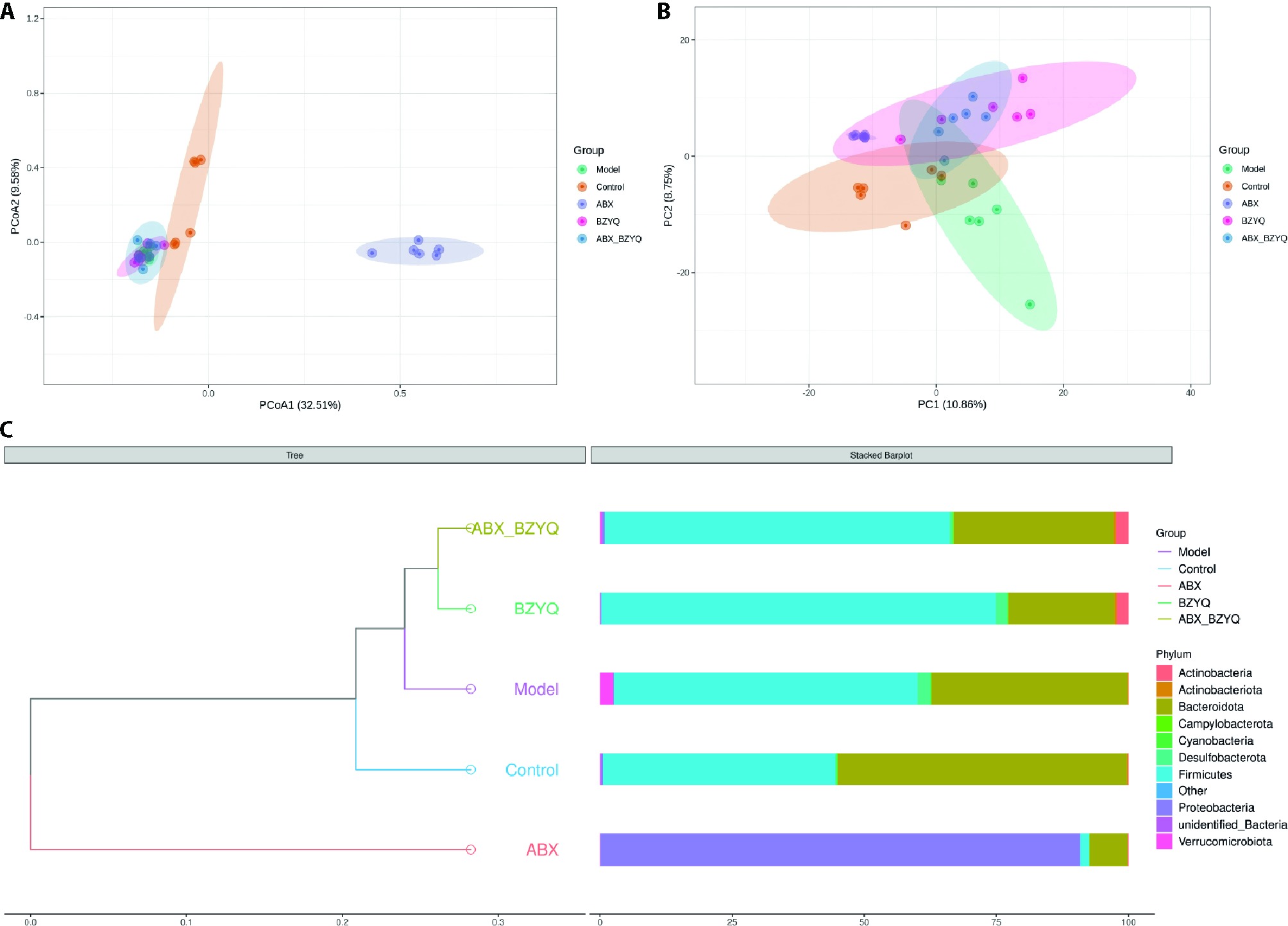
Figure 2 Comparative analysis of inter-group differences. A: PCoA analysis based on Unweighted Unifrac distances of ASVs; B: PCA analysis based on ASVs; C: UPGMA dendrogram based on Weighted Unifrac distances of ASVs. BZYQ group: the AIT received BZYQ at a rate of 1 mL·g-1;·d-1;, once daily for 8 consecutive weeks; ABX group: the AIT received ceftriaxone sodium (350 mg/kg) and gentamicin sulfate (126 mg/kg) at a rate of 1 mL·g-1;·d-1;, administered twice daily for 6 consecutive days, to deplete the gut microbiota; ABX_BZYQ group: after deplete the gut microbiota, the AIT received BZYQ at a rate of 1 mL·g-1;·d-1;, once daily for 8 consecutive weeks; BZYQ: Buzhong Yiqi decoction; ABX: antibiotics; PCoA: principal coordinates analysis; ASVs: amplicon sequence variants; PCA: principal component analysis; UPGMA: unweighted pair-group method with arithmetic means; AIT: autoimmune thyroiditis.
Figure 2 Comparative analysis of inter-group differences. A: PCoA analysis based on Unweighted Unifrac distances of ASVs; B: PCA analysis based on ASVs; C: UPGMA dendrogram based on Weighted Unifrac distances of ASVs. BZYQ group: the AIT received BZYQ at a rate of 1 mL·g-1;·d-1;, once daily for 8 consecutive weeks; ABX group: the AIT received ceftriaxone sodium (350 mg/kg) and gentamicin sulfate (126 mg/kg) at a rate of 1 mL·g-1;·d-1;, administered twice daily for 6 consecutive days, to deplete the gut microbiota; ABX_BZYQ group: after deplete the gut microbiota, the AIT received BZYQ at a rate of 1 mL·g-1;·d-1;, once daily for 8 consecutive weeks; BZYQ: Buzhong Yiqi decoction; ABX: antibiotics; PCoA: principal coordinates analysis; ASVs: amplicon sequence variants; PCA: principal component analysis; UPGMA: unweighted pair-group method with arithmetic means; AIT: autoimmune thyroiditis.
Table 1 MRPP analysis of iInter-group differences based on ASVs
| Group | A | Observed_delta | Expected_delta | Significance |
|---|---|---|---|---|
| Model_vs_Control | 0.101532212 | 0.603127707 | 0.671284731 | 0.003329634 |
| Model_vs_ABX | 0.495838186 | 0.35331937 | 0.700805495 | 0.004439512 |
| Model_vs_BZYQ | 0.099030148 | 0.599985484 | 0.665932919 | 0.007769145 |
| ABX_vs_ABX_BZYQ | 0.469687222 | 0.37734158 | 0.711545329 | 0.00554939 |
Table 1 MRPP analysis of iInter-group differences based on ASVs
| Group | A | Observed_delta | Expected_delta | Significance |
|---|---|---|---|---|
| Model_vs_Control | 0.101532212 | 0.603127707 | 0.671284731 | 0.003329634 |
| Model_vs_ABX | 0.495838186 | 0.35331937 | 0.700805495 | 0.004439512 |
| Model_vs_BZYQ | 0.099030148 | 0.599985484 | 0.665932919 | 0.007769145 |
| ABX_vs_ABX_BZYQ | 0.469687222 | 0.37734158 | 0.711545329 | 0.00554939 |
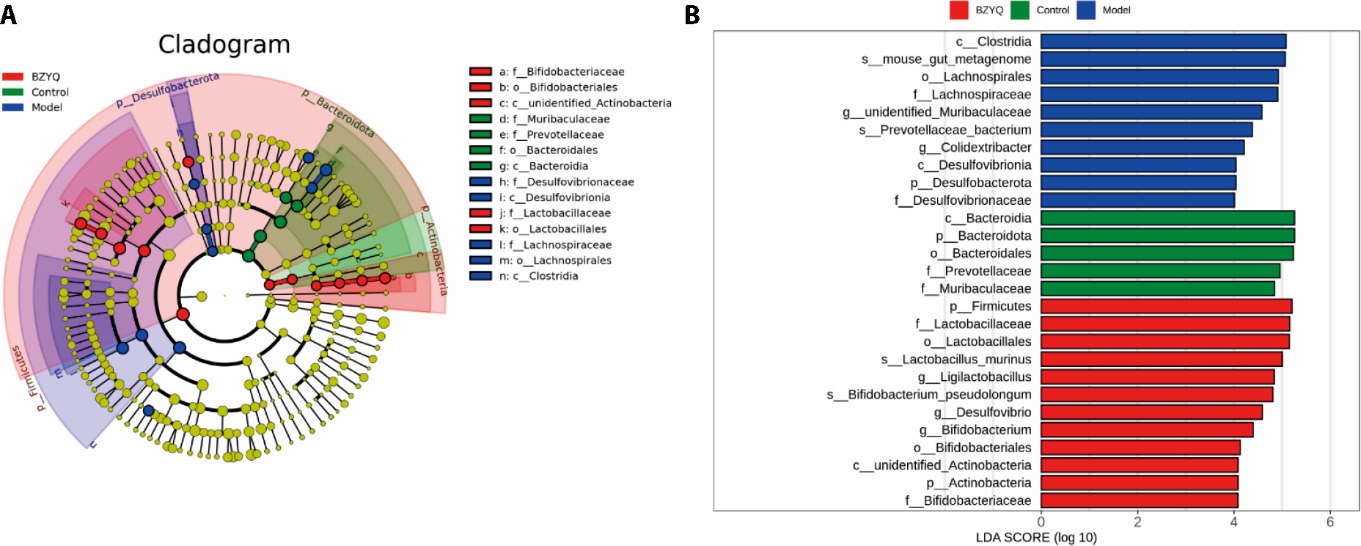
Figure 3 LEfSe analysis A: phylogenetic tree based on ASVs (In the phylogenetic tree, the radiating circles from the center represent the taxonomic levels from phylum to genus (or species). Each small circle at different taxonomic levels represents a classification at that level, and the diameter of the small circle is proportional to the relative abundance. Coloring principle: Species with no significant difference are uniformly colored yellow, and differential species Biomarkers are colored according to the group. Red nodes indicate microbial groups that play an important role in the red group, and green nodes indicate microbial groups that play an important role in the green group. If a group is missing in the Figure, it means there are no significantly different species in this group, hence the group is missing. The species names represented by English letters in the Figure are displayed in the legend on the right); B: bar chart of LDA values based on ASVs. The bar chart of LDA values shows species with LDA Scores greater than the set value (default is 4), i.e., Biomarkers with statistical differences between groups. It displays the species with significant abundance differences in different groups, and the length of the bar chart represents the impact size of the differential species (i.e., LDA Score); BZYQ group: the AIT received BZYQ at a rate of 1 mL·g-1;·d-1;, once daily for 8 consecutive weeks. BZYQ: Buzhong Yiqi decoction; LEfSe: linear discriminant analysis effect size; ASVs: amplicon sequence variants; LDA: linear discriminant analysis.
Figure 3 LEfSe analysis A: phylogenetic tree based on ASVs (In the phylogenetic tree, the radiating circles from the center represent the taxonomic levels from phylum to genus (or species). Each small circle at different taxonomic levels represents a classification at that level, and the diameter of the small circle is proportional to the relative abundance. Coloring principle: Species with no significant difference are uniformly colored yellow, and differential species Biomarkers are colored according to the group. Red nodes indicate microbial groups that play an important role in the red group, and green nodes indicate microbial groups that play an important role in the green group. If a group is missing in the Figure, it means there are no significantly different species in this group, hence the group is missing. The species names represented by English letters in the Figure are displayed in the legend on the right); B: bar chart of LDA values based on ASVs. The bar chart of LDA values shows species with LDA Scores greater than the set value (default is 4), i.e., Biomarkers with statistical differences between groups. It displays the species with significant abundance differences in different groups, and the length of the bar chart represents the impact size of the differential species (i.e., LDA Score); BZYQ group: the AIT received BZYQ at a rate of 1 mL·g-1;·d-1;, once daily for 8 consecutive weeks. BZYQ: Buzhong Yiqi decoction; LEfSe: linear discriminant analysis effect size; ASVs: amplicon sequence variants; LDA: linear discriminant analysis.
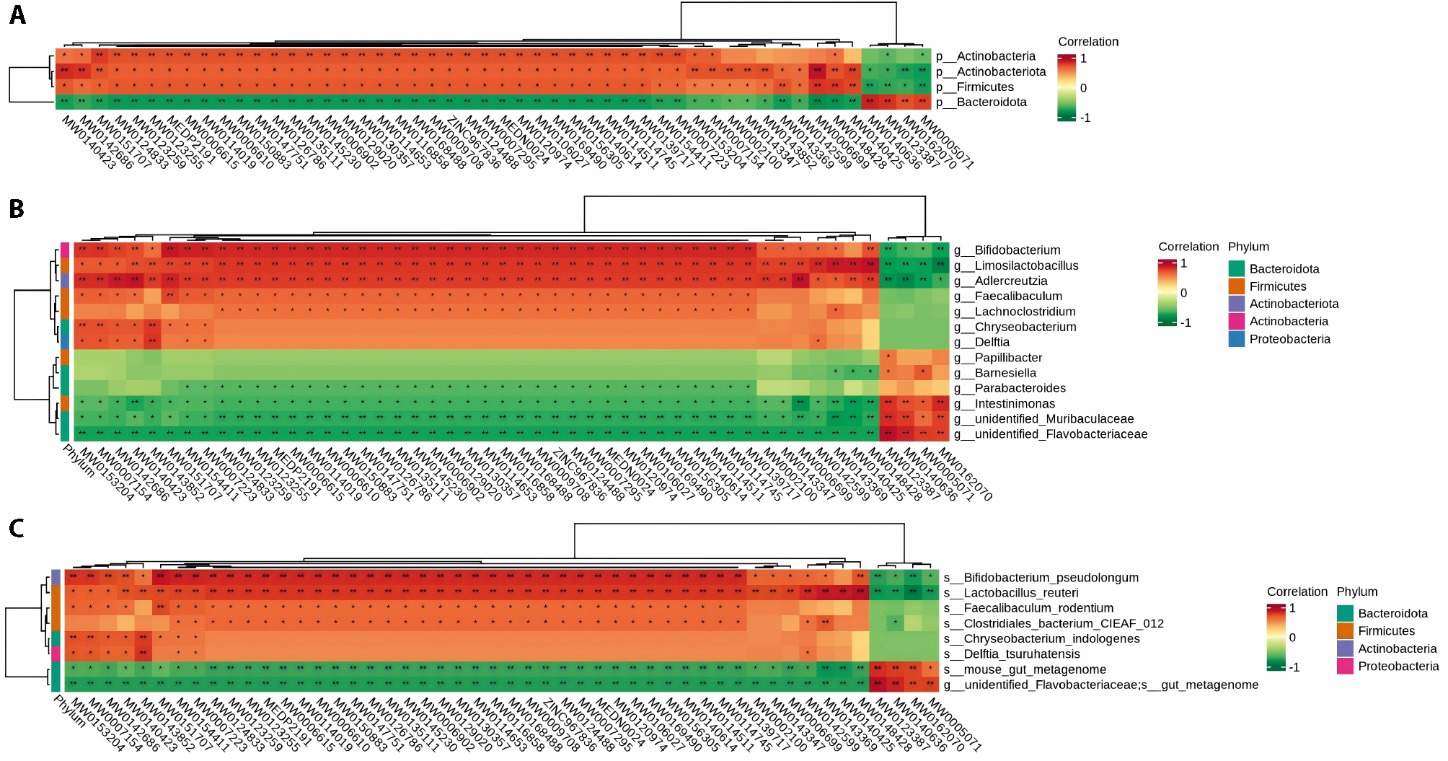
Figure 4 Hierarchical clustering heatmap of spearman correlations between differential microbiota and metabolites in model and BZYQ groups A: phylum level; B: genus level; C: species level. Rows represent microbes, and columns represent metabolites. The dendrogram on the left indicates the hierarchical clustering results of the microbes, and the dendrogram at the top indicates the hierarchical clustering results of the metabolites. Red indicates positive correlation, and green indicates negative correlation. The data analyzed using Spearman correlation analysis. *P < 0.05, **P < 0.01. BZYQ: Buzhong Yiqi decoction.
Figure 4 Hierarchical clustering heatmap of spearman correlations between differential microbiota and metabolites in model and BZYQ groups A: phylum level; B: genus level; C: species level. Rows represent microbes, and columns represent metabolites. The dendrogram on the left indicates the hierarchical clustering results of the microbes, and the dendrogram at the top indicates the hierarchical clustering results of the metabolites. Red indicates positive correlation, and green indicates negative correlation. The data analyzed using Spearman correlation analysis. *P < 0.05, **P < 0.01. BZYQ: Buzhong Yiqi decoction.
| 1. |
McLeod DS, Cooper DS. The incidence and prevalence of thyroid autoimmunity. Endocrine 2012; 42: 252-65.
PMID |
| 2. |
Ralli M, Angeletti D, Fiore M, et al. Hashimoto's thyroiditis: an update on pathogenic mechanisms, diagnostic protocols, therapeutic strategies, and potential malignant transformation. Autoimmun Rev 2020; 19: 102649.
DOI URL |
| 3. | Klubo-Gwiezdzinska J, Wartofsky L. Hashimoto thyroiditis: an evidence-based guide to etiology, diagnosis and treatment. Pol Arch Intern Med 2022; 132: 16222. |
| 4. |
Ott J, Meusel M, Schultheis A, et al. The incidence of lymphocytic thyroid infiltration and Hashimoto's thyroiditis increased in patients operated for benign goiter over a 31-year period. Virchows Arch 2011; 459: 277-81.
DOI URL |
| 5. |
Ragusa F, Fallahi P, Elia G, et al. Hashimotos' thyroiditis: epidemiology, pathogenesis, clinic and therapy. Best Pract Res Clin Endocrinol Metab 2019; 33: 101367.
DOI URL |
| 6. | Fariduddin MM, Singh G. Thyroiditis. StatPearls [Internet] serial online, 2023-08-08, cited 2026-05-15; Available from URL: https://www.ncbi.nlm.nih.gov/books/NBK555975. |
| 7. |
Chaker L, Razvi S, Bensenor IM, Azizi F, Pearce EN, Peeters RP. Hypothyroidism. Nat Rev Dis Primers 2022; 8: 30.
DOI PMID |
| 8. |
Pan J, Ye F, Yu C, et al. Papillary thyroid carcinoma landscape and its immunological link with hashimoto thyroiditis at single-cell resolution. Front Cell Dev Biol 2021; 9: 758339.
DOI URL |
| 9. |
Kyriacou A, McLaughlin J, Syed AA. Thyroid disorders and gastrointestinal and liver dysfunction: a state of the art review. Eur J Intern Med 2015; 26: 563-71.
DOI PMID |
| 10. |
Jordan B, Uer O, Buchholz T, Spens A, Zierz S. Physical fatigability and muscle pain in patients with hashimoto thyroiditis. J Neurol 2021; 268: 2441-9.
DOI PMID |
| 11. | Wiersinga WM. Thyroid hormone replacement therapy. Hormone research 2001; 56 Suppl 1: 74-81. |
| 12. | Han J. Clinical study on the treatment of hashimoto's thyroiditis (HT) with the method of rectifying and eliminating goiter formula. Beijing: Beijing University of Chinese Medicine 2019: 1-64. |
| 13. | Zhou Y, Guan QQ, Han J, Xia ZY. Clinical study of Buzhong Yiqi decoction in the treatment of subclinical hypothyroidism. Anhui Zhong Yi Yao Da Xue Xue Bao 2017; 36: 30-34. |
| 14. | Liu SY, Guan QQ, Han J, et al. Effect of Buzhong Yiqi granule on treg/th17 cytokine expression in EAT rats. Beijing Zhong Yi Yao Da Xue Xue Bao 2019; 42: 404-8+15. |
| 15. | Lou PF, Qiao JJ, Wang YZ, Xia ZY. Effects of Buzhong Yiqi decoction on thyroid antibodies and TH-related cytokines in rats with autoimmune thyroiditis. Beijing Zhong Yi Yao Da Xue Xue Bao 2022; 45: 1037-43. |
| 16. | Qiao JJ, Yuan Q, Zhao YK, Xia ZY. Study on the regulation and mechanism of Buzhong Yiqi decoction on immune imbalance in experimental autoimmune thyroiditis rats. Beijing Zhong Yi Yao 2023; 42: 268-74. |
| 17. | Wang YZ, Zhang YY, Qiao JJ, Lu YY, Xia ZY. Protective effect of thyroid and restores of ovarian function of Buzhong Yiqi granule on experimental autoimmune thyroiditis in female rats. J Tradit Chin Med 2024; 44: 315-23. |
| 18. | Zhang XJ, Qiao JJ, Wang YZ, Xia ZY. Effect of Buzhong Yiqi granule on ultrastructure of intestinal mucosa in rats with autoimmune thyroiditis. Zhong Hua Zhong Yi Yao Xue Kan 2023; 41: 82-5+269-70. |
| 19. | Sun W, Song GH, He B. Experimental autoimmune thyroiditis induced by iodine and thyroglobulin in rats. Zhong Hua Nei Ke 2000; 39: 48-9. |
| 20. |
Xia N, Chen G, Liu M, et al. Anti-inflammatory effects of luteolin on experimental autoimmune thyroiditis in mice. Exp Ther Med 2016; 12: 4049-54.
DOI PMID |
| 21. | Zhao Y, Wu J, Li JV, Zhou NY, Tang H, Wang Y. Gut microbiota composition modifies fecal metabolic profiles in mice. J Proteome Res 2013; 12: 2987-99. |
| 22. | Guo YP, Chen MY, Shao L, et al. Quantification of Panax notoginseng saponins metabolites in rat plasma with in vivo gut microbiota-mediated biotransformation by HPLC-MS/MS. Chin J Nat Med 2019; 17: 231-40. |
| 23. | Mu YF, Xiang N, Zuo XH, Yu XR, Zhao Y, Chen JD. The effects of total glycosides of Paeonia lactiflora on the intestinal mucosal barrier and intestinal flora in rats with autoimmune thyroiditis. Zhong Cao Yao 2021; 52: 3269-77. |
| 24. | Dong TJ. Based on metabolomics and intestinal microbiota, the mechanism of action of the "Softening and Removing Goiter Pills" on EAT rats was explored. Shenyang: Liaoning University of Traditional Chinese Medicine 2022: 1-105. |
| 25. | Mu YF, Zuo XH, Xiang N, Zhao Y, Hua C, Chen JD. A study on the mechanism of action of the Qijian Xiaoying formula in treating autoimmune thyroiditis in rats based on the "gut microbiota-mucosal barrier" model. Zhong Guo Zhong Yi Ji Chu Yi Xue Za Zhi 2022; 28: 362-9. |
| 26. | Guo FY, Liu ZY, Wang ZM, et al. The effect of the Yiqi Huatan huoxue formula on the intestinal flora of mice with autoimmune thyroiditis. Shi Zhen Guo Yi Guo Yao 2023; 34: 292-5. |
| 27. | Feng XZ, Zhang YN, Jiang X, Wang HG. Experimental study on the promotion of gut probiotic growth by modified bu zhong yi qi decoction. Zhong Guo Wei Sheng Tai Xue Za Zhi 2008; 02: 159-60. |
| 28. | Li Y, Wu CM, Li X, Sun N. Study on the bidirectional regulation of gastrointestinal motility and anti-inflammatory effects of Bu Zhong Yi Qi decoction in Mice. Yi Yao Lun Tan Za Zhi 2011; 32: 18-9+22. |
| 29. | Ju WJ, Guo L, Chen SL, Du SL, Wen XP. Study on the metabolomics of rats with spleen deficiency-type gastrointestinal motility disorders treated with Buzhong Yiqi decoction. Zhong Hua Zhong Yi Yao Xue Kan 2020; 38: 69-73+271-2. |
| 30. | Wang W, Wang J. Exploring the application of Buzhong Yiqi decoction in the treatment of recurrent ulcerative colitis. Zhong Hua Zhen Jiu Dian Zi Za Zhi 2021; 10: 86-8. |
| 31. | Zhang MY, Wu YX, Wang YZ, et al. Research progress on the treatment of spleen deficiency syndrome with Qi-strengthening Traditional Chinese Medicines by regulating gut microbiota. Zhong Guo Zhong Yao Za Zhi 2021; 52: 5430-6. |
| 32. | Yu HC, Meng YY, Wang EK, Yuan JY, Peng Y, Li XB. The influence of Bu Zhong Yi Qi decoction on the quantities of two characteristic bacteria in both in vivo and in vitro experiments for the syndrome of spleen deficiency. Shi Jie Ke Xue Ji Shu - Zhong Yi Yao Xian Dai Hua 2022; 24: 1146-57. |
| 33. | Guo Z, Meng LF, Guo Q, Zhang YF, Liu JN. The effect of Buzhong Yiqi decoction on the intestinal flora structure and gastrointestinal function of rats with chronic fatigue syndrome. Zhong Hua Zhong Yi Yao Za Zhi 2024; 39: 3084-8. |
| 34. | Yu HC, Meng YY, Wang EK, Yuan JY, Peng Y, Li XB. Research on the Mechanism of Bu Zhong Yi Qi decoction regulating intestinal microbiota to improve spleen deficiency syndrome. Zhong Guo Zhong Yao Za Zhi 2024; 49: 1028-43. |
| 35. |
He Q, Han C, Huang L, et al. Astragaloside IV alleviates mouse slow transit constipation by modulating gut microbiota profile and promoting butyric acid generation. J Cell Mol Med 2020; 24: 9349-61.
DOI URL |
| 36. |
Gong P, Xiao X, Wang S, et al. Hypoglycemic effect of astragaloside IV via modulating gut microbiota and regulating AMPK/SIRT1 and PI3K/AKT pathway. J Ethnopharmacol 2021; 281: 114558.
DOI URL |
| 37. | Rong X, Zhu L, Shu Q. Synergistic gut microbiome-mediated degradation of Astragalus membranaceus polysaccharides and Codonopsis pilosula polysaccharides into butyric acid: a metatranscriptomic analysis. Microbiol Spectr 2025; 13: e0303924. |
| 38. | Sun YF, Zhang X, Wang XY, Jia W. The effect of long-term administration of ginseng extract on the structure of intestinal flora in rats. Zhong Guo Zhong Yao Za Zhi 2018; 43: 3927-32. |
| 39. | Zhao Q, Yu D, Wang RQ, Du LD, Wu GT. Research progress on the theory and practice of Chinese herbal angelica sinensis in moistening the intestines and promoting defecation. Shi Zhen Guo Yi Guo Yao 2024; 35: 3252-6. |
| 40. | Gao XL, Zhang GX, Xie M. The effects of different spleen-strengthening formulas on the gastrointestinal tract, thyroid gland and immune function of rat models with spleen deficiency syndrome. Zhong Yao Yao Li Yu Lin Chuang 2016; 32: 16-9. |
| 41. | Liu HT, Shi JX, Huang ZJ, Wu MY, Shi XG. The effects of different formulations of Buzhong Yiqi decoction on the immune organs and the expression of transporter proteins in the small intestinal mucosa of rats with spleen deficiency. Zhong Yao Cai 2017; 40: 466-9. |
| 42. |
Virili C, Centanni M. "With a little help from my friends" - The role of microbiota in thyroid hormone metabolism and enterohepatic recycling. Mol Cell Endocrinol 2017; 458: 39-43.
DOI PMID |
| 43. |
Gong B, Wang C, Meng F, et al. Association between gut microbiota and autoimmune thyroid disease: a systematic review and Meta-analysis. Front Endocrinol (Lausanne) 2021; 12: 774362.
DOI URL |
| 44. |
Zhang J, Zhu S, Ma N, et al. Metabolites of microbiota response to tryptophan and intestinal mucosal immunity: a therapeutic target to control intestinal inflammation. Med Res Rev 2021; 41: 1061-88.
DOI PMID |
| 45. |
Mendoza-León MJ, Mangalam AK, Regaldiz A, et al. Gut microbiota short-chain fatty acids and their impact on the host thyroid function and diseases. Front Endocrinol (Lausanne) 2023; 14: 1192216.
DOI URL |
| 46. |
Cayres LCF, de Salis LVV, Rodrigues GSP, et al. Detection of alterations in the gut microbiota and intestinal permeability in patients with hashimoto thyroiditis. Front Immunol 2021; 12: 579140.
DOI URL |
| 47. |
Levy M, Kolodziejczyk AA, Thaiss CA, Elinav E. Dysbiosis and the immune system. Nat Rev Immunol 2017; 17: 219-32.
DOI PMID |
| 48. |
Daillère R, Vétizou M, Waldschmitt N, et al. Enterococcus hirae and barnesiella intestinihominis facilitate cyclophosphamide-induced therapeutic immunomodulatory effects. Immunity 2016; 45: 931-43.
DOI PMID |
| 49. |
Zong X, Zhang H, Zhu L, et al. Auricularia auricula polysaccharides attenuate obesity in mice through gut commensal papillibacter cinnamivorans. J Adv Res 2023; 52: 203-18.
DOI PMID |
| 50. |
Pujari R, Jadhav D, Angal A, Syed J, Dubey AK. Beneficial effect of synbiotic combination of limosilactobacillus fermentum FS-10, lactiplantibacillus plantarum Lp1-IC and short-chain fructooligosaccharides in colitis murine model. Probiotics Antimicrob Proteins 2025; 17: 1998-2008.
DOI |
| 51. |
Ding X, Tang R, Zhao J, Xu Y, Fu A, Zhan X. Lactobacillus reuteri alleviates LPS-induced intestinal mucosal damage by stimulating the expansion of intestinal stem cells via activation of the Wnt/β-catenin signaling pathway in broilers. Poult Sci 2024; 103: 104072.
DOI URL |
| 52. |
Cervantes-Barragan L, Chai JN, Tianero MD, et al. Lactobacillus reuteri induces gut intraepithelial CD4(+)CD8αα(+) T cells. Science 2017; 357: 806-10.
DOI PMID |
| 53. |
Qi Q, Li J, Yu B, et al. Host and gut microbial tryptophan metabolism and type 2 diabetes: an integrative analysis of host genetics, diet, gut microbiome and circulating metabolites in cohort studies. Gut 2022; 71: 1095-105.
DOI URL |
| 54. |
Valeur N, Engel P, Carbajal N, Connolly E, Ladefoged K. Colonization and immunomodulation by Lactobacillus reuteri ATCC 55730 in the human gastrointestinal tract. Appl Environ Microbiol 2004; 70: 1176-81.
DOI URL |
| 55. |
Dolecka J, Urbanik-Sypniewska T, Skrzydło-Radomańska B, Parada-Turska J. Effect of kynurenic acid on the viability of probiotics in vitro. Pharmacol Rep 2011; 63: 548-51.
PMID |
| 56. | Kaszaki J, Erces D, Varga G, Szabó A, Vécsei L, Boros M. Kynurenines and intestinal neurotransmission: the role of N-methyl-D-aspartate receptors. J Neural Transm (Vienna) 2012; 119: 211-23. |
| 57. | Turski MP, Turska M, Paluszkiewicz P, Parada-Turska J, Oxenkrug GF. Kynurenic acid in the digestive system-new facts, new challenges. Int J Tryptophan Res 2013; 6: 47-55. |
| 58. |
Li XJ, Yue LY, Guan XF, Qiao SY. The adhesion of putative probiotic lactobacilli to cultured epithelial cells and porcine intestinal mucus. J Appl Microbiol 2008; 104: 1082-91.
DOI PMID |
| 59. | Moroni F, Cozzi A, Sili M, Mannaioni G. Kynurenic acid: a metabolite with multiple actions and multiple targets in brain and periphery. J Neural Transm (Vienna) 2012; 119: 133-9. |
| 60. | Thomas CM, Hong T, van Pijkeren JP, et al. Histamine derived from probiotic Lactobacillus reuteri suppresses TNF via modulation of PKA and ERK signaling. PloS one 2012; 7: e31951. |
| 61. | Hou C, Liu H, Zhang J, et al. Intestinal microbiota succession and immunomodulatory consequences after introduction of Lactobacillus reuteri I 5007 in neonatal piglets. PLoS One 2015; 10: e0119505. |
| 62. |
Wirthgen E, Hoeflich A, Rebl A, Günther J. Kynurenic acid: the janus-faced role of an immunomodulatory tryptophan metabolite and its link to pathological conditions. Front Immunol 2018; 8: 1957.
DOI URL |
| 63. |
Al-Ruwad SH, Attia AI, Abdel Monem UM, et al. Dietary supplementation with copper nanoparticles enhances broiler performance by improving growth, immunity, digestive enzymes, and gut microbiota. Poult Sci 2024; 103: 104026.
DOI URL |
| 64. |
Kaakoush NO. Sutterella species, IgA-degrading bacteria in ulcerative colitis. Trends Microbiol 2020; 28: 519-22.
DOI PMID |
| [1] | DING Huanzhang, WANG Hui, YANG Qinjun, MA Xiao, WU Di, LI Qiao, ZHENG Caixia, LU Jiasheng, WU Chengming, HUANG Pingfu, CHEN Zhixiang, WANG Shihan, FENG Jihong, LIU Jian, SUN Dengdi, ZHU Jie, TONG Jiabing, GAO Yating, LI Zegeng. A multicenter randomized controlled trial and metabolomics exploration of Traditional Chinese Medicine pattern-based therapy for stable chronic obstructive pulmonary disease [J]. Journal of Traditional Chinese Medicine, 2026, 46(3): 652-665. |
| [2] | SHI Bing, LI Yang, JIANG Zhuocheng, QIN Guozheng, ZHAO Fan. Mechanic evaluation of Jisheng Shenqi Wan (济生肾气丸) on calcium oxalate kidney stones: an integrated network pharmacology and metabolomics [J]. Journal of Traditional Chinese Medicine, 2026, 46(2): 371-381. |
| [3] | JIA Ao, LIU Shuang, GAO Tingting, ZHANG Haoran, GAO Wenyuan, WU Xiongzhi. Mechanisms of Gualou Beimu Yin (瓜蒌贝母饮) in suppressing the development and metastasis of triple-negative breast cancer: an integrated study based on network pharmacology, transcriptomics, and metabolomics [J]. Journal of Traditional Chinese Medicine, 2026, 46(1): 149-159. |
| [4] | YUAN Menghua, SHAO Jianbin, YANG Yawei, ZHAO Yan, HU Xingang. Combined acupuncture and herb treatment improves intestinal flora inabdominally obese subjects based on 16s rRNA sequencing: a randomized controlled trial [J]. Journal of Traditional Chinese Medicine, 2026, 46(1): 205-210. |
| [5] | ZHANG Yuan, CHENG Shizan, HUA Yue, SHI Ji, SU Guoming, ZHANG Chao, LIAN Jing, LIU Pengpeng, JIA Tianzhu. Mechanisms of Suanzaoren (Ziziphi Spinosae Semen) and its processed products in treating insomnia: an integrated study based on network pharmacology and metabolomics [J]. Journal of Traditional Chinese Medicine, 2025, 45(6): 1307-1316. |
| [6] | CHENG Ziqi, DONG Xin, Temuribagen , XU Caimeng, HU Shaonan, CHEN Qianwen, WANG Yuewu, WANG Haibo, HE Xiaoyu, XUE Dan, XUE Peifeng. Exploration of the mechanism of the Mongolian medicine Tonglaga-5 (通拉嘎-5) for the treatment of n-methyl-n′-nitro-n-nitrosoguanidine-induced chronic atrophic gastritis based on network pharmacology and metabolomics [J]. Journal of Traditional Chinese Medicine, 2025, 45(6): 1366-1375. |
| [7] | PAN Tingyu, YAO Jing, GE Yue, YANG Shuang, SUN Zikai, WEI Yu, WU Jieyu, XU Yong, ZHOU Xianmei, HE Hailang. Liquid chromatography-mass spectrometry-based metabolomics study of the protective mechanism of Shenji Guben decoction (参吉固本方) on chronic obstructive pulmonary disease [J]. Journal of Traditional Chinese Medicine, 2025, 45(5): 1009-1018. |
| [8] | WANG Yue, LIU Xingxing, GUO Yi, GUO Yongming, YUAN Gongming, ZHANG Yu, ZHENG Zhiyu, XU Yuan, LI Yuan. Characterization of acupuncture on central amino acid metabolism based on targeted neurotransmitter analysis in mice with inflammatory pain [J]. Journal of Traditional Chinese Medicine, 2025, 45(5): 1019-1027. |
| [9] | WANG Raoqiong, HAO Linyao, LU Ye, WANG Lingxue, LI Jianrong, PENG Yan, TANG Hongmei, LI Shuangyang, BAI Xue. Mechanism analysis of Tongqiao Yizhi decoction (通窍益智颗粒) in treating vascular dementia rats by brain tissue untargeted metabonomics and fecal 16S rRNA gene sequencing [J]. Journal of Traditional Chinese Medicine, 2025, 45(4): 759-769. |
| [10] | ZHANG Lina, LIN Xiu, ZHAO Xin, LI Wenjuan, ZHAO Ye. Study on the mechanism of Fuzi Lizhong decoction (附子理中汤) in the treatment of colorectal cancer of spleen kidney Yang deficiency from the perspective of intestinal flora and hypoxia inducible factor-1α signalling pathway [J]. Journal of Traditional Chinese Medicine, 2025, 45(4): 845-851. |
| [11] | LIU Qian, XIAO Liuchen, YUAN Yue, DANG Xiaopeng, WEN Jie, TAN Moye, LIU Yuxin, GU Hongfeng, XIE Xuejiao. Xiong's Shiwei Wendan decoction (熊氏十味温胆汤) attenuates plaque lesions and balances gut microbiota dysbiosis in ApoE-/- mice with high-fat diet [J]. Journal of Traditional Chinese Medicine, 2025, 45(3): 508-517. |
| [12] | WU Jiaman, NING Yan, TAN Liya, MA Fei, LIN Yanting, ZHUO Yuanyuan. Difference of the gut microbiota of premature ovarian insufficiency in two traditional Chinese syndromes [J]. Journal of Traditional Chinese Medicine, 2025, 45(1): 132-139. |
| [13] | WANG Yiying, LIU Jianjun, XIONG Yongjian, ZHANG Yongli, WEN Yuqi, XUE Mengli, GUO Huishu, QIU Juanjuan. Analysis of composition of gut microbial community in a rat model of functional dyspepsia treated with Simo Tang (四磨汤) [J]. Journal of Traditional Chinese Medicine, 2024, 44(6): 1168-1176. |
| [14] | LIAO Mengting, LI Tao, CHU Fuhao, CHEN Yan, LOU Ni, ZHUANG Yuan, BO Rongqiang, DING Xia. Weichang’ an pill (胃肠安丸) alleviates functional dyspepsia through modulating brain-gut peptides and gut microbiota [J]. Journal of Traditional Chinese Medicine, 2024, 44(6): 1177-1186. |
| [15] | HUANG Xiaona, LI Yuzhen, ZHU Chenyang, ZHU Hengzhou, JIANG Chenyu, ZHU Xiaodan, ZHANG Chencen, JIN Chunhui. Weitiao No. 3 (微调3号方) enhances the efficacy of anti-programmed cell death protein-1 immunotherapy by modulating the intestinal microbiota in an orthotopic model of gastric cancer mice [J]. Journal of Traditional Chinese Medicine, 2024, 44(5): 906-915. |
| Viewed | ||||||
|
Full text |
|
|||||
|
Abstract |
|
|||||