
Journal of Traditional Chinese Medicine ›› 2026, Vol. 46 ›› Issue (4): 883-893.DOI: 10.19852/j.cnki.jtcm.2026.04.009
• Original Articles • Previous Articles Next Articles
Jianchang No. 1 (健肠1号) formula alleviates irritable bowel syndrome with diarrhea via improving gut microbiota and regulating toll-like receptors/nuclear factor-kappa B signaling pathway in bowel syndrome with diarrhea rats
LIU Yutong1, YANG Yan2, XU Huiying1, LI Lei1, GE Fei3( ), CHEN Meijuan1()
- 1
School of Medicine ,Nanjing University of Chinese Medicine Nanjing 210023, China
2Department of Pharmacy ,Haian Hospital of Traditional Chinese Medicine Affiliated to Nanjing University of Chinese Medicine Nantong 226600, China
3Department of Traditional Chinese Medicine ,the Affiliated Central Hospital of Jiangnan University, Wuxi 214000, China; Department of Gastroenterology, Haian Hospital of Traditional Chinese Medicine Affiliated to Nanjing University of Chinese Medicine Nantong 226600, China
-
Received:2025-06-06Accepted:2025-10-13Online:2026-08-15Published:2026-08-08 -
Contact:GE Fei, Department of Gastroenterology, Haian Hospital of Traditional Chinese Medicine Affiliated to Nanjing University of Chinese Medicine, Nantong 226600, China; Department of Traditional Chinese Medicine, the Affiliated Central Hospital of Jiangnan University, Wu Xi 214000, China. ha9099@163.com;
Prof. CHEN Meijuan, School of Medicine, Nanjing University of Chinese Medicine, Nanjing 210023, China. mjchen@njucm.edu.cn,Telephone: +86-25-85811389 -
Supported by:The Medical Research Project of Jiangsu Provincial Health Commission: Study on the Material Basis and Molecular Targets of Modified Tongxie Yaofang in Treating Diarrhea-Predominant Irritable Bowel Syndrome Based on the Protein Kinase A/5-Hydroxytryptamine Signaling Pathway(M2022024);Scientific Research Project of Jiangsu Chinese Medicine Society: Efficacy Evaluation and Mechanism Study of Jianchang No. 1 Prescription in Treating Irritable Bowel Syndrome with Diarrhea of Liver Depression and Spleen Deficiency Type by Intervening in the Protein Kinase A/5-Hydroxytryptamine Signaling Pathway(2024041);Wuxi Municipal Health Commission Scientific and Technological Achievements and Appropriate Technology Promotion Project: Clinical Application and Promotion of Jianchang No. 1 Prescription in the Treatment of Diarrhea-Predominant Irritable Bowel Syndrome(T202422);Nantong Municipal Health Commission Scientific Research Project: Efficacy Evaluation and Mechanism Study of Jianpi Xingjiu Formula in Treating Mild to Moderate Alcohol Intoxication(MSZ2024087);Key Project of Nantong Traditional Chinese Medicine Alliance: Efficacy Evaluation and Mechanism Study of Lianyin Zhihan Formula in Treating Menopausal Hyperhidrosis in Women(TZYK202315)

Cite this article
LIU Yutong, YANG Yan, XU Huiying, LI Lei, GE Fei, CHEN Meijuan. Jianchang No. 1 (健肠1号) formula alleviates irritable bowel syndrome with diarrhea via improving gut microbiota and regulating toll-like receptors/nuclear factor-kappa B signaling pathway in bowel syndrome with diarrhea rats[J]. Journal of Traditional Chinese Medicine, 2026, 46(4): 883-893.
share this article
Table 1 Body weight, Fecal water content and Colorectal distension change in the different groups ($\bar{x}±s$)
| Group | n | Body weight (g) | FWC (%) | Colorectal distension (mL) | |||||
|---|---|---|---|---|---|---|---|---|---|
| Before medication | After medication | Before medication | Before medication | Before medication | Before medication | ||||
| Normal | 8 | 403.90±17.48 | 463.40±19.40 | 43.51±18.82 | 37.18±9.73 | 2.63±0.12 | 2.57±0.17 | ||
| Model | 8 | 320.47±17.17a | 356.40±19.61a | 82.70±12.40a | 82.15±4.74a | 1.67±0.34a | 1.27±0.09a | ||
| Jianchang-L | 8 | 317.33±3.96a | 395.93±8.10 | 87.24±6.62a | 52.20±7.76b | 1.70±0.08a | 1.97±0.12b | ||
| Jianchang-M | 8 | 320.37±8.48a | 407.30±10.64b | 83.37±9.39a | 43.00±12.71b | 1.60±0.08a | 2.33±0.25b | ||
| Jianchang-H | 8 | 320.70±9.78a | 431.37±14.52b | 86.84±6.16a | 32.68±8.55b | 1.60±0.16a | 2.00±0.08b | ||
| Pinaverium bromide | 8 | 330.63±15.71a | 393.47±20.25 | 80.07±8.37a | 55.06±8.01b | 1.47±0.34a | 2.00±0.28b | ||
Table 1 Body weight, Fecal water content and Colorectal distension change in the different groups ($\bar{x}±s$)
| Group | n | Body weight (g) | FWC (%) | Colorectal distension (mL) | |||||
|---|---|---|---|---|---|---|---|---|---|
| Before medication | After medication | Before medication | Before medication | Before medication | Before medication | ||||
| Normal | 8 | 403.90±17.48 | 463.40±19.40 | 43.51±18.82 | 37.18±9.73 | 2.63±0.12 | 2.57±0.17 | ||
| Model | 8 | 320.47±17.17a | 356.40±19.61a | 82.70±12.40a | 82.15±4.74a | 1.67±0.34a | 1.27±0.09a | ||
| Jianchang-L | 8 | 317.33±3.96a | 395.93±8.10 | 87.24±6.62a | 52.20±7.76b | 1.70±0.08a | 1.97±0.12b | ||
| Jianchang-M | 8 | 320.37±8.48a | 407.30±10.64b | 83.37±9.39a | 43.00±12.71b | 1.60±0.08a | 2.33±0.25b | ||
| Jianchang-H | 8 | 320.70±9.78a | 431.37±14.52b | 86.84±6.16a | 32.68±8.55b | 1.60±0.16a | 2.00±0.08b | ||
| Pinaverium bromide | 8 | 330.63±15.71a | 393.47±20.25 | 80.07±8.37a | 55.06±8.01b | 1.47±0.34a | 2.00±0.28b | ||
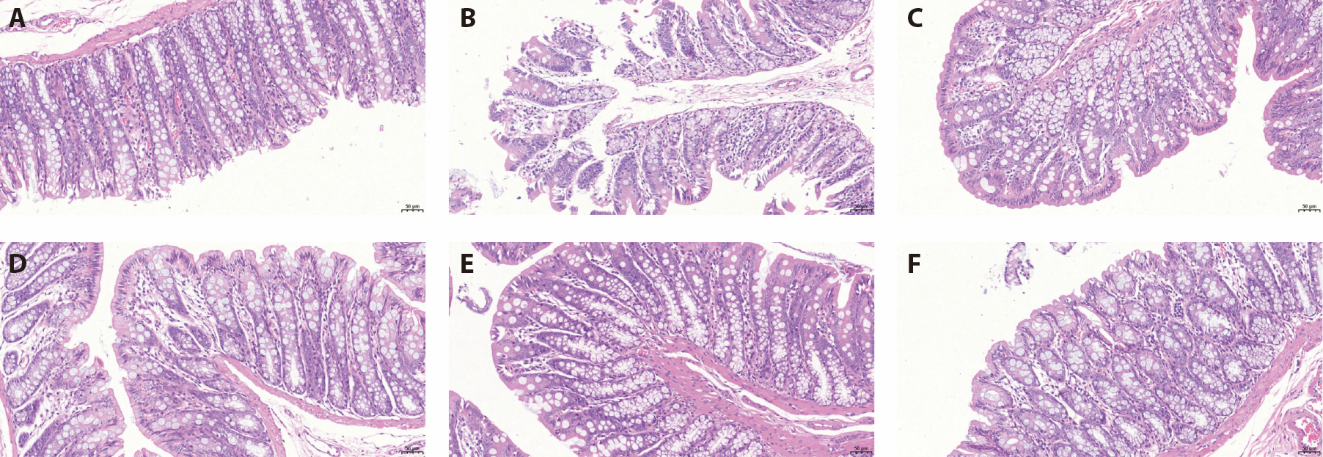
Figure 1 Results of intestinal pathological examination A: Normal group; B: Model group; C: Jianchang-L group; D: Jianchang-M group; E: Jianchang-H group; F: Pinaverium bromide group. Normal group: healthy cases; Model group: animal model of diarrhea-predominant irritable bowel syndrome without treatment; Jianchang-L group: animal model of diarrhea-predominant irritable bowel syndrome rats treated with Jianchang No. 1 at a daily dose of 0.5 g/mL (1 mL/100 g) for 2 week; Jianchang-M group: animal model of diarrhea-predominant irritable bowel syndrome rats treated with Jianchang No. 1 at a daily dose of 1 g/mL (1 mL/100 g) for 2 week; Jianchang-H group: animal model of diarrhea-predominant irritable bowel syndrome rats treated with Jianchang No. 1 at a daily dose of 2 g/mL (1 mL/100 g) for 2 week; Pinaverium bromide group: animal model of diarrhea-predominant irritable bowel syndrome rats treated with Pinaverium bromide at a daily dose of 1.5 mg/mL (1 mL/100 g) for 2 week. Colon sections from all groups were stained with HE to assess changes in morphology. Method multiplier, × 200. HE: hematoxylin and eosin.
Figure 1 Results of intestinal pathological examination A: Normal group; B: Model group; C: Jianchang-L group; D: Jianchang-M group; E: Jianchang-H group; F: Pinaverium bromide group. Normal group: healthy cases; Model group: animal model of diarrhea-predominant irritable bowel syndrome without treatment; Jianchang-L group: animal model of diarrhea-predominant irritable bowel syndrome rats treated with Jianchang No. 1 at a daily dose of 0.5 g/mL (1 mL/100 g) for 2 week; Jianchang-M group: animal model of diarrhea-predominant irritable bowel syndrome rats treated with Jianchang No. 1 at a daily dose of 1 g/mL (1 mL/100 g) for 2 week; Jianchang-H group: animal model of diarrhea-predominant irritable bowel syndrome rats treated with Jianchang No. 1 at a daily dose of 2 g/mL (1 mL/100 g) for 2 week; Pinaverium bromide group: animal model of diarrhea-predominant irritable bowel syndrome rats treated with Pinaverium bromide at a daily dose of 1.5 mg/mL (1 mL/100 g) for 2 week. Colon sections from all groups were stained with HE to assess changes in morphology. Method multiplier, × 200. HE: hematoxylin and eosin.
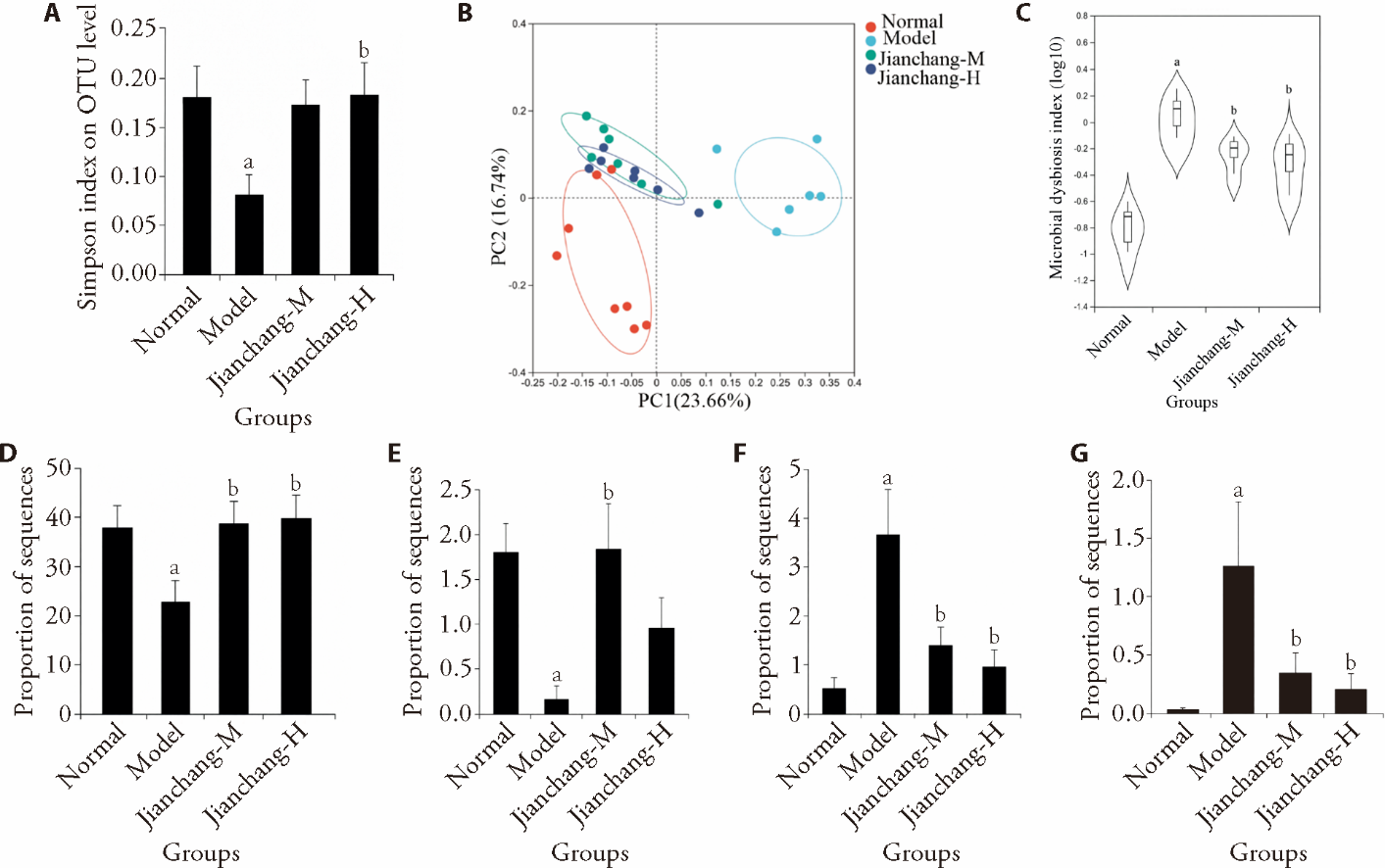
Figure 2 Effect of Jianchang No. 1 on the gut microbiota in IBS-D rats A: changes in Simpson's index of the gut microbiota in rats of each group; B: PCoA score plots were obtained through β-diversity analysis; C: changes in the gut MDI of rats in each group; D: relative abundance of Lactobacillus_murinus in the gut microbiota of rats from each group; E: relative abundance of Lachno_NK4A in the gut microbiota of rats from each group; F: relative abundance of Oscil_uncl in the gut microbiota of rats from each group; G: relative abundance of Rumin_N15 in the gut microbiota of rats from each group. Normal group: healthy cases; Model group: animal model of diarrhea-predominant irritable bowel syndrome without treatment; Jianchang-M group: animal model of diarrhea-predominant irritable bowel syndrome rats treated with Jianchang No. 1 at a daily dose of 1 g/mL (1 mL/100 g) for 2 week; Jianchang-H group: animal model of diarrhea-predominant irritable bowel syndrome rats treated with Jianchang No. 1 at a daily dose of 2 g/mL (1 mL/100 g) for 2 week. IBS-D: irritable bowel syndrome with diarrhea; MDI: microbiota dysbiosis index; OTUs: operational taxonomic units; PCoA: principal co-ordinates analysis; Lachno_NK4A: unclassified_g__Lachnospiraceae_NK4A136_group; Oscil_uncl: unclassified_g__norank_f__ Oscillospiraceae; Rumin_N15: Ruminococcus_sp._N15.MGS-57_g__Ruminococcus. Data are expressed as the mean ± standard deviation (n = 8). One-way analysis of variance was adopted for statistical analysis. Compared with the normal group, aP < 0.05; compared with the model group, bP < 0.05.
Figure 2 Effect of Jianchang No. 1 on the gut microbiota in IBS-D rats A: changes in Simpson's index of the gut microbiota in rats of each group; B: PCoA score plots were obtained through β-diversity analysis; C: changes in the gut MDI of rats in each group; D: relative abundance of Lactobacillus_murinus in the gut microbiota of rats from each group; E: relative abundance of Lachno_NK4A in the gut microbiota of rats from each group; F: relative abundance of Oscil_uncl in the gut microbiota of rats from each group; G: relative abundance of Rumin_N15 in the gut microbiota of rats from each group. Normal group: healthy cases; Model group: animal model of diarrhea-predominant irritable bowel syndrome without treatment; Jianchang-M group: animal model of diarrhea-predominant irritable bowel syndrome rats treated with Jianchang No. 1 at a daily dose of 1 g/mL (1 mL/100 g) for 2 week; Jianchang-H group: animal model of diarrhea-predominant irritable bowel syndrome rats treated with Jianchang No. 1 at a daily dose of 2 g/mL (1 mL/100 g) for 2 week. IBS-D: irritable bowel syndrome with diarrhea; MDI: microbiota dysbiosis index; OTUs: operational taxonomic units; PCoA: principal co-ordinates analysis; Lachno_NK4A: unclassified_g__Lachnospiraceae_NK4A136_group; Oscil_uncl: unclassified_g__norank_f__ Oscillospiraceae; Rumin_N15: Ruminococcus_sp._N15.MGS-57_g__Ruminococcus. Data are expressed as the mean ± standard deviation (n = 8). One-way analysis of variance was adopted for statistical analysis. Compared with the normal group, aP < 0.05; compared with the model group, bP < 0.05.
Table 2 LPS content changes in the different groups (EU/L, $\bar{x}±s$)
| Group | n | Colon tissue | Serum |
|---|---|---|---|
| Normal | 8 | 48.5±5.2 | 140.7±4.7 |
| Model | 8 | 115.3±8.8a | 237.3±48.2a |
| Jianchang-L | 8 | 70.4±3.8b | 124.5±7.0b |
| Jianchang-M | 8 | 67.2±1.57b | 83.0±9.8b |
| Jianchang-H | 8 | 39.2±13.0b | 49.2±15.3b |
Table 2 LPS content changes in the different groups (EU/L, $\bar{x}±s$)
| Group | n | Colon tissue | Serum |
|---|---|---|---|
| Normal | 8 | 48.5±5.2 | 140.7±4.7 |
| Model | 8 | 115.3±8.8a | 237.3±48.2a |
| Jianchang-L | 8 | 70.4±3.8b | 124.5±7.0b |
| Jianchang-M | 8 | 67.2±1.57b | 83.0±9.8b |
| Jianchang-H | 8 | 39.2±13.0b | 49.2±15.3b |
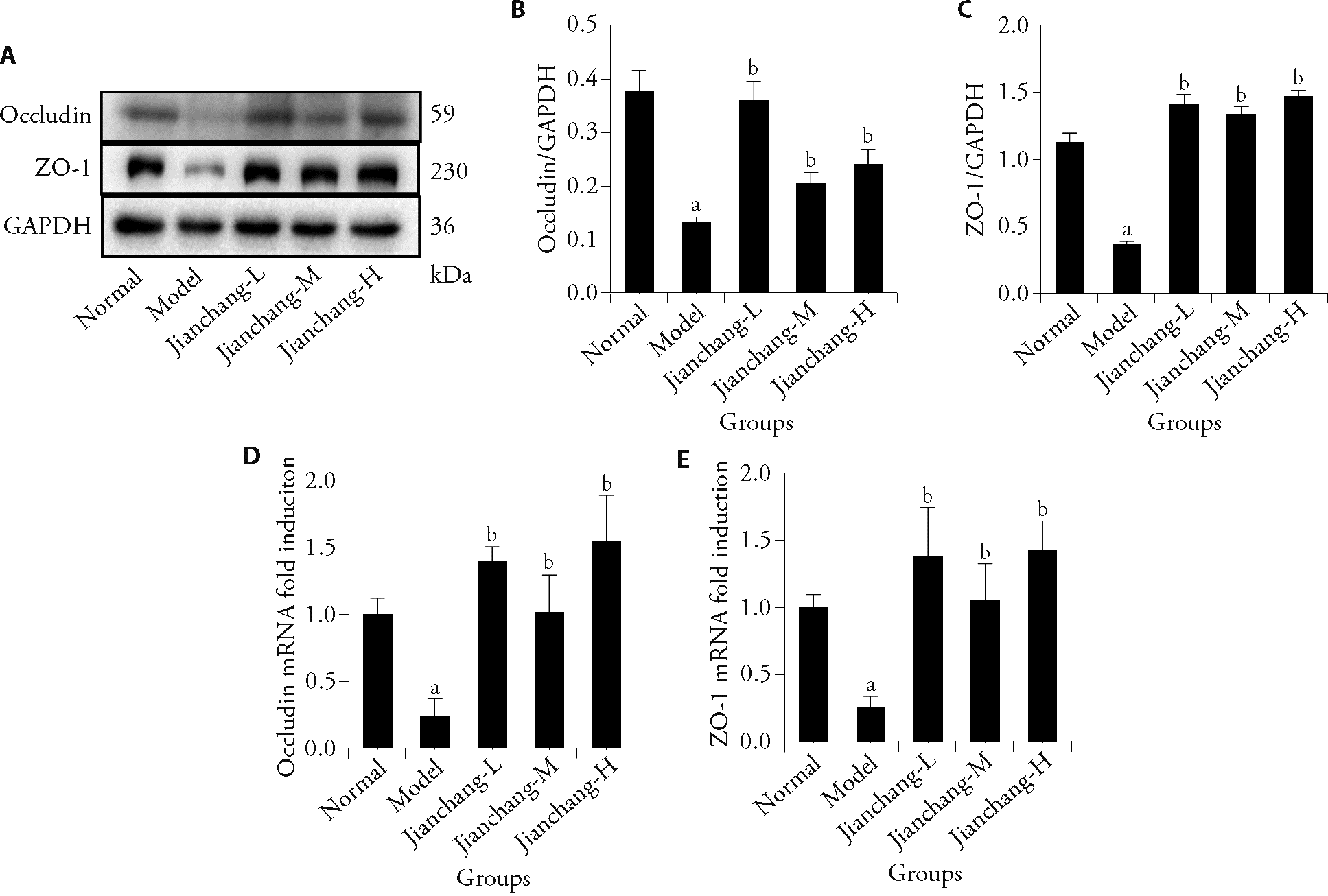
Figure 3 Jianchang No. 1 maintains intestinal barrier integrity in IBS-D rats A: Western blot analyses of Occludin and ZO-1 protein expression in colon tissues; B: statistical graphs of Occludin protein expression levels; C: statistical graphs of ZO-1 protein expression levels; D: statistical graphs of Occludin mRNA expression levels; E: statistical graphs of ZO-1 mRNA expression levels. Normal group: healthy cases; Model group: animal model of diarrhea-predominant irritable bowel syndrome without treatment; Jianchang-M group: animal model of diarrhea-predominant irritable bowel syndrome rats treated with Jianchang No. 1 at a daily dose of 1 g/mL (1 mL/100 g) for 2 week; Jianchang-H group: animal model of diarrhea-predominant irritable bowel syndrome rats treated with Jianchang No. 1 at a daily dose of 2 g/mL (1 mL/100 g) for 2 week. GAPDH: glyceraldehyde-3-phosphate dehydrogenase; ZO-1: zonula occludens-1. Data are expressed as the mean ± standard deviation (n = 8). One-way analysis of variance was adopted for statistical analysis. Compared with the normal group, aP < 0.05; compared with the model group, bP < 0.05.
Figure 3 Jianchang No. 1 maintains intestinal barrier integrity in IBS-D rats A: Western blot analyses of Occludin and ZO-1 protein expression in colon tissues; B: statistical graphs of Occludin protein expression levels; C: statistical graphs of ZO-1 protein expression levels; D: statistical graphs of Occludin mRNA expression levels; E: statistical graphs of ZO-1 mRNA expression levels. Normal group: healthy cases; Model group: animal model of diarrhea-predominant irritable bowel syndrome without treatment; Jianchang-M group: animal model of diarrhea-predominant irritable bowel syndrome rats treated with Jianchang No. 1 at a daily dose of 1 g/mL (1 mL/100 g) for 2 week; Jianchang-H group: animal model of diarrhea-predominant irritable bowel syndrome rats treated with Jianchang No. 1 at a daily dose of 2 g/mL (1 mL/100 g) for 2 week. GAPDH: glyceraldehyde-3-phosphate dehydrogenase; ZO-1: zonula occludens-1. Data are expressed as the mean ± standard deviation (n = 8). One-way analysis of variance was adopted for statistical analysis. Compared with the normal group, aP < 0.05; compared with the model group, bP < 0.05.
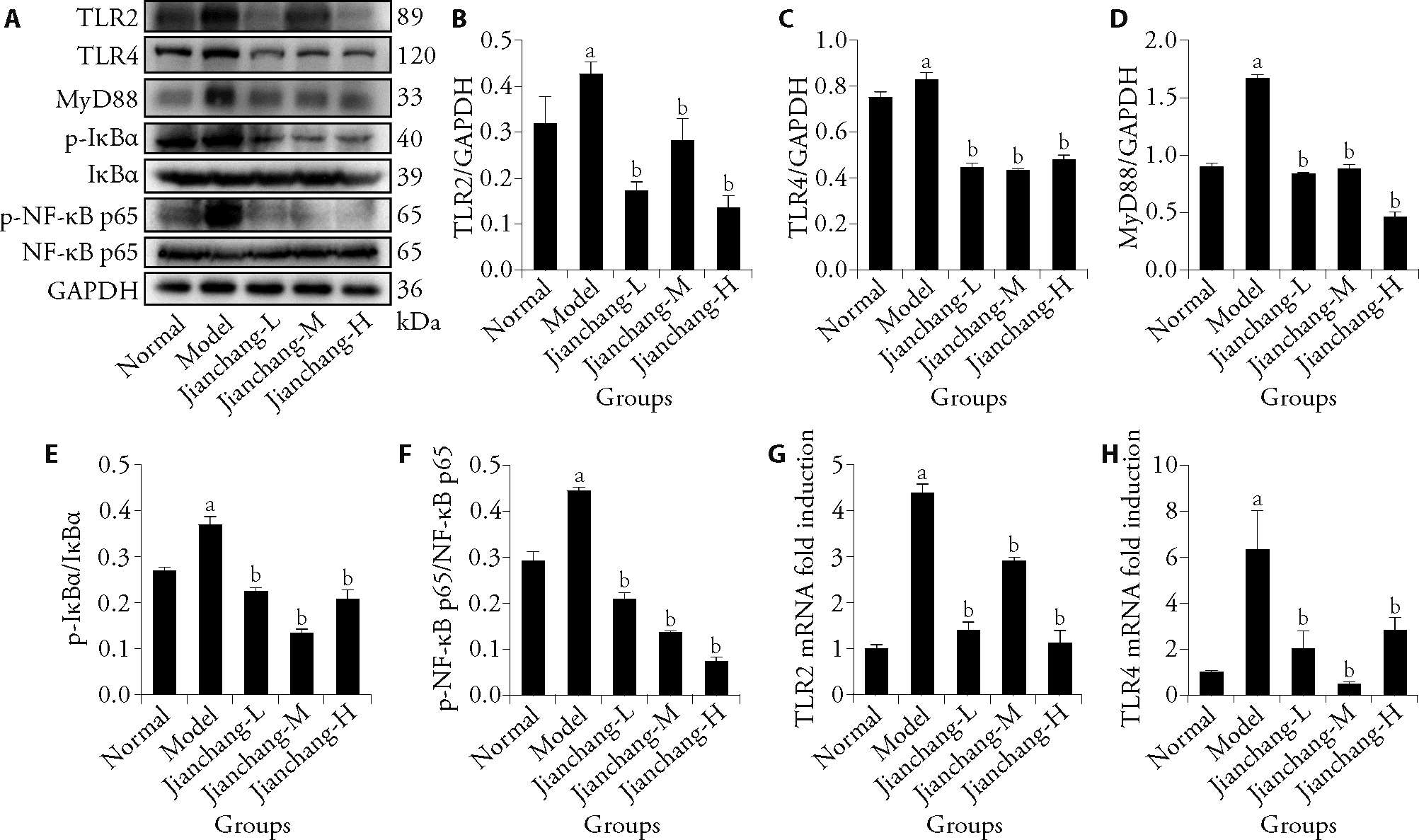
Figure 4 Effect of Jianchang No. 1 on the expression of TLRs/NF-κB signaling pathway-related proteins in colon tissue of IBS-D rats A: Western blot analyses of TLRs/NF-κB signaling pathway-related proteins in colon tissues; B: statistical graphs of TLR2 Protein expression levels; C: statistical graphs of TLR4 Protein expression levels; D: statistical graphs of MyD88 Protein expression levels; E: statistical graphs of IκBα protein phosphorylation levels; F: statistical graphs of NF-κB p65 protein phosphorylation levels; G: statistical graphs of TLR2 mRNA expression levels; H: statistical graphs of TLR4 mRNA expression levels. Normal group: healthy cases; Model group: animal model of diarrhea-predominant irritable bowel syndrome without treatment; Jianchang-M group: animal model of diarrhea-predominant irritable bowel syndrome rats treated with Jianchang No. 1 at a daily dose of 1 g/mL (1 mL/100 g) for 2 week; Jianchang-H group: animal model of diarrhea-predominant irritable bowel syndrome rats treated with Jianchang No. 1 at a daily dose of 2 g/mL (1 mL/100 g) for 2 week. IκBα: inhibitor of κB alpha; MyD88: myeloid differentiation factor 88; NF-κB p65: nuclear factor kappa B p65; p-IκBα: phosphorylated IκBα; p-NF-κB p65: phosphorylated NF-κB p65; TLR: toll-like receptor; IBS-D: irritable bowel syndrome with diarrhea. Data are expressed as the mean ± standard deviation (n = 8). One-way analysis of variance was adopted for statistical analysis. Compared with the normal group, aP < 0.05; compared with the model group, bP < 0.05.
Figure 4 Effect of Jianchang No. 1 on the expression of TLRs/NF-κB signaling pathway-related proteins in colon tissue of IBS-D rats A: Western blot analyses of TLRs/NF-κB signaling pathway-related proteins in colon tissues; B: statistical graphs of TLR2 Protein expression levels; C: statistical graphs of TLR4 Protein expression levels; D: statistical graphs of MyD88 Protein expression levels; E: statistical graphs of IκBα protein phosphorylation levels; F: statistical graphs of NF-κB p65 protein phosphorylation levels; G: statistical graphs of TLR2 mRNA expression levels; H: statistical graphs of TLR4 mRNA expression levels. Normal group: healthy cases; Model group: animal model of diarrhea-predominant irritable bowel syndrome without treatment; Jianchang-M group: animal model of diarrhea-predominant irritable bowel syndrome rats treated with Jianchang No. 1 at a daily dose of 1 g/mL (1 mL/100 g) for 2 week; Jianchang-H group: animal model of diarrhea-predominant irritable bowel syndrome rats treated with Jianchang No. 1 at a daily dose of 2 g/mL (1 mL/100 g) for 2 week. IκBα: inhibitor of κB alpha; MyD88: myeloid differentiation factor 88; NF-κB p65: nuclear factor kappa B p65; p-IκBα: phosphorylated IκBα; p-NF-κB p65: phosphorylated NF-κB p65; TLR: toll-like receptor; IBS-D: irritable bowel syndrome with diarrhea. Data are expressed as the mean ± standard deviation (n = 8). One-way analysis of variance was adopted for statistical analysis. Compared with the normal group, aP < 0.05; compared with the model group, bP < 0.05.
| 1. | Zeeshan MH, Vakkalagadda NP, Sree GS, et al. Irritable bowel syndrome in adults: prevalence and risk factors. Ann Med Surg 2022; 81: 104408. |
| 2. | Liu YL, Liu JS. Irritable bowel syndrome in China: a review on the epidemiology, diagnosis, and management. Chin Med 2021; 134: 1396-401. |
| 3. |
Moshiree B, Heidelbaugh JJ, Sayuk GS. A narrative review of irritable bowel syndrome with diarrhea: a primer for primary care providers. Adv Ther 2022; 39: 4003-20.
DOI PMID |
| 4. |
Lembo A, Sultan S, Chang L, et al. AGA clinical practice guideline on the pharmacological management of irritable bowel syndrome with diarrhea. Gastroenterology 2022; 163: 137-53.
DOI PMID |
| 5. |
Almquist E, Törnblom H, Simrén M. Practical management of irritable bowel syndrome: a clinical review. Minerva Gastroenterol Dietol 2016; 62: 30-48.
PMID |
| 6. | Brenner DM, Sayuk GS. Current US food and drug administration-approved pharmacologic therapies for the treatment of irritable bowel syndrome with diarrhea. Adv Ther 2020; 37: 83-96. |
| 7. | Yao CJ, Li YL, Pu MJ, et al. Traditional Chinese Medicine for irritable bowel syndrome a protocol for Meta-analysis. Medicine (Baltimore) 2020; 99: 5. |
| 8. |
Tang HY, Jiang AJ, Wang XY, et al. Uncovering the pathophysiology of irritable bowel syndrome by exploring the gut-brain axis: a narrative review. Ann Transl Med 2021; 9: 13.
DOI URL |
| 9. |
Shaikh SD, Sun NTL, Canakis A, et al. Irritable bowel syndrome and the gut microbiome: a comprehensive review. J Clin Med 2023; 12: 22.
DOI URL |
| 10. | Ma T, Shen X, Shi X, et al. Targeting gut microbiota and metabolism as the major probiotic mechanism-an evidence-based review. Tre Food Sci Technol 2023; 138: 178-98. |
| 11. |
Zhai LX, Huang CH, Ning ZW, et al. Ruminococcus gnavus plays a pathogenic role in diarrhea-predominant irritable bowel syndrome by increasing serotonin biosynthesis. Cell Host Microbe 2023; 31: 33.
DOI URL |
| 12. |
Hu Y, Chen F, Ye HY, et al. Integrative analysis of the gut microbiome and metabolome in a rat model with stress induced irritable bowel syndrome. Sci Rep 2021; 11: 11.
DOI |
| 13. |
Candelli M, Franza L, Pignataro G, et al. Interaction between lipopolysaccharide and gut microbiota in inflammatory bowel diseases. Int J Mol Sci 2021; 22: 12.
DOI URL |
| 14. |
Kim HJ, Kim H, Lee JH, et al. Toll-like receptor 4 (TLR4): new insight immune and aging. Immun Ageing 2023; 20: 11.
DOI |
| 15. | Belmonte L, Youmba SB, Bertiaux-Vandaële N, et al. Role of toll like receptors in irritable bowel syndrome: differential mucosal immune activation according to the disease subtype. PLoS One 2012; 7: 10. |
| 16. |
Bradesi S, Schwetz I, Ennes H S, et al. Repeated exposure to water avoidance stress in rats: a new model for sustained visceral hyperalgesia. Am J Physiol Gastrointest Liver Physiol 2005; 289: G42-G53.
DOI URL |
| 17. |
Al-Chaer ED, Kawasaki M, Pasricha PJ. A new model of chronic visceral hypersensitivity in adult rats induced by colon irritation during postnatal development. Gastroenterology 2000; 119: 1276-1285.
DOI PMID |
| 18. |
Agrawal A, Whorwell PJ. BMJ learning-Irritable bowel syndrome: diagnosis and management. BMJ 2006; 332: 280-3.
DOI URL |
| 19. | Cangemi DJ, Lacy BE. Management of irritable bowel syndrome with diarrhea: a review of nonpharmacological and pharmacological interventions. Ther Adv Gastroenterol 2019; 12: 19. |
| 20. |
Fukudo S, Okumura T, Inamori M, et al. Evidence-based clinical practice guidelines for irritable bowel syndrome 2020. J Gastroenterol 2021; 56: 193-217.
DOI PMID |
| 21. |
Chen J, Zhang T, Liu Y, et al. Animal models with characteristics of irritable bowel syndrome with diarrhea: current applications and future perspectives. Am J Physiol Gastrointest Liver Physiol 2024; 327: G360-78.
DOI URL |
| 22. |
Zheng L, Lu WM, Xiao Q, et al. Assessing the post-treatment therapeutic effect of pinaverium in irritable bowel syndrome: a randomized controlled trial. Sci Rep 2021; 11: 13.
DOI |
| 23. |
Thursby E, Juge N. Introduction to the human gut microbiota. Biochem J 2017; 474: 1823-36.
DOI PMID |
| 24. |
Napolitano M, Fasulo E, Ungaro F, et al. Gut dysbiosis in irritable bowel syndrome: a narrative review on correlation with disease subtypes and novel therapeutic implications. Microorganisms 2023; 11: 31.
DOI URL |
| 25. |
Pittayanon R, Lau JT, Yuan YH, et al. Gut microbiota in patients with irritable bowel syndrome-a systematic review. Gastroenterology 2019; 157: 97-108.
DOI PMID |
| 26. | Zhang M, Li Y, Ou L, et al. Gut microbiota-derived metabolites in irritable bowel syndrome. Wei Sheng Wu Xue Tong Bao 2023; 50: 3122-36. |
| 27. |
Dale HF, Rasmussen SH, Asiller Ö, et al. Probiotics in irritable bowel syndrome: an up-to-date systematic review. Nutrients 2019; 11: 15.
DOI URL |
| 28. | Huang RJ, Wu F, Zhou Q, et al. Lactobacillus and intestinal diseases: mechanisms of action and clinical applications. Microbiol Res 2022; 260: 22. |
| 29. |
Vancamelbeke M, Vermeire S. The intestinal barrier: a fundamental role in health and disease. Expert Rev Gastroenterol Hepatol 2017; 11: 821-34.
DOI URL |
| 30. |
Carding S, Verbeke K, Vipond DT, et al. Dysbiosis of the gut microbiota in disease. Microb Ecol Health Dis 2015; 26: 26191.
DOI PMID |
| 31. | Fortea M, Albert-Bayo M, Abril-Gil M, et al. Present and future therapeutic approaches to barrier dysfunction. Front Nutr 2021; 8: 31. |
| 32. | Lei L, Deng DZ, Xu WQ, et al. Increased intestinal permeability and lipopolysaccharide contribute to swainsonine-induced systemic inflammation. Ecotox Environ Safe 2024; 284: 11. |
| 33. | Bao L, Cui L. Exprossion of TLR4 and NF-kappaB in rats model induced with IBS-D and its mechanism. Jie Fang Jun Yi Xue Za Zhi 2019; 44: 648-51. |
| 34. | Xi MJ, Zhao P, Li F, et al. MicroRNA-16 inhibits the TLR4/NF-ΚB pathway and maintains tight junction integrity in irritable bowel syndrome with diarrhea. J Biol Chem 2022; 298: 14. |
| 35. |
Wang XX, Luo RJ, She B, et al. Traditional Chinese Medicine (Shun-Qi-Tong-Xie granule) for irritable bowel syndrome: study protocol for a randomised controlled trial. Trials 2014; 15: 273.
DOI |
| 36. |
Wang R, Zhou G, Wang M, et al. The metabolism of polysaccharide from atractylodes macrocephala Koidz and its effect on intestinal microflora. Evid Based Complement Altern Med 2014; 2014: 926381.
DOI URL |
| 37. |
Lu Q, Jiao YQ, Wu ZD, et al. Zanthoxylum nitidum ameliorates intestinal barrier dysfunction and inflammation in TNBS-induced colitis rats and LPS-stimulated caco-2 cells. FASEB J 2025; 39: e71099.
DOI URL |
| [1] | KANG Xiaochun, WU Sinuo, LI Ningcen, XU Wenyue, XU Zhifang, Thong Yikchih, LI Peiyun, TU Shiwei, MA Ning, LI Yanwei, DOU Baomin, TAN Wenjun, GUO Jing, GUO Yi, PAN Xingfang, LÜ Zhongxi. Regulatory effects and mechanisms of the acupuncture-induced complement component 1q on the high mobility group box 1 -receptor for advanced glycation end products-nuclear factor kappa-B pathway at Zusanli (ST36) [J]. Journal of Traditional Chinese Medicine, 2026, 46(4): 844-853. |
| [2] | XU Huichao, HAO Jianheng, CHANG Boya, WANG Danni, LI Rangqian, CAO Yuxia, WANG Haijun, JI Laixi. Electroacupuncture alleviates intestinal inflammation in rats with ulcerative colitis by regulating colonic cell autophagy and gut microbiota [J]. Journal of Traditional Chinese Medicine, 2026, 46(4): 894-906. |
| [3] | ZHENG Jie, DING Zhimin, CHEN Tingyu, LÜ Zhuan, ZHANG Lihong, LIU Yongtao, ZHANG Yasu, JIN Xiaoqin, WANG Xinyu, LIU Bin, FENG Xiaodong. Antihypertensive effect of acupuncture involve reshaping gut microbiota and alleviating gut inflammation in spontaneously hypertensive rats [J]. Journal of Traditional Chinese Medicine, 2026, 46(4): 907-915. |
| [4] | XU Mengjun, YAN Zixing, CHEN Xi, CAI Juanjuan, ZHANG Haiou, LIN Zhenwen. Hepatoprotection of Jianpi Qingre Lishi prescription (健脾清热利湿法) on non-alcoholic steatohepatitis via miRNA-27/peroxisome proliferator-activated receptor gamma axis [J]. Journal of Traditional Chinese Medicine, 2026, 46(3): 561-570. |
| [5] | CHEN Ying, QIAO Jiajun, LU Yuyuan, XUE Chongxiang, XIA Zhongyuan. Mechanism of Buzhong Yiqi decoction (补中益气汤) for Hashimoto's thyroiditis: insights from gut microbiota and metabolomics [J]. Journal of Traditional Chinese Medicine, 2026, 46(3): 571-583. |
| [6] | ZHANG Quanhui, ZENG Jinlan, SU Liang, WANG Yi, DENG Yongwen, ZHANG Xiuchai. Shenling Baizhu powder (参苓白术散) reduced the oxidative stress and mitochondrial damage during ulcerative colitis via the Kelch-like ECH-associated protein 1-NF-E2-related factor 2/nuclear factor kappa B pathway [J]. Journal of Traditional Chinese Medicine, 2026, 46(3): 584-593. |
| [7] | HAO Feng, SANG Jiajia, PENG Chuanyu, HU Jun, WU Zijian, HU Ling, GU Yihuang. Effect of moxibustion at Zusanli (ST36) on beclin 1-solute carrier family 7 member 11 gene ferroptosis-related proteins in synovial inflammation of rats with rheumatoid arthritis [J]. Journal of Traditional Chinese Medicine, 2026, 46(3): 594-604. |
| [8] | LI Chuanpeng, YAO Yaoyao, XU Yingzhi, JIANG Ping, FENG Luda, GAO Ying, DONG Xinglu. Evaluation of the anti-apoptotic, anti-platelet aggregation, and pro-angiogenic properties of Naoshuantong capsule (脑栓通) in ischemic stroke: insights from network pharmacology and animal experiments [J]. Journal of Traditional Chinese Medicine, 2026, 46(3): 629-640. |
| [9] | XU Pingyuan, ZHU Heng, ZHOU Ruonan, WEI Yaping, ZHU Ziwei, XU Fangyuan, XIANG Yingying, CAO Yue, SHEN Lixuan, WANG Ziwei, XUE Yingying, YU Xizhong, FANG Penghua, SHANG Wenbin. Beneficial effects of Huanglian Jiedu decoction (黄连解毒汤 ) on metabolic syndrome: a prospective randomized controlled clinical trial [J]. Journal of Traditional Chinese Medicine, 2026, 46(2): 411-417. |
| [10] | YU Fangning, LIN Li, TANG Xiao, HE Xiujuan, ZHANG Bo, CHEN Yukun, MA Yizhao, LIU Zeyu, YE Jinsheng, XU Xuying. Effect of Huiyang Shengji unguent (回阳生肌膏) on the NOD-like receptor family pyrin domain containing protein 3/caspase1/ gasdermin D pathway and lymphatic angiogenesis in patients with diabetic foot ulcer [J]. Journal of Traditional Chinese Medicine, 2026, 46(2): 427-438. |
| [11] | LI Hongzheng, LIN Guosheng, PENG Yuxuan, Churov Alexey Viktorovich, YANG Wenwen, WANG Jie, LU Jieming, LIAO Feifei, YU Ruotong, WEI Yue, ZHAO Zhiru, LU Aimei, LI Peng, SHEN Aling, LONG Linzi, QU Hua, FU Changgeng. Candidate biomarker identification for blood stasis syndrome among coronary artery disease patients using the Olink proteomics platform [J]. Journal of Traditional Chinese Medicine, 2026, 46(2): 490-500. |
| [12] | LIANG Zihao, GAO Jie, SONG Jinyun, ZHENG Qin, ZHAO Hongyu. Network pharmacological and experimental validation of the mechanism of Chaihu Guizhi Ganjiang decoction (柴胡桂枝干姜汤) regulating T helper cell 17/regulatory T cell balance to improve autoimmune hepatitis [J]. Journal of Traditional Chinese Medicine, 2026, 46(1): 110-118. |
| [13] | SUN Yan, ZHOU Haozheng, FENG Jianhui, LIN Zikai, HE Jie, WANG Zhenhua, GUO Yuting, WEN Shaohong, LI Gang. Baitouweng Tang (白头翁汤) alleviates dextran sulfate sodium-induced ulcerative colitis in mice: a network pharmacology combined with experimental study [J]. Journal of Traditional Chinese Medicine, 2026, 46(1): 119-126. |
| [14] | ZHOU Mi, BU Huaien, WANG Dongjun, ZHANG Naijin, SUN Xuan, TIAN Zhikui, WANG Hongwu. Efficacy of Tongxie Yaofang (痛泻要方) compared with pinaverium bromide on irritable bowel syndrome with liver depression and spleen deficiency: a systematic review and Meta-analysis [J]. Journal of Traditional Chinese Medicine, 2026, 46(1): 14-21. |
| [15] | GAO Yinli, ZHANG Linhua, ZHANG Yaqiang, ZHANG Liuhe, ZHI Nan, LIAN Haihong. Pinggan Yuyin Qingre formula (平肝育阴清热方) ameliorates meibomian gland dysfunction through the interleukin-17/nuclear factor kappa B pathway based on network pharmacology and experimental validation [J]. Journal of Traditional Chinese Medicine, 2026, 46(1): 172-182. |
| Viewed | ||||||
|
Full text |
|
|||||
|
Abstract |
|
|||||
