
Journal of Traditional Chinese Medicine ›› 2026, Vol. 46 ›› Issue (4): 1000-1008.DOI: 10.19852/j.cnki.jtcm.2026.04.019
• Original Articles • Previous Articles Next Articles
Altered amino acids and acylcarnitines profile in infantile intrahepatic cholestasis liver disease: implication for Traditional Chinese Medicine syndrome differentiation
QIU Yanyan1, XIA Yu2, LI Weiwei1, YAN Suqi3( ), PANG Yusheng4()
- 1
Department of Pediatrics ,the First Affiliated Hospital of Guangxi University of Chinese Medicine Nanning 530000, China
2Department of Pharmacy ,China Pharmaceutical University Nanjing Drum Tower Hospital Nanjing 210000, China
3Department of Integrated Chinese and Western Medicine ,Wuhan Children’s Hospital, Tongji Medical College, Huazhong University of Science and Technology Wuhan 430000, China
4Department of Pediatrics ,The First Affiliated Hospital of Guangxi Medical University Nanning 530000, China
-
Received:2025-05-13Accepted:2025-11-25Online:2026-08-15Published:2026-08-08 -
Contact:Prof. PANG Yusheng, Department of Pediatrics, The First Affiliated Hospital of Guangxi Medical University, Nanning 530000, China. 451064242@qq.com; Prof. YAN Suqi, Department of Integrated Chinese and Western Medicine, Wuhan Children’s Hospital, Tongji Medical College, Huazhong University of Science and Technology, Wuhan 430000, China. 283952430@qq.com,Telephone: +86-771-5848508
-
About author:QIU Yanyan and XIA Yu are co-first authors and contributed equally to this work -
Supported by:National Natural Science Foundation of China: Mechanistic Study on Li-Dan-He-Ji's Hepatoprotective Effects Against Cholestasis in Juvenile Rats ia Suppressing Calcium-Sensing Receptor-Mediated Apoptosis(81574024)

Cite this article
QIU Yanyan, XIA Yu, LI Weiwei, YAN Suqi, PANG Yusheng. Altered amino acids and acylcarnitines profile in infantile intrahepatic cholestasis liver disease: implication for Traditional Chinese Medicine syndrome differentiation[J]. Journal of Traditional Chinese Medicine, 2026, 46(4): 1000-1008.
share this article
Table 1 Demographic and clinical characteristics of the study cohort ($\bar{x}±s$)
| Characteristic | HCs (n = 50) | IICLD (n = 77) | COS (n = 43) | JSA (n = 34) |
|---|---|---|---|---|
| Gender (M/F, n) | 31/19 | 47/30 | 27/16 | 20/14 |
| Age (months) | 2.5±0.9 | 2.3±0.8 | 2.4±0.7 | 2.6±0.8 |
| Body weight (kg) | 5.0±1.0 | 4.9±1.0 | 4.9±1.0 | 4.9±1.1 |
| Mode of delivery (ND/CS, n) | 23/27 | 30/47 | 18/25 | 12/22 |
| TBIL (μmol/L) | 10.8±4.4 | 216.1±51.4a | 204.5±48.9 | 230.7±51.5b |
| DBIL (μmol/L) | 3.8±2.1 | 133.4±35.8a | 126.4±32.6 | 142.1±38.2b |
| ALT (U/L) | 34.6±15.0 | 255.9±187.7a | 202.4±124.6 | 323.4±230.1b |
| AST (U/L) | 25.4±8.1 | 320.6±237.2a | 255.6±177.2 | 402.8±277.8b |
| TBA (μmol/L) | 5.7±2.8 | 165.7±71.1a | 145.7±47.2 | 190.9±87.3b |
| GGT (U/L) | 24.4±14.8 | 225.6±219.1a | 155.5±111.4 | 314.3±283.3b |
| ALP (U/L) | 243.8±68.0 | 478.6±192.5a | 444.4±155.6 | 521.9±225.9b |
Table 1 Demographic and clinical characteristics of the study cohort ($\bar{x}±s$)
| Characteristic | HCs (n = 50) | IICLD (n = 77) | COS (n = 43) | JSA (n = 34) |
|---|---|---|---|---|
| Gender (M/F, n) | 31/19 | 47/30 | 27/16 | 20/14 |
| Age (months) | 2.5±0.9 | 2.3±0.8 | 2.4±0.7 | 2.6±0.8 |
| Body weight (kg) | 5.0±1.0 | 4.9±1.0 | 4.9±1.0 | 4.9±1.1 |
| Mode of delivery (ND/CS, n) | 23/27 | 30/47 | 18/25 | 12/22 |
| TBIL (μmol/L) | 10.8±4.4 | 216.1±51.4a | 204.5±48.9 | 230.7±51.5b |
| DBIL (μmol/L) | 3.8±2.1 | 133.4±35.8a | 126.4±32.6 | 142.1±38.2b |
| ALT (U/L) | 34.6±15.0 | 255.9±187.7a | 202.4±124.6 | 323.4±230.1b |
| AST (U/L) | 25.4±8.1 | 320.6±237.2a | 255.6±177.2 | 402.8±277.8b |
| TBA (μmol/L) | 5.7±2.8 | 165.7±71.1a | 145.7±47.2 | 190.9±87.3b |
| GGT (U/L) | 24.4±14.8 | 225.6±219.1a | 155.5±111.4 | 314.3±283.3b |
| ALP (U/L) | 243.8±68.0 | 478.6±192.5a | 444.4±155.6 | 521.9±225.9b |
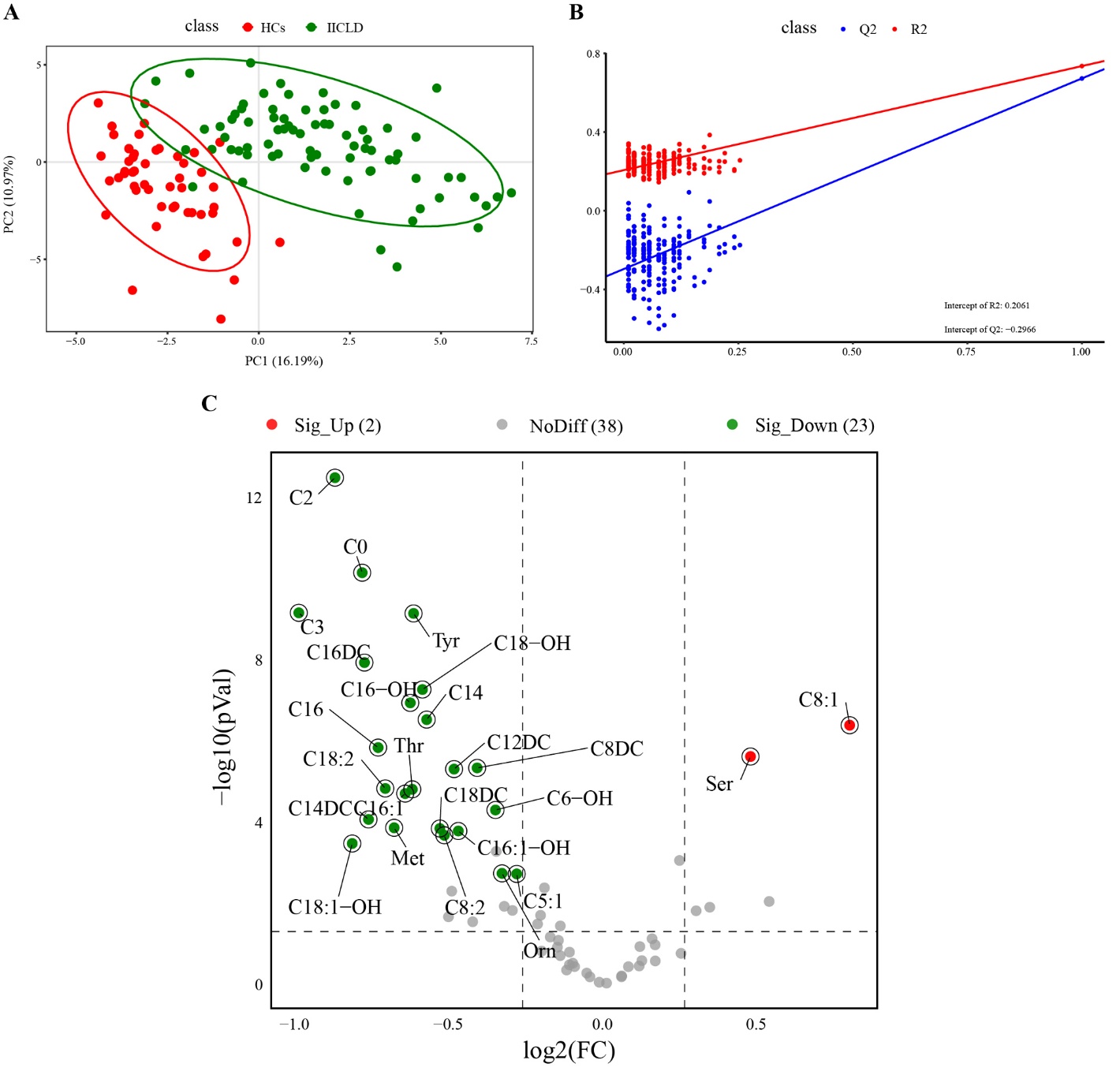
Figure 1 Amino acid- and acylcarnitine-targeted metabolomics profiling analysis in healthy controls group and infant intrahepatic cholestasis liver disease group A: PLS-DA score plots; B: validation plots obtained from 200 permutation tests; C: volcano map of 25 differential amino acid and acylcarnitine screening with a screening threshold of variables of importance in projection ≥ 1, FC ≥ 1.2 or ≤ 0.83, and P < 0.05. HCs: healthy controls (n = 50); IICLD: infantile intrahepatic cholestatic liver disease (n = 77). FC: fold change; PLS-DA: partial least squares discriminant analysis; PC: principal component; C0: free carnitine; C2: acetylcarnitine; C3: propionylcarnitine; Thr: threonine; C16DC: hexadecanedioylcarnitine; C18-OH: 3-hydroxysteroylcarnitine; C14: myristoylcarnitine; C16: palmitoylcarnitine; C16-OH: 3-hydroxy-hexadecanoylcarnitine; C12-DC: dodecanedioylcarnitine; C8DC: suberylcarnitine; C18:2: octadecadienylcarnitine; C18DC: octadecanedioylcarnitine; C14-DC: tetracanedioylcarnitine; C16:1: hexadecenoylcarnitine; C16:1-OH: 3-hydroxy-hexadecenoylcarnitine; C18:1-OH: 3-hydroxyoleylcarnitine; C8:2: octadienoylcarnitine; C8:1: octenoylcarnitine; C6-OH: 3-hydroxyhexanoylcarnitine; Orn: ornithine; Ser: serine; Met: methionine. Statistical analyses were measured by using 2-tailed unpaired Student’s t-test.
Figure 1 Amino acid- and acylcarnitine-targeted metabolomics profiling analysis in healthy controls group and infant intrahepatic cholestasis liver disease group A: PLS-DA score plots; B: validation plots obtained from 200 permutation tests; C: volcano map of 25 differential amino acid and acylcarnitine screening with a screening threshold of variables of importance in projection ≥ 1, FC ≥ 1.2 or ≤ 0.83, and P < 0.05. HCs: healthy controls (n = 50); IICLD: infantile intrahepatic cholestatic liver disease (n = 77). FC: fold change; PLS-DA: partial least squares discriminant analysis; PC: principal component; C0: free carnitine; C2: acetylcarnitine; C3: propionylcarnitine; Thr: threonine; C16DC: hexadecanedioylcarnitine; C18-OH: 3-hydroxysteroylcarnitine; C14: myristoylcarnitine; C16: palmitoylcarnitine; C16-OH: 3-hydroxy-hexadecanoylcarnitine; C12-DC: dodecanedioylcarnitine; C8DC: suberylcarnitine; C18:2: octadecadienylcarnitine; C18DC: octadecanedioylcarnitine; C14-DC: tetracanedioylcarnitine; C16:1: hexadecenoylcarnitine; C16:1-OH: 3-hydroxy-hexadecenoylcarnitine; C18:1-OH: 3-hydroxyoleylcarnitine; C8:2: octadienoylcarnitine; C8:1: octenoylcarnitine; C6-OH: 3-hydroxyhexanoylcarnitine; Orn: ornithine; Ser: serine; Met: methionine. Statistical analyses were measured by using 2-tailed unpaired Student’s t-test.
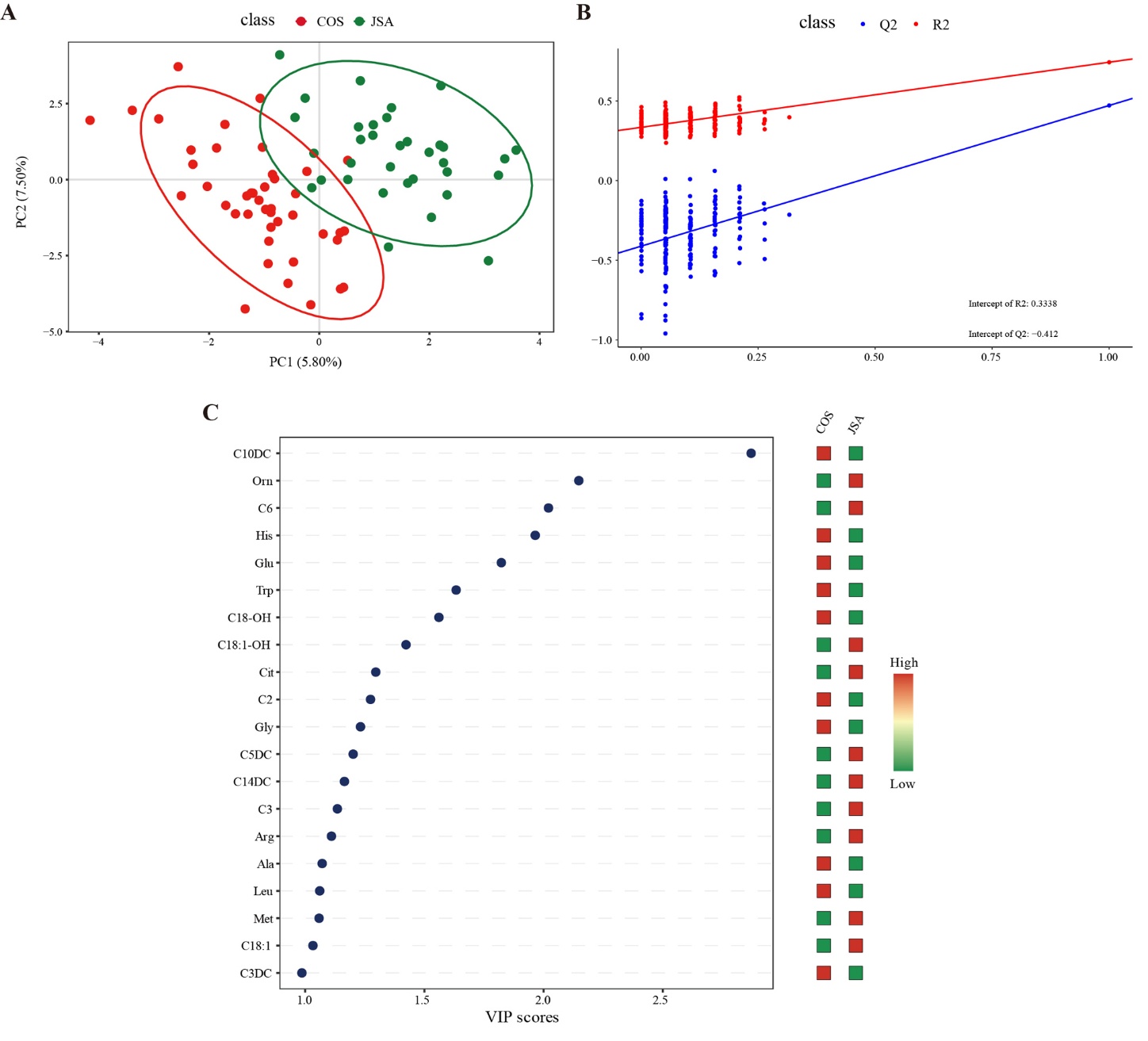
Figure 2 Amino acids- and acylcarnitines-targeted metabolomics profiling analysis in COS group and JSA group A: PLS-DA score plots; B: validation plots were obtained from 200 permutation tests; C: variable importance in projection analysis. The green and red boxes on the right indicate whether metabolite level is increased (red) or decreased (green). COS: cold-damp obstruction and stagnation syndrome (n = 43); JSA: jaundice due to stasis and accumulation syndrome (n = 34). PLS-DA: partial least squares discriminant analysis; PC: principal component; C10DC: decanedioylcarnitine; Orn: ornithine; C6: caproylcarnitine; His: histidine; Glu: glutamic acid; Trp: tryptophan; C18-OH: 3-hydroxysteroylcarnitine; C18:1-OH: 3-hydroxyoleylcarnitine; Cit: citrulline; C2: acetylcarnitine; Gly: glycine; C5DC: glutarylcarnitine; C14-DC: tetracanedioylcarnitine; C3: propionylcarnitine; Arg: arginine; Ala: alanine; Leu: leucine; Met: methionine; C18:1: octadecenoylcarnitine; C3DC: malonylcarnitine; VIP: variables of importance in projection.
Figure 2 Amino acids- and acylcarnitines-targeted metabolomics profiling analysis in COS group and JSA group A: PLS-DA score plots; B: validation plots were obtained from 200 permutation tests; C: variable importance in projection analysis. The green and red boxes on the right indicate whether metabolite level is increased (red) or decreased (green). COS: cold-damp obstruction and stagnation syndrome (n = 43); JSA: jaundice due to stasis and accumulation syndrome (n = 34). PLS-DA: partial least squares discriminant analysis; PC: principal component; C10DC: decanedioylcarnitine; Orn: ornithine; C6: caproylcarnitine; His: histidine; Glu: glutamic acid; Trp: tryptophan; C18-OH: 3-hydroxysteroylcarnitine; C18:1-OH: 3-hydroxyoleylcarnitine; Cit: citrulline; C2: acetylcarnitine; Gly: glycine; C5DC: glutarylcarnitine; C14-DC: tetracanedioylcarnitine; C3: propionylcarnitine; Arg: arginine; Ala: alanine; Leu: leucine; Met: methionine; C18:1: octadecenoylcarnitine; C3DC: malonylcarnitine; VIP: variables of importance in projection.
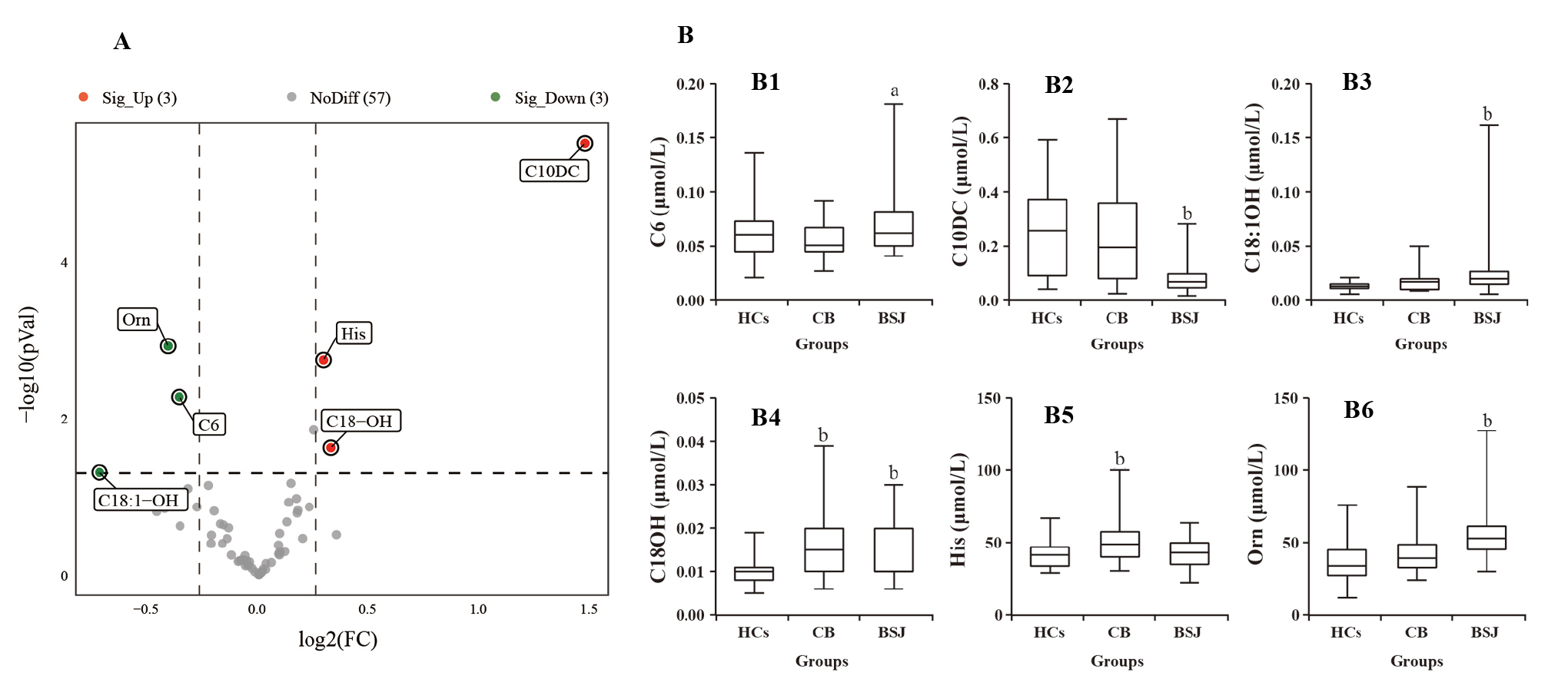
Figure 3 Differential metabolites analysis between COS group and JSA group A: volcano map of six differential amino acids and acylcarnitines with a screening threshold of VIP ≥ 1, FC ≥ 1.2 or ≤ 0.83, and P < 0.05; B: comparison of differential metabolites between HCs group, COS group and JSA group; B1: C6; B2: C10DC; B3: C18:1-OH; B4: C18-OH; B5: His; B6: Orn. HCs: healthy controls (n = 50); COS: cold-damp obstruction and stagnation syndrome (n = 43); JSA: jaundice due to stasis and accumulation syndrome (n = 34). Orn: ornithine; His: histidine; C6: caproylcarnitine; C10DC: decanedioylcarnitine; C18-OH: 3-hydroxysteroylcarnitine; C18:1-OH: 3-hydroxyoleylcarnitine. Data are presented as the median (P25, P75). Statistical analyses were measured by using 2-tailed unpaired Student’s t-test. aP < 0.1, bP < 0.01 vs HCs group.
Figure 3 Differential metabolites analysis between COS group and JSA group A: volcano map of six differential amino acids and acylcarnitines with a screening threshold of VIP ≥ 1, FC ≥ 1.2 or ≤ 0.83, and P < 0.05; B: comparison of differential metabolites between HCs group, COS group and JSA group; B1: C6; B2: C10DC; B3: C18:1-OH; B4: C18-OH; B5: His; B6: Orn. HCs: healthy controls (n = 50); COS: cold-damp obstruction and stagnation syndrome (n = 43); JSA: jaundice due to stasis and accumulation syndrome (n = 34). Orn: ornithine; His: histidine; C6: caproylcarnitine; C10DC: decanedioylcarnitine; C18-OH: 3-hydroxysteroylcarnitine; C18:1-OH: 3-hydroxyoleylcarnitine. Data are presented as the median (P25, P75). Statistical analyses were measured by using 2-tailed unpaired Student’s t-test. aP < 0.1, bP < 0.01 vs HCs group.
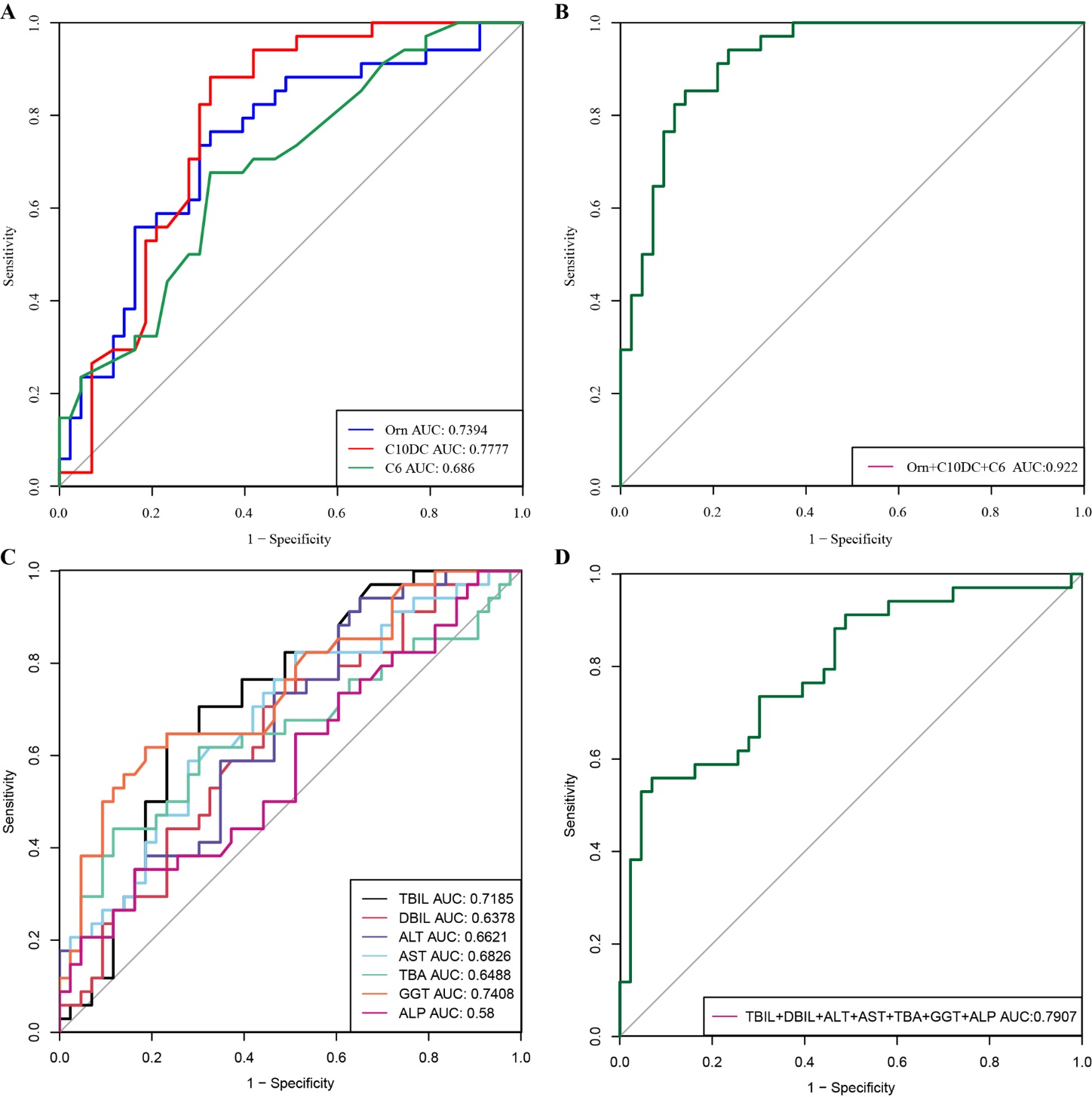
Figure 4 ROC curve based on potential biomarkers and biomedical indexes A: ROC curves for Orn, C10DC and C6, respectively; B: ROC curves for Orn + C10DC + C6; C: ROC curves for TBIL, DBIL, ALT, AST, TBA, GGT and ALP, respectively; D: ROC curves for TBIL + DBIL + ALT + AST + TBA + GGT + ALP. ROC: receiver operating characteristic; AUC: areas under the receiver operating characteristic curves; Orn: ornithine; C10DC: decanedioylcarnitine; C6: caproylcarnitine; TBIL: total bilirubin; DBIL: direct bilirubin; ALT: alanine aminotransferase; AST: aspartate aminotransferase; TBA: total bile acid; GGT: γ-glutamyl transpeptidase; ALP: alkaline phosphatase.
Figure 4 ROC curve based on potential biomarkers and biomedical indexes A: ROC curves for Orn, C10DC and C6, respectively; B: ROC curves for Orn + C10DC + C6; C: ROC curves for TBIL, DBIL, ALT, AST, TBA, GGT and ALP, respectively; D: ROC curves for TBIL + DBIL + ALT + AST + TBA + GGT + ALP. ROC: receiver operating characteristic; AUC: areas under the receiver operating characteristic curves; Orn: ornithine; C10DC: decanedioylcarnitine; C6: caproylcarnitine; TBIL: total bilirubin; DBIL: direct bilirubin; ALT: alanine aminotransferase; AST: aspartate aminotransferase; TBA: total bile acid; GGT: γ-glutamyl transpeptidase; ALP: alkaline phosphatase.
| 1. |
Fawaz R, Baumann U, Ekong U, et al. Guideline for the evaluation of cholestatic jaundice in infants: Joint Recommendations of the North American Society for Pediatric Gastroenterology, Hepatology, and Nutrition and the European Society for Pediatric Gastroenterology, Hepatology, and Nutrition. J Pediatr Gastroenterol Nutr 2017; 64: 154-68.
DOI URL |
| 2. |
Feldman AG, Sokol RJ. Recent developments in diagnostics and treatment of neonatal cholestasis. Semin Pediatr Surg 2020; 29: 150945.
DOI URL |
| 3. | Liu Y, Huang ZH. Clinical diagnosis and treatment of cholestatic hepatopathy in infants. J Clin Hepatol 2015; 31: 1218-20. |
| 4. | Yi W, Yan SQ, Tang JQ, Ma X, Su MJ, Li H. Effects of Li-Dan-He-Ji on regulating oxidative stress and antagonising infantile cholestatic hepatic fibrosis. Zhong Hua Wei Zhong Bing Ji Jiu Yi Xue 2023; 35: 741-5. |
| 5. | Shu J, He Q, Mu J, You SJ, Li YN, Wu XM. Treatment of infantile intrahepatic cholestatic liver disease based on hepatic collateral theory. J Tradit Chin Med 2021; 62: 79-81. |
| 6. |
Qin H, Zhang LL, Xiong XL, et al. Lidan Heji improves infantile cholestasis hepatopathy through inhibiting calcium-sensing receptor-mediated hepatocyte apoptosis. Front Pharmacol 2020; 11: 156.
DOI URL |
| 7. | Lin XX, He Q, Zhang XH, SU WW, Ding ZX. Treatment of low γ-glutamyl transpeptidase type of infantile cholestatic liver disease with liver colla-terals obstruction and damp-heat internal accumulation syndrome by tongluo lidan decoction: 72 cases clinical observation. J Tradit Chin Med 2023; 64: 1248-54. |
| 8. | Li Z, Xu C. The fundamental theory of Traditional Chinese Medicine and the consideration in its research strategy. Front Med 2011; 5: 208-11. |
| 9. | Ma R. Pediatrics of Traditional Chinese Medicine. Beijing: China Press of Traditional Chinese Medicine, 2016: 240-3. |
| 10. | Wang XF, Zheng J. Pediatrics of Traditional Chinese and Western Medicine. Beijing: China Press of Traditional Chinese Medicine, 2016: 53-8. |
| 11. |
Wu JM, Yan N, Liya T, Fei MA, Lin YT, Zhuo YY. Difference of the gut microbiota of premature ovarian insufficiency in two traditional Chinese syndromes. J Tradit Chin Med 2025; 45: 132-9.
DOI |
| 12. |
Gonzalez-Pena D, Brennan L. Recent advances in the application of metabolomics for nutrition and health. Annu Rev Food Sci Technol 2019; 10: 479-519.
DOI URL |
| 13. |
Yang Q, Zhang AH, Miao JH, et al. Metabolomics biotechnology, applications, and future trends: a systematic review. RSC Adv 2019; 9: 37245-57.
DOI URL |
| 14. |
Sha Q, Zhang Z, Li H, Xu Y, Wang J, Du A. Serum metabolomic profile of myasthenia gravis and potential values as biomarkers in disease monitoring. Clinica Chimica Acta 2024; 562: 119873.
DOI URL |
| 15. |
Wishart DS. Metabolomics for investigating physiological and pathophysiological processes. Physiol Rev 2019; 99: 1819-75.
DOI PMID |
| 16. |
Wudy SI, Mittermeier-Klessinger VK, Dunkel A, et al. High-throughput analysis of underivatized amino acids and acylcarnitines in infant serum: a micromethod based on stable isotope dilution targeted HILIC-ESI-MS/MS. J Agric Food Chem 2023; 71: 8633-47.
DOI URL |
| 17. |
Nambo-Venegas R, Valdez-Vargas C, Cisneros B, et al. Altered plasma acylcarnitines and amino acids profile in spinocerebellar ataxia type 7. Biomolecules 2020; 10: 390.
DOI URL |
| 18. |
McCann MR, George De la Rosa MV, Rosania GR, Stringer KA. L-carnitine and acylcarnitines: mitochondrial biomarkers for precision medicine. Metabolites 2021; 11: 51.
DOI URL |
| 19. |
Cynober LA. Plasma amino acid levels with a note on membrane transport: characteristics, regulation, and metabolic significance. Nutrition 2002; 18: 761-6.
DOI PMID |
| 20. |
Copple BL, Jaeschke H, Klaassen CD. Oxidative stress and the pathogenesis of cholestasis. Semin Liver Dis 2010; 30: 195-204.
DOI PMID |
| 21. |
Fossdal G, Braadland P, Hov JR, et al. Mitochondrial dysfunction and lipid alterations in primary sclerosing cholangitis. Scand J Gastroenterol 2025; 60: 165-73.
DOI URL |
| 22. | Subspecialty Group of Infectious Diseases tSoPCMA, Subspecialty Group of Gastroenterology tSoPCMA, Editorial Board CJoP. Expert consensus on diagnosis and treatment of infantile cholestasis. Chin J Pediatr 2022; 60: 990-7. |
| 23. | Dong C, Huang ZH. Diagnosis and differential diagnosis of infantile cholestasis disease. Chin J Appl Clin Pediatr 2018; 33: 1441-7. |
| 24. | Gu MY, Yang Y, Sun Y, Shang Y, Hu XS. Guideline for TCM pediatrics clinical diagnosis and treatment·fetal Jaundice (amendment). Zhong Yi Er Ke Za Zhi 2018; 14: 5-9. |
| 25. |
Mai M, Tonjes A, Kovacs P, Stumvoll M, Fiedler GM, Leichtle AB. Serum levels of acylcarnitines are altered in prediabetic conditions. PLoS One 2013; 8: e82459.
DOI URL |
| 26. |
Zhang J, Chen Q, Zhang L, et al. Simultaneously quantifying hundreds of acylcarnitines in multiple biological matrices within ten minutes using ultrahigh-performance liquid-chromatography and tandem mass spectrometry. J Pharm Anal 2024; 14: 140-8.
DOI PMID |
| 27. |
McGill MR, Li F, Sharpe MR, et al. Circulating acylcarnitines as biomarkers of mitochondrial dysfunction after acetaminophen overdose in mice and humans. Arch Toxicol 2014; 88: 391-401.
DOI PMID |
| 28. |
Dong R, Ye N, Zhao S, et al. Studies on novel diagnostic and predictive biomarkers of intrahepatic cholestasis of pregnancy through metabolomics and proteomics. Front Immunol 2021; 12: 733225.
DOI URL |
| 29. | Ribel-Madsen A, Ribel-Madsen R, Brons C, Newgard CB, Vaag AA, Hellgren LI. Plasma acylcarnitine profiling indicates increased fatty acid oxidation relative to tricarboxylic acid cycle capacity in young, healthy low birth weight men. Physiol Rep 2016; 4: 12977. |
| 30. |
Levitsky DO, Skulachev VP. Carnitine: the carrier transporting fatty acyls into mitochondria by means of an electrochemical gradient of H+. Biochim Biophys Acta 1972; 275: 33-50.
PMID |
| 31. | Oono T, Yamasaki T, Zaitsu J, et al. Association of tyrosine with insulin resistance in hepatitis C virus-related chronic liver disease. Hepatol Res 2014; 44: E54-62. |
| 32. |
Ferreira GK, Scaini G, Carvalho-Silva M, et al. Effect of L-tyrosine in vitro and in vivo on energy metabolism parameters in brain and liver of young rats. Neurotox Res 2013; 23: 327-35.
DOI URL |
| 33. | Zhou X, He L, Wu C, Zhang Y, Wu X, Yin Y. Serine alleviates oxidative stress via supporting glutathione synthesis and methionine cycle in mice. Mol Nutr Food Res 2017; 61: 1002. |
| 34. |
Arya P, Kumar U, Sharma S, et al. Targeted NMR-based serum metabolic profiling of serine, glycine and methionine in acute-on-chronic liver failure patients: possible insights into mitochondrial dysfunction. Anal Sci Adv 2021; 2: 536-45.
DOI URL |
| 35. |
Zhou X, He L, Zuo S, et al. Serine prevented high-fat diet-induced oxidative stress by activating AMPK and epigenetically modulating the expression of glutathione synthesis-related genes. Biochim Biophys Acta Mol Basis Dis 2018; 1864: 488-98.
DOI URL |
| 36. | Zhang J, Li Y. Reflections on research approaches to the material basis of TCM syndromes. Zhong Guo Zhong Yi Ji Chu Yi Xue Za Zhi 2007; 394-5. |
| 37. | Li GF. Application of metabolomics in pediatrics of Traditional Chinese Medicine. Zhong Yi Er Ke Za Zhi 2019; 15: 89-92. |
| 38. | Liu W, Wei BW, Lu H, Ka YX, Wang W. A multi-omics study on the differences in blood biological characteristics between acute gout patients with damp-heat toxin accumulation syndrome and damp-heat accumulation syndrome. J Tradit Chin Med 2025; 66: 480-91. |
| 39. | Wang HH, Zhang FG, Cheng G, et al. Research and practice of the hypothesis of "treatment by syndrome and metabonomics". Chin Gen Pract 2016; 19: 2344-7. |
| 40. |
McCoin CS, Knotts TA, Adams SH. Acylcarnitines--old actors auditioning for new roles in metabolic physiology. Nat Rev Endocrinol 2015; 11: 617-25.
DOI PMID |
| 41. |
Schriever SC, Deutsch MJ, Adamski J, Roscher AA, Ensenauer R. Cellular signaling of amino acids towards mTORC1 activation in impaired human leucine catabolism. J Nutr Biochem 2013; 24: 824-31.
DOI PMID |
| [1] | SANG Xiuxiu, Lü Shuquan, WANG Feng, YANG Jing, WANG Qingguo, WANG Lixin. Therapeutic effect of Fuzheng Yixin decoction (扶正益心方) on cardiac insufficiency via the soluble guanylyl cyclase-cyclic guanosine monophosphate-protein kinase G pathway in a doxorubicin-induced dilated cardiomyopathy rat model [J]. Journal of Traditional Chinese Medicine, 2026, 46(4): 854-863. |
| [2] | CHEN Lijin, CHEN Linghui, WANG Chengrui, FANG Yijun, GAN Liping, HANG Jinyu. Metabolomics and network pharmacology analysis of mechanisms underlying amelioration of tic disorders in rats by Jiawei Huangan Lipi decoction (加味缓肝理脾汤) [J]. Journal of Traditional Chinese Medicine, 2026, 46(4): 916-926. |
| [3] | CHEN Ying, QIAO Jiajun, LU Yuyuan, XUE Chongxiang, XIA Zhongyuan. Mechanism of Buzhong Yiqi decoction (补中益气汤) for Hashimoto's thyroiditis: insights from gut microbiota and metabolomics [J]. Journal of Traditional Chinese Medicine, 2026, 46(3): 571-583. |
| [4] | DING Huanzhang, WANG Hui, YANG Qinjun, MA Xiao, WU Di, LI Qiao, ZHENG Caixia, LU Jiasheng, WU Chengming, HUANG Pingfu, CHEN Zhixiang, WANG Shihan, FENG Jihong, LIU Jian, SUN Dengdi, ZHU Jie, TONG Jiabing, GAO Yating, LI Zegeng. A multicenter randomized controlled trial and metabolomics exploration of Traditional Chinese Medicine pattern-based therapy for stable chronic obstructive pulmonary disease [J]. Journal of Traditional Chinese Medicine, 2026, 46(3): 652-665. |
| [5] | SHI Bing, LI Yang, JIANG Zhuocheng, QIN Guozheng, ZHAO Fan. Mechanic evaluation of Jisheng Shenqi Wan (济生肾气丸) on calcium oxalate kidney stones: an integrated network pharmacology and metabolomics [J]. Journal of Traditional Chinese Medicine, 2026, 46(2): 371-381. |
| [6] | JIA Ao, LIU Shuang, GAO Tingting, ZHANG Haoran, GAO Wenyuan, WU Xiongzhi. Mechanisms of Gualou Beimu Yin (瓜蒌贝母饮) in suppressing the development and metastasis of triple-negative breast cancer: an integrated study based on network pharmacology, transcriptomics, and metabolomics [J]. Journal of Traditional Chinese Medicine, 2026, 46(1): 149-159. |
| [7] | ZHANG Yuan, CHENG Shizan, HUA Yue, SHI Ji, SU Guoming, ZHANG Chao, LIAN Jing, LIU Pengpeng, JIA Tianzhu. Mechanisms of Suanzaoren (Ziziphi Spinosae Semen) and its processed products in treating insomnia: an integrated study based on network pharmacology and metabolomics [J]. Journal of Traditional Chinese Medicine, 2025, 45(6): 1307-1316. |
| [8] | CHENG Ziqi, DONG Xin, Temuribagen , XU Caimeng, HU Shaonan, CHEN Qianwen, WANG Yuewu, WANG Haibo, HE Xiaoyu, XUE Dan, XUE Peifeng. Exploration of the mechanism of the Mongolian medicine Tonglaga-5 (通拉嘎-5) for the treatment of n-methyl-n′-nitro-n-nitrosoguanidine-induced chronic atrophic gastritis based on network pharmacology and metabolomics [J]. Journal of Traditional Chinese Medicine, 2025, 45(6): 1366-1375. |
| [9] | PAN Tingyu, YAO Jing, GE Yue, YANG Shuang, SUN Zikai, WEI Yu, WU Jieyu, XU Yong, ZHOU Xianmei, HE Hailang. Liquid chromatography-mass spectrometry-based metabolomics study of the protective mechanism of Shenji Guben decoction (参吉固本方) on chronic obstructive pulmonary disease [J]. Journal of Traditional Chinese Medicine, 2025, 45(5): 1009-1018. |
| [10] | WANG Yue, LIU Xingxing, GUO Yi, GUO Yongming, YUAN Gongming, ZHANG Yu, ZHENG Zhiyu, XU Yuan, LI Yuan. Characterization of acupuncture on central amino acid metabolism based on targeted neurotransmitter analysis in mice with inflammatory pain [J]. Journal of Traditional Chinese Medicine, 2025, 45(5): 1019-1027. |
| [11] | WANG Raoqiong, HAO Linyao, LU Ye, WANG Lingxue, LI Jianrong, PENG Yan, TANG Hongmei, LI Shuangyang, BAI Xue. Mechanism analysis of Tongqiao Yizhi decoction (通窍益智颗粒) in treating vascular dementia rats by brain tissue untargeted metabonomics and fecal 16S rRNA gene sequencing [J]. Journal of Traditional Chinese Medicine, 2025, 45(4): 759-769. |
| [12] | GAO Jiaming, ZHANG Yehao, Chen Yuanyuan, JIN Long, ZHAO Jianfeng, GUO Hao, FU Jianhua. Qingfei Zhisou oral liquid (清肺止嗽口服液) alleviates fever-induced inflammation by regulating arachidonic acid and lysophospholipids metabolism and inhibiting hypothalamus transient receptor potential ion channels expression [J]. Journal of Traditional Chinese Medicine, 2024, 44(5): 954-962. |
| [13] | SONG Zhenguang, YANG Bin, WANG Fei, YAN Dongmei, ZHOU Xiaoqing, HUANG Liping, GAO Xuemei, LI Bin, HUANG Luqi. Study on the four Qi of Pfaffia glomerata based on the metabolomics technology and comparison of Dangshen (Radix Codonopsis) in the equivalent substitution prescription [J]. Journal of Traditional Chinese Medicine, 2024, 44(4): 713-721. |
| [14] | YAN Jing, FENG Huimin, QIU Fang, WANG Haijun, YIN Luyun, JIN Xiaofei, ZHAO Jiyu, WANG Hongyang, YAN Xiaoqin. Effect on serum metabolomics of rats with premature ovarian insufficiency by Zhibian (BL54) through Shuidao (ST28) acupuncture [J]. Journal of Traditional Chinese Medicine, 2024, 44(4): 722-733. |
| [15] | WANG Xiang, HUANG Jianping, WANG Yupeng, WANG Qilong, JING Yajiang, ZHANG Gang, PENG Liang, GAO Jing, WANG Hongyan, YAN Yonggang. Differential metabolite analysis of the pharmacodynamic differences between different ratios of Dahuang (Radix Et Rhizoma Rhei Palmati)-Taoren (Semen Persicae) herb pair [J]. Journal of Traditional Chinese Medicine, 2024, 44(3): 515-523. |
| Viewed | ||||||
|
Full text |
|
|||||
|
Abstract |
|
|||||
