
Journal of Traditional Chinese Medicine ›› 2026, Vol. 46 ›› Issue (3): 517-529.DOI: 10.19852/j.cnki.jtcm.2026.03.001
• Original Articles • Next Articles
Activation of the nucleus nuclear factor erythroid 2-related factor 2 via ghrelin/growth hormone secretagogue receptor 1a signaling by Yueju pill (越鞠丸) confers cardioprotective and antidepressant effects
JING Yunjia1, YE Zhaoyi2, ZHU Yan1, GAO Xin3, CHEN Xi2, WANG Kaixuan2, HUANG Dafeng1, HU Yue2, JIANG Jiancong1( )
)
- 1
Cardiovascular Division ,Yixing Traditional Chinese Medicine Hospital Yixing 214299, China
2School of Integrative Medicine ,Nanjing University of Chinese Medicine Nanjing 210023, China
3Cardiovascular Division ,Affiliated Hospital of Integrated Traditional Chinese and Western Medicine, Nanjing University of Chinese Medicine Nanjing 210014, China
-
Received:2025-01-07Accepted:2025-08-29Online:2026-06-15Published:2026-06-08 -
Contact:Prof. JIANG Jiancong, Cardiovascular Division, Yixing Traditional Chinese Medicine Hospital, Yixing 214299, China. 15371072272@163.com,Telephone: +86-510-87927059 -
Supported by:Yixing City Outstanding Medical Talent Award: To Explore the Regulation of Ghrelin by Yueju Pill and its Similar Prescriptions Based on the Simultaneous Treatment of Heart and Brain Theory(Q202354)

Cite this article
JING Yunjia, YE Zhaoyi, ZHU Yan, GAO Xin, CHEN Xi, WANG Kaixuan, HUANG Dafeng, HU Yue, JIANG Jiancong. Activation of the nucleus nuclear factor erythroid 2-related factor 2 via ghrelin/growth hormone secretagogue receptor 1a signaling by Yueju pill (越鞠丸) confers cardioprotective and antidepressant effects[J]. Journal of Traditional Chinese Medicine, 2026, 46(3): 517-529.
share this article

Figure 1 YJP effectively ameliorates cardiac dysfunction in CHF mice A: representative echocardiograms of mice with heart failure treated with or without YJP or with fluoxetine only; B: changes of LVESD; C: changes of LVEDD; D: changes of LVEF; E: changes of LVFS; F: representative photomicrographs of Masson’s trichrome staining in the myocardium; G: representative photomicrographs of HE staining in the myocardium; H: representative western blot of collagen I and III expressions in the myocardium; I: changes in collagen I expressions; J: changes in collagen III expressions. A1, F1, G1: Sham group; A2, F2, G2: Model group; A3, F3, G3: YJP-L group; A4, F4, G4: YJP-H group; A5, F5, G5: Fluoxetine group. Sham: sham operated; YJP-L: the mice received YJP at a dose of 180 mg/kg once every day for 2 weeks; YJP-H: the mice received YJP at a dose of 360 mg/kg once every day for 2 weeks; Fluoxetine: the mice received fluoxetine at a dose of 18 mg/kg once every day for 2 weeks. YJP: Yueju pill; LVESD: left ventricular end systolic diameter; LVEDD: left ventricular end diastolic diameter; LVEF: left ventricular ejection fractions; LVFS: left ventricular fractional shortening; HE: hematoxylin and eosin. Results are presented as the mean ± standard error of the mean (n = 10). Statistical analyses were measured by using one-way analysis of variance. aP < 0.01 versus Sham group, bP < 0.05 versus Model group.
Figure 1 YJP effectively ameliorates cardiac dysfunction in CHF mice A: representative echocardiograms of mice with heart failure treated with or without YJP or with fluoxetine only; B: changes of LVESD; C: changes of LVEDD; D: changes of LVEF; E: changes of LVFS; F: representative photomicrographs of Masson’s trichrome staining in the myocardium; G: representative photomicrographs of HE staining in the myocardium; H: representative western blot of collagen I and III expressions in the myocardium; I: changes in collagen I expressions; J: changes in collagen III expressions. A1, F1, G1: Sham group; A2, F2, G2: Model group; A3, F3, G3: YJP-L group; A4, F4, G4: YJP-H group; A5, F5, G5: Fluoxetine group. Sham: sham operated; YJP-L: the mice received YJP at a dose of 180 mg/kg once every day for 2 weeks; YJP-H: the mice received YJP at a dose of 360 mg/kg once every day for 2 weeks; Fluoxetine: the mice received fluoxetine at a dose of 18 mg/kg once every day for 2 weeks. YJP: Yueju pill; LVESD: left ventricular end systolic diameter; LVEDD: left ventricular end diastolic diameter; LVEF: left ventricular ejection fractions; LVFS: left ventricular fractional shortening; HE: hematoxylin and eosin. Results are presented as the mean ± standard error of the mean (n = 10). Statistical analyses were measured by using one-way analysis of variance. aP < 0.01 versus Sham group, bP < 0.05 versus Model group.

Figure 2 YJP improves cardiac function by activating NRF2 in the nuclei of mice with heart failure-induced depression A: representative Nissl staining in the hippocampal CA1 region; A1: Sham group; A2: Model group; A3: YJP-L group; A4: YJP-H group; A5: Fluoxetine group; B: quantification of neuronal cells in the hippocampus; C: representative Golgi staining in the hippocampus; D: spine density changes in the hippocampal CA3 region; E:representative immunofluorescence staining of NRF2 expression in the myocardium; E1: NRF2 expression in the Sham group; E2: NRF2 expression in the Model group; E3: NRF2 expression in the YJP-L group; E4: NRF2 expression in the YJP-H group; E5: DAPI nuclear staining in the Sham group;E6: DAPI nuclear staining in the Model group; E7: DAPI nuclear staining in the YJP-L group; E8: DAPI nuclear staining in the YJP-H group; E9: merge image of NRF2 and DAPI in the Sham group; E10: merge image of NRF2 and DAPI in the Model group; E11: merge image of NRF2 and DAPI in the YJP-L group; E12: merge image of NRF2 and DAPI in the YJP-H group; F: expressions of NRF2 in the myocardium; G: representative western blot of NRF2, HO1, and NQO1 expression in the myocardium; H: quantification of NRF2 proteins in the myocardium; I: quantification of HO1 proteins in the myocardium; J: quantification of NQO1 proteins in the myocardium. Sham: sham operated; YJP-L: the mice received YJP at a dose of 180 mg/kg once every day for 2 weeks; YJP-H: the mice received YJP at a dose of 360 mg/kg once every day for 2 weeks; Fluoxetine: the mice received fluoxetine at a dose of 18 mg/kg once every day for 2 weeks. YJP: Yueju pill; NRF2: nuclear factor erythroid 2-related factor 2; HO1: heme oxygenase 1; NQO1: NAD (P)H dehydrogenase [quinone] 1. Results are presented as the mean ± standard error of the mean (n = 10). Statistical analyses were measured by using one-way analysis of variance. aP < 0.01 versus Sham group; bP < 0.05 versus Model group.
Figure 2 YJP improves cardiac function by activating NRF2 in the nuclei of mice with heart failure-induced depression A: representative Nissl staining in the hippocampal CA1 region; A1: Sham group; A2: Model group; A3: YJP-L group; A4: YJP-H group; A5: Fluoxetine group; B: quantification of neuronal cells in the hippocampus; C: representative Golgi staining in the hippocampus; D: spine density changes in the hippocampal CA3 region; E:representative immunofluorescence staining of NRF2 expression in the myocardium; E1: NRF2 expression in the Sham group; E2: NRF2 expression in the Model group; E3: NRF2 expression in the YJP-L group; E4: NRF2 expression in the YJP-H group; E5: DAPI nuclear staining in the Sham group;E6: DAPI nuclear staining in the Model group; E7: DAPI nuclear staining in the YJP-L group; E8: DAPI nuclear staining in the YJP-H group; E9: merge image of NRF2 and DAPI in the Sham group; E10: merge image of NRF2 and DAPI in the Model group; E11: merge image of NRF2 and DAPI in the YJP-L group; E12: merge image of NRF2 and DAPI in the YJP-H group; F: expressions of NRF2 in the myocardium; G: representative western blot of NRF2, HO1, and NQO1 expression in the myocardium; H: quantification of NRF2 proteins in the myocardium; I: quantification of HO1 proteins in the myocardium; J: quantification of NQO1 proteins in the myocardium. Sham: sham operated; YJP-L: the mice received YJP at a dose of 180 mg/kg once every day for 2 weeks; YJP-H: the mice received YJP at a dose of 360 mg/kg once every day for 2 weeks; Fluoxetine: the mice received fluoxetine at a dose of 18 mg/kg once every day for 2 weeks. YJP: Yueju pill; NRF2: nuclear factor erythroid 2-related factor 2; HO1: heme oxygenase 1; NQO1: NAD (P)H dehydrogenase [quinone] 1. Results are presented as the mean ± standard error of the mean (n = 10). Statistical analyses were measured by using one-way analysis of variance. aP < 0.01 versus Sham group; bP < 0.05 versus Model group.
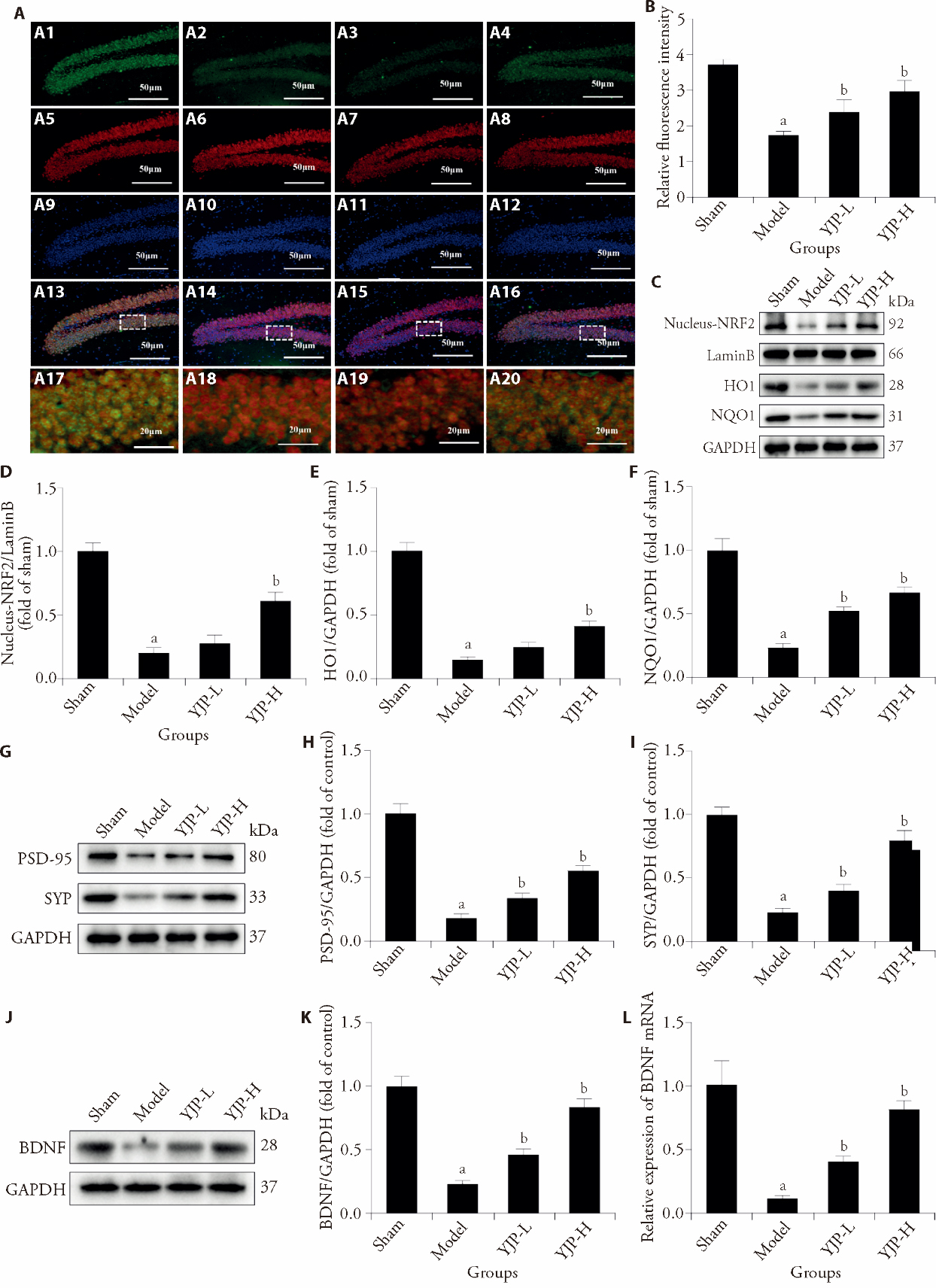
Figure 3 YJP activates NRF2/BDNF signaling to protect against heart failure-induced depressive-like behaviors A: representative immunofluorescence staining of NRF2 in the hippocampus.A1: NRF2 expression in the Sham group; A2: NRF2 expression in the Model group; A3: NRF2 expression in the YJP-L group; A4: NRF2 expression in the YJP-H group; A5: NEUN staining in the Sham group; A6: NEUN staining in the Model group; A7: NEUN staining in the YJP-L group; A8: NEUN staining in the YJP-H group;A9: DAPI nuclear staining in the Sham group; A10: DAPI nuclear staining in the Model group; A11: DAPI nuclear staining in the YJP-L group; A12: DAPI nuclear staining in the YJP-H group; A13 merge image in the Sham group; A14: merge image in the Model group; A15: merge image in the YJP-L group; A16: merge image in the YJP-H group; A17: magnified merge of panel A13; A18: magnified merge of panel A14; A19: magnified merge of panel A15; A20: magnified merge of panel A16; B: expressions of NRF2 in the hippocampus; C: representative western blot of NRF2, HO1, and NQO1 expression in the hippocampus; D: expressions of NRF2 in the hippocampus; E: expressions of HO1 in the hippocampus; F: expressions of NQO1 in the hippocampus. G: representative Western blot of PSD-95 and SYP in the hippocampus; H: expressions of PSD-95 in the hippocampus; I: expressions of SYP in the hippocampus; J: representative western blot of BDNF expression in the hippocampus; K: expressions of BDNF in the hippocampus; L: representative quantitative reverse transcription polymerase chain reaction of BDNF mRNA in the hippocampus. Sham: sham operated; YJP-L: the mice received YJP at a dose of 180 mg/kg once every day for 2 weeks; YJP-H: the mice received YJP at a dose of 360 mg/kg once every day for 2 weeks. YJP: Yueju pill; NRF2: nuclear factor erythroid 2-related factor 2; HO1: heme oxygenase 1; NQO1: NAD(P)H dehydrogenase [quinone] 1; PSD-95: disks large homolog 4; SYP: synaptophysin; BDNF: brain-derived neurotrophic factor. Results are presented as the mean ± standard error of the mean (n = 10). Statistical analyses were measured by using one-way analysis of variance. aP < 0.01 versus Sham group; bP < 0.05 versus Model group.
Figure 3 YJP activates NRF2/BDNF signaling to protect against heart failure-induced depressive-like behaviors A: representative immunofluorescence staining of NRF2 in the hippocampus.A1: NRF2 expression in the Sham group; A2: NRF2 expression in the Model group; A3: NRF2 expression in the YJP-L group; A4: NRF2 expression in the YJP-H group; A5: NEUN staining in the Sham group; A6: NEUN staining in the Model group; A7: NEUN staining in the YJP-L group; A8: NEUN staining in the YJP-H group;A9: DAPI nuclear staining in the Sham group; A10: DAPI nuclear staining in the Model group; A11: DAPI nuclear staining in the YJP-L group; A12: DAPI nuclear staining in the YJP-H group; A13 merge image in the Sham group; A14: merge image in the Model group; A15: merge image in the YJP-L group; A16: merge image in the YJP-H group; A17: magnified merge of panel A13; A18: magnified merge of panel A14; A19: magnified merge of panel A15; A20: magnified merge of panel A16; B: expressions of NRF2 in the hippocampus; C: representative western blot of NRF2, HO1, and NQO1 expression in the hippocampus; D: expressions of NRF2 in the hippocampus; E: expressions of HO1 in the hippocampus; F: expressions of NQO1 in the hippocampus. G: representative Western blot of PSD-95 and SYP in the hippocampus; H: expressions of PSD-95 in the hippocampus; I: expressions of SYP in the hippocampus; J: representative western blot of BDNF expression in the hippocampus; K: expressions of BDNF in the hippocampus; L: representative quantitative reverse transcription polymerase chain reaction of BDNF mRNA in the hippocampus. Sham: sham operated; YJP-L: the mice received YJP at a dose of 180 mg/kg once every day for 2 weeks; YJP-H: the mice received YJP at a dose of 360 mg/kg once every day for 2 weeks. YJP: Yueju pill; NRF2: nuclear factor erythroid 2-related factor 2; HO1: heme oxygenase 1; NQO1: NAD(P)H dehydrogenase [quinone] 1; PSD-95: disks large homolog 4; SYP: synaptophysin; BDNF: brain-derived neurotrophic factor. Results are presented as the mean ± standard error of the mean (n = 10). Statistical analyses were measured by using one-way analysis of variance. aP < 0.01 versus Sham group; bP < 0.05 versus Model group.
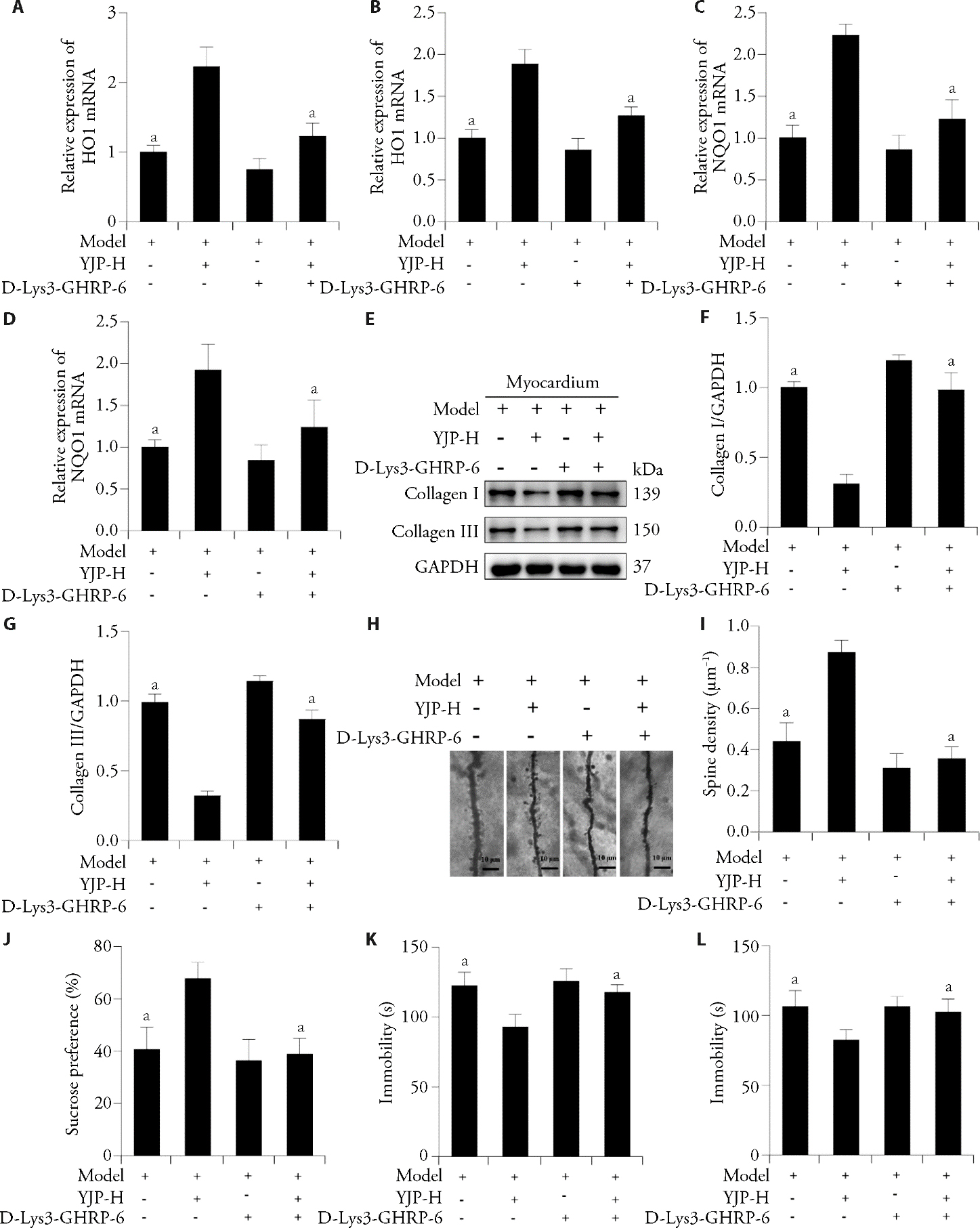
Figure 4 YJP activates ghrelin/ GHS-R 1a signaling in the myocardium and hippocampus of mice with heart failure A: expressions of HO1 in the hippocampus; B: expressions of HO1 in the myocardium; C: expressions of NQO1 in the hippocampus; D:expressions of NQO1 in the myocardium; E: representative Western blot of collagen I and III expressions in the myocardium; F: changes in collagen I expressions; G: changes in collagen III expressions; H: representative Golgi staining in the hippocampus; I: changes in spine density in the hippocampus; J: results of the SPT; K: results of the TST; L: results of the FST. Sham: sham operated; YJP-H: the mice received YJP at a dose of 360 mg/kg once every day for 2 weeks; D-Lys3 GHRP-6: the mice received D-Lys3-GHRP-6 at a dose of 9 mg/kg by intraperitoneal injection once every day for 2 weeks. YJP: Yueju pill; HO1: heme oxygenase 1; NQO1: NAD(P)H dehydrogenase [quinone] 1; SPT: sucrose preference test; TST: tail suspension test; FST: forced swimming test; GHS-R1a: growth hormone secretagogue receptor 1a. Results are presented as the mean ± standard error of the mean (n = 10). Statistical analyses were subjected to one- and two-way analysis of variance. aP < 0.01 versus Model + YJP-H group.
Figure 4 YJP activates ghrelin/ GHS-R 1a signaling in the myocardium and hippocampus of mice with heart failure A: expressions of HO1 in the hippocampus; B: expressions of HO1 in the myocardium; C: expressions of NQO1 in the hippocampus; D:expressions of NQO1 in the myocardium; E: representative Western blot of collagen I and III expressions in the myocardium; F: changes in collagen I expressions; G: changes in collagen III expressions; H: representative Golgi staining in the hippocampus; I: changes in spine density in the hippocampus; J: results of the SPT; K: results of the TST; L: results of the FST. Sham: sham operated; YJP-H: the mice received YJP at a dose of 360 mg/kg once every day for 2 weeks; D-Lys3 GHRP-6: the mice received D-Lys3-GHRP-6 at a dose of 9 mg/kg by intraperitoneal injection once every day for 2 weeks. YJP: Yueju pill; HO1: heme oxygenase 1; NQO1: NAD(P)H dehydrogenase [quinone] 1; SPT: sucrose preference test; TST: tail suspension test; FST: forced swimming test; GHS-R1a: growth hormone secretagogue receptor 1a. Results are presented as the mean ± standard error of the mean (n = 10). Statistical analyses were subjected to one- and two-way analysis of variance. aP < 0.01 versus Model + YJP-H group.
| 1. |
Sbolli M, Fiuzat M, Cani D, O'Connor CM. Depression and heart failure: the lonely comorbidity. Eur J Heart Fail 2020; 22: 2007-17.
DOI URL |
| 2. |
Crump C, Sundquist J, Kendler KS, Sieh W, Edwards AC, Sundquist K. Risks of depression and suicide after diagnosis with heart failure: a national cohort study. JACC Heart Fail 2022; 10: 819-27.
DOI URL |
| 3. |
Poletti V, Pagnini F, Banfi P, Volpato E. The role of depression on treatment adherence in patients with heart failure-a systematic review of the literature. Curr Cardiol Rep 2022; 24: 1995-2008.
DOI PMID |
| 4. | Li ZW, Zhao HM, Wang J. Metabolism and chronic inflammation: the links between chronic heart failure and comorbidities. Front Cardiovasc Med 2021; 5: 650278. |
| 5. |
Patrick M, Miller B, Will B, Bena JF, Morrison SL, Siegmund LA. Anxiety and depression moderate the relationship between quality of life and self-care in patients with heart failure. Geriatric Nursing 2022; 44: 54-9.
DOI PMID |
| 6. |
Xie DY, Xiong K, Su XL, et al. Identification of an endogenous glutamatergic transmitter system controlling excitability and conductivity of atrial cardiomyocytes. Cell research 2021; 31: 951-64.
DOI PMID |
| 7. | Zhu ZH(Yuan dynasty). Dan Xi Xin Fa. Beijing: People's Medical Publishing House, 2005: 361. |
| 8. | Wang W, Zhou T, Jia R, et al. Nmda receptors and l-arginine/nitric oxide/cyclic guanosine monophosphate pathway contribute to the antidepressant-like effect of Yueju pill in mice. Biosci Rep 2019; 39: BSR20190524. |
| 9. |
Zhang HL, Sun Y, Qian SY, et al. Yueju-ganmaidazao decoction confers rapid antidepressant-like effects and the involvement of suppression of NMDA/NO/CGMP signaling. J Ethnopharmacol 2020; 250: 112380.
DOI URL |
| 10. |
Zhang HL, Sun Y, Yau SY, et al. Synergistic effects of two naturally occurring iridoids in eliciting a rapid antidepressant action by up-regulating hippocampal pacap signalling. Br J Pharmacol 2022; 179: 4078-91.
DOI URL |
| 11. |
Guo LT, Wang SQ, Su J, et al. Baicalin ameliorates neuroinflammation-induced depressive-like behavior through inhibition of toll-like receptor 4 expression via the PI3K/AKT/FoxO1 pathway. J Neuroinflammation 2019; 16: 95.
DOI |
| 12. |
Li YJ, Song W, Tong Y, et al. Isoliquiritin ameliorates depression by suppressing NLRP3-mediated pyroptosis via miRNA-27A/SYK/NF-κB axis. J Neuroinflammation 2021; 18: 1.
DOI |
| 13. |
Shi SQ, Yan H, Chen Y, et al. Pharmacokinetic study of precisely representative antidepressant, prokinetic, anti-inflammatory and anti-oxidative compounds from fructus aurantii and magnolia bark. Chemico-Biological Interactions 2020; 315: 108851.
DOI URL |
| 14. |
Han QQ, Huang HJ, Wang YL, et al. Ghrelin exhibited antidepressant and anxiolytic effect via the p38-mapk signaling pathway in hippocampus. Prog Neuropsychopharmacol Biol Psychiatry 2019; 93: 11-20.
DOI URL |
| 15. | Yang CY Yang P, Yang CY Yang P. Gw29-e 1601 ghrelin partially protects against heart failure after myocardial infarction by increasing the bcl-2/bax ratio in a ghs-r1a-dependent manner. J Am Coll Cardiol 2018; 72: C49. |
| 16. | Hosoda H. Effect of ghrelin on the cardiovascular system. Biology (Basel) 2022; 11: 1190. |
| 17. |
Wang M, Qian L, Li J, et al. Ghsr deficiency exacerbates cardiac fibrosis: role in macrophage inflammasome activation and myofibroblast differentiation. Cardiovasc Res 2020; 116: 2091-102.
DOI PMID |
| 18. |
Wu SJ, Liao XY, Zhu ZJ, et al. Antioxidant and anti-inflammation effects of dietary phytochemicals: the NRF2/NF-κB signalling pathway and upstream factors of Nrf2. Phytochemistry 2022; 204: 113429.
DOI URL |
| 19. |
Yamamoto M, Kensler TW, Motohashi H. The keap1-Nrf2 system: a thiol-based sensor-effector apparatus for maintaining redox homeostasis. Physiol Rev 2018; 98: 1169-203.
DOI PMID |
| 20. |
Wang Q, Liu AD, Li TS, Tang Q, Wang XC, Chen XB. Ghrelin ameliorates cardiac fibrosis after myocardial infarction by regulating the Nrf2/NADPH/ROS pathway. Peptides 2021; 144: 170613.
DOI URL |
| 21. |
Ma S, Feng J, Lin XY, et al. Nicotinamide riboside alleviates cardiac dysfunction and remodeling in pressure overload cardiac hypertrophy. Oxid Med Cell Longev 2021; 2021: 5546867.
DOI URL |
| 22. |
Iyer KA, Alix K, Eltit JM, et al. Multi-modal antidepressant-like action of 6- and 7-chloro-2-aminodihydroquinazolines in the mouse tail suspension test. Psychopharmacology (Berl) 2019; 236: 2093-104.
DOI |
| 23. |
Alburges ME, Narang N, Wamsley JK. A sensitive and rapid hplc-ecd method for the simultaneous analysis of norepinephrine, dopamine, serotonin and their primary metabolites in brain tissue. Biomed Chromatogr 1993; 7: 306-10.
PMID |
| 24. | Cui LL, Li S, Wang SM, et al. Major depressive disorder: hypothesis, mechanism, prevention and treatment. Signal Transduct Target Ther 2024; 9: 30. |
| 25. |
Malhi GS, Mann JJ. Depression. Lancet 2018; 392: 2299-312.
DOI PMID |
| 26. |
Cao QQ, Zou QM, Zhao X, et al. Regulation of bdnf transcription by Nrf2 and mecp2 ameliorates mptp-induced neurotoxicity. Cell Death Discov 2022; 8: 267.
DOI PMID |
| 27. |
Cheng YJ, Chen B, Xie WQ, et al. Ghrelin attenuates secondary brain injury following intracerebral hemorrhage by inhibiting nlrp3 inflammasome activation and promoting Nrf2/ARE signaling pathway in mice. International Immunopharmacology 2020; 79: 106180.
DOI URL |
| 28. | Wang L, Zhang X, Xiong XX, et al. Nrf2 regulates oxidative stress and its role in cerebral ischemic stroke. Antioxidants (Basel) 2022; 11: 2377. |
| 29. |
Wang H, Zhou XM, Wu LY, et al. Aucubin alleviates oxidative stress and inflammation via Nrf2-mediated signaling activity in experimental traumatic brain injury. J Neuroinflammation 2020; 17: 188.
DOI |
| 30. |
George M, Tharakan M, Culberson J, Reddy AP, Reddy PH. Role of Nrf 2 in aging, alzheimer's and other neurodegenerative diseases. Ageing Res Rev 2022; 82: 101756.
DOI URL |
| 31. |
Li HL, Zhuang WW, Xiong TQ, et al. Nrf2 deficiency attenuates atherosclerosis by reducing LOX-1-mediated proliferation and migration of vascular smooth muscle cells. Atherosclerosis 2022; 347: 1-16.
DOI PMID |
| 32. | Gutierrez-Cuevas J, Galicia-Moreno M, Monroy-Ramirez HC, et al. The role of Nrf2 in obesity-associated cardiovascular risk factors. Antioxidants (Basel) 2022; 11: 235. |
| 33. |
Chen QM. Nrf 2 for cardiac protection: Pharmacological options against oxidative stress. Trends Pharmacol Sci 2021; 42: 729-44.
DOI PMID |
| 34. |
Facchinetti MM. Heme-oxygenase-1. Antioxid Redox Signal 2020; 32: 1239-42.
DOI URL |
| 35. |
Ross D, Siegel D. The diverse functionality of NQO1 and its roles in redox control. Redox Biol 2021; 41: 101950.
DOI URL |
| 36. |
Chen QM. Nrf 2 for protection against oxidant generation and mitochondrial damage in cardiac injury. Free Radic Biol Med 2022; 179: 133-43.
DOI URL |
| 37. | Brandes MS, Zweig JA, Tang A, Gray NE. Nrf2 activation ameliorates oxidative stress and improves mitochondrial function and synaptic plasticity, and in a53t α-synuclein hippocampal neurons. Antioxidants (Basel) 2021; 11. |
| 38. |
Howick K, Chruscicka B, Felice D, et al. Behavioural characterization of ghrelin ligands, anamorelin and hm01: appetite and reward-motivated effects in rodents. Neuropharmacology 2020; 168: 108011.
DOI URL |
| 39. | Gray SM, Page LC, Tong J. Ghrelin regulation of glucose metabolism. J Neuroendocrinol 2019; 31: e12705. |
| 40. |
Smith A, Woodside B, Abizaid A. Ghrelin and the control of energy balance in females. Front Endocrinol (Lausanne) 2022; 13: 904754.
DOI URL |
| 41. |
Gross JD, Zhou Y, Barak LS, Caron MG. Ghrelin receptor signaling in health and disease: a biased view. Trends Endocrinol Metab 2023; 34: 106-18.
DOI URL |
| 42. |
Rouault AAJ, Buscaglia P, Sebag JA. Mrap 2 inhibits β-arrestin recruitment to the ghrelin receptor by preventing GHSR1a phosphorylation. J Biol Chem 2022; 298: 102057.
DOI URL |
| 43. |
Li N, Xiao KW, Mi X, et al. Ghrelin signaling in dCA1 suppresses neuronal excitability and impairs memory acquisition via PI3K/ AKT/GSK-3β cascades. Neuropharmacology 2022; 203: 108871.
DOI URL |
| 44. | Jasek-Gajda E, Jurkowska H, Jasinska M, Lis GJ. Targeting the MAPK/ERK and PI3K/AKT signaling pathways affects Nrf2, Trx and GSH antioxidant systems in leukemia cells. Antioxidants (Basel) 2020; 9: 633. |
| 45. |
Edvardsson CE, Vestlund J, Jerlhag E. A ghrelin receptor antagonist reduces the ability of ghrelin, alcohol or amphetamine to induce a dopamine release in the ventral tegmental area and in nucleus accumbens shell in rats. Eur J Pharmacol 2021; 899: 174039.
DOI URL |
| 46. |
Li W, Ali T, Zheng C, et al. Anti-depressive-like behaviors of apn ko mice involve Trkb/BDNF signaling related neuroinflammatory changes. Mol Psychiatry 2022; 27: 1047-58.
DOI |
| 47. |
Murphy SE, Capitao LP, Giles SLC, Cowen PJ, Stringaris A, Harmer CJ. The knowns and unknowns of SSRI treatment in young people with depression and anxiety: efficacy, predictors, and mechanisms of action. Lancet Psychiatry 2021; 8: 824-35.
DOI PMID |
| [1] | XU Jianglin, SHI Xiaolu, LI Yan, ZHOU Kun, LI Peng, LI Sinai, LU Jinjin, CHEN Yajun, ZHAN Nannan, ZHANG Ruotong, CHENG Bairu, LIN Qian, WAN Jie, LIU Jing. Yiqi Huoxue formula (益气活血方) relieves heart failure with reduced ejection fraction in calcium/calmodulin-dependent protein kinase Ⅱ delta B isoform and calcium/calmodulin-dependent protein kinase Ⅱ delta C isoform transgenic mice by inhibiting myocardial remodeling and enhancing calcium homeostasis [J]. Journal of Traditional Chinese Medicine, 2026, 46(3): 530-543. |
| [2] | ZHANG Quanhui, ZENG Jinlan, SU Liang, WANG Yi, DENG Yongwen, ZHANG Xiuchai. Shenling Baizhu powder (参苓白术散) reduced the oxidative stress and mitochondrial damage during ulcerative colitis via the Kelch-like ECH-associated protein 1-NF-E2-related factor 2/nuclear factor kappa B pathway [J]. Journal of Traditional Chinese Medicine, 2026, 46(3): 584-593. |
| [3] | GAO Bing, LIU Pan, LI Lan, GONG Tiantian, ZHU Ling, LI Lingji, XIA Ran, MA Qiang, HU Jing, WANG Jing. Moxibustion alleviates autophagy and inhibits ferroptosis to improve cardiac function in rats with post-myocardial infarction heart failure [J]. Journal of Traditional Chinese Medicine, 2026, 46(2): 339-349. |
| [4] | WANG Zhuo, MAO Yinhui, ZANG Yueyue, HE Shuangyan, SUN Juntao, WEI Zhitao, WANG Mingxing, YANG Yong. Mechanism of Shaofu Zhuyu decoction (少腹逐瘀汤) in improving diabetic mellitus erectile dysfunction via inhibition of ferroptosis based on network pharmacology and experimental validation [J]. Journal of Traditional Chinese Medicine, 2026, 46(2): 382-391. |
| [5] | ZHOU Mi, BU Huaien, WANG Dongjun, ZHANG Naijin, SUN Xuan, TIAN Zhikui, WANG Hongwu. Efficacy of Tongxie Yaofang (痛泻要方) compared with pinaverium bromide on irritable bowel syndrome with liver depression and spleen deficiency: a systematic review and Meta-analysis [J]. Journal of Traditional Chinese Medicine, 2026, 46(1): 14-21. |
| [6] | XU Yuqin, YUAN Jinjun, ZHU Yanxian, CHEN Chen, MA Xiaoming, JIANG Jiaona, HUANG Xingxian, LUO Wenshu, LIU Fan, YANG Zhuoxin, ZHOU Yumei. Observation of the efficacy and safety of acupuncture for postpartum depression [J]. Journal of Traditional Chinese Medicine, 2025, 45(6): 1405-1413. |
| [7] | FAN Mengyue, YAO Lin, ZHANG Guoqing, WANG Ruixue, CHEN Kexin, FAN Yujing, WANG Ziming, FU Jia, CHEN Yongjun, WANG Taiyi. Study on subtyping and Traditional Chinese Medicine treatment of depression based on machine learning and text mining [J]. Journal of Traditional Chinese Medicine, 2025, 45(5): 1152-1163. |
| [8] | LI Weijia, LU Jing, MA Chao, LIU Mengmeng, PEI Ke, CHEN Hongyan, LIN Zhe, LYU Guangfu. Hamayou (Oviductus Ranae) protein hydrolysate ameliorates depression by regulating the mitogen-activated protein kinase pathway [J]. Journal of Traditional Chinese Medicine, 2025, 45(3): 493-507. |
| [9] | ZHANG Yang, LYU Wang, XU Xin, LI Jie, HU Shengli, WANG Ying. Clinical effect of Shugan Jieyu San (疏肝解郁散) for improving liver function and alleviating depression in patients with triple negative breast cancer [J]. Journal of Traditional Chinese Medicine, 2025, 45(3): 633-638. |
| [10] | LI Yajing, WANG Baoying, SHAO Wenxue, LU Shuaifei, SU Pan, BAI Ming, XU Erping, LI Yucheng. Quantitative proteomic analysis of the brain reveals the potential antidepressant mechanism of Jiawei Danzhi Xiaoyao San (加味丹栀逍遥散) in a chronic unpredictable mild stress mouse model of depression [J]. Journal of Traditional Chinese Medicine, 2025, 45(1): 22-31. |
| [11] | Faiq Amin, Saara Ahmad, Muhammad Wasim, Asra Khan, Fazal Manzoor Arain, Zehra Batool, Saiqa Tabassum, Saima Khaliq, Noreen Samad, Saida Haider. Antidepressive and anxiolytic effects of a combination of Saffron and Chamomile in rats and their relationship with serotonin using in vivo methods [J]. Journal of Traditional Chinese Medicine, 2025, 45(1): 49-56. |
| [12] | LIU Tongtong, ZHANG Xi, YANG Hui, LIN Xiaoyuan, LIU Jian, ZHANG Xiuli, GUO Dongwei, ZHAO Hongqing, ZOU Manshu, LEI Chang, LONG Hongping, LUO Yan, XIANG Yun, GE Jinwen, WANG Yuhong, MENG Pan. Luteolin promotes neuronogenesis in hippocampus of chronic unpredictable mild stress rats and primary hippocampus of fetal rats [J]. Journal of Traditional Chinese Medicine, 2024, 44(4): 670-679. |
| [13] | ZHANG Zeyu, JIA Zhuangzhuang, SONG Yuwei, ZHANG Xuan, WANG Ci, WANG Shuai, ZHANG Peipei, REN Qiuan, WANG Xianliang, MAO Jingyuan. Optimized new Shengmai powder (优化新生脉散方) inhibits myocardial fibrosis in heart failure by regulating the rat sarcoma/rapidly accelerated fibrosarcoma/mitogen-activated protein kinase kinase/extracellular regulated protein kinases signaling pathway [J]. Journal of Traditional Chinese Medicine, 2024, 44(3): 448-457. |
| [14] | HUANG Hongmei, YANG Maojun, LI Ting, WANG Dandan, LI Ying, TANG Xiaochi, YUAN Lu, GU Shi, XU Yong. Neferine inhibits the progression of diabetic nephropathy by modulating the miR-17-5p/nuclear factor E2-related factor 2 axis [J]. Journal of Traditional Chinese Medicine, 2024, 44(1): 44-53. |
| [15] | TIAN Xinrong, HOU Runsu, LIU Xinguang, ZHAO Peng, TIAN Yange, LI Jiansheng. Yangqing Chenfei formula (养清尘肺方) alleviates crystalline silica induced pulmonary inflammation and fibrosis by suppressing macrophage polarization [J]. Journal of Traditional Chinese Medicine, 2023, 43(6): 1126-1139. |
| Viewed | ||||||
|
Full text |
|
|||||
|
Abstract |
|
|||||