
Journal of Traditional Chinese Medicine ›› 2025, Vol. 45 ›› Issue (6): 1169-1177.DOI: 10.19852/j.cnki.jtcm.2025.06.001
Key elements for screening kidney deficiency pattern in Traditional Chinese and Korean Medicine: a systematic review and Delphi study
Hyungsun Jun1, Nahyun Cho2, Wonbae Ha3, Junghan Lee4, Mi Mi Ko5, Young-Eun Kim6, Jeeyoun Jung5( ), Jungtae Leem7()
- 1 Department of Diagnostics, College of Korean Medicine, Dongshin University, Naju 58245, Republic of Korea
2 Department of Diagnostics, College of Korean Medicine, Wonkwang University, Iksan 54538, Republic of Korea
3 Department of Korean Medicine Rehabilitation, College of Korean Medicine, Wonkwang University, Iksan 54538, Republic of Korea
4 Department of Korean Medicine Rehabilitation, College of Korean Medicine, Wonkwang University, Iksan 54538, Republic of Korea; Korea Institute of Integrative Medicine, Jangheung 59338, Republic of Korea
5 Korea Medicine Science Research Division, Korea Institute of Oriental Medicine, Daejeon 34054, Republic of Korea
6 Korea Medicine Data Research Division, Korea Institute of Oriental Medicine, Daejeon 34054, Republic of Korea
7 Department of Il-won Integrated Medicine, Wonkwang University Korean Medicine Hospital, Iksan 54538, Republic of Korea; Research Center of Traditional Korean Medicine, College of Korean Medicine, Wonkwang University, Iksan 54538, Republic of Korea
-
Received:2024-05-12Accepted:2025-03-26Online:2025-12-15Published:2025-11-24 -
Contact:Jeeyoun Jung, Korea Medicine Science Research Division, Korea Institute of Oriental Medicine, Daejeon 34054, Republic of Korea. jjy0918@kiom.re.kr; Jungtae Leem, Department of Il-won Integrated Medicine, Wonkwang University Korean Medicine Hospital, Iksan 54538, Republic of Korea; Research Center of Traditional Korean Medicine, College of Korean Medicine, Wonkwang University, Iksan 54538, Republic of Korea. julcho0908@wku.ac.kr, Telephone: +82-42-868-9272; +82-63-850-6914 -
Supported by:Research on the Scientification of Korean Medicine Theory for Healthy Aging(KSN2311021);Network and Big Data Analysis-Based Translational Research for Optimizing Korean Medicine Regimens and Predicting Responders in Heart Failure(RS-2022-NR072366)

Cite this article
Hyungsun Jun, Nahyun Cho, Wonbae Ha, Junghan Lee, Mi Mi Ko, Young-Eun Kim, Jeeyoun Jung, Jungtae Leem. Key elements for screening kidney deficiency pattern in Traditional Chinese and Korean Medicine: a systematic review and Delphi study[J]. Journal of Traditional Chinese Medicine, 2025, 45(6): 1169-1177.
share this article
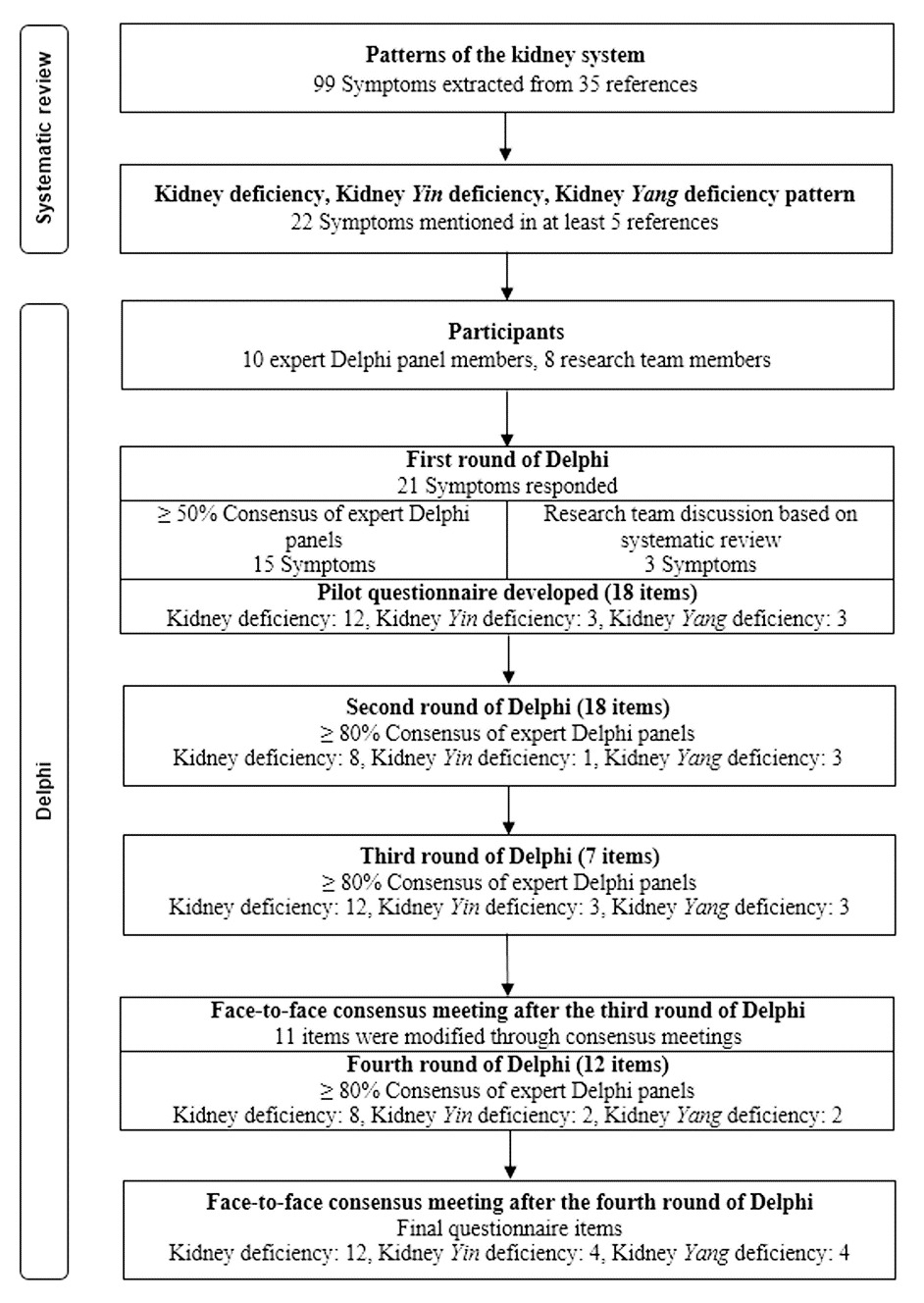
Figure 1 Flow diagram of the process to explore key elements of KDPScreenQ
Figure 1 Flow diagram of the process to explore key elements of KDPScreenQ
Table 1 Symptoms mentioned in at least five references for each kidney deficiency, kidney Yin deficiency, kidney Yang deficiency pattern [n (%)]
| Category | No. | Symptom | KDP (n = 18) | KDP-Yin (n = 14) | KDP-Yang (n = 19) |
|---|---|---|---|---|---|
| Systemic symptoms | 1 | Edema | 5 (27.8) | 0 | 9 (47.4)c |
| 2 | Lassitude | 5 (27.8) | 0 | 9 (47.4)c | |
| 3 | Aversion to cold, cold intolerance | 4 (22.2) | 0 | 10 (52.6)c | |
| 4 | Insomniaa | 4 (22.2) | 7 (50)c | 0 | |
| 5 | Night sweats | 2 (11.1) | 8 (57.1)c | 0 | |
| 6 | Tidal fever in the afternoona | 1 (5.6) | 7 (50)c | 0 | |
| Symptoms in the trunk and limbs | 7 | Pain and soreness in the lumbar region or knee joints | 14 (77.8)b | 7 (50) | 11 (57.9) |
| 8 | Weakness in the lumbar region or knee joints | 8 (44.4)b | 5 (35.7) | 8 (42.1) | |
| 9 | Cold limbs | 4 (22.2) | 1 (7.1) | 15 (78.9)c | |
| 10 | Heat sensations in the palms, feet, and chest | 4 (22.2) | 6 (42.9)c | 0 | |
| Urinary and bowel issues | 11 | Urinary incontinence | 12 (66.7)b | 4 (28.6) | 10 (52.6) |
| 12 | Early morning (Cock’s crow) diarrhea, loose stools | 4 (22.2) | 0 | 9 (47.4)c | |
| 13 | Clear urine, increased urine volumea | 1 (5.6) | 0 | 7 (36.8)c | |
| Sexual dysfunction | 14 | Impotence | 6 (33.3)c | 0 | 4 (21.1) |
| 15 | Reduced libido | 5 (27.8) | 3 (21.4) | 9 (47.4)c | |
| Symptoms in the head and face | 16 | Tinnitus, deafness | 12 (66.7)c | 5 (35.7) | 6 (31.6) |
| 17 | Dizzinessa | 7 (38.9)b | 8 (57.1) | 5 (26.3) | |
| 18 | Forgetfulness | 7 (38.9)b | 4 (28.6) | 4 (21.1) | |
| 19 | Loose teeth, weak gums, and bleeding | 6 (33.3)c | 1 (7.1) | 0 | |
| 20 | Loss of hair, hair thinning, white hair | 5 (27.8)c | 1 (7.1) | 0 | |
| 21 | Dry mouth, thirst | 3 (16.7) | 9 (64.3)c | 2 (10.5) | |
| 22 | Red facial complexion, hot flusha | 2 (11.1) | 6 (42.9)c | 0 |
Table 1 Symptoms mentioned in at least five references for each kidney deficiency, kidney Yin deficiency, kidney Yang deficiency pattern [n (%)]
| Category | No. | Symptom | KDP (n = 18) | KDP-Yin (n = 14) | KDP-Yang (n = 19) |
|---|---|---|---|---|---|
| Systemic symptoms | 1 | Edema | 5 (27.8) | 0 | 9 (47.4)c |
| 2 | Lassitude | 5 (27.8) | 0 | 9 (47.4)c | |
| 3 | Aversion to cold, cold intolerance | 4 (22.2) | 0 | 10 (52.6)c | |
| 4 | Insomniaa | 4 (22.2) | 7 (50)c | 0 | |
| 5 | Night sweats | 2 (11.1) | 8 (57.1)c | 0 | |
| 6 | Tidal fever in the afternoona | 1 (5.6) | 7 (50)c | 0 | |
| Symptoms in the trunk and limbs | 7 | Pain and soreness in the lumbar region or knee joints | 14 (77.8)b | 7 (50) | 11 (57.9) |
| 8 | Weakness in the lumbar region or knee joints | 8 (44.4)b | 5 (35.7) | 8 (42.1) | |
| 9 | Cold limbs | 4 (22.2) | 1 (7.1) | 15 (78.9)c | |
| 10 | Heat sensations in the palms, feet, and chest | 4 (22.2) | 6 (42.9)c | 0 | |
| Urinary and bowel issues | 11 | Urinary incontinence | 12 (66.7)b | 4 (28.6) | 10 (52.6) |
| 12 | Early morning (Cock’s crow) diarrhea, loose stools | 4 (22.2) | 0 | 9 (47.4)c | |
| 13 | Clear urine, increased urine volumea | 1 (5.6) | 0 | 7 (36.8)c | |
| Sexual dysfunction | 14 | Impotence | 6 (33.3)c | 0 | 4 (21.1) |
| 15 | Reduced libido | 5 (27.8) | 3 (21.4) | 9 (47.4)c | |
| Symptoms in the head and face | 16 | Tinnitus, deafness | 12 (66.7)c | 5 (35.7) | 6 (31.6) |
| 17 | Dizzinessa | 7 (38.9)b | 8 (57.1) | 5 (26.3) | |
| 18 | Forgetfulness | 7 (38.9)b | 4 (28.6) | 4 (21.1) | |
| 19 | Loose teeth, weak gums, and bleeding | 6 (33.3)c | 1 (7.1) | 0 | |
| 20 | Loss of hair, hair thinning, white hair | 5 (27.8)c | 1 (7.1) | 0 | |
| 21 | Dry mouth, thirst | 3 (16.7) | 9 (64.3)c | 2 (10.5) | |
| 22 | Red facial complexion, hot flusha | 2 (11.1) | 6 (42.9)c | 0 |
Table 2 KDPScreenQ: kidney deficiency pattern screening questionnaire
| Pattern | Q | Questionnaire item |
|---|---|---|
| KDP | 1 | Easily experiences physical weakness and mental listlessness |
| 2 | Weakness in the legs, making it difficult to walk | |
| 3 | Numbness and soreness in the lumbar region or knee joints | |
| 4 | Persistent pain in the lumbar region or knee joints | |
| 5 | Dull pain and sluggish movement in the lumbar region or knee joints | |
| 6 | Reduced libido or issues with male and female reproductive functions (such as ejaculation and erectile dysfunction, menstrual irregularities, vaginal dryness, abnormal vaginal discharge, etc.) | |
| 7 | Tinnitus or impaired hearing | |
| 8 | Frequent urge to urinate during activity and involuntary leakage of urine | |
| 9 | Nocturia that affects sleep more than three times a night | |
| 10 | Thinning of hair and excessive hair loss | |
| 11 | Frequent forgetfulness that affects daily life | |
| 12 | Teeth feeling wobbly due to weak gums and loose teeth | |
| KDP-Yin | 13 | Heat sensation in the palms and feet |
| 14 | Heat sensation and tightness above the chest in the afternoon | |
| 15 | Excessive night sweats | |
| 16 | Frequent thirst and dry mouth, with an urge to drink | |
| KDP-Yang | 17 | Aversion to cold and sensitivity to cold |
| 18 | Edema, especially of the legs and ankles | |
| 19 | Tendency to have loose stools | |
| 20 | Frequent abdominal pain or diarrhea at dawn |
Table 2 KDPScreenQ: kidney deficiency pattern screening questionnaire
| Pattern | Q | Questionnaire item |
|---|---|---|
| KDP | 1 | Easily experiences physical weakness and mental listlessness |
| 2 | Weakness in the legs, making it difficult to walk | |
| 3 | Numbness and soreness in the lumbar region or knee joints | |
| 4 | Persistent pain in the lumbar region or knee joints | |
| 5 | Dull pain and sluggish movement in the lumbar region or knee joints | |
| 6 | Reduced libido or issues with male and female reproductive functions (such as ejaculation and erectile dysfunction, menstrual irregularities, vaginal dryness, abnormal vaginal discharge, etc.) | |
| 7 | Tinnitus or impaired hearing | |
| 8 | Frequent urge to urinate during activity and involuntary leakage of urine | |
| 9 | Nocturia that affects sleep more than three times a night | |
| 10 | Thinning of hair and excessive hair loss | |
| 11 | Frequent forgetfulness that affects daily life | |
| 12 | Teeth feeling wobbly due to weak gums and loose teeth | |
| KDP-Yin | 13 | Heat sensation in the palms and feet |
| 14 | Heat sensation and tightness above the chest in the afternoon | |
| 15 | Excessive night sweats | |
| 16 | Frequent thirst and dry mouth, with an urge to drink | |
| KDP-Yang | 17 | Aversion to cold and sensitivity to cold |
| 18 | Edema, especially of the legs and ankles | |
| 19 | Tendency to have loose stools | |
| 20 | Frequent abdominal pain or diarrhea at dawn |
| 1. |
Miettinen OS. Reflections on preventive medicine. Prev Med 2014; 67: 313-5.
DOI PMID |
| 2. |
Kaeberlein M, Rabinovitch PS, Martin GM. Healthy aging: the ultimate preventative medicine. Science 2015; 350: 1191-3.
DOI PMID |
| 3. | Xu J, Li Y, Zhao J, Li Y, Zhang L, Zhang G. Theoretical origin and practical thinking of the theory of Chinese Medicine preventive treatment of disease. J Tradit Chin Med 2016; 57: 1351-4. |
| 4. | World Health Organization. WHO international standard terminologies on Traditional Chinese Medicine. World Health Organization, 2022-03-21, cited 2023-09-27; 155-7. Available from URL: https://www.who.int/publications-detail-redirect/9789240042322. |
| 5. |
Zhang NL, Yuan S, Chen T, Wang Y. Latent tree models and diagnosis in Traditional Chinese Medicine. Artif Intell Med 2008; 42: 229-45.
PMID |
| 6. | Cha WS, Oh JH, Park HJ, Ahn SW, Hong SY, Kim NI. Historical difference between traditional Korean medicine and Traditional Chinese Medicine. Neurol Res 2007; 29 Suppl 1: S5-9. |
| 7. | Zhang Y, Liu Y, Li X, et al. Age-related changes in prevalence and symptom characteristics in kidney deficiency syndrome with varied health status: a cross-sectional observational study. J Tradit Chin Med Sci 2014; 1: 20-7. |
| 8. | Wang SJ, Yue W, Rahman K, et al. Mechanism of treatment of kidney deficiency and osteoporosis is similar by Traditional Chinese Medicine. Curr Pharm Des 2016; 22: 312-20. |
| 9. | Qiu J, Zhu Y, Xing J, Wang L, Zhang J, Yin H. Comparative pharmacokinetic study of 5 active ingredients after oral administration of Zuogui Pill in osteoporotic rats with different syndrome types. Int J Anal Chem 2023; 2023: e1473878. |
| 10. | Wang Y, Zhang J, Wang L, Yin H. Twelve-component pharmacokinetic study of rat plasma after oral administration of You-Gui-Wan in osteoporosis rats with kidney-Yin deficiency and kidney-Yang deficiency. Biomed Chromatogr 2023; 37: e5619. |
| 11. | Min Y, Yao H, Wang Z, et al. Efficacy of suspended moxibustion stimulating Shenshu (BL23) and Guanyuan (CV4) on the amygdala-HPA axis in rats with kidney-deficiency symptom pattern induced by hydrocortisone. J Tradit Chin Med 2023; 43: 113-23. |
| 12. | Zhang T, Xun YQ, Liu HL, et al. Observation on clinical effect of fire needling for mild to moderate benign prostatic hyperplasia with kidney Yang deficiency. Zhong Guo Zhen Jiu 2023; 43: 45-50. |
| 13. | Jin X, Ding L, Xia D, Chen P. Effects of acupoint catgut embedding combined with auricular point pressure on menopausal syndrome of liver-kidney deficiency type and estradiol. Zhong Guo Zhen Jiu 2017; 37: 836-9. |
| 14. | Wan X. Formulate development and assessment of Yang deficiency syndrome patient reported outcome scale. Fuzhou: Fujian University of Traditional Chinese Medicine, 2016: 1-98. |
| 15. | Xiong L. Development and evaluation of the patient-reported outcomes of Yin-deficiency syndrome. Fuzhou: Fujian University of Traditional Chinese Medicine, 2016: 1-118. |
| 16. | Zhao Z, Gong W, Dong J, et al. Kidney-Qi deficiency diagnosed by Deng’s diagnosis standard was not correlated with aging based on clinical observation of 90 participants. J Tradit Chin Med 2019; 39: 267-74. |
| 17. |
Zhang GG, Singh B, Lee W, Handwerger B, Lao L, Berman B. Improvement of agreement in TCM diagnosis among TCM practitioners for persons with the conventional diagnosis of rheumatoid arthritis: effect of training. J Altern Complement Med 2008; 14: 381-6.
DOI URL |
| 18. |
Okoli C, Pawlowski SD. The Delphi method as a research tool: an example, design considerations and applications. Inf Manage 2004; 42: 15-29.
DOI URL |
| 19. | Hopper J. Why you need 4-point scales. Versta research serial online, 2016-11-23, cited 2024-06-12; 4 screens. Available from URL: https://verstaresearch.com/blog/why-you-need-4-point-scales/. |
| 20. |
Lynn MR. Determination and quantification of content validity. Nurs Res 1986; 35: 382-5.
PMID |
| 21. | Polit DF, Beck CT. The content validity index: are you sure you know what’s being reported? Critique and recommendations. Res Nurs Health 2006; 29: 489-97. |
| 22. |
Zell B, Hirata J, Marcus A, Ettinger B, Pressman A, Ettinger KM. Diagnosis of symptomatic postmenopausal women by Traditional Chinese Medicine practitioners. Menopause 2000; 7: 129-34.
DOI PMID |
| 23. | Park KS. The factors of kidney vacuity syndrome and life style related to BMD decrease. Iksan: Wonkwang University, 2003: 1-41. |
| 24. | Yun Y.Objectification and industrialization of Oriental Medical prescription, part Ⅱ. Korea Institute of Oriental Medicine, 2004-12-01, cited 2023-09-27;1-155. Available from URL: http://www.riss.kr/search/detail/DetailView.do?p_mat_type=1a0202e37d52c72d&control_no=25c9a2c516a1a19dc85d2949c297615a |
| 25. | Ding H, Tan C, Feng W, Wang M. Analyse of differentially expressed genes associated with signal transduction of patients who suffered from osteoarthritis of the deficiency of Kidney-Yang. Liaoning Zhong Yi Za Zhi 2006; 33: 1220-2. |
| 26. | Kim SM. Clinical characteristics of kidney deficiency in patients with low back pain. Pocheon: Pochon CHA University, 2006: 1-59. |
| 27. | Shi YQ, Zhou ZH, Liu JH, Wang K, Ou MH. Sort and diagnostic standard of kidney deficiency syndrome of Traditional Chinese Medicine in exercise-induced fatigue. Zhong Guo Lin Chuang Kang Fu 2006; 10: 28-30. |
| 28. | Moon J, Park K, Choi S. Study on the development of a questionnaire software for health examination in Oriental Medicine. Korean J Orient Med 2007; 13: 135-42. |
| 29. |
Chen RQ, Cao KJ, Lam TH, Wong CM. Symptom characteristics of Kidney-Yin deficiency and Kidney-Yang deficiency in Hong Kong Chinese midlife women. J Altern Complement Med 2008; 14: 457-60.
DOI URL |
| 30. | Zhang M. A research on the diagnosis and treatment characteristic of Shen diagnosis and treatment based on the database of Chinese Medical Records. Jinan: Shandong University of Traditional Chinese Medicine 2009: 1-56. |
| 31. |
Chen RQ, Wong CM, Cao KJ, Lam TH. An evidence-based validation of Traditional Chinese Medicine syndromes. Complement Ther Med 2010; 18: 199-205.
DOI PMID |
| 32. | Zhang J, Zhang T, Cheng Z. Discussion on the basic method of syndrome differentiation based on principal symptoms. Lin Chuang He Shi Yan Yi Xue Za Zhi 2011; 10: 1634-5. |
| 33. |
Luiz AB, Cordovil I, Filho JB, Ferreira AS. Zangfu zheng (patterns) are associated with clinical manifestations of zang shang (target-organ damage) in arterial hypertension. Chin Med 2011; 6: 23.
DOI |
| 34. | Xiong G, Virasakdi C, Geater A, Zhang Y, Li M, Lerkiatbundit S. Factor analysis on symptoms and signs of chronic low-back pain based on Traditional Chinese Medicine theory. J Altern Complement Med 2011; 17: 51-5. |
| 35. | Chen RQ, Wong CM, Lam TH. Construction of a Traditional Chinese Medicine syndrome-specific outcome measure: the Kidney Deficiency Syndrome Questionnaire (KDSQ). BMC Complement Altern Med 2012; 12: 73. |
| 36. | Tian F, Xie Y, Yi D, et al. Reliability and validity analysis on risk factor and syndrome questionnaire of postmenopausal osteoporosis in 40-65 years' old women. Zhong Guo Zhong Yi Ji Chu Yi Xue Za Zhi 2012; 18: 609-11. |
| 37. | Ahn MY, Song YK, Ko SG, Lim HH. Development of questionnaire for pattern identification of chronic low back pain by Delphi method. J Korean Med Rehabil 2013; 23: 143-58. |
| 38. | Wang H, Li X, Zhao T, Yu C, Meng J. Development and evaluation of questionnaire for clinical epidemiological investigation of kidney essence deficiency syndrome. Tianjin Zhong Yi Yao 2013; 30: 711-3. |
| 39. | Kim MY, Ahn JY, Hwang DS, et al. A Study on the relationship of climacteric women’s vasomotor symptoms and body temperature, kidney deficiency pattern. J Korean Obstet Gynecol 2014; 27: 66-78. |
| 40. |
Kim Y, Kang J, Kwak K, Lee H. Observation of correlation between deficiency syndrome of kidney and bone mineral density in osteoporosis patients. Korean J Acupunct 2014; 31: 99-107.
DOI URL |
| 41. | Xue JG, Fan Q, Zhou YC, Ning KQ, Wang JS, Bian TS. Distribution, combination, and evolution of syndromic etiologies of erectile dysfunction. Zhong Hua Nan Ke Xue 2014; 20: 830-3. |
| 42. | Zheng D, Dai Z, Wang H. Objectifying research on special region corresponding to five internal organs in colour inspections of Chinese medicine. Chin J Integr Med 2014; 20: 737-42. |
| 43. |
Lee JC, Lee S, Jin HJ. Development of decision-making rules for pattern identification. Eur J Integr Med 2015; 7: 348-53.
DOI URL |
| 44. |
Huang LW, Chen IJ, Hsu CH. Influence of Traditional Chinese Medicine syndrome groups on quality of life in women with metabolic syndrome. J Tradit Complement Med 2016; 6: 404-8.
DOI URL |
| 45. | Zhao T, Wang H, Yu C, et al. Classification and differentiation between kidney Yang and Yin decficiency syndromes in TCM based on decision tree analysis method. Int J Clin Exp Med 2016; 9: 21888-99. |
| 46. |
Jang E, Kim Y, Park Y, Jeon J, Jung IC. The development of instrument of Korean Medical pattern identification and functional evaluation for five organ. J Physiol Pathol Korean Med 2017; 31: 173-81.
DOI URL |
| 47. | Mun S, Kim S, Bae KH, Lee S. Cold and Spleen-Qi deficiency patterns in Korean Medicine are associated with low resting metabolic rate. Evid Based Complement Alternat Med 2017; 2017: e9532073. |
| 48. | Sun Y. The establishment of macroscopic diagnostic scale for Yang-xu Syndrome. Guangzhou: Guangzhou University of Chinese Medicine, 2018: 1-153. |
| 49. |
Zhang Z, Yang J, Kong T, et al. Traditional Chinese Medicine syndrome elements of male infertility revealed by latent tree model analysis. J Tradit Chin Med 2018; 38: 926-35.
PMID |
| 50. | Zhao W, Xu FS. Essentials of the differentiation and standardization of syndromes for male impotence in Xu Fu-song’s clinical experience. Zhong Hua Nan Ke Xue 2018; 24: 911-5. |
| 51. | World Health Organization. World report on ageing and health. World Health Organization, 2015-09-30, cited 2023-10-05; 1-246. Available from URL: https://www.who.int/publications-detail-redirect/9789241565042/ |
| 52. | World Health Organization. Integrated care for older people: guidelines on community-level interventions to manage declines in intrinsic capacity. World Health Organization; 2017-01-01, cited 2023-10-05; 1-15. Available from URL: https://www.who.int/publications-detail-redirect/9789241550109. |
| 53. | Vespa J, Medina L, Armstrong DM. Demographic turning points for the United States: population projections for 2020 to 2060. U.S. Census Bureau, 2020-03-01, cited 2023-10-05; 25-1144: 1-15. Available from URL: https://www.census.gov/library/publications/2020/demo/p25-1144.html. |
| 54. |
Wang X, Zhang L, Huang R, et al. Regulatory mechanism of hormones of the pituitary-target gland axes in kidney-Yang deficiency based on a support vector machine model. J Tradit Chin Med 2015; 35: 238-43.
DOI URL |
| 55. | Chen CB, Ma J, Jia J, Li YQ, Liu AQ, Dong HJ. Reproduction-related proteins differentially expressed in the testes of the mice with kidney-Yang or kidney-Yin deficiency. Zhong Hua Nan Ke Xue 2019; 25: 248-56. |
| 56. | Fang G, Zhang LL, Ren Q, et al. Development of a diagnostic questionnaire for Damp Phlegm Pattern and Blood Stasis Pattern in coronary heart disease patients (CHD-DPBSPQ). Evid Based Complement Alternat Med 2019; 2019: 6856085. |
| 57. |
Maeda-Minami A, Yoshino T, Katayama K, et al. Discrimination of prediction models between cold-heat and deficiency-excess patterns. Complement Ther Med 2020; 49: 102353.
DOI URL |
| 58. | He Y, He J, Xu X, et al. Consensus on diagnostic criteria for Yin deficiency syndrome in hypertension: a modified Delphi study. J Tradit Chin Med 2023; 43: 181-7. |
| 59. | Hsu CC, Sandford B. The Delphi technique: making sense of consensus. Pract Assess Res Eval 2007; 12: 10. |
| 60. |
Kim S, Lee JH, Yook TH, Park J, Leem J, Lee H. Development and validation of a survey form for adverse events associated with acu-puncture and moxibustion. Korean J Acupunct 2015; 32: 177-89.
DOI URL |
| 61. | Lee IS, Kim DI, Yoo JE, Kang CW. Development of a guideline for the application of a diagnostic tool for menopausal syndromes based on the use of systemic review and Delphi method. J Korean Obstet Gynecol 2017; 30: 175-202. |
| 62. | Colbert GB, Venegas-Vera AV, Lerma EV. Utility of telemedicine in the COVID-19 era. Rev Cardiovasc Med 2020; 21: 583-7. |
| 63. |
Jünger S, Payne SA, Brine J, Radbruch L, Brearley SG. Guidance on Conducting and REporting DElphi Studies (CREDES) in palliative care: recommendations based on a methodological systematic review. Palliat Med 2017; 31: 684-706.
DOI PMID |
| 64. |
Yeo MK, Dong SO, Lee YS, Jang ES. Review on reliability and validity of questionnaire of pattern identification in Traditional Chinese Medicine -using China National Knowledge Infrastructure. J Physiol Pathol Korean Med 2015; 29: 246-55.
DOI URL |
| 65. |
Ko MM, Lee MS, Birch S, Lee JA. The reliability and validity of instruments measuring pattern identification in Korean Medicine: systematic review. Eur J Integr Med 2017; 15: 47-63.
DOI URL |
| 66. |
Zamanzadeh V, Ghahramanian A, Rassouli M, Abbaszadeh A, Alavi-Majd H, Nikanfar AR. Design and implementation content validity study: development of an instrument for measuring patient-centered communication. J Caring Sci 2015; 4: 165-78.
DOI PMID |
| 67. |
Tinsley HE, Weiss DJ. Interrater reliability and agreement of subjective judgments. J Couns Psychol 1975; 22: 358-76.
DOI URL |
| 68. |
Wynd CA, Schmidt B, Schaefer MA. Two quantitative approaches for estimating content validity. West J Nurs Res 2003; 25: 508-18.
DOI PMID |
| [1] | WANG Ci, CAO Yawen, WANG Jiaying, CHEN Jixin, MA Xue, WANG Xianliang, MAO Jingyuan. Efficacy and safety of acupuncture for arrythmias: an overview of systematic reviews and Meta-analyses [J]. Journal of Traditional Chinese Medicine, 2025, 45(6): 1178-1190. |
| [2] | KONG Lingyao, ZHANG Xiaowen, WANG Xuehui, WANG Zhijie, Robinson Nicola, LIU Jianping. Moxibustion for human immunodeficiency virus and acquired immunodeficiency syndrome and its complications: a systematic review of randomized controlled trials [J]. Journal of Traditional Chinese Medicine, 2025, 45(6): 1201-1214. |
| [3] | WANG Yiying, DONG Shuai, LI Bo, HAN Mei, CAO Huijuan. Update evidence of effectiveness on pain relieving of cupping therapy: a systematic review and Meta-analysis of randomized controlled trials [J]. Journal of Traditional Chinese Medicine, 2025, 45(2): 234-253. |
| [4] | LAN Xiaoxue, SUN Yanan, WENG Zhiwen, WANG Yue, ZHANG Ying, LIANG Yuanwen, GU Sirui, ZHOU Rong, CHEN Qianji, JIA Baolin, BO Han, WANG Fangying, HE Qiang, ZHANG Jie, TAN Jiang, YE Xingzhu, WANG Xiyou, YU Changhe, CHEN Hong. Development of international guidelines by Tuina practitioners for specific acupoints of paediatrics Tuina (2022 version) [J]. Journal of Traditional Chinese Medicine, 2024, 44(5): 1044-1051. |
| [5] | XU Yingshan, WU Chunxiao, YU Wei, GUO Hongji, LU Liming, XU Nenggui, TANG Chunzhi. Systematic review and Meta-analysis of brain plasticity associated with electroacupuncture in experimental ischemic stroke [J]. Journal of Traditional Chinese Medicine, 2024, 44(5): 859-870. |
| [6] | DENG Yasheng, HAN Siyin, XI Lanhua, HUANG Hui, LIANG Tianwei, ZHENG Yiqing, FAN Yanping, LIN Jiang. Traditional Chinese Medicine in the treatment of recurrent respiratory tract infections in children: an overview of systematic reviews and Meta-analyses [J]. Journal of Traditional Chinese Medicine, 2024, 44(5): 871-884. |
| [7] | CHEN Dandan, JIN Qianhong, SHEN Yuanjuan, WANG Qing, DAI Zhengxiang. Scraping therapy for knee osteoarthritis: a systematic review and Meta-analysis [J]. Journal of Traditional Chinese Medicine, 2024, 44(4): 633-641. |
| [8] | WANG Yuhuang, ZHANG Le, ZHANG Zhengshan, YAO Zhi, LI Xiyao, SUN Luying, LIAO Xing. Characteristics and quality of clinical practice guidelines for diabetic kidney disease: a systematic review [J]. Journal of Traditional Chinese Medicine, 2024, 44(3): 609-619. |
| [9] | LIU Tingting, LIU Tongou, LIU Mingfu. Effectiveness and safety of acupuncture in treatment of pregnancy-related symptoms: a systematic review and Meta-analysis [J]. Journal of Traditional Chinese Medicine, 2024, 44(1): 16-26. |
| [10] | WANG Jiabao, ZHANG Lishuang, NIU Baihan, YU Yajun, YANG Fengwen, MIAO Lin, CHAI Lijuan, DING Xinya, SUN Yingjie, WANG Yujing, WANG Lin, ZHANG Han, WANG Yi, LI Lin. Efficacy and safety of Weichang’ an pill (胃肠安丸) combined with Western Medicine on gastrointestinal diseases: a systematic review and Meta-analysis [J]. Journal of Traditional Chinese Medicine, 2023, 43(6): 1057-1067. |
| [11] | FAN Rong, HE Haoyu, TANG Tao, CUI Hanjin. Long-term effects of Qingfei Paidu decoction (清肺排毒汤) in patients with coronavirus disease 2019 acute pneumonia after treatment: a protocol for systematic review and Meta-analysis [J]. Journal of Traditional Chinese Medicine, 2023, 43(6): 1068-1071. |
| [12] | JIANG Wenjing, JIANG Huaying, YUAN Lihua, SA Yuanhong, XIAO Jimei, SUN Hongqi, SONG Jingyan, SUN Zhengao. Xiaoyi Yusi decoction (消异育嗣汤) improves in vitro fertilization and embryo transfer outcomes in patients with endometriosis [J]. Journal of Traditional Chinese Medicine, 2023, 43(5): 1026-1033. |
| [13] | ZHAO HuiYan, JUN Purumea, LEE Chaewon, HAN Chang-Hyun. Acupoint catgut embedding for simple obesity in animal studies: a systematic review and Meta-analysis [J]. Journal of Traditional Chinese Medicine, 2023, 43(5): 860-867. |
| [14] | SUN Wu, ZHAO Yuwei, LIAO Liang, ZHAO Zhonghui, CHEN Shiqi, YAN Xiaoling, WANG Xueyao, CHAO Guojun, ZHOU Jian. Effectiveness and safety of Xuebijing injection for patients with coronavirus disease 2019: a systematic review and Meta-analysis [J]. Journal of Traditional Chinese Medicine, 2023, 43(4): 631-639. |
| [15] | MENG Xiangran, CAO Xue, SUN Minglin, AI Yanke, HE Liyun, LIU Jia. Effectiveness and safety of Angong Niuhuang pill (安宫牛黄丸) in treatment of acute stroke: a systematic review and Meta-analysis [J]. Journal of Traditional Chinese Medicine, 2023, 43(4): 650-660. |
| Viewed | ||||||
|
Full text |
|
|||||
|
Abstract |
|
|||||