
Journal of Traditional Chinese Medicine ›› 2026, Vol. 46 ›› Issue (5): 1160-1171.DOI: 10.19852/j.cnki.jtcm.2026.05.010
• Original Articles • Previous Articles Next Articles
Exploring the role of Yishen Qufeng formula (益肾祛风方) in alleviating renal injury in diabetic kidney disease rats via regulating pyroptosis through the nucleotide-binding oligomerization domain-like receptor protein 3/caspase-1/gasdermin D pathway
ZHAO Xueshan1,2,3, CHEN Ansheng1,2,3, YONG Chen2,3, HUANG Guoshun1,2,3, ZHOU Enchao1,2,3( )
- 1
the First Clinical Medical College ,Nanjing University of Chinese Medicine Nanjing 210023, China
2Department of Nephrology ,Affiliated Hospital of Nanjing University of Chinese Medicine Nanjing 210029, China
3Jiangsu Key Laboratory of Traditional Chinese Medicine for Kidney Tonification and Anti-Aging Nanjing 210023, China
-
Received:2025-08-20Accepted:2025-12-03Online:2026-10-15Published:2026-10-09 -
Contact:Prof. ZHOU Enchao, Nanjing University of Chinese Medicine, Nanjing 210023, China; Department of Nephrology, Affiliated Hospital of Nanjing University of Chinese Medicine, Nanjing 210029, China; Jiangsu Key Laboratory of Traditional Chinese Medicine for Kidney Tonification and Anti-Aging, Nanjing 210023, China. zhouenchao@njucm.edu.cn,Telephone: +86-13851572603 -
Supported by:National Natural Science Foundation of China: Mechanism Study of Yishen Qufeng Formula in Regulating the A-Kinase Anchoring Protein 1-mtDNA Pathway to Inhibit Z-DNA Binding Protein 1 (ZBP1)-Mediated PANoptosis of Renal Tubular Epithelial Cells and Ameliorate Diabetic Kidney Disease(82474427);Third Batch of Jiangsu Provincial Leading Talent Cultivation Program in Traditional Chinese Medicine: Evidence-Based Protocol for the Integrated Prevention and Treatment of Chronic Kidney Disease via Tonifying Kidney Primordial-Qi and Eliminating Renal Toxins and its Mechanistic Research(013091001009);Postgraduate Research & Practice Innovation Program of Jiangsu Province: Clinical Efficacy and Mechanism of Yishen Qufeng Formula for Diabetic Kidney Disease: Cyclic Guanosine Monophosphate-Adenosine Monophosphate Synthase/Stimulator of Interferon Genes Axis Induced by Coordinated Sensing of ZBP1 and mtDNA(SJCX25_0939)

Cite this article
ZHAO Xueshan, CHEN Ansheng, YONG Chen, HUANG Guoshun, ZHOU Enchao. Exploring the role of Yishen Qufeng formula (益肾祛风方) in alleviating renal injury in diabetic kidney disease rats via regulating pyroptosis through the nucleotide-binding oligomerization domain-like receptor protein 3/caspase-1/gasdermin D pathway[J]. Journal of Traditional Chinese Medicine, 2026, 46(5): 1160-1171.
share this article
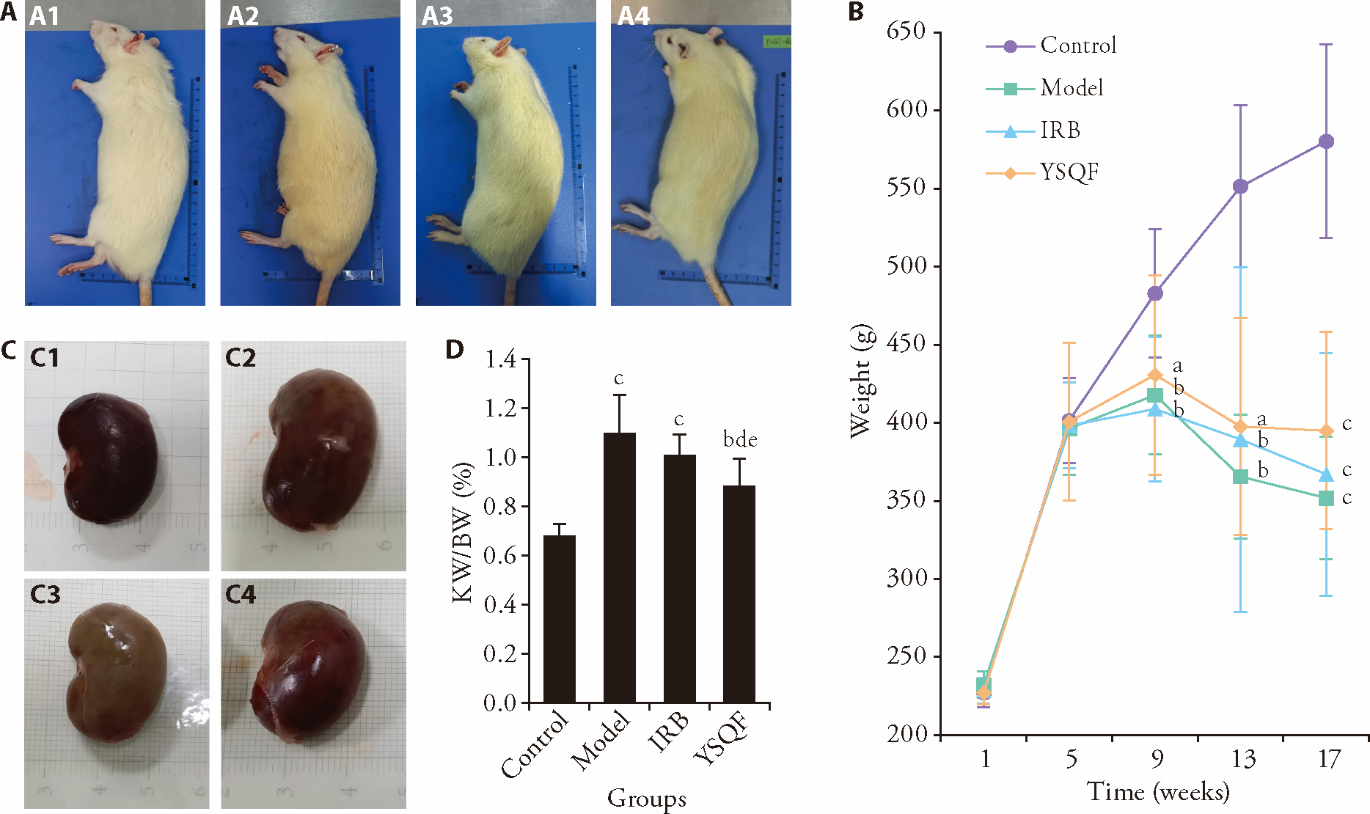
Figure 1 General condition of rats A: general appearance of rats in each group; A1: control group; A2: model group; A3: IRB group; A4: YSQF group; B: changes in body weight over time in each group; C: gross renal morphology; C1: control group; C2: model group; C3: IRB group; C4: YSQF group; D: KW/BW in each group. Control: control group (sham surgery without kidney removal + intraperitoneal injections of sodium citrate buffer + sterile water); Model: model group (unilateral nephrectomy + intraperitoneal injections of STZ + sterile water); IRB: IRB group (unilateral nephrectomy + intraperitoneal injections of STZ + 13.5 mg/kg IRB); YSQF: YSQF group (unilateral nephrectomy + intraperitoneal injections of STZ + 13.86 g/kg YSQF). IRB: irbesartan; YSQF: Yishen Qufeng formula; STZ: streptozotocin; KW/BW: kidney weight/body weight ratio. Body weight data at weeks 1, 5, 9, and 17 followed a normal distribution and were analyzed using one-way analysis of variance, whereas data at week 13 were non-normally distributed and were analyzed using a non-parametric test. For visual consistency, all body weight data in the line graph are presented as mean ± standard deviation: n = 8 for the control group, n = 9 for the model group, n = 7 for the IRB group, and n = 7 for the YSQF group. aP < 0.05, bP < 0.01, cP < 0.001, compared with the control group; dP < 0.001, compared with the model group; eP < 0.05, compared with the IRB group.
Figure 1 General condition of rats A: general appearance of rats in each group; A1: control group; A2: model group; A3: IRB group; A4: YSQF group; B: changes in body weight over time in each group; C: gross renal morphology; C1: control group; C2: model group; C3: IRB group; C4: YSQF group; D: KW/BW in each group. Control: control group (sham surgery without kidney removal + intraperitoneal injections of sodium citrate buffer + sterile water); Model: model group (unilateral nephrectomy + intraperitoneal injections of STZ + sterile water); IRB: IRB group (unilateral nephrectomy + intraperitoneal injections of STZ + 13.5 mg/kg IRB); YSQF: YSQF group (unilateral nephrectomy + intraperitoneal injections of STZ + 13.86 g/kg YSQF). IRB: irbesartan; YSQF: Yishen Qufeng formula; STZ: streptozotocin; KW/BW: kidney weight/body weight ratio. Body weight data at weeks 1, 5, 9, and 17 followed a normal distribution and were analyzed using one-way analysis of variance, whereas data at week 13 were non-normally distributed and were analyzed using a non-parametric test. For visual consistency, all body weight data in the line graph are presented as mean ± standard deviation: n = 8 for the control group, n = 9 for the model group, n = 7 for the IRB group, and n = 7 for the YSQF group. aP < 0.05, bP < 0.01, cP < 0.001, compared with the control group; dP < 0.001, compared with the model group; eP < 0.05, compared with the IRB group.
Table 1 Biochemical parameters of blood and urine in rats
| Group | n | Scr (µmol/L) | BUN (mmol/L) | K (mmol/L) | ALT (U/L) | AST (U/L) | 24-h UTP (mg/24 h) | ACR (mg/g) | |||
|---|---|---|---|---|---|---|---|---|---|---|---|
| Control | 8 | 27.9±2.2 | 3.6±0.7 | 7.5 (6.1, 7.9) | 51.0 (44.5, 53.5) | 99.5 (84.8, 108.0) | 10.4 (5.8, 17.6) | 740.0 (370.0, 1903.0) | |||
| Model | 9 | 32.8±13.1 | 9.7±1.8b | 8.3 (7.8, 9.0)a | 82.0 (65.0, 613.5)a | 122.0 (101.5, 770.5) | 44.9 (38.3, 60.7)b | 7211.0 (3086.5, 13433.5)b | |||
| IRB | 7 | 23.2±2.7a | 8.9±1.2b | 10.6 (10.1, 12.9)bc | 106.0 (69.0, 160.0)a | 195.0 (77.0, 413.0) | 27.4 (11.5, 37.2)ae | 3697.0 (3084.0, 4845.0)b | |||
| YSQF | 7 | 23.6±6.4 | 8.9±1.1b | 10.5 (9.4, 11.0)bd | 80.0 (65.0, 82.0) | 134.0 (106.0, 184.0) | 18.9 (14.5, 40.9)ad | 3862.0 (2773.0, 5066.0)b | |||
Table 2 Serum inflammatory cytokine levels in rats (ng/L, $\bar{x}$ ± s)
| Group | n | IL-1β | IL-18 |
|---|---|---|---|
| Control | 8 | 35.8±2.1 | 168.4±10.1 |
| Model | 9 | 45.7±1.6a | 210.5±7.2a |
| IRB | 7 | 37.5±1.5b | 186.6±4.8db |
| YSQF | 7 | 41.4±1.9abc | 196.0±4.7aef |
Table 2 Serum inflammatory cytokine levels in rats (ng/L, $\bar{x}$ ± s)
| Group | n | IL-1β | IL-18 |
|---|---|---|---|
| Control | 8 | 35.8±2.1 | 168.4±10.1 |
| Model | 9 | 45.7±1.6a | 210.5±7.2a |
| IRB | 7 | 37.5±1.5b | 186.6±4.8db |
| YSQF | 7 | 41.4±1.9abc | 196.0±4.7aef |

Figure 2 Histopathological changes of renal tissues of rats A: HE staining (× 20, scale bar = 50 μm); B: Masson’s staining (× 20, scale bar = 50 μm); C: TUNEL staining (× 20, scale bar = 50 μm); A1, B1, C1: control group glomeruli; A2, B2, C2: model group glomeruli; A3, B3, C3: IRB group glomeruli; A4, B4, C4: YSQF group glomeruli; A5, B5, C5: control group renal tubules; A6, B6, C6: model group renal tubules; A7, B7, C7: IRB group renal tubules; A8, B8, C8: YSQF group renal tubules. D: area percentage of renal collagen content; E: apoptotic positive area percentage in renal tissue. Control: control group (sham surgery without kidney removal + intraperitoneal injections of sodium citrate buffer + sterile water); Model: model group (unilateral nephrectomy + intraperitoneal injections of STZ + sterile water); IRB: IRB group (unilateral nephrectomy + intraperitoneal injections of STZ + 13.5 mg/kg IRB); YSQF: YSQF group (unilateral nephrectomy + intraperitoneal injections of STZ + 13.86 g/kg YSQF). IRB: irbesartan; YSQF: Yishen Qufeng formula; STZ: streptozotocin; HE: hematoxylin and eosin staining; Masson’s staining: Masson's trichrome staining; TUNEL staining: terminal deoxynucleotidyl transferase dUTP nick end labeling staining. Normally distributed data were expressed as mean ± standard deviation and compared using one-way analysis of variance (n = 3). aP < 0.01, dP < 0.001, eP < 0.05, compared with the control group; bP < 0.05, cP < 0.01, compared with the model group.
Figure 2 Histopathological changes of renal tissues of rats A: HE staining (× 20, scale bar = 50 μm); B: Masson’s staining (× 20, scale bar = 50 μm); C: TUNEL staining (× 20, scale bar = 50 μm); A1, B1, C1: control group glomeruli; A2, B2, C2: model group glomeruli; A3, B3, C3: IRB group glomeruli; A4, B4, C4: YSQF group glomeruli; A5, B5, C5: control group renal tubules; A6, B6, C6: model group renal tubules; A7, B7, C7: IRB group renal tubules; A8, B8, C8: YSQF group renal tubules. D: area percentage of renal collagen content; E: apoptotic positive area percentage in renal tissue. Control: control group (sham surgery without kidney removal + intraperitoneal injections of sodium citrate buffer + sterile water); Model: model group (unilateral nephrectomy + intraperitoneal injections of STZ + sterile water); IRB: IRB group (unilateral nephrectomy + intraperitoneal injections of STZ + 13.5 mg/kg IRB); YSQF: YSQF group (unilateral nephrectomy + intraperitoneal injections of STZ + 13.86 g/kg YSQF). IRB: irbesartan; YSQF: Yishen Qufeng formula; STZ: streptozotocin; HE: hematoxylin and eosin staining; Masson’s staining: Masson's trichrome staining; TUNEL staining: terminal deoxynucleotidyl transferase dUTP nick end labeling staining. Normally distributed data were expressed as mean ± standard deviation and compared using one-way analysis of variance (n = 3). aP < 0.01, dP < 0.001, eP < 0.05, compared with the control group; bP < 0.05, cP < 0.01, compared with the model group.
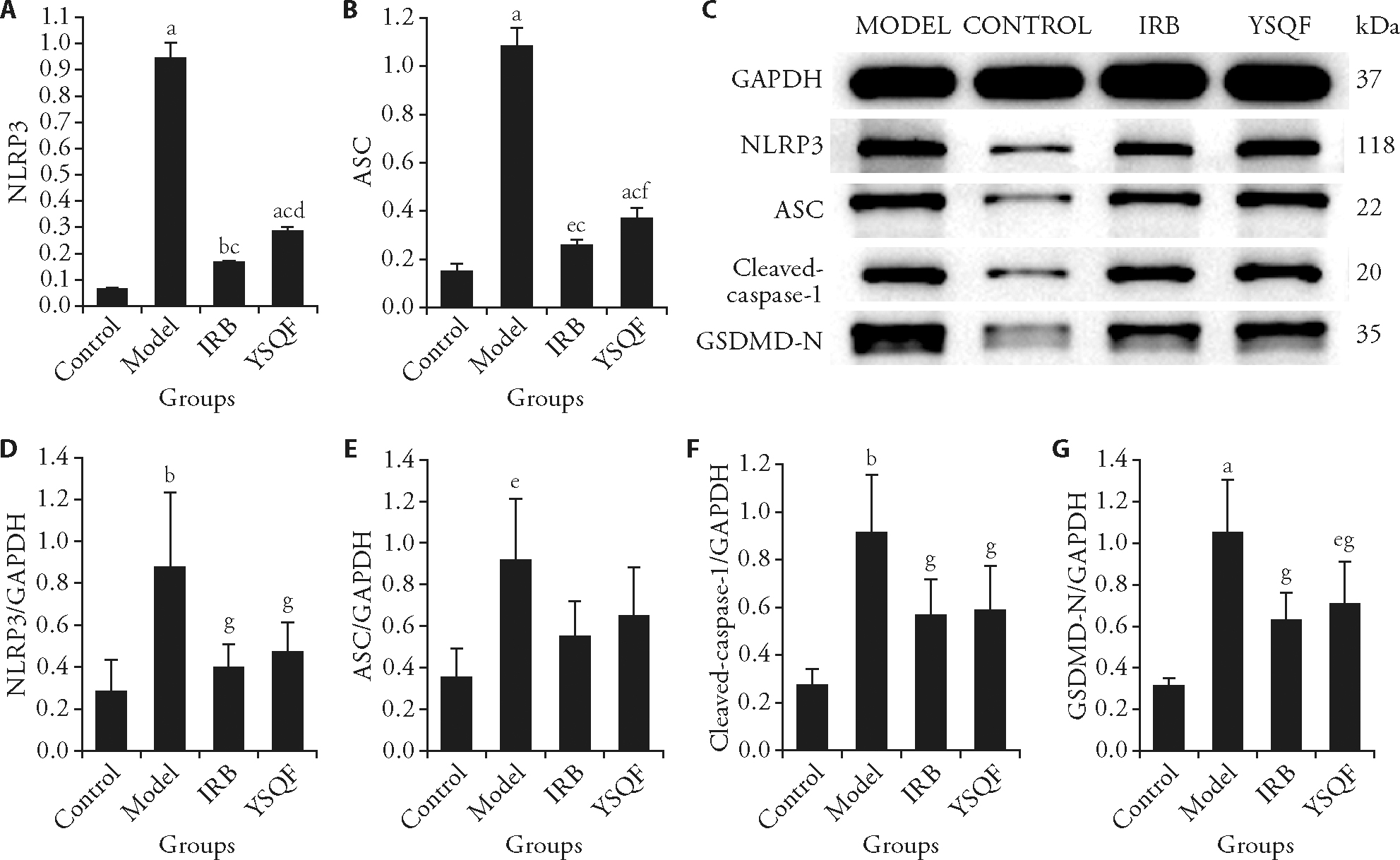
Figure 3 Changes in pyroptosis-related proteins in renal tissue of rats A: relative mRNA expression of NLRP3; B: relative mRNA expression of ASC; C: electrophoresis band pattern; D: relative protein expression levels of NLRP3; E: relative protein expression levels of ASC; F: relative protein expression levels of cleaved-caspase-1; G: relative protein expression levels of GSDMD-N. Control: control group (sham surgery without kidney removal + intraperitoneal injections of sodium citrate buffer + sterile water); Model: model group (unilateral nephrectomy + intraperitoneal injections of STZ + sterile water); IRB: IRB group (unilateral nephrectomy + intraperitoneal injections of STZ + 13.5 mg/kg IRB); YSQF: YSQF group (unilateral nephrectomy + intraperitoneal injections of STZ + 13.86 g/kg YSQF). IRB: irbesartan; YSQF: Yishen Qufeng formula; STZ: streptozotocin; NLRP3: nucleotide-binding oligomerization domain-like receptor protein 3; ASC: apoptosis-associated speck-like protein containing a caspase recruitment domain; cleaved-caspase-1: cleaved cysteine-aspartic acid protease 1; GSDMD-N: N-terminal fragment of gasdermin D. Normally distributed data were expressed as mean ± standard deviation and compared using one-way analysis of variance (n = 3). aP < 0.001, bP < 0.01, eP < 0.05, compared with the control group; cP < 0.001, gP < 0.05, compared with the model group, dP < 0.01, fP < 0.05, compared with the control group.
Figure 3 Changes in pyroptosis-related proteins in renal tissue of rats A: relative mRNA expression of NLRP3; B: relative mRNA expression of ASC; C: electrophoresis band pattern; D: relative protein expression levels of NLRP3; E: relative protein expression levels of ASC; F: relative protein expression levels of cleaved-caspase-1; G: relative protein expression levels of GSDMD-N. Control: control group (sham surgery without kidney removal + intraperitoneal injections of sodium citrate buffer + sterile water); Model: model group (unilateral nephrectomy + intraperitoneal injections of STZ + sterile water); IRB: IRB group (unilateral nephrectomy + intraperitoneal injections of STZ + 13.5 mg/kg IRB); YSQF: YSQF group (unilateral nephrectomy + intraperitoneal injections of STZ + 13.86 g/kg YSQF). IRB: irbesartan; YSQF: Yishen Qufeng formula; STZ: streptozotocin; NLRP3: nucleotide-binding oligomerization domain-like receptor protein 3; ASC: apoptosis-associated speck-like protein containing a caspase recruitment domain; cleaved-caspase-1: cleaved cysteine-aspartic acid protease 1; GSDMD-N: N-terminal fragment of gasdermin D. Normally distributed data were expressed as mean ± standard deviation and compared using one-way analysis of variance (n = 3). aP < 0.001, bP < 0.01, eP < 0.05, compared with the control group; cP < 0.001, gP < 0.05, compared with the model group, dP < 0.01, fP < 0.05, compared with the control group.
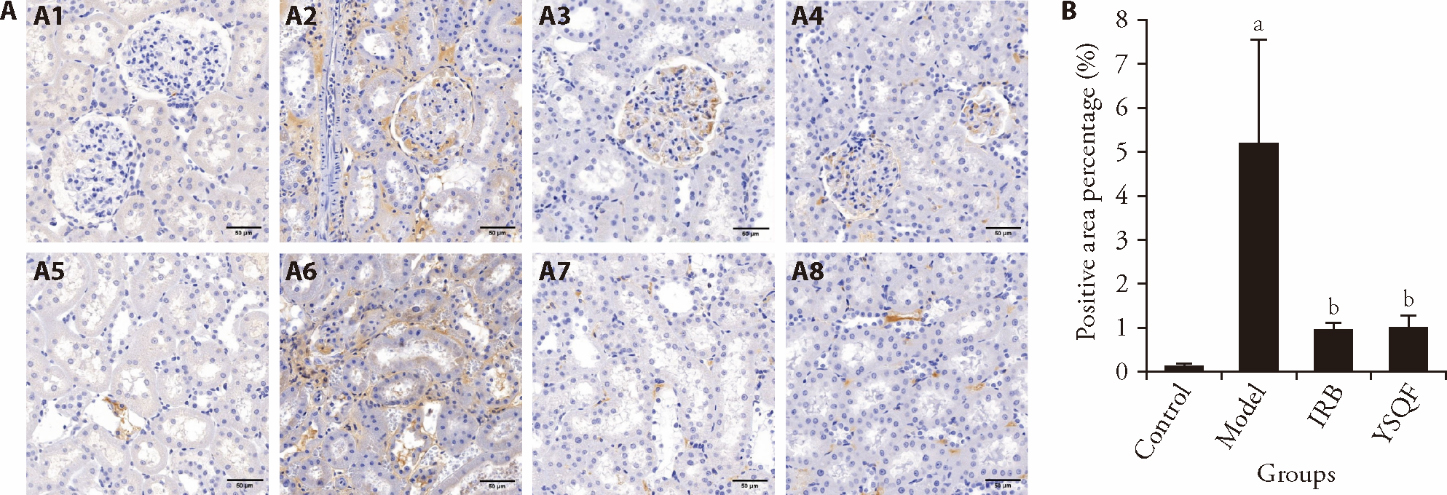
Figure 4 NLRP3 immunohistochemical expression in renal tissue of rats. A: immunohistochemical staining (× 20, scale bar = 50 μm); A1: control group glomeruli; A2: model group glomeruli; A3: IRB group glomeruli; A4: YSQF group glomeruli; A5: control group renal tubules; A6: model group renal tubules; A7: IRB group renal tubules; A8: YSQF group renal tubules; B: positive area percentage of NLRP3 staining. Control: control group (sham surgery without kidney removal + intraperitoneal injections of sodium citrate buffer + sterile water); Model: model group (unilateral nephrectomy + intraperitoneal injections of STZ + sterile water); IRB: IRB group (unilateral nephrectomy + intraperitoneal injections of STZ + 13.5 mg/kg IRB); YSQF: YSQF group (unilateral nephrectomy + intraperitoneal injections of STZ + 13.86 g/kg YSQF). IRB: irbesartan; YSQF: Yishen Qufeng formula; STZ: streptozotocin; NLRP3: nucleotide-binding oligomerization domain-like receptor protein 3. Normally distributed data were expressed as mean ± standard deviation and compared using one-way analysis of variance (n = 3). aP < 0.001, compared with the control group; bP < 0.01, compared with the model group.
Figure 4 NLRP3 immunohistochemical expression in renal tissue of rats. A: immunohistochemical staining (× 20, scale bar = 50 μm); A1: control group glomeruli; A2: model group glomeruli; A3: IRB group glomeruli; A4: YSQF group glomeruli; A5: control group renal tubules; A6: model group renal tubules; A7: IRB group renal tubules; A8: YSQF group renal tubules; B: positive area percentage of NLRP3 staining. Control: control group (sham surgery without kidney removal + intraperitoneal injections of sodium citrate buffer + sterile water); Model: model group (unilateral nephrectomy + intraperitoneal injections of STZ + sterile water); IRB: IRB group (unilateral nephrectomy + intraperitoneal injections of STZ + 13.5 mg/kg IRB); YSQF: YSQF group (unilateral nephrectomy + intraperitoneal injections of STZ + 13.86 g/kg YSQF). IRB: irbesartan; YSQF: Yishen Qufeng formula; STZ: streptozotocin; NLRP3: nucleotide-binding oligomerization domain-like receptor protein 3. Normally distributed data were expressed as mean ± standard deviation and compared using one-way analysis of variance (n = 3). aP < 0.001, compared with the control group; bP < 0.01, compared with the model group.
| [1] | Yao L, Liang XH, Wang P. Therapeutic perspective: evolving evidence of nonsteroidal mineralocorticoid receptor antagonists in diabetic kidney disease. Am J Physiol Endocrinol Metab 2023; 324: E531-41. |
| [2] | Lee WC, Li LC, Ng HY, et al. Urinary exosomal microRNA signatures in nephrotic, biopsy-proven diabetic nephropathy. J Clin Med 2020; 9: 1220. |
| [3] | Yuan JY, Wu SH, Meng YF, Li HB, Li GL, Xu JY. Yishen Tongluo formula ameliorates kidney injury modulating inflammation and apoptosis in streptozotocin-induced diabetic kidney disease mice. J Tradit Chin Med 2025; 45: 254-65. |
| [4] | Yang TY, An JP, Xu XQ, Li B, Dou ZM. Research progress on pyroptosis regulated by mesenchymal stem cell-derived exosomes. Front Immunol 2025; 16: 1717465. |
| [5] | Cheng Q, Pan J, Zhou ZL, et al. Caspase-11/4 and gasdermin D-mediated pyroptosis contributes to podocyte injury in mouse diabetic nephropathy. Acta Pharmacol Sin 2021; 42: 954-63. |
| [6] | Shao YW, Deng SJ, Tang W, et al. Molecular mechanism of GSDMD mediated glomerular endothelial cells pyroptosis: an implying in the progression of diabetic nephropathy. Int Immunopharmacol 2023; 122: 110632. |
| [7] | Huang LZ, Chen XY, Shao YW, et al. Elevation of ISG15 promotes diabetic kidney disease by modulating renal tubular epithelial cell pyroptosis. Clin Transl Med 2025; 15: e70337. |
| [8] | Gao KX, Liu YC, Sun C, et al. TNF-ɑ induces mitochondrial dysfunction to drive NLRP3/Caspase-1/GSDMD-mediated pyroptosis in MCF-7 cells. Sci Rep 2024; 14: 25880. |
| [9] | Li YJ, Guo B. GSDMD-mediated pyroptosis: molecular mechanisms, diseases and therapeutic targets. Mol Biomed 2025; 6: 11. |
| [10] | Shen J, Zhou EC. Professor Zhou Enchao's experience in the treatment of renal proteinuria from “weak” “Dampness” “wind” and “blood stasis”. Zhejiang Zhong Yi Yao Da Xue Xue Bao 2019; 43: 1237-40. |
| [11] | Zhou EC, Fu JJ, Yong C, inventors; Jiangsu Province Hospital of Chinese Medicine, assignee. A Traditional Chinese Medicine compound composition for benefiting kidney and dispelling wind, and its preparation method and application. China patent CN117018076B. 2024 Jan 23. |
| [12] | Chinese Pharmacopoeia Commission. Pharmacopoeia of the People's Republic of China. 2020 ed. Volume I. Beijing: China Medical Science Press, 2020: 3-403 |
| [13] | Broz P. Pyroptosis: molecular mechanisms and roles in disease. Cell Res 2025; 35: 334-44. |
| [14] | Wu Q, Du JC, Bae EJ, Choi YJ. Pyroptosis in skeleton diseases: a potential therapeutic target based on inflammatory cell death. Int J Mol Sci 2024; 25: 9068. |
| [15] | Ju XL, Yang ZL, Zhang H, Wang Q. Role of pyroptosis in cancer cells and clinical applications. Biochimie 2021; 185: 78-86. |
| [16] | Hu XR, Wang JJ, Jiang L, et al. Rutaecarpine protects podocytes in diabetic kidney disease by targeting VEGFR2/NLRP3-mediated pyroptosis. Int Immunopharmacol 2024; 130: 111790. |
| [17] | Du Y, Feng Y, Cai Y, Tian C. CircLARP1B promotes pyroptosis of high glucose-induced renal mesangial cells by regulating the miR-578/TLR4 axis. Int Urol Nephrol 2024; 56: 283-93. |
| [18] | Kong XR, Zhao YY, Wang XY, et al. Loganin reduces diabetic kidney injury by inhibiting the activation of NLRP3 inflammasome-mediated pyroptosis. Chem Biol Interact 2023; 382: 110640. |
| [19] | Tang BQ, Wu YG, Zhang YD, Cheng YQ, Wu YQ, Fang H. Scorpion and centipede alleviates severe asthma through M2 macrophage-derived exosomal miR-30b-5p. Aging (Albany NY) 2022; 14: 3921-40. |
| [20] | Tan WP, Cheng SY, Qiu QF, et al. Celastrol exerts antiarrhythmic effects in chronic heart failure via NLRP3/Caspase-1/IL-1β signaling pathway. Biomed Pharmacother 2024; 177: 117121. |
| [21] | Liu Q, Gao M, Lü HJ, Rao ZL, Zeng N. Anti-inflammatory effect and mechanism of ethanol extract from Saposhnikoviae Radix in LPS-induced inflammation mouse model. Zhong Guo Zhong Yao Za Zhi 2021; 46: 4800-07. |
| [22] | Li G (Jin dynasty). Nei Wai Shang Bian Huo Lun. Beijing: People's Medical Publishing House, 2023: 20. |
| [23] | Li XH, Dong X, Zhang LY, et al. Astragaloside IV attenuates renal tubule injury in DKD rats via suppression of CD36-mediated NLRP3 inflammasome activation. Front Pharmacol 2024; 15: 1285797. |
| [24] | Hu ZB, Zhou Y, Gao CL, Liu JF, Pan CQ, Guo J. Astragaloside IV attenuates podocyte apoptosis via regulating TXNIP/NLRP3/GSDMD signaling pathway in diabetic nephropathy. Diabetol Metab Syndr 2024; 16: 296. |
| [25] | He JX, Cui JL, Shi YM, et al. Astragaloside IV attenuates high-glucose-induced impairment in diabetic nephropathy by increasing klotho expression via the NF-κB/NLRP 3 axis. J Diabetes Res 2023; 2023: 7423661. |
| [26] | Li YP, Zheng D, Shen DY, Zhang XL, Zhao XY, Liao H. Protective effects of two safflower derived compounds, kaempferol and hydroxysafflor yellow A, on hyperglycaemic stress-induced podocyte apoptosis via modulating of macrophage M1/M2 polarization. J Immunol Res 2020; 2020: 2462039. |
| [27] | Li CY, Ma JY, Mali N, et al. Relevance of the pyroptosis-related inflammasome drug targets in the Chuanxiong to improve diabetic nephropathy. Mol Med 2022; 28: 136. |
| [1] | YU Fangning, LIN Li, TANG Xiao, HE Xiujuan, ZHANG Bo, CHEN Yukun, MA Yizhao, LIU Zeyu, YE Jinsheng, XU Xuying. Effect of Huiyang Shengji unguent (回阳生肌膏) on the NOD-like receptor family pyrin domain containing protein 3/caspase1/ gasdermin D pathway and lymphatic angiogenesis in patients with diabetic foot ulcer [J]. Journal of Traditional Chinese Medicine, 2026, 46(2): 427-438. |
| [2] | SUN Weiwei, ZHANG Jiale, YANG Hanwen, YAN Runze, WEI Shuwu, WU Qiaoru, CUI Zhaoli, ZHENG Huijuan, WANG Yaoxian. Traditional Chinese herbal medicine Qingre Xiaozheng formula (清热消癥方) improves renal outcomes in patients with diabetic kidney disease: a retrospective study [J]. Journal of Traditional Chinese Medicine, 2025, 45(4): 873-880. |
| [3] | XU Bojun, TAO Tian, ZHAO Liangbin, ZHENG Hui, ZHAN huakui, GUO Julan. Bushen Tongluo recipe (补肾通络方) improves oxidative stress homeostasis, inhibits transforming growth factor/Notch signaling pathway, and regulates the lncRNA maternally expressed gene 3/miR-145 axis to delay diabetic kidney disease [J]. Journal of Traditional Chinese Medicine, 2025, 45(3): 561-570. |
| [4] | YUAN Jiayao, WU Suhui, MENG Yufan, LI Hanbing, LI Genlin, XU Jiangyan. Yishen Tongluo formula (益肾通络方) ameliorates kidney injury via modulating inflammation and apoptosis in streptozotocin-induced diabetic kidney disease mice [J]. Journal of Traditional Chinese Medicine, 2025, 45(2): 254-265. |
| [5] | HANG Wenlu, WANG Lin, BO Yun, ZUO Shurun, WANG Songquan, LI Haiquan, BU Chunlu, ZHAO Jie, ZHOU Xianmei. Bufei Huoxue capsule (补肺活血胶囊) alleviates silicosis by inhibiting the activation of nucleotide-like receptor containing pyrin domain 3 inflammasome and macrophages polarization based on network pharmacology [J]. Journal of Traditional Chinese Medicine, 2024, 44(6): 1236-1246. |
| [6] | LI Yanjiao, HAO Linyao, LI Shuangyang, LUO Yanqi, WANG Juan, WANG Raoqiong, BAI Xue. Tongqiao Yizhi granule (通窍益智颗粒) repress the nuclear factor kappa-b/nucleotide oligomerization domain-like receptors 3/caspase-1 pyroptosis pathway in the hippocampus to counter vascular dementia in rats [J]. Journal of Traditional Chinese Medicine, 2024, 44(4): 680-687. |
| [7] | WANG Yuhuang, ZHANG Le, ZHANG Zhengshan, YAO Zhi, LI Xiyao, SUN Luying, LIAO Xing. Characteristics and quality of clinical practice guidelines for diabetic kidney disease: a systematic review [J]. Journal of Traditional Chinese Medicine, 2024, 44(3): 609-619. |
| [8] | LI Shuang, DUAN Shuwei, DONG Zheyi, QU Yilun, LUO Yayong, KE Jianghua, WANG Conghui, PENG Yangzhi, ZHOU Xuefeng, CHEN Xiangmei. Distribution of Traditional Chinese Medicine syndromes in diabetic kidney disease chronic kidney disease 1-5: a correlation study [J]. Journal of Traditional Chinese Medicine, 2024, 44(3): 572-580. |
| [9] | HUANG Hongmei, YANG Maojun, LI Ting, WANG Dandan, LI Ying, TANG Xiaochi, YUAN Lu, GU Shi, XU Yong. Neferine inhibits the progression of diabetic nephropathy by modulating the miR-17-5p/nuclear factor E2-related factor 2 axis [J]. Journal of Traditional Chinese Medicine, 2024, 44(1): 44-53. |
| [10] | QU Yilun, CHENG Haimei, WANG Qian, LI Shuang, DUAN Shuwei, FENG Zhe, LI Weizhen, JIANG Shuangshuang, YANG Hongtao, MAO Yonghui, GENG Yanqiu, LI Jijun, LIU Yuning, TIAN Jinzhou, LIU Hongfang, DONG Zheyi, CHEN Xiangmei. Noninvasive identificational diagnosis of diabetic nephropathy and non-diabetic renal disease based on clinical characteristics of Traditional Chinese Medicine symptom pattern and conventional medicine [J]. Journal of Traditional Chinese Medicine, 2023, 43(3): 588-593. |
| [11] | XIE Jing, BI Zheng, WANG Sihai, SHEN Guoming, FANG Zhaohui. Danzhi Jiangtang capsule (丹蛭降糖胶囊) reduces renal injury in rats with diabetes induced by high fat diet and streptozotocin via downregulating toll-like receptor 4-nuclear factor-κB pathway and apoptosis [J]. Journal of Traditional Chinese Medicine, 2023, 43(2): 312-321. |
| [12] | GUO Yangzhi, DU Juan, JIANG Min, GUO Wei. Full composition granules of Huanglian (Rhizoma Coptidis) decrease the serum monocyte chemotactic protein-1 and connective tissue growth factor levels and inhibit kidney nuclear factor-κB expression in rats with high-fat diet-induced diabetes [J]. Journal of Traditional Chinese Medicine, 2021, 41(3): 424-431. |
| [13] | HAN Jiarui, ZHANG Yage, SHI Xiujie, PENG Zining, XING Yufeng, PANG Xinxin. Tongluo Digui decoction(通络地龟汤) treats renal injury in diabetic rats by promoting autophagy of podocytes [J]. Journal of Traditional Chinese Medicine, 2021, 41(1): 125-132. |
| [14] | Xia Xichao, Mao Dongxue, Dai Hongmei, Wu Xi, Zhang Zuyuan, Wang Huaying, Zhou Wenwen, Dong Yanmei, Wang Mengqi, Li Yuan, Shao Xiangyang, Ouyang Jingfeng. Effect of Cyclocarya paliurus polysaccharides on streptozotocin-induced diabetic nephropathy in rats [J]. Journal of Traditional Chinese Medicine, 2020, 40(6): 956-964. |
| [15] | Guo Jing, Chen Hongdong, Zhao Xiyan, Zhao Linhua, Tong Xiaolin. Diabetic kidney disease treated with a modified Shenzhuo formula derived from Traditional Chinese Medicine: a case report [J]. Journal of Traditional Chinese Medicine, 2017, 37(06): 854-861. |
| Viewed | ||||||
|
Full text |
|
|||||
|
Abstract |
|
|||||