
Journal of Traditional Chinese Medicine ›› 2026, Vol. 46 ›› Issue (4): 916-926.DOI: 10.19852/j.cnki.jtcm.2026.04.012
• Original Articles • Previous Articles Next Articles
Metabolomics and network pharmacology analysis of mechanisms underlying amelioration of tic disorders in rats by Jiawei Huangan Lipi decoction (加味缓肝理脾汤)
CHEN Lijin1, CHEN Linghui2, WANG Chengrui3, FANG Yijun2, GAN Liping4, HANG Jinyu2( )
)
- 1
Department of Pharmacy ,Zhangzhou Traditional Chinese Medical Hospital Zhangzhou 363000, China
2Department of Pediatrics ,Zhangzhou Traditional Chinese Medical Hospital Zhangzhou 363000, China
3School of Medicine and Health ,Harbin Institute of Technology, Harbin150001, China; Zhengzhou Advanced Research Institute of Harbin Institute of Technology Zhengzhou 450000, China
4Department of aircrew ,General Hospital of Xinjiang Military Region Urumqi 830000, China
-
Received:2025-05-28Accepted:2025-11-07Online:2026-08-15Published:2026-08-08 -
Contact:HANG Jinyu, Department of Pediatrics, Zhangzhou Traditional Chinese Medical Hospital, Zhangzhou 363000, China. sx11b@163.com,Telephone: +86-13709333668
-
Supported by:Fujian Natural Science Foundation: Mechanisms of Jiawei Huangan Lipi decoction in Treating Tic Disorders Investigated by Network Pharmacology and Metabolomics(2023J011851)

Cite this article
CHEN Lijin, CHEN Linghui, WANG Chengrui, FANG Yijun, GAN Liping, HANG Jinyu. Metabolomics and network pharmacology analysis of mechanisms underlying amelioration of tic disorders in rats by Jiawei Huangan Lipi decoction (加味缓肝理脾汤)[J]. Journal of Traditional Chinese Medicine, 2026, 46(4): 916-926.
share this article
Table 1 Comparison of scores between different groups ($\bar{x}±s$)
| Item | Group | H value | P value | |||
|---|---|---|---|---|---|---|
| TDM (n = 6) | Low-JHD (n = 6) | Middle-JHD (n = 6) | High-JHD (n = 6) | |||
| Locomotor Behavior | 2.3±0.4 | 1.3±0.7 | 1.5±0.3 | 0.8±0.4 | 15.7 | 0.001 |
| Stereotyped Behavior | 2.2±0.5 | 1.6±0.8 | 1.2±0.5 | 1.1±0.6 | 9.8 | 0.020 |
Table 1 Comparison of scores between different groups ($\bar{x}±s$)
| Item | Group | H value | P value | |||
|---|---|---|---|---|---|---|
| TDM (n = 6) | Low-JHD (n = 6) | Middle-JHD (n = 6) | High-JHD (n = 6) | |||
| Locomotor Behavior | 2.3±0.4 | 1.3±0.7 | 1.5±0.3 | 0.8±0.4 | 15.7 | 0.001 |
| Stereotyped Behavior | 2.2±0.5 | 1.6±0.8 | 1.2±0.5 | 1.1±0.6 | 9.8 | 0.020 |
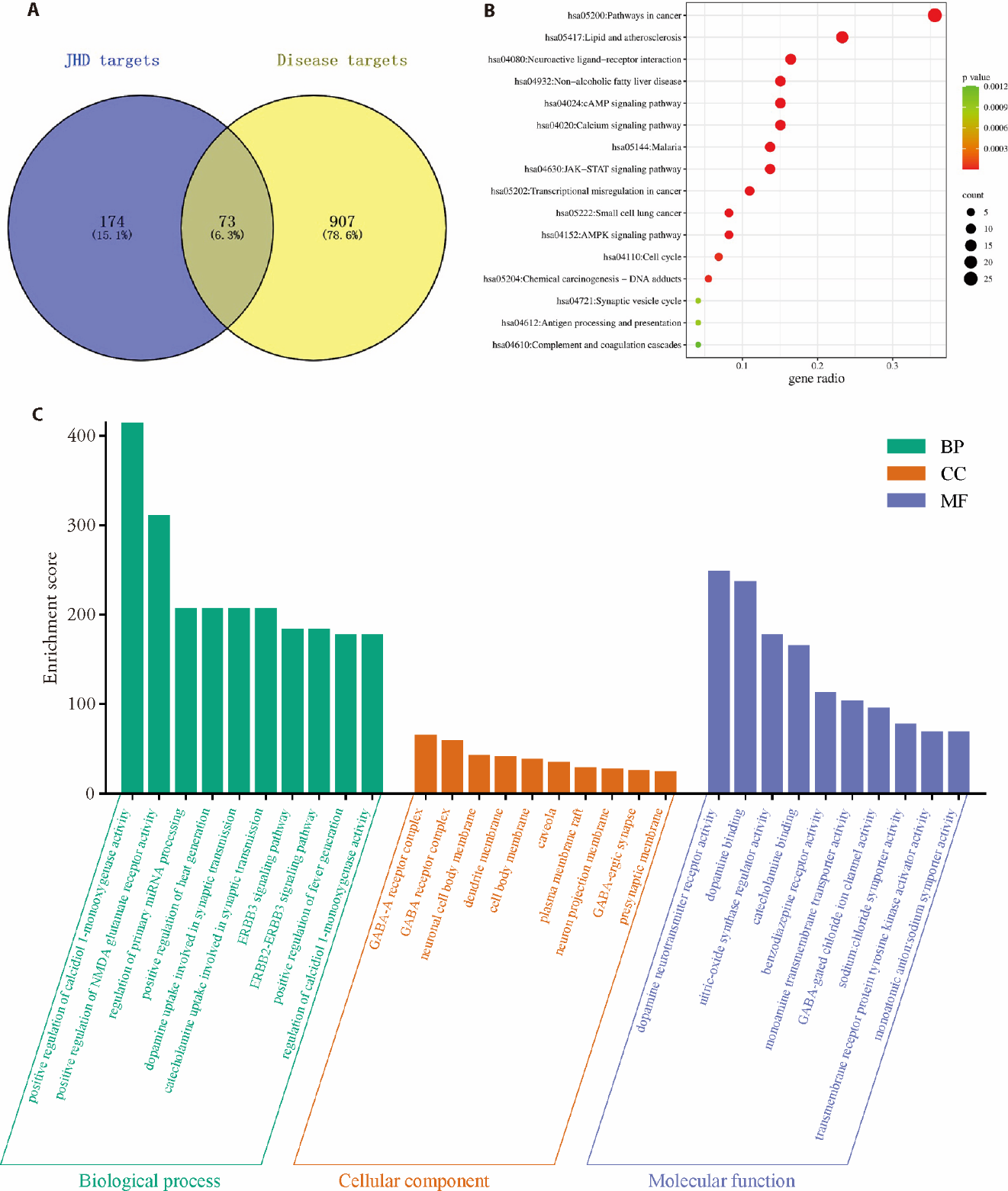
Figure 1 Network pharmacology of JHD A: venn diagram of the TD targets for JHD; B: PPI network diagram; C: KEGG pathway enrichment bubble map. TD: tic disorders; JHD: Jiawei Huangan Lipi decoction; PPI: protein-protein interaction; KEGG: kyoto encyclopedia of genes and genomes; GO: gene ontology; ICAM1: intercellular adhesion molecule 1; CCL2: chemokine (C-C motif) ligand 2; IL2: interleukin 2; IRFNG: interferon gamma; CD40LG: CD40 ligand; CXCL8: C-X-C motif chemokine ligand 8; IL10: interleukin 10; IL4: interleukin 4; IL1B: interleukin 1 beta; MMP9: matrix metallopeptidase 9; COL18A1: collagen type XVIII alpha 1 chain; SPP1: secreted phosphoprotein 1; CYP1A2: cytochrome P450 family 1 subfamily A member 2; GSTM1: glutathione S-transferase mu 1; CYP3A4: cytochrome P450 family 3 subfamily A member 4; OPRM1: opioid receptor mu 1; OPRD1: opioid receptor delta 1; ACHE: acetylcholinesterase; APP: amyloid beta precursor protein; MTTP: microsomal triglyceride transfer protein; APOB: apolipoprotein B; RUNX2: runt-related transcription factor 2; SLC6A3: solute carrier family 6 member 3; DRD1: dopamine receptor D1; DRD2: dopamine receptor D2; SLC6A4: solute carrier family 6 member 4; STAT3: signal transducer and activator of transcription 3; MAPK1: mitogen-activated protein kinase 1; MARK1: MAP/microtubule affinity regulating kinase 1; FOS: fos proto-oncogene, AP-1 transcription factor subunit; ESR1: estrogen receptor 1; ESR2: estrogen receptor 2; SCN5A: sodium voltage-gated channel alpha subunit 5; KCNH2: potassium voltage-gated channel subfamily H member 2; PPARG: peroxisome proliferator-activated receptor gamma; ADIPOQ: adiponectin; PPARA: peroxisome proliferator-activated receptor alpha; F10: coagulation factor X; F3: coagulation factor Ⅲ, tissue factor; PLAT: plasminogen activator, tissue type; CHEK2: checkpoint kinase 2; GSK3B: glycogen synthase kinase 3 beta; EGFR: epidermal growth factor receptor; EGF: epidermal growth factor; NOS2: nitric oxide synthase 2; ERBB3: erb-B2 receptor tyrosine kinase 3; ERBB2: erb-B2 receptor tyrosine kinase 2; MYC: MYC proto-oncogene, bHLH transcription factor; TP53: tumor protein P53; PTEN: phosphatase and tensin homolog; HSPB1: heat shock protein family B (small) member 1; TGFB1: transforming growth factor beta 1; CRP: C-reactive protein.
Figure 1 Network pharmacology of JHD A: venn diagram of the TD targets for JHD; B: PPI network diagram; C: KEGG pathway enrichment bubble map. TD: tic disorders; JHD: Jiawei Huangan Lipi decoction; PPI: protein-protein interaction; KEGG: kyoto encyclopedia of genes and genomes; GO: gene ontology; ICAM1: intercellular adhesion molecule 1; CCL2: chemokine (C-C motif) ligand 2; IL2: interleukin 2; IRFNG: interferon gamma; CD40LG: CD40 ligand; CXCL8: C-X-C motif chemokine ligand 8; IL10: interleukin 10; IL4: interleukin 4; IL1B: interleukin 1 beta; MMP9: matrix metallopeptidase 9; COL18A1: collagen type XVIII alpha 1 chain; SPP1: secreted phosphoprotein 1; CYP1A2: cytochrome P450 family 1 subfamily A member 2; GSTM1: glutathione S-transferase mu 1; CYP3A4: cytochrome P450 family 3 subfamily A member 4; OPRM1: opioid receptor mu 1; OPRD1: opioid receptor delta 1; ACHE: acetylcholinesterase; APP: amyloid beta precursor protein; MTTP: microsomal triglyceride transfer protein; APOB: apolipoprotein B; RUNX2: runt-related transcription factor 2; SLC6A3: solute carrier family 6 member 3; DRD1: dopamine receptor D1; DRD2: dopamine receptor D2; SLC6A4: solute carrier family 6 member 4; STAT3: signal transducer and activator of transcription 3; MAPK1: mitogen-activated protein kinase 1; MARK1: MAP/microtubule affinity regulating kinase 1; FOS: fos proto-oncogene, AP-1 transcription factor subunit; ESR1: estrogen receptor 1; ESR2: estrogen receptor 2; SCN5A: sodium voltage-gated channel alpha subunit 5; KCNH2: potassium voltage-gated channel subfamily H member 2; PPARG: peroxisome proliferator-activated receptor gamma; ADIPOQ: adiponectin; PPARA: peroxisome proliferator-activated receptor alpha; F10: coagulation factor X; F3: coagulation factor Ⅲ, tissue factor; PLAT: plasminogen activator, tissue type; CHEK2: checkpoint kinase 2; GSK3B: glycogen synthase kinase 3 beta; EGFR: epidermal growth factor receptor; EGF: epidermal growth factor; NOS2: nitric oxide synthase 2; ERBB3: erb-B2 receptor tyrosine kinase 3; ERBB2: erb-B2 receptor tyrosine kinase 2; MYC: MYC proto-oncogene, bHLH transcription factor; TP53: tumor protein P53; PTEN: phosphatase and tensin homolog; HSPB1: heat shock protein family B (small) member 1; TGFB1: transforming growth factor beta 1; CRP: C-reactive protein.
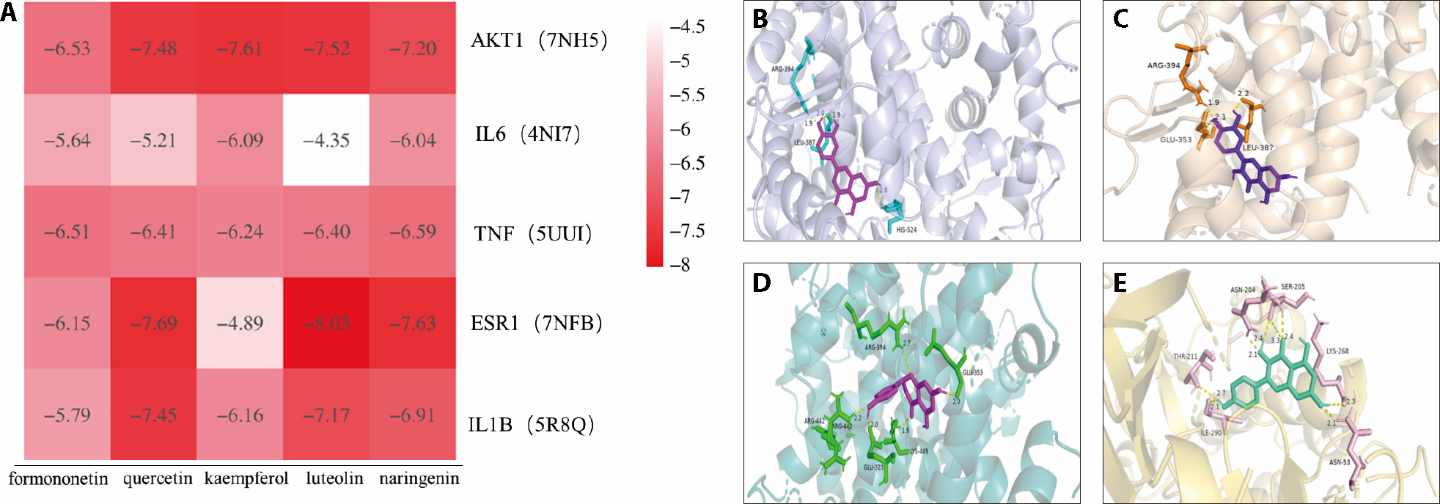
Figure 2 Molecular docking of JHD A: thermogram of the docking binding energies of key JHD components to the core targets; B-E: molecular docking diagram of active ingredients with key targets; B: luteolin docked with ESR1; C: quercetin docked with ESR1; D: naringenin docked with ESR1; E: kaempferol docked with AKT1. JHD: Jiawei Huangan Lipi decoction; ESR1: estrogen receptor 1; AKT1: RAC-alpha serine/threonine kinase 1; IL-6: interleukin 6; TNF: tumor necrosis factor; ARG: arginine; LEU: leucine; HIS: histidine; GLU: glutamic acid; LYS: lysine; ASN: asparagine; SER: serine; THR: threonine; ILE: isoleucine.
Figure 2 Molecular docking of JHD A: thermogram of the docking binding energies of key JHD components to the core targets; B-E: molecular docking diagram of active ingredients with key targets; B: luteolin docked with ESR1; C: quercetin docked with ESR1; D: naringenin docked with ESR1; E: kaempferol docked with AKT1. JHD: Jiawei Huangan Lipi decoction; ESR1: estrogen receptor 1; AKT1: RAC-alpha serine/threonine kinase 1; IL-6: interleukin 6; TNF: tumor necrosis factor; ARG: arginine; LEU: leucine; HIS: histidine; GLU: glutamic acid; LYS: lysine; ASN: asparagine; SER: serine; THR: threonine; ILE: isoleucine.
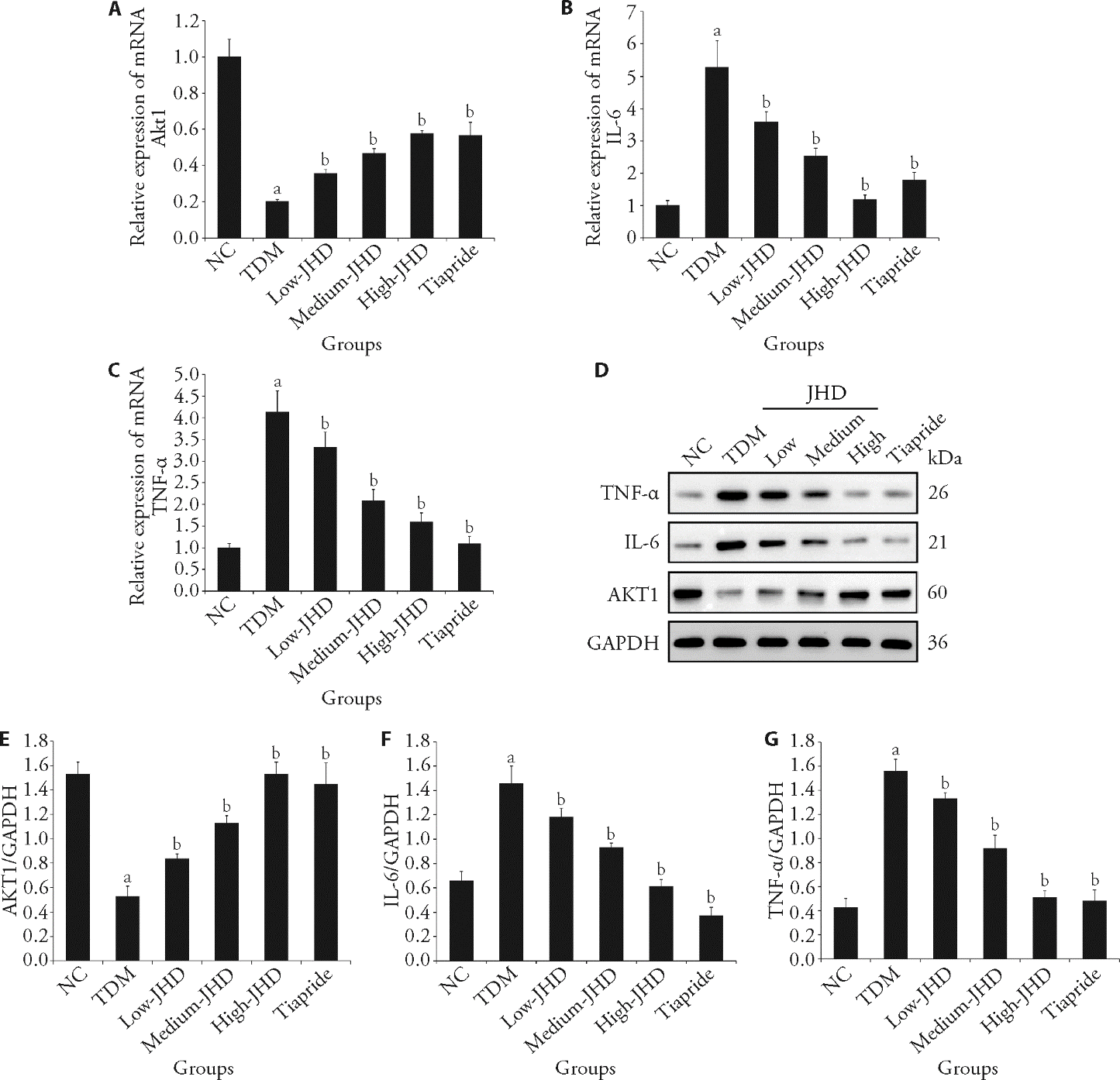
Figure 3 Validation of core targets Hippocampal tissues were isolated from six groups of mice, and RNA and protein were extracted for RT-qPCR and Western blot analyses, respectively. A: mRNA levels of Akt1 in the six groups were detected by RT-qPCR; B: mRNA levels of IL-6 in the six groups were detected by RT-qPCR; C: mRNA levels of Tnfa in the six groups were detected by RT-qPCR; D: representative Western blot images showing AKT1, IL-6, and TNF-α protein expression across the six groups; E: statistical graphs quantifying the protein levels of AKT1; F: statistical graphs quantifying the protein levels of IL-6; G: statistical graphs quantifying the protein levels of TNF-α. NC: The normal rats. TDM: tic disorder model. Low-JHD: The TDM rats were treated with JHD at a dose of 2.4 g/mL. Medium-JHD: The TDM rats were treated with JHD at a dose of 3.2 g/mL. High-JHD: The TDM rats were treated with JHD at a dose of 4.8 g/mL. Tiapride: The TDM rats were treated with tiapride. RT-qPCR: reverse transcription quantitative polymerase chain reaction; AKT1: AKT serine/threonine kinase 1; IL-6: interleukin 6; TNF-α: tumor necrosis factor α. Statistical analyses were subjected to one-way analysis of variance. Data are shown as the mean ± standard deviation (n = 3). aP < 0.01 versus NC group; bP < 0.05 versus TDM group.
Figure 3 Validation of core targets Hippocampal tissues were isolated from six groups of mice, and RNA and protein were extracted for RT-qPCR and Western blot analyses, respectively. A: mRNA levels of Akt1 in the six groups were detected by RT-qPCR; B: mRNA levels of IL-6 in the six groups were detected by RT-qPCR; C: mRNA levels of Tnfa in the six groups were detected by RT-qPCR; D: representative Western blot images showing AKT1, IL-6, and TNF-α protein expression across the six groups; E: statistical graphs quantifying the protein levels of AKT1; F: statistical graphs quantifying the protein levels of IL-6; G: statistical graphs quantifying the protein levels of TNF-α. NC: The normal rats. TDM: tic disorder model. Low-JHD: The TDM rats were treated with JHD at a dose of 2.4 g/mL. Medium-JHD: The TDM rats were treated with JHD at a dose of 3.2 g/mL. High-JHD: The TDM rats were treated with JHD at a dose of 4.8 g/mL. Tiapride: The TDM rats were treated with tiapride. RT-qPCR: reverse transcription quantitative polymerase chain reaction; AKT1: AKT serine/threonine kinase 1; IL-6: interleukin 6; TNF-α: tumor necrosis factor α. Statistical analyses were subjected to one-way analysis of variance. Data are shown as the mean ± standard deviation (n = 3). aP < 0.01 versus NC group; bP < 0.05 versus TDM group.
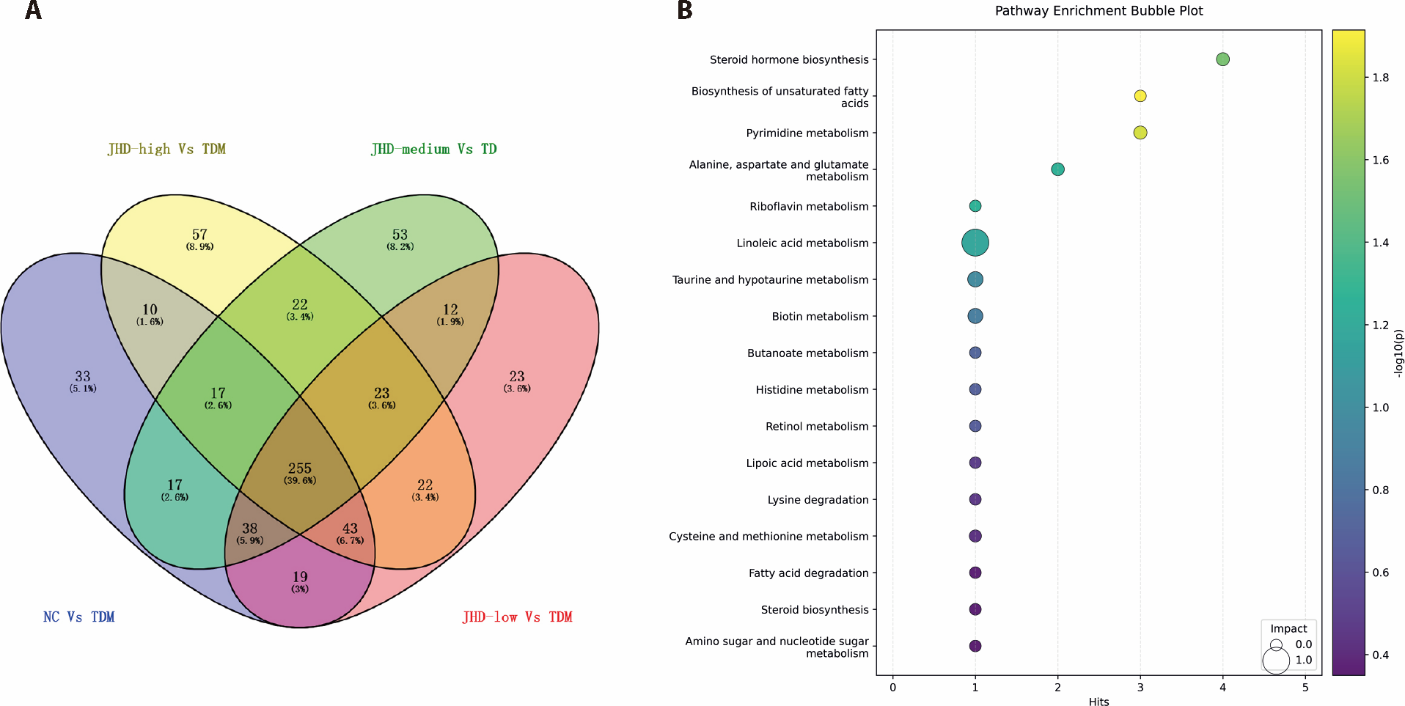
Figure 4 Cross-tabulation analysis of metabolic components A: venn diagram of metabolites in the serum metabolic profile; B: metabolic pathways of the TD metabolites. TD: tic disorders; JHD: Jiawei Huangan Lipi decoction; TDM: tic disorders model.
Figure 4 Cross-tabulation analysis of metabolic components A: venn diagram of metabolites in the serum metabolic profile; B: metabolic pathways of the TD metabolites. TD: tic disorders; JHD: Jiawei Huangan Lipi decoction; TDM: tic disorders model.
| 1. | Lu Q, Sun D, Liu ZS. Interpretation of expert consensus for diagnosis and treatment of tic disorders in China. Zhong Hua Ying Yong Lin Chuang Er Ke Za Zhi 2021; 36: 647-53. |
| 2. | Chen M, Tu Y, Yang HM. Cohort study on the influencing factor in tic disorders for children. Zhong Guo Shi Yong Shen Jing Bing Xue Za Zhi 2018; 21: 124-8. |
| 3. |
Kong M, Yan SJ, Gao YN, Li H. Is traditional Chinese medicine effective in treating tic disorders (tourette syndrome) a Meta-analysis of randomized controlled trials. Complement Med Res 2023; 30: 248-57.
DOI URL |
| 4. | Wu Q (Qing dynasty). Yi Zong Jin Jian. Beijing: People's Medical Publishing House, 1973: 68. |
| 5. | Hang JY, Fang YJ, Han HY, Weng WT. 32 Cases of Jiawei Huangan Lipi decoction combined with Yijinjing in treating pediatric tic disorder with spleen deficiency and liver hyperactivity. Fujian Zhong Yi Za Zhi 2022; 53: 59-60+63. |
| 6. |
Zhang ZY, Yi PJ, Yang JJ, et al. Integrated network pharmacology analysis and serum metabolomics to reveal the cognitive improvement effect of Bushen Tiansui formula on Alzheimer's disease. J Ethnopharmacol 2020; 249: 112371.
DOI URL |
| 7. | Zhang YL, Ma WG, Qian XY, et al. Construction of experimental animal models and evaluation of spleen deficiency syndrome: a review. Zhong Guo Shi Yan Dong Wu Xue Bao 2024; 32: 385-96. |
| 8. | Shi WL, Chen HM, Ma BX. Advances in establishment and application of tic disorder animal model with spleen deficiency and liver hyperactivity syndrome. Shi Jie Zhong Yi Yao 2022; 17: 3559-63. |
| 9. | Ke ZL, Chen YH. Research progress in animal models for tic disorder. Zhong Hua Shi Yong Er Ke Lin Chuan Za Zhi 2024; 39: 288-92. |
| 10. |
Want EJ, O'Maille G, Smith CA, et al. Solvent-dependent metabolite distribution, clustering, and protein extraction for serum profiling with mass spectrometry. Anal Chem 2006; 78: 743-52.
DOI PMID |
| 11. |
Barri T, Dragsted LO. UPLC-ESI-QTOF/MS and multivariate data analysis for blood plasma and serum metabolomics: effect of experimental artefacts and anticoagulant. Anal Chim Acta 2013; 768: 118-28.
DOI PMID |
| 12. | Ru JL, Li P, Wang JN, et al. TCMSP: a database of systems pharmacology for drug discovery from herbal medicines. J Cheminform 2014; 6: 13. |
| 13. | Szklarczyk D, Morris JH, Cook H, et al. The STRING database in 2017:quality-controlled protein-protein association networks, made broadly accessible. Nucleic Acids Res 2017; 45: D362-8. |
| 14. |
Burley SK, Berman HM, Kleywegt GJ, et al. Protein data bank (PDB): The single global macromolecular structure archive. Methods Mol Biol 2017; 1607: 627-41.
DOI PMID |
| 15. |
Chong J, Xia JG. MetaboAnalystR: an R package for flexible and reproducible analysis of metabolomics data. Bioinformatics 2018; 34: 4313-4.
DOI PMID |
| 16. | Chen YG, Tu YQ, Wang CQ, Chen J, Zhang BH. Network pharmacology and molecular docking to discuss the mechanism of Jinhutongdan prescription in the treatment of cholelithiasis and experimental verification. Zhong Guo Lin Chuang Yu Zhi Liao Xue Za Zhi 2022; 27: 1090-8. |
| 17. | Cheng Y, Huang S, Feng YJ, Tang Y. Effects of zhichou decoction on tic behavior and TNF-α, IL-6, IL-1β of tic disorder model rats. Yunnan Zhong Yi Yao Da Xue Xue Bao 2021; 44: 17-21. |
| 18. | Ma BT, Wu M, Zhou YB, Zhang JM, Zhang X. Clinical practice guide of Traditional Chinese Medicine for child tic disorder treatment. Guo Ji Zhong Yi Zhong Yao Za Zhi 2012; 34: 1098-101. |
| 19. | Wang B, Wu LJ, Chen J, et al. Metabolism pathways of arachidonic acids: mechanisms and potential therapeutic targets. Signal Transduct Target Ther 2021; 6: 94. |
| 20. |
Perez-Castro L, Garcia R, Venkateswaran N, Barnes S, Conacci-Sorrell M. Tryptophan and its metabolites in normal physiology and cancer etiology. Febs j 2023; 290: 7-27.
DOI URL |
| 21. | Jasani B, Simmer K, Patole SK, Rao SC. Long chain polyunsaturated fatty acid supplementation in infants born at term. Cochrane Database Syst Rev 2017; 3: Cd000376. |
| 22. |
Ghasemzadeh Rahbardar M, Razavi BM, Hosseinzadeh H. Investigating the ameliorative effect of alpha-mangostin on development and existing pain in a rat model of neuropathic pain. Phytother Res 2020; 34: 3211-25.
DOI URL |
| 23. |
Wang J, Xian JM, Zhang RH, et al. α-mangostin exhibits antitumor activity against NCI-H1975 cells via the EGFR/STAT3 pathway: an experimental and molecular simulation study. Molecules. 2025; 30: 1294.
DOI URL |
| 24. |
Deepika, Maurya PK. Health benefits of quercetin in age-related diseases. Molecules. 2022; 27: 2498.
DOI URL |
| 25. |
Jin S, Zhang LJ, Wang L. Kaempferol, a potential neuroprotective agent in neurodegenerative diseases: from chemistry to medicine. Biomed Pharmacother 2023; 165: 115215.
DOI URL |
| 26. |
Li ZB, Zheng Y, Liu K, et al. Lignans as multi-targeted natural products in neurodegenerative diseases and depression: recent perspectives. Phytother Res 2023; 37: 5599-621.
DOI PMID |
| 27. | Emran TB, Islam F, Nath N, et al. Naringin and naringenin polyphenols in neurological diseases: understandings from a therapeutic viewpoint. Life (Basel) 2022; 13: 99. |
| Viewed | ||||||
|
Full text |
|
|||||
|
Abstract |
|
|||||