
Journal of Traditional Chinese Medicine ›› 2026, Vol. 46 ›› Issue (1): 127-137.DOI: 10.19852/j.cnki.jtcm.2026.01.012
• Original Articles • Previous Articles Next Articles
Validating the potential mechanism and therapeutic effect of Qinlian Jiangxia decoction (芩连姜夏汤) in the treatment of type 2 diabetes mellitus complicated with hyperlipidemia through network pharmacology, molecular docking, molecular dynamics simulation, and in vivo experiments
REN Zonghao( ), YUE Rensong()
- Department of Endocrinology, Hospital of Chengdu University of Traditional Chinese Medicine, Chengdu 610032, China
-
Received:2024-11-21Accepted:2025-03-11Online:2026-02-15Published:2026-01-28 -
Contact:Prof. YUE Rensong, Department of Endocrinology, Hospital of Chengdu University of Traditional Chinese Medicine, Chengdu 610032, China.songrenyue@cdutcm.edu.cn ; REN Zonghao, Department of Endocrinology, Hospital of Chengdu University of Traditional Chinese Medicine, Chengdu 610032, China.821654881@qq.com ;Telephone: +86-17882009709

Cite this article
REN Zonghao, YUE Rensong. Validating the potential mechanism and therapeutic effect of Qinlian Jiangxia decoction (芩连姜夏汤) in the treatment of type 2 diabetes mellitus complicated with hyperlipidemia through network pharmacology, molecular docking, molecular dynamics simulation, and in vivo experiments[J]. Journal of Traditional Chinese Medicine, 2026, 46(1): 127-137.
share this article

Figure 1 “Traditional Chinese Medicine-Bioactive Components-Treatment Targets-Core Pathways-Disease” network
Figure 1 “Traditional Chinese Medicine-Bioactive Components-Treatment Targets-Core Pathways-Disease” network
Table 1 Molecular docking results of key components with key targets
| Receptor | Ligand | Binding energy in ADT (kcal/mol) | Hydrogen bond sites in ADT | Hydrogen binding sites in PyMOL | Hydrogen bond length in PyMOL (?) |
|---|---|---|---|---|---|
| PPARG | Quercetin | -3.55 | THR440 | THR440 ALA433 GLN430 | 2.1 3.0 2.3 |
| β-sitosterol | -4.51 | - | GLU324 | 1.9 | |
| Wogonin | -4.85 | THR241 THR242 | THR241 THR242 | 2.2 2.0/2.0 | |
| Baicalein | -4.86 | LYS434 | GLN430 LYS434 | 2.4 1.9 | |
| FABP4 | Quercetin | -5.86 | LEU66 ASP2 ASP47 | LEU66 ASP47 GLY46 | 2.0 1.8/3.3/3.6 2.7 |
| β-sitosterol | -6.69 | - | GLY46 | 2.7 | |
| Wogonin | -5.34 | - | LEU66 ASP47 | 2.3 2.0/2.6 | |
| Baicalein | -5.27 | LEU66 | LEU66 ASP47 | 1.9 2.7 |
Table 1 Molecular docking results of key components with key targets
| Receptor | Ligand | Binding energy in ADT (kcal/mol) | Hydrogen bond sites in ADT | Hydrogen binding sites in PyMOL | Hydrogen bond length in PyMOL (?) |
|---|---|---|---|---|---|
| PPARG | Quercetin | -3.55 | THR440 | THR440 ALA433 GLN430 | 2.1 3.0 2.3 |
| β-sitosterol | -4.51 | - | GLU324 | 1.9 | |
| Wogonin | -4.85 | THR241 THR242 | THR241 THR242 | 2.2 2.0/2.0 | |
| Baicalein | -4.86 | LYS434 | GLN430 LYS434 | 2.4 1.9 | |
| FABP4 | Quercetin | -5.86 | LEU66 ASP2 ASP47 | LEU66 ASP47 GLY46 | 2.0 1.8/3.3/3.6 2.7 |
| β-sitosterol | -6.69 | - | GLY46 | 2.7 | |
| Wogonin | -5.34 | - | LEU66 ASP47 | 2.3 2.0/2.6 | |
| Baicalein | -5.27 | LEU66 | LEU66 ASP47 | 1.9 2.7 |
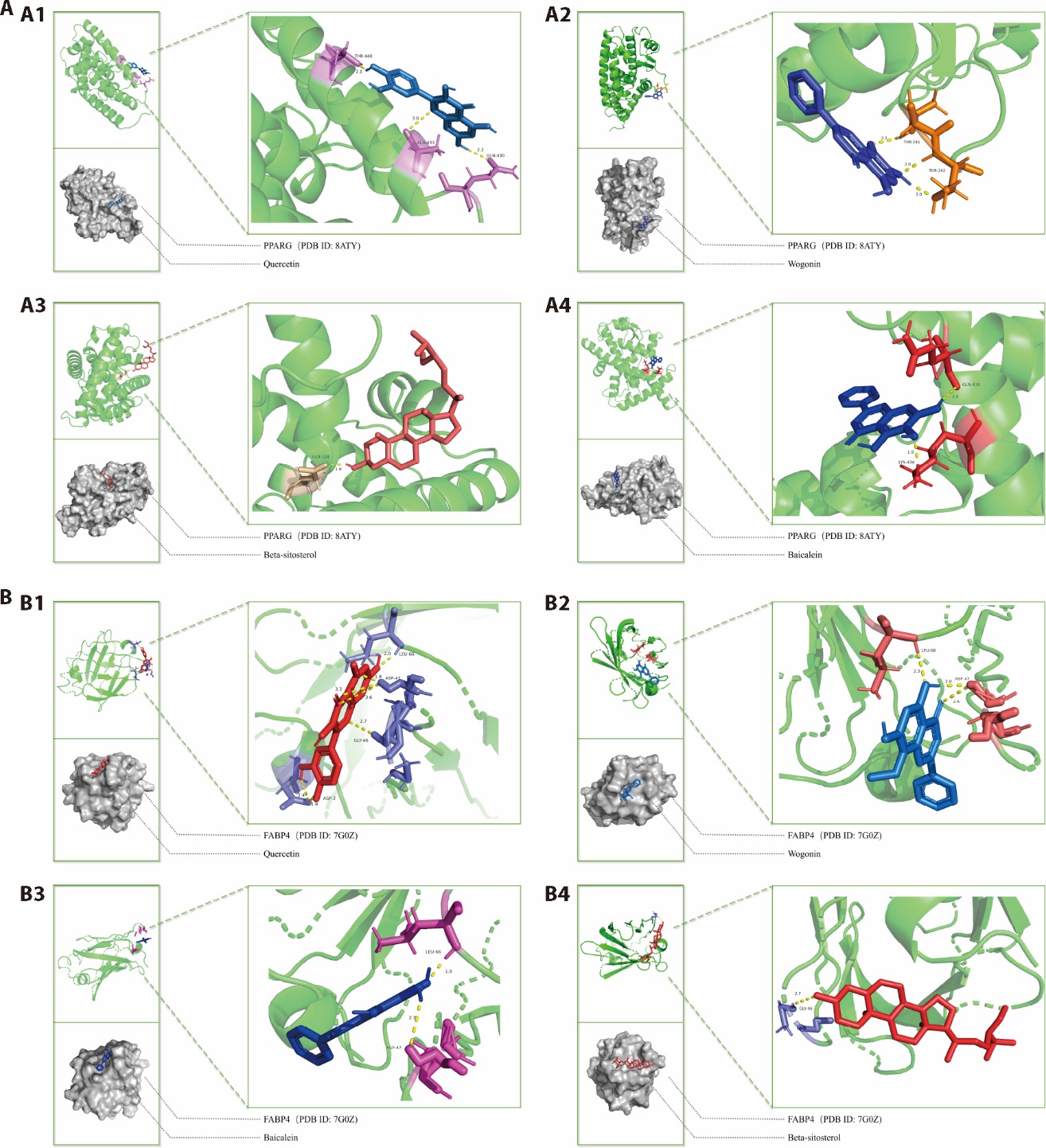
Figure 2 Molecular docking results of PPARG and FABP4 A: the surface and cartoon perspectives of the docking of PPARG; A1: quercetin; A2: wogonin; A3: β-sitosterol; A4: baicalein; B: the surface and cartoon perspectives of the docking of FABP4; B1: quercetin; B2: wogonin; B3: baicalein; B4: β-sitosterol. FABP4: fatty acid-binding protein 4; PDB: Protein Data Bank; PPARG: peroxisome proliferator-activated receptor gamma.
Figure 2 Molecular docking results of PPARG and FABP4 A: the surface and cartoon perspectives of the docking of PPARG; A1: quercetin; A2: wogonin; A3: β-sitosterol; A4: baicalein; B: the surface and cartoon perspectives of the docking of FABP4; B1: quercetin; B2: wogonin; B3: baicalein; B4: β-sitosterol. FABP4: fatty acid-binding protein 4; PDB: Protein Data Bank; PPARG: peroxisome proliferator-activated receptor gamma.
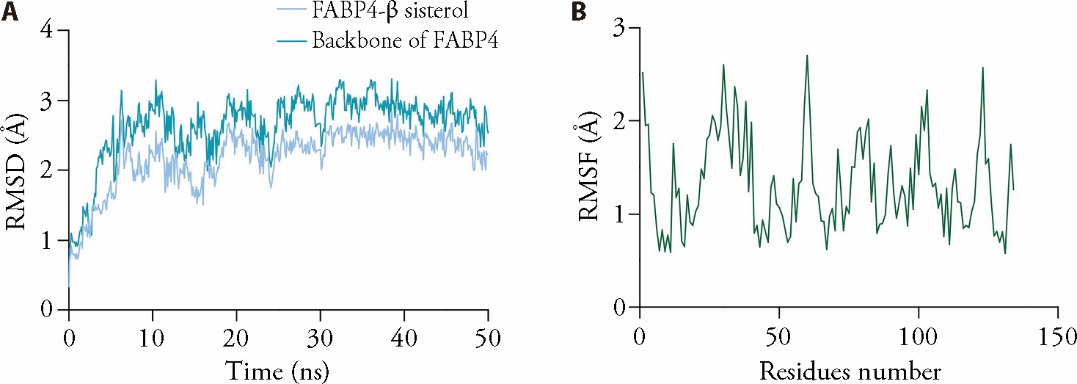
Figure 3 Molecular dynamics simulation results of FABP4 and β-sitosterol A: RMSD results during the docking of FABP4 and β-sitosterol; B: RMSF results during the docking of FABP4 and β-sitosterol. RMSD: root mean square deviation; RMSF: root mean square fluctuation; FABP4: fatty acid-binding protein 4; ns: nanosecond.
Figure 3 Molecular dynamics simulation results of FABP4 and β-sitosterol A: RMSD results during the docking of FABP4 and β-sitosterol; B: RMSF results during the docking of FABP4 and β-sitosterol. RMSD: root mean square deviation; RMSF: root mean square fluctuation; FABP4: fatty acid-binding protein 4; ns: nanosecond.
Table 2 OGTT blood glucose of rats in each group (mmol/L)
| Group | n | 0 min | 30 min | 60 min | 90 min | 120 min | 180 min |
|---|---|---|---|---|---|---|---|
| NG | 6 | 4.5±0.6 | 5.9±0.6 | 6.8±0.6 | 5.9±0.7 | 5.1±0.7 | 4.5±0.6 |
| MG | 6 | 27.6±2.1a | 32.2±1.0a | 32.0±1.8a | 32.0±1.5a | 32.8±1.3a | 31.1±1.9a |
| QG | 6 | 13.2±1.4b | 15.2±2.1b | 20.5±2.4b | 19.2±2.0b | 16.8±2.6b | 13.9±1.7b |
| PG | 6 | 17.6±2.2b | 14.0±2.0b | 18.7±3.5b | 17.3±2.4b | 16.2±4.2b | 12.3±2.1b |
Table 2 OGTT blood glucose of rats in each group (mmol/L)
| Group | n | 0 min | 30 min | 60 min | 90 min | 120 min | 180 min |
|---|---|---|---|---|---|---|---|
| NG | 6 | 4.5±0.6 | 5.9±0.6 | 6.8±0.6 | 5.9±0.7 | 5.1±0.7 | 4.5±0.6 |
| MG | 6 | 27.6±2.1a | 32.2±1.0a | 32.0±1.8a | 32.0±1.5a | 32.8±1.3a | 31.1±1.9a |
| QG | 6 | 13.2±1.4b | 15.2±2.1b | 20.5±2.4b | 19.2±2.0b | 16.8±2.6b | 13.9±1.7b |
| PG | 6 | 17.6±2.2b | 14.0±2.0b | 18.7±3.5b | 17.3±2.4b | 16.2±4.2b | 12.3±2.1b |
Table 3 Serum insulin and lipid measurements of the experimental rats
| Group | n | INS (ng/mL) | TC (mmol/L) | TG (mmol/L) | LDL-C (mmol/L) | HDL-C (mmol/L) |
|---|---|---|---|---|---|---|
| NG | 6 | 15.70±0.99 | 0.41±0.09 | 0.21±0.03 | 0.28±0.06 | 0.81±0.07 |
| MG | 6 | 86.34±5.67a | 1.83±0.08a | 1.92±0.13a | 1.66±0.17a | 0.35±0.10a |
| QG | 6 | 54.02±4.98b | 1.01±0.17b | 0.66±0.09b | 0.46±0.09b | 0.59±0.08b |
| PG | 6 | 25.25±1.98b | 1.14±0.11b | 0.92±0.06b | 0.65±0.09b | 0.49±0.07c |
Table 3 Serum insulin and lipid measurements of the experimental rats
| Group | n | INS (ng/mL) | TC (mmol/L) | TG (mmol/L) | LDL-C (mmol/L) | HDL-C (mmol/L) |
|---|---|---|---|---|---|---|
| NG | 6 | 15.70±0.99 | 0.41±0.09 | 0.21±0.03 | 0.28±0.06 | 0.81±0.07 |
| MG | 6 | 86.34±5.67a | 1.83±0.08a | 1.92±0.13a | 1.66±0.17a | 0.35±0.10a |
| QG | 6 | 54.02±4.98b | 1.01±0.17b | 0.66±0.09b | 0.46±0.09b | 0.59±0.08b |
| PG | 6 | 25.25±1.98b | 1.14±0.11b | 0.92±0.06b | 0.65±0.09b | 0.49±0.07c |

Figure 4 Oil Red O staining results of perirenal adipose tissue in rats A1: results of perirenal fat oil red o staining in NG rats; A2: results of perirenal fat oil red o staining in MG rats; A3: results of perirenal fat oil red o staining in QG rats; A4: results of perirenal fat oil red o staining in PG rats; B: quantitative analysis of lipid accumulation. NG and MG received normal saline for eight weeks according to body weight. QG received QLJXD for eight weeks according to body weight. PG received metformin for eight weeks according to body weight. NG: normal control group; MG: model group; QG: QLJXD group; PG: positive control group. One-way analysis of variance was used for data statistics in this figure. The data are shown as the mean ± standard deviation (n = 6). aP < 0.01, compared to NG; bP < 0.01, compared to MG.
Figure 4 Oil Red O staining results of perirenal adipose tissue in rats A1: results of perirenal fat oil red o staining in NG rats; A2: results of perirenal fat oil red o staining in MG rats; A3: results of perirenal fat oil red o staining in QG rats; A4: results of perirenal fat oil red o staining in PG rats; B: quantitative analysis of lipid accumulation. NG and MG received normal saline for eight weeks according to body weight. QG received QLJXD for eight weeks according to body weight. PG received metformin for eight weeks according to body weight. NG: normal control group; MG: model group; QG: QLJXD group; PG: positive control group. One-way analysis of variance was used for data statistics in this figure. The data are shown as the mean ± standard deviation (n = 6). aP < 0.01, compared to NG; bP < 0.01, compared to MG.
Table 4 mRNA expression of FABP4 and PPARG in perirenal adipose tissue of rats in each group
| Item | NG (n = 6) | MG (n = 6) | QG (n = 6) | PG (n = 6) |
|---|---|---|---|---|
| FABP4 mRNA | 1.00±0.07 | 8.79±0.32a | 1.75±0.14b | 4.46±0.41b |
| PPARG mRNA | 1.00±0.10 | 0.12±0.01a | 0.44±0.03b | 0.21±0.03b |
Table 4 mRNA expression of FABP4 and PPARG in perirenal adipose tissue of rats in each group
| Item | NG (n = 6) | MG (n = 6) | QG (n = 6) | PG (n = 6) |
|---|---|---|---|---|
| FABP4 mRNA | 1.00±0.07 | 8.79±0.32a | 1.75±0.14b | 4.46±0.41b |
| PPARG mRNA | 1.00±0.10 | 0.12±0.01a | 0.44±0.03b | 0.21±0.03b |
Table 5 Primer sequences
| Gene | Primer | Sequence (5′-3′) |
|---|---|---|
| Rat GAPDH | Forward | ACAGCAACAGGGTGGTGGAC |
| Reverse | TTTGAGGGTGCAGCGAACTT | |
| Rat FABP4 | Forward | TGGCTTTGTCTGTTTCTCCTCTCC |
| Reverse | TTCCGCTCCTCCTTCCTCTGG | |
| Rat PPARG | Forward | CCAAGAATACCAAAGTGCGATC |
| Reverse | TCACAAGCATGAACTCCATAGT |
Table 5 Primer sequences
| Gene | Primer | Sequence (5′-3′) |
|---|---|---|
| Rat GAPDH | Forward | ACAGCAACAGGGTGGTGGAC |
| Reverse | TTTGAGGGTGCAGCGAACTT | |
| Rat FABP4 | Forward | TGGCTTTGTCTGTTTCTCCTCTCC |
| Reverse | TTCCGCTCCTCCTTCCTCTGG | |
| Rat PPARG | Forward | CCAAGAATACCAAAGTGCGATC |
| Reverse | TCACAAGCATGAACTCCATAGT |
| 1. | National Health Commission, China, Department of Disease Prevention and Control. Report on the nutritional and chronic disease status of Chinese residents (2020). J Nutr 2020; 42: 521. |
| 2. | Chinese Diabetes Society. Guideline for the prevention and treatment of type 2 diabetes mellitus in China (2020 edition). Zhong Guo Shi Yong Nei Ke Za Zhi 2021; 41: 482-548. |
| 3. |
Lu SX, Wu TW, Chou CL, et al. Combined effects of hypertension, hyperlipidemia, and diabetes mellitus on the presence and severity of carotid atherosclerosis in community-dwelling elders: a community-based study. J Chin Med Assoc 2023; 86: 220-6.
DOI URL |
| 4. | Lipid metabolism blood group of the Endocrine Society of the Chinese Medical Association. Expert consensus on prevention and treatment for type 2 diabetes mellitus complicated with dyslipidemia in China. Zhong Hua Nei Fen Mi Dai Xie Za Zhi 2017; 33: 925-36. |
| 5. |
Heghes SC, Filip L, Vostinaru O, et al. Essential oil-bearing plants from balkan peninsula: promising sources for new drug candidates for the prevention and treatment of diabetes mellitus and dyslipidemia. Front Pharmacol 2020; 11: 989.
DOI PMID |
| 6. | Li PH, Li K, Zhan ZQ. research progress of Banxia Xiexin decoction in treating diabetes mellitus and its complications. Guang Ming Zhong Yi 2023; 38: 4507-10. |
| 7. | Zhang ZJ (Han dynasty). Shang Han Lun. Edited by Qian Chaochen and Hao Wanshan. Beijing: People’s Medical Publishing House, 2005: 87. |
| 8. | Che MH, Dai XY, Chen J, et al. effect evaluation of Banxia Xiexin decoction combined with conventional Western Medicine in treatment of spleen deficiency Damp-Heat syndrome of type 2 diabetes mellitus with. Liaoning Zhong Yi Za Zhi 2024; 51: 84-7. |
| 9. | Tan YM, Hu J, Zhao H, et al. Type 2 diabetes mellitus of cold and heat in complexity syndrome treated with Banxia Xiexin decoction: a randomized controlled trial. Zhong Yi Za Zhi 2022; 63: 1343-9. |
| 10. |
Baradaran Rahimi V, Askari VR, Hosseinzadeh H. promising influences of scutellaria baicalensis and its two active constituents, baicalin, and baicalein, against metabolic syndrome: a review. Phytotherapy research 2021; 35: 3558-74.
DOI PMID |
| 11. |
Zhao T, Tang H, Xie L, et al. Scutellaria baicalensis Georgi. (Lamiaceae): a review of its traditional uses, botany, phytochemistry, pharmacology and toxicology. J Pharm Pharmacol 2019; 71: 1353-69.
DOI PMID |
| 12. |
Chen Q, Ren R, Zhang Q, et al. Coptis chinensis Franch polysaccharides provide a dynamically regulation on intestinal microenvironment, based on the intestinal flora and mucosal immunity. J Ethnopharmacol 2021; 267: 113542.
DOI URL |
| 13. |
Hsieh PC, Chen WY, Wang TM, et al. Coptis chinensis, and extracts of guava and mulberry leaves present good inhibiting potential on obesity and associated metabolic disorders in high-fat diet obesity mice model. J Tradit Complement Med 2023; 13: 270-6.
DOI URL |
| 14. |
Salih AK, Alwan AH, Khadim M, et al. Eitro and in vivo evidence that quercetin prtake on human serum lipid profile: systematic review and Meta-analysis. Phytother Res 2023; 37: 2472-83.
DOI URL |
| 15. |
Chen C, Sun YT, Wang ZJ, et al. Pinellia genus: a systematic review of active ingredients, pharmacological effects and action mechanism, toxicological evaluation, and multi-omics application. Gene 2023; 870: 147426.
DOI URL |
| 16. |
Li X, Zhang X, Yang W, et al. Preparation and characterization of native and autoclaving-cooling treated Pinellia ternate starch and its impact on gut microbiota. Int J Biol Macromol 2021; 182: 1351-61.
DOI PMID |
| 17. |
Lai X, Wang X, Hu Y, et al. Network pharmacology and traditional medicine. Front Pharmacol 2020; 11: 1194.
DOI URL |
| 18. |
Li S, Zhang B. Traditional Chinese Medicine network pharmacology: theory, methodology and application. Chin J Nat Med 2013; 11: 110-20.
DOI URL |
| 19. | Ru J, Li P, Wang J, et al. TCMSP: a database of systems pharmacology for drug discovery from herbal medicines. J Cheminform 2014; 6: 13. |
| 20. |
UniProt: the Universal Protein Knowledgebase in 2023. Nucleic Acids Res 2023; 51: D523-31.
DOI URL |
| 21. |
Xu HY, Zhang YQ, Liu ZM, et al. ETCM: an encyclopaedia of Traditional Chinese Medicine. Nucleic Acids Res 2019; 47: D976-82.
DOI URL |
| 22. | Stelzer G, Rosen N, Plaschkes I, et al. The GeneCards suite: from gene data mining to disease genome sequence analyses. Curr Protoc Bioinformatics 2016; 54: 1.30. 31-33. |
| 23. | Amberger JS, Hamosh A. Searching Online Mendelian Inheritance in Man (OMIM): a knowledgebase of human genes and genetic phenotypes. Curr Protoc Bioinformatics 58: 1.2. 1-12. |
| 24. | Zhou Y, Zhang Y, Zhao D, et al. TTD: therapeutic target database describing target druggability information. Nucleic Acids Res 2024; 52: D1465-77. |
| 25. |
Szklarczyk D, Gable AL, Lyon D, et al. STRING v11: protein-protein association networks with increased coverage, supporting functional discovery in genome-wide experimental datasets. Nucleic Acids Res 2019; 47: D607-13.
DOI |
| 26. |
Zhou Y, Zhou B, Pache L, et al. Metascape provides a biologist-oriented resource for the analysis of systems-level datasets. Nat Commun 2019; 10: 1523.
DOI PMID |
| 27. |
Tang D, Chen M, Huang X, et al. SRplot: a free online platform for data visualization and graphing. PLoS One 2023; 18: e0294236.
DOI URL |
| 28. | Liu XJ, Deng PY, Fan CL, et al. Interaction between cycloxaprid and human serum albumin. Nong Yao Xue Xue Bao 2024; 26: 160-7. |
| 29. | Yang JL, Li G, Liu YP, et al. Establishing a rat model similar to the adult patient of the general type 2 diabetes by long-term fat-enriched fed and lower dose of streptozocin-treated rats. Zhong Guo Shi Yan Xue Bao 2003; 11: 12-5. |
| 30. | Rao ZL, Zhao SH, Liu SL, et al. Rat Model Establishment of Type2 Diabetes with Hyperlipidemia and the Intervention of Metformin. Shi Yan Dong Wu Ke Xue 2009; 26: 15-8. |
| 31. | Ni J, Xu XK, Song P. Effect of modified Banxia Xiexin decoction on type Ⅱ diabetes mellitus (spleen deficiency and stomach stagnation) and its effect on TCM symptom score and blood glucose level. Tang Niao Bing Xin Shi Ji 2022; 25: 20-3. |
| 32. | Yang X, Yue RS, Wang QY. Exploring the mechanism of hemixia laxative heart soup to improve insulin resistance in T2DM model rats based on AMPK/SIRT1/PGC-1α signaling pathway. Shi Zhen Guo Yi Guo Yao 2023; 34: 1560-63. |
| 33. |
Zhang B, Lu C, Bai M, et al. Tetramethylpyrazine identified by a network pharmacology approach ameliorates methotrexate-induced oxidative organ injury. J Ethnopharmacol 2015; 175: 638-47.
DOI PMID |
| 34. |
Gu M, Lin Y, Gai X, et al. High serum FABP4 levels are negatively associated with the reversion from prediabetes to normal glucose tolerance: a 2-year retrospective cohort community study. Diabetes Metab Syndr Obes 2022; 15: 2217-25.
DOI URL |
| 35. |
Lü J, Hu Y, Li L, et al. Targeting FABP4 in elderly mice rejuvenates liver metabolism and ameliorates aging-associated metabolic disorders. Metabolism 2023; 142: 155528.
DOI URL |
| 36. |
Osorio-Conles Ó, Ibarzabal A, Balibrea JM, et al. FABP4 expression in subcutaneous adipose tissue is independently associated with circulating triglycerides in obesity. J Clin Med 2023; 12: 1013.
DOI URL |
| 37. |
Prentice KJ, Saksi J, Robertson LT, et al. A hormone complex of FABP4 and nucleoside kinases regulates islet function. Nature 2021; 600: 720-6.
DOI |
| 38. |
Hsin KY, Ghosh S, Kitano H. Combining machine learning systems and multiple docking simulation packages to improve docking prediction reliability for network pharmacology. PLoS One 2013; 8: e83922.
DOI URL |
| 39. | Song MM, Men B, Chen M, et al. Exploration of the mechanism of Danggui Buxue decoction for the treatment of gastric ulcer based on network pharmacology, molecular docking, and experiment. J Tradit Chin Med 2025; 45: 806-16. |
| 40. |
Su J, Sun T, Wang Y, et al. conformational dynamics of glucagon-like peptide-2 with different electric field. Polymers (Basel) 2022; 14: 2722.
DOI URL |
| 41. | Bi DZ. Clinical evaluation of Traditional Chinese Medicine injection for promoting blood circulation and removing blood stasis in the treatment of chronic coronary syndrome based on network Meta-analysis and network pharmacolog. Jinan: Shandong University of Traditional Chinese Medicine, 2022: 36-7. |
| 42. | Wang ZY, Wang X, Zhang DY, et al. Traditional Chinese Medicine network pharmacology: development in new era under guidance of network pharmacology evaluation method guidance. Zhong Guo Zhong Yao Za Zhi 2022; 47: 7-17. |
| 43. |
Zhang P, Zhang D, Zhou W, et al. Network pharmacology: towards the artificial intelligence-based precision Traditional Chinese Medicine. Brief Bioinform 2023; 25: bbad518.
DOI URL |
| 44. |
Liu Y, Wang S, Jin G, et al. Network pharmacology-based study on the mechanism of Shenkang injection in diabetic kidney disease through Keap1/Nrf2/Ho-1 signaling pathway. Phytomedicine 2023; 118: 154915.
DOI URL |
| 45. |
Roshanravan N, Askari SF, Fazelian S, et al. The roles of quercetin in diabetes mellitus and related metabolic disorders; special focus on the modulation of gut microbiota: a comprehensive review. Crit Rev Food Sci Nutr 2023; 63: 2990-3003.
DOI URL |
| 46. |
Shi GJ, Li Y, Cao QH, et al. In vitro and in vivo evidence that quercetin protects against diabetes and its complications: a systematic review of the literature. Biomed Pharmacother 2019; 109: 1085-99.
DOI URL |
| 47. |
Smelcerovic A, Lazarevic J, Tomovic K, et al. An overview, advantages and therapeutic potential of nonpeptide positive allosteric modulators of glucagon-like peptide-1 receptor. Chem Med Chem 2019; 14: 514-21.
DOI URL |
| 48. |
Babu S, Jayaraman S. An update on β-sitosterol: a potential herbal nutraceutical for diabetic management. Biomed Pharmacother 2020; 131: 110702.
DOI PMID |
| 49. |
Ponnulakshmi R, Shyamaladevi B, Vijayalakshmi P, et al. In silico and in vivo analysis to identify the antidiabetic activity of beta sitosterol in adipose tissue of high fat diet and sucrose induced type-2 diabetic experimental rats. Toxicol Mech Methods 2019; 29: 276-90.
DOI URL |
| 50. |
Chai JW, Lim SL, Kanthimathi MS, et al. Gene regulation in β-sitosterol-mediated stimulation of adipogenesis, glucose uptake, and lipid mobilization in rat primary adipocytes. Genes Nutr 2011; 6: 181-8.
DOI URL |
| 51. |
Khan S, Kamal MA. Wogonin alleviates hyperglycemia through increased glucose entry into cells via AKT/GLUT4 pathway. Curr Pharm Des 2019; 25: 2602-6.
DOI URL |
| 52. |
Liu XQ, Jiang L, Li YY, et al. Wogonin protects glomerular podocytes by targeting Bcl-2-mediated autophagy and apoptosis in diabetic kidney disease. Acta Pharmacol Sin 2022; 43: 96-110.
DOI |
| 53. |
Froldi G, Djeujo FM, Bulf N, et al. Comparative evaluation of the antiglycation and anti-α-glucosidase activities of baicalein, baicalin (baicalein 7-O-Glucuronide) and the antidiabetic drug metformin. Pharmaceutics 2022; 14: 2141.
DOI URL |
| 54. |
Xing Y, Ren X, Li X, et al. Baicalein enhances the effect of acarbose on the improvement of nonalcoholic fatty liver disease associated with prediabetes via the inhibition of de novo lipogenesis. J Agric Food Chem 2021; 69: 9822-36.
DOI URL |
| 55. |
Lin J, Lan Y, Xiang D, et al. IL-33 promotes pancreatic β-cell survival and insulin secretion under diabetogenic conditions through PPARG. Eur J Pharmacol 2023; 959: 176059.
DOI URL |
| 56. |
Qiu Y, Gan M, Wang X, et al. The global perspective on peroxisome proliferator-activated receptor γ (PPARG) in ectopic fat deposition: a review. Int J Biol Macromol 2023; 253: 127042.
DOI URL |
| 57. |
Su M, Sang S, Liang T, Li H. PPARG: a novel target for yellow tea in kidney stone prevention. Int J Mol Sci 2023; 24: 11955.
DOI URL |
| 58. | Guo PH, Zhao WE, Zhang X, et al. effect of quercetin on K562 cell proliferation and PPARG protein expression. Zhong Yao Yao Li Yu Lin Chuang 2008; 24: 24-6. |
| 59. | Jalilian N, Pakzad R, Shahbazi M, et al. Circulating FABP-4 levels in patients with atherosclerosis or coronary artery disease: a comprehensive systematic review and Meta-analysis. Cardiovasc Ther 2023; 2023: 1092263. |
| 60. |
Trojnar M, Patro-Małysza J, Kimber-Trojnar Ż, et al. Associations between fatty acid-binding protein 4⁻A proinflammatory adipokine and insulin resistance, gestational and type 2 diabetes mellitus. Cells 2019; 8: 227.
DOI URL |
| 61. |
Fang CL, Wang Y, Tsai KH, Chang HI. Liposome-encapsulated baicalein suppressed lipogenesis and extracellular matrix formation in Hs68 human dermal fibroblasts. Front Pharmacol 2018; 9: 155.
DOI URL |
| 62. |
Floresta G, Patamia V, Zagni C, Rescifina A. Adipocyte fatty acid binding protein 4 (FABP4) inhibitors. An update from 2017 to early 2022. Eur J Med Chem 2022; 240: 114604.
DOI URL |
| 63. |
Yu J, Tang L, Yang Y, Ji R. Synthesis and evaluation of a series of benzopyran derivatives as PPAR alpha/gamma agonists. Eur J Med Chem 2008; 43: 2428-35.
DOI PMID |
| 64. |
Makowski L, Brittingham KC, Reynolds JM, et al. The fatty acid-binding protein, aP2, coordinates macrophage cholesterol trafficking and inflammatory activity. Macrophage expression of aP2 impacts peroxisome proliferator-activated receptor gamma and Ikappa B kinase activities. J Biol Chem 2005; 280: 12888-95.
DOI PMID |
| 65. |
Mao H, Han B, Li H, et al. FABP4 knockdown suppresses inflammation, apoptosis and extracellular matrix degradation in IL-1β-induced chondrocytes by activating PPARG to regulate the NF-κB signaling pathway. Mol Med Rep 2021; 24: 855.
DOI URL |
| Viewed | ||||||
|
Full text |
|
|||||
|
Abstract |
|
|||||