
Journal of Traditional Chinese Medicine ›› 2026, Vol. 46 ›› Issue (3): 695-705.DOI: 10.19852/j.cnki.jtcm.20251204.001
• Original Articles • Previous Articles Next Articles
Integrated analysis of plasma metabolomics and proteomics reveals the biological characteristics of damp-heat and stasis-toxin syndrome in colorectal cancer
QIAN Jingyang1,2, ZHANG Qinchang1, ZHANG Dong1, SHI Heweng1, GENG Xuechen1, SUN Xiaohe1, SUN Dongdong1( ), CHENG Haibo1()
- 1
Jiangsu Collaborative Innovation Center of Traditional Chinese Medicine in Prevention and Treatment of Tumor ,the First Clinical Medical College, Nanjing University of Chinese Medicine Nanjing 210023, China
2Department of Oncology ,Dafeng People’s Hospital Yancheng 224100, China
-
Received:2025-02-11Accepted:2025-08-25Online:2026-06-15Published:2025-12-04 -
Contact:Prof. CHENG Haibo, Jiangsu Collaborative Innovation Center of Traditional Chinese Medicine in Prevention and Treatment of Tumor, the First Clinical Medical College, Nanjing University of Chinese Medicine, Nanjing 210023, China. hbcheng@njucm.edu.cn;
Prof. SUN Dongdong, Jiangsu Collaborative Innovation Center of Traditional Chinese Medicine in Prevention and Treatment of Tumor, the First Clinical Medical College, Nanjing University of Chinese Medicine, Nanjing 210023, China. sundd@njucm.edu.cn, Telephone: +86-18861017016 -
Supported by:key project of the National Natural Science Foundation of China: Biological Basis of Core Pathogenesis Syndrome in Colorectal Cancer Liver Metastasis and the Mechanism of Action of Xianlian Jiedu Decoction in Prevention and Treatment(82430122);National Key R&D Program of China: Research on Cancer Toxicity Pathogenesis Theory and Its Guidance for Prevention and Treatment Strategies of Malignant Tumors(2022YFC3500200);National Key R&D Program of China: Research on Cancer Toxicity Pathogenesis Theory and Its Guidance for Prevention and Treatment Strategies of Malignant Tumors(2022YFC3500202);Innovation Team and Talents Cultivation Program of National Administration of Traditional Chinese Medicine: Inheritance and Innovation Team for Cancer Toxin Pathogenesis Theory in Prevention and Treatment of Gastrointestinal Malignancies(ZYYCXTD-C-202208)

Cite this article
QIAN Jingyang, ZHANG Qinchang, ZHANG Dong, SHI Heweng, GENG Xuechen, SUN Xiaohe, SUN Dongdong, CHENG Haibo. Integrated analysis of plasma metabolomics and proteomics reveals the biological characteristics of damp-heat and stasis-toxin syndrome in colorectal cancer[J]. Journal of Traditional Chinese Medicine, 2026, 46(3): 695-705.
share this article
Table 1 Demographic and clinical characteristics of participants
| Characteristic | SRYD (n = 40) | non-SRYD (n = 40) | Normal (n = 40) | P value | |
|---|---|---|---|---|---|
| Age | 66.000 (57.0, 70.8) | 63.500 (58.0, 70.0) | 30.000 (28.0, 32.8) | 0.722 | |
| BMI | 23.212 (20.9, 25.0) | 23.625 (21.5, 26.1) | 22.059 (19.1, 22.8) | 0.465 | |
| Hypertension | 15 (37.50) | 11 (27.50) | NA | 0.340 | |
| Hyperlipidemia | 2 (5.00) | 3 (7.50) | NA | 0.644 | |
| Diabetes mellitus | 6 (15.00) | 5 (12.50) | NA | 0.745 | |
| Sex | Female | 10 (25.00) | 15 (37.50) | 15 (37.50) | 0.228 |
| Male | 30 (75.00) | 25 (62.50) | 25 (62.50) | ||
| Location | Colon | 25 (62.50) | 22 (55.00) | NA | 0.496 |
| Rectum | 15 (37.50) | 18 (45.00) | NA | ||
| TNM | Ⅰ | 4 (10.00) | 5 (12.50) | NA | 0.224 |
| Ⅱ | 16 (40.00) | 19 (47.50) | NA | ||
| Ⅲ | 16 (40.00) | 16 (40.00) | NA | ||
| Ⅳ | 4 (10.00) | 0 (0.00) | NA | ||
Table 1 Demographic and clinical characteristics of participants
| Characteristic | SRYD (n = 40) | non-SRYD (n = 40) | Normal (n = 40) | P value | |
|---|---|---|---|---|---|
| Age | 66.000 (57.0, 70.8) | 63.500 (58.0, 70.0) | 30.000 (28.0, 32.8) | 0.722 | |
| BMI | 23.212 (20.9, 25.0) | 23.625 (21.5, 26.1) | 22.059 (19.1, 22.8) | 0.465 | |
| Hypertension | 15 (37.50) | 11 (27.50) | NA | 0.340 | |
| Hyperlipidemia | 2 (5.00) | 3 (7.50) | NA | 0.644 | |
| Diabetes mellitus | 6 (15.00) | 5 (12.50) | NA | 0.745 | |
| Sex | Female | 10 (25.00) | 15 (37.50) | 15 (37.50) | 0.228 |
| Male | 30 (75.00) | 25 (62.50) | 25 (62.50) | ||
| Location | Colon | 25 (62.50) | 22 (55.00) | NA | 0.496 |
| Rectum | 15 (37.50) | 18 (45.00) | NA | ||
| TNM | Ⅰ | 4 (10.00) | 5 (12.50) | NA | 0.224 |
| Ⅱ | 16 (40.00) | 19 (47.50) | NA | ||
| Ⅲ | 16 (40.00) | 16 (40.00) | NA | ||
| Ⅳ | 4 (10.00) | 0 (0.00) | NA | ||
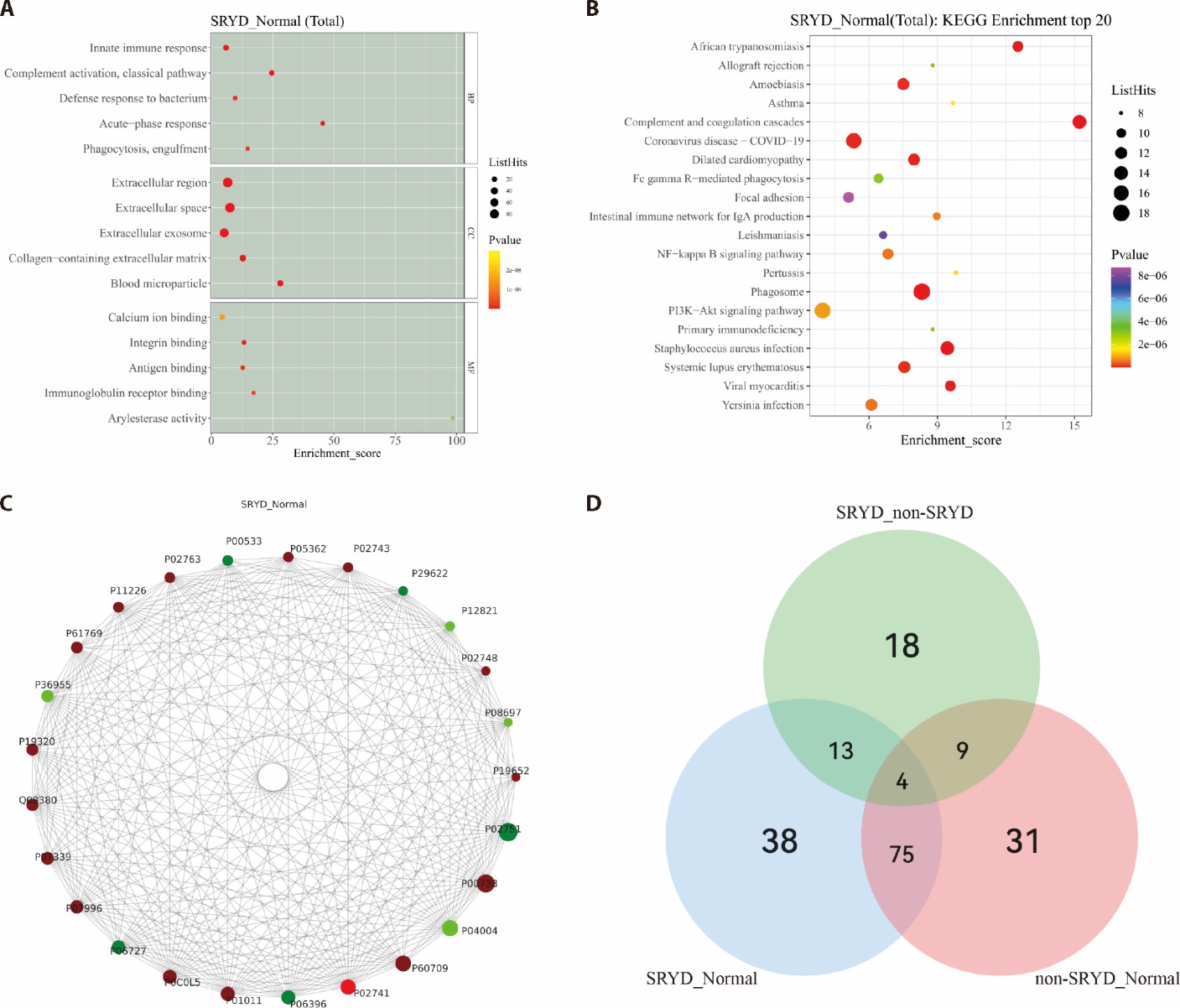
Figure 1 Analysis of differential proteins through bioinformatics A: GO enrichment analysis: the x-axis represents enrichment scores, and the y-axis displays the top five items for BP, CC, and MF; B: KEGG enrichment analysis: the x-axis indicates enrichment scores, and the y-axis lists the top 20 pathways; C: hub proteins identified within the PPI network. D: venn diagram showing DPs overlap among SRYD_Normal, non-SRYD_Normal, and SRYD_non-SRYD groups. GO: gene ontology; BP: biological process; CC: cellular component; MF: molecular function; KEGG: kyoto encyclopedia of genes and genomes; PPI: protein-protein interaction; DPs: differential proteins; SRYD: patients with damp-heat and stasis-toxin syndrome (n = 20); non-SRYD: patients without damp-heat and stasis-toxin syndrome (n = 20); Normal: volunteers without underlying diseases or SRYD-related symptoms (n = 20).
Figure 1 Analysis of differential proteins through bioinformatics A: GO enrichment analysis: the x-axis represents enrichment scores, and the y-axis displays the top five items for BP, CC, and MF; B: KEGG enrichment analysis: the x-axis indicates enrichment scores, and the y-axis lists the top 20 pathways; C: hub proteins identified within the PPI network. D: venn diagram showing DPs overlap among SRYD_Normal, non-SRYD_Normal, and SRYD_non-SRYD groups. GO: gene ontology; BP: biological process; CC: cellular component; MF: molecular function; KEGG: kyoto encyclopedia of genes and genomes; PPI: protein-protein interaction; DPs: differential proteins; SRYD: patients with damp-heat and stasis-toxin syndrome (n = 20); non-SRYD: patients without damp-heat and stasis-toxin syndrome (n = 20); Normal: volunteers without underlying diseases or SRYD-related symptoms (n = 20).
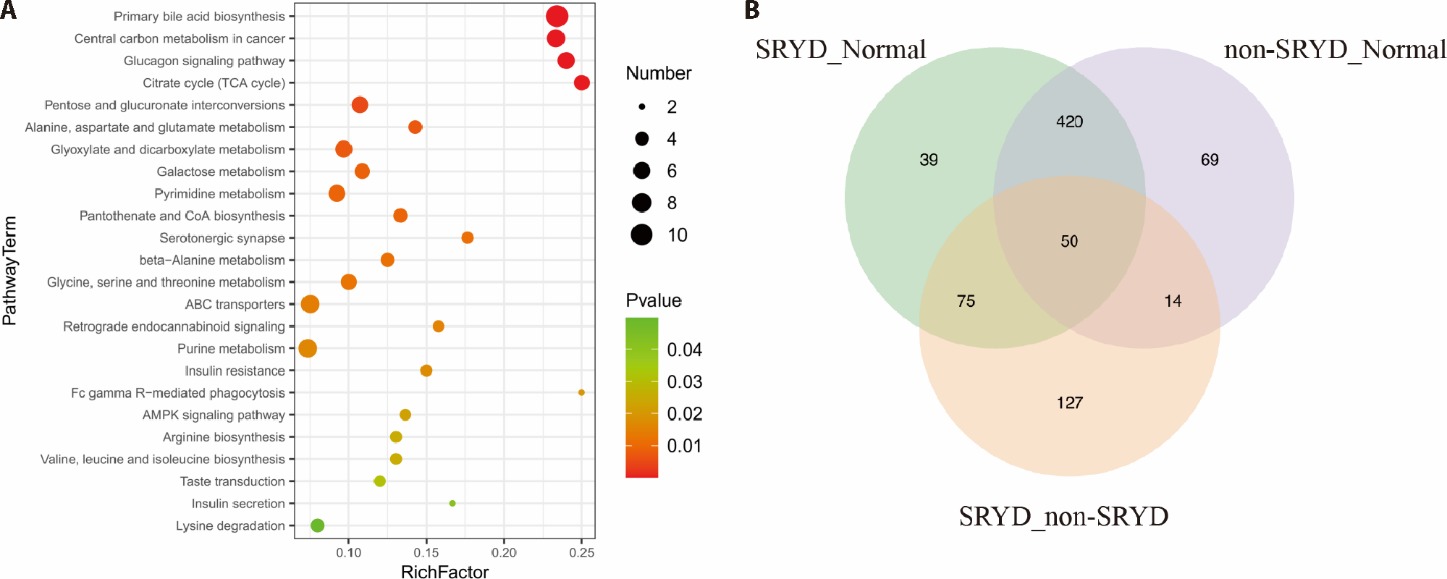
Figure 2 Bioinformatics-based analysis of differential metabolites A: KEGG pathway enrichment analysis of DMs in SRYD-Normal group; B: venn diagram of DMs overlap among the SRYD_Normal, non-SRYD_Normal, and SRYD_non-SRYD groups. KEGG: kyoto encyclopedia of genes and genomes; DMs: differential metabolites; SRYD: patients with damp-heat and stasis-toxin syndrome (n = 40); non-SRYD: patients without damp-heat and stasis-toxin syndrome (n = 40); Normal: volunteers without underlying diseases or SRYD-related symptoms (n = 40).
Figure 2 Bioinformatics-based analysis of differential metabolites A: KEGG pathway enrichment analysis of DMs in SRYD-Normal group; B: venn diagram of DMs overlap among the SRYD_Normal, non-SRYD_Normal, and SRYD_non-SRYD groups. KEGG: kyoto encyclopedia of genes and genomes; DMs: differential metabolites; SRYD: patients with damp-heat and stasis-toxin syndrome (n = 40); non-SRYD: patients without damp-heat and stasis-toxin syndrome (n = 40); Normal: volunteers without underlying diseases or SRYD-related symptoms (n = 40).
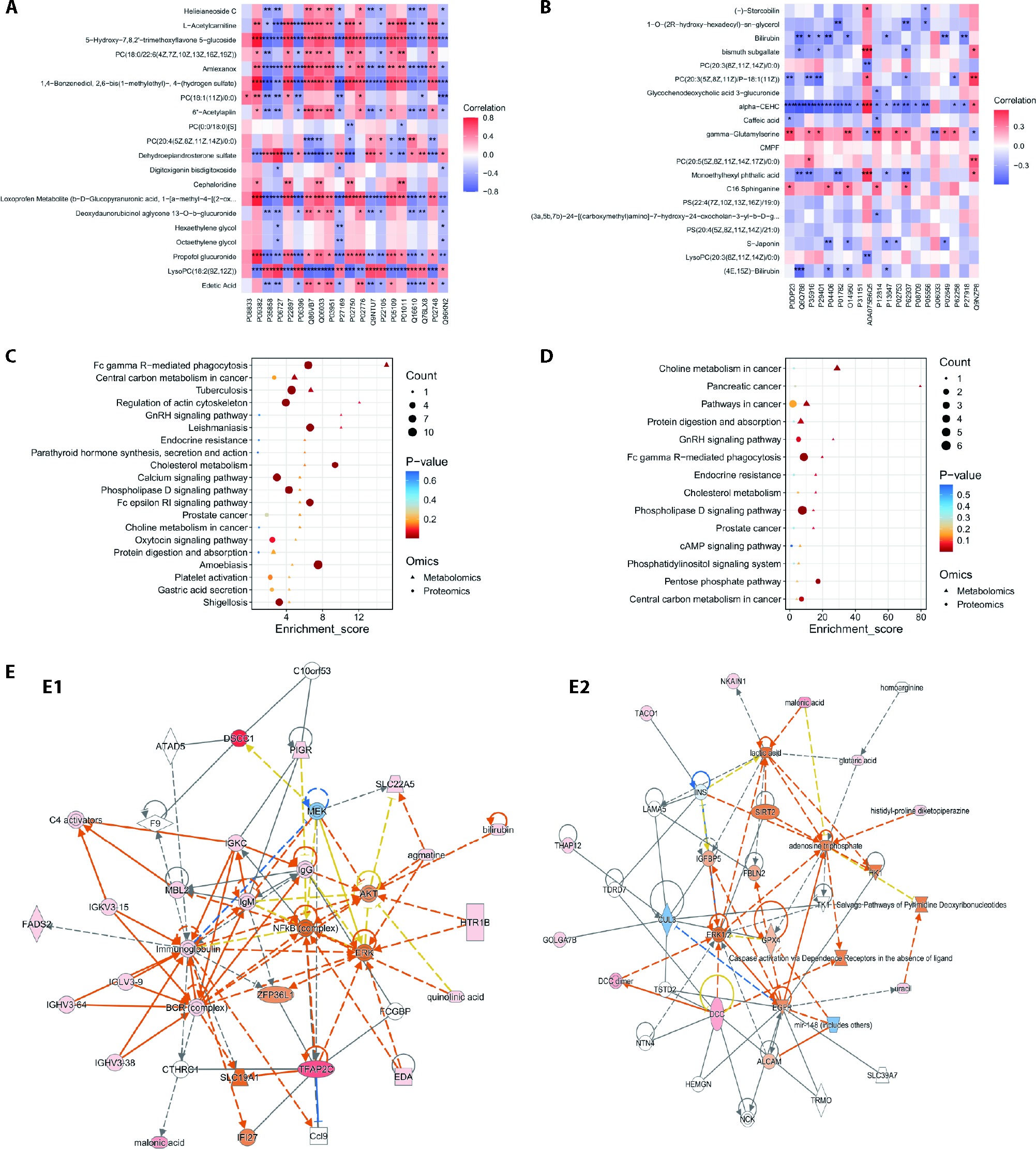
Figure 3 Combined analysis of differential proteins and metabolites A: correlation analysis between the top 20 DPs and DMs ranked by VIP in the SRYD_Normal group: each row represents a different metabolite, and each column represents the corresponding protein. Red denotes a positive correlation, blue a negative correlation, with darker colors indicating stronger correlations. Asterisks indicate significance levels; B: correlation analysis between the top 20 DPs and DMs ranked by VIP in the SRYD_non-SRYD groups (***P < 0.001, **P between 0.01 and 0.001, * P between 0.05 and 0.01); C: bubble plot of shared pathways between DPs and DMs in the SRYD_Normal groups; D: bubble plot of shared pathways between DPs and DMs in the SRYD_non-SRYD groups; E: IPA-based molecular network of CRC-SRYD-specific differential proteins and metabolites; E1: centered on key molecules; E2: primarily centered on EGFR, ERK1/2, and lactic acid. DPs: differential proteins; DMs: differential metabolites; VIP: variable importance in projection; SRYD: patients with damp-heat and stasis-toxin syndrome; non-SRYD: patients without damp-heat and stasis-toxin syndrome; Normal: volunteers without underlying diseases or SRYD-related symptoms; IPA: ingenuity pathway analysis; CRC-SRYD syndrome: colorectal cancer with damp-heat and stasis-toxin syndrome; EGFR: epidermal growth factor receptor; ERK1/2: extracellular signal-regulated kinases.
Figure 3 Combined analysis of differential proteins and metabolites A: correlation analysis between the top 20 DPs and DMs ranked by VIP in the SRYD_Normal group: each row represents a different metabolite, and each column represents the corresponding protein. Red denotes a positive correlation, blue a negative correlation, with darker colors indicating stronger correlations. Asterisks indicate significance levels; B: correlation analysis between the top 20 DPs and DMs ranked by VIP in the SRYD_non-SRYD groups (***P < 0.001, **P between 0.01 and 0.001, * P between 0.05 and 0.01); C: bubble plot of shared pathways between DPs and DMs in the SRYD_Normal groups; D: bubble plot of shared pathways between DPs and DMs in the SRYD_non-SRYD groups; E: IPA-based molecular network of CRC-SRYD-specific differential proteins and metabolites; E1: centered on key molecules; E2: primarily centered on EGFR, ERK1/2, and lactic acid. DPs: differential proteins; DMs: differential metabolites; VIP: variable importance in projection; SRYD: patients with damp-heat and stasis-toxin syndrome; non-SRYD: patients without damp-heat and stasis-toxin syndrome; Normal: volunteers without underlying diseases or SRYD-related symptoms; IPA: ingenuity pathway analysis; CRC-SRYD syndrome: colorectal cancer with damp-heat and stasis-toxin syndrome; EGFR: epidermal growth factor receptor; ERK1/2: extracellular signal-regulated kinases.
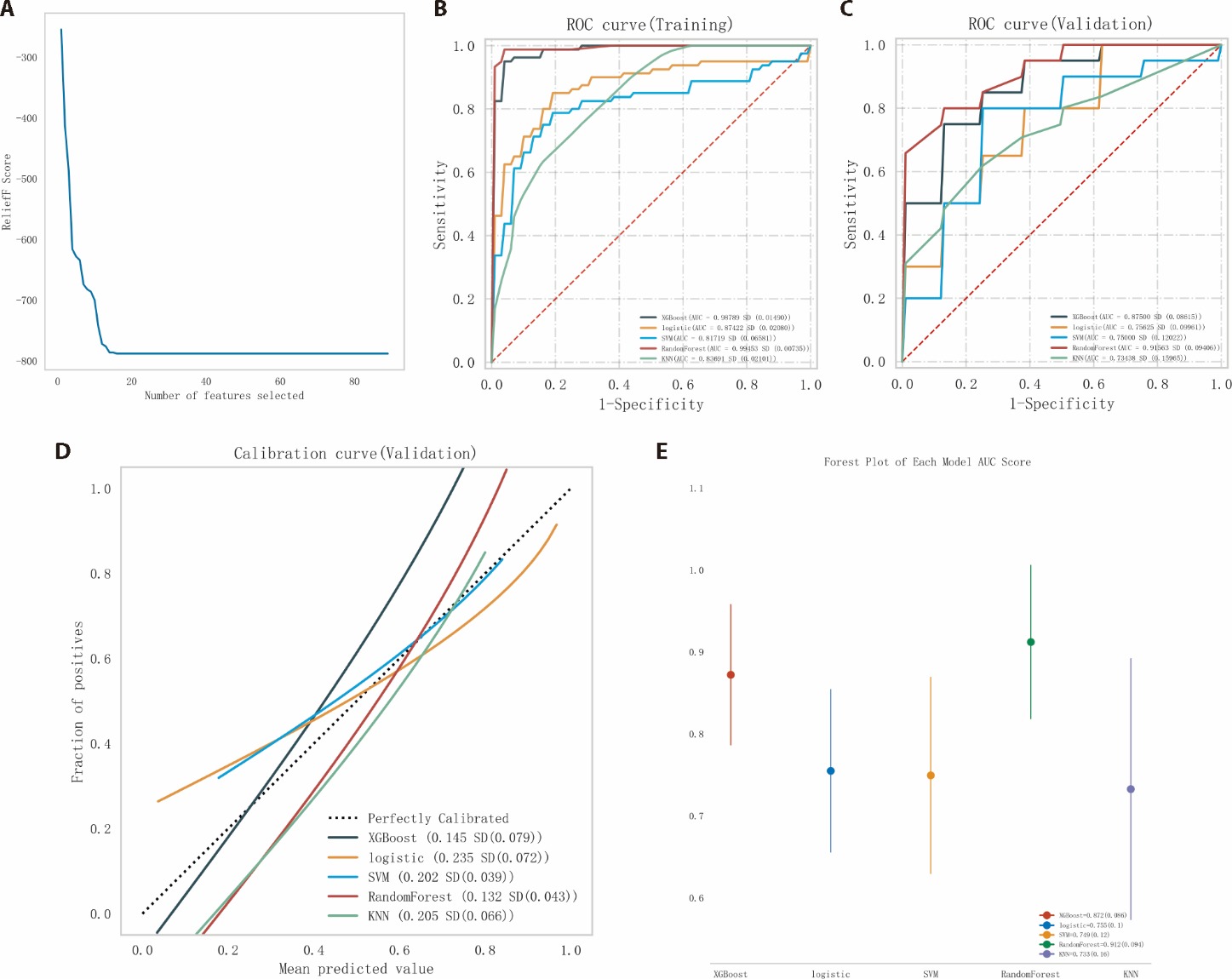
Figure 4 Diagnostic biomarkers for CRC-SRYD syndrome based on specific DPs and DMs A: ReliefF feature selection cumulative score plot: The x-axis represents the number of top-ranked features selected, while the y-axis indicates the cumulative importance scores calculated by the ReliefF algorithm. Higher cumulative scores reflect stronger discriminative power of the feature subset for CRC-SRYD syndrome classification; B: ROC curves of five models based on the training set; C: ROC curves of five models based on the validation set; D: calibration curves of five models on the validation set; E: forest plot of AUC scores for the five models: Each point represents the mean AUC value of the corresponding model, with error bars indicating the confidence intervals; CRC-SRYD syndrome: colorectal cancer with damp-heat and stasis-toxin syndrome; DPs: differential proteins; DMs: differential metabolites; ROC: receiver operating characteristic; AUC: area under curve; XGBoost: eXtreme Gradient Boosting; SVM: support vector machine; KNN: K-Nearest Neighbors.
Figure 4 Diagnostic biomarkers for CRC-SRYD syndrome based on specific DPs and DMs A: ReliefF feature selection cumulative score plot: The x-axis represents the number of top-ranked features selected, while the y-axis indicates the cumulative importance scores calculated by the ReliefF algorithm. Higher cumulative scores reflect stronger discriminative power of the feature subset for CRC-SRYD syndrome classification; B: ROC curves of five models based on the training set; C: ROC curves of five models based on the validation set; D: calibration curves of five models on the validation set; E: forest plot of AUC scores for the five models: Each point represents the mean AUC value of the corresponding model, with error bars indicating the confidence intervals; CRC-SRYD syndrome: colorectal cancer with damp-heat and stasis-toxin syndrome; DPs: differential proteins; DMs: differential metabolites; ROC: receiver operating characteristic; AUC: area under curve; XGBoost: eXtreme Gradient Boosting; SVM: support vector machine; KNN: K-Nearest Neighbors.
| 1. | Bray F, Laversanne M, Sung H, et al. Global cancer statistics 2022: GLOBOCAN estimates of incidence and mortality worldwide for 36 cancers in 185 countries. CA Cancer J Clin 2024; 74: 229-63. |
| 2. |
Sun JX, Wei Y, Wang J, Hou MX, Su LY. Treatment of colorectal cancer by Traditional Chinese Medicine: prevention and treatment mechanisms. Front Pharmacol 2024; 15: 1377592.
DOI URL |
| 3. | Wang M, Zheng Y. Clinical value of modified Shenling Baizhu powder in treating targeted therapy-induced diarrhea in non-small cell lung cancer. J Tradit Chin Med 2024; 44: 1000-5. |
| 4. | Huang XN, Li YZ, Zhu CY, et al. Weitiao No. 3 (3) enhances the efficacy of anti-programmed cell death protein-1 immunotherapy by modulating the intestinal microbiota in an orthotopic model of gastric cancer mice. J Tradit Chin Med 2024; 44: 906-15. |
| 5. | Cheng HB, Jia LQ. Oncology of integrated Traditional Chinese and Western Medicine. Zhong Xi Yi Jie He Zhong Liu Xue 2023: 124-30. |
| 6. |
Yang MD, Chen XL, Hu XQ, et al. Traditional Chinese Medicine syndromes distribution in colorectal cancer and its association with Western Medicine treatment and clinical laboratory indicators. World J Gastroenterol 2019, 5: 81-7.
DOI URL |
| 7. |
Yu YN, Liu J, Zhang L, Wang Z, Duan DD, Wang YY. Clinical Zheng-hou pharmacology: the missing link between pharmacogenomics and personalized medicine? Curr Vasc Pharmacol 2015; 13: 423-32.
DOI URL |
| 8. |
Zou M, Zhang YS, Feng JK, et al. Serum metabolomics analysis of biomarkers and metabolic pathways in patients with colorectal cancer associated with spleen-deficiency and Qi-stagnation syndrome or damp-heat syndrome: a prospective cohort study. Front Oncol 2023; 13: 1190706.
DOI URL |
| 9. |
Lu YY, Zhou CG, Zhu MD, et al. Traditional Chinese Medicine syndromes classification associates with tumor cell and microenvironment heterogeneity in colorectal cancer: a single cell RNA sequencing analysis. Chin Med 2021; 16: 133.
DOI |
| 10. |
Reel PS, Reel S, Pearson E, Trucco E, Jefferson E. Using machine learning approaches for multi-omics data analysis: a review. Biotechnol Adv 2021; 49: 107739.
DOI URL |
| 11. |
An R, Yu HT, Wang YZ, et al. Integrative analysis of plasma metabolomics and proteomics reveals the metabolic landscape of breast cancer. Cancer Metab 2022; 10: 13.
DOI PMID |
| 12. |
Xu RH, Wang JR, Zhu QQ, et al. Integrated models of blood protein and metabolite enhance the diagnostic accuracy for non-small cell lung cancer. Biomark Res 2023; 11: 71.
DOI PMID |
| 13. |
Martin-Hernandez R, Espeso-Gil S, Domingo C, et al. Machine learning combining multi-omics data and network algorithms identifies adrenocortical carcinoma prognostic biomarkers. Front Mol Biosci 2023; 10: 1258902.
DOI URL |
| 14. | National Health Commission of the People's Republic of China. Chinese protocol of diagnosis and treatment of colorectal cancer (2020 edition). Zhong Hua Wai Ke Za Zhi 2020; 58: 561-85. |
| 15. | Lin HS. Guidelines of diagnosis and therapy in oncology with Traditional Chinese Medicine. Beijing: People's Medical Publishing House, 2014: 339-52. |
| 16. |
Zeki ÖC, Eylem CC, Reçber T, Kır S, Nemutlu E. Integration of GC-MS and LC-MS for untargeted metabolomics profiling. J Pharm Biomed Anal 2020; 190: 113509.
DOI URL |
| 17. |
Ocvirk S, O'Keefe SJD. Dietary fat, bile acid metabolism and colorectal cancer. Semin Cancer Biol 2021; 73: 347-55.
DOI URL |
| 18. |
Cai J, Sun LL, Gonzalez FJ. Gut microbiota-derived bile acids in intestinal immunity, inflammation, and tumorigenesis. Cell Host Microbe 2022; 30: 289-300.
DOI PMID |
| 19. |
Kühn T, Stepien M, López-Nogueroles M, et al. Prediagnostic plasma bile acid levels and colon cancer risk: a prospective study. J Natl Cancer Inst 2020; 112: 516-24.
DOI PMID |
| 20. |
Duan DF, Chen A, Pen SJ, et al. Explanation of colon cancer pathophysiology through analyzing the disrupted homeostasis of bile acids. Afr Health Sci 2014; 14: 925-8.
DOI PMID |
| 21. | Ding X, Liu YZ, Wang RL, Shen H, Wang Q. Scientific connotation of “treating different diseases with the same method” from the perspective of metabolic-immune dysregulation in inflammation-mediated carcinogenesis of digestive organs. J Tradit Chin Med Sci 2023; 10: 3-9. |
| 22. |
Weng HD, Deng L, Wang TY, et al. Humid heat environment causes anxiety-like disorder via impairing gut microbiota and bile acid metabolism in mice. Nat Commun 2024; 15: 5697.
DOI |
| 23. |
Luo ZC, Zhou W, Xie T, et al. The role of botanical triterpenoids and steroids in bile acid metabolism, transport, and signaling: Pharmacological and toxicological implications. Acta Pharm Sin B 2024; 14: 3385-415.
DOI PMID |
| 24. |
Wang KX, Xu WJ, He W, Ding MZ, Xia T, Tan XM. Simiao Wan attenuates high-fat diet-induced hyperlipidemia in mice by modulating the gut microbiota-bile acid axis. J Ethnopharmacol 2025; 337: 118868.
DOI URL |
| 25. |
Li YF, Wang H, He XF, et al. Zhi-Kang-Yin formula attenuates high-fat diet-induced metabolic disorders through modulating gut microbiota-bile acids axis in mice. Chin Med 2024; 19: 145.
DOI |
| 26. |
Chen JF, Wu SW, Shi ZM, Hu B. Traditional Chinese Medicine for colorectal cancer treatment: potential targets and mechanisms of action. Chin Med 2023; 18: 14.
DOI |
| 27. | Guo Q, Jin YZ, Chen XY, et al. NF-κB in biology and targeted therapy: new insights and translational implications. Signal Transduct Target Ther 2024; 9: 53. |
| 28. |
Ghosh S, Karin M. Missing pieces in the NF-kappa B puzzle. Cell 2002; 109 Suppl: S81-96.
DOI URL |
| 29. |
Chen HT, Ye CX, Cai BY, et al. Berberine inhibits intestinal carcinogenesis by suppressing intestinal pro-inflammatory genes and oncogenic factors through modulating gut microbiota. BMC Cancer 2022; 22: 566.
DOI PMID |
| 30. |
You S, Park B, Lee MS. Accelerated RBC senescence as a novel pathologic mechanism of blood stasis syndrome in traditional East Asian medicine. Am J Transl Res 2015; 7: 422-9.
PMID |
| 31. |
Ma CY, Liu JH, Liu JX, et al. Relationship between two blood stasis syndromes and inflammatory factors in patients with acute coronary syndrome. Chin J Integr Med 2017; 23: 845-9.
DOI URL |
| 32. |
Wu RY, Zhou YJ, Xu HJ, et al. Aqueous extract of Salvia Miltiorrhiza Bunge reduces blood pressure through inhibiting oxidative stress, inflammation and fibrosis of adventitia in primary hypertension. Front Pharmacol 2023; 14: 1093669.
DOI URL |
| 33. |
Chen Z, Gao X, Jiao Y, et al. Tanshinone ⅡA exerts anti-inflammatory and immune-regulating effects on vulnerable atherosclerotic plaque partially via the TLR4/MyD88/NF-κB signal pathway. Front Pharmacol 2019; 10: 850.
DOI URL |
| 34. |
Zuo J, Zhang TH, Peng C, et al. Essential oil from Ligusticum chuanxiong Hort. alleviates lipopolysaccharide-induced neuroinflammation: integrating network pharmacology and molecular mechanism evaluation. J Ethnopharmacol 2024; 319: 117337.
DOI URL |
| Viewed | ||||||
|
Full text |
|
|||||
|
Abstract |
|
|||||