
Journal of Traditional Chinese Medicine ›› 2026, Vol. 46 ›› Issue (5): 1307-1322.DOI: 10.19852/j.cnki.jtcm.2026.05.023
• Review • Previous Articles
Pharmacological advances of alkaloids from Traditional Chinese Medicine against pulmonary fibrosis: focus on anti-inflammatory mechanisms
DONG Jiamei1,2, ZHONG Jieren3, YANG Mingqi4,5, YU Jiangkun6, ZHOU Zhuoling7, LUO Yuhong2, WANG Ruiqi2, YANG Yang2, YANG Haikui2, LIU Yanyan8, XU Jiehua1,6( ), WU Qibiao1,9()
- 1
Faculty of Chinese Medicine and State Key Laboratory of Mechanism and Quality of Chinese Medicine ,Macau University of Science and Technology Macau 999078, China
2Department of Pharmacy ,Zhuhai People's Hospital (The Affiliated Hospital of Beijing Institute of Technology, Zhuhai Clinical Medical College of Jinan University) Zhuhai 519000, China
3Department of Radiation Oncology ,Zhuhai Clinical Medical College of Jinan University (Zhuhai People's Hospital, The Affiliated Hospital of Beijing Institute of Technology) Zhuhai 519000, China
4Faculty of Medicine ,Macau University of Science and Technology Macau 999078, China
5Outpatient Department ,Zhuhai People's Hospital (the Affiliated Hospital of Beijing Institute of Technology, Zhuhai Clinical Medical College of Jinan University) Zhuhai 519000, China
6Department of Nuclear Medicine ,Zhuhai People's Hospital (The Affiliated Hospital of Beijing Institute of Technology, Zhuhai Clinical Medical College of Jinan University) Zhuhai 519000, China
7School of Pharmaceutical Sciences ,Southern Medical University Guangzhou 510515, China
8Guangdong Provincial Key Laboratory of Tumor Interventional Diagnosis and Treatment ,Zhuhai People's Hospital (The Affiliated Hospital of Beijing Institute of Technology, Zhuhai Clinical Medical College of Jinan University) Zhuhai 519000, China
9Zhuhai M.U.S.T. Science and Technology Research Institute ,Guangdong-Macao In-Depth Cooperation Zone in Hengqin Zhuhai 519000, China
-
Received:2025-12-12Accepted:2026-04-13Online:2026-10-15Published:2026-10-09 -
Contact:Prof. WU Qibiao, Faculty of Chinese Medicine and State Key Laboratory of Mechanism and Quality of Chinese Medicine, Macau University of Science and Technology, Macau 999078, China; Zhuhai M.U.S.T. Science and Technology Research Institute, Guangdong-Macao In-Depth Cooperation Zone in Hengqin, Zhuhai 519000, China, qbwu@must.edu.mo,Telephone: +853-88972261; Prof. XU Jiehua, Faculty of Chinese Medicine and State Key Laboratory of Mechanism and Quality of Chinese Medicine, Macau University of Science and Technology, Macau 999078, China; Department of Nuclear Medicine, Zhuhai People's Hospital (The Affiliated Hospital of Beijing Institute of Technology, Zhuhai Clinical Medical College of Jinan University), Zhuhai 519000, China. xujhgz3@163.com,Telephone: +86-15992459188 -
About author:DONG Jiamei and ZHONG Jieren are co-first authors and contributed equally to this work
-
Supported by:Science and Technology Development Fund, Macau Special Administrative Region: the Molecular Mechanisms of High Metastasis Propensity in Colorectal Cancer with Spleen Deficiency, Damp-Heat, and Blood Stasis Syndrome and the Preventive Role of Xianlian Jiedu Decoction in Preventing Metastasis(0048/2023/AFJ);Science and Technology Development Fund, Macau Special Administrative Region: Identification of the Anti-Depressive Mechanism of Ginsenoside by Exploring Its Interaction with Kynurenine 3-Monooxygenase and Effects on the Kynurenine Pathway(0164/2023/RIA3);Zhuhai People’s Hospital: Positron Emission Tomography/Computed Tomography Scintigraphy of Hepatocellular Carcinoma with Aptamer JHIT2e And Its Targeted Molecular(2021KYQD-03);Beijing Dadi Medical Charity Foundation: Population Pharmacokinetics of Meropenem in Patients with SevereInfections(DDYL-A-KT-20250519-0058);Basic and Applied Basic Research Project of Guangdong Province: Application Research of Multiple Biomarker Detection Based on Electrode Array and Electrochemiluminescence Technology in Early Diagnosis of Liver Cancer(2024A1515220042);Science and Technology Planning Project of Guangzhou: the Role and Mechanism of Asproin in Liver Fibrosis Associated with Non-Alcoholic Fatty Liver Disease(2024A03J0377);National Natural Science Foundation of China: Asporin Promotes Hepatic Fibrosis by Activating Cyclin-dependent Kinase 1 Related Mitochondrial Homeostasis Imbalance of Hepatic Stellate Cells(82304589)

Cite this article
DONG Jiamei, ZHONG Jieren, YANG Mingqi, YU Jiangkun, ZHOU Zhuoling, LUO Yuhong, WANG Ruiqi, YANG Yang, YANG Haikui, LIU Yanyan, XU Jiehua, WU Qibiao. Pharmacological advances of alkaloids from Traditional Chinese Medicine against pulmonary fibrosis: focus on anti-inflammatory mechanisms[J]. Journal of Traditional Chinese Medicine, 2026, 46(5): 1307-1322.
share this article
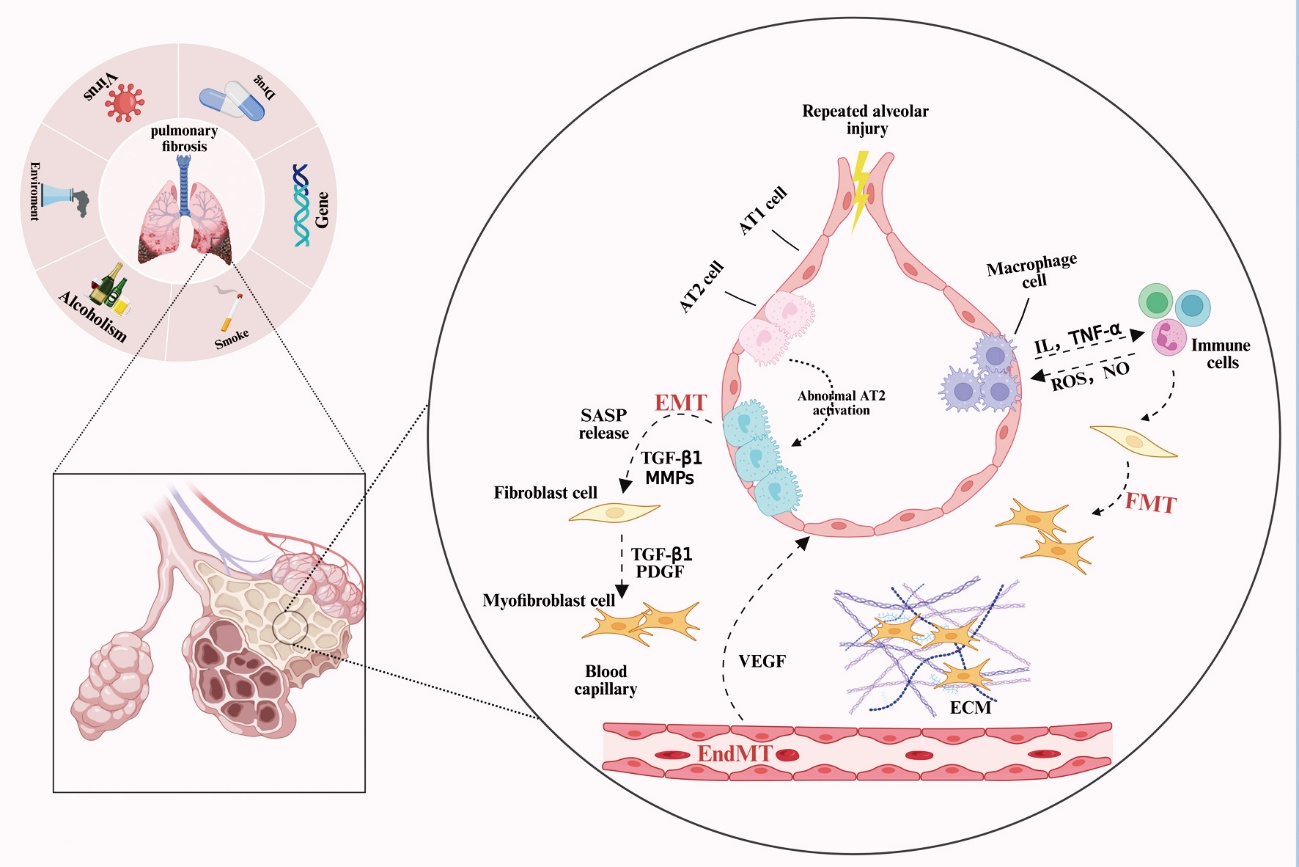
Figure 1 Multifaceted etiology of PF and the role of various cell types involved in PF PF: pulmonary fibrosis; AT1 cell: alveolar type I cell; AT2 cell: alveolar type II cell; EMT: epithelial-mesenchymal transition; SASP: senescence-associated secretory phenotype; TGF-β1: transforming growth factor-beta 1; MMPs: matrix metalloproteinases; PDGF: platelet-derived growth factor; EndMT: endothelial-to-mesenchymal transition; VEGF: vascular endothelial growth factor; ECM: extracellular matrix; FMT: fibroblast-to-myofibroblast transition; TNF-α: tumor necrosis factor alpha. Created using BioRender (BioRender.com Inc., Toronto, Canada).
Figure 1 Multifaceted etiology of PF and the role of various cell types involved in PF PF: pulmonary fibrosis; AT1 cell: alveolar type I cell; AT2 cell: alveolar type II cell; EMT: epithelial-mesenchymal transition; SASP: senescence-associated secretory phenotype; TGF-β1: transforming growth factor-beta 1; MMPs: matrix metalloproteinases; PDGF: platelet-derived growth factor; EndMT: endothelial-to-mesenchymal transition; VEGF: vascular endothelial growth factor; ECM: extracellular matrix; FMT: fibroblast-to-myofibroblast transition; TNF-α: tumor necrosis factor alpha. Created using BioRender (BioRender.com Inc., Toronto, Canada).
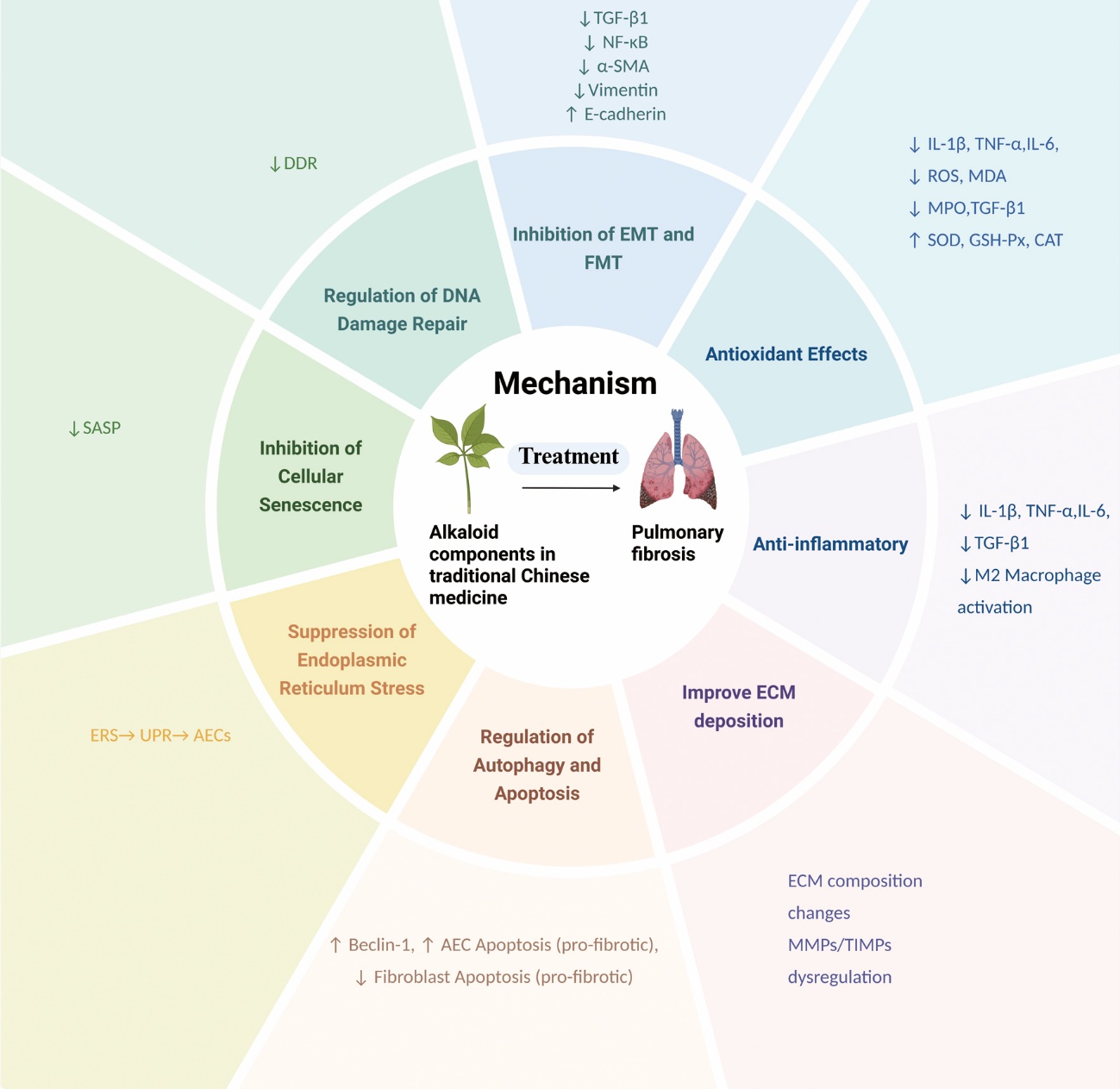
Figure 2 Mechanism of action of the active alkaloid components in TCM against PF TCM: Traditional Chinese Medicine; PF: pulmonary fibrosis; DDR: DNA damage response; TGF-β: transforming growth factor-beta; NF-κB: nuclear factor kappa B; α-SMA: α-smooth muscle actin; IL-1β: interleukin-1 beta; TNF-α: tumor necrosis factor alpha; IL-6: interleukin-6; ROS: reactive oxygen species; MDA: malondialdehyde; MPO: myeloperoxidase; TGF-β1: transforming growth factor-beta 1; SOD: superoxide dismutase; GSH-Px: glutathione peroxidase; CAT: catalase; M2: alternatively activated macrophage; ECM: extracellular matrix; MMPs: matrix metalloproteinases; TIMPs: tissue inhibitors of metalloproteinases; AEC: alveolar epithelial cell; ERS: endoplasmic reticulum stress; UPR: unfolded protein response; SASP: senescence-associated secretory phenotype; EMT: epithelial-mesenchymal transition; FMT: fibroblast-to-myofibroblast transition. Created using BioRender (BioRender.com Inc., Toronto, Canada).
Figure 2 Mechanism of action of the active alkaloid components in TCM against PF TCM: Traditional Chinese Medicine; PF: pulmonary fibrosis; DDR: DNA damage response; TGF-β: transforming growth factor-beta; NF-κB: nuclear factor kappa B; α-SMA: α-smooth muscle actin; IL-1β: interleukin-1 beta; TNF-α: tumor necrosis factor alpha; IL-6: interleukin-6; ROS: reactive oxygen species; MDA: malondialdehyde; MPO: myeloperoxidase; TGF-β1: transforming growth factor-beta 1; SOD: superoxide dismutase; GSH-Px: glutathione peroxidase; CAT: catalase; M2: alternatively activated macrophage; ECM: extracellular matrix; MMPs: matrix metalloproteinases; TIMPs: tissue inhibitors of metalloproteinases; AEC: alveolar epithelial cell; ERS: endoplasmic reticulum stress; UPR: unfolded protein response; SASP: senescence-associated secretory phenotype; EMT: epithelial-mesenchymal transition; FMT: fibroblast-to-myofibroblast transition. Created using BioRender (BioRender.com Inc., Toronto, Canada).
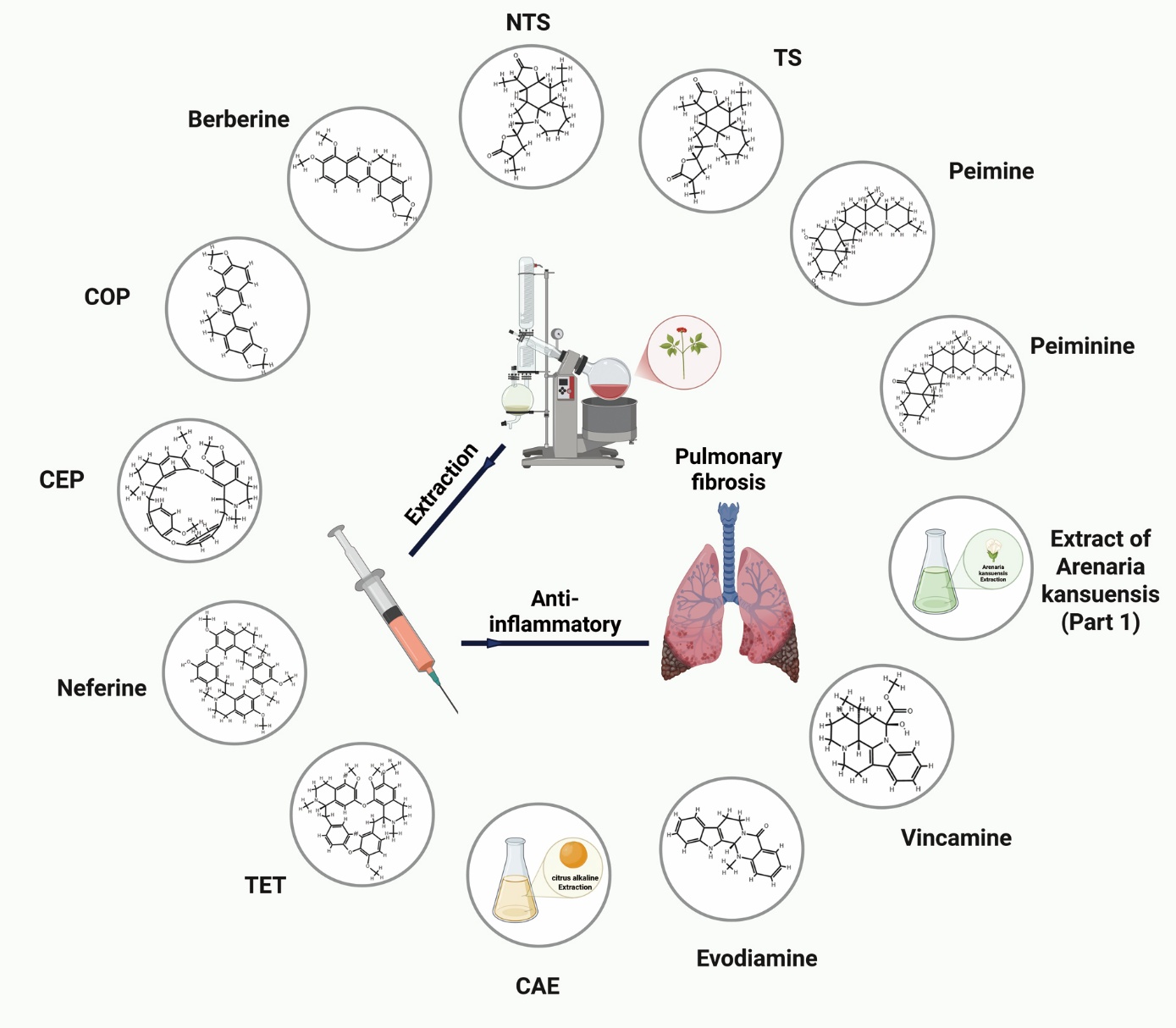
Figure 3 Thirteen Traditional Chinese Medicinal alkaloids involved in anti-inflammatory mechanisms and structural formulas for improving PF PF: pulmonary fibrosis; NTS: neotuberostemonine; TS: tuberostemonine; CAE: citrus alkaline extracts; TET: tetrandrine; CEP: cepharanthine; COP: coptisine. Created using BioRender (BioRender.com Inc., Toronto, Canada).
Figure 3 Thirteen Traditional Chinese Medicinal alkaloids involved in anti-inflammatory mechanisms and structural formulas for improving PF PF: pulmonary fibrosis; NTS: neotuberostemonine; TS: tuberostemonine; CAE: citrus alkaline extracts; TET: tetrandrine; CEP: cepharanthine; COP: coptisine. Created using BioRender (BioRender.com Inc., Toronto, Canada).
Table 1 Details of the in vivo experimental model and dose of alkaloid natural products derived from TCM involved in improving the anti-inflammatory mechanism of PF
| Name | Experimental model in vivo | Dosage | Reference |
|---|---|---|---|
| Berberine | BLM-induced PF in male wistar albino rats | The rats were treated continuously according to the dosage of 200 mg/kg for the first 14 d and the following 14 d | 95 |
| BLM-induced PF in albino male mice | Mice were treated with berberine at a dosage of 5 mg/kg from days 15 to 28 after BLM induction | 96 | |
| Berberine hydrochloride | PM2.5-induced PF in male C57BL/6 mice | Mice were treated continuously according to the dosage of 50 mg/kg for 45 d | 98 |
| CEP | BLM-induced PF in male C57BL/6 mice | The mice were treated continuously according to the dosage of 10 mg/kg for 7 d | 106 |
| Neferine | Amiodarone- induced PF in adult male Kunming mice | The rats were treated continuously according to the dosage of 20 mg/kg twice a day for 14 d | 107 |
| BLM-induced PF in Kunming mice | The rats were treated continuously according to the dosage of 20 mg/kg for 7, 14, and 21 d | 111 | |
| Tetrandrine | BLM-induced male C57BL/ 6 mice | The mice were treated continuously according to the dosage of 20 mg/kg for 14 d | 114 |
| BLM-induced IPF in male C57BL/6 mice | The mice were treated with TET-LIPs via intratracheal atomization at a dose of 2.5 mg/kg, once every two days for three weeks | 116 | |
| Citrus alkaline extracts | BLM-induced PF in male Sprague-Dawley rats | The rats were treated continuously according to the dosage of 8, 16, and 32 mg·kg-1·d-1 for 28 d | 117 |
| Evodiamine | LPS-induced PF in male BALB/c mice | Mice were treated continuously according to the dosage of 10 mg/kg for 7 d | 66 |
| Vincamine | BLM-induced PF in male C57BL/6J mice | The mice were treated continuously according to the dosage of 15, 30 mg/kg for 20 d | 123 |
| Extract of Arenaria kansuensis (Part 1) | BLM-induced PF in adult male and female Kunming mice | The rats were treated continuously according to the dosage of 50, 100 and 150 mg/kg for 15 d | 124 |
| Peiminine | BLM-induced PF in acute lung injury in Sprague-Dawley rats | The rats were treated with peiminine at a dosage of 5 mg/kg for 28 consecutive days | 128 |
| Peimine | BLM-induced PF in male C57BL/6 mice | Mice were treated with Peimine at dosages of 2.5 or 5 mg/kg for 14 d starting for 15 d | 130 |
| BLM-induced PF in Sprague-Dawley rats | The rats were treated with peimine at a dosage of 0.24 mg/kg orally for 14 d | 129 | |
| Neotuberostemonine and tuberostemonine | BLM-induced PF in male ICR mice | The mice were orally administered with NTS (30 mg/kg) and TS (30 mg/kg) once a day | 131 |
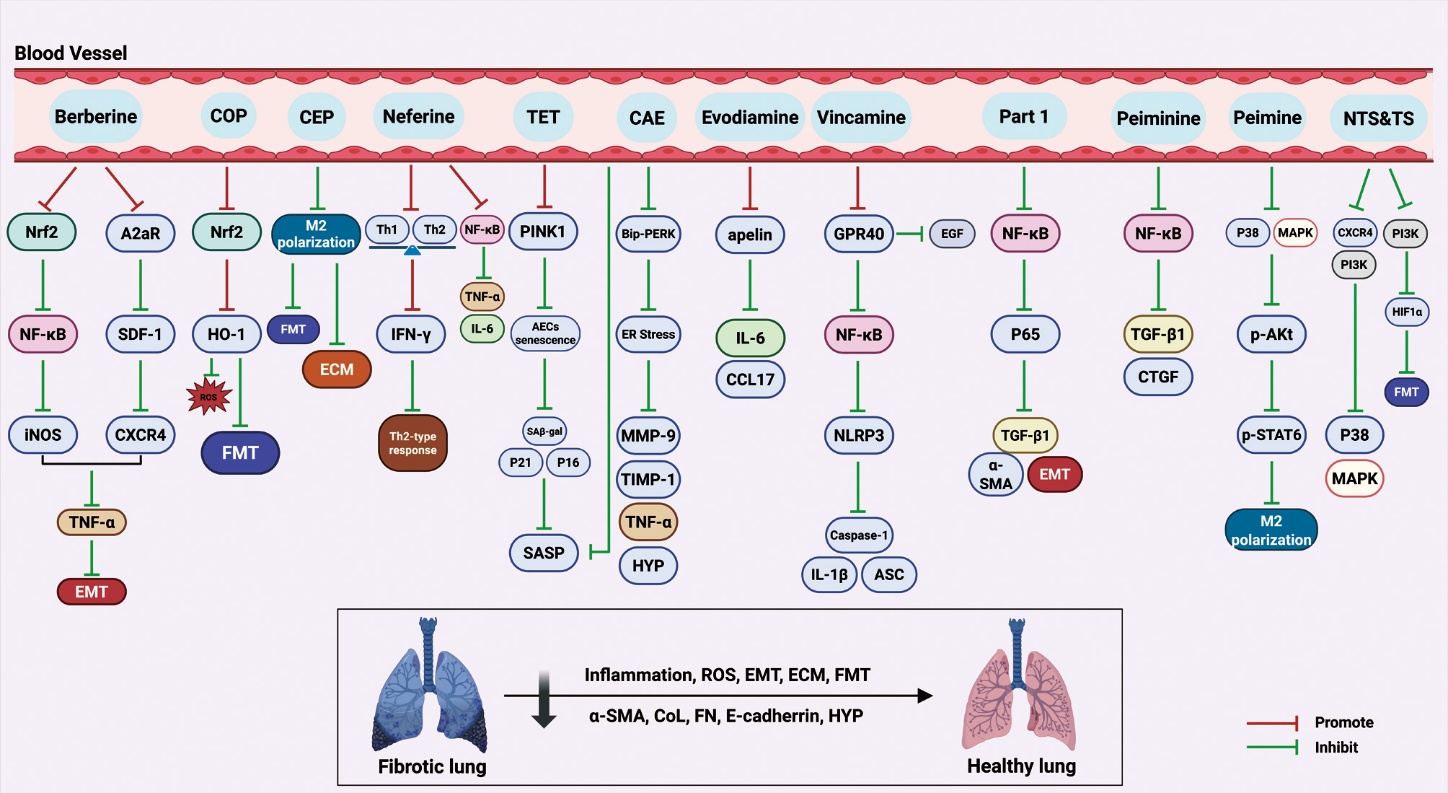
Figure 4 Overview of target signaling pathways involved in the antipulmonary fibrosis effects of thirteen bioactive alkaloids derived from TCM TCM: Traditional Chinese Medicine; COP: coptisine; CEP: cepharanthine; TET: tetrandrine; CAE: Citrus alkaline extracts; NTS: neotuberostemonine; TS: tuberostemonine; Nrf2: nuclear factor erythroid 2-related factor 2; NF-κB: nuclear factor kappa B; iNOS: inducible nitric oxide synthase; A2aR: A2a receptor; SDF-1: stromal cell-derived factor-1; CXCR4: C-X-C chemokine receptor type 4; TNF-α: tumor necrosis factor alpha; EMT: epithelial-mesenchymal transition; HO-1: heme oxygenase-1; ROS: reactive oxygen species; FMT: fibroblast-to-myofibroblast transition; M2: alternatively activated macrophage; ECM: extracellular matrix; Th1: type 1 helper T cell; Th2: type 2 helper T cell; IFN-γ: interferon-gamma; IL-6: interleukin-6; PINK1: PTEN-induced putative kinase 1; AECs: alveolar epithelial cells; SAβ-gal: senescence-associated beta-galactosidase; P21: cyclin-dependent kinase inhibitor 1A; P16: cyclin-dependent kinase inhibitor 2A; SASP: senescence-associated secretory phenotype; Bip: binding immunoglobulin protein; PEPK: protein kinase RNA-like endoplasmic reticulum kinase; ER Stress: endoplasmic reticulum stress; MMP-9: matrix metalloproteinase-9; TIMP-1: tissue inhibitor of metalloproteinase-1; HYP: hydroxyproline; CCL17: C-C motif chemokine ligand 17; GPR40: G protein-coupled receptor 40; NLRP3: NOD-like receptor family, pyrin domain containing 3; IL-1β: interleukin-1 beta; ASC: apoptosis-associated speck-like protein containing a CARD; EGF: epidermal growth factor; P65: transcription factor p65; TGF-β1: transforming growth factor-beta 1; α-SMA: α-smooth muscle actin; CTGF: connective tissue growth factor; P38: p38 mitogen-activated protein kinase; MAPK: mitogen-activated protein kinase; p-AKt: phosphorylated protein kinase B; p-STAT6: phosphorylated signal transducer and activator of transcription 6; PI3K: phosphoinositide 3-kinase; HIF1α: hypoxia-inducible factor-1 alpha; CoL: collagen; FN: fibronectin. Created using BioRender (BioRender.com Inc., Toronto, Canada).
Figure 4 Overview of target signaling pathways involved in the antipulmonary fibrosis effects of thirteen bioactive alkaloids derived from TCM TCM: Traditional Chinese Medicine; COP: coptisine; CEP: cepharanthine; TET: tetrandrine; CAE: Citrus alkaline extracts; NTS: neotuberostemonine; TS: tuberostemonine; Nrf2: nuclear factor erythroid 2-related factor 2; NF-κB: nuclear factor kappa B; iNOS: inducible nitric oxide synthase; A2aR: A2a receptor; SDF-1: stromal cell-derived factor-1; CXCR4: C-X-C chemokine receptor type 4; TNF-α: tumor necrosis factor alpha; EMT: epithelial-mesenchymal transition; HO-1: heme oxygenase-1; ROS: reactive oxygen species; FMT: fibroblast-to-myofibroblast transition; M2: alternatively activated macrophage; ECM: extracellular matrix; Th1: type 1 helper T cell; Th2: type 2 helper T cell; IFN-γ: interferon-gamma; IL-6: interleukin-6; PINK1: PTEN-induced putative kinase 1; AECs: alveolar epithelial cells; SAβ-gal: senescence-associated beta-galactosidase; P21: cyclin-dependent kinase inhibitor 1A; P16: cyclin-dependent kinase inhibitor 2A; SASP: senescence-associated secretory phenotype; Bip: binding immunoglobulin protein; PEPK: protein kinase RNA-like endoplasmic reticulum kinase; ER Stress: endoplasmic reticulum stress; MMP-9: matrix metalloproteinase-9; TIMP-1: tissue inhibitor of metalloproteinase-1; HYP: hydroxyproline; CCL17: C-C motif chemokine ligand 17; GPR40: G protein-coupled receptor 40; NLRP3: NOD-like receptor family, pyrin domain containing 3; IL-1β: interleukin-1 beta; ASC: apoptosis-associated speck-like protein containing a CARD; EGF: epidermal growth factor; P65: transcription factor p65; TGF-β1: transforming growth factor-beta 1; α-SMA: α-smooth muscle actin; CTGF: connective tissue growth factor; P38: p38 mitogen-activated protein kinase; MAPK: mitogen-activated protein kinase; p-AKt: phosphorylated protein kinase B; p-STAT6: phosphorylated signal transducer and activator of transcription 6; PI3K: phosphoinositide 3-kinase; HIF1α: hypoxia-inducible factor-1 alpha; CoL: collagen; FN: fibronectin. Created using BioRender (BioRender.com Inc., Toronto, Canada).
| [1] | Koudstaal T, Funke-Chambour M, Kreuter M, Molyneaux PL, Wijsenbeek MS. Pulmonary fibrosis: from pathogenesis to clinical decision-making. Trends Mol Med 2023; 29: 1076-87. |
| [2] | Kamiya M, Carter H, Espindola MS, et al. Immune mechanisms in fibrotic interstitial lung disease. Cell 2024; 187: 3506-30. |
| [3] | Raghu G, Remy-Jardin M, Richeldi L, et al. Idiopathic pulmonary fibrosis (an update) and progressive pulmonary fibrosis in adults: an official ATS/ERS/JRS/ALAT clinical practice guideline. Am J Respir Crit Care Med 2022; 205: e18-47. |
| [4] | Mohamed R, Sangani RG, Kamal KM, et al. Development of a local nomogram-based scoring system for predicting overall survival in idiopathic pulmonary fibrosis: a rural appalachian experience. Med Adv 2024; 2: 336-48. |
| [5] | Ma J, Li G, Wang H, Mo C. Comprehensive review of potential drugs with anti-pulmonary fibrosis properties. Biomed Pharmacother 2024; 173: 116282. |
| [6] | Hao Y, Li J, Dan L, et al. Chinese medicine as a therapeutic option for pulmonary fibrosis: clinical efficacies and underlying mechanisms. J Ethnopharmacol 2024; 318: 116836. |
| [7] | Gieseck RL, Wilson MS, Wynn TA. Type 2 immunity in tissue repair and fibrosis. Nat Rev Immunol 2018; 18: 62-76. |
| [8] | Furman D, Campisi J, Verdin E, et al. Chronic inflammation in the etiology of disease across the life span. Nat Med 2019; 25: 1822-32. |
| [9] | Liao W, Zhou H, Wen Z, et al. Identifying causal inflammatory factors with gene mediators and potential drugs for bronchiectasis. Med Adv 2025; 3: 158-70. |
| [10] | Wang Y, Xu B, Wang J, Li S, Xie Y. Traditional Chinese Medicine ion introduction therapy reduces the incidence of acute exacerbation of idiopathic pulmonary fibrosis: a prospective cohort study. Int J Gen Med 2025; 18: 21-32. |
| [11] | Ma X, Wang X, Jiang D, et al. Yizong Tongluo formula attenuates idiopathic pulmonary fibrosis and inflammatory injury by inhibiting HIF-1a/ LSH/SCD1-mediated ferroptosis. Front Immunol 2026; 17: 1760615. |
| [12] | Rampogu S, Balasubramaniyam T, Lee JH. Phytotherapeutic applications of alkaloids in treating breast cancer. Biomed Pharmacother 2022; 155: 113760. |
| [13] | Zheng X, Wu F, Lin X, Shen L, Feng Y. Developments in drug delivery of bioactive alkaloids derived from Traditional Chinese Medicine. Drug Deliv 2018; 25: 398-416. |
| [14] | Shan Q, Yu W, Xu Q, et al. Detoxification and underlying mechanisms towards toxic alkaloids by Traditional Chinese Medicine processing: a comprehensive review. Phytomedicine 2024; 129: 155623. |
| [15] | Fingerlin TE, Murphy E, Zhang W, et al. Genome-wide association study identifies multiple susceptibility loci for pulmonary fibrosis. Nat Genet 2013; 45: 613-20. |
| [16] | Allen RJ, Porte J, Braybrooke R, et al. Genetic variants associated with susceptibility to idiopathic pulmonary fibrosis in people of European ancestry: a genome-wide association study. Lancet Respir Med 2017; 5: 869-80. |
| [17] | Kropski JA, Blackwell TS. Endoplasmic reticulum stress in the pathogenesis of fibrotic disease. J Clin Invest 2018; 128: 64-73. |
| [18] | Strykowski R, Adegunsoye A. Idiopathic pulmonary fibrosis and progressive pulmonary fibrosis. Immunol Allergy Clin North Am 2023; 43: 209-28. |
| [19] | Douglas D, Keating L, Strykowski R, et al. Tobacco smoking is associated with combined pulmonary fibrosis and emphysema and worse outcomes in interstitial lung disease. Am J Physiol Lung Cell Mol Physiol 2023; 325: L233-43. |
| [20] | Zhu J, Zhou D, Yu M, Li Y. Appraising the causal role of smoking in idiopathic pulmonary fibrosis: a mendelian randomization study. Thorax 2024; 79: 179-81. |
| [21] | Zhang Y, Huang W, Zheng Z, et al. Cigarette smoke-inactivated SIRT1 promotes autophagy-dependent senescence of alveolar epithelial type 2 cells to induce pulmonary fibrosis. Free Radic Biol Med 2021; 166: 116-27. |
| [22] | Zou X, Huang Z, Zhan Z, et al. The alcohol extracts of Sceptridium ternatum (Thunb.) Lyon exert anti-pulmonary fibrosis effect through targeting SETDB1/STAT3/p-STAT3 signaling. J Ethnopharmacol 2023; 313: 116520. |
| [23] | Skeoch S, Weatherley N, Swift AJ, et al. Drug-induced interstitial lung disease: a systematic review. J Clin Med 2018; 7: 356. |
| [24] | Li S, Shi J, Tang H. Animal models of drug-induced pulmonary fibrosis: an overview of molecular mechanisms and characteristics. Cell Biol Toxicol 2022; 38: 699-723. |
| [25] | Mostafaei S, Sayad B, Azar MEF, et al. The role of viral and bacterial infections in the pathogenesis of IPF: a systematic review and Meta-analysis. Respir Res 2021; 22: 53. |
| [26] | Keyvani H, Moghoofei M, Bokharaei-Salim F, et al. Prevalence of respiratory viruses in Iranian patients with idiopathic pulmonary fibrosis. J Med Microbiol 2017; 66: 1602-6. |
| [27] | Yang J, Pan X, Wang L, Yu G. Alveolar cells under mechanical stressed niche: critical contributors to pulmonary fibrosis. Mol Med 2020; 26: 95. |
| [28] | Moss BJ, Ryter SW, Rosas IO. Pathogenic mechanisms underlying idiopathic pulmonary fibrosis. Annu Rev Pathol Mech Dis 2022; 17: 515-46. |
| [29] | Spagnolo P, Kropski JA, Jones MG, et al. Idiopathic pulmonary fibrosis: disease mechanisms and drug development. Pharmacol Ther 2021; 222: 107798. |
| [30] | Chilosi M, Caliò A, Rossi A, et al. Epithelial to mesenchymal transition-related proteins ZEB1, β-catenin, and β-tubulin-Ⅲ in idiopathic pulmonary fibrosis. Mod Pathol 2017; 30: 26-38. |
| [31] | Peng D, Fu M, Wang M, Wei Y, Wei X. Targeting TGF-β signal transduction for fibrosis and cancer therapy. Mol Cancer 2022; 21: 104. |
| [32] | Gonzalez-Sanchez E, Vaquero J, Férnandez-Barrena MG, et al. The TGF-β pathway: a pharmacological target in hepatocellular carcinoma? Cancers 2021; 13: 3248. |
| [33] | Kendall RT, Feghali-Bostwick CA. Fibroblasts in fibrosis: novel roles and mediators. Front Pharmacol 2014; 5: 123. |
| [34] | Feng F, Wang Z, Li R, et al. Citrus alkaline extracts prevent fibroblast senescence to ameliorate pulmonary fibrosis via activation of COX-2. Biomed Pharmacother 2019; 112: 108669. |
| [35] | John AE, Joseph C, Jenkins G, Tatler AL. COVID-19 and pulmonary fibrosis: a potential role for lung epithelial cells and fibroblasts. Immunol Rev 2021; 302: 228-40. |
| [36] | Yu QY, Tang XX. Irreversibility of pulmonary fibrosis. Aging Dis 2022; 13: 73. |
| [37] | Wang Q, Xie ZL, Wu Q, Jin ZX, Yang C, Feng J. Role of various imbalances centered on alveolar epithelial cell/fibroblast apoptosis imbalance in the pathogenesis of idiopathic pulmonary fibrosis. Chin Med J 2021; 134: 261-74. |
| [38] | Mei Q, Liu Z, Zuo H, Yang Z, Qu J. Idiopathic pulmonary fibrosis: an update on pathogenesis. Front Pharmacol 2022; 12: 797292. |
| [39] | May J, Mitchell JA, Jenkins RG. Beyond epithelial damage: vascular and endothelial contributions to idiopathic pulmonary fibrosis. J Clin Invest 2023; 133: e172058. |
| [40] | Wu X, Zhang D, Qiao X, et al. Regulating the cell shift of endothelial cell-like myofibroblasts in pulmonary fibrosis. Eur Respir J 2023; 61: 2201799. |
| [41] | Yanagihara T, Guignabert C, Kolb MRJ. Endothelial cells in pulmonary fibrosis: more than a bystander. Eur Respir J 2023; 61: 2300407. |
| [42] | Volpe MC, Ciucci G, Zandomenego G, et al. Flt1 produced by lung endothelial cells impairs ATII cell transdifferentiation and repair in pulmonary fibrosis. Cell Death Dis 2023; 14: 437. |
| [43] | Li X, Liu Y, Tang Y, Xia Z. Transformation of macrophages into myofibroblasts in fibrosis-related diseases: emerging biological concepts and potential mechanism. Front Immunol 2024; 15: 1474688. |
| [44] | Miura S, Iwamoto H, Namba M, et al. High S100A9 level predicts poor survival, and the S100A 9 inhibitor paquinimod is a candidate for treating idiopathic pulmonary fibrosis. BMJ Open Resp Res 2024; 11: e001803. |
| [45] | Roman J, Chiba H. B cells in idiopathic pulmonary fibrosis: targeting immune cells with antifibrotic agents. Am J Respir Cell Mol Biol 2021; 64: 652-4. |
| [46] | Snyder ME, Anderson MR, Benvenuto LJ, et al. Impact of age and telomere length on circulating T cells and rejection risk after lung transplantation for idiopathic pulmonary fibrosis. J Heart Lung Transplant 2023; 42: 1666-77. |
| [47] | Wang X, Zhang H, Wang Y, et al. DNA sensing via the cGAS/STING pathway activates the immunoproteasome and adaptive T-cell immunity. EMBO J 2023; 42: e110597. |
| [48] | Kong D, Zhang F, Shao J, et al. Curcumin inhibits cobalt chloride-induced epithelial-to-mesenchymal transition associated with interference with TGF-β/Smad signaling in hepatocytes. Lab Invest 2015; 95: 1234-45. |
| [49] | Fawzy MA, Beshay ON, Bekhit AA, et al. Nephroprotective effect of AT-MSCs against cisplatin-induced EMT is improved by azilsartan via attenuating oxidative stress and TGF-β/Smad signaling. Biomed Pharmacother 2023; 158: 114097. |
| [50] | López-Cabrera M. Mesenchymal conversion of mesothelial cells is a key event in the pathophysiology of the peritoneum during peritoneal dialysis. Adv Med 2014; 2014: 1-17. |
| [51] | Grande MT, Sánchez-Laorden B, López-Blau C, et al. Snail1-induced partial epithelial-to-mesenchymal transition drives renal fibrosis in mice and can be targeted to reverse established disease. Nat Med 2015; 21: 989-97. |
| [52] | Lovisa S, LeBleu VS, Tampe B, et al. Epithelial-to-mesenchymal transition induces cell cycle arrest and parenchymal damage in renal fibrosis. Nat Med 2015; 21: 998-1009. |
| [53] | Tai Y, Woods EL, Dally J, et al. Myofibroblasts: function, formation, and scope of molecular therapies for skin fibrosis. Biomolecules 2021; 11: 1095. |
| [54] | King TE, Pardo A, Selman M. Idiopathic pulmonary fibrosis. Lancet 2011; 378: 1949-61. |
| [55] | Yue D, Zhang Q, Zhang J, et al. Diesel exhaust PM2.5 greatly deteriorates fibrosis process in pre-existing pulmonary fibrosis via ferroptosis. Environ Int 2023; 171: 107706. |
| [56] | Yan J, Wang SY, Su Q, et al. Targeted immunotherapy rescues pulmonary fibrosis by reducing activated fibroblasts and regulating alveolar cell profile. Nat Commun 2025; 16: 3748. |
| [57] | Montuschi P, Toni GC, Paredi P, et al. 8-isoprostane as a biomarker of oxidative stress in interstitial lung diseases. Am J Respir Crit Care Med 1998; 158: 1524-7. |
| [58] | Lenz A, Costabel U, Maier K. Oxidized BAL fluid proteins in patients with interstitial lung diseases. Eur Respir J 1996; 9: 307-12. |
| [59] | Markart P, Luboeinski T, Korfei M, et al. Alveolar oxidative stress is associated with elevated levels of nonenzymatic low-molecular-weight antioxidants in patients with different forms of chronic fibrosing interstitial lung diseases. Antioxid Redox Signal 2009; 11: 227-40. |
| [60] | Abdelrahman RS, Shawky NM. Trimetazidine, a metabolic modulator, attenuates silica-induced pulmonary fibrosis and decreases lactate levels and LDH activity in rats. J Biochem Mol Toxicol 2022; 36: e23071. |
| [61] | Cantin AM, Hubbard RC, Crystal RG. Glutathione deficiency in the epithelial lining fluid of the lower respiratory tract in idiopathic pulmonary fibrosis. Am Rev Respir Dis 1989; 139: 370-2. |
| [62] | Meyer A, Buhl R, Magnussen H. The effect of oral N-acetylcysteine on lung glutathione levels in idiopathic pulmonary fibrosis. Eur Respir J 1994; 7: 431-6. |
| [63] | Bergeron A, Soler P, Kambouchner M, et al. Cytokine profiles in idiopathic pulmonary fibrosis suggest an important role for TGF-β and IL-10. Eur Respir J 2003; 22: 69-76. |
| [64] | Wynn T. Cellular and molecular mechanisms of fibrosis. J Pathol 2008; 214: 199-210. |
| [65] | Qiu M, Yang Z, Bian M, Liu C, Zhao Y, Liu Q. Protective effects of isorhynchophylline against silicon-dioxide-induced lung injury in mice. Artif Cells Nanomed Biotechnol 2020; 48: 1125-34. |
| [66] | Ye C, Zhang N, Zhao Q, et al. Evodiamine alleviates lipopolysaccharide-induced pulmonary inflammation and fibrosis by activating apelin pathway. Phytother Res 2021; 35: 3406-17. |
| [67] | Mills C. M1 and M2 macrophages: oracles of health and disease. Crit Rev Immunol 2012; 32: 463-88. |
| [68] | Jiang Y, Cai R, Huang Y, et al. Macrophages in organ fibrosis: from pathogenesis to therapeutic targets. Cell Death Discov 2024; 10: 487. |
| [69] | Karamanos NK, Theocharis AD, Piperigkou Z, et al. A guide to the composition and functions of the extracellular matrix. FEBS J 2021; 288: 6850-912. |
| [70] | Romero Y, Bueno M, Ramirez R, et al. mTORC 1 activation decreases autophagy in aging and idiopathic pulmonary fibrosis and contributes to apoptosis resistance in IPF fibroblasts. Aging Cell 2016; 15: 1103-12. |
| [71] | Zhang X, Mao Y, Peng W, et al. Autophagy-related protein EI24 delays the development of pulmonary fibrosis by promoting autophagy. Life Sci 2021; 264: 118664. |
| [72] | Han Y, Ye L, Du F, et al. Iron metabolism regulation of epithelial-mesenchymal transition in idiopathic pulmonary fibrosis. Ann Transl Med 2021; 9: 1755. |
| [73] | Duan JX, Guan XX, Yang HH, et al. Vasoactive intestinal peptide attenuates bleomycin-induced murine pulmonary fibrosis by inhibiting epithelial-mesenchymal transition: restoring autophagy in alveolar epithelial cells. Int Immunopharmacol 2021; 101: 108211. |
| [74] | Tatler AL, Jenkins G. Sphingosine-1-phosphate metabolism: can its enigmatic lyase promote the autophagy of fibrosis? Thorax 2015; 70: 1106-7. |
| [75] | Jin Y, Peng LQ, Zhao AL. Hyperoxia induces the apoptosis of alveolar epithelial cells and changes of pulmonary surfactant proteins. Eur Rev Med Pharmacol Sci 2018; 22: 492-7. |
| [76] | Im J, Kim K, Hergert P, Nho RS. Idiopathic pulmonary fibrosis fibroblasts become resistant to Fas ligand-dependent apoptosis via the alteration of decoy receptor 3. J Pathol 2016; 240: 25-37. |
| [77] | Deng J, Liu J, Chen W, Liang Q, He Y, Sun G. Effects of natural products through inhibiting endoplasmic reticulum stress on attenuation of idiopathic pulmonary fibrosis. Drug Des Devel Ther 2024; 18: 1627-50. |
| [78] | Bridges JP, Wert SE, Nogee LM, Weaver TE. Expression of a human surfactant protein C mutation associated with interstitial lung disease disrupts lung development in transgenic mice. J Biol Chem 2003; 278: 52739-46. |
| [79] | Mulugeta S, Maguire JA, Newitt JL, Russo SJ, Kotorashvili A, Beers MF. Misfolded BRICHOS SP-C mutant proteins induce apoptosis via caspase-4- and cytochrome c-related mechanisms. Am J Physiol Lung Cell Mol Physiol 2007; 293: L720-9. |
| [80] | Mulugeta S, Nguyen V, Russo SJ, Muniswamy M, Beers MF. A surfactant protein C precursor protein BRICHOS domain mutation causes endoplasmic reticulum stress, proteasome dysfunction, and caspase 3 activation. Am J Respir Cell Mol Biol 2005; 32: 521-30. |
| [81] | Maiers J, Malhi H. Endoplasmic reticulum stress in metabolic liver diseases and hepatic fibrosis. Semin Liver Dis 2019; 39: 235-48. |
| [82] | Cybulsky AV. Endoplasmic reticulum stress, the unfolded protein response and autophagy in kidney diseases. Nat Rev Nephrol 2017; 13: 681-96. |
| [83] | Wu B, Tang L, Kapoor M. Fibroblasts and their responses to chronic injury in pulmonary fibrosis. Semin Arthritis Rheum 2021; 51: 310-7. |
| [84] | Byrne AJ, Maher TM, Lloyd CM. Pulmonary macrophages: a new therapeutic pathway in fibrosing lung disease? Trends Mol Med 2016; 22: 303-16. |
| [85] | Byrne AJ, Mathie SA, Gregory LG, Lloyd CM. Pulmonary macrophages: key players in the innate defence of the airways. Thorax 2015; 70: 1189-96. |
| [86] | Hsu HS, Liu CC, Lin JH, et al. Involvement of ER stress, PI3K/AKT activation, and lung fibroblast proliferation in bleomycin-induced pulmonary fibrosis. Sci Rep 2017; 7: 14272. |
| [87] | Delbrel E, Soumare A, Naguez A, et al. HIF-1α triggers ER stress and CHOP-mediated apoptosis in alveolar epithelial cells, a key event in pulmonary fibrosis. Sci Rep 2018; 8: 17939. |
| [88] | Shmulevich R, Krizhanovsky V. Cell senescence, DNA damage, and metabolism. Antioxid Redox Signal 2021; 34: 324-34. |
| [89] | Schafer MJ, White TA, Iijima K, et al. Cellular senescence mediates fibrotic pulmonary disease. Nat Commun 2017; 8: 14532. |
| [90] | Van Deursen JM. The role of senescent cells in ageing. Nature 2014; 509: 439-46. |
| [91] | Rao X, Zhou Y, Xue J, Zhou Z. Identification of DNA damage repair-related diagnostic markers for idiopathic pulmonary fibrosis via WGCNA. Comput Biol Chem 2025; 119: 108563. |
| [92] | Liu W, Han X, Li Q, Sun L, Wang J. Iguratimod ameliorates bleomycin-induced pulmonary fibrosis by inhibiting the EMT process and NLRP3 inflammasome activation. Biomed Pharmacother 2022; 153: 113460. |
| [93] | Van Der Vliet A, Janssen-Heininger YMW, Anathy V. Oxidative stress in chronic lung disease: from mitochondrial dysfunction to dysregulated redox signaling. Mol Aspects Med 2018; 63: 59-69. |
| [94] | Carusillo A, Mussolino C. DNA damage: from threat to treatment. Cells 2020; 9: 1665. |
| [95] | Chitra P, Saiprasad G, Manikandan R, Sudhandiran G. Berberine attenuates bleomycin induced pulmonary toxicity and fibrosis via suppressing NF-κB dependant TGF-β activation: a biphasic experimental study. Toxicol Lett 2013; 219: 178-93. |
| [96] | Ahmedy OA, Kamel MW, Abouelfadl DM, Shabana ME, Sayed RH. Berberine attenuates epithelial mesenchymal transition in bleomycin-induced pulmonary fibrosis in mice via activating A2aR and mitigating the SDF-1/CXCR4 signaling. Life Sci 2023; 322: 121665. |
| [97] | Wu J, Luo Y, Jiang Q, et al. Coptisine from Coptis chinensis blocks NLRP3 inflammasome activation by inhibiting caspase-1. Pharmacol Res 2019; 147: 104348. |
| [98] | Zhao J, Ma X, Li S, et al. Berberine hydrochloride ameliorates PM2.5-induced pulmonary fibrosis in mice through inhibiting oxidative stress and inflammatory. Chem Biol Interact 2023; 386: 110731. |
| [99] | Javad-Mousavi SA, Hemmati AA, Mehrzadi S, et al. Protective effect of Berberis vulgaris fruit extract against paraquat-induced pulmonary fibrosis in rats. Biomed Pharmacother 2016; 81: 329-36. |
| [100] | Yang J, Huang Y, Cui Z, Liu C, Xie G. Rhizoma coptidis can inhibit the excessive proliferation, inflammation, and transformation of lung fibroblasts into myofibroblasts. Allergol Immunopathol (Madr) 2024; 52: 15-20. |
| [101] | Liu K, Hong B, Wang S, et al. Pharmacological activity of cepharanthine. Molecules 2023; 28: 5019. |
| [102] | Rogosnitzky M, Okediji P, Koman I. Cepharanthine: a review of the antiviral potential of a Japanese-approved alopecia drug in COVID-19. Pharmacol Rep 2020; 72: 1509-16. |
| [103] | Shi L, Wang S, Zhang S, et al. Research progress on pharmacological effects and mechanisms of cepharanthine and its derivatives. Naunyn Schmiedebergs Arch Pharmacol 2023; 396: 2843-60. |
| [104] | Zhang S, Huang W, Ren L, et al. Comparison of viral RNA-host protein interactomes across pathogenic RNA viruses informs rapid antiviral drug discovery for SARS-CoV-2. Cell Res 2022; 32: 9-23. |
| [105] | Li J, Chen G, Meng Z, et al. Bioavailability enhancement of cepharanthine via pulmonary administration in rats and its therapeutic potential for pulmonary fibrosis associated with COVID-19 infection. Molecules 2022; 27: 2745. |
| [106] | Bao J, Liu C, Song H, et al. Cepharanthine attenuates pulmonary fibrosis via modulating macrophage M2 polarization. BMC Pulm Med 2024; 24: 444. |
| [107] | Niu CH, Wang Y, Liu JD, Wang JL, Xiao JH. Protective effects of neferine on amiodarone-induced pulmonary fibrosis in mice. Eur J Pharmacol 2013; 714: 112-9. |
| [108] | Papiris SA, Triantafillidou C, Kolilekas L, Markoulaki D, Manali ED. Amiodarone: review of pulmonary effects and toxicity. Drug Saf 2010; 33: 539-58. |
| [109] | Șorodoc V, Indrei L, Dobroghii C, et al. Amiodarone therapy: updated practical insights. J Clin Med 2024; 13: 6094. |
| [110] | Botas C, Poulain F, Akiyama J, et al. Altered surfactant homeostasis and alveolar type II cell morphology in mice lacking surfactant protein D. Proc Natl Acad Sci USA 1998; 95: 11869-74. |
| [111] | Zhao L, Wang X, Chang Q, et al. Neferine, a bisbenzylisoquinline alkaloid attenuates bleomycin-induced pulmonary fibrosis. Eur J Pharmacol 2010; 627: 304-12. |
| [112] | Bhagya N, Chandrashekar KR. Tetrandrine-a molecule of wide bioactivity. Phytochemistry 2016; 125: 5-13. |
| [113] | Guo X, Qi J, Li H, Xing Z. Clinical efficacy of acetylcysteine combined with tetrandrine tablets on patients with silicosis and its effect on exercise tolerance and pulmonary function. Exp Ther Med 2020; 20: 1285-90. |
| [114] | Chu L, Zhuo J, Huang H, et al. Tetrandrine alleviates pulmonary fibrosis by inhibiting alveolar epithelial cell senescence through PINK1/Parkin-mediated mitophagy. Eur J Pharmacol 2024; 969: 176459. |
| [115] | Luan F, He X, Zeng N. Tetrandrine: a review of its anticancer potentials, clinical settings, pharmacokinetics and drug delivery systems. J Pharm Pharmacol 2020; 72: 1491-512. |
| [116] | Liang Y, Sun L, Ma X, et al. Inhalation of tetrandrine liposomes for the treatment of bleomycin induced idiopathic pulmonary fibrosis. J Drug Deliv Sci Technol 2022; 74: 103492. |
| [117] | Zhou XM, Wen GY, Zhao Y, Liu YM, Li JX. Inhibitory effects of alkaline extract of Citrus reticulata on pulmonary fibrosis. J Ethnopharmacol 2013; 146: 372-8. |
| [118] | Wang Z, Feng F, He H, et al. Citrus alkaline extracts prevent endoplasmic reticulum stress in type II alveolar epithelial cells to ameliorate pulmonary fibrosis via the ATF3/PINK 1 pathway. Phytomedicine 2021; 89: 153599. |
| [119] | Solanki R, Patel S. Evodiamine and its nano-based approaches for enhanced cancer therapy: recent advances and challenges. J Sci Food Agric 2024; 104: 8430-44. |
| [120] | Zhang Y, Zhang Y, Zhao Y, et al. Protection against ulcerative colitis and colorectal cancer by evodiamine via anti-inflammatory effects. Mol Med Rep 2022; 25: 188. |
| [121] | Nandini HS, Naik PR. Antidiabetic, antihyperlipidemic and antioxidant effect of vincamine, in streptozotocin-induced diabetic rats. Eur J Pharmacol 2019; 843: 233-9. |
| [122] | Lasithiotaki I, Giannarakis I, Tsitoura E, et al. NLRP3 inflammasome expression in idiopathic pulmonary fibrosis and rheumatoid lung. Eur Respir J 2016; 47: 910-8. |
| [123] | Zhao T, Zhou Z, Zhao S, et al. Vincamine as an agonist of G protein-coupled receptor 40 effectively ameliorates pulmonary fibrosis in mice. Phytomedicine 2023; 118: 154919. |
| [124] | Cui Y, Jiang L, Yu R, Shao Y, Mei L, Tao Y. β-carboline alkaloids attenuate bleomycin induced pulmonary fibrosis in mice through inhibiting NF-kb/p65 phosphorylation and epithelial-mesenchymal transition. J Ethnopharmacol 2019; 243: 112096. |
| [125] | Fan B, Li T, Xu S, Chen L, Wei G, Qian C. Efficient, accurate and comprehensive evaluation of polysaccharides from Fritillaria and their inhibitory responses to mouse inflammation. Food Funct 2019; 10: 7913-25. |
| [126] | Cha SJ, Kim SS, Shin JH, Seo SR. Peiminine exerts its anti-acne effects by regulating the NF-κB pathway. Antioxidants 2024; 13: 131. |
| [127] | Chen K, Lü Z, Zhou C, et al. Peimine suppresses interleukin-1β-induced inflammation via MAPK downregulation in chondrocytes. Int J Mol Med 2019; 43: 2241-51. |
| [128] | Guo H, Ji F, Liu B, et al. Peiminine ameliorates bleomycin-induced acute lung injury in rats. Mol Med Rep 2013; 7: 1103-10. |
| [129] | Cai Z, Tian Y, Li J, et al. Peimine ameliorates pulmonary fibrosis via the inhibition of M2-type macrophage polarization through the suppression of P38/Akt/STAT6 signals. Biosci Rep 2022; 42: BSR20220986. |
| [130] | Li K, Liu X, Lu R, Zhao P, Tian Y, Li J. Bleomycin pollution and lung health: the therapeutic potential of peimine in bleomycin-induced pulmonary fibrosis by inhibiting glycolysis. Ecotoxicol Environ Saf 2025; 289: 117451. |
| [131] | Fu S, Song X, Hu Y, et al. Neotuberostemonine and tuberostemonine ameliorate pulmonary fibrosis through suppressing TGF-β and SDF-1 secreted by macrophages and fibroblasts via the PI3K-dependent AKT and ERK pathways. Chin J Nat Med 2023; 21: 527-39. |
| [1] | ZHENG Haizhen, CHEN Baohao, ZOU Hanlin, LI Yingjie, WU Wenzhe, HUANG Guomin. Efficacy and safety of moxibustion therapy for bronchial asthma: a systematic review and network Meta-analysis [J]. Journal of Traditional Chinese Medicine, 2026, 46(5): 1047-1060. |
| [2] | LIANG Yong, GUAN Qiuyan, CHEN Yi, WU Wei, YANG Ming, TANG Fangrui, WANG Yawen, PAN Deng, HUANG Xiaoying, LI Huiting. Intranasal essential oils in therapy: advances in clinical applications and delivery mechanisms [J]. Journal of Traditional Chinese Medicine, 2026, 46(4): 1026-1041. |
| [3] | LIU Yutong, YANG Yan, XU Huiying, LI Lei, GE Fei, CHEN Meijuan. Jianchang No. 1 (健肠1号) formula alleviates irritable bowel syndrome with diarrhea via improving gut microbiota and regulating toll-like receptors/nuclear factor-kappa B signaling pathway in bowel syndrome with diarrhea rats [J]. Journal of Traditional Chinese Medicine, 2026, 46(4): 883-893. |
| [4] | ZHENG Jie, DING Zhimin, CHEN Tingyu, LÜ Zhuan, ZHANG Lihong, LIU Yongtao, ZHANG Yasu, JIN Xiaoqin, WANG Xinyu, LIU Bin, FENG Xiaodong. Antihypertensive effect of acupuncture involve reshaping gut microbiota and alleviating gut inflammation in spontaneously hypertensive rats [J]. Journal of Traditional Chinese Medicine, 2026, 46(4): 907-915. |
| [5] | XU Mengjun, YAN Zixing, CHEN Xi, CAI Juanjuan, ZHANG Haiou, LIN Zhenwen. Hepatoprotection of Jianpi Qingre Lishi prescription (健脾清热利湿法) on non-alcoholic steatohepatitis via miRNA-27/peroxisome proliferator-activated receptor gamma axis [J]. Journal of Traditional Chinese Medicine, 2026, 46(3): 561-570. |
| [6] | ZHANG Quanhui, ZENG Jinlan, SU Liang, WANG Yi, DENG Yongwen, ZHANG Xiuchai. Shenling Baizhu powder (参苓白术散) reduced the oxidative stress and mitochondrial damage during ulcerative colitis via the Kelch-like ECH-associated protein 1-NF-E2-related factor 2/nuclear factor kappa B pathway [J]. Journal of Traditional Chinese Medicine, 2026, 46(3): 584-593. |
| [7] | HAO Feng, SANG Jiajia, PENG Chuanyu, HU Jun, WU Zijian, HU Ling, GU Yihuang. Effect of moxibustion at Zusanli (ST36) on beclin 1-solute carrier family 7 member 11 gene ferroptosis-related proteins in synovial inflammation of rats with rheumatoid arthritis [J]. Journal of Traditional Chinese Medicine, 2026, 46(3): 594-604. |
| [8] | LIN Kaifeng, ZENG Zhongliao, SUN Yan, SUN Fangzhou, ZHANG Han, SUN Jing, JIANG Ling, Jeffrey D. Deng, LI Min, LIANG Bocheng. Traditional Chinese Medicine for the prevention and treatment of adolescent idiopathic scoliosis: scientific understanding and a multimodal therapeutic approach [J]. Journal of Traditional Chinese Medicine, 2026, 46(3): 745-756. |
| [9] | MIN Zeting, XU Qianqian, SHI Mengqiong, GUO Wei, ZHANG Jihong, CHEN Maohua, XU Jie, HU Huiquan, ZHOU Gang, TANG Haiming. A comprehensive review on chemical structure, quality control, pharmacological effects, and structure-activity relationship of saponins from Zhuzishen (Rhizoma Panacis Majoris) [J]. Journal of Traditional Chinese Medicine, 2026, 46(3): 757-767. |
| [10] | JIAN Jiawei, DING Zhimin, ZHUANG Yueyang, WANG Junzi, YANG Minguang, LIU Weilin. Acupuncture-driven exosomes: an emerging therapy [J]. Journal of Traditional Chinese Medicine, 2026, 46(3): 768-778. |
| [11] | WANG Xuehui, SUN Yuxin, Birling Yoann, LI Xun, ZHAO Ruotong, ZHENG Youyou, SONG Zhenmei, ZHANG Yanli, DU Hongbo, WANG Jianyun, LI Yinqing, LIU Zhaolan, LIU Jianping. A Meta-analysis of Traditional Chinese Medicine constitution distribution in people with functional constipation [J]. Journal of Traditional Chinese Medicine, 2026, 46(2): 261-273. |
| [12] | XU Pingyuan, ZHU Heng, ZHOU Ruonan, WEI Yaping, ZHU Ziwei, XU Fangyuan, XIANG Yingying, CAO Yue, SHEN Lixuan, WANG Ziwei, XUE Yingying, YU Xizhong, FANG Penghua, SHANG Wenbin. Beneficial effects of Huanglian Jiedu decoction (黄连解毒汤 ) on metabolic syndrome: a prospective randomized controlled clinical trial [J]. Journal of Traditional Chinese Medicine, 2026, 46(2): 411-417. |
| [13] | YU Fangning, LIN Li, TANG Xiao, HE Xiujuan, ZHANG Bo, CHEN Yukun, MA Yizhao, LIU Zeyu, YE Jinsheng, XU Xuying. Effect of Huiyang Shengji unguent (回阳生肌膏) on the NOD-like receptor family pyrin domain containing protein 3/caspase1/ gasdermin D pathway and lymphatic angiogenesis in patients with diabetic foot ulcer [J]. Journal of Traditional Chinese Medicine, 2026, 46(2): 427-438. |
| [14] | LI Hongzheng, LIN Guosheng, PENG Yuxuan, Churov Alexey Viktorovich, YANG Wenwen, WANG Jie, LU Jieming, LIAO Feifei, YU Ruotong, WEI Yue, ZHAO Zhiru, LU Aimei, LI Peng, SHEN Aling, LONG Linzi, QU Hua, FU Changgeng. Candidate biomarker identification for blood stasis syndrome among coronary artery disease patients using the Olink proteomics platform [J]. Journal of Traditional Chinese Medicine, 2026, 46(2): 490-500. |
| [15] | LI Kexin, YANG Jinzu, XIAO Kunlin, DUAN Shaojie, XIAO Kunmin. Tongue-coating microbiome as a predictor of solid tumors: an updated scoping review of clinical studies [J]. Journal of Traditional Chinese Medicine, 2026, 46(2): 501-508. |
| Viewed | ||||||
|
Full text |
|
|||||
|
Abstract |
|
|||||