
Journal of Traditional Chinese Medicine ›› 2026, Vol. 46 ›› Issue (4): 1026-1041.DOI: 10.19852/j.cnki.jtcm.2026.04.022
• Review • Previous Articles
Intranasal essential oils in therapy: advances in clinical applications and delivery mechanisms
LIANG Yong1, GUAN Qiuyan1, CHEN Yi1, WU Wei1,2, YANG Ming1, TANG Fangrui1, WANG Yawen1, PAN Deng1, HUANG Xiaoying1( ), LI Huiting1()
- 1
Key Laboratory of Modern Preparation of Traditional Chinese Medicine ,Ministry of Education, Jiangxi University of Chinese Medicine Nanchang 330004, China
2College of Pharmacy ,Jinan University Guangzhou 510632, China
-
Received:2025-03-26Accepted:2025-11-13Online:2026-08-15Published:2026-08-08 -
Contact:Prof. HUANG Xiaoying, Prof. LI Huiting, Key Laboratory of Modern Preparation of Traditional Chinese Medicine, Ministry of Education, Jiangxi University of Chinese Medicine 330004, China. 8842100@qq.com;Li Huiting19@163.com,Telephone: +86-13607062322; +86-18702694569
-
Supported by:Hainan Province Science and Technology Special Fund: Research on the Chemical Basis of Aroma Formation and High-value Utilization of Hainan Agarwood(ZDYF2025SHFZ055);National Natural Science Foundation of China: Research on Stabilization Control Strategies of Essential Oils Based on “Porous Adsorption-Size Sieving-Structural Controlled Release”(82404878);Natural Science Foundation of Jiangxi Province: Research on the Design of Mesoporous Material-Loaded Essential Oil Solidified Powders and Their Stabilization Application in Tablets(20242BAB20456);Key R & D Projects of Ganjiang New District in Jiangxi Province: Development and Application of “Scent Stabilization” Technology for Essential Oils(2023007);Doctoral Research Startup Fund Project of Jiangxi University of Traditional Chinese Medicine: Research on Process Control Strategies for the “Release-Stabilization” of Essential Oils Based on Volatility and Pyrolyzability, Optimization of Microbial Fermentation Process for Fengyan Aurantii Fructus(2024BSZR016);Doctoral Research Startup Fund Project of Jiangxi University of Traditional Chinese Medicine: Research on Process Control Strategies for the “Release-Stabilization” of Essential Oils Based on Volatility and Pyrolyzability, Optimization of Microbial Fermentation Process for Fengyan Aurantii Fructus(2024BSZR005);Science and Technology Research Project of Jiangxi Education Department: Research on the Degradation of Traditional Chinese Medicine Wastewater by Hydrotalcite-Based Photocatalysts(GJJ211258);National College Students' Innovation and Entrepreneurship Training Program in 2024: Yunding Fragrance-Traditional Chinese Medicine (TCM) Scalp Therapy Essential Oil(202410412007);Provincial College Students' Innovation and Entrepreneurship Training Program in 2024: Yinyang Zhihe-a TCM Compound Essential Oil Pillow Sheet for Insomnia Caused by Liver Fire Disturbing the Heart(S202410412094)

Cite this article
LIANG Yong, GUAN Qiuyan, CHEN Yi, WU Wei, YANG Ming, TANG Fangrui, WANG Yawen, PAN Deng, HUANG Xiaoying, LI Huiting. Intranasal essential oils in therapy: advances in clinical applications and delivery mechanisms[J]. Journal of Traditional Chinese Medicine, 2026, 46(4): 1026-1041.
share this article
Table 1 Therapeutic effects of EOs on CNS disorders: experimental models and clinical findings
| Essential oil | Participant/animal | Dose/mode | Effect | Mechanism | Indication | Reference |
|---|---|---|---|---|---|---|
| Lavender | Patient with PSD | Nonwoven bag con-tains microcapsules with 1.5 g EO Inhale every night for 4 weeks | Alleviate depression and improve the quality of sleep | n/a | Depression Insomnia | Yin et al 2024 |
| Lavender/chamomile | Patient | 1.5% inhale A cotton ball is poured with three drops/d for 30 d | Significantly relieve patients' depression and anxiety | n/a | Depression Anxiety | Ebrahimi et al 2022 |
| Bergamot | Healthy female | 1‰v/v Inhale for 15 min | Reduced salivary cortisol levels, increased parasympathetic nervous system activity, improved mood states | n/a | Anxiety | Watanabe et al 2015 |
| Lemon, Eucalyptus, Tea tree, Peppermint | Healthy participants | Day: EO pendant; Night: Aroma stone (3 drops); inhale for 4 weeks | Significantly higher sleep quality and lower depression levels | n/a | Insomnia Depression | Lee et al 2017 |
| Bergamot | EPM and hole-board test-induced anxiety model—Wistar rats | 1.0%, 2.5%, 5.0% w/w Inhale 7 min | The percentage of entries in the open arms↑ Time spent on the open arms↑ | Reducing the corticosterone stress response to attenuated HPA axis activity | Anxiety | Saiyudthong et al 2010 |
| Suhexiang (Storax Liq-uidambaris Orientalis) | CMS-induced depression model-ICR mouse | 10% SHX inhale 10 min/d for 12 d 30 min/d for 12 d | ANG↓, TPO↓, IL-6↓, TNF-α↓ | Effect on the infl-amematory resp-onse and/or blood vessel change | Depression Anxiety | Liang et al 2018 |
| Ciguoeshen (Radix Anthrisci Nemorosae) | Scopolamine-induced choli-nergic amnesia in Wistar rats | 1%, 3% inhale for 21 d | Significantly improves memory and reduces anxiety and depre-ssive-like behavior | n/a | Depression Anxiety Cognitive enhance-ment | Bagci et al 2016 |
| Zhizi (Fructus Gardeniae) | OF, EPM, and LDB-induced anxiety model in ICR mice | 10% (v/v) inhale 10 min | Elevated the time mice spent in the open arms, the entries spent in the open arms, and the time duration in the light chamber | 5-HIAA↓, 5HIAA/5HT↓ | Anxiety | Zhang et al 2020 |
| Moxa smoke | Subthreshold doses of pento-barbital-induced sleep in KM mice | 0.4%, 1.2%, 15% Inhale 20 min/d for 7 d | High concentration signi-ficantly pro-longed the pento-barbital-induced sleeping time and sleeping rate | Component of the Eucalyptol soothing effect on the CNS | Insomnia | Jia Yang et al 2016 |
| Chenxiang (Lignum Aquilariae Resinatum) | PCPA-induced insomnia model-KM mice | 2 μL, 4 μL, 8 μL Inhale 1 h/d for 7 days | Significantly shorten sleep latency and prolong sleep time | GABAA↑,GABAA/Glu↑, 5HT↑, Adenosine ↑ | Insomnia | Wang et al 2022 |
| Zisuye (Folium Perillae Argutae) | PCPA-induced insomnia model-ICR mice | 1.5‰, 3‰, 6‰ Inhale 1 h/d for 7 d | Increase the falling asleep rate, shorten the latency of sleeping time, and prolong the duration. | Hypothalamus and cerebral cortex 5-HT, GABA↑ | Insomnia | Zhong et al 2021 |
| Suhexiang (Storax Liquidambaris Orientalis) | Hippocampus injection of Aβ1-42 induces an AD-like model in ICR mice | 3 h/time 2 times/d Inhale for 14 d | Improve memory impairment | Suppressed Aβ1-42 induced phosphorylation of JNK, p38, Tau in hippocampus | Cognitive enhance-ment | Jeon et al 2012 |
| Peppermint | APP/PS1 trans-genic mice induce an AD model | 1 h/time 2 times/d Inhale for 21 d | Improve learning and me-mory ability and decrease cognitive impairment, decrease Aβ deposition | Improving amino acid metabolism and energy metabolism | Cognitive enhance-ment | Lv et al 2022 |
| Lavender | i.p. scopolamine induces a memory disorder model -ICR mice | 1%, 2%, 3% Inhale 1 h/d for 10 d | Improve spatial memory defects | Brain tissue SOD↓, GPX↓, and CAT↓ reduce oxidative stress | Cognitive enhance-ment | Zhu et al 2017 |
Table 1 Therapeutic effects of EOs on CNS disorders: experimental models and clinical findings
| Essential oil | Participant/animal | Dose/mode | Effect | Mechanism | Indication | Reference |
|---|---|---|---|---|---|---|
| Lavender | Patient with PSD | Nonwoven bag con-tains microcapsules with 1.5 g EO Inhale every night for 4 weeks | Alleviate depression and improve the quality of sleep | n/a | Depression Insomnia | Yin et al 2024 |
| Lavender/chamomile | Patient | 1.5% inhale A cotton ball is poured with three drops/d for 30 d | Significantly relieve patients' depression and anxiety | n/a | Depression Anxiety | Ebrahimi et al 2022 |
| Bergamot | Healthy female | 1‰v/v Inhale for 15 min | Reduced salivary cortisol levels, increased parasympathetic nervous system activity, improved mood states | n/a | Anxiety | Watanabe et al 2015 |
| Lemon, Eucalyptus, Tea tree, Peppermint | Healthy participants | Day: EO pendant; Night: Aroma stone (3 drops); inhale for 4 weeks | Significantly higher sleep quality and lower depression levels | n/a | Insomnia Depression | Lee et al 2017 |
| Bergamot | EPM and hole-board test-induced anxiety model—Wistar rats | 1.0%, 2.5%, 5.0% w/w Inhale 7 min | The percentage of entries in the open arms↑ Time spent on the open arms↑ | Reducing the corticosterone stress response to attenuated HPA axis activity | Anxiety | Saiyudthong et al 2010 |
| Suhexiang (Storax Liq-uidambaris Orientalis) | CMS-induced depression model-ICR mouse | 10% SHX inhale 10 min/d for 12 d 30 min/d for 12 d | ANG↓, TPO↓, IL-6↓, TNF-α↓ | Effect on the infl-amematory resp-onse and/or blood vessel change | Depression Anxiety | Liang et al 2018 |
| Ciguoeshen (Radix Anthrisci Nemorosae) | Scopolamine-induced choli-nergic amnesia in Wistar rats | 1%, 3% inhale for 21 d | Significantly improves memory and reduces anxiety and depre-ssive-like behavior | n/a | Depression Anxiety Cognitive enhance-ment | Bagci et al 2016 |
| Zhizi (Fructus Gardeniae) | OF, EPM, and LDB-induced anxiety model in ICR mice | 10% (v/v) inhale 10 min | Elevated the time mice spent in the open arms, the entries spent in the open arms, and the time duration in the light chamber | 5-HIAA↓, 5HIAA/5HT↓ | Anxiety | Zhang et al 2020 |
| Moxa smoke | Subthreshold doses of pento-barbital-induced sleep in KM mice | 0.4%, 1.2%, 15% Inhale 20 min/d for 7 d | High concentration signi-ficantly pro-longed the pento-barbital-induced sleeping time and sleeping rate | Component of the Eucalyptol soothing effect on the CNS | Insomnia | Jia Yang et al 2016 |
| Chenxiang (Lignum Aquilariae Resinatum) | PCPA-induced insomnia model-KM mice | 2 μL, 4 μL, 8 μL Inhale 1 h/d for 7 days | Significantly shorten sleep latency and prolong sleep time | GABAA↑,GABAA/Glu↑, 5HT↑, Adenosine ↑ | Insomnia | Wang et al 2022 |
| Zisuye (Folium Perillae Argutae) | PCPA-induced insomnia model-ICR mice | 1.5‰, 3‰, 6‰ Inhale 1 h/d for 7 d | Increase the falling asleep rate, shorten the latency of sleeping time, and prolong the duration. | Hypothalamus and cerebral cortex 5-HT, GABA↑ | Insomnia | Zhong et al 2021 |
| Suhexiang (Storax Liquidambaris Orientalis) | Hippocampus injection of Aβ1-42 induces an AD-like model in ICR mice | 3 h/time 2 times/d Inhale for 14 d | Improve memory impairment | Suppressed Aβ1-42 induced phosphorylation of JNK, p38, Tau in hippocampus | Cognitive enhance-ment | Jeon et al 2012 |
| Peppermint | APP/PS1 trans-genic mice induce an AD model | 1 h/time 2 times/d Inhale for 21 d | Improve learning and me-mory ability and decrease cognitive impairment, decrease Aβ deposition | Improving amino acid metabolism and energy metabolism | Cognitive enhance-ment | Lv et al 2022 |
| Lavender | i.p. scopolamine induces a memory disorder model -ICR mice | 1%, 2%, 3% Inhale 1 h/d for 10 d | Improve spatial memory defects | Brain tissue SOD↓, GPX↓, and CAT↓ reduce oxidative stress | Cognitive enhance-ment | Zhu et al 2017 |
Table 2 Therapeutic effects of EOs on respiratory system disorders: experimental models and clinical findings
| Essential oil | Participant/animal | Dose/mode | Effect | Mechanism | Indication | Reference |
|---|---|---|---|---|---|---|
| Sandalwood, Geranium, Ravensara | Perennial AR patient | 0.2% (v/v) Inhale 5 min/time, 2 times/d for 7 d | Relieve AR symptoms, improve AR patients, and reduce AR patients' fatigue | n/a | AR | Choi et al 2016 |
| Ravintsara, Geranium, Eucalyptus radiata, niaouli | Perennial AR patient | 2 times/d nasal spray for 30 d | 69.8% of patients with rhinitis were controlled | n/a | AR | Caimmi et al 2021 |
| Menthol | Inhaling citric acid induces cough in healthy participants | 75% (w/w) Inhale for 5 min | Reduce cough frequency | n/a | Cough | Morice et al 1994 |
| Chamaecyparis obtusa | OVA-induced AR model-BALB/c mice | 0.01%, 0.1% intranasal instill 20 μL for 14 d | Anti-inflammatory and anti-allergic effects | Inhibiting inflammatory mediators' production and expression | AR | Shin et al 2020 |
| Lavender | OVA-induced asthma model -BALB/c mice | 5 or 20 μL EOs on filter paper inhalation for 20 min/d 5 d/week for 2 weeks | Suppressed allergic airway inflammation and mucous cell hyperplasia | BALF cytokine IL-5, IL-13↓, lung tissue mRNA expression level of IL-4, IL-5, and IL-13↓ | Asthma | Ueno-Iio et al 2014 |
| Yuxingcao (Herba Houttuynia cordata) | HDM-induced asthma model -BALB/c mice | 10 mg/mL nebulized inhalation for 30 min 1 time/2 d for 21 d | Anti-inflammatory activity prevents airway remodeling | n/a | Asthma | Huang et al 2023 |
| Bergamot | OVA-induced asthma model -BALB/c mice | 20, 40, 80 mg/kg Nebulization Inhale for 7 d | Anti-inflammatory effects, reduce cytokine release and mRNA expression | Downregulating the MAPK, JAK-STAT pathway, PPARA↓, PTGS2↓ | Asthma | Feng et al 2023 |
| Peppermint | PM10 and OVA-induced asthma model-BALB/c mice | 0.1% (v/v) aerosolized inhalation 5 min/d for 23 d | Inhibition of the airway wall hickening, collagen deposition, goblet cell activation | IL-6↓, p-JAK2↓, p-STAT3↓ | Asthma | Kim et al 2020 |
| Turmeric | Ammonia induces cough in KM mice Citric acid induces cough in the guinea pig | 5%, 10% aerosol Inh 20 min two times/d for 3 d | Anti-inflammatory and antibacterial effects | n/a | Cough | Li et al 1998 |
| Menthol | Citric acid induces cough in the guinea pig | 3, 10, 30 μg/L Inhale for 5 min | Dose-dependent reduction of cough frequencies, increases cough latency | n/a | Cough | Laude et al 1994 |
Table 2 Therapeutic effects of EOs on respiratory system disorders: experimental models and clinical findings
| Essential oil | Participant/animal | Dose/mode | Effect | Mechanism | Indication | Reference |
|---|---|---|---|---|---|---|
| Sandalwood, Geranium, Ravensara | Perennial AR patient | 0.2% (v/v) Inhale 5 min/time, 2 times/d for 7 d | Relieve AR symptoms, improve AR patients, and reduce AR patients' fatigue | n/a | AR | Choi et al 2016 |
| Ravintsara, Geranium, Eucalyptus radiata, niaouli | Perennial AR patient | 2 times/d nasal spray for 30 d | 69.8% of patients with rhinitis were controlled | n/a | AR | Caimmi et al 2021 |
| Menthol | Inhaling citric acid induces cough in healthy participants | 75% (w/w) Inhale for 5 min | Reduce cough frequency | n/a | Cough | Morice et al 1994 |
| Chamaecyparis obtusa | OVA-induced AR model-BALB/c mice | 0.01%, 0.1% intranasal instill 20 μL for 14 d | Anti-inflammatory and anti-allergic effects | Inhibiting inflammatory mediators' production and expression | AR | Shin et al 2020 |
| Lavender | OVA-induced asthma model -BALB/c mice | 5 or 20 μL EOs on filter paper inhalation for 20 min/d 5 d/week for 2 weeks | Suppressed allergic airway inflammation and mucous cell hyperplasia | BALF cytokine IL-5, IL-13↓, lung tissue mRNA expression level of IL-4, IL-5, and IL-13↓ | Asthma | Ueno-Iio et al 2014 |
| Yuxingcao (Herba Houttuynia cordata) | HDM-induced asthma model -BALB/c mice | 10 mg/mL nebulized inhalation for 30 min 1 time/2 d for 21 d | Anti-inflammatory activity prevents airway remodeling | n/a | Asthma | Huang et al 2023 |
| Bergamot | OVA-induced asthma model -BALB/c mice | 20, 40, 80 mg/kg Nebulization Inhale for 7 d | Anti-inflammatory effects, reduce cytokine release and mRNA expression | Downregulating the MAPK, JAK-STAT pathway, PPARA↓, PTGS2↓ | Asthma | Feng et al 2023 |
| Peppermint | PM10 and OVA-induced asthma model-BALB/c mice | 0.1% (v/v) aerosolized inhalation 5 min/d for 23 d | Inhibition of the airway wall hickening, collagen deposition, goblet cell activation | IL-6↓, p-JAK2↓, p-STAT3↓ | Asthma | Kim et al 2020 |
| Turmeric | Ammonia induces cough in KM mice Citric acid induces cough in the guinea pig | 5%, 10% aerosol Inh 20 min two times/d for 3 d | Anti-inflammatory and antibacterial effects | n/a | Cough | Li et al 1998 |
| Menthol | Citric acid induces cough in the guinea pig | 3, 10, 30 μg/L Inhale for 5 min | Dose-dependent reduction of cough frequencies, increases cough latency | n/a | Cough | Laude et al 1994 |
Table 3 Therapeutic effects of EOs on cardiovascular system disorders: Experimental Models and Clinical Findings
| Essential Oil | Participant/ Animal | Dose/Mode | Effect | Mechanism | Indication | Reference |
|---|---|---|---|---|---|---|
| Lavender, ylang-ylang, Marjoram, Neroli | Hypertensive participants | Necklace with the EOs inhaled for 24 h for 4 weeks | Significant decreases in daytime SBP and DBP | n/a | Hypertension | Kim et al 2012 |
| Lavender | Patients | 2% two drops Inhale 10 min | Reduce systolic, diastolic pressure, and heart rate | n/a | Hypertension | Armaiti Salamati et al 2017 |
| Rosmarinus officinalis | Hypotensive patients | Inhale 8 h/d for 72 weeks | Significant increase in SBP, DBP, and heart rate | n/a | Hypotension | Fernández et al 2014 |
| Lemon | Health participants, patients | Three to four drops. Inhale for 10 min | Significant increase in health participants' heart rate and DBP, Consider-able increase in patient SBP, DBP, and heart rate | n/a | Hypotension | Goepfert et al 2017 |
| Moxibustion | Spontaneous AS model -ApoE−/− mice | Inhale 20 min/d 6 d/week for 12 weeks | Regulated blood lipid reduces plaque area formation | TG↓,LDL↓, ApoA-I↑, LXRα↑, ABCA1↑ | AS | Cui et al 2019 |
| Moxibustion | High-Cholester-ol diet and an injection of bo-vine serum alb-umin induces AS model-rabbit | Inhale 10 min/d for 4 weeks | Regulated blood lipid | TC↓, LDL↓, CD40L↓, sCD40L↓, NF-κB↓ | AS | Cai et al 2014 |
| Chuanxiong (Rhizoma Chuanxiong) | Carotid arteries blocked, and reperfusion Surgery induced the CIRI model-KM mice | 60 mg/Kg Nasal instillation | Improve neurological deficits and brain pathology | n/a | CIRI | Long et al 2023 |
| Zhuyacao (Gleditsiae fructus abnormalis) | Suture occluded method induced the CIRI model-SD rats | Nasal instillation 30 μL/d for 7 d | Alleviate neurological impairment, decrease cerebral infarct volume | IL-1β↓, IL-6↓, VEGF↓ | CIRI | Na-na et al 2023 |
| Chaxiong | Suture method induced middle cerebral artery occlusion in SD rats | Nasal instillation 50 μL or 100 μL/d for 7 d | Improvement of behavioral disorders in rats with cerebral ischemia, reduction of the percentage of the cerebral infarction area | n/a | CIRI | Huang et al 2022 |
Table 3 Therapeutic effects of EOs on cardiovascular system disorders: Experimental Models and Clinical Findings
| Essential Oil | Participant/ Animal | Dose/Mode | Effect | Mechanism | Indication | Reference |
|---|---|---|---|---|---|---|
| Lavender, ylang-ylang, Marjoram, Neroli | Hypertensive participants | Necklace with the EOs inhaled for 24 h for 4 weeks | Significant decreases in daytime SBP and DBP | n/a | Hypertension | Kim et al 2012 |
| Lavender | Patients | 2% two drops Inhale 10 min | Reduce systolic, diastolic pressure, and heart rate | n/a | Hypertension | Armaiti Salamati et al 2017 |
| Rosmarinus officinalis | Hypotensive patients | Inhale 8 h/d for 72 weeks | Significant increase in SBP, DBP, and heart rate | n/a | Hypotension | Fernández et al 2014 |
| Lemon | Health participants, patients | Three to four drops. Inhale for 10 min | Significant increase in health participants' heart rate and DBP, Consider-able increase in patient SBP, DBP, and heart rate | n/a | Hypotension | Goepfert et al 2017 |
| Moxibustion | Spontaneous AS model -ApoE−/− mice | Inhale 20 min/d 6 d/week for 12 weeks | Regulated blood lipid reduces plaque area formation | TG↓,LDL↓, ApoA-I↑, LXRα↑, ABCA1↑ | AS | Cui et al 2019 |
| Moxibustion | High-Cholester-ol diet and an injection of bo-vine serum alb-umin induces AS model-rabbit | Inhale 10 min/d for 4 weeks | Regulated blood lipid | TC↓, LDL↓, CD40L↓, sCD40L↓, NF-κB↓ | AS | Cai et al 2014 |
| Chuanxiong (Rhizoma Chuanxiong) | Carotid arteries blocked, and reperfusion Surgery induced the CIRI model-KM mice | 60 mg/Kg Nasal instillation | Improve neurological deficits and brain pathology | n/a | CIRI | Long et al 2023 |
| Zhuyacao (Gleditsiae fructus abnormalis) | Suture occluded method induced the CIRI model-SD rats | Nasal instillation 30 μL/d for 7 d | Alleviate neurological impairment, decrease cerebral infarct volume | IL-1β↓, IL-6↓, VEGF↓ | CIRI | Na-na et al 2023 |
| Chaxiong | Suture method induced middle cerebral artery occlusion in SD rats | Nasal instillation 50 μL or 100 μL/d for 7 d | Improvement of behavioral disorders in rats with cerebral ischemia, reduction of the percentage of the cerebral infarction area | n/a | CIRI | Huang et al 2022 |
Table 4 Therapeutic effects of EOs on metabolic system disorders: experimental models and clinical findings
| Essential oil | Participant | Dose/mode | Effect | Mechanism | Indication | Reference |
|---|---|---|---|---|---|---|
| Lavender, geranium, cinnamon, grapefruit, neroli, Ylang Ylang | Prediabetic middle-aged women | 1 mL of EOs was added to the necklace; inhaled 3-6 h/d for 2 weeks | Significantly decrease the fructosamine level | n/a | Diabetes | Hur et al 2019 |
| Patchouli | Given the HFD-induced obese model—SD rats | 0.3%, 1% inhaled 30 min for 12 weeks | Reduce food intake and weight, improve cholesterol profile, HDL↑, and LDL↓ | Leptin↓decreases leptin resistance | Obesity | Hong et al 2020 |
| Citronella | Given the HFD-induced obese model—SD rats | 1% inhaled for 10 min for 35 d | Decrease weight, lower blood cholesterol level | Sympathetic nerve activity↑ | Obesity | Hong et al 2022 |
| Fennel | Given HFD-induced lipid and metabolic dysfunction, the model—SD rats | 0.3%, 1% inhalation 30 min for 12 weeks | Decrease blood glucose levels | n/a | Diabetes | Hong et al 2022 |
| Basil | CMS-induced dyslipidemia model—SD rats | 100% inhaled 5 min/d for 4 weeks 20 min/d for 4 weeks | Reduce white adipose tissue, HDL↑, LDL↓, TG↓, TC↓ | n/a | Dyslipidemia | Kim et al 2022 |
| Bohe (Herba Menthae Haplocalycis) | HFD-induced obese-C57BL/6 mice | Inhale 2 h/d for 7 weeks | Body fat↓, serum level of AST↓, triglycerides↓, total cholesterol↓, and LDL↓ | n/a | Dyslipidemia | Kim et al 2023 |
Table 4 Therapeutic effects of EOs on metabolic system disorders: experimental models and clinical findings
| Essential oil | Participant | Dose/mode | Effect | Mechanism | Indication | Reference |
|---|---|---|---|---|---|---|
| Lavender, geranium, cinnamon, grapefruit, neroli, Ylang Ylang | Prediabetic middle-aged women | 1 mL of EOs was added to the necklace; inhaled 3-6 h/d for 2 weeks | Significantly decrease the fructosamine level | n/a | Diabetes | Hur et al 2019 |
| Patchouli | Given the HFD-induced obese model—SD rats | 0.3%, 1% inhaled 30 min for 12 weeks | Reduce food intake and weight, improve cholesterol profile, HDL↑, and LDL↓ | Leptin↓decreases leptin resistance | Obesity | Hong et al 2020 |
| Citronella | Given the HFD-induced obese model—SD rats | 1% inhaled for 10 min for 35 d | Decrease weight, lower blood cholesterol level | Sympathetic nerve activity↑ | Obesity | Hong et al 2022 |
| Fennel | Given HFD-induced lipid and metabolic dysfunction, the model—SD rats | 0.3%, 1% inhalation 30 min for 12 weeks | Decrease blood glucose levels | n/a | Diabetes | Hong et al 2022 |
| Basil | CMS-induced dyslipidemia model—SD rats | 100% inhaled 5 min/d for 4 weeks 20 min/d for 4 weeks | Reduce white adipose tissue, HDL↑, LDL↓, TG↓, TC↓ | n/a | Dyslipidemia | Kim et al 2022 |
| Bohe (Herba Menthae Haplocalycis) | HFD-induced obese-C57BL/6 mice | Inhale 2 h/d for 7 weeks | Body fat↓, serum level of AST↓, triglycerides↓, total cholesterol↓, and LDL↓ | n/a | Dyslipidemia | Kim et al 2023 |
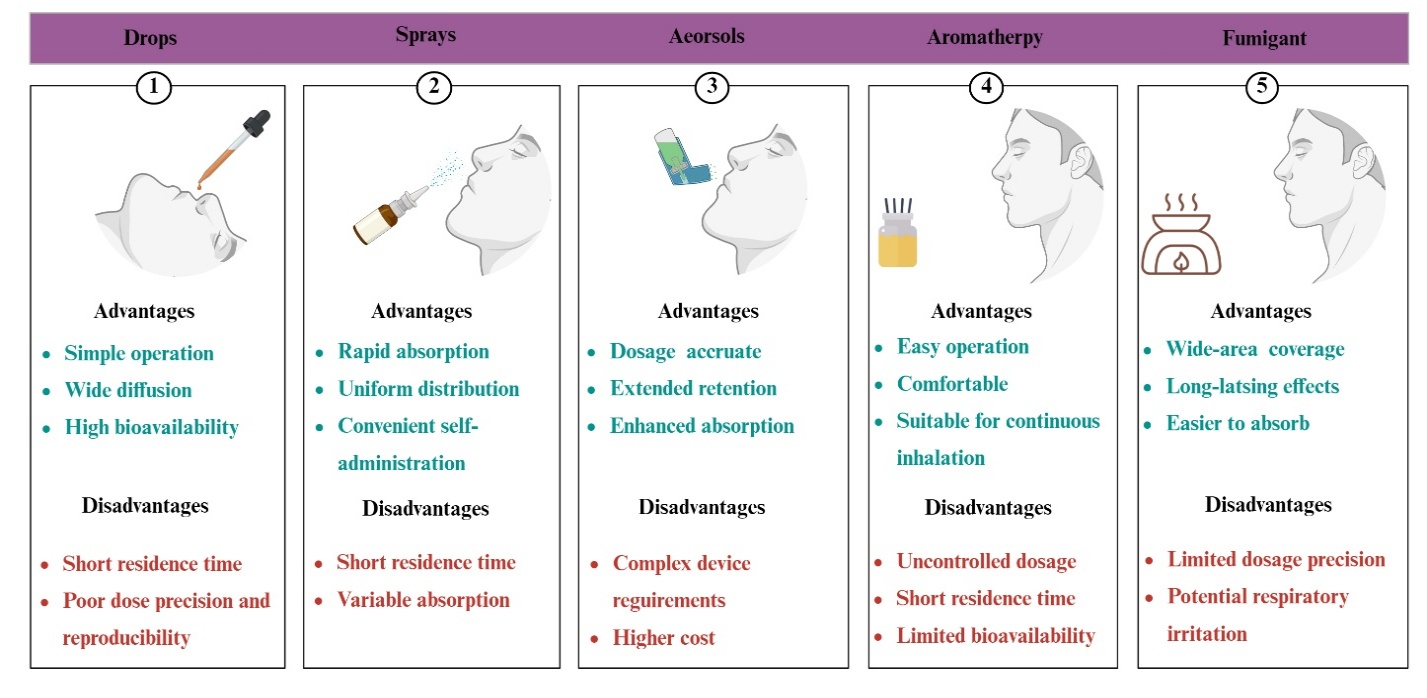
Figure 1 The different types of intranasal EO delivery formulations are commonly used in therapeutic applications This diagram compares five intranasal delivery methods for EOs: (1) Drops, (2) Sprays, (3) Aerosols, (4) Aromatherapy, and (5) Fumigants. Each method's advantages (green) and disadvantages (red) are highlighted, such as bioavailability, distribution precision, user comfort, and operational complexity. It visually summarizes their unique characteristics for targeted therapeutic applications. EO: essential oil. Created using BioRender (BioRender.com Inc., Toronto, Canada).
Figure 1 The different types of intranasal EO delivery formulations are commonly used in therapeutic applications This diagram compares five intranasal delivery methods for EOs: (1) Drops, (2) Sprays, (3) Aerosols, (4) Aromatherapy, and (5) Fumigants. Each method's advantages (green) and disadvantages (red) are highlighted, such as bioavailability, distribution precision, user comfort, and operational complexity. It visually summarizes their unique characteristics for targeted therapeutic applications. EO: essential oil. Created using BioRender (BioRender.com Inc., Toronto, Canada).
Table 5 Comparative analysis of novel nasal delivery systems for EOs
| Delivery system | Characteristic | Advantage | Limitation | Application | Reference |
|---|---|---|---|---|---|
| Nanoemulsion | Thermodynamically stable; small droplet size (20-200 nm) | Enhances the solubility and stability of EOs; increases bioavailability; and reduces mucociliary clearance. | Requires surfactants; limited long-term stability | AR, anxiolytic | Rinaldi et al 2020 |
| Liposomes | Phospholipid bilayer vesicles encapsulating EO molecules | Reduces irritation; improves EO stability; and enhances targeting specificity | Expensive and requires complex manufacturing techniques; structural instability over time | CIRI, anti-atherosclerosis | Long et al 2023 |
| In situ nasal gel | Thermosensitive, pH-sensitive, or ion-sensitive gel forming upon nasal administration. | Prolongs nasal residence time; reduces mucosal irritation; improves bioavailability, and improves patient compliance. | Drug release rate depends on gel matrix properties; it may interfere with nasal mucociliary clearance. | Antidepressant, insomnia, AR | Huang et al 2022 |
| Nanostructured lipid carriers | Lipid-based nanoparticles composed of solid and liquid lipids | High drug-loading capacity with controlled release prolongs retention time in the nasal cavity. Improves EO stability | Complex formulation and challenging preparation process; May affect drug release kinetics | Antidepressant, anxiolytic | Bonaccorso et al 2021 |
Table 5 Comparative analysis of novel nasal delivery systems for EOs
| Delivery system | Characteristic | Advantage | Limitation | Application | Reference |
|---|---|---|---|---|---|
| Nanoemulsion | Thermodynamically stable; small droplet size (20-200 nm) | Enhances the solubility and stability of EOs; increases bioavailability; and reduces mucociliary clearance. | Requires surfactants; limited long-term stability | AR, anxiolytic | Rinaldi et al 2020 |
| Liposomes | Phospholipid bilayer vesicles encapsulating EO molecules | Reduces irritation; improves EO stability; and enhances targeting specificity | Expensive and requires complex manufacturing techniques; structural instability over time | CIRI, anti-atherosclerosis | Long et al 2023 |
| In situ nasal gel | Thermosensitive, pH-sensitive, or ion-sensitive gel forming upon nasal administration. | Prolongs nasal residence time; reduces mucosal irritation; improves bioavailability, and improves patient compliance. | Drug release rate depends on gel matrix properties; it may interfere with nasal mucociliary clearance. | Antidepressant, insomnia, AR | Huang et al 2022 |
| Nanostructured lipid carriers | Lipid-based nanoparticles composed of solid and liquid lipids | High drug-loading capacity with controlled release prolongs retention time in the nasal cavity. Improves EO stability | Complex formulation and challenging preparation process; May affect drug release kinetics | Antidepressant, anxiolytic | Bonaccorso et al 2021 |
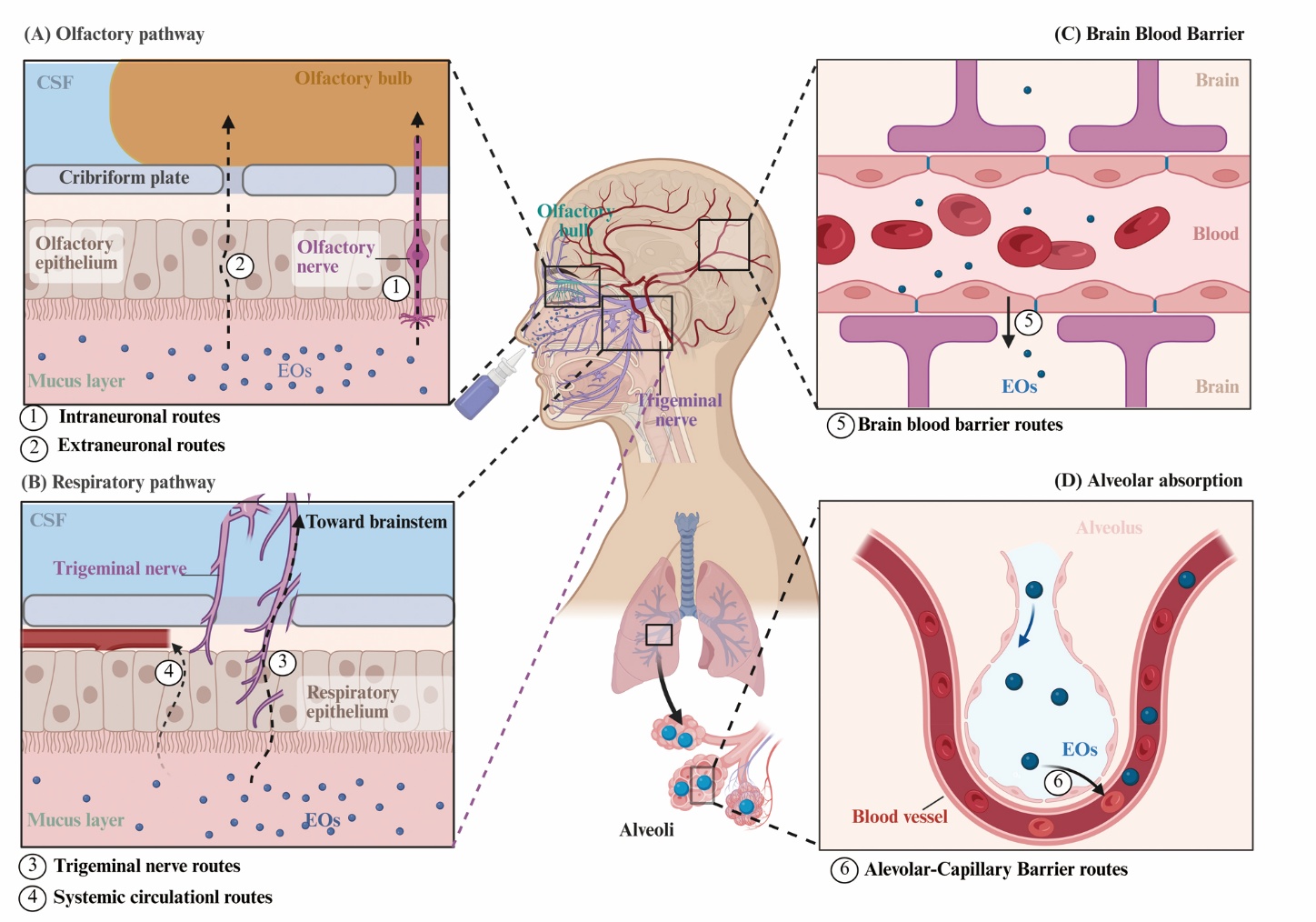
Figure 2 The primary pathways through which EOs are administered via the nasal cavity can reach the central nervous system and systemic circulation This schematic highlights the pathways by which EOs are delivered through the intranasal route. (A) The olfactory region allows EOs to pass through the olfactory epithelium and reach the olfactory bulb, facilitating brain access via the olfactory nerve. (B) The respiratory region enables EO delivery via the trigeminal nerve and mucosal absorption. The figure also illustrates transport across the BBB (C) and alveolar-capillary barrier (D), showcasing potential systemic and localized effects. CSF: cerebrospinal fluid; EOs: essential oils. Created using BioRender (BioRender.com Inc., Toronto, Canada).
Figure 2 The primary pathways through which EOs are administered via the nasal cavity can reach the central nervous system and systemic circulation This schematic highlights the pathways by which EOs are delivered through the intranasal route. (A) The olfactory region allows EOs to pass through the olfactory epithelium and reach the olfactory bulb, facilitating brain access via the olfactory nerve. (B) The respiratory region enables EO delivery via the trigeminal nerve and mucosal absorption. The figure also illustrates transport across the BBB (C) and alveolar-capillary barrier (D), showcasing potential systemic and localized effects. CSF: cerebrospinal fluid; EOs: essential oils. Created using BioRender (BioRender.com Inc., Toronto, Canada).
| 1. |
Spisni E, Valerii MC, Massimino ML. Essential oil molecules can break the loop of oxidative stress in neurodegenerative diseases. Biology 2023; 12: 1504.
DOI URL |
| 2. |
Aziz ZAA, Ahmad A, Setapar SHM, et al. Essential oils: extraction techniques, pharmaceutical and therapeutic potential-a review. Curr Drug Metab 2018; 19: 1100-10.
DOI URL |
| 3. |
de Sousa DP, Damasceno ROS, Amorati R, et al. Essential oils: chemistry and pharmacological activities. Biomolecules 2023; 13: 1144.
DOI URL |
| 4. |
Angelucci FL, Silva VV, Dal Pizzol C, et al. Physiological effect of olfactory stimuli inhalation in humans: an overview. Int J Cosmet Sci 2014; 36: 117-23.
DOI URL |
| 5. |
Lee MS, Choi J, Posadzki P, Ernst E. Aromatherapy for health care: an overview of systematic reviews. Maturitas 2012; 71: 257-60.
DOI PMID |
| 6. |
Zhang N, Yao L. Anxiolytic effect of essential oils and their constituents: a review. J Agric Food Chem 2019; 67: 13790-808.
DOI URL |
| 7. |
Lungare S, Bowen J, Badhan R. Development and evaluation of a novel intranasal spray for the delivery of amantadine. J Pharm Sci 2016; 105: 1209-20.
DOI URL |
| 8. | Dufes C, Olivier JC, Gaillard F, et al. Brain delivery of vasoactive intestinal peptide (VIP) following nasal administration to rats. J Agric Food Chem 2003; 255: 87-97. |
| 9. |
Kozlovskaya L, Abou-Kaoud M, Stepensky D. Quantitative analysis of drug delivery to the brain via nasal route. J Control Release 2014; 189: 133-40.
DOI URL |
| 10. |
Feigin VL, Abajobir AA, Abate KH, et al. Global, regional, and national burden of neurological disorders during 1990-2015: a systematic analysis for the Global Burden of Disease Study 2015. Lancet Neurol 2017; 16: 877-97.
DOI PMID |
| 11. |
Erdő F, Bors LA, Farkas D, et al. Evaluation of intranasal delivery route of drug administration for brain targeting. Brain Res Bull 2018; 143: 155-70.
DOI PMID |
| 12. |
Lu J, Fu T, Qian Y, et al. Distribution of α-asarone in brain following three different routes of administration in rats. Eur J Pharm Sci 2014; 63: 63-70.
DOI PMID |
| 13. |
Crowe TP, Greenlee MHW, Kanthasamy AG, et al. Hsu WH. Mechanism of intranasal drug delivery directly to the brain. Life Sci 2018; 195: 44-52.
DOI PMID |
| 14. |
Sattayakhom A, Wichit S, Koomhin P. The effects of essential oils on the nervous system: a scoping review. Molecules 2023; 28: 3771
DOI URL |
| 15. |
Lizarraga-Valderrama LR. Effects of essential oils on central nervous system: focus on mental health. Phytothe Res 2020; 35: 657-79.
DOI URL |
| 16. |
Faturi CB, Leite JR, Alves PB. c Anxiolytic-like effect of sweet orange aroma in Wistar rats. Prog Neuropsychopharmacol Biol Psychiatry 2010; 34: 605-9.
DOI URL |
| 17. |
Selvaraj K, Gowthamarajan K, Karri VVSR. Nose to brain transport pathways an overview: potential of nanostructured lipid carriers in nose to brain targeting. Artif Cells Nanomed Biotechnol 2018; 46: 2088-95.
DOI PMID |
| 18. |
Penninx BWJH, Pine DS, Holmes EA, et al. Anxiety disorders. Lancet 2021; 397: 914-27.
DOI PMID |
| 19. | Katona C, Katona C. New generation multi-modal antidepressants: focus on vortioxetine for major depressive disorder. Neuropsychiatr Dis Treat 2014; 10: 349-54. |
| 20. | Amin F, Ahmad S, Wasim M, et al. Saida Haider antidepressive and anxiolytic effects of a combination of saffron and chamomile in rats and their relationship with serotonin using in vivo methods. J Tradit Chin Med 2025; 44: 49-56. |
| 21. | LI YJ, Wang BY, Shao WX, et al. Quantitative proteomic analysis of the brain reveals the potential antidepressant mechanism of Jiawei Danzhi Xiaoyao San (加味丹栀逍遥散) in a chronic unpredictable mild stress mouse model of depression. J Tradit Chin Med 2025; 44: 22-31. |
| 22. |
Han XS, Gibson J, Eggett DL, et al. Bergamot (Citrus bergamia) essential oil inhalation improves positive feelings in the waiting room of a mental health treatment center: a pilot study. Phytother Res 2017; 31: 812-6.
DOI PMID |
| 23. |
Lakhan SE, Vieira KF. Nutritional and herbal supplements for anxiety and anxiety-related disorders: systematic review. Nutr J 2010; 9: 42.
DOI PMID |
| 24. |
Lehrner J, Marwinski G, Lehr S, et al. Ambient odors of orange and lavender reduce anxiety and improve mood in a dental office. Physiol Behav 2005; 86: 92-5.
DOI PMID |
| 25. |
Yin XJ, Lin GP, Wu XY, et al. Effects of lavender essential oil inhalation aromatherapy on depression and sleep quality in stroke patients: a single-blind randomized controlled trial. Complement Ther Clin Pract 2024; 55: 101828.
DOI URL |
| 26. | Ebrahimi H, Mardani A, Basirinezhad MH, et al. The effects of lavender and chamomile essential oil inhalation aromatherapy on depression, anxiety and stress in older community-dwelling people: a randomized controlled trial. Explore (NY) 2022; 18: 272-8. |
| 27. |
Saiyudthong S, Marsden CA. Acute effects of bergamot oil on anxiety-related behaviour and corticosterone level in rats. Phytother Res 2010; 25: 858-62.
DOI URL |
| 28. |
Liang M, Du Y, Li W, et al. SuHeXiang essential oil inhalation produces antidepressant- and anxiolytic-like effects in adult mice. Biol Pharm Bull 2018; 41: 1040-8.
DOI PMID |
| 29. |
Bagci E, Aydin E, Ungureanu E, Hritcu L. Anthriscus nemorosa essential oil inhalation prevents memory impairment, anxiety and depression in scopolamine-treated rats. Biomed Pharmacothe 2016; 84: 1313-20.
DOI URL |
| 30. |
Zhang N, Luo M, He L, Yao L. Chemical composition of essential oil from flower of ‘Shanzhizi’ (Gardenia jasminoides Ellis) and involvement of serotonergic system in its anxiolytic effect. Molecules 2020; 25: 4702.
DOI URL |
| 31. |
Mehta N Sharma, N. Exploring the synergistic effects of aromatherapy in the management of anxiety and depression in conjunction with cognitive behavioral therapy. J Complement Integr Med 2015; 12: 159-64.
DOI URL |
| 32. |
Ford DE, Kamerow BD. Epidemiologic study of sleep disturbances and psychiatric disorders. JAMA 2015; 262: 1479-84.
DOI URL |
| 33. |
Ferini-Strambi L, Auer R, Bjorvatn B, et al. Insomnia disorder: clinical and research challenges for the 21st century. Eur J Neurol 2021; 28: 2156-67.
DOI PMID |
| 34. |
Glidewell RN, McPherson Botts E, Orr WC. Insomnia and anxiety. Sleep Med Clin 2015; 10: 93-9.
DOI PMID |
| 35. | Diao RH, Duan XW, Li LL, QU TG, Feng HS, Chen GS. Intervention and mechanism of Xiaoyin Anshen Yin (消银安神饮) in treatment of psoriasis combined with sleep disorders. J Tradit Chin Med 2025; 44: 552-60. |
| 36. |
Karan NB. Influence of lavender oil inhalation on vital signs and anxiety: a randomized clinical trial. Physiol Behav 2019; 211: 112676.
DOI URL |
| 37. | Cannard G. On the scent of a good night's sleep. Nurs Stand 1995; 9: 21. |
| 38. |
Jia Y, Zheng XJ, Ran J, et al. Effect of moxa smoke produced during combustion of Aiye (Folium Artemisiae Argyi) on behavioral changes in mice inhaling the smoke. J Tradit Chin Med 2016; 36: 805-11.
DOI PMID |
| 39. |
Howes M-JR, Houghton PJ. Plants used in Chinese and Indian traditional medicine for improvement of memory and cognitive function. Pharmacol Biochem Behav 2003; 75: 513-27.
DOI URL |
| 40. |
Ni S, Liu XF, Guo XY, et al. Mechanism of Tiaogeng decoction (调更汤) in a cognitive dysfunction mouse model. J Tradit Chin Med 2025; 45: 987-97.
DOI |
| 41. |
Sadaoui N, Bec N, Barragan-Montero V, et al. The essential oil of Algerian Ammodaucus leucotrichus Coss. & Dur. and its effect on the cholinesterase and monoamine oxidase activities. Fitoterapia 2018; 130: 1-5.
DOI URL |
| 42. |
Xu MJ, Zhang XY, Ren FY, et al. Essential oil of Schisandra chinensisameliorates cognitive decline in mice by alleviating inflammation. Food Funct 2019; 10: 5827-42.
DOI URL |
| 43. |
Moss M, Cook J, Wesnes K, Duckett P. Aromas of rosemary and lavender essential oils differentially affect cognition and mood in healthy adults. Int J Neurosci 2003; 113: 15-38.
PMID |
| 44. |
Pengelly A, Snow J, Mills SY, Scholey A, Wesnes K, Butler LR. Short-term effects of rosemary on cognitive performance and mood. Ther Adv Psychopharmacol 2012; 2: 103-13.
DOI URL |
| 45. |
Jeon S, Hur J, Jeong HJ, Koo BS, Pak SC. Suhexiang Wan essential oil alleviates amyloid beta induced memory impairment through inhibition of Tau protein phosphorylation in mice. Am J Chin Med 2012; 39: 917-32.
DOI URL |
| 46. |
Kennedy DO, Scholey AB, Wesnes KA. Dose dependent changes in cognitive performance and mood following acute administration of Ginseng to healthy young volunteers. Nutr Neurosci 2001; 4: 295-310.
DOI URL |
| 47. |
Moss M, Hewitt S, Moss L, Wesnes K. Modulation of cognitive performance and mood by aromas of peppermint and ylang-ylang. Int J Neurosci 2008; 118: 59-77.
DOI PMID |
| 48. |
Lv X, Feng Y, Ma R, et al. Effects of peppermint essential oil on learning and memory ability in APP/PS1 transgenic mice. Molecules 2022; 27: 2051
DOI URL |
| 49. |
Watanabe E, Kuchta K, Kimura M, et al. Effects of bergamot (Citrus bergamia (Risso) Wright & Arn.) essential oil aromatherapy on mood states, parasympathetic nervous system activity, and salivary cortisol levels in 41 healthy females. Forsch Komplementmed 2015; 22: 43-9.
DOI PMID |
| 50. |
Lee MK, Lim S, Song JA, Kim ME, Hur MH. The effects of aromatherapy essential oil inhalation on stress, sleep quality and immunity in healthy adults: randomized controlled trial. Eur J Integr Med 2017; 12: 79-86.
DOI URL |
| 51. |
Wang C, Wang Y, Gong B, et al. Effective components and molecular mechanism of agarwood essential oil inhalation and the sedative and hypnotic effects based on GC-MS-Qtof and molecular docking. Molecules 2022; 27: 3483
DOI URL |
| 52. |
Zhong Y, Zheng Q, Hu P, et al. Sedative and hypnotic effects of Perilla frutescens essential oil through GABAergic system pathway. J Ethnopharmacol 2021; 279:113627.
DOI URL |
| 53. | Zhu LY, Gao YS, Song LZ, Li SF, Qian JQ. Research on improving memory impairment of blue lavender volatile oil. Zhong Guo Zhong Yao Za Zhi 2017; 42: 4819-26. |
| 54. |
Khattak S, Zhang QQ, Sarfraz M, et al. The role of hydrogen sulfide in respiratory diseases. Biomolecules 2021; 11: 682.
DOI URL |
| 55. |
Li J, Chen W, Liu H, et al. Pharmacologic effects approach of essential oils and their components on respiratory diseases. J Ethnopharmacol 2023; 304: 115962.
DOI URL |
| 56. |
Wang Z, Yang L. Chinese herbal medicine: fighting SARS-CoV-2 infection on all fronts. J Ethnopharmacol 2021; 270: 113869.
DOI URL |
| 57. |
Shingnaisui K, Dey T, Manna P, Kalita J. Therapeutic potentials of Houttuynia cordata Thunb. against inflammation and oxidative stress: a review. J Ethnopharmacol 2018; 220: 35-43.
DOI PMID |
| 58. |
Caimmi D, Neukirch C, Demoly P. Essential oils: what is the clinical tolerance in asthmatic patients? J Asthma 2021; 59: 934-6.
DOI URL |
| 59. |
Lam HY, Tergaonkar V, Ahn KS. Mechanisms of allergen-specific immunotherapy for allergic rhinitis and food allergies. Biosci Rep 2020; 40: BSR20200256.
DOI URL |
| 60. |
Bousquet J, Anto JM, Bachert C, et al. Allergic rhinitis. Nat Rev Dis Primers 2020; 6: 96.
DOI PMID |
| 61. | Li W. The efficacy of eucalyptus oil on allergic rhinitis: a randomized controlled trial. Allergy 2019; 74: 403-12. |
| 62. |
Han X, Parker TL. Lavender essential oil inhalation reduces allergic airway inflammation and exerts immunomodulatory effects. J Ethnopharmacol 2017; 200: 165-72.
DOI URL |
| 63. |
Shin SH, Ye MK, Lee DW, Che MH. Immunomodulative effects of chamaecyparis obtusa essential oil in mouse model of allergic rhinitis. Molecules 2020; 25: 4517.
DOI URL |
| 64. |
Choi SY, Park K. Effect of Inhalation of aromatherapy oil on patients with perennial allergic rhinitis: a randomized controlled trial. Evid Based Complement Alternat Med 2016; 2016: 7896081.
DOI URL |
| 65. |
Papi A, Brightling C, Pedersen SE, Reddel HK. Asthma. Lancet 2018; 391: 783-800.
DOI PMID |
| 66. |
Worth H, Dethlefsen U. Patients with asthma benefit from concomitant therapy with cineole: a placebo-controlled, double-blind trial. J Asthma 2012; 49: 849-53.
DOI PMID |
| 67. |
Ziment I, Tashkin DP. Alternative medicine for allergy and asthma. J Allergy Clin Immunol 2000; 106: 603-14.
DOI URL |
| 68. |
Huang AS, Tong BCK, Hung HCH, et al. Targeting calcium signaling by inositol trisphosphate receptors: a novel mechanism for the anti-asthmatic effects of Houttuynia cordata. Biomed Pharmacother 2023; 164: 114935.
DOI URL |
| 69. |
Feng S, Xu G, Fu Y, Ding Q, Shi Y. Exploring the mechanism of bergamot essential oil against asthma based on network pharmacology and experimental verification. ACS Omega 2023; 8: 10202-13.
DOI PMID |
| 70. |
Kim MH, Park SJ, Yang WM. Inhalation of essential oil from mentha piperita ameliorates PM10-exposed asthma by targeting IL-6/JAK2/STAT3 pathway based on a network pharmacological analysis. Pharmaceuticals 2020; 14: 2.
DOI URL |
| 71. |
Mahboubi M. Management of acute cough by zataria multiflora boiss as an alternative treatment. J Integr Med 2018; 16: 20-5.
DOI PMID |
| 72. |
Baky MH, Farag MA, Rasheed DM. Metabolome-based analysis of herbal cough preparations via headspace solid-phasemicroextraction GC/MS and multivariate data analyses: a prospect for its essential oil equivalency. ACS Omega 2020; 5: 31370-80.
DOI URL |
| 73. | Smith A, Matthews O. Aromatic ointments for the common cold: what does the science say? Drugs Context 2022; 11: 1-9. |
| 74. | Schlage WK. Mechanisms of menthol in the treatment of chronic cough. Pulm Pharmacol Ther 2016; 39: 60-8. |
| 75. | Greiner D. Effect of thyme oil and its constituents on the respiratory tract: a review. Planta Medica 2013; 79: 507-15. |
| 76. | Li LL, Luo J, Huang N. A study on effect of turmeric volatile oil on respiratory tract. Zhong Guo Zhong Yao Za Zhi 1998; 23: 624-5. |
| 77. |
Laude EA, Morice AH, Grattan TJ. The antitussive effects of menthol, camphor and cineole in conscious guinea-pigs. Pulm Pharmacol 1994; 7: 179-84.
PMID |
| 78. |
Caimmi D, Neukirch C, Louis R, et al. Effect of the use of intranasal spray of essential oils in patients with perennial allergic rhinitis: a prospective study. Int Arch Allergy Immunol 2021; 182: 182-9.
DOI URL |
| 79. |
Morice AH, Marshall AE, Higgins KS, TJ G. Effect of inhaled menthol on citric acid induced cough in normal subjects. Thorax 1994; 49: 1024-6.
PMID |
| 80. |
Ueno-Iio T, Shibakura M, Yokota K, et al. Lavender essential oil inhalation suppresses allergic airway inflammation and mucous cell hyperplasia in a murine model of asthma. Life Sci 2014; 108: 109-15.
DOI PMID |
| 81. |
Mensah GA, Roth GA, Fuster V. The global eurden of cardiovascular diseases and risk factors. J Am Coll Cardiol 2019; 74: 2529-32.
DOI URL |
| 82. | Naimipoor N, Bagheri-Hosseinabadi Z, Hajizadeh MR, et al. Promising effects of Persian shallot extract on the serum markers and blood pressure of patients with metabolic syndrome: a double-blinded randomized controlled trial. J Tradit Chin Med 2025; 44: 100-6. |
| 83. |
Huang HY, Mu QC, Gao HJ, et al. Ligustrazine monomer against cerebral ischemia-reperfusion injury. Neural Regen Res 2015; 10: 832-40.
DOI URL |
| 84. |
Alves-Silva JM, Monica Zuzarte M, Marques C, Salgueiro L, Girao H. Protective effects of terpenes on the cardiovascular system: current advances and future perspectives. Curr Med Chem 2016; 23: 4559-600.
PMID |
| 85. |
Menezes IA, Barreto CM, Antoniolli AR, Santos MR, deSousa DP. Hypotensive activity of terpenes found in essential oils. Z Naturforsch C J Biosci 2010; 65: 562-6.
DOI PMID |
| 86. |
Ribeiro TP, Porto DL, Menezes CP, et al. Unravelling the cardiovascular effects induced by α‐terpineol: a role for the nitric oxide-cGMP pathway. Clin Exp Pharmacol Physiol 2010; 37: 811-6.
DOI URL |
| 87. |
Saljoughian S, Roohinejad S, Bekhit AEA, et al. The effects of food essential oils on cardiovascular diseases: a review. Crit Rev Food Sci Nut 2017; 58: 1688-705.
DOI URL |
| 88. | Che QZ, Liu DS, Xiang XH, et al. Integrating machine learning and human use experience to identify personalized pharmacotherapy in Traditional Chinese Medicine: a case study on resistant hypertension. J Tradit Chin Med 2025; 44: 192-200. |
| 89. |
Fuchs FD, Whelton PK. High blood pressure and cardiovascular disease. Hypertension 2020; 75: 285-92.
DOI PMID |
| 90. |
Desai AN. High blood pressure. JAMA 2020; 324: 1254-5.
DOI PMID |
| 91. |
Alves-Silva JM, Zuzarte M, Girão H, Salgueiro L. The role of essential oils and their main compounds in the management of cardiovascular disease risk factors. Molecules 2021; 26: 3506.
DOI URL |
| 92. | Kim IH, Kim C, Seong K, et al. Essential oil inhalation on blood pressure and salivary cortisol levels in prehypertensive and hypertensive subjects. Evid Based Complement Alternat Med 2012; 2012: 1-9. |
| 93. |
Salamati A, Mashouf S, Mojab F. Effect of inhalation of lavender essential oil on vital signs in open heart surgery ICU. Iran J Pharm Res 2017; 16: 404-9.
PMID |
| 94. |
Fernández LF, Palomino OM, Frutos G. Effectiveness of Rosmarinus officinalis essential oil as antihypotensive agent in primary hypotensive patients and its influence on health-related quality of life. J Ethnopharmacol 2014; 151: 509-16.
DOI PMID |
| 95. | Goepfert M, Liebl P, Herth N, et al. Aroma oil therapy in palliative care: a pilot study with physiological parameters in conscious as well as unconscious patients. J Cancer Res Clin Onco 2017; 143: 2123-9. |
| 96. |
Foks AC, Bot I. Preface: pathology and pharmacology of atherosclerosis. Eur J Pharmacol 2017; 816: 1-2.
DOI PMID |
| 97. | LI Y, Pan JX, Yang GL, et al. Mechanism of Huayu Qutan recipe (化瘀祛痰方) anti-atherosclerosis mediates lipophagy via mammalian target of rapamycin complex 1/transcription factor EB signaling pathway in ApoE-/- Mice. J Tradit Chin Med 2025; 44: 291-302. |
| 98. |
Fan J, Watanabe T. Atherosclerosis: known and unknown. Pathol Int 2022; 72: 151-60.
DOI PMID |
| 99. |
Cui Y, Liu J, Huang C, Zhao B. Moxibustion at CV4 alleviates atherosclerotic lesions through activation of the LXRα/ABCA1 pathway in apolipoprotein-E-deficient mice. Acupunct Med 2019; 37: 237-43.
DOI PMID |
| 100. | Cai HH, Wang LL, Jiang JF, Wu S, W J. Effect of warm moxibustion on CD40-CD40L axis in rabbits with atherosclerosis. Zhong Guo Zhen Jiu 2014; 34: 55-60. |
| 101. |
Hentia C, Rizzato A, Camporesi E, et al. An overview of protective strategies against ischemia/reperfusion injury: the role of hyperbaric oxygen preconditioning. Brain Behav 2018; 8: e00959.
DOI URL |
| 102. | Long Y, Yang Q, Xiang Y, et al. Nose to brain drug delivery-a promising strategy for active components from herbal medicine for treating cerebral ischemia reperfusion. Pharmacol Re 2020; 159: 104795. |
| 103. |
Long Y, Yu S, Li D, et al. Preparation, characterization and safety evaluation of Ligusticum chuanxiong essential oils liposomes for treatment of cerebral ischemia-reperfusion injury. Food Chem Toxicol 2023; 175: 113723.
DOI URL |
| 104. | Dong NN, Chen XL, Deng BL, Xie SC, Hu J. Effective constituents of essential oil from Gleditsiae Fructus abnormalis and anti-cerebral ischemia/reperfusion injury mechanism: based on GC-MS, network pharmacology, and experimental verification. Zhong Guo Zhong Yao Za Zhi 2023; 48: 1076-86. |
| 105. |
Huang C, Wang C, Zhang W, et al. Preparation, In vitro and in vivo evaluation of nanoemulsion in situ gel for transnasal delivery of Traditional Chinese Medicine volatile oil from Ligusticum sinense Oliv.cv. Chaxiong. Molecules 2022; 27: 7644.
DOI URL |
| 106. |
Barroso I, McCarthy MI. The genetic basis of metabolic disease. Cell 2019; 177: 146-61.
DOI PMID |
| 107. | Spann SJ, Ottinger MA. Longevity, metabolic disease, and community health. Prog Mol Biol Transl Sci 2018; 155: 1-9. |
| 108. |
DeFronzo RA, Ferrannini E, Groop L, et al. Type 2 diabetes mellitus. Nat Rev Dis Primer 2015; 1: 15039.
DOI |
| 109. |
Abdellatief SA, Beheiry RR, El-Mandrawy SAM. Peppermint essential oil alleviates hyperglycemia caused by streptozotocin- nicotinamide-induced type 2 diabetes in rats. Biomed Pharmacother 2017; 95: 990-9.
DOI PMID |
| 110. |
Ștefănescu R, Ősz B-E, Pintea A, et al. Fennel essential oil as a complementary therapy in the management of diabetes. Pharmaceutics 2023; 15: 2657.
DOI URL |
| 111. |
Kiyose C, Takeuchi H, Yabe Y, et al. Improvement effect of sweet basil (Ocimum basilicum L.) powder intake on obese mice fed a high-fat and high-sucrose Diet. J Oleo Sci 2021; 70: 1317-23.
DOI PMID |
| 112. |
Al Kury LT, Abdoh A, Ikbariah K, Sadek B, Mahgoub M. In vitro and in vivo antidiabetic potential of monoterpenoids: an update. Molecules 2021; 27: 182.
DOI URL |
| 113. |
Heghes SC, Filip L, Vostinaru O, et al. Essential oil-bearing plants from balkan peninsula: promising sources for new drug candidates for the prevention and treatment of diabetes mellitus and dyslipidemia. Frontiers in Pharmacology 2020; 11: 989.
DOI PMID |
| 114. | Wujie YE, Yawei Y, Da Z, et al. Effectiveness of combining Qingyanyin formulated granules (轻燕饮配方颗粒) with press needles in treating abdominal obesity: a multicenter randomized controlled trial. J Tradit Chin Med 2025; 44: 107-14. |
| 115. |
Pan XF, Wang L, Pan A. Epidemiology and determinants of obesity in China. Lancet Diabetes Endocrinol 2021; 9: 373-92.
DOI URL |
| 116. | Kim K. The effect of grapefruit essential oil inhalation on lipid metabolism in high-fat diet-induced obese mice. J Nutr Biochem 2020; 73: 108-15. |
| 117. |
Hong SJ, Cho J, Boo CG, et al. Inhalation of patchouli (Pogostemon Cablin Benth.) essential oil improved metabolic parameters in obesity-induced sprague dawley rats. Nutrients 2020; 12: 2077.
DOI URL |
| 118. |
Batubara I, Suparto I, Sa’diah S, Matsuoka R, Mitsunaga T. Effects of inhaled citronella oil and related compounds on rat body weight and brown adipose tissue sympathetic nerve. Nutrients 2015; 7: 1859-70.
DOI PMID |
| 119. |
Hong SJ, Kim DS, Lee J, et al. Inhalation of low-dose basil (Ocimum basilicum) essential oil improved cardiovascular health and plasma lipid markers in high fat diet-induced obese rats. J Food Sci 2022; 87: 2450-62.
DOI PMID |
| 120. |
Shaw JE, Sicree RA, Zimmet PZ. Global estimates of the prevalence of diabetes for 2010 and 2030. Diabetes Res Clin Pract 2010; 87: 4-14.
DOI URL |
| 121. | YKai Y, Wei W, Yan W, et al. Network pharmacology-based study on the mechanism of Tangfukang formula (糖复康方) against type 2 diabetes mellitus. J Tradit Chin Med 2025; 44: 76-88. |
| 122. |
Hong SJ, Yoon S, Jo SM, et al. Olfactory stimulation by fennel (Foeniculum vulgare Mill.) essential oil improves lipid metabolism and metabolic disorders in high fat-induced obese rats. Nutrients 2022; 14: 741.
DOI URL |
| 123. | Hur MH, Hong JH, Yeo S. Effects of aromatherapy on stress, fructosamine, fatigue, and sleep quality in prediabetic middle-aged women: a randomised controlled trial. Eur J Integr Med 2019; 49: 566-76. |
| 124. |
Pirillo A, Casula M, Olmastroni E, Norata GD, Catapano AL. Global epidemiology of dyslipidaemias. Nat Rev Cardiol 2021; 18: 689-700.
DOI PMID |
| 125. |
Natesan V, Kim SJ. Lipid mmetabolism, disorders and therapeutic drugs-review. Biomol Ther 2021; 29: 596-604.
DOI URL |
| 126. | Shah F. Basil essential oil improves lipid profile and oxidative status in hyperlipidemic rats. J Ethnopharmaco 2018; 224: 293-8. |
| 127. |
Kim DS, Hong SJ, Yoon S, et al. Olfactory stimulation with volatile aroma compounds of basil (Ocimum basilicum L.) essential oil and linalool ameliorates white fat cccumulation and dyslipidemia in chronically stressed rats. Nutrients 2022; 14: 1822.
DOI URL |
| 128. | Kim SY, Kim MH, Kim MR. Effects of inhaled menthae herba essential oil on hypothalamic neurotransmitters and lipid metabolism in diet-induced obese mice. IBRO Neurosci Rep 2023; 15: S762-3. |
| 129. |
Rinaldi F, Oliva A, Sabatino M, et al. Antimicrobial essential oil formulation: chitosan coated nanoemulsions for nose to brain delivery. Pharmaceutics 2020; 12: 678.
DOI URL |
| 130. |
Bonaccorso A, Cimino C, Manno DE, et al. Essential oil-loaded NLC for potential intranasal administration. Pharmaceutics 2021; 13: 1166.
DOI URL |
| 131. |
Charlton S, Jones NS, Davis SS, Illum L. Distribution and clearance of bioadhesive formulations from the olfactory region in man: effect of polymer type and nasal delivery device. Eur J Pharm Sci 2007; 30: 295-302.
PMID |
| 132. |
McKay DL, Blumberg JB. A review of the bioactivity and potential health benefits of peppermint tea (Mentha piperita L.). Phytother Res 2006; 20: 619-33.
DOI PMID |
| 133. |
Cavanagh HM, Wilkinson JM. Biological activities of lavender essential oil. Phytother Res 2002; 16: 301-8.
DOI PMID |
| 134. |
Liang Y, Zhang X, Zou J, et al. Pharmacology mechanism of Flos magnoliae and Centipeda minima for treating allergic rhinitis based on pharmacology network. Drug Dev Ind Pharm 2019; 45: 1547-55.
DOI URL |
| 135. | Wu M, Zhang JY, Zhang X. Clinical observation of Flos Magnoliae volatile oil nano-liposome nasal drops in treating pediatric allergic rhinitis. Zhong Guo Zhong Xi Yi Jie He Za Zhi 2009; 29: 740-2. |
| 136. |
Vidgren MT, Kublik H. Nasal delivery systems and their effect on deposition and absorption. Adv Drug Deliv Rev 1998; 29: 157-77.
DOI URL |
| 137. |
Ben-Arye E, Dudai N, Eini A, et al. Treatment of upper respiratory tract infections in primary care: a randomized study using aromatic herbs. Evid Based Complement Alternat Med 2011; 2011: 690346.
DOI URL |
| 138. |
Yogi W, Tsukada M, Sato Y, et al. Influences of lavender essential oil inhalation on stress responses during short-duration sleep cycles: a pilot study. Healthcare 2021; 9: 909.
DOI URL |
| 139. |
Juergens UR, Dethlefsen U, Steinkamp G, Gillissen A, Repges R, Vetter H. Anti-inflammatory activity of 1.8-cineol (eucalyptol) in bronchial asthma: a double-blind placebo-controlled trial. Respir Med 2003; 97: 250-6.
DOI URL |
| 140. | Sun Ah, Gong LL. Therapeutic effect of a combined therapy with Cangxin nasal spray and iontophoresis on allergic rhinitis. Chin J Otorhinolaryngol Integ Med 2016; 24: 422-31. |
| 141. | Müller RH, Shegokar R, Keck CM. 20 years of lipid nanoparticles (SLN and NLC): present state of development and industrial applications. Curr Drug Discov Techno 2011; 8: 207-27. |
| 142. |
Berraaouan D, Essifi K, Addi M, et al. Hybrid microcapsules for encapsulation and controlled release of rosemary essential oil. Polymers 2023; 15: 823.
DOI URL |
| 143. |
Zhao Y, Wang Y, Zhang Z, Li H. Advances in controllable release essential oil microcapsules and their promising applications. Molecules 2023; 28: 4979.
DOI URL |
| 144. |
Hye T, Moinuddin SM, Sarkar T, et al. An evolving perspective on novel modified release drug delivery systems for inhalational therapy. Expert Opin Drug Deliv 2023; 20: 335-48.
DOI URL |
| 145. |
Hwang E, Shin S. The effects of aromatherapy on sleep improvement: a systematic literature review and Meta-analysis. J Altern Complement Med 2015; 21: 61-8.
DOI URL |
| 146. |
Zhong Y, Zheng Q, Hu P, et al. Sedative and hypnotic effects of compound Anshen essential oil inhalation for insomnia. BMC Complement Altern Med 2019; 19: 306.
DOI |
| 147. |
Chuang KJ, Chen HW, Liu IJ, Chuang HC, Lin LY. The effect of essential oil on heart rate and blood pressure among solus por aqua workers. Eur J Prev Cardiol 2012; 21: 823-8.
DOI URL |
| 148. |
Sakagami H, Matsumoto H, Satoh K, et al. Cytotoxicity and radical modulating activity of moxa smoke. in vivo 2005; 19: 391-7.
PMID |
| 149. | Huang YP, Qin Y, Ouyang XL, et al. The mechanism study of moxa combustion products on regulating vascular endothelial function in atherosclerotic mice. Evid Based Complement Alternat Med 2022; 2022: 1303978. |
| 150. | Ha L, Yu M, Yan Z, Rui Z, Zhao B. Effects of moxibustion and moxa smoke on behavior changes and energy metabolism in APP/PS1 mice. Evid Based Complement Alternat Med 2019; 2019: 1-10. |
| 151. |
Clementino A, Batger M, Garrastazu G, et al. The nasal delivery of nanoencapsulated statins – an approach for brain delivery. Int J Nanomedicine 2016; 11: 6575-90.
DOI URL |
| 152. |
Suman JD. Current understanding of nasal morphology and physiology as a drug delivery target. Drug Deliv Transl Res 2013; 3: 4-15.
DOI URL |
| 153. | Keller LA, Merkel O, Popp A. Intranasal drug delivery: opportunities and toxicologic challenges during drug development. Drug Deliv Transl Re 2021; 12: 735-57. |
| 154. | Lochhead JJ, Thorne RG. Intranasal delivery of biologics to the central nervous system. Adv Drug Deliv Re 2012; 64: 14-28. |
| 155. |
Bourganis V, Kammona O, Alexopoulos A, Kiparissides C. Recent advances in carrier mediated nose-to-brain delivery of pharmaceutics. Eur J Pharm Biophar 2018; 128: 337-62.
DOI URL |
| 156. | Landis MS, Boyden T, Pegg S. Nasal-to-CNS drug delivery: where are we now and where are we heading? An industrial perspective. Ther Deli 2012; 3: 195-208. |
| 157. | Kaplan NM. The deadly quartet. Upper-body obesity, glucose intolerance, hypertriglyceridemia, and hypertension. Arch Intern Me 1989; 149: 1514-20. |
| 158. |
Chioca LR, Antunes VDC, Ferro MM, Losso EM, Andreatini R. Anosmia does not impair the anxiolytic-like effect of lavender essential oil inhalation in mice. Life Sci 2013; 92: 971-5.
DOI PMID |
| 159. |
Marianecci C, Rinaldi F, Hanieh PN, et al. Nose to brain delivery: new trends in amphiphile-based “Soft” nanocarriers. Curr Pharm Des 2015; 21: 5225-32.
DOI URL |
| 160. |
Misra A. Drug delivery systems from nose to brain. Curr Pharm Biotechnol 2012; 13: 2355-79.
DOI URL |
| 161. | Trevino JT, Quispe RC, Khan F, Novak V. Non-invasive strategies for nose-to-brain drug delivery. J Clin Trials 2020; 10: 439. |
| 162. |
Dhuria SV, Hanson LR, Frey WH. Intranasal delivery to the central nervous system: mechanisms and experimental considerations. J Pharm Sci 2010; 99: 1654-73.
DOI URL |
| 163. | Mittal D, Ali A, Md S, et al. Insights into direct nose to brain delivery: current status and future perspective. Drug Deli 2013; 21: 75-86. |
| 164. | Patel A, Surti N, Mahajan A. Intranasal drug delivery: novel delivery route for effective management of neurological disorders. J Drug Deliv Sci Technol 2019; 52: 130-7. |
| 165. |
Wang Z, Xiong G, Tsang WC, Schätzlein AG, Uchegbu IF. Nose-to-brain delivery. J Pharmacol Exp Ther 2019; 370: 593-601.
DOI PMID |
| 166. |
Buchbauer G, Jirovetz L, Jäger W, Plank C, Dietrich H. Fragrance compounds and essential oils with sedative effects upon inhalation. J Pharm Sci 1993; 82: 660-4.
DOI URL |
| 167. |
Schuwald AM, Noldner M, Wilmes T, et al. Lavender oil-potent anxiolytic properties via modulating voltage dependent calcium channels. PLoS One 2013; 8: e59998.
DOI URL |
| 168. |
Cui J, Li M, Wei Y, et al. Inhalation aromatherapy via brain-targeted nasal delivery: natural volatiles or essential oils on mood disorders. Front Pharmacol 2022; 13: 860043.
DOI URL |
| 169. |
Willis DN, Liu B, Ha MA, Jordt SE, Morris JB. Menthol attenuates respiratory irritation responses to multiple cigarette smoke irritants. FASEB J 2011; 25: 4434-44.
DOI PMID |
| 170. | Schoen K Ashbrook, D. Olfactory and trigeminal nerve interactions: Influences of eucalyptol and menthol on respiratory sensations. Chem Senses 2016; 41: 513-8 |
| 171. |
Guo J, Duan JA, Shang EX, Tang Y, Qian D. Determination of ligustilide in rat brain after nasal administration of essential oil from Rhizoma Chuanxiong. Fitoterapia 2009; 80: 168-72.
DOI URL |
| 172. |
Veronesi MC, Alhamami M, Miedema SB, et al. Imaging of intranasal drug delivery to the brain. Am J Nucl Med Mol Imaging 2020; 10: 1-31.
PMID |
| 173. |
Martial C, Poirrier AL, Pottier L, et al. From nose to brain: The effect of lemon inhalation observed by whole brain voxel to voxel functional connectivity. Cortex 2023; 165: 119-28.
DOI PMID |
| 174. |
Nasr M, Mansour S, Mortada ND, El Shamy AA. Lipospheres as carriers for topical delivery of aceclofenac: preparation, characterization and in vivo evaluation. AAPS PharmSciTech 2008; 9: 154-62.
DOI URL |
| [1] | LIN Kaifeng, ZENG Zhongliao, SUN Yan, SUN Fangzhou, ZHANG Han, SUN Jing, JIANG Ling, Jeffrey D. Deng, LI Min, LIANG Bocheng. Traditional Chinese Medicine for the prevention and treatment of adolescent idiopathic scoliosis: scientific understanding and a multimodal therapeutic approach [J]. Journal of Traditional Chinese Medicine, 2026, 46(3): 745-756. |
| [2] | MIN Zeting, XU Qianqian, SHI Mengqiong, GUO Wei, ZHANG Jihong, CHEN Maohua, XU Jie, HU Huiquan, ZHOU Gang, TANG Haiming. A comprehensive review on chemical structure, quality control, pharmacological effects, and structure-activity relationship of saponins from Zhuzishen (Rhizoma Panacis Majoris) [J]. Journal of Traditional Chinese Medicine, 2026, 46(3): 757-767. |
| [3] | JIAN Jiawei, DING Zhimin, ZHUANG Yueyang, WANG Junzi, YANG Minguang, LIU Weilin. Acupuncture-driven exosomes: an emerging therapy [J]. Journal of Traditional Chinese Medicine, 2026, 46(3): 768-778. |
| [4] | WANG Xuehui, SUN Yuxin, Birling Yoann, LI Xun, ZHAO Ruotong, ZHENG Youyou, SONG Zhenmei, ZHANG Yanli, DU Hongbo, WANG Jianyun, LI Yinqing, LIU Zhaolan, LIU Jianping. A Meta-analysis of Traditional Chinese Medicine constitution distribution in people with functional constipation [J]. Journal of Traditional Chinese Medicine, 2026, 46(2): 261-273. |
| [5] | LI Kexin, YANG Jinzu, XIAO Kunlin, DUAN Shaojie, XIAO Kunmin. Tongue-coating microbiome as a predictor of solid tumors: an updated scoping review of clinical studies [J]. Journal of Traditional Chinese Medicine, 2026, 46(2): 501-508. |
| [6] | Masoumeh Amiri, Mozafar Khazaei, Tayebeh Sadat Tabatabai, Leila Rezakhani. Therapeutic potential of garlic-derived exosome like nanovesicles: challenge and opportunity [J]. Journal of Traditional Chinese Medicine, 2026, 46(2): 509-516. |
| [7] | LIN Lixia, LI Xin, LI Ling, YANG Pu, LU Liming, LIU Buping, SU Shengyong. Multiple acupuncture and moxibustion therapies for allergic rhinitis in adults: a network Meta-analysis of randomized controlled trials [J]. Journal of Traditional Chinese Medicine, 2026, 46(1): 1-13. |
| [8] | YANG Wu, LI Yinghui, LIAO Heng, XIONG Shangbin. Molecular landscape of Berberine's therapeutic potential in gastrointestinal disorders [J]. Journal of Traditional Chinese Medicine, 2026, 46(1): 245-256. |
| [9] | Hyungsun Jun, Nahyun Cho, Wonbae Ha, Junghan Lee, Mi Mi Ko, Young-Eun Kim, Jeeyoun Jung, Jungtae Leem. Key elements for screening kidney deficiency pattern in Traditional Chinese and Korean Medicine: a systematic review and Delphi study [J]. Journal of Traditional Chinese Medicine, 2025, 45(6): 1169-1177. |
| [10] | WANG Ci, CAO Yawen, WANG Jiaying, CHEN Jixin, MA Xue, WANG Xianliang, MAO Jingyuan. Efficacy and safety of acupuncture for arrythmias: an overview of systematic reviews and Meta-analyses [J]. Journal of Traditional Chinese Medicine, 2025, 45(6): 1178-1190. |
| [11] | KONG Lingyao, ZHANG Xiaowen, WANG Xuehui, WANG Zhijie, Robinson Nicola, LIU Jianping. Moxibustion for human immunodeficiency virus and acquired immunodeficiency syndrome and its complications: a systematic review of randomized controlled trials [J]. Journal of Traditional Chinese Medicine, 2025, 45(6): 1201-1214. |
| [12] | ZHANG Gedi, WEN Xiaoli, TAO Tianming, YAN Ziyou, LIU Hongning. Exploration of constructing a relatively comprehensive syndrome differentiation and treatment system based on dialectical materialism principles [J]. Journal of Traditional Chinese Medicine, 2025, 45(5): 1164-1168. |
| [13] | JIANG Jinglei, YU Tao, QIAN Yulin, WANG Meng. Understanding the role of microglia in Alzheimer's disease: insights into mechanisms, acupuncture, and potential therapeutic targets [J]. Journal of Traditional Chinese Medicine, 2025, 45(4): 922-936. |
| [14] | WANG Yiying, DONG Shuai, LI Bo, HAN Mei, CAO Huijuan. Update evidence of effectiveness on pain relieving of cupping therapy: a systematic review and Meta-analysis of randomized controlled trials [J]. Journal of Traditional Chinese Medicine, 2025, 45(2): 234-253. |
| [15] | ZHANG Dingshan, CHEN Li, MARYAM Mazhar, XUE Jinyi, LIU Ping, LIU Mengnan. Application of promoting blood circulation and resolving blood stasis in intracerebral hemorrhage: a traditional method gradually being reconsidered [J]. Journal of Traditional Chinese Medicine, 2025, 45(2): 458-472. |
| Viewed | ||||||
|
Full text |
|
|||||
|
Abstract |
|
|||||