
Journal of Traditional Chinese Medicine ›› 2026, Vol. 46 ›› Issue (5): 1295-1306.DOI: 10.19852/j.cnki.jtcm.2026.05.022
• Idea and Methodology • Previous Articles Next Articles
Quality criteria for measuring properties of diagnostic scale for Traditional Chinese Medicine syndromes
FANG Ge1,2, LI Lin2, LI Xiantao3, CHEN Jiaxu4, ZHOU Xuan4, HU Zhixi2( )
- 1
School of Traditional Chinese Medicine ,Hunan Traditional Chinese Medical College Zhuzhou 412000, China
2School of Traditional Chinese Medicine ,Hunan University of Chinese Medicine Changsha 410208, China
3School of Basic Medical Science ,Guangzhou University of Chinese Medicine Guangzhou 510006, China
4Formula-Pattern Research Center ,School of Traditional Chinese Medicine, Jinan University Guangzhou 510632, China
-
Received:2025-02-12Accepted:2025-12-24Online:2026-10-15Published:2026-10-09 -
Contact:Prof. HU Zhixi, School of Traditional Chinese Medicine, Hunan University of Chinese Medicine, Changsha 410208, China. 003405@hnucm.edu.cn,Telephone: +86-18719139564 -
Supported by:Key Areas of Research and Development Plan of Guangdong Province: a Systematic Study of the Diagnostic Criteria for Qi Stagnation Syndrome(2020B1111100001);National Natural Science Foundation of China: Exploring the Pathological Mechanism of Myocardial Fibrosis in Ischemic Heart Failure Based on miR-155 Regulation of Macrophage Polarization and its Interventional Approach Based on Evidence(82274412);Hunan Provincial Natural Science Foundation of China: Based on the Concept of “Heart-kidney Disharmony,” this Study Explores the Pathological Mechanisms of Hypertension, Heart Failure, and Renal Fibrosis(2020JJ4062);Effects and Mechanism of Endurance Exercise on Myocardial Fibrosis in Hypertensive Heart Failure Based on miR-378(2020JJ5408)

Cite this article
FANG Ge, LI Lin, LI Xiantao, CHEN Jiaxu, ZHOU Xuan, HU Zhixi. Quality criteria for measuring properties of diagnostic scale for Traditional Chinese Medicine syndromes[J]. Journal of Traditional Chinese Medicine, 2026, 46(5): 1295-1306.
share this article
Table 1 Quality criteria for the property measurements of the diagnostic criteria for TCM syndromes
| Property | Definition | Quality criteria |
|---|---|---|
| Literature review | Systematically collects disease descriptions in the TCM literature, organizes physicians’ experience, and provides basic data to establish scale items | + A good search strategy; Clear inclusion/exclusion criteria; Quantified and graded |
| − No searched strategy; Vague inclusion and exclusion criteria; Not quantified and graded | ||
| Clinical data | Primarily cross-sectional and retrospective studies | + The pool of the top 20 items and the remaining low-frequency words are selected as alternative items |
| − All items are considered alternate items | ||
| Subjective screening | Delphi method, soliciting experts’ anonymous opinions of the item pool | + (a) Expert concentration: average >2 (rate 0-4), grade sum >30% of full score ratio, and full score ratio >30% and (b) expert coordination coefficient: coordination coefficient >0.1 |
| − (a) Expert concentration: average ≤2 (rate 0-4), grade sum ≤30% of full score ratio, and full score ratio ≤30%; and (b) expert coordination coefficient: coordination coefficient ≤0.1 | ||
| Objective screening | The extent to which the results of participant interviews are examined using various statistical methods | + (a) Item distribution inspection method: a response rate ≤80% for any option; (b) t-test: P-value < 0.05; (c) discrete trend method: S ≥0.9; (d) correlation coefficient method: correlation coefficient of ≥0.4; and (e) Cronbach’s α coefficient method: If Cronbach’s α changes little, it is retained |
| − (a) Item distribution inspection method: a response rate >80% in any option; (b) t-test: P-value ≥0.05; (c) discrete trend method: S < 0.9; (d) correlation coefficient method: correlation coefficient of < 0.4; and (e) Cronbach’s α coefficient method: If Cronbach’s α increases significantly, consider deleting the item | ||
| Item weighting methods | Items were quantified | + Formulas used to determine item scores |
| − No formulas used to determine item scores | ||
| Diagnostic threshold | ROC analysis | + ROC curve of >0.6 |
| − ROC curve of ≤0.6 | ||
| Internal consistency | Items in a (sub)scale are intercorrelated, thus measuring the same construct | + Cronbach’s α: 0.70-0.90 |
| − Cronbach’s α: < 0.70 or >0.90 | ||
| Split-half | Test of how consistently a quantity is represented across items | + Cronbach’s α: 0.70-0.90 |
| − Cronbach’s α: < 0.70 or >0.90 | ||
| Test-retest | After the scale measures the same measurement object, it is re-measured using the same scale within a certain period (less than two weeks) | + ICC or weighted kappa is ≥0.40 |
| − ICC or weighted kappa is < 0.40 | ||
| Interrater consistency | Clinicians from multiple centers with different backgrounds and professional knowledge of Chinese medicine | + ICC or weighted kappa is ≥0.40; and ≥10 clinicians |
| − ICC or weighted kappa is < 0.40; and < 10 clinicians | ||
| Content validity | Degree of coincidence between the content actually measured by a scale and the content to be measured | + I-CVI >0.78 and S-CVI >0.80 |
| − I-CVI ≤0.78 and S-CVI ≤0.80 | ||
| Criterion validity | Correlation between the scale and gold standard | + correlation coefficient is >0.70 |
| − correlation coefficient is ≤0.70 | ||
| Structural validity | Degree of correlation between specific construct items, which is consistent with the theoretical hypothesis | + CFA: RMSEA < 0.08, and GFI, AGFI, NFI, IFI, TLI, and CFI >0.80 |
| − CFA: RMSEA ≥0.08, and GFI, AGFI, NFI, IFI, TLI, and CFI ≤0.80 | ||
| Convergent validity | Computed from the hypothesis item-subscale correlation | + correlation coefficient ≥0.40 |
| − correlation coefficient < 0.40 | ||
| Discriminant validity | Comparing and analyzing score differences in different characteristic populations | + t-test: t >1 and P < 0.05. |
| − t-test: t ≤1 and P ≥0.05. |
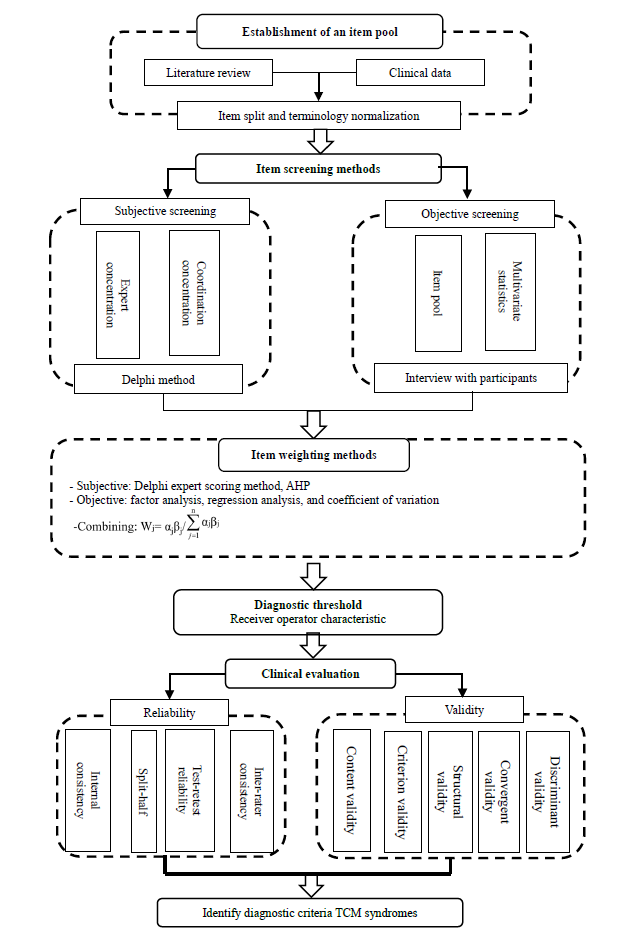
Figure 1 Diagnostic criteria for TCM syndromes
Figure 1 Diagnostic criteria for TCM syndromes
Table 2 Summary of the assessment of measurement properties among TCM diagnostic scales for functional dyspepsia
| Scale | TCM functional gastrointestinal disorders scale | TCM syndrome differentiation instrument for functional gastrointestinal disorders | TCM syndrome differentiation instrument for functional gastrointestinal disorders (amended) | TCM functional dyspepsia scale | Stomach Qi defificiency pattern assessment scale | ||
|---|---|---|---|---|---|---|---|
| Establishment of an item pool | Literature review | + | + | + | + | + | |
| Clinical data | + | − | − | − | − | ||
| Item screening methods | Subjective screening | − | − | − | − | + | |
| Objective screening | + | + | + | + | − | ||
| Item weighting methods | − | − | − | + | − | ||
| Diagnostic threshold | − | − | − | + | + | ||
| Clinical evaluation | Reliability | Internal consistency | + | − | − | − | + |
| Split-half | + | − | − | − | − | ||
| Test-retest | − | − | − | + | − | ||
| Inter-rater consistency | − | − | − | − | − | ||
| Validity | Content validity | + | − | − | − | − | |
| Criterion validity | − | − | − | + | + | ||
| Structural validity | + | + | + | − | − | ||
| Convergent validity | − | − | − | − | − | ||
| Discriminant validity | + | + | − | − | − | ||
| [1] | Yu DL, Hu JQ. Reflections on diagnostic criteria of Traditional Chinese Medicine syndrome. Zhong Hua Zhong Yi Yao Za Zhi 2021; 36: 4110-3. |
| [2] | Chen X, Jiang JY. Analysis on the research status of Traditional Chinese Medicine syndrome scale. Shi Yong Zhong Yi Nei Ke Za Zhi 2021; 35: 129-31. |
| [3] | Zhou DQ, Zhou HY, Yang ZZ, Zhou GQ. Clinical study of Niuhuang Jiangya pills in the treatment of essential hypertension. Zhong Guo Zhong Yao Za Zhi 2006; 31: 612-4. |
| [4] | Wang LP, Wang SL, Zhang DW, et al. Correlation between the severity and its variables of blood stasis syndrome and the clinical outcome of patients with acute corornary syndrome after percutaneous coronary intervention. Zhong Xi Yi Jie He Xin Nao Xue Guan Bing Za Zhi 2020; 18: 1025-30. |
| [5] | SFDA: Guidelines for the application of patient-reported outcomes in drug clinical development (trial). In. 2021-12-27, cited 2023-05-22; 2-8. Available from URL: https://www.cde.org.cn/main/news/viewInfoCommon/c2f79c22e8678241b030c71523eb300c. |
| [6] | Alrubaiy L, Hutchings HA, Williams JG. Assessing patient reported outcome measures: a practical guide for gastroenterologists. United European Gastroenterol J 2014; 2: 463-70. |
| [7] | McDowell I, Jenkinson C. Development standards for health measures. J Health Serv Res Policy 1996; 1: 238-46. |
| [8] | Koller M, Neugebauer EAM, Augustin M, et al. Assessment of quality of life in health services research-conceptual, methodological and structural prerequisites. Gesundheitswesen 2009; 71: 864-72. |
| [9] | Cao Y, Yu XP. Recent research on the PRO scale at home and abroad. Zhong Yi Za Zhi 2014; 55: 710-4. |
| [10] | Li XJ, Chen JX, LIU YY. Discussion about the significance of TCM syndrome biological foundation in the improvement of TCM syndrome differentiation system. Zhong Hua Zhong Yi Yao Za Zhi 2017; 32: 2353-7. |
| [11] | News Center of Tianjin University of Traditional Chinese Medicine. Standardization is an important channel for Traditional Chinese Medicine to go international. In. 2023-02-11, cited 2023-05-28; 3 screens. Available from URL: https://www.sohu.com/a/639632271_121118850. |
| [12] | Sun L, Mao JJ, Yan Y, Xu Y, Yang Y. Patient reported Traditional Chinese Medicine spleen deficiency syndrome (TCM-SDS) scale for colorectal cancer: development and validation in China. Integr Cancer Ther 2021; 20: 15347354211020105. |
| [13] | Fang G, Zhou X, Chen JX, et al. Construction of diagnostic scale of liver constraint and Qi stagnation syndrome based on delphi method and analytic hierarchy process. Zhong Yi Za Zhi 2022; 63: 1525-31. |
| [14] | Song CC, Ye XH, Fu HQ, et al. Diagnostic and categorization criteria for palpitations below the heart in Traditional Chinese Medicine: a delphi consensus study. Altern Ther Health Med 2021; 27: 68-72. |
| [15] | Fang G, Wang YX, Yan ZQ, et al. Test-retest reliability of the coronary heart disease damp phlegm and blood stasis pattern questionnaire: results from a multicenter clinical trial. Evid Based Complement Alternat Med 2021; 2021: 6291301. |
| [16] | Liu XQ, Peng DH, Wang YP, et al. Diagnostic accuracy of Chinese medicine diagnosis scale of phlegm and blood stasis syndrome in coronary heart disease: a study protocol. Chin J Integr Med 2019; 25: 515-20. |
| [17] | Fang G, Zhang LL, Ren Q, et al. Development of a diagnostic questionnaire for damp phlegm pattern and blood stasis pattern in coronary heart disease patients (CHD-DPBSPQ). Evid Based Complement Alternat Med 2019; 2019: 6856085. |
| [18] | Liu B, Zhang PT. A methodological review of the key steps in establishing quantitative diagnostic criteria for TCM syndromes. Zhong Yi Za Zhi 2020; 61: 2204-8. |
| [19] | Sun YJ. The establishment of macroscopic diagnostic scale for Yang-xu syndrome. Guangzhou: Guangzhou University of Chinese Medicine, 2018: 3-8. |
| [20] | Carlton J, Peasgood T, Mukuria C, et al. Generation, selection, and face validation of items for a new generic measure of quality of life: the EQ-HWB. Value Health 2022; 25: 512-24. |
| [21] | Zhou YL, Liu W, Li Y, et al. Development of an item pool for nutrition literacy assessment for Chinese pregnant women. Ying Yang Xue Bao 2021; 43: 115-9. |
| [22] | Bao YH. Construction of item Pool of TCM syndrome differentiation scale for gastrointestinal dysfunction based on literature research. Shenyang: Liaoning University of Traditional Chinese Medicine, 2020: 3-6. |
| [23] | Wang XF, Liu FB, Wu ZQ, Wang Z, Wei W, Ma HZ. Development of structure model and item pool of the evaluation of efficacy scale combined disease and syndrome for children's pneumonia. Liaoning Zhong Yi Yao Da Xue Xue Bao 2016; 18: 5-8. |
| [24] | Yan SY, Zhu BX, Li DX, et al. linic terminology of traditional Chinese medical diagnosis and treatment - Part 2:Syndromes/patterns. GB/T 16751.2-2021. Beijing: China Standards Press, 2021: 1-279. |
| [25] | Qin Y. Formulation and evaluation of diagnostic criteria of kidney Yang deficiency syndrome based on mixed methods research. Beijing: China Academy of Chinese Medical Sciences, 2020: 35-44. |
| [26] | Page MJ, McKenzie JE, Bossuyt PM, et al. The PRISMA 2020 statement: an updated guideline for reporting systematic reviews. BMJ 2021; 372: n71. |
| [27] | Tang AM, Xu YH, Kong LP, He YL, Li XY, Ge HY. Inventory of patient-reported outcome scale for diabetic foot patients and test on the reliability and validity. Hu Li Yu Kang Fu 2021; 20: 1-6+11. |
| [28] | Ni LL, Xu YS. Establishing and evaluation of the item pool of xiaoke eye disease patients reported outcomes scale based on TCM syndrome elements. Zhong Guo Quan Ke Yi Xue 2017; 20: 874-8+85. |
| [29] | Zhang ZP. The establishment of syndrome elements and entry pool of coronary heart disease stable angina pectoris syndrome diagnostic scale. Changchun: Changchun University of Chinese Medicine, 2017: 9-20. |
| [30] | Zhang XL, Li YL. The development and test of diagnostic scale item for hypertension with kidney Yang deficiency syndrome. Shi Zhen Guo Yi Guo Yao 2015; 26: 2797-800. |
| [31] | Chen LM, Zhang X, Deng LZ, Jiang TJ, Shang T. Effect evaluation of ICD-11 disease encoding system and its comparison with ICD-10. Zhong Guo Ke Ji Shu Yu 2022; 24: 62-8. |
| [32] | De Meyer D, Kottner J, Beele H, et al. Delphi procedure in core outcome set development: rating scale and consensus criteria determined outcome selection. J Clin Epidemiol 2019; 111: 23-31. |
| [33] | Boulkedid R, Abdoul H, Loustau M, Sibony O, Alberti C. Using and reporting the Delphi method for selecting healthcare quality indicators: a systematic review. PLoS One 2011; 6: e20476. |
| [34] | Hasson F, Keeney S, McKenna H. Research guidelines for the Delphi survey technique. J Adv Nurs 2000; 32: 1008-15. |
| [35] | He Yun, He Jing, Xu XR, et al. Consensus on diagnostic criteria for deficiency syndrome in hypertension: a modified Delphi study. J Tradit Chin Med 2023; 43: 181-7. |
| [36] | Zeng G. Modern epidemiological methods and applications. Beijing: Joint Press of Beijing Medical University and Peking Union Medical College, 1996: 253-8. |
| [37] | Huang JY, Ye ZS, Zhong SJ, Wang JG, Hu ZX. Study on screening the diagnostic items of heart-Qi deficiency syndrome. Zhong Yi Yao Dao Bao 2019; 25: 8-12. |
| [38] | Shen GS. The research of clinic guide of Traditional Chinese Medicine for mucocutaneous lymph node syndrome. Nanjing: Nanjing University of Chinese Medicine, 2011: 15-6. |
| [39] | He HY, Zhou T, Zeng DF, Ma YL. Development of the competency assessment scale for clinical nursing teachers: results of a Delphi study and validation. Nurse Educ Today 2021; 101: 104876. |
| [40] | Guo SN, Liu Q, Wang SQ, Gao Y. Development of the syndrome evaluation Scale of liver depression and heat syndrome. Zhong Guo Zhong Yi Ji Chu Yi Xue Za Zhi 2017; 23: 351-3. |
| [41] | Fang G, Wang B, Zhou X, et al. Item selection of diagnostic scale for syndrome of intermingled phlegm and blood stasis of angina pectoris and coronary heart disease. Zhong Yi Za Zhi 2019; 60: 1911-5. |
| [42] | Xu P, Lyu ZG, Zhang Y, Cui YZ, Wang J, Yang HM. Summary on study of methods on developing Traditional Chinese Medicine syndrome scale. Changchun Zhong Yi Yao Da Xue Xue Bao 2016; 32: 628-30. |
| [43] | Liu YS, Sun CK, Li TS, Liu CJ. The development and validation of an acne self-regulation inventory. J Dermatol Sci 2016; 84: 203-9. |
| [44] | Cao MJ, Zou LY, Zhao BY, Qiu YJ, Liu HP, Wei GF. Reliability and validity of the Chinese version of the spiritual health scale. Ann Palliat Med 2022; 11: 1058-67. |
| [45] | Zheng WJ, Yao HY, Liu JJ, Yu SC. Developing a subjective evaluation scale for assessing the built environments of China's hygienic city initiative. Biomed Environ Sci 2021; 34: 372-8. |
| [46] | Guo XC, Zhang JP, Zhu YP, Zhou YN, Lyu SC, Xiao N. Item selection analysis based on quality of life scale in patients with viral myocarditis. Zhong Guo Yi Xue Ke Xue Yuan Xue Bao 2012; 34: 116-25. |
| [47] | Chen YW, Cao ZB, Zhou XQ, Chen PT. Review in quantitative methods of TCM symptoms and clinical application. Hunan Zhong Yi Yao Da Xue Xue Bao 2016; 36: 82-6. |
| [48] | Improta G, Perrone A, Russo MA, Triassi M. Health technology assessment (HTA) of optoelectronic biosensors for oncology by analytic hierarchy process (AHP) and Likert scale. BMC Med Res Methodol 2019; 19: 140. |
| [49] | Xie R, Lian XF, Zhou X, et al. Preliminary assessment based on analytic hierarchy process on the importance of syndrome differentiation basis of intermingled phlegm-blood stasis syndrome in coronary heart disease. Tianjin Zhong Yi Yao 2019; 36: 23-6. |
| [50] | Xie R, Lian XF, Peng DH, Wang YP, Liu XQ, Li XT. Evaluation of the importance of phlegm syndrome differentiation basis of coronary heart disease based on analytic hierarchy process. Shi Zhen Guo Yi Guo Yao 2017; 28: 2301-4. |
| [51] | Yan H, Xu YY. Medical statistics. 3rd ed. Beijing: People's Medical Publishing House, 2015: 155-6. |
| [52] | Yang Y. Evaluation and analysis of weighting method in multi index comprehensive evaluation. Tong Ji Yu Jue Ce 2006; 22: 17-9. |
| [53] | Wu CS, Chen JX, Hu LS. Duble percent nethod, the new method to determine the weight coefficient in building diagnostic criteria in TCM with delpi method. Zhong Guo Zhong Yi Ji Chu Yi Xue Za Zhi 2006; 12: 254-5. |
| [54] | Yang WQ, Li YL, Xie J, Chu YJ, Du F, Jiang F. Exploratory study of quantification diagnostic standard on common Traditional Chinese Medicine syndromes of hypertension. Zhong Hua Zhong Yi Yao Za Zhi 2016; 31: 2008-12. |
| [55] | Zhou X, Li XT, Liu XQ, Wang B, Fang G. Assessment of intermingled phlegm and blood stasis syndrome in coronary heart disease: development of a diagnostic scale. Evid Based Complement Alternat Med 2018; 2018: 4683431. |
| [56] | Ji CH. Application of ROC analysis method in TCM diagnosis scale development process. Zhong Hua Zhong Yi Yao Xue Kan 2013; 31: 550-1. |
| [57] | Mandrekar JN. Receiver operating characteristic curve in diagnostic test assessment. J Thorac Oncol 2010; 5: 1315-6. |
| [58] | Zhang Y, Wang JH, Hu YY, Shao BY, Fu ZJ, Liu JP. Determining sample size of pilot trials in Traditional Chinese Medicine. Zhong Yi Za Zhi 2021; 62: 307-11. |
| [59] | Fang JQ. Methods and applications of quality of life measurement. Beijing: Beijing Medical University Press, 2000: 71-2. |
| [60] | Nunnally JC, Bernstein IH. Psychometric theory. 3rd ed. New York: McGraw-Hill, 1994: 57-70. |
| [61] | Terwee CB, Bot SD, de Boer MR, et al. Quality criteria were proposed for measurement properties of health status questionnaires. J Clin Epidemiol 2007; 60: 34-42. |
| [62] | Siderowf A, McDermott M, Kieburtz K, et al. Test-retest reliability of the unified Parkinson's disease rating scale in patients with early Parkinson's disease: results from a multicenter clinical trial. Mov Disord 2002; 17: 758-63. |
| [63] | Mist S, Ritenbaugh C, Aickin M. Effects of questionnaire-based diagnosis and training on inter-rater reliability among practitioners of Traditional Chinese Medicine. J Altern Complement Med 2009; 15: 703-9. |
| [64] | Wang XY, Yang HY, Nie GN, et al. Study on the reliability and validity of the Chinese Menopause Rating Scale (CMRS). Zhong Hua Liu Xing Bing Xue Za Zhi 2008; 29: 882-6. |
| [65] | Shi JZ, Mo XK, Sun ZQ. Content validity index in scale development. Zhong Nan Da Xue Xue Bao (Yi Xue Ban) 2012; 37: 152-5. |
| [66] | Farzanegan R, Farzanegan B, Alehashem M, et al. Item selection and content validity of the risk factors of post-intubation tracheal stenosis observation questionnaire for ICU-admitted patients. Tanaffos 2017; 16: 22-33. |
| [67] | Chang HY, Lo CL, Hung YY. Development and validation of traditional & complementary medicine (TCM) scales for nurses: using structural equation modelling (SEM). BMC Complement Altern Med 2019; 19: 321. |
| [68] | Lynn MR. Determination and quantification of content validity. Nurs Res 1986; 35: 382-5. |
| [69] | Tong CY, Huang LM, Ni Y. Reliability and validity of Self-efficacy for Appropriate Medication Use Scale in the in vitro fertilization patients medication adherence based on structural equation model. Zhong Hua Sheng Zhi Yu Bi Yun 2020; 40: 1013-21. |
| [70] | Celeste RK, Scalco GP, Abegg C, et al. Structural validity of the Brazilian version of the Sense of Coherence scale (SOC-13) in oral health research: exploratory and confirmatory factor analysis. BMC Oral Health 2022; 22: 337. |
| [71] | de Vet HC, Ader HJ, Terwee CB, Pouwer F. Are factor analytical techniques used appropriately in the validation of health status questionnaires? A systematic review on the quality of factor analysis of the SF-36. Qual Life Res 2005; 14: 1203-18. |
| [72] | Bollen KA:Structural equations with latent variables. New York: Wiley; 1989: 233-8. |
| [73] | Jiang LJ. Development of healthy fitness measurement scale. Guangzhou: Southern Medical University, 2020: 43-5. |
| [74] | Lin CH. Analysis of functional gastrointestinal disorders scale of Traditional Chinese Medicine based on syndrome differentiation using structural equation model and item response theory methods. Guangzhou: Guangzhou University of Chinese Medicine, 2011: 11-72. |
| [75] | Abiramalatha T, Ramaswamy VV, Bandyopadhyay T, et al. Interventions to prevent bronchopulmonary dysplasia in preterm neonates: an umbrella review of systematic reviews and Meta-analyses. JAMA Pediatr 2022; 176: 502-16. |
| [76] | Mokkink LB, Prinsen CA, Bouter LM, Vet HC, Terwee CB. The COnsensus-based Standards for the selection of health Measurement INstruments (COSMIN) and how to select an outcome measurement instrument. Braz J Phys Ther 2016; 20: 105-13. |
| [77] | Carrozzino D, Patierno C, Guidi J, et al. Clinimetric criteria for patient-reported outcome measures. Psychother Psychosom 2021; 90: 222-32. |
| [78] | NMPA. Technical guiding principles for clinical research of new Traditional Chinese Medicines with syndromes. In. 2018-11-06, cited 2023-05-28; 4 screens. Available from URL: https://baijiahao.baidu.com/s?id=1616392962744705533&wfr=spider&for=pc. |
| [79] | CACM. Standardization. In. 2008-04-03, cited 2023-11-10; 2 screens. Available from URL: http://www.cacm.org.cn/category/zyzn/bzh/bzhsj/. |
| [80] | Zhuang KH. Development and Evaluation of functional gastrointestinal disorders scale of Traditional Chinese Medicine. Guangzhou: Guangzhou University of Chinese Medicine; 2010: 4-48. |
| [81] | Shuldiner SR, Chung VC, Wu XY, et al. Methodological challenges in mapping Chinese medicine syndrome with conventional diagnosis: implications for multi-centre trials in integrative medicine. Eur J Integr Med 2015; 7: 358-64. |
| [82] | Cao YH. Analysis of Traditional Chinese Medicine functional dyspepsia scale based on syndrome differentiation using multidimensional item response theory method. Guangzhou: Guangzhou University of Chinese Medicine; 2015: 33-64. |
| [83] | Lee JH, Park JW, Ko SJ, Kim JS. Development and validation of a new pattern identification scale for stomach Qi deficiency. Eur J Integr Med. 2018; 17: 56-63. |
| [84] | Zhang Y, Wang X, Carrozzino D, Yuan Y. Clinimetric properties of the Chinese version of the Euthymia Scale. Clin Psychol Psychother 2022; 29: 360-6. |
| [85] | Xu R, Wang G, Yu DM, Wang JW, Han Y. Strategy of individual treatment for painful diabetic neuropathy in Traditional Chinese Medicine. Zhong Yi Za Zhi 2023; 64: 342-5+57. |
| [86] | Guo QK: Principle and application of psychological testing. Beijing: People’s Military Medical Press; 2002: 82-184. |
| [87] | Zhang H, Lü H, Huang PX, Lin Y, Hu XC, Liu P. Comparative study of TCM syndrome scale for liver disease and chronic liver disease questionnaire based on assessment of posthepatitic cirrhosis. Evid Based Complement Alternat Med 2012; 2012: 496575. |
| [88] | Yin DQ, Huang F, Zhao AQ, et al. Establishing Traditional Chinese Medicine pattern elements diagnostic scale of schizophrenia. Shou Du Yi Ke Da Xue Xue Bao 2018; 39: 821-7. |
| [89] | Li DB, Cui QR, Ren J, Zhou QW. Development of TCM syndrome diagnostic scale for non-small cell lung cancer. Henan Zhong Yi 2019; 39: 61-6. |
| [90] | Li C, Wang MM, Wang Y, Li YL. Establishment of diagnostic scale threshold of liver-Qi stagnation syndrome in essential hypertension. Zhong Yi Xue Bao 2019; 34: 112-4. |
| [91] | Zhu SS, Liu Q, Kong JM, Zhang GM. Key questions and thoughts of scale development of TCM syndrome. Zhong Yi Xue Bao 2021; 36: 2138-41. |
| [92] | Xu WH, Wen ZH, Liang WX, Wang Q. A review of research on the development of instruments for therapeutic efficacy evaluation of Traditional Chinese Medicine. Zhong Xi Yi Jie He Xue Bao 2012; 10: 726-37. |
| [93] | Zhu SS. Study on the development of diagnostic scale of phlegm-heat syndrome of hemorrhagic stroke. Beijing: Beijing University of Chinese Medicine, 2021: 69-72. |
| [94] | Jiang M, Lou XE, Zhang XH, Nan Q, Gao X, Liu HF. Development and validation of the diagnostic scale of Traditional Chinese Medicine syndrome elements for diabetic kidney disease. Ann Palliat Med 2021; 10: 12291-9. |
| [95] | Chen RQ, Wong CM, Lam TH. Construction of a Traditional Chinese Medicine syndrome-specific outcome measure: the Kidney Deficiency Syndrome Questionnaire (KDSQ). BMC Complement Altern Med 2012; 12: 73. |
| [1] | LI Yanting, SUN Ao, GONG Xun, TANG Xiaopo, LIU Weixiang, XIA Congmin, WANG Jian, SONG Mengge, PENG Qiuwei, MA Xieli, ZHOU Xiaohua, JIANG Quan. Assessment of damp-heat impeding syndrome in rheumatoid arthritis: development and validation of a diagnostic scale [J]. Journal of Traditional Chinese Medicine, 2026, 46(5): 1286-1294. |
| [2] | CHEN Huan, XU Chunjun, NIU Zuohu, LIU Shuo, LIU Ye. Analysis of risk factors for anti-tuberculous drug-induced liver injury in treatment-naïve pulmonary tuberculosis patients with different Traditional Chinese Medicine syndromes: a retrospective study [J]. Journal of Traditional Chinese Medicine, 2026, 46(5): 1276-1285. |
| [3] | CHEN An, ZHANG Jiawen, GAO Du, ZHOU Tianyi, LOU Hongshan, GUO Lanzhong, QU Fan. Chinese medicine syndrome differentiation—kidney deficiency syndrome (KDS) for women during pregnancy: Delphi expert consensus on a self-reported KDS symptoms scale followed by psychometric properties evaluation [J]. Journal of Traditional Chinese Medicine, 2026, 46(1): 236-244. |
| [4] | WANG Dan, HUANG Xiaoyan, LI Ping, HONG Xiaofan, ZHANG Yumin, WANG Rongrong, BAO Kun, LIANG Xing. Study on the diagnostic criteria of syndrome of dampness obstruction in idiopathic membranous nephropathy based on expert consensus [J]. Journal of Traditional Chinese Medicine, 2025, 45(1): 167-175. |
| Viewed | ||||||
|
Full text |
|
|||||
|
Abstract |
|
|||||