
Journal of Traditional Chinese Medicine ›› 2026, Vol. 46 ›› Issue (5): 1276-1285.DOI: 10.19852/j.cnki.jtcm.2026.05.020
• Original Articles • Previous Articles Next Articles
Analysis of risk factors for anti-tuberculous drug-induced liver injury in treatment-naïve pulmonary tuberculosis patients with different Traditional Chinese Medicine syndromes: a retrospective study
CHEN Huan1,2, XU Chunjun2( ), NIU Zuohu2, LIU Shuo3, LIU Ye1
- 1
Department of Traditional Chinese Medicine ,Daxing Teaching Hospital, Capital Medical University Beijing 102600, China
2Department of Infections ,Beijing Hospital of Traditional Chinese Medicine, Capital Medical University Beijing 100010, China
3Department of Pharmacy ,Beijing Chest Hospital, Capital Medical University Beijing 101149, China
-
Received:2025-05-31Accepted:2026-01-21Online:2026-10-15Published:2026-10-09 -
Contact:Prof. XU Chunjun, Department of Infections, Beijing Hospital of Traditional Chinese Medicine, Capital Medical University, Beijing 100010, China. xucj1409@126.com,Telephone: +86-13601372632

Cite this article
CHEN Huan, XU Chunjun, NIU Zuohu, LIU Shuo, LIU Ye. Analysis of risk factors for anti-tuberculous drug-induced liver injury in treatment-naïve pulmonary tuberculosis patients with different Traditional Chinese Medicine syndromes: a retrospective study[J]. Journal of Traditional Chinese Medicine, 2026, 46(5): 1276-1285.
share this article
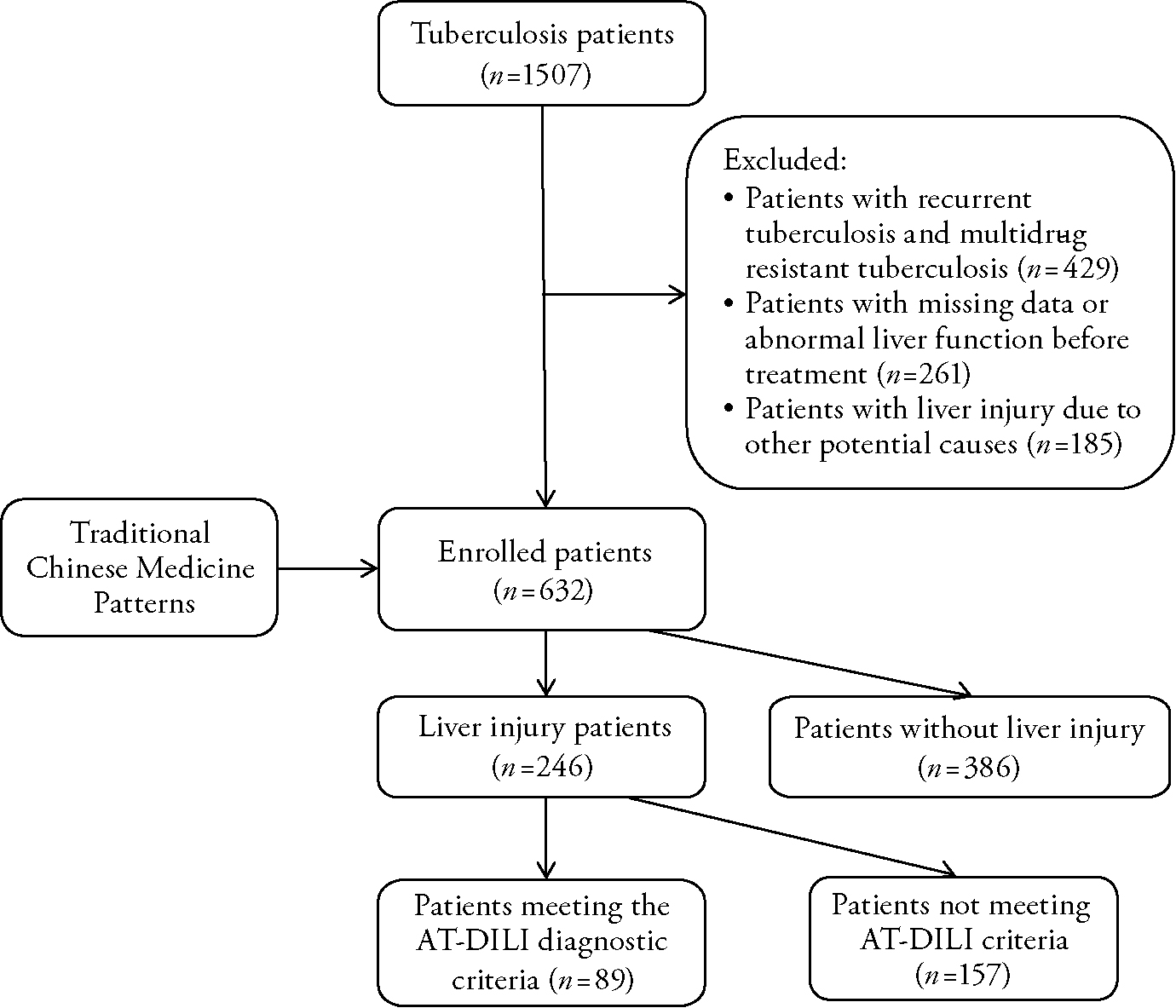
Figure 1 Patients selection flow chart AT-DILI: Anti-TB drug-induced liver injury.
Figure 1 Patients selection flow chart AT-DILI: Anti-TB drug-induced liver injury.
Table 1 Comparison of general characteristics in treatment-naïve pulmonary TB patients with different TCM syndromes ($\bar{x}$ ± s)
| Variable | Total (n = 632) | PYD (n = 304) | HFYD (n = 102) | DQY (n = 182) | DYY (n = 44) | P value | |
|---|---|---|---|---|---|---|---|
| Age (years) | 46±20 | 42±18 | 40±19 | 52±20 | 66±16 | <0.001 | |
| Gender [n (%)] | Male | 398 (63) | 178 (59) | 63 (62) | 132 (73) | 25 (57) | 0.015 |
| Female | 234 (37) | 126 (41) | 39 (38) | 50 (27) | 19 (43) | ||
| BMI (kg/m2) | 21±4 | 20±4 | 19±3 | 19±3 | 22±3 | <0.001 | |
| Smoke [n (%)] | No | 415 (66) | 205 (67) | 74 (73) | 164 (90) | 28 (59) | 0.132 |
| Yes | 217 (34) | 99 (33) | 28 (27) | 18 (10) | 18 (41) | ||
| Alcohol [n (%)] | No | 523 (83) | 254(83) | 89 (87) | 143 (79) | 37 (84) | 0.276 |
| Yes | 109 (17) | 50 (17) | 13 (13) | 39 (21) | 7 (16) | ||
| Allergy [n (%)] | No | 574 (91) | 272 (90) | 99 (97) | 164 (90) | 38 (86) | 0.055 |
| Yes | 58 (9) | 31 (10) | 3(3) | 18 (10) | 6 (14) | ||
| Diabetes [n (%)] | No | 497 (79) | 239 (79) | 87 (85) | 134 (74) | 37 (84) | 0.103 |
| Yes | 135 (21) | 65 (21) | 15 (15) | 48 (26) | 7 (16) | ||
Table 1 Comparison of general characteristics in treatment-naïve pulmonary TB patients with different TCM syndromes ($\bar{x}$ ± s)
| Variable | Total (n = 632) | PYD (n = 304) | HFYD (n = 102) | DQY (n = 182) | DYY (n = 44) | P value | |
|---|---|---|---|---|---|---|---|
| Age (years) | 46±20 | 42±18 | 40±19 | 52±20 | 66±16 | <0.001 | |
| Gender [n (%)] | Male | 398 (63) | 178 (59) | 63 (62) | 132 (73) | 25 (57) | 0.015 |
| Female | 234 (37) | 126 (41) | 39 (38) | 50 (27) | 19 (43) | ||
| BMI (kg/m2) | 21±4 | 20±4 | 19±3 | 19±3 | 22±3 | <0.001 | |
| Smoke [n (%)] | No | 415 (66) | 205 (67) | 74 (73) | 164 (90) | 28 (59) | 0.132 |
| Yes | 217 (34) | 99 (33) | 28 (27) | 18 (10) | 18 (41) | ||
| Alcohol [n (%)] | No | 523 (83) | 254(83) | 89 (87) | 143 (79) | 37 (84) | 0.276 |
| Yes | 109 (17) | 50 (17) | 13 (13) | 39 (21) | 7 (16) | ||
| Allergy [n (%)] | No | 574 (91) | 272 (90) | 99 (97) | 164 (90) | 38 (86) | 0.055 |
| Yes | 58 (9) | 31 (10) | 3(3) | 18 (10) | 6 (14) | ||
| Diabetes [n (%)] | No | 497 (79) | 239 (79) | 87 (85) | 134 (74) | 37 (84) | 0.103 |
| Yes | 135 (21) | 65 (21) | 15 (15) | 48 (26) | 7 (16) | ||
Table 2 Comparison of biochemical indicators in treatment-naïve pulmonary TB patients with different TCM syndromes ($\bar{x}$ ± s)
| Variable | Total (n = 632) | PYD (n = 304) | HFYD (n = 102) | DQY (n = 182) | DYY (n = 44) | P value | |
|---|---|---|---|---|---|---|---|
| Hydrothorax [n (%)] | No | 515 (81) | 273 (90) | 78 (76) | 131 (72) | 33 (75) | <0.001a |
| Yes | 117 (19) | 31 (10) | 24 (24) | 51 (28) | 11 (25) | ||
| HGB (g/L) | 123.92±20.76 | 120.70±19.93 | 116.39±18.54 | 119.62±22.25 | 128.38±20.14 | 0.357b | |
| PLT (×109/L) | 283.92±95.45 | 284.08±97.02 | 298.80±119.02 | 309.41±99.17 | 273.12±87.72 | 0.012b | |
| ALB (g/L) | 35.97±5.38 | 34.08±5.14 | 33.82±4.79 | 35.60±5.33 | 37.54±5.15 | <0.001b | |
| CHE (U/L) | 6245.17±1949.48 | 5632.48±2061.57 | 5494.45±1883.43 | 5883.53±1907.90 | 6841.97±1717.62 | <0.001b | |
| TBA (μmol/L) | 5.46±5.92 | 5.55±3.95 | 5.83±3.83 | 5.59±4.58 | 5.31±7.39 | 0.060b | |
| CHOL (mmol/L) | 3.85±0.87 | 3.87±0.92 | 3.80±0.88 | 3.81±0.78 | 3.86±0.86 | 0.943b | |
| TG (mmol/L) | 1.31±1.62 | 1.26±0.96 | 1.99±4.96 | 1.09±0.53 | 1.33±1.11 | 0.201b | |
| LDL-C (mmol/L) | 2.80±0.80 | 2.85±0.83 | 2.70±0.86 | 2.77±0.76 | 2.79±0.79 | 0.891b | |
| LDH (U/L) | 170.54±49.03 | 179.33±52.30 | 183.20±66.91 | 166.74±44.75 | 164.72±44.28 | 0.009b | |
| CRP (U/L) | 30.26±38.81 | 39.72±43.71 | 30.69±31.28 | 30.36±36.38 | 24.46±36.42 | <0.001b | |
| PT (S) | 10.82±1.14 | 10.97±1.18 | 11.15±1.02 | 11.02±1.09 | 10.61±1.13 | 0.410b | |
| INR | 0.94 ±0.18 | 0.94±0.11 | 0.96±0.09 | 0.95±0.10 | 0.93±0.24 | <0.001b | |
| APTT (S) | 29.86±6.08 | 30.92±6.40 | 31.72±5.61 | 30.73±5.38 | 28.65±5.96 | <0.001b | |
| TT (S) | 19.58±1.84 | 19.50±2.08 | 19.67±2.06 | 19.44±1.18 | 19.65±1.84 | 0.006b | |
| D-dimer (mg/L) | 1.54±2.31 | 2.17±2.86 | 2.06±2.55 | 2.05±2.54 | 0.92±1.54 | <0.001b | |
Table 2 Comparison of biochemical indicators in treatment-naïve pulmonary TB patients with different TCM syndromes ($\bar{x}$ ± s)
| Variable | Total (n = 632) | PYD (n = 304) | HFYD (n = 102) | DQY (n = 182) | DYY (n = 44) | P value | |
|---|---|---|---|---|---|---|---|
| Hydrothorax [n (%)] | No | 515 (81) | 273 (90) | 78 (76) | 131 (72) | 33 (75) | <0.001a |
| Yes | 117 (19) | 31 (10) | 24 (24) | 51 (28) | 11 (25) | ||
| HGB (g/L) | 123.92±20.76 | 120.70±19.93 | 116.39±18.54 | 119.62±22.25 | 128.38±20.14 | 0.357b | |
| PLT (×109/L) | 283.92±95.45 | 284.08±97.02 | 298.80±119.02 | 309.41±99.17 | 273.12±87.72 | 0.012b | |
| ALB (g/L) | 35.97±5.38 | 34.08±5.14 | 33.82±4.79 | 35.60±5.33 | 37.54±5.15 | <0.001b | |
| CHE (U/L) | 6245.17±1949.48 | 5632.48±2061.57 | 5494.45±1883.43 | 5883.53±1907.90 | 6841.97±1717.62 | <0.001b | |
| TBA (μmol/L) | 5.46±5.92 | 5.55±3.95 | 5.83±3.83 | 5.59±4.58 | 5.31±7.39 | 0.060b | |
| CHOL (mmol/L) | 3.85±0.87 | 3.87±0.92 | 3.80±0.88 | 3.81±0.78 | 3.86±0.86 | 0.943b | |
| TG (mmol/L) | 1.31±1.62 | 1.26±0.96 | 1.99±4.96 | 1.09±0.53 | 1.33±1.11 | 0.201b | |
| LDL-C (mmol/L) | 2.80±0.80 | 2.85±0.83 | 2.70±0.86 | 2.77±0.76 | 2.79±0.79 | 0.891b | |
| LDH (U/L) | 170.54±49.03 | 179.33±52.30 | 183.20±66.91 | 166.74±44.75 | 164.72±44.28 | 0.009b | |
| CRP (U/L) | 30.26±38.81 | 39.72±43.71 | 30.69±31.28 | 30.36±36.38 | 24.46±36.42 | <0.001b | |
| PT (S) | 10.82±1.14 | 10.97±1.18 | 11.15±1.02 | 11.02±1.09 | 10.61±1.13 | 0.410b | |
| INR | 0.94 ±0.18 | 0.94±0.11 | 0.96±0.09 | 0.95±0.10 | 0.93±0.24 | <0.001b | |
| APTT (S) | 29.86±6.08 | 30.92±6.40 | 31.72±5.61 | 30.73±5.38 | 28.65±5.96 | <0.001b | |
| TT (S) | 19.58±1.84 | 19.50±2.08 | 19.67±2.06 | 19.44±1.18 | 19.65±1.84 | 0.006b | |
| D-dimer (mg/L) | 1.54±2.31 | 2.17±2.86 | 2.06±2.55 | 2.05±2.54 | 0.92±1.54 | <0.001b | |
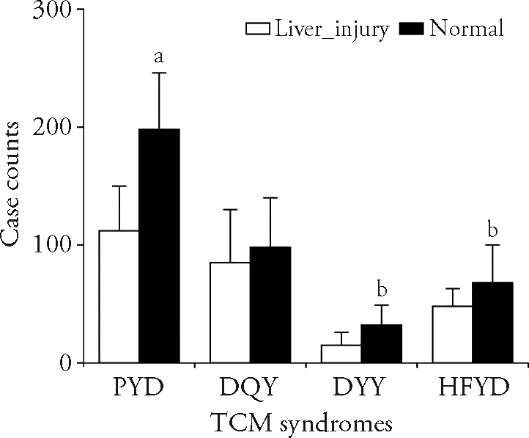
Figure 2 Comparison of case counts between patients with AT-DILI and those with normal liver function across four TCM syndrome groups PYD: pulmonary Yin deficiency; HFYD: hyperactivity of fire due to Yin deficiency; DQY: deficiency of Qi and Yin; DYY: deficiency of Yin and Yang. AT-DILI: anti-tuberculosis drug-induced liver injury; TCM: Traditional Chinese Medicine. Statistical comparisons within each TCM syndrome group were performed using the χ 2 test. aP < 0.001, bP < 0.01 vs the normal group within the same syndrome.
Figure 2 Comparison of case counts between patients with AT-DILI and those with normal liver function across four TCM syndrome groups PYD: pulmonary Yin deficiency; HFYD: hyperactivity of fire due to Yin deficiency; DQY: deficiency of Qi and Yin; DYY: deficiency of Yin and Yang. AT-DILI: anti-tuberculosis drug-induced liver injury; TCM: Traditional Chinese Medicine. Statistical comparisons within each TCM syndrome group were performed using the χ 2 test. aP < 0.001, bP < 0.01 vs the normal group within the same syndrome.
Table 3 Comparison of biochemical markers in patients with liver injury across different TCM syndromes ($\bar{x}$ ± s)
| Variable | Total (n = 246) | PYD (n = 110) | HFYD (n = 36) | DQY (n = 87) | DYY (n = 13) | P value |
|---|---|---|---|---|---|---|
| AST (U/L) | 53.4±35.3 | 57.0±43.4 | 46.1±13.7 | 39.3±24.4 | 55.3±31.3 | 0.218 |
| ALT (U/L) | 40.1±27.8 | 43.2±30.2 | 28.9±9.3 | 37.4±26.4 | 39.6±27.5 | 0.792 |
| ALP (U/L) | 107.8±47.1 | 110.5±52.8 | 136.5±71.5 | 121.5±41.9 | 98.5±38.0 | 0.082 |
| TBIL (μmol/L) | 12.4±7.0 | 12.8±7.2 | 13.7±8.6 | 8.8±4.7 | 12.9±7.0 | 0.057 |
| DBIL (μmol/L) | 4.2±3.1 | 4.5±3.3 | 5.9±4.7 | 2.8±1.9 | 4.1±2.9 | 0.033 |
| IBIL (μmol/L) | 8.2±4.6 | 8.2±4.5 | 7.8±4.2 | 5.9±3.1 | 8.8±4.8 | 0.085 |
| GGT (U/L) | 48.6±40.6 | 55.6±46.7 | 64.5±72.1 | 37.2±30.8 | 44.4±31.7 | 0.257 |
| TBA (μmol/L) | 8.0±8.9 | 9.0±9.9 | 18.5±18.8 | 6.0±5.5 | 6.6±6.0 | 0.026 |
| TIME (days) | 43.6±41.0 | 48.8±48.2 | 31.4±44.5 | 30.5±24. 5 | 44.5±37.5 | 0.263 |
Table 3 Comparison of biochemical markers in patients with liver injury across different TCM syndromes ($\bar{x}$ ± s)
| Variable | Total (n = 246) | PYD (n = 110) | HFYD (n = 36) | DQY (n = 87) | DYY (n = 13) | P value |
|---|---|---|---|---|---|---|
| AST (U/L) | 53.4±35.3 | 57.0±43.4 | 46.1±13.7 | 39.3±24.4 | 55.3±31.3 | 0.218 |
| ALT (U/L) | 40.1±27.8 | 43.2±30.2 | 28.9±9.3 | 37.4±26.4 | 39.6±27.5 | 0.792 |
| ALP (U/L) | 107.8±47.1 | 110.5±52.8 | 136.5±71.5 | 121.5±41.9 | 98.5±38.0 | 0.082 |
| TBIL (μmol/L) | 12.4±7.0 | 12.8±7.2 | 13.7±8.6 | 8.8±4.7 | 12.9±7.0 | 0.057 |
| DBIL (μmol/L) | 4.2±3.1 | 4.5±3.3 | 5.9±4.7 | 2.8±1.9 | 4.1±2.9 | 0.033 |
| IBIL (μmol/L) | 8.2±4.6 | 8.2±4.5 | 7.8±4.2 | 5.9±3.1 | 8.8±4.8 | 0.085 |
| GGT (U/L) | 48.6±40.6 | 55.6±46.7 | 64.5±72.1 | 37.2±30.8 | 44.4±31.7 | 0.257 |
| TBA (μmol/L) | 8.0±8.9 | 9.0±9.9 | 18.5±18.8 | 6.0±5.5 | 6.6±6.0 | 0.026 |
| TIME (days) | 43.6±41.0 | 48.8±48.2 | 31.4±44.5 | 30.5±24. 5 | 44.5±37.5 | 0.263 |
Table 4 Comparison of liver function laboratory indicators and time in AT-DILI patients with different TCM syndromes ($\bar{x}$ ± s)
| Variable | Total (n = 89) | PYD (n = 39) | HFYD (n = 16) | DQY (n = 29) | DYY (n = 5) | P value |
|---|---|---|---|---|---|---|
| AST (U/L) | 109±45 | 116±56 | 121±55 | 120±41 | 97±33 | 0.428 |
| ALT (U/L) | 40±28 | 433±30 | 25±8 | 38±25 | 41±29 | 0.799 |
| ALP (U/L) | 53±32 | 60±41 | 47±17 | 41±25 | 53±28 | 0.28 |
| TBIL (μmol/L) | 5±4 | 5±4 | 6±5 | 3±2 | 5±3 | 0.101 |
| DBIL (μmol/L) | 49±43 | 61±56 | 48±27 | 40±33 | 45±36 | 0.109 |
| IBIL (μmol/L) | 8±5 | 8±4 | 7±3 | 6±3 | 10±5 | 0.126 |
| GGT (U/L) | 9±10 | 10±12 | 25±21 | 7±6 | 7±6 | 0.565 |
| TBA (μmol/L) | 13±7 | 13±8 | 13±8 | 10±5 | 14±7 | 0.093 |
| TIME (days) | 40±40 | 49±51 | 11±9 | 25±17 | 43±38 | 0.055 |
Table 4 Comparison of liver function laboratory indicators and time in AT-DILI patients with different TCM syndromes ($\bar{x}$ ± s)
| Variable | Total (n = 89) | PYD (n = 39) | HFYD (n = 16) | DQY (n = 29) | DYY (n = 5) | P value |
|---|---|---|---|---|---|---|
| AST (U/L) | 109±45 | 116±56 | 121±55 | 120±41 | 97±33 | 0.428 |
| ALT (U/L) | 40±28 | 433±30 | 25±8 | 38±25 | 41±29 | 0.799 |
| ALP (U/L) | 53±32 | 60±41 | 47±17 | 41±25 | 53±28 | 0.28 |
| TBIL (μmol/L) | 5±4 | 5±4 | 6±5 | 3±2 | 5±3 | 0.101 |
| DBIL (μmol/L) | 49±43 | 61±56 | 48±27 | 40±33 | 45±36 | 0.109 |
| IBIL (μmol/L) | 8±5 | 8±4 | 7±3 | 6±3 | 10±5 | 0.126 |
| GGT (U/L) | 9±10 | 10±12 | 25±21 | 7±6 | 7±6 | 0.565 |
| TBA (μmol/L) | 13±7 | 13±8 | 13±8 | 10±5 | 14±7 | 0.093 |
| TIME (days) | 40±40 | 49±51 | 11±9 | 25±17 | 43±38 | 0.055 |

Figure 3 Univariate logistic regression analysis of risk factors for AT-DILI across TCM syndrome groups A: PYD group; B: HFYD group; C: DQY group; D: DYY group. PYD: pulmonary Yin deficiency; HFYD: hyperactivity of fire due to Yin deficiency; DQY: deficiency of Qi and Yin; DYY: deficiency of Yin and Yang. All patients in the four TCM syndrome groups received the same standardized first-line anti-tuberculosis regimen consisting of 2 months of isoniazid, rifampicin, pyrazinamide, and ethambutol followed by 4 months of isoniazid and rifampid and rifampicin (2HRZE/4HR), with dosages adjusted according to body weight. AT-DILI, anti-tuberculosis drug-induced liver injury; TCM: Traditional Chinese Medicine; OR: odds ratio; CI: confidence interval; TT: thrombin time; ALB: albumin; LDH: lactate dehydrogenase; PLT: platelet count; CHE: cholinesterase; CRP: C-reactive protein; APTT: activated partial thromboplastin time; D-Dimer: D-dimer. Univariate logistic regression was performed with AT-DILI as the dependent variable (1 = yes, 0 = no). Data are expressed as OR with 95% CI. The vertical line in each forest plot represents OR = 1 (no association). The sample sizes were 304 for PYD, 102 for HFYD, 182 for DQY, and 44 for DYY. Statistical significance was defined as a two-sided P < 0.05, with a P < 0.01 and b P < 0.05 indicated in the figure.
Figure 3 Univariate logistic regression analysis of risk factors for AT-DILI across TCM syndrome groups A: PYD group; B: HFYD group; C: DQY group; D: DYY group. PYD: pulmonary Yin deficiency; HFYD: hyperactivity of fire due to Yin deficiency; DQY: deficiency of Qi and Yin; DYY: deficiency of Yin and Yang. All patients in the four TCM syndrome groups received the same standardized first-line anti-tuberculosis regimen consisting of 2 months of isoniazid, rifampicin, pyrazinamide, and ethambutol followed by 4 months of isoniazid and rifampid and rifampicin (2HRZE/4HR), with dosages adjusted according to body weight. AT-DILI, anti-tuberculosis drug-induced liver injury; TCM: Traditional Chinese Medicine; OR: odds ratio; CI: confidence interval; TT: thrombin time; ALB: albumin; LDH: lactate dehydrogenase; PLT: platelet count; CHE: cholinesterase; CRP: C-reactive protein; APTT: activated partial thromboplastin time; D-Dimer: D-dimer. Univariate logistic regression was performed with AT-DILI as the dependent variable (1 = yes, 0 = no). Data are expressed as OR with 95% CI. The vertical line in each forest plot represents OR = 1 (no association). The sample sizes were 304 for PYD, 102 for HFYD, 182 for DQY, and 44 for DYY. Statistical significance was defined as a two-sided P < 0.05, with a P < 0.01 and b P < 0.05 indicated in the figure.
| [1] | Nathavitharana RR, Jijon DF, Pal P, Rane S. Diagnosing active tuberculosis in primary care. BMJ 2021; 374: n1590. |
| [2] | Liu QQ, Wu ZQ, Liu X, Chen Y, Fu W, Liang RX. Efficacy of the 2HRZE/4HR regimen in the treatment of patients with pulmonary tuberculosis. Zhong Guo Yao Wu Lan Yong Fang Zhi Za Zhi 2025; 31: 700-2. |
| [3] | Tostmann A, Boeree MJ, Aarnoutse RE, De Lange WC, Van Der Ven AJ, Dekhuijzen R. Antituberculosis drug-induced hepatotoxicity: concise up-to-date review. J Gastroenterol Hepatol 2008; 23: 192-202. |
| [4] | Society CMaT. Expert consensus on the diagnosis and management of drug-induced liver injury caused by anti-tuberculosis drugs. In: Chinese Medical Association Tuberculosis Branch, editors. 2014 Annual Conference on Infection and Hepatology of Henan Medical Association; 2014 Aug 22; Zhengzhou, China. 2014: 161-5. |
| [5] | Kunst H, Khan KS. Age-related risk of hepatotoxicity in the treatment of latent tuberculosis infection: a systematic review. Int J Tuberc Lung Dis 2010; 14: 1374-81. |
| [6] | Pan L, Jia ZS, Chen L, Fu EQ, Li GY. Effect of anti-tuberculosis therapy on liver function of pulmonary tuberculosis patients infected with hepatitis B virus. World J Gastroenterol 2005; 11: 2518-21. |
| [7] | An HR, Wu XQ, Wang ZY, Zhang JX, Liang Y. NAT2 and CYP2E1 polymorphisms associated with antituberculosis drug-induced hepatotoxicity in Chinese patients. Clin Exp Pharmacol Physiol 2012; 39: 535-43. |
| [8] | Medicine NaOTC. General rules for the formulation and revision of standards for diagnosis and evaluation of therapeutic effects of Traditional Chinese Medicine (TCM) diseases ZY/T 10-2024. Beijing China: National Administration of Traditional Chinese Medicine, 2024: 1-19 [2025-04-28]http://www.natcm.gov.cn/d/file/p/2024/07-29/719ac8d7f3d56e8950d8ca16c4cb9634.pdf. |
| [9] | Jiang TT, Wang C, Wei LL, et al. Serum protein gamma-glutamyl hydrolase, Ig gamma-3 chain C region, and haptoglobin are associated with the syndromes of pulmonary tuberculosis in Traditional Chinese Medicine. BMC Complement Altern Med 2015; 15: 243. |
| [10] | Yang HM, Chen L, Pei N, et al. Correlation between Traditional Chinese Medicine syndromes of pulmonary tuberculosis and CT cavity characteristics. Zhong Guo Fang Lao Za Zhi 2020; 42: 1171-6. |
| [11] | Wang Y, Fu JY, Zhang SY, et al. Investigation of correlation between Traditional Chinese Medicine synbrome elements and clinical characteristics of patients with multidrug-resistant pulmonary tuberculosis. Zhong Guo Fang Lao Za Zhi 2020; 42: 115-20. |
| [12] | Sun T, Lu YC, Ning F, Li TT, Lu F, Zhang J. Characteristics of TCM syndrome types in Wilson's disease and changes in liver and kidney functions and oxidative stress indicators. Huan Qiu Zhong Yi Yao 2021; 14: 1701-4. |
| [13] | Ding H. Level changes of serum inflammatory factors and oxidative stress indices before and after treatment in patients with rheumatoid arthritis. Zhong Guo Xian Dai Yi Sheng 2020; 58: 135-8. |
| [14] | China NHaFPCOTPSRO. Tuberculosis diagnosis standard (WS 288-2017). Emerg Infect Dis 2018; 3: 59-61. |
| [15] | Aithal GP, Watkins PB, Andrade RJ, et al. Case definition and phenotype standardization in drug-induced liver injury. Clin Pharmacol Ther 2011; 89: 806-15. |
| [16] | Avigan MI, Bjornsson ES, Pasanen M, et al. Liver safety assessment: required data elements and best practices for data collection and standardization in clinical trials. Drug Safety 2014; 37: 19-31. |
| [17] | Jiang TT, Wei LL, Shi LY, et al. Microarray expression profile analysis of mRNAs and long non-coding RNAs in pulmonary tuberculosis with different Traditional Chinese Medicine syndromes. BMC Complement Altern Med 2016; 16: 472. |
| [18] | Sang X, Wang Z, Liu S, Wang R. Relationship between Traditional Chinese Medicine (TCM) constitution and TCM syndrome in the diagnosis and treatment of chronic diseases. Chin Med Sci J 2018; 33: 114-9. |
| [19] | Dai L, Zhang LL, Li WL, Li ZH, Ruan SQ. Research progress on TCM syndrome of pulmonary tuberculosis. Zhong Xi Yi Jie He Yan Jiu 2019; 11: 313-5. |
| [20] | Wang J, Guo S, Gao K, et al. Plasma metabolomics combined with personalized diagnosis guided by Chinese medicine reveals subtypes of chronic heart failure. J Tradit Chin Med Sci 2015; 2: 80-90. |
| [21] | Zhang Z, Jin XF, Yang LJ, et al. Research progress on the concept of heat-toxin. Zhong Guo Zhong Yi Ji Zheng 2023; 32: 1673-6. |
| [22] | Wang H, Li SL, Zhu JJ. Research progress of autophagy in sepsis-induced liver injury. Zhong Hua Ji Zhen Yi Xue Za Zhi 2021; 41: 87-90. |
| [23] | Rudić JS, Culafić DM, Mirković DS, Ješić RS, Krstić MN. Role of serotonin in development of esophageal and gastric fundal varices. World J Gastroenterol 2010; 16: 6135-8. |
| [24] | Ellinsworth DC, Shukla N, Fleming I, Jeremy JY. Interactions between thromboxane A2, thromboxane/prostaglandin (TP) receptors, and endothelium-derived hyperpolarization. Cardiovasc Res 2014; 102: 9-16. |
| [25] | Blasco-Algora S, Masegosa-Ataz J, Gutiérrez-García ML, Alonso-López S, Fernández-Rodríguez CM. Acute-on-chronic liver failure: pathogenesis, prognostic factors and management. World J Gastroenterol 2015; 21: 12125-40. |
| [26] | Takahashi K, Nagai S, Collins KM, et al. Factors associated with low graft regeneration in the early phase after living donor liver transplantation. Clin Transplant 2019; 33: e13690. |
| [27] | Kraakman MJ, Kammoun HL, Allen TL, et al. Blocking IL-6 trans-signaling prevents high-fat diet-induced adipose tissue macrophage recruitment but does not improve insulin resistance. Cell Metab 2015; 21: 403-16. |
| [28] | Rawat S, Bouchard MJ. The hepatitis B virus (HBV) HBx protein activates AKT to simultaneously regulate HBV replication and hepatocyte survival. J Virol 2015; 89: 999-1012. |
| [29] | Shabbir M, Afsar T, Razak S, Almajwal A, Khan MR. Phytochemical analysis and evaluation of hepatoprotective effect of Maytenus royleanus leaves extract against anti-tuberculosis drug induced liver injury in mice. Lipids Health Dis 2020; 19: 46. |
| [30] | Sharma PR, Jain S, Bamezai RN, Tiwari PK. Utility of serum LDH isoforms in the assessment of mycobacterium tuberculosis induced pathology in TB patients of Sahariya tribe. Indian J Clin Biochem 2010; 25: 57-63. |
| [31] | Gao YX, Zhang QY, Peng JQ, et al. Establishment and evaluation of animal model of acute myocardial infarction with syndrome of Qi and Yin deficiency. Zhong Guo Shi Yan Fang Ji Xue Za Zhi 2024; 30: 134-42. |
| [32] | Bhadauria S, Singh G, Sinha N, Srivastava S. Isoniazid induces oxidative stress, mitochondrial dysfunction and apoptosis in Hep G2 cells. Cell Mol Biol (Noisy-le-grand) 2007; 53: 102-14. |
| [33] | Lee KK, Fujimoto K, Zhang C, et al. Isoniazid-induced cell death is precipitated by underlying mitochondrial complex I dysfunction in mouse hepatocytes. Free Radical Biology and Medicine 2013; 65: 584-94. |
| [34] | Jia ZZ, Xu HT, Fumin Z. Treatment of hyperthyroidism based on Yin deficiency theory. Lin Chuang Ge Xing Hua Yi Xue 2024; 12: 1009-17. |
| [35] | Konrath S, Mailer RK, Renné T. Mechanism, functions, and diagnostic relevance of FXII activation by foreign surfaces. Hamostaseologie 2021; 41: 489-501. |
| [36] | Kruskal JB, Robson SC, Franks JJ, Kirsch RE. Elevated fibrin-related and fibrinogen-related antigens in patients with liver disease. Hepatology 1992; 16: 920-3. |
| [37] | Jiang F, Yan H, Liang L, et al. Incidence and risk factors of anti-tuberculosis drug induced liver injury (DILI): large cohort study involving 4652 Chinese adult tuberculosis patients. Liver Int 2021; 41: 1565-75. |
| [38] | Sun X, Xing Z, Wan Z, et al. A robust ensemble deep learning framework for accurate diagnoses of tuberculosis from chest radiographs. Front Med (Lausanne) 2024; 11: 1391184. |
| [39] | Ye JQ, Zhang RQ, Zhang J, Zhu H, Wu HK, Li XD. Treatment of non-alcoholic fatty liver disease from phlegm and blood stasis. Shi Yong Zhong Yi Nei Ke Za Zhi 2023; 37: 87-90. |
| [40] | Dewidar B, Meyer C, Dooley S, Meindl-Beinker AN.TGF-β in hepatic stellate cell activation and liver fibrogenesis-updated 2019. Cells 2019; 8: 1419. |
| [41] | Han JY, Fan JY, Horie Y, et al. Ameliorating effects of compounds derived from Salvia miltiorrhiza root extract on microcirculatory disturbance and target organ injury by ischemia and reperfusion. Pharmacol Ther 2008; 117: 280-95. |
| [1] | FANG Ge, LI Lin, LI Xiantao, CHEN Jiaxu, ZHOU Xuan, HU Zhixi. Quality criteria for measuring properties of diagnostic scale for Traditional Chinese Medicine syndromes [J]. Journal of Traditional Chinese Medicine, 2026, 46(5): 1295-1306. |
| [2] | LI Kexin, YANG Jinzu, XIAO Kunlin, DUAN Shaojie, XIAO Kunmin. Tongue-coating microbiome as a predictor of solid tumors: an updated scoping review of clinical studies [J]. Journal of Traditional Chinese Medicine, 2026, 46(2): 501-508. |
| [3] | WEI Lexin, LI Weiyi, TIAN Ting, ZHANG Ning, YANG Shijing, YANG Dongqing, LI Guochun, YE Fang. Identification of novel biomarkers and therapeutic target candidates for stasis-heat symptom pattern of acute intracerebral hemorrhage by quantitative plasma proteomics [J]. Journal of Traditional Chinese Medicine, 2022, 42(4): 622-632. |
| [4] | ZHANG Di, WEI Muyun, CHEN Luan, WU Hao, WANG Ting, ZHANG Zhiruo, ZHANG Ying, YU Juan, HUANG Jinming, ZHU Jinhang, QIN Shengying. Drug response biomarkers of Pien Tze Huang (片仔癀) treatment for hepatic fibrosis induced by carbon tetrachloride [J]. Journal of Traditional Chinese Medicine, 2022, 42(4): 530-538. |
| [5] | ZHANG Mina, XU Xiaolong, LIU Qingquan. Commentary on "coagulation dysfunction in coronavirus disease 2019 patients" [J]. Journal of Traditional Chinese Medicine, 2021, 41(6): 833-835. |
| [6] | Zhang Yandong, Biao Yaning, Chu Xinqiao, Hao Lei, Shi Cheng, Liu Yu, Zhang Yixin, Wang Xi. Protective effect of Chushizi(Fructus Broussonetiae) on acetaminophen-induced rat hepatitis by inhibiting the Toll-like receptor 3/c-Jun N-terminal kinase/c-jun/c-fos/janus protein tyrosine kinase/activators of transcription 3 pathway [J]. Journal of Traditional Chinese Medicine, 2020, 40(6): 965-973. |
| [7] | Zeng Chuang, Bai Xuejing, Qin Heping, Wang Hong, Rong Xiaofeng, Yan Jin. Effect of adjuvant therapy with electroacupuncture on bone turnover markers and interleukin 17 in patients with rheumatoid arthritis [J]. Journal of Traditional Chinese Medicine, 2019, 39(04): 582-586. |
| [8] | Yuan Jun, Xu Qianlei, Chen Xiumin, Meng Pengfei, Li Qingya, Xu Liran, Meng Xiangle, Jin Yantao, Guo Huijun. Prevalence of liver injury among patients with acquired immunodeficiency syndrome treated with highly active antiretroviral therapy in China [J]. Journal of Traditional Chinese Medicine, 2019, 39(02): 275-280. |
| Viewed | ||||||
|
Full text |
|
|||||
|
Abstract |
|
|||||