
Journal of Traditional Chinese Medicine ›› 2026, Vol. 46 ›› Issue (4): 798-808.DOI: 10.19852/j.cnki.jtcm.2026.04.003
• Original Articles • Previous Articles Next Articles
Baihe Dihuang decoction (百合地黄汤) activates cannabinoid type 2 receptor to regulate microglial polarization and alleviate anxiety-like behavior in chronic restraint stress mice
LUO Qiaoyun1, HAN Yuanshan2, LIU Yang4, TANG Lin3, WANG Tianyu1, WANG Yuhong4, ZHAO Hongqing4( )
)
- 1
School of Pharmacy ,Hunan University of Chinese Medicine Changsha 410208, China
2Drug Clinical Research Center ,the First Hospital, Hunan University of Chinese Medicine Changsha 410007, China
3Pharmaceutical Preparation Center ,the first affiliated Hospital, Hunan University of Chinese Medicine Changsha 410007, China
4Academy of Chinese Medical Sciences/Science & Technology Innovation Center ,Hunan University of Chinese Medicine Changsha 410208, China
-
Received:2025-03-27Accepted:2025-10-16Online:2026-08-15Published:2026-08-08 -
Contact:ZHAO Hongqing, Academy of Chinese Medical Sciences/Science & Technology Innovation Center, Hunan University of Chinese Medicine, Changsha 410208, China. zhaohongq@hnucm.edu.cn,Telephone: +86-731-88459550
-
Supported by:National Natural Science Foundation of China: Mechanism Study of Baihe Dihuang Decoction in Ameliorating Neural Pathway Injury of Basolateral Amygdala-Ventral Hippocampus in Anxious Depression via Src Homology 2 Domain-Containing Protein Tyrosine Phosphatase 2(82104836);Natural Science Foundation of Hunan Province: Study on the Mechanism of Anxiolytic Mechanism of Baihe Dihuang Decoction by Activating Cannabinoid Type 2 Receptor to Regulate the Polarization Phenotype of Microglia(2023JJ60482);Mechanism Study of Baihe Dihuang Decoction in Improving Synaptic Homeostasis of Basolateral Amygdala-ventral Hippocampus in Anxious Depression by Regulating Microglial Function via Cannabinoid Type 2 Receptor(2026JJ50265);Scientific Research Project of Hunan Provincial Department of Education: Scientific Research Project of Hunan Provincial Department of Education: Mechanism of Excitatory/Inhibitory Imbalance of Spiny Neurons in Basolateral Amygdala to Nucleus Accumbens Neural Circuit Inducing Anxiety and Intervention Research of Baihe Shugan Anshen Tablets(23B0391);Open Fund of National Key Laboratory Cultivation Base of Chinese Medicinal Powder & Innovative Medicinal Jointly Established by Province and Ministry: Mechanism of Anxiolytic Neural Circuitry of Baihe Jielü Anshen Granules was Studied Based on Basolateral Amygdala to Nucleus Accumbens Neuronal Excitation/Inhibition Imbalance(25PTKF1002);Science and Technology Talent Promotion Project of Hunan Province: Young and Talented Science and Technology Talent Development Program(2023TJ-N22)

Cite this article
LUO Qiaoyun, HAN Yuanshan, LIU Yang, TANG Lin, WANG Tianyu, WANG Yuhong, ZHAO Hongqing. Baihe Dihuang decoction (百合地黄汤) activates cannabinoid type 2 receptor to regulate microglial polarization and alleviate anxiety-like behavior in chronic restraint stress mice[J]. Journal of Traditional Chinese Medicine, 2026, 46(4): 798-808.
share this article
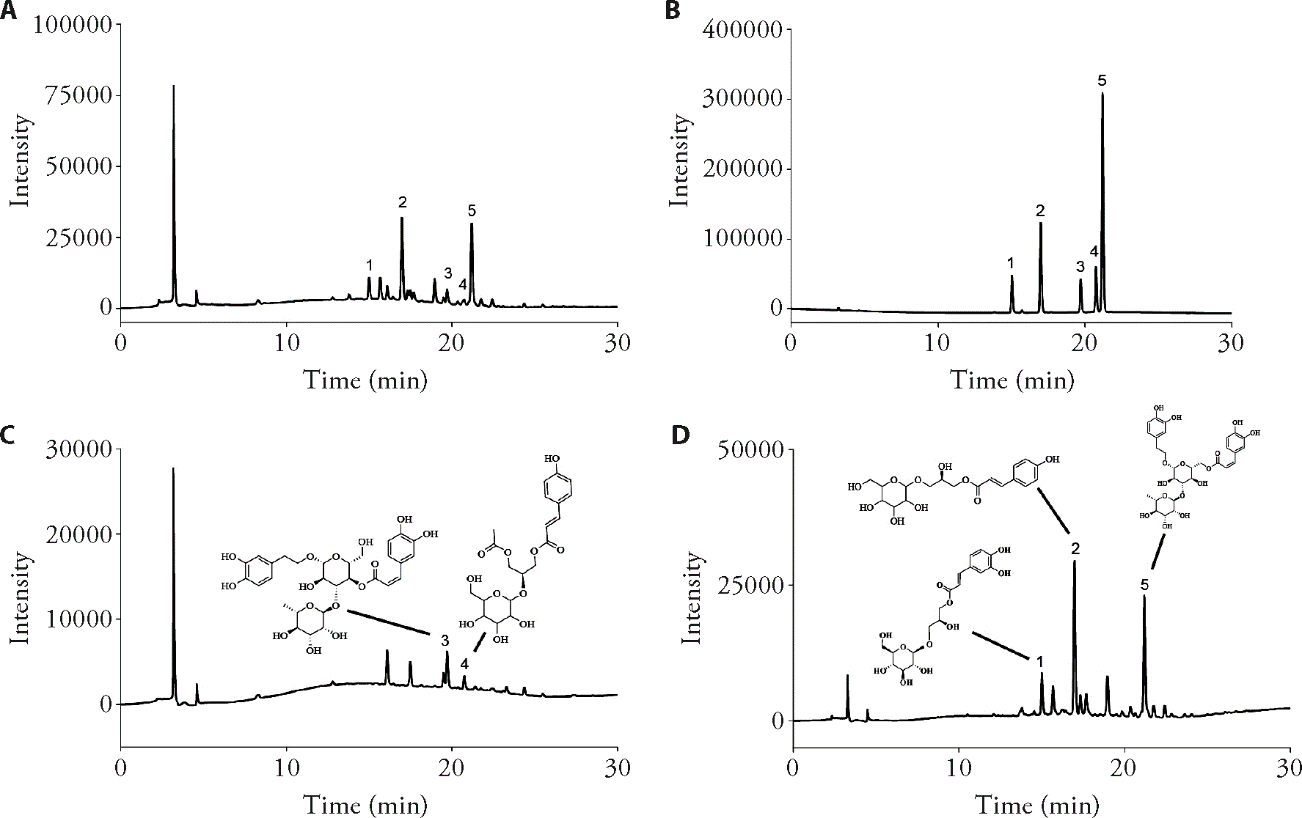
Figure 1 HPLC fingerprints of the main components of BDD extracts A: sample chromatogram; B: mixed standards; C: negative control lacking Baihe (Bulbus Lilii Lancifolii); D: negative control lacking. Peaks: 1: regaloside C; 2: regaloside A; 3: verbascoside; 4: isoacteoside; 5: regaloside; HPLC: high-performance liquid chromatography; BDD: Baihe Dihuang decoction.
Figure 1 HPLC fingerprints of the main components of BDD extracts A: sample chromatogram; B: mixed standards; C: negative control lacking Baihe (Bulbus Lilii Lancifolii); D: negative control lacking. Peaks: 1: regaloside C; 2: regaloside A; 3: verbascoside; 4: isoacteoside; 5: regaloside; HPLC: high-performance liquid chromatography; BDD: Baihe Dihuang decoction.
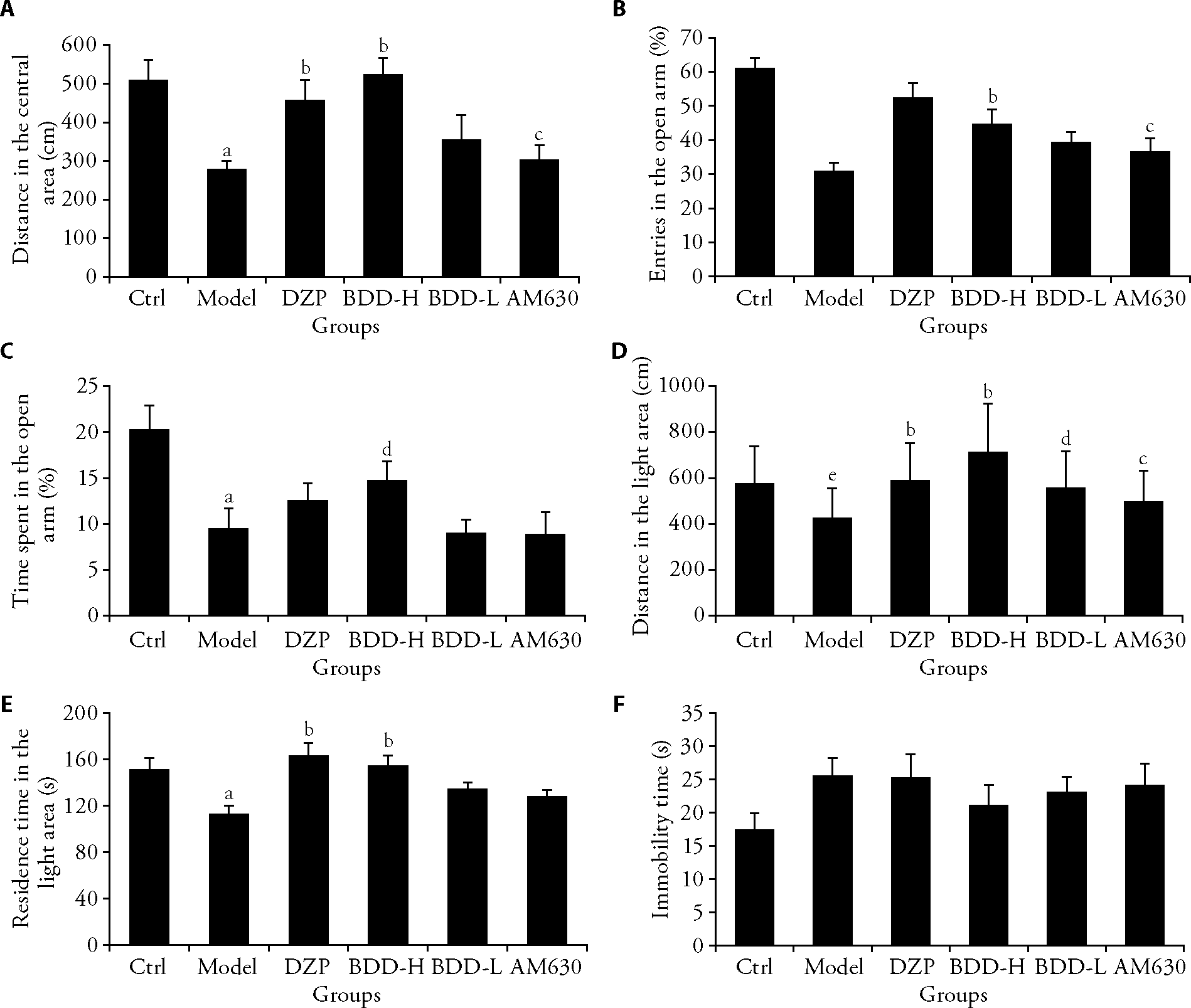
Figure 2 Effect of BDD on anxiety-like behavior in CRS mice A: distance in the center area in the OFT, OFT: open field test;; B: entries in the open arm of the EPM, EPM: elevated plus maze; C: time spent in the open arm of the EPM; D: distance in the light area of the LDT, LDT: light-dark box test; E: residence time in the light area of the LDT; F: immobility time in the FST, FST: forced swim test. Ctrl: control group (distilled water); Model: model group (CRS + distilled water); DZP: diazepam group (CRS + 2 mg/kg diazepam); BDD-H: high dose of BDD group (CRS + 16 g/kg BDD); BDD-L: low dose of BDD group (CRS + 8 g/kg BDD); AM630: high dose of BDD combined with AM630 group (CRS + 16 g/kg BDD + 1 mg/kg AM630). BDD: Baihe Dihuang decoction; CRS: chronic restraint stress; ANOVA: analysis of variance. Statistical significance was assessed using one way ANOVA, followed by pairwise comparisons between groups using the t-test. Data were presented as mean ± standard deviation (n = 10). aP < 0.01, eP < 0.05, vs the control group; bP < 0.01, dP < 0.05, vs the model group; cP < 0.05, vs the BDD-H group.
Figure 2 Effect of BDD on anxiety-like behavior in CRS mice A: distance in the center area in the OFT, OFT: open field test;; B: entries in the open arm of the EPM, EPM: elevated plus maze; C: time spent in the open arm of the EPM; D: distance in the light area of the LDT, LDT: light-dark box test; E: residence time in the light area of the LDT; F: immobility time in the FST, FST: forced swim test. Ctrl: control group (distilled water); Model: model group (CRS + distilled water); DZP: diazepam group (CRS + 2 mg/kg diazepam); BDD-H: high dose of BDD group (CRS + 16 g/kg BDD); BDD-L: low dose of BDD group (CRS + 8 g/kg BDD); AM630: high dose of BDD combined with AM630 group (CRS + 16 g/kg BDD + 1 mg/kg AM630). BDD: Baihe Dihuang decoction; CRS: chronic restraint stress; ANOVA: analysis of variance. Statistical significance was assessed using one way ANOVA, followed by pairwise comparisons between groups using the t-test. Data were presented as mean ± standard deviation (n = 10). aP < 0.01, eP < 0.05, vs the control group; bP < 0.01, dP < 0.05, vs the model group; cP < 0.05, vs the BDD-H group.
Table 1 Effect of BDD on inflammatory cytokines and endocannabinoid levels in CRS mice (pg/mL,$\bar{x}±s$)
| Group | n | IL-6 | IL-1β | IL-10 | IL-4 | AEA | 2-AG |
|---|---|---|---|---|---|---|---|
| Ctrl | 6 | 185±32 | 122±18 | 150±19 | 68±8 | 385±35 | 279±39 |
| Model | 6 | 251±29a | 167±18a | 110±10a | 53±3a | 320±22a | 172±16a |
| DZP | 6 | 228±23 | 132±19b | 130±19d | 66±6b | 350±40 | 225±21b |
| BDD-H | 6 | 204±26b | 126±14b | 126±10 | 61±4d | 358±30d | 227±19b |
| BDD-L | 6 | 227±25 | 139±12b | 110±14 | 58±6 | 360±16d | 214±20d |
| AM630 | 6 | 222±11 | 138±10 | 109±10e | 57±3c | 335±26 | 198±39 |
Table 1 Effect of BDD on inflammatory cytokines and endocannabinoid levels in CRS mice (pg/mL,$\bar{x}±s$)
| Group | n | IL-6 | IL-1β | IL-10 | IL-4 | AEA | 2-AG |
|---|---|---|---|---|---|---|---|
| Ctrl | 6 | 185±32 | 122±18 | 150±19 | 68±8 | 385±35 | 279±39 |
| Model | 6 | 251±29a | 167±18a | 110±10a | 53±3a | 320±22a | 172±16a |
| DZP | 6 | 228±23 | 132±19b | 130±19d | 66±6b | 350±40 | 225±21b |
| BDD-H | 6 | 204±26b | 126±14b | 126±10 | 61±4d | 358±30d | 227±19b |
| BDD-L | 6 | 227±25 | 139±12b | 110±14 | 58±6 | 360±16d | 214±20d |
| AM630 | 6 | 222±11 | 138±10 | 109±10e | 57±3c | 335±26 | 198±39 |

Figure 3 Effect of BDD on neuronal damage, apoptosis and microglial polarization in the amygdala A: representative images of HE staining showing neuronal morphology in the amygdala, scale bars: 100 μm; B: representative images of Nissl staining showing neuronal morphology in the amygdala, scale bars: 100 μm; C: representative images of TUNEL staining showing neuronal apoptosis in the amygdala (green: TUNEL, blue: DAPI), scale bars: 100 μm; D: number of TUNEL-positive cells in the amygdala; E: representative images of immunofluorescence staining for Iba-1 (green), iNOS (red) and DAPI (blue) in the amygdala, scale bars: 100 μm; F: representative images of immunofluorescence staining for Iba-1 (green), ARG-1 (red) and DAPI (blue) in the amygdala, scale bars: 100 μm; G: ratio of iNOS+/Iba-1+ positive cells in the amygdala; H: ratio of ARG-1+/Iba-1+ positive cells in the amygdala; A1, B1, C1, E1, F1: control group; A2, B2, C2, E2, F2: model group; A3, B3, C3, E3, F3: DZP group; A4, B4, C4, E4, F4: BDD-H group; A5, B5, C5, E5, F5: BDD-L group; A6, B6, C6, E6, F6: AM630 group. Ctrl: control group (distilled water); Model: model group (CRS + distilled water); DZP: diazepam group (CRS + 2 mg/kg diazepam); BDD-H: high dose of BDD group (CRS + 16 g/kg BDD); BDD-L: low dose of BDD group (CRS + 8 g/kg BDD); AM630: high dose of BDD combined with AM630 group (CRS + 16 g/kg BDD + 1 mg/kg AM630). BDD: Baihe Dihuang decoction; CRS: chronic restraint stress; HE: hematoxylin and eosin; TUNEL: terminal deoxynucleotidyl transferase dUTP nick-end labeling; DAPI: 4',6-diamidino-2-phenylindole; Iba-1: ionized calcium-binding adapter molecule 1; iNOS: inducible nitric oxide synthase; ARG-1: arginase-1; ANOVA: analysis of variance. Statistical significance was assessed using one way ANOVA, followed by pairwise comparisons between groups using the t-test. Data were presented as mean ± standard deviation (n = 3). aP < 0.01, vs the control group; bP < 0.01, dP < 0.05, vs the model group; cP < 0.01, eP < 0.05, vs the BDD-H group.
Figure 3 Effect of BDD on neuronal damage, apoptosis and microglial polarization in the amygdala A: representative images of HE staining showing neuronal morphology in the amygdala, scale bars: 100 μm; B: representative images of Nissl staining showing neuronal morphology in the amygdala, scale bars: 100 μm; C: representative images of TUNEL staining showing neuronal apoptosis in the amygdala (green: TUNEL, blue: DAPI), scale bars: 100 μm; D: number of TUNEL-positive cells in the amygdala; E: representative images of immunofluorescence staining for Iba-1 (green), iNOS (red) and DAPI (blue) in the amygdala, scale bars: 100 μm; F: representative images of immunofluorescence staining for Iba-1 (green), ARG-1 (red) and DAPI (blue) in the amygdala, scale bars: 100 μm; G: ratio of iNOS+/Iba-1+ positive cells in the amygdala; H: ratio of ARG-1+/Iba-1+ positive cells in the amygdala; A1, B1, C1, E1, F1: control group; A2, B2, C2, E2, F2: model group; A3, B3, C3, E3, F3: DZP group; A4, B4, C4, E4, F4: BDD-H group; A5, B5, C5, E5, F5: BDD-L group; A6, B6, C6, E6, F6: AM630 group. Ctrl: control group (distilled water); Model: model group (CRS + distilled water); DZP: diazepam group (CRS + 2 mg/kg diazepam); BDD-H: high dose of BDD group (CRS + 16 g/kg BDD); BDD-L: low dose of BDD group (CRS + 8 g/kg BDD); AM630: high dose of BDD combined with AM630 group (CRS + 16 g/kg BDD + 1 mg/kg AM630). BDD: Baihe Dihuang decoction; CRS: chronic restraint stress; HE: hematoxylin and eosin; TUNEL: terminal deoxynucleotidyl transferase dUTP nick-end labeling; DAPI: 4',6-diamidino-2-phenylindole; Iba-1: ionized calcium-binding adapter molecule 1; iNOS: inducible nitric oxide synthase; ARG-1: arginase-1; ANOVA: analysis of variance. Statistical significance was assessed using one way ANOVA, followed by pairwise comparisons between groups using the t-test. Data were presented as mean ± standard deviation (n = 3). aP < 0.01, vs the control group; bP < 0.01, dP < 0.05, vs the model group; cP < 0.01, eP < 0.05, vs the BDD-H group.
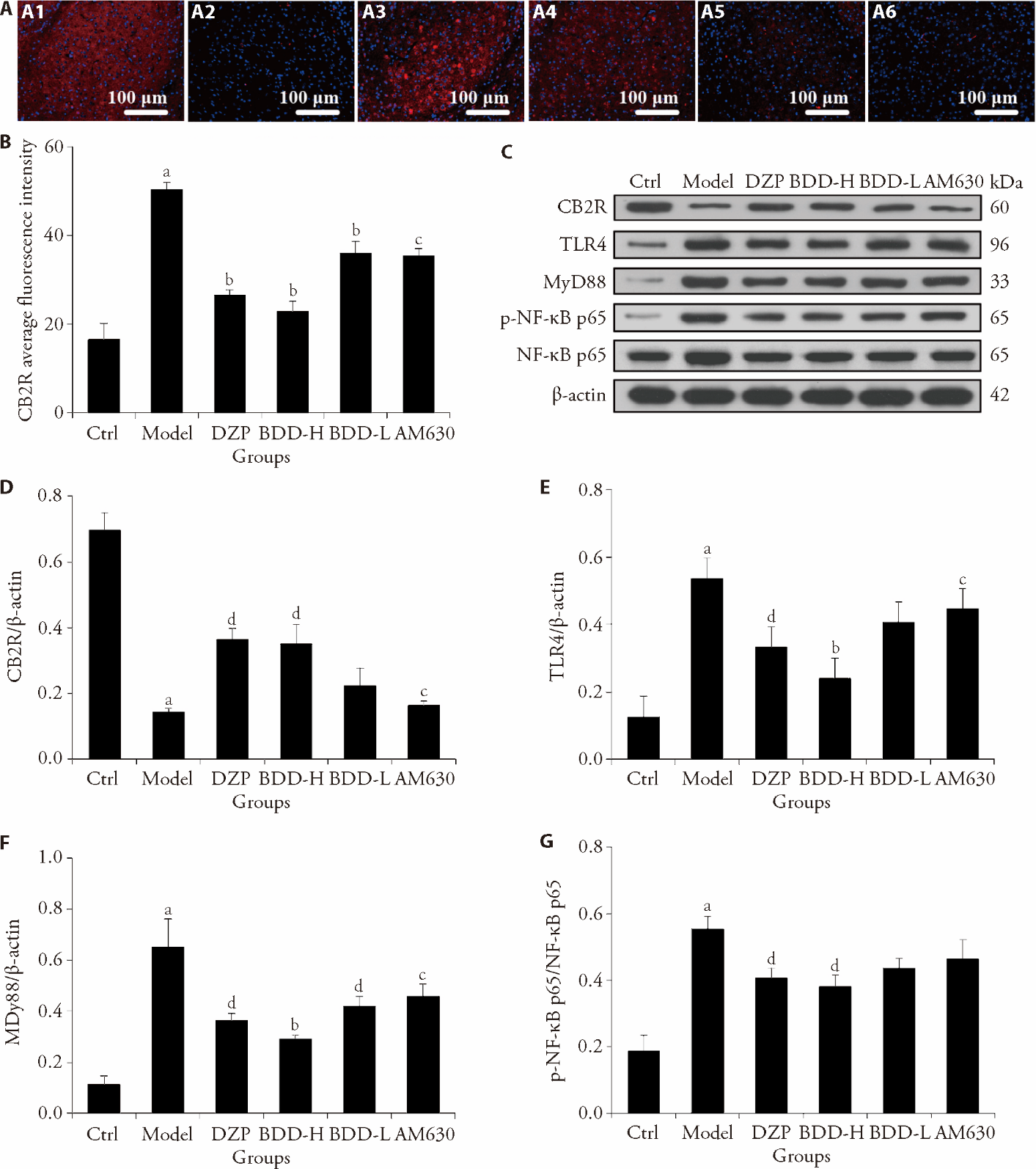
Figure 4 BDD modulated CB2R expression and TLR4/MyD88/NF-κB signaling in the amygdala A: representative images of microglia immunofluorescence staining for CB2R (red) and DAPI (blue) in the amygdala, scale bars: 100 μm; A1: the control group; A2: model group; A3: DZP group; A4: BDD-H group; A5: BDD-L group; A6: AM630 group; B: CB2R average fluorescence density; C: protein electrophoresis of CB2R and TLR4/MyD88/NF-κB signaling molecules; D: protein expression of CB2R in the amygdala; E: protein expression of TLR4 in the amygdala; F: protein expression of MyD88 in the amygdala; G: protein expression of NF-κB in the amygdala. Ctrl: control group (distilled water); Model: model group (CRS + distilled water); DZP: diazepam group (CRS + 2 mg/kg diazepam); BDD-H: high dose of BDD group (CRS + 16 g/kg BDD); BDD-L: low dose of BDD group (CRS + 8 g/kg BDD); AM630: high dose of BDD combined with AM630 group (CRS + 16 g/kg BDD + 1 mg/kg AM630). BDD: Baihe Dihuang decoction; CB2R: cannabinoid type 2 receptor; TLR4: toll-like receptor 4; MyD88: myeloid differentiation primary response gene 88; DAPI: 4',6-diamidino-2-phenylindole; NF-κB: nuclear factor-kappa B; CRS: chronic restraint stress; ANOVA: analysis of variance. Statistical significance was assessed using one way ANOVA, followed by pairwise comparisons between groups using the t-test. Data were presented as mean ± standard deviation (n = 3). aP < 0.01, vs the control group; bP < 0.01, dP < 0.05, vs the model group; cP < 0.05 vs the BDD-H group.
Figure 4 BDD modulated CB2R expression and TLR4/MyD88/NF-κB signaling in the amygdala A: representative images of microglia immunofluorescence staining for CB2R (red) and DAPI (blue) in the amygdala, scale bars: 100 μm; A1: the control group; A2: model group; A3: DZP group; A4: BDD-H group; A5: BDD-L group; A6: AM630 group; B: CB2R average fluorescence density; C: protein electrophoresis of CB2R and TLR4/MyD88/NF-κB signaling molecules; D: protein expression of CB2R in the amygdala; E: protein expression of TLR4 in the amygdala; F: protein expression of MyD88 in the amygdala; G: protein expression of NF-κB in the amygdala. Ctrl: control group (distilled water); Model: model group (CRS + distilled water); DZP: diazepam group (CRS + 2 mg/kg diazepam); BDD-H: high dose of BDD group (CRS + 16 g/kg BDD); BDD-L: low dose of BDD group (CRS + 8 g/kg BDD); AM630: high dose of BDD combined with AM630 group (CRS + 16 g/kg BDD + 1 mg/kg AM630). BDD: Baihe Dihuang decoction; CB2R: cannabinoid type 2 receptor; TLR4: toll-like receptor 4; MyD88: myeloid differentiation primary response gene 88; DAPI: 4',6-diamidino-2-phenylindole; NF-κB: nuclear factor-kappa B; CRS: chronic restraint stress; ANOVA: analysis of variance. Statistical significance was assessed using one way ANOVA, followed by pairwise comparisons between groups using the t-test. Data were presented as mean ± standard deviation (n = 3). aP < 0.01, vs the control group; bP < 0.01, dP < 0.05, vs the model group; cP < 0.05 vs the BDD-H group.
Table 2 CB2R and TLR4/MyD88/NF-κB signaling molecules mRNA levels in the amygdala ($\bar{x}±s$)
| Group | n | CB2R | TLR4 | MyD88 | NF-κB |
|---|---|---|---|---|---|
| Ctrl | 3 | 1.081±0.068 | 1.005±0.061 | 1.056±0.050 | 1.018±0.016 |
| Model | 3 | 0.504±0.049a | 1.620±0.233a | 1.560±0.242a | 1.294±0.148 |
| DZP | 3 | 0.828±0.148b | 1.043±0.178b | 0.949±0.269b | 0.958±0.045 |
| BDD-H | 3 | 0.936±0.039c | 0.979±0.170b | 0.960±0.109b | 0.931±0.280 |
| BDD-L | 3 | 0.884±0.157c | 1.102±0.177d | 1.007±0.125d | 1.057±0.265 |
| AM630 | 3 | 0.607±0.026d | 1.448±0.112e | 1.464±0.157e | 1.374±0.098e |
Table 2 CB2R and TLR4/MyD88/NF-κB signaling molecules mRNA levels in the amygdala ($\bar{x}±s$)
| Group | n | CB2R | TLR4 | MyD88 | NF-κB |
|---|---|---|---|---|---|
| Ctrl | 3 | 1.081±0.068 | 1.005±0.061 | 1.056±0.050 | 1.018±0.016 |
| Model | 3 | 0.504±0.049a | 1.620±0.233a | 1.560±0.242a | 1.294±0.148 |
| DZP | 3 | 0.828±0.148b | 1.043±0.178b | 0.949±0.269b | 0.958±0.045 |
| BDD-H | 3 | 0.936±0.039c | 0.979±0.170b | 0.960±0.109b | 0.931±0.280 |
| BDD-L | 3 | 0.884±0.157c | 1.102±0.177d | 1.007±0.125d | 1.057±0.265 |
| AM630 | 3 | 0.607±0.026d | 1.448±0.112e | 1.464±0.157e | 1.374±0.098e |
| 1. |
Gong M, Dong H, Tang Y, et al. Effects of aromatherapy on anxiety: a Meta-analysis of randomized controlled trials. J Affect Disord 2020; 274: 1028-40.
DOI URL |
| 2. |
Nakada S, Ho FK, Celis-Morales C, et al. Individual and joint associations of anxiety disorder and depression with cardiovascular disease: a UK Biobank prospective cohort study. Eur Psychiatry 2023; 66: e54.
DOI URL |
| 3. |
Zhao H, Zhou M, Liu Y, et al. Recent advances in anxiety disorders: focus on animal models and pathological mechanisms. Anim Model Exp Med 2023; 6: 559-72.
DOI URL |
| 4. |
Dang R, Wang M, Li X, et al. Edaravone ameliorates depressive and anxiety-like behaviors via Sirt1/Nrf2/HO-1/Gpx4 pathway. J Neuroinflammation 2022; 19: 41.
DOI |
| 5. |
Hu P, Lu Y, Pan BX, et al. New insights into the pivotal role of the amygdala in Inflammation-related depression and anxiety disorder. Int J Mol Sci 2022; 23: 11076.
DOI URL |
| 6. |
Du Preez A, Onorato D, Eiben I, et al. Chronic stress followed by social isolation promotes depressive-like behaviour, alters microglial and astrocyte biology and reduces hippocampal neurogenesis in male mice. Brain Behav Immun 2021; 91: 24-47.
DOI PMID |
| 7. |
Zhang L, Wang X, Yu W, et al. CB2R activation regulates TFEB-mediated autophagy and affects lipid metabolism and inflammation of astrocytes in POCD. Front Immunol 2022; 13: 836494.
DOI URL |
| 8. |
Pakkhesal S, Shakouri M, Mosaddeghi-Heris R, et al. Bridging the gap: the endocannabinoid system as a functional fulcrum for benzodiazepines in a novel frontier of anxiety pharmacotherapy. Pharmacol Ther 2025; 267: 108799.
DOI URL |
| 9. |
Hossain MZ, Ando H, Unno S, et al. Targeting peripherally restricted cannabinoid receptor 1, cannabinoid receptor 2, and endocannabinoid-degrading enzymes for the treatment of neuropathic pain Including neuropathic orofacial pain. Int J Mol Sci 2020; 21: 1423.
DOI URL |
| 10. |
Zhao S, Liu S, Gong Y, et al. The effect of cannabinoid type Ⅱ receptor on the excitability of substantia nigra dopaminergic neurons. Front Pharmacol 2025; 16: 1522210.
DOI URL |
| 11. |
Ricardi C, Barachini S, Consoli G, et al. Beta-caryophyllene, a cannabinoid receptor type 2 selective agonist, in eotional and cognitive disorders. Int J Mol Sci 2024; 25: 3203.
DOI URL |
| 12. |
Chen S, Li Z, Yang L, et al. Cannabinoid receptor-2 alleviates sepsis-induced neuroinflammation by modulating microglia M1/M2 subset polarization through inhibiting Nogo-B expression. Mol Neurobiol 2025; 62: 9258-70.
DOI PMID |
| 13. |
Jing N, Fang B, Li Z, et al. Exogenous activation of cannabinoid-2 receptor modulates TLR4/MMP9 expression in a spinal cord ischemia reperfusion rat model. J Neuroinflammation 2020; 17: 101.
DOI |
| 14. |
El-Maadawy WH, Hafiz E, Okasha H, et al. Phycocyanin stimulates ulcerative colitis healing via selective activation of cannabinoid receptor-2, intestinal mucosal healing, Treg accumulation, and p38MAPK/MK2 signaling inhibition. Life Sci 2022; 305: 120741.
DOI URL |
| 15. |
Bandelow B. Current and novel psychopharmacological drugs for anxiety disorders. Adv Exp Med Biol 2020; 1191: 347-65.
DOI PMID |
| 16. | Lin WL, Liang YC, Chung KH, et al. Using text mining and data visualization approaches for investigating mental illness from the perspective of Traditional Chinese Medicine. Med (Kaunas) 2023; 59: 196. |
| 17. | Zhang ZJ (Han dynasty). Jin Kui Yao Lue. Beijing: People's Medical Publishing House, 2017: 26. |
| 18. | Peng L, Zhang XF, Guo DY, et al. Evaluation of the clinical efficacy of the classic prescription "Baihe Dihuang decoction" based on Meta-analysis. Evid Based Complement Alternat Med 2022; 2022: 8559176. |
| 19. |
Tang L, Liu J, Yang H, et al. Microbiome metabolomic analysis of the anxiolytic effect of baihe dihuang decoction in a rat model of chronic restraint stress. Drug Des Devel Ther 2024; 18: 2227-48.
DOI URL |
| 20. | Zhao HQ, Liu J, Meng P, et al. Effect of baihe dihuang decoction on synaptic plasticity of hippocampus in rats with anxious depression. Zhong Guo Zhong Yao Za Zhi 2021; 46: 1205-10. |
| 21. |
Mao Q, Zhang H, Zhang Z, et al. Co-decoction of Lilii Bulbus and Radix Rehmannia recens and its key bioactive ingredient verbascoside inhibit neuroinflammation and intestinal permeability associated with chronic stress-induced depression via the gut microbiota-brain axis. Phytomedicine 2024; 129: 155510.
DOI URL |
| 22. |
Xue X, Pan J, Zhang H, et al. Baihe Dihuang (Lilium Henryi Baker and Rehmannia Glutinosa) decoction attenuates somatostatin interneurons deficits in prefrontal cortex of depression via miRNA-144-3p mediated GABA synthesis and release. J Ethnopharmacol 2022; 292: 115218.
DOI URL |
| 23. | Chinese Pharmacopoeia Commission. Pharmacopoeia of the People’s Republic of China: 2020 Edition, Volume I. Beijing: China Medical Science Press, 2020: 129-30, 137-8. |
| 24. |
Tang L, Zhao HQ, Yang H, et al. Spectrum-effect relationship combined with bioactivity evaluation to discover the main anxiolytic active components of Baihe Dihuang decoction. J Ethnopharmacol 2024; 319: 117090.
DOI URL |
| 25. | Tang L, Zhao H, Liu J, et al. Optimization of the best ratio of lily and rehmannia for anxiolytic and antidepressant effect based on increase-decrease baseline geometric proportion design combined with entropy weight TOPSIS method. Shi Zhen Guo Yi Guo Yao 2023; 34: 2125-9. |
| 26. |
Liu WZ, Zhang WH, Zheng ZH, et al. Identification of a prefrontal cortex-to-amygdala pathway for chronic stress-induced anxiety. Nat Commun 2020; 11: 2221.
DOI |
| 27. |
Youssef DA, El-Fayoumi HM, Mahmoud MF. Beta-caryophyllene alleviates diet-induced neurobehavioral changes in rats: the role of CB2 and PPAR-γ receptors. Biomed Pharmacother 2019; 110: 145-54.
DOI PMID |
| 28. |
Topuz RD, Cetinkaya MZ, Erumit D, et al. The role of endocannabinoid system and TRPV1 receptors in the antidepressant and anxiolytic effects of dipyrone in chronic unpredictable mild stress in mice. Eur J Pharmacol 2021; 908: 174315.
DOI URL |
| 29. | Zhao H, Mou Q, Jiang J, et al. Zuogui Jiangtang Jieyu formula ameliorating hippocampal neuronal apoptosis in diabetic rats with depression by inhibiting JNK signaling pathway. Digit Chin Med 2024; 7: 195-208. |
| 30. |
Wang B, Xu E, Bai M, et al. Quantitative proteomic analysis of the brain reveals the potential antidepressant mechanism of Jiawei Danzhi Xiaoyao San (加味丹栀逍遥散) in a chronic unpredictable mild stress mouse model of depression. J Tradit Chin Med 2025; 45: 22-31.
DOI |
| 31. |
Al Omran AJ, Shao AS, Watanabe S, et al. Social isolation induces neuroinflammation and microglia overactivation, while dihydromyricetin prevents and improves them. J Neuroinflammation 2022; 19: 2.
DOI |
| 32. |
Zou J, Gao J, Shang W, et al. Minocycline ameliorates staphylococcus aureus-induced neuroinflammation and anxiety-like behaviors by regulating the TLR2 and STAT3 pathways in microglia. Brain Sciences 2025; 15: 128.
DOI URL |
| 33. |
Fülöp B, Hunyady Á, Bencze N, et al. IL-1 mediates chronic stress-induced hyperalgesia accompanied by microglia and astroglia morphological changes in pain-related brain regions in mice. Int J Mol Sci 2023; 24: 5479.
DOI URL |
| 34. |
León-Rodríguez A, Fernández-Arjona MDM, Grondona JM, et al. Anxiety-like behavior and microglial activation in the amygdala after acute neuroinflammation induced by microbial neuraminidase. Sci Rep 2022; 12: 11581.
DOI PMID |
| 35. |
Wang J, Zhang G, Yang Y, et al. Schisandra chinensis lignans exert antidepressant effects by promoting BV2 microglia polarization toward the M2 phenotype through the activation of the cannabinoid receptor type-2-signal transducer and activator of transcription 6 pathway. J Agric Food Chem 2022; 70: 14157-69.
DOI URL |
| 36. |
Lin MH, Cheng PC, Hsiao PJ, et al. The GLP-1 receptor agonist exenatide ameliorates neuroinflammation, locomotor activity, and anxiety-like behavior in mice with diet-induced obesity through the modulation of microglial M2 polarization and downregulation of SR-A4. Int Immunopharmacol 2023; 115: 109653.
DOI URL |
| 37. |
Alcaraz-Silva J, Feingold D, Viana-Torre G, et al. The endocannabinoid system as a biomarker for diagnostic and therapeutic applications in depression and anxiety. CNS Neurol Disord Drug Targets 2023; 22: 417-30.
DOI URL |
| 38. |
Zhao H, Liu Y, Cai N, et al. Endocannabinoid hydrolase inhibitors: potential novel anxiolytic drugs. Drug Des Devel Ther 2024; 18: 2143-67.
DOI URL |
| 39. |
Frontera JL, Gonzalez Pini VM, Messore FL, et al. Exposure to cannabinoid agonist WIN 55,212-2 during early adolescence increases alcohol preference and anxiety in CD1 mice. Neuropharmacology 2018; 137: 268-74.
DOI PMID |
| 40. |
Cristino L, Bisogno T, Di Marzo V. Cannabinoids and the expanded endocannabinoid system in neurological disorders. Nat Rev Neurol 2020; 16: 9-29.
DOI PMID |
| 41. |
Xin Q, Xu F, Taylor DH, et al. The impact of cannabinoid type 2 receptors (CB2Rs) in neuroprotection against neurological disorders. Acta Pharmacol Sin 2020; 41: 1507-18.
DOI PMID |
| 42. |
Wu Q, Ma Y, Liu Y, et al. CB2R agonist JWH-133 attenuates chronic inflammation by restraining M1 macrophage polarization via Nrf2/HO-1 pathway in diet-induced obese mice. Life Sci 2020; 260: 118424.
DOI URL |
| 43. |
Li J, Wang H, Liu D, et al. CB2R activation ameliorates late adolescent chronic alcohol exposure-induced anxiety-like behaviors during withdrawal by preventing morphological changes and suppressing NLRP3 inflammasome activation in prefrontal cortex microglia in mice. Brain Behav Immun 2023; 110: 60-79.
DOI PMID |
| 44. |
Tanaka M, Sackett S, Zhang Y. Endocannabinoid modulation of microglial phenotypes in neuropathology. Front Neurol 2020; 11: 87.
DOI PMID |
| 45. |
Huang J, Hu X, Li J, et al. Edaravone dexborneol promotes M2 microglia polarization against lipopolysaccharide-induced inflammation via suppressing TLR4/MyD88/NF-κB pathway. Naunyn Schmiedebergs Arch Pharmacol 2024; 397: 6647-59.
DOI |
| 46. |
Zhu R, Zhang Y, He W, et al. Wogonoside alleviates microglia-mediated neuroinflammation via TLR4/MyD88/NF-κB signaling axis after spinal cord injury. Eur J Pharmacol 2024; 973: 176566.
DOI URL |
| 47. | Huang H, Ou J, Gao J, et al. Fuzheng xuanfei huashi prescripti (扶正宣肺化湿方) suppresses inflammation in lipopolysaccharide-induced lung injury in mice via toll-like recptor 4/nuclear transcription factor κB and cyclooxygenase-2/prostaglandin E2 pathway. J Tradit Chin Med 2025; 45: 272-80. |
| 48. |
Dai Y, Lu Q, Li P, et al. Xianglian pill attenuates ulcerative colitis through TLR4/MyD88/NF-κB signaling pathway. J Ethnopharmacol 2023; 300: 115690.
DOI URL |
| [1] | XI Hanqing, LI Xia, ZHANG Ziyi, CUI Xiang, JING Xianghong, ZHU Bing, GAO Xinyan. Neuro- and immuno-modulation mediated by the cardiac sympathetic nerve: a novel insight into the anti-ischemic efficacy of acupuncture [J]. Journal of Traditional Chinese Medicine, 2024, 44(5): 1058-1066. |
| [2] | LI Zhenxuan, WANG Xuerui, Luis Ulloa, Ayman Youssef, BAI Yunjing, XU Xiaolong, LIU Qingquan. Complementary and alternative medicine on cognitive defects and neuroinflammation after sepsis [J]. Journal of Traditional Chinese Medicine, 2024, 44(2): 408-416. |
| [3] | Ying Cui, Chunlei Rong, Junming Wang, Can Cui, Li Wang, Zhiyi Feng, Jing Feng, Bing Niu. Mechanism-based anti-anxiety effects of polysaccharides extracted from Shudihuang (Radix Rehmanniae Preparata) by two-dimensional electrophoresis analysis in rat hippocampus proteins [J]. Journal of Traditional Chinese Medicine, 2013, 33(04): 524-530. |
| Viewed | ||||||
|
Full text |
|
|||||
|
Abstract |
|
|||||
