
Journal of Traditional Chinese Medicine ›› 2026, Vol. 46 ›› Issue (4): 788-797.DOI: 10.19852/j.cnki.jtcm.2026.04.002
• Original Articles • Previous Articles Next Articles
Berberine alleviates alcoholic liver disease via activating intestinal nuclear receptor subfamily 1 group D member 1
HUANG Yuwei1, CAI Yuting1, LI Zanjin1, WU Zicong1, GUO Lianxia1, LIN Luomin1, DONG Linlin3, WU Baojian1, DONG Dong2( )
)
- 1
Institute of Molecular Rhythm and Metabolism ,Guangzhou University of Chinese Medicine Guangzhou 510000, China
2Department of Public Health and Preventive Medicine ,School of Medicine, Jinan University Guangzhou 510632, China
3Hebei Geo-Environment Monitoring Institute Shijiazhuang 050021, China
-
Received:2025-04-25Accepted:2025-10-15Online:2026-08-15Published:2026-08-08 -
Contact:Dr. DONG Dong, Department of Public Health and Preventive Medicine, School of Medicine, Jinan University, Guangzhou 510632, China. dd2015@jnu.edu.cn,Telephone: +86-18617327324
-
About author:HUANG Yuwei and CAI Yuting are co-first authors and contributed equally to this work -
Supported by:Project for Young Qihuang Scholars of the National Administration of Traditional Chinese Medicine;China Postdoctoral Science Foundation-Founded Project: Mechanism Study of Circadian Rhythm in Allergic Rhinitis(2024M760666);Scientific Research Platforms and Projects of Guangdong Higher Education Institutions-founded Project: Circadian Controlled Disease and Innovative Drug Investigation Team(2023KCXTD009)

Cite this article
HUANG Yuwei, CAI Yuting, LI Zanjin, WU Zicong, GUO Lianxia, LIN Luomin, DONG Linlin, WU Baojian, DONG Dong. Berberine alleviates alcoholic liver disease via activating intestinal nuclear receptor subfamily 1 group D member 1[J]. Journal of Traditional Chinese Medicine, 2026, 46(4): 788-797.
share this article

Figure 1 Berberine attenuated both chronic and acute alcohol induced liver injury A: levels of Biochemical parameters in CD-fed, EtOH-fed and EtOH-fed+BBR mice (n = 10); A1: plasma ALT; A2: plasma TG; A3: plasma TC; hepatic TG. B: ORO and HE staining of liver tissues in Ctrl-fed, EtOH-fed and EtOH-fed + BBR mice (n = 3); B1: CD-fed group; B2: EtOH-fed group; B3: EtOH-fed + BBR group; B4: CD-fed group; B5: EtOH-fed group; B6: EtOH-fed + BBR group; CD-fed group: control diet; EtOH-fed group: ethanol-modified diet; EtOH-fed + BBR group: ethanol-modified diet + received BBR at a dose of 100 mg/kg by gavage once every day for 16 d; ALT: alanine transaminase; TG: triglyceride; TC: triglyceride; ORO: oil Red o; HE: hematoxylin-eosin; CD-fed: control diet; EtOH-fed: ethanol-modified diet; BBR: berberine. Statistical analyses were measured using one-way analysis of variance followed by post hoc Tukey correction for multiple comparisons. Data were presented as mean ± standard deviation. Compared with the CD-fed group, aP < 0.05; compared with the EtOH-fed group, bP < 0.05.
Figure 1 Berberine attenuated both chronic and acute alcohol induced liver injury A: levels of Biochemical parameters in CD-fed, EtOH-fed and EtOH-fed+BBR mice (n = 10); A1: plasma ALT; A2: plasma TG; A3: plasma TC; hepatic TG. B: ORO and HE staining of liver tissues in Ctrl-fed, EtOH-fed and EtOH-fed + BBR mice (n = 3); B1: CD-fed group; B2: EtOH-fed group; B3: EtOH-fed + BBR group; B4: CD-fed group; B5: EtOH-fed group; B6: EtOH-fed + BBR group; CD-fed group: control diet; EtOH-fed group: ethanol-modified diet; EtOH-fed + BBR group: ethanol-modified diet + received BBR at a dose of 100 mg/kg by gavage once every day for 16 d; ALT: alanine transaminase; TG: triglyceride; TC: triglyceride; ORO: oil Red o; HE: hematoxylin-eosin; CD-fed: control diet; EtOH-fed: ethanol-modified diet; BBR: berberine. Statistical analyses were measured using one-way analysis of variance followed by post hoc Tukey correction for multiple comparisons. Data were presented as mean ± standard deviation. Compared with the CD-fed group, aP < 0.05; compared with the EtOH-fed group, bP < 0.05.
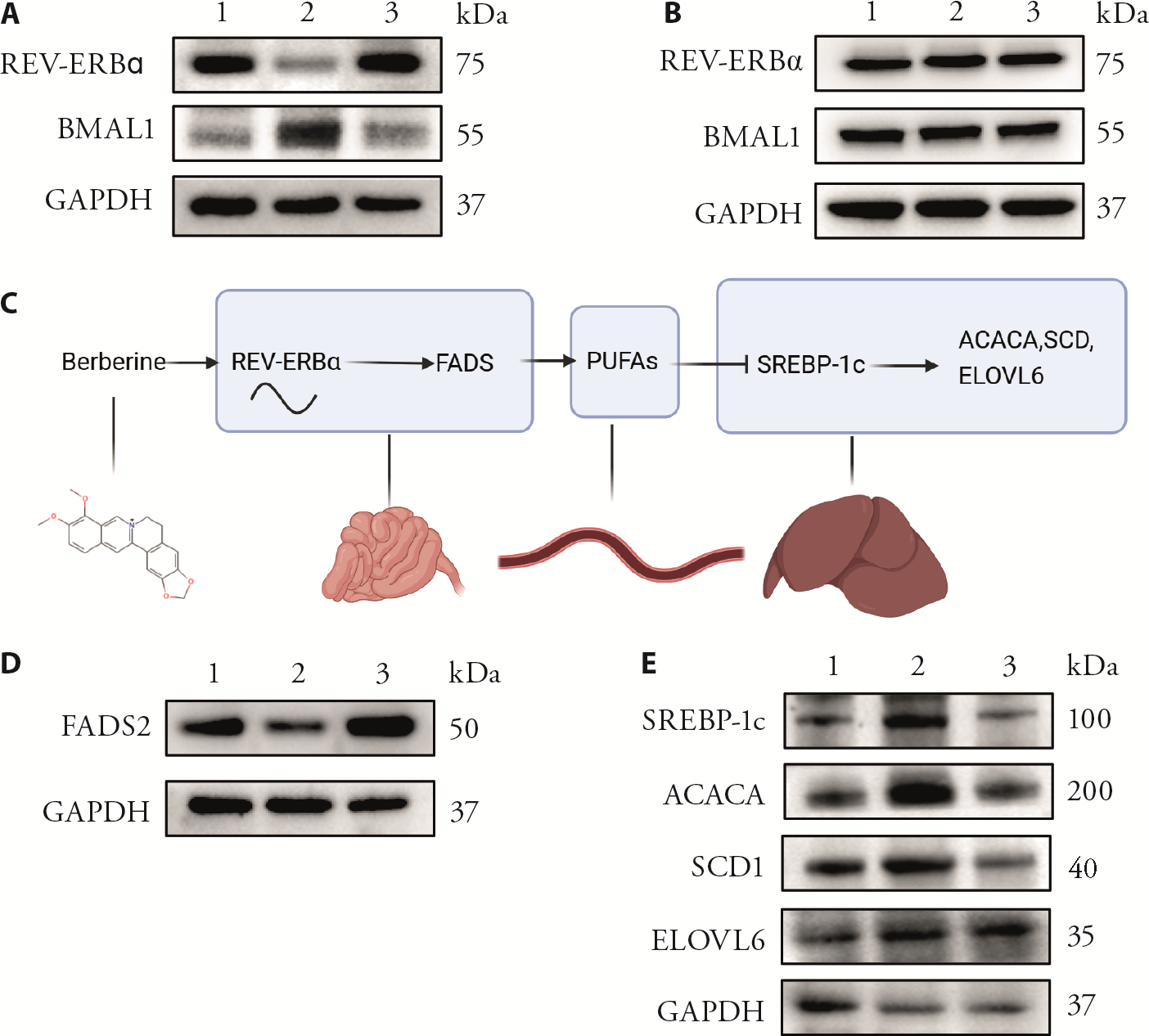
Figure 2 Berberine modulated hepatic lipid metabolism via activating the intestinal REV-ERBα A: REV-ERBα and BMAL1 protein expression of CD-fed (1), EtOH-fed (2), and EtOH-fed + BBR (3) mice in the intestine; B: REV-ERBα and BMAL1 protein expression of CD-fed (1), EtOH-fed (2), and EtOH-fed + BBR (3) mice in the liver; C: Schematic diagram of intestinal REV-ERBα controls hepatic lipid metabolism; D: FADS2 protein expression of CD-fed (1), EtOH-fed (2), and EtOH-fed + BBR (3) mice in the intestine; E: SREBP-1c, ACACA, SCD1 and ELOVL6 protein expression of CD-fed (1), EtOH-fed (2), and EtOH-fed + BBR (3) mice in the liver; CD-fed group: control diet; EtOH-fed group: ethanol-modified diet; EtOH-fed + BBR group: ethanol-modified diet + received BBR at a dose of 100 mg/kg by gavage once every day for 16 d. REV-ERBα: nuclear receptor subfamily 1 group D member 1; BMAL1: aryl hydrocarbon receptor nuclear translocator-like; FADS2: fatty acid desaturase 2; SREBP-1c: sterol regulatory element-binding protein 1; ACACA: acetyl-coenzyme A carboxylase alpha; SCD1: stearoyl-coenzyme A desaturase 1; ELOVL6: elongation of long-chain fatty acids family member 6; CD-fed: control diet; EtOH-fed: ethanol-modified diet; BBR: berberine.
Figure 2 Berberine modulated hepatic lipid metabolism via activating the intestinal REV-ERBα A: REV-ERBα and BMAL1 protein expression of CD-fed (1), EtOH-fed (2), and EtOH-fed + BBR (3) mice in the intestine; B: REV-ERBα and BMAL1 protein expression of CD-fed (1), EtOH-fed (2), and EtOH-fed + BBR (3) mice in the liver; C: Schematic diagram of intestinal REV-ERBα controls hepatic lipid metabolism; D: FADS2 protein expression of CD-fed (1), EtOH-fed (2), and EtOH-fed + BBR (3) mice in the intestine; E: SREBP-1c, ACACA, SCD1 and ELOVL6 protein expression of CD-fed (1), EtOH-fed (2), and EtOH-fed + BBR (3) mice in the liver; CD-fed group: control diet; EtOH-fed group: ethanol-modified diet; EtOH-fed + BBR group: ethanol-modified diet + received BBR at a dose of 100 mg/kg by gavage once every day for 16 d. REV-ERBα: nuclear receptor subfamily 1 group D member 1; BMAL1: aryl hydrocarbon receptor nuclear translocator-like; FADS2: fatty acid desaturase 2; SREBP-1c: sterol regulatory element-binding protein 1; ACACA: acetyl-coenzyme A carboxylase alpha; SCD1: stearoyl-coenzyme A desaturase 1; ELOVL6: elongation of long-chain fatty acids family member 6; CD-fed: control diet; EtOH-fed: ethanol-modified diet; BBR: berberine.
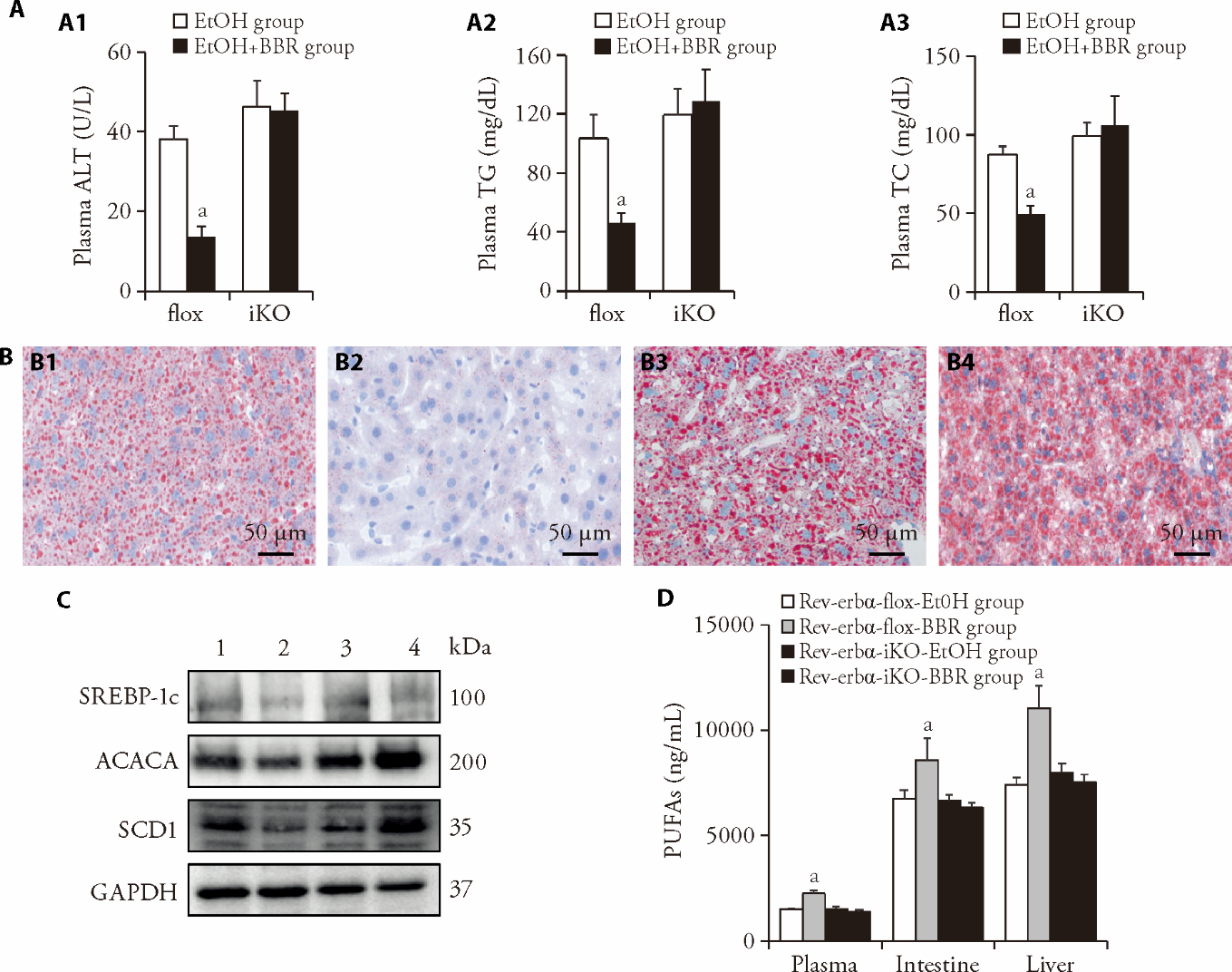
Figure 3 Berberine’s protection effect on alcohol-induced liver injury was lost in Rev-erbα-iKO mice A: levels of biochemical parameters in Rev-erbα-flox-EtOH, Rev-erbα-flox-BBR, Rev-erbα-iKO-EtOH and Rev-erbα-iKO-BBR mice (n = 10); A1: plasma ALT; A2: plasma TG; A3: plasma TC; B: ORO and HE staining of liver tissues in Rev-erbα-flox-EtOH, Rev-erbα-flox-BBR, Rev-erbα-iKO-EtOH and Rev-erbα-iKO-BBR mice (n = 3); B1: Rev-erbα-flox-EtOH group; B2: Rev-erbα-flox-BBR group; B3: Rev-erbα-iKO-EtOH group; B4: Rev-erbα-iKO-BBR group; C: SREBP-1c, ACACA, SCD1 and ELOVL6 protein expression of Rev-erbα-flox-EtOH (1), Rev-erbα-flox-BBR (2), Rev-erbα-iKO-EtOH (3) and Rev-erbα-iKO-BBR (4) mice in the liver; D: levels of PUFAs in Rev-erbα-flox-EtOH, Rev-erbα-flox-BBR, Rev-erbα-iKO-EtOH and Rev-erbα-iKO-BBR mice (n = 3). Rev-erbα-flox-EtOH group: Rev-erbα-flox mice received EtOH at a dose of 6 g/kg by gavage once every day for 3 d; Rev-erbα-flox-BBR group: Rev-erbα-flox-EtOH group + received BBR at a dose of 300 mg/kg by gavage once every day for 6 d; Rev-erbα-iKO-EtOH group: Rev-erbα-iKO mice received EtOH at a dose of 6 g/kg by gavage once every day for 3 d; Rev-erbα-iKO-BBR group: Rev-erbα-iKO-EtOH group + received BBR at a dose of 300 mg/kg by gavage once every day for 6 d. Rev-erbα: nuclear receptor subfamily 1 group D member 1; ALT: alanine transaminase; TG: triglyceride; TC: triglyceride; ORO: oil Red o; SREBP-1c: sterol regulatory element-binding protein 1; ACACA: acetyl-coenzyme A carboxylase alpha; SCD1: stearoyl-coenzyme A desaturase 1; ELOVL6: elongation of long-chain fatty acids family member 6; EtOH: ethanol; iKO: intestinal epithelial cell conditional knockout; BBR: berberine. Statistical analyses were measured using two-way analysis of variance followed by post hoc Tukey correction for multiple comparisons. Data were presented as mean ± standard deviation. Compared with the Rev-erbα-flox-EtOH group, aP < 0.05.
Figure 3 Berberine’s protection effect on alcohol-induced liver injury was lost in Rev-erbα-iKO mice A: levels of biochemical parameters in Rev-erbα-flox-EtOH, Rev-erbα-flox-BBR, Rev-erbα-iKO-EtOH and Rev-erbα-iKO-BBR mice (n = 10); A1: plasma ALT; A2: plasma TG; A3: plasma TC; B: ORO and HE staining of liver tissues in Rev-erbα-flox-EtOH, Rev-erbα-flox-BBR, Rev-erbα-iKO-EtOH and Rev-erbα-iKO-BBR mice (n = 3); B1: Rev-erbα-flox-EtOH group; B2: Rev-erbα-flox-BBR group; B3: Rev-erbα-iKO-EtOH group; B4: Rev-erbα-iKO-BBR group; C: SREBP-1c, ACACA, SCD1 and ELOVL6 protein expression of Rev-erbα-flox-EtOH (1), Rev-erbα-flox-BBR (2), Rev-erbα-iKO-EtOH (3) and Rev-erbα-iKO-BBR (4) mice in the liver; D: levels of PUFAs in Rev-erbα-flox-EtOH, Rev-erbα-flox-BBR, Rev-erbα-iKO-EtOH and Rev-erbα-iKO-BBR mice (n = 3). Rev-erbα-flox-EtOH group: Rev-erbα-flox mice received EtOH at a dose of 6 g/kg by gavage once every day for 3 d; Rev-erbα-flox-BBR group: Rev-erbα-flox-EtOH group + received BBR at a dose of 300 mg/kg by gavage once every day for 6 d; Rev-erbα-iKO-EtOH group: Rev-erbα-iKO mice received EtOH at a dose of 6 g/kg by gavage once every day for 3 d; Rev-erbα-iKO-BBR group: Rev-erbα-iKO-EtOH group + received BBR at a dose of 300 mg/kg by gavage once every day for 6 d. Rev-erbα: nuclear receptor subfamily 1 group D member 1; ALT: alanine transaminase; TG: triglyceride; TC: triglyceride; ORO: oil Red o; SREBP-1c: sterol regulatory element-binding protein 1; ACACA: acetyl-coenzyme A carboxylase alpha; SCD1: stearoyl-coenzyme A desaturase 1; ELOVL6: elongation of long-chain fatty acids family member 6; EtOH: ethanol; iKO: intestinal epithelial cell conditional knockout; BBR: berberine. Statistical analyses were measured using two-way analysis of variance followed by post hoc Tukey correction for multiple comparisons. Data were presented as mean ± standard deviation. Compared with the Rev-erbα-flox-EtOH group, aP < 0.05.

Figure 4 Effect of berberine on alcohol-induced injury was dosing time dependent A: levels of biochemical parameters in ZT6-Ctrl, ZT6-EtOH, ZT18-Ctrl and ZT18-EtOH mice (n = 10); A1: plasma ALT; A2: plasma TG; A3: plasma TC; A4: hepatic TG; B: ORO and HE staining of liver tissues in ZT6-Ctrl, ZT6-EtOH, ZT18-Ctrl and ZT18-EtOH mice (n = 3); B1: ZT6-Ctrl group; B2: ZT6-EtOH group; B3: ZT18-Ctrl group; B4: ZT18-EtOH; B5: ZT6-Ctrl group; B6: ZT6-EtOH group; B7: ZT18-Ctrl group; B8: ZT18-EtOH group; C: levels of biochemical parameters in EtOH-Vehicle (ZT6), EtOH-BBR (ZT6), EtOH-Vehicle (ZT18) and EtOH-BBR (ZT18) mice (n = 10); EtOH-Vehicle (ZT6) group: EtOH group + received Vehicle by gavage at ZT6 for 6 d; EtOH-BBR (ZT6) group: EtOH group + received 300 mg/kg EtOH by gavage at ZT6 for 6 d; EtOH-Vehicle (ZT18) group: EtOH group + received Vehicle by gavage at ZT18 for 6 d; EtOH-BBR (ZT18) group: EtOH group + received 300 mg/kg EtOH by gavage at ZT18 for 6 d. ALT: alanine transaminase; ZT: zeitgeber time; TG: triglyceride; TC: triglyceride; ORO: oil Red o; HE: hematoxylin-eosin; EtOH: ethanol; BBR: berberine. Statistical analyses were measured using two-way analysis of variance followed by post hoc Tukey correction for multiple comparisons. Data were presented as mean ± standard deviation. Compared with the EtOH-Vehicle (ZT6) group, aP < 0.05; compared with the EtOH-Vehicle (ZT18) group, bP < 0.05.
Figure 4 Effect of berberine on alcohol-induced injury was dosing time dependent A: levels of biochemical parameters in ZT6-Ctrl, ZT6-EtOH, ZT18-Ctrl and ZT18-EtOH mice (n = 10); A1: plasma ALT; A2: plasma TG; A3: plasma TC; A4: hepatic TG; B: ORO and HE staining of liver tissues in ZT6-Ctrl, ZT6-EtOH, ZT18-Ctrl and ZT18-EtOH mice (n = 3); B1: ZT6-Ctrl group; B2: ZT6-EtOH group; B3: ZT18-Ctrl group; B4: ZT18-EtOH; B5: ZT6-Ctrl group; B6: ZT6-EtOH group; B7: ZT18-Ctrl group; B8: ZT18-EtOH group; C: levels of biochemical parameters in EtOH-Vehicle (ZT6), EtOH-BBR (ZT6), EtOH-Vehicle (ZT18) and EtOH-BBR (ZT18) mice (n = 10); EtOH-Vehicle (ZT6) group: EtOH group + received Vehicle by gavage at ZT6 for 6 d; EtOH-BBR (ZT6) group: EtOH group + received 300 mg/kg EtOH by gavage at ZT6 for 6 d; EtOH-Vehicle (ZT18) group: EtOH group + received Vehicle by gavage at ZT18 for 6 d; EtOH-BBR (ZT18) group: EtOH group + received 300 mg/kg EtOH by gavage at ZT18 for 6 d. ALT: alanine transaminase; ZT: zeitgeber time; TG: triglyceride; TC: triglyceride; ORO: oil Red o; HE: hematoxylin-eosin; EtOH: ethanol; BBR: berberine. Statistical analyses were measured using two-way analysis of variance followed by post hoc Tukey correction for multiple comparisons. Data were presented as mean ± standard deviation. Compared with the EtOH-Vehicle (ZT6) group, aP < 0.05; compared with the EtOH-Vehicle (ZT18) group, bP < 0.05.
| 1. |
Gilmore W, Chikritzhs T, Stockwell T, Jernigan D, Naimi T, Gilmore I. Alcohol: taking a population perspective. Nat Rev Gastroenterol Hepatol 2016; 13: 426-34.
DOI PMID |
| 2. |
Mandrekar P, Bataller R, Tsukamoto H, Gao B. Alcoholic hepatitis: translational approaches to develop targeted therapies. Hepatology 2016; 64: 1343-55.
DOI PMID |
| 3. |
Seitz HK, Bataller R, Cortez-Pinto H, et al. Alcoholic liver disease. Nat Rev Dis Primers 2018; 4: 16.
DOI PMID |
| 4. |
Liangpunsakul S, Haber P, McCaughan GW. Alcoholic liver disease in Asia, Europe, and North America. Gastroenterology 2016; 150: 1786-97.
DOI PMID |
| 5. |
Rehm J, Samokhvalov AV, Shield KD. Global burden of alcoholic liver diseases. J Hepatol 2013; 59: 160-8.
DOI PMID |
| 6. |
Taieb J, Mathurin P, Elbim C, et al. Blood neutrophil functions and cytokine release in severe alcoholic hepatitis: effect of corticosteroids. J Hepatol 2000; 32: 579-86.
DOI PMID |
| 7. |
Naveau S, Chollet-Martin S, Dharancy S, et al. A double-blind randomized controlled trial of infliximab associated with prednisolone in acute alcoholic hepatitis. Hepatology 2004; 39: 1390-7.
DOI PMID |
| 8. |
Vonghia L, Leggio L, Ferrulli A, Bertini M, Gasbarrini G, Addolorato G. Acute alcohol intoxication. Eur J Intern Med 2008; 19: 561-7.
DOI PMID |
| 9. | Mao YM, Zeng MD, Li YM, et al. Capsule metadoxine in the treatment of alcoholic liver disease: a randomized, double-blind, placebo-controlled, multicenter study. Zhong Hua Gan Zang Bing Za Zhi 2009; 17: 213-6. |
| 10. |
Kong W, Wei J, Abidi P, et al. Berberine is a novel cholesterol-lowering drug working through a unique mechanism distinct from statins. Nat Med 2004; 10: 1344-51.
DOI PMID |
| 11. |
Qin X, Guo BT, Wan B, et al. Regulation of Th1 and Th17 cell differentiation and amelioration of experimental autoimmune encephalomyelitis by natural product compound berberine. J Immunol 2010; 185: 1855-63.
DOI PMID |
| 12. |
Tang LQ, Wei W, Chen LM, Liu S. Effects of berberine on diabetes induced by alloxan and a high-fat/high-cholesterol diet in rats. J Ethnopharmacol 2006; 108: 109-15.
DOI PMID |
| 13. |
Li-Weber M. Targeting apoptosis pathways in cancer by Chinese medicine. Cancer Lett 2013; 332: 304-12.
DOI PMID |
| 14. |
Shuai H, Zhikang D, Zirui W, et al. Network pharmacology approach to unveiling the mechanism of berberine in the amelioration of morphine tolerance. J Tradit Chin Med 2025; 45: 376-384.
DOI |
| 15. |
Zhou XQ, Zeng XN, Kong H, Sun XL. Neuroprotective effects of berberine on stroke models in vitro and in vivo. Neurosci Lett 2008; 447: 31-6.
DOI URL |
| 16. |
Baska A, Leis K, Galazka P. Berberine in the treatment of diabetes mellitus: a review. Endocr Metab Immune Disord Drug Targets 2021; 21: 1379-86.
DOI PMID |
| 17. | Pang B, Zhao LH, Zhou Q, et al. Application of berberine on treating type 2 diabetes mellitus. Int J Endocrinol 2015; 2015: 905749. |
| 18. |
Li GS, Liu XH, Zhu H, et al. Berberine-improved visceral white adipose tissue insulin resistance associated with altered sterol regulatory element-binding proteins, liver X receptors, and peroxisome proliferator-activated receptors transcriptional programs in diabetic hamsters. Biol Pharm Bull 2011; 34: 644-54.
DOI URL |
| 19. |
Xia X, Yan J, Shen Y, et al. Berberine improves glucose metabolism in diabetic rats by inhibition of hepatic gluconeogenesis. PLoS One 2011; 6: e16556.
DOI URL |
| 20. |
Altman BJ, Hsieh AL, Gouw AM, Dang CV. Correspondence: oncogenic MYC persistently upregulates the molecular clock component REV-ERBα. Nat Commun 2017; 8: 14862.
DOI PMID |
| 21. |
Chu G, Zhou X, Hu Y, Shi S, Yang G. Rev-erbα inhibits proliferation and promotes apoptosis of preadipocytes through the agonist GSK4112. Int J Mol Sci 2019; 20: 4524.
DOI URL |
| 22. |
Li T, Eheim AL, Klein S, et al. Novel role of nuclear receptor rev-erbα in hepatic stellate cell activation: potential therapeutic target for liver injury. Hepatology 2014; 59: 2383-96.
DOI PMID |
| 23. |
Cho H, Zhao X, Hatori M, et al. Regulation of circadian behaviour and metabolism by REV-ERB-alpha and REV-ERB-beta. Nature 2012; 485: 123-7.
DOI |
| 24. |
Zhangsun ZY, Xu XZ, Escames G, et al. Targeting NR1D1 in organ injury: challenges and prospects. Mil Med Res 2023; 10: 62.
DOI PMID |
| 25. |
Yang Z, Smalling RV, Huang Y, et al. The role of SHP/REV-ERBalpha/CYP4A axis in the pathogenesis of alcohol-associated liver disease. Jci Insight 2021; 6: e140687.
DOI URL |
| 26. |
Yu F, Wang Z, Zhang T, et al. Deficiency of intestinal Bmal1 prevents obesity induced by high-fat feeding. Nat Commun 2021; 12: 5323.
DOI PMID |
| 27. |
Chen M, Lin Y, Dang Y, et al. Reprogramming of rhythmic liver metabolism by intestinal clock. J Hepatol 2023; 79: 741-57.
DOI URL |
| 28. |
Zhou Z, Lin Y, Gao L, Yang Z, Wang S, Wu B. Circadian pharmacological effects of berberine on chronic colitis in mice: role of the clock component Rev-erbalpha. Biochem Pharmacol 2020; 172: 113773.
DOI URL |
| 29. |
Bertola A, Mathews S, Ki SH, Wang H, Gao B. Mouse model of chronic and binge ethanol feeding (the NIAAA model). Nat Protoc 2013; 8: 627-37.
DOI PMID |
| 30. |
Lachenmeier DW, Monakhova YB, Rehm J. Influence of unrecorded alcohol consumption on liver cirrhosis mortality. World J Gastroenterol 2014; 20: 7217-22.
DOI URL |
| 31. |
Sozio MS, Liangpunsakul S, Crabb D. The role of lipid metabolism in the pathogenesis of alcoholic and nonalcoholic hepatic steatosis. Semin Liver Dis 2010; 30: 378-90.
DOI PMID |
| 32. |
You M, Arteel GE. Effect of ethanol on lipid metabolism. J Hepatol 2019; 70: 237-48.
DOI PMID |
| 33. |
Tomita K, Azuma T, Kitamura N, et al. Pioglitazone prevents alcohol-induced fatty liver in rats through up-regulation of c-Met. Gastroenterology 2004; 126: 873-85.
DOI PMID |
| 34. |
Zhou R, Lin J, Wu D. Sulforaphane induces Nrf2 and protects against CYP2E1-dependent binge alcohol-induced liver steatosis. Biochim Biophys Acta 2014; 1840: 209-18.
DOI PMID |
| 35. |
Zhang P, Ma D, Wang Y, et al. Berberine protects liver from ethanol-induced oxidative stress and steatosis in mice. Food Chem Toxicol 2014; 74: 225-32.
DOI URL |
| 36. |
Yi J, Wu S, Tan S, et al. Berberine alleviates liver fibrosis through inducing ferrous redox to activate ROS-mediated hepatic stellate cells ferroptosis. Cell Death Discov 2021; 7: 374.
DOI PMID |
| 37. |
Yue SJ, Liu J, Wang WX, et al. Berberine treatment-emergent mild diarrhea associated with gut microbiota dysbiosis. Biomed Pharmacother 2019; 116: 109002.
DOI URL |
| 38. |
Kim YH, Marhon SA, Zhang Y, Steger DJ, Won KJ, Lazar MA. Rev-erbalpha dynamically modulates chromatin looping to control circadian gene transcription. Science 2018; 359: 1274-7.
DOI |
| 39. |
Liu Q, Xu L, Wu M, et al. Rev-erbalpha exacerbates hepatic steatosis in alcoholic liver diseases through regulating autophagy. Cell Biosci 2021; 11: 129.
DOI |
| 40. |
Luo ZC, Li ZH, Liang Z, et al. Berberine increases stromal production of Wnt molecules and activates Lgr5+ stem cells to promote epithelial restitution in experimental colitis. BMC Biol 2022; 20: 287.
DOI |
| 41. |
Xiong W, Sang W, Linghu KG, et al. Dual-functional Brij-S20-modified nanocrystal formulation enhances the intestinal transport and oral bioavailability of berberine. Int J Nanomedicine 2018; 13: 3781-93.
DOI URL |
| 42. |
Nakakuki M, Kawano H, Notsu T, Imada K, Mizuguchi K, Shimano H. A novel processing system of sterol regulatory element-binding protein-1c regulated by polyunsaturated fatty acid. J Biochem 2014; 155: 301-13.
DOI PMID |
| 43. |
Kesharwani D, Kumar A, Rizvi A, Datta M. miR-539-5p regulates Srebf1 transcription in the skeletal muscle of diabetic mice by targeting DNA methyltransferase 3b. Mol Ther Nucleic Acids 2022; 29: 718-732.
DOI URL |
| 44. |
Solt LA, Wang Y, Banerjee S, et al. Regulation of circadian behaviour and metabolism by synthetic REV-ERB agonists. Nature 2012; 485: 62-8.
DOI |
| 45. |
Grant D, Yin L, Collins JL, et al. GSK4112, a small molecule chemical probe for the cell biology of the nuclear heme receptor Rev-erbalpha. Acs Chem Biol 2010; 5: 925-32.
DOI URL |
| 46. |
Cheng J, Yan G, Tan W, et al. Berberine alleviates fructose-induced hepatic injury via ADK/AMPK/Nrf 2 pathway: a novel insight. Biomed Pharmacother 2024; 179: 117361.
DOI URL |
| 47. |
Delezie J, Dumont S, Dardente H, et al. The nuclear receptor REV-ERBalpha is required for the daily balance of carbohydrate and lipid metabolism. Faseb J 2012; 26: 3321-35.
DOI PMID |
| 48. |
Yang Z, Tsuchiya H, Zhang Y, et al. REV-ERBα activates C/EBP homologous protein to control small heterodimer partner-mediated oscillation of alcoholic fatty liver. Am J Pathol 2016; 186: 2909-20.
DOI PMID |
| [1] | YANG Wu, LI Yinghui, LIAO Heng, XIONG Shangbin. Molecular landscape of Berberine's therapeutic potential in gastrointestinal disorders [J]. Journal of Traditional Chinese Medicine, 2026, 46(1): 245-256. |
| [2] | HAN Shuai, Du Zhikang, WANG Zirui, HUANG Tianfeng, GE Yali, SHI Jianwen, GAO Ju. Network pharmacology approach to unveiling the mechanism of berberine in the amelioration of morphine tolerance [J]. Journal of Traditional Chinese Medicine, 2025, 45(2): 376-384. |
| [3] | HAN Shuai, MAO Hua, JIN Tingting, YAN Rubing, WANG Ziyi, ZHANG Jie, SHI Jianwen, LIANG Yongxin. Inhibitory effect of berberine on morphine tolerance and hyperalgesia in mice [J]. Journal of Traditional Chinese Medicine, 2023, 43(5): 915-924. |
| [4] | CHEN Xiaoqing, ZHANG Yong, HUANG Chunlai, FU Tingting, TAO Qinghua, MA Liqiang, WANG Liping. Efficacy of Huanglian root decoction(黄连煎剂) on kidney injury in rat's model of metabolic syndrome [J]. Journal of Traditional Chinese Medicine, 2021, 41(1): 117-124. |
| [5] | Bai Jinxia, Han Jin, Chen Hongge, Shen Baode, Xu He, Dai Ling, Shen Chengying, Yuan Hailong. Daily administration times of Canhuang tablet based on a pharmacodynamic/pharmacokinetic model in jaundiced rats [J]. Journal of Traditional Chinese Medicine, 2015, 35(01): 84-89. |
| [6] | Shengyan Xi, Kunhan Chuang, Kwangming Fang, Yimin Lee, Jinggung Chung, Yaochen Chuang. Effect of berberine on activity and mRNA expression of N-acetyl transferase in human lung cancer cell line A549 [J]. Journal of Traditional Chinese Medicine, 2014, 34(03): 302-308. |
| Viewed | ||||||
|
Full text |
|
|||||
|
Abstract |
|
|||||
