
Journal of Traditional Chinese Medicine ›› 2026, Vol. 46 ›› Issue (5): 1047-1060.DOI: 10.19852/j.cnki.jtcm.20260910.001
• Systematic Review • Next Articles
Efficacy and safety of moxibustion therapy for bronchial asthma: a systematic review and network Meta-analysis
ZHENG Haizhen1,2, CHEN Baohao3, ZOU Hanlin3, LI Yingjie3, WU Wenzhe3, HUANG Guomin4( )
- 1
Research Center for Differentiation and Development of CM Basic Theory ,Jiangxi University of Chinese Medicine Nanchang 330004, China
2Jiangxi Province Key Laboratory of CM Etiopathogenisis Nanchang 330004, China
3Graduate school ,Jiangxi University of Chinese Medicine Nanchang 330004, China
4the fifth section of Acupuncture and Moxibustion ,the Affiliated Hospital of Jiangxi University of Chinese Medicine Nanchang 330006, China
-
Received:2025-09-17Accepted:2026-02-10Online:2026-10-15Published:2026-09-10 -
Contact:Prof. HUANG Guomin, the fifth section of Acupuncture and Moxibustion, the Affiliated Hospital of Jiangxi University of Chinese Medicine, Nanchang 330006, China. 1608589346@qq.com,Telephone: +86-13617098593 -
About author:ZHENG Haizhen and CHEN Baohao are co-first authors and contributed equally to this work
-
Supported by:Jiangxi Provincial Natural Science Foundation: Investigating the Mechanism of Heat-sensitive Moxibustion in Asthma by Regulating the Th17/Treg Balance via Inhibition of Autophagy through the Adenosine Monophosphate-Activated Protein Kinase/Mechanistic Target of Rapamycin Pathway(20232BAB216114);Exploring the Mechanism of Heat-sensitive Moxibustion in Asthma via Ferroptosis Mediated by the Transient Receptor Potential Cation Channel, Subfamily C, Member 6/Calcium/Calmodulin-Dependent Protein Kinase 2 Pathway(20252BAC240447);Innovative Training Program for College Students: Exploring the Mechanism by Heat-sensitive Moxibustion Controls Asthma via the Regulation of Autophagy through the Sirtuin 1/Forkhead Box O1 Signalling Pathway(S202510412147);Postgraduate Innovation Special Fund Project: Exploring the Mechanism by Heat-sensitive Moxibustion Controls Asthma through the Regulation of Ferroptosis via the Sirtuin 1/Nuclear Factor Rythroid 2-related Factor 2/Glutathione Peroxidase 4 Signalling Pathway(XJS202508)

Cite this article
ZHENG Haizhen, CHEN Baohao, ZOU Hanlin, LI Yingjie, WU Wenzhe, HUANG Guomin. Efficacy and safety of moxibustion therapy for bronchial asthma: a systematic review and network Meta-analysis[J]. Journal of Traditional Chinese Medicine, 2026, 46(5): 1047-1060.
share this article
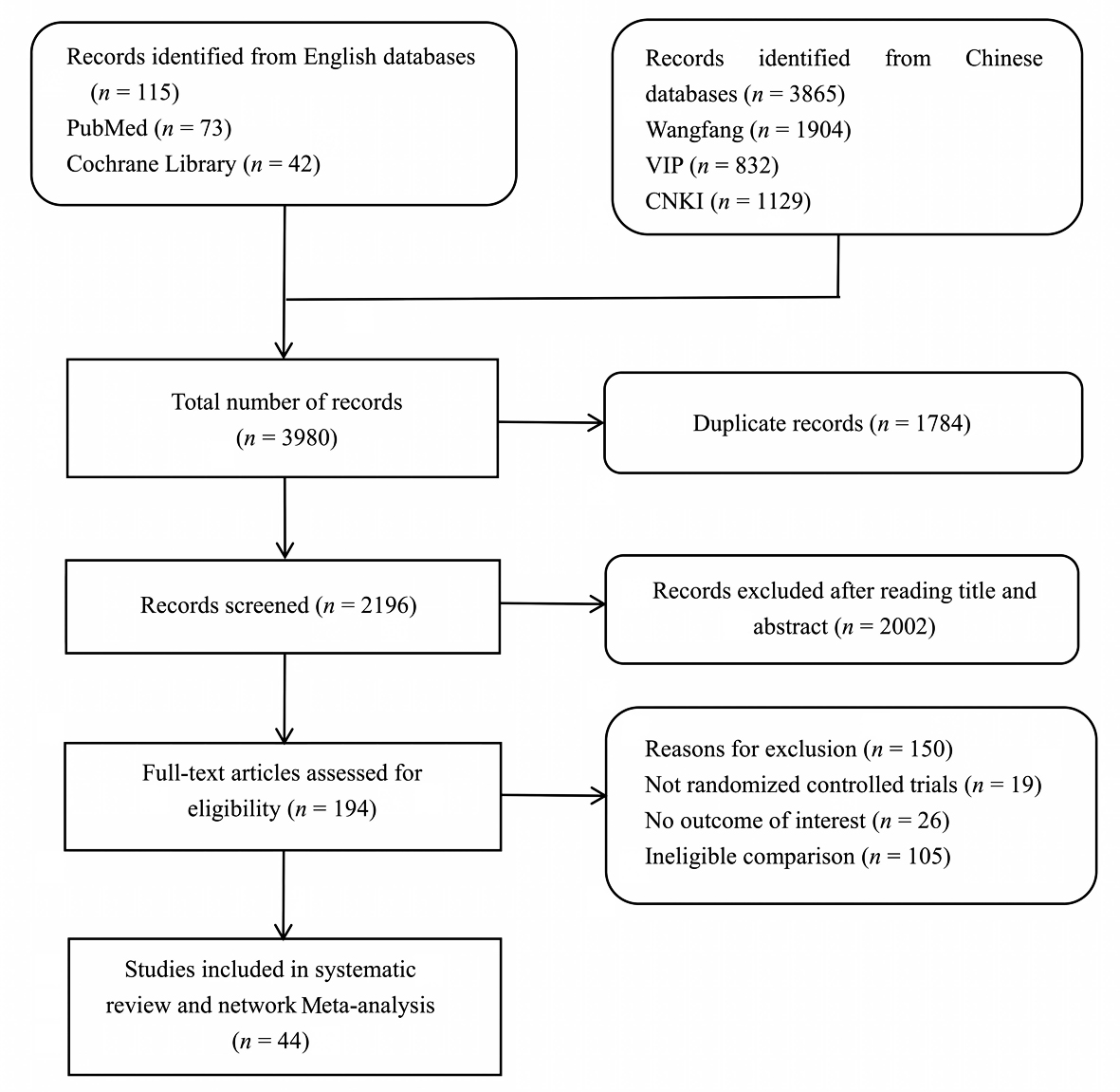
Figure 1 Flowchart of the study screening process VIP: China Science and Technology Journal Database; CNKI:China National Knowledge Infrastructure.
Figure 1 Flowchart of the study screening process VIP: China Science and Technology Journal Database; CNKI:China National Knowledge Infrastructure.
Table 1 Basic characteristics of the included studies
| Study | Country | Age (years) | Sample size | Grouping intervention | Course of treatment | Outcome index | |||
|---|---|---|---|---|---|---|---|---|---|
| Cao Y et al 2017 | China | 47.5±7.6/ 46.1±6.3 | 40/40 | 1 vs 4 | 8 weeks | ACT score, lung function | |||
| Chen SL et al 2020 | China | 7±2/8±3 | 30/30 | 1vs 3 | 2 months | ACT score, lung function, follow-up of asthma attacks for half a year | |||
| Chen XY et al 2018 | China | 44.87±12.17/ 45.02±13.09 | 97/97 | 1 vs 2 | 6 weeks | ACT score, lung function, serological index, effective rate | |||
| Cui XY, Ben DY 2017 | China | 67±5/67±5 | 42/42 | 1vs 4 | 2 months | ACT score, lung function, AQLQ score, effective rate | |||
| Dou YX 2010 | China | 41.90±10.85/ 44.33±9.44 | 21/21 | 1 vs 5 | 3 months | Lung function | |||
| Gu HY et al 2020 | China | 41.21±11.62/ 40.92±10.56 | 45/45 | 1vs 9 | 6 weeks | Lung function, serological index | |||
| Huang J, Zhang XB 2018 | China | 21-65/19-64 | 42/42 | 1 vs 5 | 2 months | Lung function, effective rate | |||
| Huo YC et al 2016 | China | 42.4±14/ 43.3±12.2 | 60/60 | 1 vs 5 | 3 months | Lung function | |||
| Li HF et al 2021 | China | 9.36±2.67/ 8.87±2.14 | 44/48 | 1vs 3 | 1 year | C-CACT score, lung function, effective rate | |||
| Liang C 2011 | China | 44.38±12.97/ 44.75±10.73/ 43.3±12.21 | 15/15/15 | 1 vs 6 vs 5 | 3 months | Lung function, safety evaluation | |||
| Liang C et al 2010 | China | 44.4±13.0/ 43.3±12.2 | 19/17 | 1 vs 5 | 3 months | Lung function | |||
| Liao Y 2010 | China | 42.42±14.087/ 42.33±11.171 | 11/11 | 1 vs 5 | 3 months | ACT score, lung function | |||
| Lu XY 2010 | China | 41.90±10.85/ 44.33±9.44 | 21/21 | 1 vs 5 | 3 months | ACT score | |||
| Ma HJ 2011 | China | 43.91±13.715/ 41±11.712 | 11/10 | 1 vs 5 | 3 months | Lung function, clinical symptom score, effective rate | |||
| Ouyang BS et al 2011 | China | 46.03±8.59/ 45.13±7.87 | 29/28 | 1 vs 5 | 3 months | ACT score, lung function, quality of life score | |||
| Qian HL et al 2017 | China | 9.96±2.58/ 10.13±2.33 | 45/42 | 1vs 3 | 7 days | Lung function, serological index, effective rate | |||
| Wei ZX et al 2021 | China | 45±12/47±13 | 21/21 | 1 vs 7 | 2 months | Lung function, adverse effect | |||
| Wu LZ 2018 | China | 6±2.6/ 5.23±2.86 | 30/30 | 1vs 3 | 3 months | Effective rate | |||
| Wu YJ 2010 | China | 46.03±8.59/ 46.11±7.99 | 29/28 | 1 vs 5 | 3 months | ACT score, lung function | |||
| Yang K 2010 | China | 45.9±12.1/ 46.2±11.7 | 21/21 | 1 vs 5 | 3 months | Symptom score, lung function | |||
| Zhang XR et al 2020 | China | 8±1/7±1 | 45/45 | 1 vs 10 | 6 weeks | Lung function, serological index | |||
| Song NC et al 2012 | China | 46±12.1/ 46±15.3 | 32/32 | 1 vs 5 | 3 months | ACT score, effective rate | |||
| Zhao LF et al 2019 | China | 41.7±13.6/ 40.1±11.7 | 15/15 | 1 vs 5 | 3 months | Symptom score, lung function, effective rate | |||
| Qi JZ, Li WY 2015 | China | 45.1±11.7/ 42.7±12.1 | 40/40 | 1 vs 5 | 3 months | Effective rate | |||
| Chen RX et al 2013 | China | 43.6±12.2/ 43.8±13 | 144/144 | 1 vs 5 | 3 months | ACT score, effective rate | |||
| Qi JZ 2011 | China | 44.11±11.67/ 42.65±12.07 | 34/32 | 1 vs 5 | 3 months | Lung function, asthma symptom score | |||
| Zuo TP 2010 | China | 48.33±13.1/ 45.5±10.6 | 12/12 | 1 vs 5 | 3 months | ACT score, lung function, asthma symptom score | |||
| Guo JY et al 2024 | China | 56±12/54±12 | 41/42 | 1 vs 4 | 6 weeks | ACT score, lung function, serological index | |||
| Study | Country | Age (years) | Sample size | Grouping intervention | Course of treatment | Outcome index | |||
| Shao ZY et al 2024 | China | 45±7/44±7 | 46/46 | 1 vs 7 | 2 months | Lung function | |||
| Pu CH, Zhou Y 2024 | China | 3.49±0.22/ 3.51±0.23 | 40/40 | 1 vs 3 | 3 months | Lung function, effective rate | |||
| Zhu L et al 2023 | China | 47.65±3.79/ 48.18±4.12 | 68/68 | 1 vs 8 | 3 months | Lung function, effective rate | |||
| Long W 2023 | China | 48.333±3.246/ 48.466±4.056 | 30/30 | 1 vs 8 | 5 weeks | Lung function, effective rate, ACT score | |||
| Li DM 2023(1) | China | 6.12±1.15/ 6.84±1.21 | 50/50 | 1 vs 3 | 2 weeks | Lung function, effective rate, serological index | |||
| Li DM, Li Q 2023(2) | China | 9.15±2.46/ 9.28±2.35 | 46/50 | 1 vs 3 | 3 months | ACT score, lung function, serological index | |||
| Zhang TT 2022 | China | 6.21±1.31/ 6.32±1.13 | 31/31 | 1 vs 10 | 6 weeks | Lung function, effective rate, adverse effect | |||
| Li DM et al 2022 | China | 8.36±1.49/ 8.59±1.57 | 49/49 | 1 vs 3 | 1 week | Lung function, serological index, adverse effect | |||
| Ke BX 2011 | China | 9.1±2.496/ 9.27±2.664 | 30/30 | 6 vs 5 | 2 months | ACT score, lung function, effective rate | |||
| Xu H et al 2014 | China | 37.93±10.91/ 38.93±12.14 | 30/30 | 6 vs 5 | 20 days | Effective rate | |||
| Xia XJ, Li XY 2013 | China | 53.67/53.67 | 30/30 | 6 vs 5 | 2 months | Lung function, effective rate | |||
| Luo JQ 2021 | China | 47.32±15.62/ 47.96±14.36 | 25/24 | 1 vs 8 | 6 weeks | ACT score, lung function, clinical symptom score | |||
| Bai L et al 2021 | China | 51.15±12.76/ 52.76±12.2 | 65/65 | 1 vs 3 | 2 weeks | Lung function, effective rate, serological index | |||
| Shao XP et al 2025 | China | 42.15±4.98/ 41.95±5.32 | 40/40 | 1 vs 3 | 2 weeks | Lung function, effective rate, serological index | |||
| Luo QY et al 2017 | China | 39.1±6.1/ 38.5±5.9 | 30/30 | 1 vs 2 | 3 months | Lung function, effective rate | |||
| Ren ZY et al 2025 | China | 47±5.6/47±5.5 | 49/49 | 1 vs 4 | 8 weeks | Lung function, effective rate, serological index, adverse effect | |||
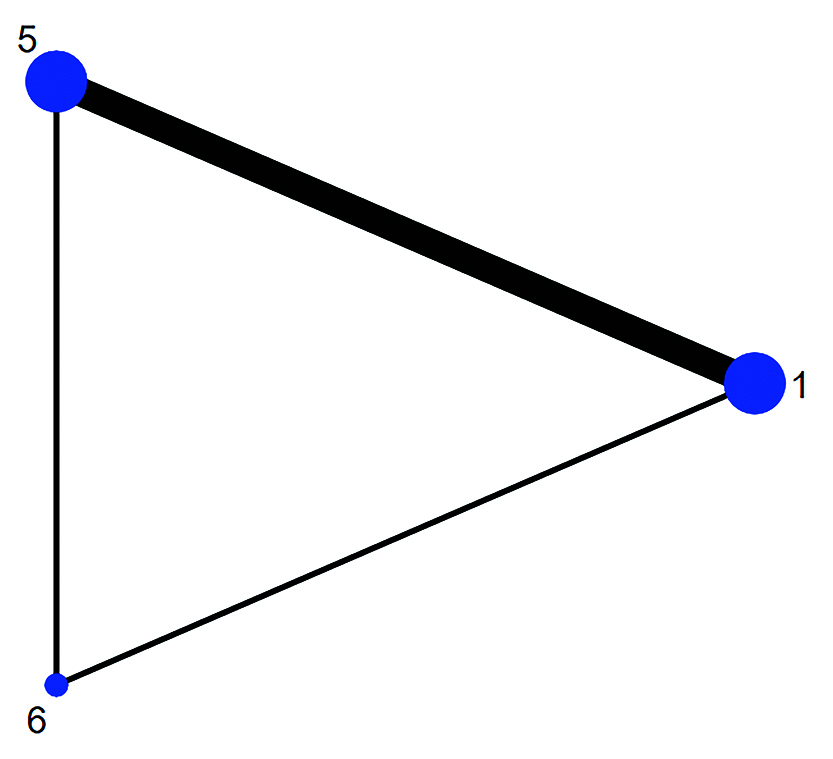
Figure 2 Long-term effect of moxibustion or conventional treatment on PEF throughout follow-up network diagram 1: conventional treatment; 5: heat-sensitive moxibustion; 6: traditional suspending moxibustion. PEF: peak expiratory flow.
Figure 2 Long-term effect of moxibustion or conventional treatment on PEF throughout follow-up network diagram 1: conventional treatment; 5: heat-sensitive moxibustion; 6: traditional suspending moxibustion. PEF: peak expiratory flow.
Table 2 SUCRA probability ranking
| Intervention | Total effective rate | PEF | FEV1 | ACT score | IL-6 | IgE | CD4+/CD8+ | long-term effect on PEF | long-term effect on FEV1 | long-term effect on ACT score | |||||||||||||||||||
|---|---|---|---|---|---|---|---|---|---|---|---|---|---|---|---|---|---|---|---|---|---|---|---|---|---|---|---|---|---|
| SUCRA% | Rank-ing | SUCRA% | Rank-ing | SUCRA% | Rank-ing | SUCRA% | Rank-ing | SUCRA% | Rank-ing | SUCRA% | Rank-ing | SUCRA% | Rank-ing | SUCRA% | Rank-ing | SUCRA% | Rank-ing | SUCRA% | Rank-ing | ||||||||||
| 1 | 14 | 10 | 23.7 | 7 | 16.9 | 7 | 6.8 | 7 | 2.6 | 3 | 27.1 | 4 | 39.7 | 3 | 50.7 | 2 | 30.9 | 2 | 3 | 3 | |||||||||
| 2 | 21.6 | 9 | 88.2 | 1 | 97.6 | 1 | 87.8 | 1 | - | - | 86.5 | 1 | 66 | 2 | - | - | - | - | - | - | |||||||||
| 3 | 55 | 5 | 77.4 | 2 | 71.5 | 3 | 65.1 | 3 | 78.1 | 1 | 38.3 | 3 | - | - | - | - | - | - | - | - | |||||||||
| 4 | 41.5 | 6 | 70.7 | 4 | 82.5 | 2 | 65 | 4 | 69.3 | 2 | - | - | - | - | - | - | - | - | - | - | |||||||||
| 5 | 60.9 | 4 | 24.8 | 6 | 32.3 | 5 | 27 | 6 | - | - | - | - | - | - | 94.3 | 1 | 92.2 | 1 | 68.4 | 2 | |||||||||
| 6 | 37.2 | 7 | 7.7 | 8 | 9.0 | 8 | 28.8 | 5 | - | - | - | - | - | - | 5 | 3 | 27 | 3 | - | - | |||||||||
| 7 | 31.1 | 8 | 31.1 | 5 | 29.6 | 6 | - | - | - | - | - | - | - | - | - | - | - | - | - | - | |||||||||
| 8 | 70.3 | 3 | 76.5 | 3 | 60.6 | 4 | 69.6 | 2 | - | - | - | - | - | - | - | - | - | - | 78.7 | 1 | |||||||||
| 9 | 81.6 | 2 | - | - | - | - | - | - | - | - | - | - | 72.4 | 1 | - | - | - | - | - | - | |||||||||
| 10 | 86.8 | 1 | - | - | - | - | - | - | - | - | 48.1 | 2 | 21.9 | 4 | - | - | - | - | - | - | |||||||||
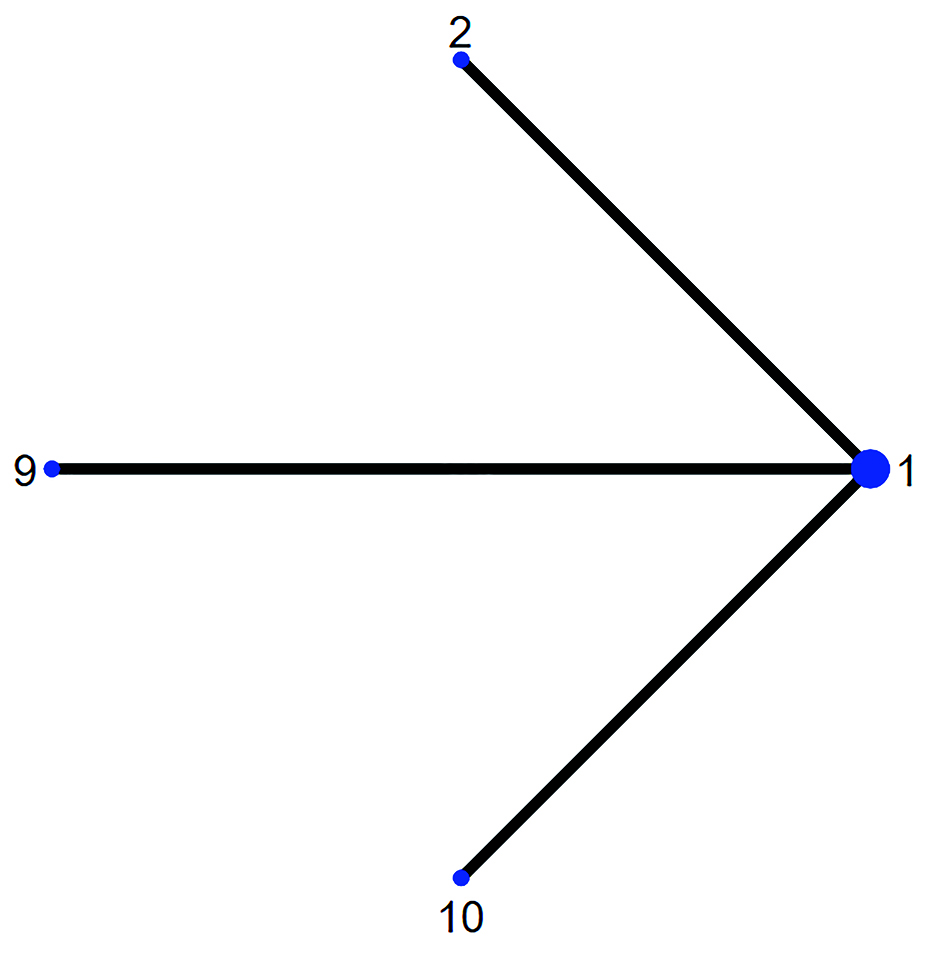
Figure 3 CD4+/CD8+ ratio network diagram 1: conventional treatment; 2: conventional treatment + heat-sensitive moxibustion; 9: conventional treatment + indirect moxibustion; 10: indirect moxibustion.
Figure 3 CD4+/CD8+ ratio network diagram 1: conventional treatment; 2: conventional treatment + heat-sensitive moxibustion; 9: conventional treatment + indirect moxibustion; 10: indirect moxibustion.

Figure 4 Funnel plots of the included papers reporting effective rate, PEF, FEV1 and ACT scores A: effective rate; B: PEF; C: FEV1; D: ACT scores. PEF: peak expiratory flow; FEV1: forced expiratory volume in 1 second; ACT: asthma control test. 1: conventional treatment; 2: conventional treatment + heat-sensitive moxibustion; 3: conventional treatment + traditional suspending moxibustion; 4: conventional treatment + grain-sized moxibustion; 5: heat-sensitive moxibustion; 6: traditional suspending moxibustion; 7: grain-sized moxibustion; 8: conventional treatment + governor vessel moxibustion; 9: conventional treatment + indirect moxibustion; 10: indirect moxibustion.
Figure 4 Funnel plots of the included papers reporting effective rate, PEF, FEV1 and ACT scores A: effective rate; B: PEF; C: FEV1; D: ACT scores. PEF: peak expiratory flow; FEV1: forced expiratory volume in 1 second; ACT: asthma control test. 1: conventional treatment; 2: conventional treatment + heat-sensitive moxibustion; 3: conventional treatment + traditional suspending moxibustion; 4: conventional treatment + grain-sized moxibustion; 5: heat-sensitive moxibustion; 6: traditional suspending moxibustion; 7: grain-sized moxibustion; 8: conventional treatment + governor vessel moxibustion; 9: conventional treatment + indirect moxibustion; 10: indirect moxibustion.
| [1] | Wan R, Srikaram P, Guntupalli V, et al. Cellular senescence in asthma: from pathogenesis to therapeutic challenges. EBioMedicine 2023; 94: 104717. |
| [2] | GBD 2015 Chronic Respiratory Disease Collaborators. Global, regional, and national deaths, prevalence, disability-adjusted life years, and years lived with disability for chronic obstructive pulmonary disease and asthma, 1990-2015: a systematic analysis for the Global Burden of Disease Study 2015. Lancet Respir Med 2017; 5: 691-706. |
| [3] | Settipane RA, Kreindler JL, Chung Y, et al. Evaluating direct costs and productivity losses of patients with asthma receiving GINA 4/5 therapy in the United States. Ann Allergy Asthma Immunol 2019; 123: 564-72. |
| [4] | Pedroso A, Oliveira JMD, Alves TB, et al. Associations with short-term and long-term use of inhaled corticosteroid in adults with asthma. A retrospective analysis. Rev Assoc Med Bras (1992) 2025; 71: e20241240. |
| [5] | Crossingham I, Turner S, Ramakrishnan S, et al. Combination fixed-dose beta agonist and steroid inhaler as required for adults or children with mild asthma. Cochrane Database Syst Rev 2021; 5: D13518. |
| [6] | Engelkes M, Janssens HM, de Jongste JC, et al. Medication adherence and the risk of severe asthma exacerbations: a systematic review. Eur Respir J 2015; 45: 396-407. |
| [7] | Shin YH, Hwang J, Kwon R, et al. Global, regional, and national burden of allergic disorders and their risk factors in 204 countries and territories, from 1990 to 2019: a systematic analysis for the Global Burden of Disease Study 2019. Allergy 2023; 78: 2232-54. |
| [8] | Wang FX, Jin LW. Research on the mechanism and application of acupuncture therapy for asthma: a review. J Asthma Allergy 2024; 17: 495-516. |
| [9] | Zeng T. Investigation of the effects of heat-sensitive moxibustion at the Dazhui point on airway inflammatory responses in asthmatic rats via the LPS/TLR4/NF-κB signalling pathway. Nanchang: Jiangxi University of Chinese Medicine, 2023: 1-78. |
| [10] | Chen RX. Heat-sensitive moxibustion: inheritance, innovation and development of moxibustion of Traditional Chinese Medicine. Zhong Guo Zhen Jiu 2023; 43: 483-8. |
| [11] | Chen M, Li SJ, Su ML, et al. Effects of different dosages of summer solstice moxibustion on pulmonary TGF-β1 levels in New Zealand rabbits with bronchial asthma. Huan Qiu Zhong Yi Yao 2018; 11: 827-30. |
| [12] | Huo YC, Qin XY, Zheng WL, et al. Clinical study on acupoint heat-sensitive moxibustion for adult chronic moderate bronchial asthma. Henan Zhong Yi 2016; 36: 344-5. |
| [13] | Zhao LF, Ma HJ, Lin GH, et al. Clinical observation of heat-sensitive moxibustion at acupoints for treating the chronic persistent phase of asthma. Shi Jie Zhong Yi Yao 2019; 14: 2137-40. |
| [14] | Chen RX, Chen MR, Xiong J, et al. Curative effect of heat-sensitive moxibustion on chronic persistent asthma: a multicenter randomized controlled trial. J Tradit Chin Med 2013; 33: 584-91. |
| [15] | Chen XY, Shu H, Wu ZY, et al. Systematic evaluation of the clinical efficacy of heat-sensitive moxibustion in treating bronchial asthma. Zhen Jiu Lin Chuang 2016; 32: 51-5. |
| [16] | Liu YL, Xu GX, Huang LY, et al. Re-evaluation of the systematic review on acupuncture treatment for bronchial asthma. Zhong Guo Xun Zheng Yi Xue 2022; 22: 955-63. |
| [17] | Wang XY, Zeng SY, Li ZY, et al. A network Meta-analysis of different acupuncture modalities in the treatment of bronchial asthma. BMC Pulm Med 2023; 23: 357. |
| [18] | Hutton B, Salanti G, Caldwell DM, et al. The PRISMA extension statement for reporting of systematic reviews incorporating network Meta-analyses of health care interventions: checklist and explanations. Ann Intern Med 2015; 162: 777-84. |
| [19] | Sterne JAC, Savovic J, Page MJ, et al. RoB 2: a revised tool for assessing risk of bias in randomised trials. BMJ 2019; 366: l4898. |
| [20] | Li Y, Shi YG, Pan W, et al. A network Meta-analysis of the protective efficacy of different catheter care solutions on the perineal area of patients with indwelling urinary catheters. Zhong Guo Xiao Du Xue Za Zhi 2024; 41: 528-32. |
| [21] | Salanti G, Ades AE, Ioannidis JPA. Graphical methods and numerical summaries for presenting results from multiple-treatment Meta-analysis: an overview and tutorial. J Clin Epidemiol 2011; 64: 163-71. |
| [22] | Cui XY, Ben DY. Observation on the efficacy of wheat-grain moxibustion as an adjuvant therapy for mild to moderate chronic persistent phase bronchial asthma in the elderly. Shanghai Zhen Jiu 2017; 36: 1387-90. |
| [23] | Luo QY, Zhang SP, Chen YH. Clinical study on the treatment of bronchial asthma using heat-sensitisation moxibustion at acupoints combined with nebulised inhalation of salbutamol. Zhong Yi Yao Dao Bao 2017; 23: 98-101. |
| [24] | Cao Y, Chen C, Zhou WJ, et al. Observation on the efficacy of wheat-grain moxibustion in adjuvant treatment of chronic persistent bronchial asthma. Shi Yong Zhong Yi Yao 2017; 33: 1041-2. |
| [25] | Qian HL, Xi Y, Cheng ZK, et al. Clinical observation on moxibustion at Lung Shu point for acute exacerbations of cold asthma in paediatric asthma. Nanjing Zhong Yi Yao Da Xue Xue Bao 2017; 33: 363-6. |
| [26] | Qi JZ, Li WY. Clinical comparative study of heat-sensitive moxibustion versus salbutamol in treating chronic asthma. Hebei Yi Xue 2015; 21: 1382-4. |
| [27] | Xu H, Wang LH, Wan LL. Effects of heat-sensitive moxibustion on serum ECP, NO and sputum EOS in patients with chronic persistent bronchial asthma and analysis of therapeutic efficacy. Shi Yong Zhong Xi Yi Jie He Lin Chuang 2014; 14: 16-8. |
| [28] | Xia XJ, Li XY. Treatment of 30 cases of chronic persistent bronchial asthma with heat-sensitive moxibustion. Jiangxi Zhong Yi Xue Yuan Xue Bao 2013; 25: 38-40. |
| [29] | Wu LZ, Zhai JJ, Hu YC, et al. Clinical observation on moxibustion-assisted treatment for chronic persistent bronchial asthma in children. Zhong Yi Yao Lin Chuang 2018; 30: 1670-4. |
| [30] | Huang J, Zhang XB. Clinical efficacy of heat-sensitive moxibustion and Salbutamol in treating chronic asthma patients. Yi Xue Zhuang Bei 2018; 31: 120-1. |
| [31] | Chen XY, Deng XL, Cao YH, et al. Observation on the efficacy of a novel therapy combining heat-sensitised moxibustion at acupoints with salmeterol/fluticasone propionate inhalation for chronic persistent bronchial asthma. Xian Dai Zhong Xi Yi Jie He 2018; 27: 302-5. |
| [32] | Shao XP, Shao QJ, Li HY, et al. Efficacy of thunder fire moxibustion array therapy in adjuvant treatment of cold asthma syndrome during acute bronchial asthma and its effects on inflammatory factors. Sichuan Zhong Yi 2025; 43: 191-4. |
| [33] | Pu CH, Zhou Y. Clinical observation of mild moxibustion with moxa sticks as an adjuvant therapy for paediatric asthma. Shi Yong Zhong Yi Yao Za Zhi 2024; 40: 129-31. |
| [34] | Shao ZY, Guo JY, Lu XQ, et al. Modified painless wheat-grain purulent moxibustion for wind-pathogen-invading-lung-type cough variant asthma: a randomised controlled trial. Zhong Guo Zhen Jiu 2024; 44: 261-5. |
| [35] | Guo JY, Shao ZY, Chen YW, et al. Therapeutic observation of modified painless wheat-grain purulent moxibustion combined with medication for chronic persistent bronchial asthma. Shanghai Zhen Jiu 2024; 43: 362-7. |
| [36] | Zhu L, Cheng YN, Zong H, et al. Effects of Du Meridian Moxibustion nursing on quality of life and treatment outcomes in asthma patients. Xi Bu Zhong Yi Yao 2023; 36: 130-4. |
| [37] | Li DM. Study on the efficacy of smokeless moxibustion in treating chronic persistent asthma in children in western Guangxi and related inflammatory factor expression. Baise: Youjiang Medical University for Nationalities, 2023: 1-49. |
| [38] | Long W. Clinical observation of Du Meridian moxibustion in treating lung-kidney Yang deficiency syndrome during the remission period of bronchial asthma. Changsha: Hunan University of Chinese Medicine, 2023: 1-53. |
| [39] | Li DM, Li Q. Effects of smokeless moxibustion on pulmonary function and serum IL-6, IL-17, IL-33, and VEGF expression in paediatric asthma patients. Zhong Wai Yi Liao 2023; 42: 10-4. |
| [40] | Li DM, Li Q, Chen XJ, et al. Investigation into the therapeutic effects of smokeless moxibustion on paediatric patients during acute exacerbations of bronchial asthma. Zhong Guo Zhong Yi Ji Zheng 2022; 31: 2159-62. |
| [41] | Bai L, Chen H, Zhang X. Effects of moxibustion on pulmonary function and serum inflammatory factors in patients with heat-type asthma during acute exacerbation based on the principle of ‘heat syndromes amenable to moxibustion’. Shi Jie Zhong Xi Yi Jie He 2021; 16: 1783-6. |
| [42] | Wei ZX, Zhang QL, Han L, et al. Clinical study on modified painless wheat-grain suppurative moxibustion for cough-variant asthma. Shanghai Zhen Jiu 2021; 40: 658-63. |
| [43] | Li HF, Li YQ, Xie WZ. Application of moxibustion combined with home-based nursing in paediatric patients with bronchial asthma. Qi Lu Hu Li Za Zhi 2021; 27: 68-71. |
| [44] | Luo JQ. Effect of governor vessel moxibustion on symptom severity in patients with chronic persistent asthma of lung-kidney deficiency pattern. Nanjing: Nanjing University of Chinese Medicine, 2021: 1-38. |
| [45] | Gu HY, Fei X, Shi ZM, et al. Clinical study on ginger-separated mild moxibustion combined with montelukast sodium for cough variant asthma. Guangzhou Zhong Yi Yao Da Xue Xue Bao 2020; 37: 1720-4. |
| [46] | Chen SL, Chen XF, Li DD. Efficacy of moxibustion with moxa sticks combined with budesonide suspension in the remission phase of paediatric asthma and its effect on serum ET-1 and NO levels. Shanghai Zhen Jiu 2020; 39: 969-73. |
| [47] | Zhang XR, Shi ZM, Li XQ. Observation on the efficacy of Cui's four-flower point moxibustion with medicinal pads in treating cough variant asthma in children and its effects on immune function. Shanghai Zhen Jiu 2020; 39: 426-30. |
| [48] | Song NC, He JB, Xu HB, et al. Comparative study of heat-sensitive moxibustion versus salbutamol in treating chronic persistent bronchial asthma. Zhong Guo Zhen Jiu 2012; 32: 593-6. |
| [49] | Ouyang BS, Gao J, Sun G, et al. Effects of heat-sensitive moxibustion on pulmonary function and quality of life in patients with chronic persistent bronchial asthma: a randomised controlled trial. Zhong Guo Zhen Jiu 2011; 31: 965-70. |
| [50] | Ke BX. A study on the treatment of chronic persistent bronchial asthma in children using heat-sensitive moxibustion. Fuzhou: Fujian University of Traditional Chinese Medicine, 2011: 1-40. |
| [51] | Qi JZ. A Controlled study on the treatment of asthma using heat-sensitive moxibustion and an investigation into the relationship between moxibustion dosage and sensation. Guangzhou: Guangzhou University of Chinese Medicine, 2011: 1-110. |
| [52] | Ma HJ. Therapeutic observation of heat-sensitised moxibustion on acupoints for chronic persistent asthma. Guangzhou: Guangzhou University of Chinese Medicine, 2011: 1-42. |
| [53] | Liang C. Short- and long-term effects of heat-sensitised moxibustion on acupoints regarding pulmonary function in patients with chronic persistent bronchial asthma. Huhan: Hubei University of Chinese Medicine, 2011: 1-39. |
| [54] | Liang C, Zhang TF, Yang K. Comparative observation of the efficacy of heat-sensitive moxibustion at acupoints versus western medication in treating chronic persistent bronchial asthma. Zhong Guo Zhen Jiu 2010; 30: 886-90. |
| [55] | Yang K. Clinical study on heat-sensitisation moxibustion at acupoints for chronic persistent bronchial asthma. Huhan: Hubei University of Chinese Medicine, 2010: 1-38. |
| [56] | Zuo TP. Clinical observation of heat-sensitisation moxibustion therapy in patients with chronic persistent asthma. Guangzhou: Guangzhou University of Chinese Medicine, 2010: 1-57. |
| [57] | Lu XY. Clinical observation on heat-sensitised moxibustion at acupoints improving clinical symptoms of asthma (chronic persistent stage). Jinan: Shandong University of Traditional Chinese Medicine, 2010: 1-48. |
| [58] | Wu YJ. Clinical study on heat-sensitised moxibustion at acupoints for treating bronchial asthma. Nanjing: Nanjing University of Chinese Medicine, 2010: 1-72. |
| [59] | Dou YX. Clinical study on the effects of heat-sensitising moxibustion on pulmonary function in bronchial asthma (chronic persistent phase). Jinan: Shandong University of Traditional Chinese Medicine, 2010: 1-57. |
| [60] | Ren ZY, Zhang Y, Shao ZY, et al. Clinical observation on the combined treatment of wheat-grain purulent moxibustion and western medication for wind-cold invading the lung pattern of cough variant asthma. J Acupunct Tuina Sci 2025; 23: 126-34. |
| [61] | Zhang TT. Efficacy of ginger-separated moxibustion in treating childhood cough variant asthma and its effects on immune function. Kang Fu 2022: 37: 7-9. |
| [62] | Liao Y. Clinical efficacy observation of heat-sensitisation suspended moxibustion on acupoints for chronic persistent asthma. Guangzhou: Guangzhou University of Chinese Medicine, 2010: 1-51. |
| [63] | Huang J, Lim MY, Zhao B, Shao L. PM10 mass concentration and oxidative capacity of moxa smoke. QJM 2015; 108: 705-10. |
| [64] | Kwon OS, Cho SJ, Choi K, et al. Safety recommendations for moxa use based on the concentration of noxious substances produced during commercial indirect moxibustion. Acupunct Med 2017; 35: 93-9. |
| [65] | He HM. Effects of moxibustion on peripheral blood CD4+ and CD8+ T cells and serum IL-1 and IL-1Ra in an asthma rat model. Hefei: Anhui University of Chinese Medicine, 2016: 1-58. |
| [66] | Ren L, Zhou JY, Lai YK, et al. Effects of moxibustion at ‘Feishu’ and ‘Tianshu’ acupoints on airway remodelling, immune cell differentiation and intestinal short-chain fatty acids in bronchial asthma model rats. Zhong Yi Za Zhi 2024; 65: 2240-9. |
| [67] | Hua JS, Shao SJ, Zheng J, et al. Effects of the ‘Shao's Five-Needle Method’ on GATA-3/T-bet expression in rats with chronic asthma. Zhong Guo Zhong Yi Ji Chu Yi Xue 2020; 26: 1084-7. |
| [68] | Lu SF, Yin HY, Tang Y, et al. Transient receptor potential and its integration with the mechanism of moxibustion's thermal effects: a review. Zhen Ci Yan Jiu 2012; 37: 151-4. |
| [69] | Li LH, He YM, Zhou ZG, et al. Mechanism of peripheral sensitisation effect in thermal moxibustion treatment for knee osteoarthritis based on NGF/p38 MAPK/TRPV1 signalling pathway. Zhong Hua Zhong Yi Yao 2022; 37: 1379-83. |
| [70] | Jiang JF, Wang XJ, Wu XJ, et al. Analysis of factors influencing moxibustion efficacy by affecting heat-activated transient receptor potential vanilloid channels. J Tradit Chin Med 2016; 36: 255-60. |
| [71] | Zhang CS, Lu P, Tang Y, et al. Research progress and prospects on the photonic effects of moxibustion. Cheng Du Zhong Yi Yao Da Xue Xue Bao 2016; 39: 1-4. |
| [72] | Guo Y, Xu XM, Yin LZ, et al. Spectral characteristics of radiation from combustion of different moxibustion materials and moxa materials. Zhong Guo Zu Zhi Gong Cheng Yan Jiu 2018; 22: 2233-8. |
| [73] | Chen H, Wei XY, Gong ZG, et al. Resting-state fMRI study on immediate regulation of brain function in asthma patients by electroacupuncture. Zhong Guo Zhong Xi Yi Jie He Ying Xiang Xue 2022; 20: 5-10. |
| [74] | Wei XY, Chen H, Zhan SH. Neuroimaging study of pain dysregulation in asthma patients. Zhong Guo Zhong Xi Yi Jie He Ying Xiang Xue 2021; 19: 554-8. |
| [75] | Dong XH. Clinical efficacy evaluation of meridian-based acupuncture intervention for chronic persistent asthma and its impact on insular functional networks. Sichuan: Chengdu University of Traditional Chinese Medicine, 2022: 1-101. |
| [76] | Li D, Hu KW, Han L, et al. Effects of moxibustion on the immunoneuroendocrine system in cancer fatigue mice. Zhong Hua Zhong Yi Yao 2023; 38: 1799-803. |
| [77] | Zheng HZ, Qiu Q, Chen J, et al. Moxibustion pretreatment ameliorates hypothalamic-pituitary-adrenal axis suppression and lung injury in asthmatic rats. Jiangxi Zhong Yi Yao 2022; 53: 49-53. |
| [78] | Zhao FC, Han YR, Lin ZQ, et al. Clinical efficacy of Chai Pu Tang combined with salbutamol in treating bronchial asthma. Zhong Hua Zhong Yi Yao 2025; 43: 240-4. |
| [79] | El-Elimat T, Al-Khawlani AR, Al-Sawalha NA, et al. The effect of beetroot juice on airway inflammation in a murine model of asthma. J Food Biochem 2022; 46: e14381. |
| [80] | Tunnisaguli A, Ma XL, Chang JM, et al. Research on the anti-asthma effects and mechanisms of tianshan cornus through modulating Th1/Th2 immune imbalance. Zhong Yao Yao Li Yu Lin Chuang 2024; 40: 90-5. |
| [81] | Yang Y, Xue YM, Jing J, et al. Th17/Treg balance and IL-6 mRNA and STAT3 mRNA levels in respiratory tract infections among paediatric asthma patients. Zhong Hua Yi Yuan Gan Ran Xue 2025; 35: 426-30. |
| [82] | Chen XB, Luo JJ. Comparative observation of efficacy between herbal-separated moxibustion and western medication in treating prolonged and chronic diarrhoea in children. Zhong Guo Zhen Jiu 2013; 33: 113-6. |
| [83] | Xia Y, Xia MJ, Li Y, et al. Effects of moxibustion with aconite cake on Guanyuan and Mingmen acupoints on thyroid function in patients with Hashimoto's thyroiditis. Zhong Guo Zhen Jiu 2012; 32: 123-6. |
| [1] | LU Yao, WEI Lini, WANG Ruiqi, YANG Jingwen, ZHANG Kaiqi, ZHAO Ning, LI Li. Regulatory effect of baicalein on intestinal ribosome biogenesis in mice with asthma [J]. Journal of Traditional Chinese Medicine, 2026, 46(5): 1082-1095. |
| [2] | XU Hui, QI Li, QIAN Yutong, LIU Chang, LI Zhenchen, MENG Qi, LIU Shimin, JIAO Danli, ZHAO Chen. Grain-sized moxibustion attenuates renal dysfunction and inflammation in naturally aging mice via the phosphatidylinositol 3-kinase/protein kinase B/nuclear factor-κB pathway [J]. Journal of Traditional Chinese Medicine, 2026, 46(5): 1117-1126. |
| [3] | SU Rui, SU Youzhu, SUN Hongyuan, WU Caijun, QI Wensheng, ZHANG Lei, LIU Qingquan, WANG Shuo. A multicenter, randomized, double-blind, double-dummy, positive-controlled study of the general treatment method using Tanreqing capsule (痰热清胶囊) in uncomplicated influenza [J]. Journal of Traditional Chinese Medicine, 2026, 46(5): 1257-1265. |
| [4] | SHI Ling, YANG Chengcheng, HUANG Li, DENG Linwen. Effect of acupuncture and moxibustion combined with core stabilization training on the function of transverse abdominal muscle and pelvic floor muscle in women with postpartum pelvic pain [J]. Journal of Traditional Chinese Medicine, 2026, 46(4): 1009-1017. |
| [5] | HAO Feng, SANG Jiajia, PENG Chuanyu, HU Jun, WU Zijian, HU Ling, GU Yihuang. Effect of moxibustion at Zusanli (ST36) on beclin 1-solute carrier family 7 member 11 gene ferroptosis-related proteins in synovial inflammation of rats with rheumatoid arthritis [J]. Journal of Traditional Chinese Medicine, 2026, 46(3): 594-604. |
| [6] | LIU Na, CHEN Zhimin, ZHAO Gang, YUAN Bin, HUANG Zhijun, ZHANG Xuerong, SONG Guihua, CHEN Huafang. Efficacy and safety of the Chinese herbal medicine Xiao’er Niuhuang antipyretic plaster (小儿牛黄退热贴膏) for treating fever in children with acute upper respiratory tract infection with wind-heat syndrome: a multicenter, randomized, double-blind, controlled clinical trial [J]. Journal of Traditional Chinese Medicine, 2026, 46(3): 666-673. |
| [7] | WANG Xin, CAO Xue, QIN Yuning, SUN Minglin, YUE Lihong, TIAN Yukun, WANG Guangjun, LIU Xinglong, WANG Zirong, Labasangzhu , LIU Jia. Effect of electro-thumbtack needles on symptoms during high-altitude exposure: a pilot, single-blind, randomized, controlled study [J]. Journal of Traditional Chinese Medicine, 2026, 46(3): 674-683. |
| [8] | WANG Xuehui, SUN Yuxin, Birling Yoann, LI Xun, ZHAO Ruotong, ZHENG Youyou, SONG Zhenmei, ZHANG Yanli, DU Hongbo, WANG Jianyun, LI Yinqing, LIU Zhaolan, LIU Jianping. A Meta-analysis of Traditional Chinese Medicine constitution distribution in people with functional constipation [J]. Journal of Traditional Chinese Medicine, 2026, 46(2): 261-273. |
| [9] | GAO Bing, LIU Pan, LI Lan, GONG Tiantian, ZHU Ling, LI Lingji, XIA Ran, MA Qiang, HU Jing, WANG Jing. Moxibustion alleviates autophagy and inhibits ferroptosis to improve cardiac function in rats with post-myocardial infarction heart failure [J]. Journal of Traditional Chinese Medicine, 2026, 46(2): 339-349. |
| [10] | HU Wenyue, ZHONG Biying, WANG Zhenyi, ZHANG Meng, CHANG Ze, TAN Xi, HAN Zhenyun. Efficacy of Traditional Chinese Medicine psychosomatic integration therapy for subthreshold depression: a multicenter randomized controlled trial [J]. Journal of Traditional Chinese Medicine, 2026, 46(2): 392-400. |
| [11] | LI Shuning, LIU Hongxu, LAI Xiaolei, SHANG Juju, XING Wenlong, ZHANG Heyi. Efficacy and safety of Yi’anning pills (益安宁丸) for stable angina pectoris in coronary heart disease with Qi-blood and liver-kidney deficiency syndrome: a multicenter, randomized, double-blind, superiority clinical trial [J]. Journal of Traditional Chinese Medicine, 2026, 46(2): 401-410. |
| [12] | LIN Lixia, LI Xin, LI Ling, YANG Pu, LU Liming, LIU Buping, SU Shengyong. Multiple acupuncture and moxibustion therapies for allergic rhinitis in adults: a network Meta-analysis of randomized controlled trials [J]. Journal of Traditional Chinese Medicine, 2026, 46(1): 1-13. |
| [13] | ZHAO Mingzhe, YAN Peizheng, ZHAO Xiaomin, CHEN Yufan, LI Mengsitong, ZHOU Yuping, ZHANG Lu, DOU Liwen, LIU Yan, ZHENG Hong, LI Jia. A network pharmacology-based strategy to discover the molecular mechanism of correlation between the treatment of bronchial asthma with Wenyang Huayin decoction (温阳化饮方) and autophagy [J]. Journal of Traditional Chinese Medicine, 2026, 46(1): 138-148. |
| [14] | XU Huanfang, LI Jiashan, YANG Li, WU Wenzhong, YANG Jun, ZHANG Wei, LI Hui, QU Nini, WANG Rui, WANG Landi, YANG Hongzhi, ZHANG Lihua, HE Yong, XIONG Guanyu, LIU Baoyan, FANG Yigong. Effect of point application therapy for bronchial asthma: a multicenter randomized controlled trial [J]. Journal of Traditional Chinese Medicine, 2026, 46(1): 195-204. |
| [15] | YUAN Menghua, SHAO Jianbin, YANG Yawei, ZHAO Yan, HU Xingang. Combined acupuncture and herb treatment improves intestinal flora inabdominally obese subjects based on 16s rRNA sequencing: a randomized controlled trial [J]. Journal of Traditional Chinese Medicine, 2026, 46(1): 205-210. |
| Viewed | ||||||
|
Full text |
|
|||||
|
Abstract |
|
|||||