
Journal of Traditional Chinese Medicine ›› 2026, Vol. 46 ›› Issue (3): 726-732.DOI: 10.19852/j.cnki.jtcm.2026.03.012
• Original Articles • Previous Articles Next Articles
Cheek acupuncture therapy combined with Chinese herbal medicine for female chronic pelvic pain: a retrospective study
SONG Ying1, YOU Yalin2, LIAO Yiru2, HU Luodan2, WANG Danna2, NIE Guangning2( )
)
- 1
Department of Rehabilitation ,Shunde Hospital of Guangzhou University of Chinese Medicine Shunde 528300, China
2Department of Gynecology ,the Second Affiliated Hospital of Guangzhou University of Chinese Medicine Guangzhou 510120, China
-
Received:2024-12-12Accepted:2025-09-05Online:2026-06-15Published:2026-06-08 -
Contact:NIE Guangning, Department of Gynecology, the Second Affiliated Hospital of Guangzhou University of Chinese Medicine, Guangzhou 510120, China. guangningnie@gzucm.edu.cn,Telephone: +86-13724078380 -
Supported by:Shunde District Competitive Support Talent Project: Clinical Study on Acupuncture Combined With Medicine to Regulate Leptin in Patients With Obese Polycystic Ovary Syndrome(SDRC2022008);Guangdong Basic and Applied Basic Research Foundation: Multicenter Randomized Controlled Clinical Study of Modified Zexie Decoction Formula Granules and Decoction Pieces in the Treatment of Postmenopausal Metabolic Syndrome(2022A1515011651);Guangdong Basic and Applied Basic Research Foundation: Mechanism of Modified Zexie Decoction in Treating Postmenopausal Lipid Metabolism Disorder Based on the "Ovary-Gut" Axis and Farnesoid X Receptor Bile Acid Metabolism Pathway(2021A1515220139);State Key Laboratory of Dampness Syndrome of Chinese Medicine Research Foundation: Prospective Cohort Study on Long-term Cardiovascular Disease Outcomes of Dampness Syndrome in Menopausal Obesity(SZ2021KF06);Research Fund for Baijian Talents of Guangdong Provincial Hospital of Chinese Medicine: Mechanism of Bushen Jiangzhuo Therapy in Preventing and Treating Postmenopausal Lipid Metabolism Disorder by Regulating the "Ovary-gut" Axis Based on the Estrogen Receptor/ Farnesoid X Receptor-small Heterodimer Partner Pathway(BJ2022KY009)

Cite this article
SONG Ying, YOU Yalin, LIAO Yiru, HU Luodan, WANG Danna, NIE Guangning. Cheek acupuncture therapy combined with Chinese herbal medicine for female chronic pelvic pain: a retrospective study[J]. Journal of Traditional Chinese Medicine, 2026, 46(3): 726-732.
share this article
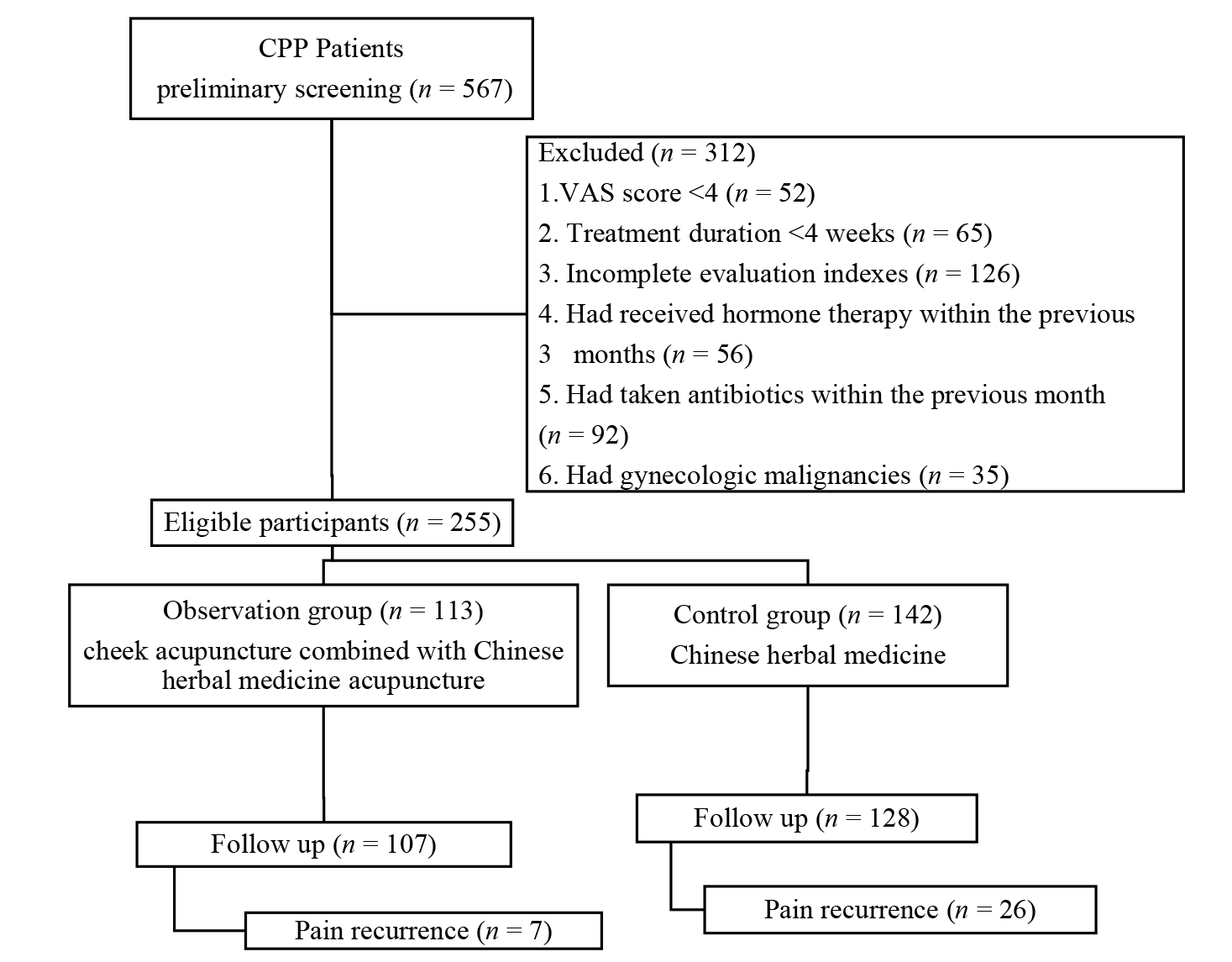
Figure 1 Flow chart for participant enrollment process CPP: chronic pelvic pain; VAS: visual analogue scale.
Figure 1 Flow chart for participant enrollment process CPP: chronic pelvic pain; VAS: visual analogue scale.
Table 1 Baseline characteristics of the two groups
| Item | Observation group (n = 113) | Control group (n = 142) | P value |
|---|---|---|---|
| Age (years) | 37.1±9.4 | 38.6±7.8 | 0.177 |
| Disease duration (years) | 6.3±4.7 | 6.0±3.1 | 0.091 |
| Treatment duration (weeks) | 4.1±3.9 | 4.2±2.7 | 0.788 |
| VAS score | 7.1±1.2 | 6.8±1.4 | 0.761 |
| McCormack score | 9.4 ±2.9 | 9.0 ±2.3 | 0.156 |
| SF-36 score | |||
| PF | 63.7±10.7 | 63.3 ±8.3 | 0.286 |
| RP | 46.7±26.9 | 44.2±23.5 | 0.435 |
| RE | 42.2±24.7 | 44.3±25.7 | 0.506 |
| BP | 41.0±23.8 | 40.27±19.9 | 0.801 |
| MH | 46.2±5.4 | 45.7±4.6 | 0.389 |
| VT | 42.5±11.4 | 41.9±8.6 | 0.627 |
| SF | 47.1±12.7 | 47.9±15.9 | 0.651 |
| GH | 43.2±8.7 | 42.2±7.9 | 0.356 |
| Disease classification [n (%)] | |||
| Endometriosis | 23 (20.3) | 30 (21.1) | 0.95 |
| Adenomyosis | 15 (13.2) | 17 (12.0) | |
| Primary dysmenorrhea | 34 (30) | 38 (26.8) | |
| Chronic pelvic inflammation | 31 (27.4) | 45 (31.7) | |
| Other | 10 (8.8) | 12 (8.5) | |
| Marital status [n (%)] | 0.17 | ||
| Unmarried | 23 (20.4) | 32 (22.5) | |
| Married | 81 (71.7) | 107 (75.3) | |
| Divorced | 8 (7.1) | 3 (2.1) | |
| Widowed | 1 (0.9) | 0 (0) |
Table 1 Baseline characteristics of the two groups
| Item | Observation group (n = 113) | Control group (n = 142) | P value |
|---|---|---|---|
| Age (years) | 37.1±9.4 | 38.6±7.8 | 0.177 |
| Disease duration (years) | 6.3±4.7 | 6.0±3.1 | 0.091 |
| Treatment duration (weeks) | 4.1±3.9 | 4.2±2.7 | 0.788 |
| VAS score | 7.1±1.2 | 6.8±1.4 | 0.761 |
| McCormack score | 9.4 ±2.9 | 9.0 ±2.3 | 0.156 |
| SF-36 score | |||
| PF | 63.7±10.7 | 63.3 ±8.3 | 0.286 |
| RP | 46.7±26.9 | 44.2±23.5 | 0.435 |
| RE | 42.2±24.7 | 44.3±25.7 | 0.506 |
| BP | 41.0±23.8 | 40.27±19.9 | 0.801 |
| MH | 46.2±5.4 | 45.7±4.6 | 0.389 |
| VT | 42.5±11.4 | 41.9±8.6 | 0.627 |
| SF | 47.1±12.7 | 47.9±15.9 | 0.651 |
| GH | 43.2±8.7 | 42.2±7.9 | 0.356 |
| Disease classification [n (%)] | |||
| Endometriosis | 23 (20.3) | 30 (21.1) | 0.95 |
| Adenomyosis | 15 (13.2) | 17 (12.0) | |
| Primary dysmenorrhea | 34 (30) | 38 (26.8) | |
| Chronic pelvic inflammation | 31 (27.4) | 45 (31.7) | |
| Other | 10 (8.8) | 12 (8.5) | |
| Marital status [n (%)] | 0.17 | ||
| Unmarried | 23 (20.4) | 32 (22.5) | |
| Married | 81 (71.7) | 107 (75.3) | |
| Divorced | 8 (7.1) | 3 (2.1) | |
| Widowed | 1 (0.9) | 0 (0) |
Table 2 Comparison of VAS, McCormack, and SF-36 scores between and within groups
| Outcome indicator | Time point | Observation group (n = 113) | Control groups (n = 142) | P value b |
|---|---|---|---|---|
| VAS score | Baseline | 7.1±1.12 | 6.8±1.4 | 0.761 |
| after treatment | 1.6±1.0a | 3.0±1.4a | 0.001 | |
| MC score | Baseline | 9.4 ±2.9 | 9.0 ±2.3 | 0.156 |
| after treatment | 0.4±1.0a | 3.0±1.2a | 0.001 | |
| SF-36 score | ||||
| PF | Baseline | 63.7±10.7 | 63.3 ±8.3 | 0.286 |
| after treatment | 85.2±12.4a | 73.8±15.7a | 0.001 | |
| RP | Baseline | 46.7±26.9 | 44.2±23.5 | 0.435 |
| after treatment | 65.5±25.8a | 62.5±12.7a | 0.23 | |
| RE | Baseline | 42.2±24.7 | 44.3±25.7 | 0.506 |
| after treatment | 76.7±20.5a | 59.0±18.9a | 0.001 | |
| BP | Baseline | 41.0±23.8 | 40.3±19.9 | 0.801 |
| after treatment | 64.3±13.5a | 52.6±8.9a | 0.001 | |
| MH | Baseline | 46.3±5.4 | 45.7±4.6 | 0.389 |
| after treatment | 81.3±24.9a | 72.0±16.9a | 0.005 | |
| VT | Baseline | 42.5±11.4 | 41.9±8.6 | 0.627 |
| after treatment | 66.7±10.7a | 56.6±16. 5a | 0.001 | |
| SF | Baseline | 47.1±12.7 | 47.9±15.9 | 0.651 |
| after treatment | 64.3±15.9a | 67.1±11.7a | 0.11 | |
| GH | Baseline | 43.2±8.7 | 42.2±7.9 | 0.356 |
| after treatment | 74.2±12.4a | 66.0±10.8a | 0.001 |
Table 2 Comparison of VAS, McCormack, and SF-36 scores between and within groups
| Outcome indicator | Time point | Observation group (n = 113) | Control groups (n = 142) | P value b |
|---|---|---|---|---|
| VAS score | Baseline | 7.1±1.12 | 6.8±1.4 | 0.761 |
| after treatment | 1.6±1.0a | 3.0±1.4a | 0.001 | |
| MC score | Baseline | 9.4 ±2.9 | 9.0 ±2.3 | 0.156 |
| after treatment | 0.4±1.0a | 3.0±1.2a | 0.001 | |
| SF-36 score | ||||
| PF | Baseline | 63.7±10.7 | 63.3 ±8.3 | 0.286 |
| after treatment | 85.2±12.4a | 73.8±15.7a | 0.001 | |
| RP | Baseline | 46.7±26.9 | 44.2±23.5 | 0.435 |
| after treatment | 65.5±25.8a | 62.5±12.7a | 0.23 | |
| RE | Baseline | 42.2±24.7 | 44.3±25.7 | 0.506 |
| after treatment | 76.7±20.5a | 59.0±18.9a | 0.001 | |
| BP | Baseline | 41.0±23.8 | 40.3±19.9 | 0.801 |
| after treatment | 64.3±13.5a | 52.6±8.9a | 0.001 | |
| MH | Baseline | 46.3±5.4 | 45.7±4.6 | 0.389 |
| after treatment | 81.3±24.9a | 72.0±16.9a | 0.005 | |
| VT | Baseline | 42.5±11.4 | 41.9±8.6 | 0.627 |
| after treatment | 66.7±10.7a | 56.6±16. 5a | 0.001 | |
| SF | Baseline | 47.1±12.7 | 47.9±15.9 | 0.651 |
| after treatment | 64.3±15.9a | 67.1±11.7a | 0.11 | |
| GH | Baseline | 43.2±8.7 | 42.2±7.9 | 0.356 |
| after treatment | 74.2±12.4a | 66.0±10.8a | 0.001 |
| 1. |
Chronic pelvic pain: ACOG practice bulletin, number 218. Obstet Gynecol 2020; 135: e98-109.
DOI URL |
| 2. | Shi W, Wang L, Zhang S. Expert consensus on the treatment of female chronic pelvic pain by integrated Chinese and western medicine (2023 edition). Shandong Zhong Yi Yao 2023; 42: 1029-36. |
| 3. |
José A, Vargas C, Carmen YLMV, et al. Prevalence of chronic pelvic pain and associated factors among indigenous women of reproductive age in Ecuador. BMC Womens Health 2024; 24: 388.
DOI PMID |
| 4. |
Ayorinde AA, Bhattacharya S, Druce KL, Jones GT, Macfarlane GJ. Chronic pelvic pain in women of reproductive and post-reproductive age: a population-based study. Eur J Pain 2017; 21: 445-55.
DOI PMID |
| 5. | Allaire C, Williams C, Bodmer-Roy S, et al. Chronic pelvic pain in an interdisciplinary setting: 1-year prospective cohort. Am J Obstet Gynecol 2018; 218: 114.e1-12. |
| 6. | Inzoli A, Barba M, Costa C, et al. The evil twins of chronic pelvic pain syndrome: a systematic review and Meta-analysis on interstitial cystitis/painful bladder syndrome and endometriosis. Healthcare (Basel) 2024; 12: 2403. |
| 7. |
Cagnacci A, Della Vecchia E, Xholli A. Chronic pelvic pain improvement: impact on quality of life and mood. Gynecol Endocrinol 2019; 35: 502-5.
DOI PMID |
| 8. |
Guan Y, Yu G, Wang G, Bai Z. The negative effect of urologic chronic pelvic pain syndrome on female sexual function: a systematic review and Meta-analysis. Int Urogynecol J 2019; 30: 1807-16.
DOI PMID |
| 9. |
Van Niekerk L, Weaver-Pirie B, Matthewson M. Psychological interventions for endometriosis-related symptoms: a systematic review with narrative data synthesis. Arch Womens Ment Health 2019; 22: 723-35.
DOI PMID |
| 10. |
Grinberg K, Sela Y, Nissanholtz-Gannot R. New insights about chronic pelvic pain syndrome (CPPS). Int J Environ Res Public Health 2020; 17: 9.
DOI URL |
| 11. |
Sun Y, Liu Y, Liu B, et al. Efficacy of acupuncture for chronic prostatitis/chronic pelvic pain syndrome: a randomized trial. Ann Intern Med 2021; 174: 1357-66.
DOI URL |
| 12. | Zheng J, Lai X, Zhu W, Huang Y, Chen C, Chen J. Effects of acupuncture combined with rehabilitation on chronic pelvic pain syndrome in females: a Meta-analysis running head-acupuncture combined with rehabilitation on chronic pelvic pain. J Healthc Eng 2022; 2022: 8770510. |
| 13. | Wang YZ. Cheeks acupuncture therapy. Beijing: People’s Health Publishing House Co., Ltd., 2017: 1-200. |
| 14. |
Wang YZ, Yang L, Wu YZ. Case report: cheek acupuncture exhibits an immediate effect in relieving severe pain associated with nerve compression or damage to the central nervous system and its potential mechanism of action. Front Neurosci 2023; 17: 1211361.
DOI URL |
| 15. | Sun Y, Zhou Q, Xiao JY, Cheng ZG. The effect of buccal acupuncture on the postoperative visceral pain in patients who underwent gynecological laparoscopic surgery and its action mechanism. Jiangxi Yi Xue 2022; 57: 584-6. |
| 16. |
Petros P, Swash M, Bornstein JA. Review of chronic pelvic pain in women. JAMA 2021; 325: 2381-91.
DOI URL |
| 17. | Allen R, Villavicencio J. Unscheduled bleeding and contraceptive choice: increasing satisfaction and continuation rates. Open Access J Contracept 2016; 7: 43-52. |
| 18. |
Brichant G, Denef M, Tebache L, et al. Chronic pelvic pain and the role of exploratory laparoscopy as a diagnostic and therapeutic tool: a retrospective observational study. Gynecol Surg 2018; 15: 13.
DOI |
| 19. | Bobing Z. Research progress on pathogenesis and treatment of chronic pelvic pain. Dang Dai Yi Xue Ji Lie 2020; 18: 67-9. |
| 20. | Nan Y. 2403 cases of pelvic adhesion conditions in gynecologic surgery and related factors analysis. Changchun: Jilin University, 2016: 1-50. |
| 21. | Wang YZ, Fang XL, Qu BP, Zhao JX, Ma MF. Clinical application of buccal acupuncture in pain. Zhongguo Zhen Jiu 2000; 20: 43-4. |
| 22. |
Ma Y, Xiang Q, Yan CY, et al. Relationship between chronic diseases and depression: the mediating effect of pain. BMC Psychiatry 2021; 21: 436.
DOI PMID |
| 23. |
Alhalal EA, Alhalal IA, Alaida AM, et al. Effects of chronic pain on sleep quality and depression: a cross-sectional study. Saudi Med J 2021; 42: 315-23.
DOI PMID |
| 24. |
Volcheck MM, Graham SM, Fleming KC, et al. Central sensitization, chronic pain, and other symptoms: better understanding, better management. Cleve Clin J Med 2023; 90: 245-54.
DOI URL |
| 25. | Xu QG, Jiang L, Hou J, Wang SJ, Chen C, He X. Effect of electroacupuncture on cognitive functions, hippocampal HIF-1α and neurons apoptosis in postoperative cognitive dysfunction rats. Zhong Guo Zhen Jiu 2020; 40: 285-9. |
| 26. |
Kang Z, Ye H, Chen T, Zhang P. Effect of electroacupuncture at siguan acupoints on expression of BDNF and TrkB proteins in the hippocampus of post-stroke depression rats. J Mol Neurosci 2021; 71: 2165-71.
DOI PMID |
| [1] | ZHAO Weibo, WANG Yaqi, KONG Lingyao, WANG Tianyi, ZHAO Haihong, ZHANG Ying, LUO Bin, WANG Ji, WANG Qi. Efficacy and safety of Tuomin Zhiti decoction (脱敏止嚏汤) on patients with seasonal allergic rhinitis: a randomized, double-blind, placebo-controlled trial [J]. Journal of Traditional Chinese Medicine, 2025, 45(4): 829-835. |
| [2] | YU Manshu, JIANG Chunchun, YAO Min, HUA Jianwu, JIANG Yan, HUANG Min, LIU Jianjing, ZHOU Yan, WANG Yuan, SHENG Meixiao. Yunpiqiangshen gel (运脾强肾浸膏) improves quality of life in dialysis patients [J]. Journal of Traditional Chinese Medicine, 2025, 45(1): 123-131. |
| [3] | WU Qiaomin, GUAN Xuanke, LIU Jinfeng, WANG Yanli, CHANG Xing, LIU Zhiming, LIU Ruxiu. Compound Tongyang Fumai decoction (通阳复脉方) improves quality of life in sick sinus syndrome: a randomized controlled study [J]. Journal of Traditional Chinese Medicine, 2024, 44(6): 1247-1253. |
| [4] | QIAN Jianan, XU Yan, HU Hongyi, ZHAO Aiguang. Clinical efficacy and safety evaluation of Buzhongyiqi pills (补中益气丸) on appetite improvement in patients with colorectal cancer receiving chemotherapy: a pilot randomized cross-over clinical trial [J]. Journal of Traditional Chinese Medicine, 2024, 44(6): 1254-1267. |
| [5] | GU Xiangchen, QIU Meisi, XIE Lin, CHEN Min, DENG Yueyi, ZHANG Changming, JIAN Guihua, WANG Chen, WANG Yi. Individualized Traditional Chinese Medicine treatment vs antibiotics for recurrent urinary tract infections: a multicenter, randomized controlled study [J]. Journal of Traditional Chinese Medicine, 2024, 44(3): 524-529. |
| [6] | GAO Xiumei, WANG Chenyan, NI Yong, ZHANG Huiling. Clinical effect of acupuncture along fascia, meridians, and nerves combined with ultrasound-guided paravertebral nerve block in the treatment of postherpetic neuralgia: a randomized parallel-controlled study [J]. Journal of Traditional Chinese Medicine, 2023, 43(2): 359-364. |
| [7] | AN Xuedong, MAO Lina, XIA Ping, SU Wen, WANG Beibei, KOU Leiya, ZHANG Zequan, QI Meng, HU Song, CHEN Jing, LI Xiujuan, LIU Jinwei, ZHOU Juan, QIAO Jie, LUO Dan, LUO Guangwei, YAN Youqin, YANG Guiping, DONG Dandan, ZHOU Wei, TAO Junxiu, JIN De, TONG Xiaolin, WEI Li. Effects of Shengmai Yin (生脉饮) on pulmonary and cardiac function in coronavirus disease 2019 convalescent patients with cardiopulmonary symptoms: a randomized, double blind, multicenter control trial [J]. Journal of Traditional Chinese Medicine, 2023, 43(1): 140-145. |
| [8] | XU Chang, LI Na, WU Xiaoling, DAI Xingye, YANG Zhiwen, SUN Qianhui, SHI Tianyu, CHAI Yemao, PANG Dandan, CHENG Kai. Effect of electroacupuncture on inflammatory signal expression in local tissues of rats with chronic pelvic pain syndrome based on purinergic 2X7 receptor/NOD-like receptor pyrin domain-containing 3 signal pathway [J]. Journal of Traditional Chinese Medicine, 2022, 42(6): 965-971. |
| [9] | ZHU Xuewei, LIU Minghui, ZONG Minru, CHEN Qianqian, WANG Jianfeng. Effect of three tongue needles acupoints Lianquan (CV23) and Hegu (LI4) combined with swallowing training on the quality of life of laryngeal cancer patients with dysphagia after surgery [J]. Journal of Traditional Chinese Medicine, 2022, 42(4): 617-621. |
| [10] | BI Yingfei, WANG Xianliang, ZHANG Xuan, HOU Yazhu, ZHAO Zhiqiang, REN Xiaoyu, YANG Zhihua, MAO Jingyuan. Protocol to study the effects of Traditional Chinese Medicine on patients with coronary heart disease showing phlegm-heat-stasis symptom pattern [J]. Journal of Traditional Chinese Medicine, 2021, 41(5): 826-832. |
| [11] | Zhao Yueyang, Wang Sumei, Li Jinhua, Zhou Yushu, Wu Wanyin, Swei Sunny Hann. Effectiveness and safety of traditional Chinese medical therapy for cancer-related fatigue: a systematic review and Meta-analysis of randomized controlled trials [J]. Journal of Traditional Chinese Medicine, 2020, 40(5): 738-748. |
| [12] | Liu Jian, Wang Yuan, Sun Yue, Huang Chuanbing, Chen Xi, Zhang Wandong, He Liyun, James Cheng-Chung Wei. Efficacy and safety of Xinfeng capsule in the treatment of osteoarthritis:a multicenter, randomized, double-blinded, controlled trial [J]. Journal of Traditional Chinese Medicine, 2020, 40(2): 284-295. |
| [13] | Li Yifan, Li Juan, Fan Bifa, Wang Yitong, Jiang Juling, Zhang Zhenhua, Wang Xinxing, Lu Wenping. Efficacy and safety of Yiqi Huoxue Jiedu decoction for the treatment of advanced epithelial ovarian cancer patients: a double-blind randomized controlled clinical trial [J]. Journal of Traditional Chinese Medicine, 2020, 40(1): 103-111. |
| [14] | Li Tiantian, Zhou Dongmei, Xu Xuying, Qu Jianhua, Jiang Chunyan, Lan Haibing, Lou Weihai, Chen Weiwen, Jin Li, Liu Rongqi, Liu Zhiyong, Zhang Cang, Duan Lanhua, Bohua Li, Xu Jingna, Zhou Tao, Jiang Xi, Cao Wei, Zhang Guangzhong, Liu Jianping, Sun Liyun, Wang Ping. Effect of Traditional Chinese Medicine plus narrow-band medium-wave ultraviolet B radiation on moderate-to-severe psoriasis vulgaris in a case series [J]. Journal of Traditional Chinese Medicine, 2019, 39(05): 692-699. |
| [15] | Li Kai, Liu Rui, Xu Guangzhong, Zhang Weihua, Liu Chen, Zhu Bin, Hua Baojin, Feng Xingzhong. Effect of a modified Banxia Xiexin decoction plus chemotherapy on stage Ⅲ colon cancer [J]. Journal of Traditional Chinese Medicine, 2019, 39(02): 251-257. |
| Viewed | ||||||
|
Full text |
|
|||||
|
Abstract |
|
|||||