
Journal of Traditional Chinese Medicine ›› 2026, Vol. 46 ›› Issue (3): 706-714.DOI: 10.19852/j.cnki.jtcm.2026.03.010
• Original Articles • Previous Articles Next Articles
Clinical characteristics of adolescents and young adults with type 2 diabetes and Traditional Chinese Medicine therapies: a single-center experience in China from 2011 to 2023
WU Jing1, WANG Le1, GUO Xiangyu1, GAO Kuo2( ), LIU Jinmin3()
- 1
Department of Endocrinology ,Dongfang Hospital Beijing University of Chinese Medicine Beijing 100071, China
2School of Traditional Chinese Medicine ,Beijing University of Chinese Medicine Beijing 100029, China
3Department of Neurosurgery ,Dongzhimen Hospital Beijing University of Chinese Medicine Beijing 100010, China
-
Received:2025-01-12Accepted:2025-06-30Online:2026-06-15Published:2026-06-08 -
Contact:GAO Kuo, School of Traditional Chinese Medicine, Beijing University of Chinese Medicine, Beijing 100029, China. gk@bucm.edu.cn;
LIU Jinmin, Department of Neurosurgery, Dongzhimen Hospital Beijing University of Chinese Medicine, Beijing 100010, China. jmvip@vip.163.com, Telephone: +86-10-67689769 -
Supported by:Fundamental Research Funds for the Central Universities: Study on the Mechanism of Chaibei Zhixian Decoction in Treating Refractory Epilepsy through the Nitric Oxide Synthase- Reactive Oxygen Species-Ferroptosis Pathway(2025-JYB-XJSJJ041)

Cite this article
WU Jing, WANG Le, GUO Xiangyu, GAO Kuo, LIU Jinmin. Clinical characteristics of adolescents and young adults with type 2 diabetes and Traditional Chinese Medicine therapies: a single-center experience in China from 2011 to 2023[J]. Journal of Traditional Chinese Medicine, 2026, 46(3): 706-714.
share this article
Table 1 Basic information of patients with T2DMY vs T2DME
| Variable | Outpatient | Inpatient | |||||||
|---|---|---|---|---|---|---|---|---|---|
| T2DMY (n = 405) | T2DME (n = 405) | Z value | P value | T2DMY (n = 570) | T2DME (n = 570) | Z value | P value | ||
| Male sex (n) | 260 | 260 | - | - | 428 | 428 | - | - | |
| Age (years) | 36 (33, 39) | 62 (54, 69) | -24.651 | < 0.001 | 35 (32, 38) | 63 (56, 72) | -29.243 | < 0.001 | |
| Duration of diabetes (months) | 36 (8.5, 60) | 84 (24, 120) | -4.164 | < 0.001 | 24 (3, 60) | 132 (60, 240) | -18.342 | < 0.001 | |
Table 1 Basic information of patients with T2DMY vs T2DME
| Variable | Outpatient | Inpatient | |||||||
|---|---|---|---|---|---|---|---|---|---|
| T2DMY (n = 405) | T2DME (n = 405) | Z value | P value | T2DMY (n = 570) | T2DME (n = 570) | Z value | P value | ||
| Male sex (n) | 260 | 260 | - | - | 428 | 428 | - | - | |
| Age (years) | 36 (33, 39) | 62 (54, 69) | -24.651 | < 0.001 | 35 (32, 38) | 63 (56, 72) | -29.243 | < 0.001 | |
| Duration of diabetes (months) | 36 (8.5, 60) | 84 (24, 120) | -4.164 | < 0.001 | 24 (3, 60) | 132 (60, 240) | -18.342 | < 0.001 | |
Table 2 Clinical characteristics of patients with T2DMY vs T2DME
| Variable | T2DMY (n = 570) | T2DME (n = 570) | Z/χ 2 value | P value |
|---|---|---|---|---|
| Family history [positive, n (%)] | 150 (26.32) | 89 (15.61) | 19.699 | < 0.001 |
| Smoking history [positive, n (%)] | 293 (51.40) | 292 (51.23) | 0.004 | 0.953 |
| Drinking history [positive, n (%)] | 190 (33.33) | 216 (37.89) | 2.586 | 0.108 |
| BMI | 28.00 (25.10, 30.79) | 25.30 (23.41, 27.75) | -0.6782 | <0.001 |
Table 2 Clinical characteristics of patients with T2DMY vs T2DME
| Variable | T2DMY (n = 570) | T2DME (n = 570) | Z/χ 2 value | P value |
|---|---|---|---|---|
| Family history [positive, n (%)] | 150 (26.32) | 89 (15.61) | 19.699 | < 0.001 |
| Smoking history [positive, n (%)] | 293 (51.40) | 292 (51.23) | 0.004 | 0.953 |
| Drinking history [positive, n (%)] | 190 (33.33) | 216 (37.89) | 2.586 | 0.108 |
| BMI | 28.00 (25.10, 30.79) | 25.30 (23.41, 27.75) | -0.6782 | <0.001 |
Table 3 Risk factors of T2DMY
| Risk factor | P value | OR (95% CI) |
|---|---|---|
| Family history | 0.002 | 0.423 (0.247, 0.724) |
| Smoking | 0.967 | 0.989 (0.593, 1.650) |
| Drinking | 0.398 | 1.258 (0.739, 2.144) |
| BMI | < 0.001 | 0.880 (0.832, 0.931) |
Table 3 Risk factors of T2DMY
| Risk factor | P value | OR (95% CI) |
|---|---|---|
| Family history | 0.002 | 0.423 (0.247, 0.724) |
| Smoking | 0.967 | 0.989 (0.593, 1.650) |
| Drinking | 0.398 | 1.258 (0.739, 2.144) |
| BMI | < 0.001 | 0.880 (0.832, 0.931) |
Table 4 Laboratory examination indicators for T2DMY and T2DME patients
| Clinical index | T2DMY (n = 975) | T2DME (n = 975) | Unadjusted P value | Adjusted P valuea |
|---|---|---|---|---|
| HbA1c (%) | 9.9 (8.1, 11.4) | 8.2 (7.1, 9.8) | <0.001 | <0.001 |
| FINS (uIU/mL) | 9.76 (4.90, 15.98) | 7.97 (4.40, 13.09) | 0.004 | 0.057 |
| TC (mmol/L) | 4.72 (3.93, 5.42) | 3.90 (3.21, 4.80) | <0.001 | <0.001 |
| TG (mmol/L) | 2.01 (1.41, 3.37) | 1.43 (1.00, 1.96) | <0.001 | <0.001 |
| HDL-C (mmol/L) | 0.97 (0.82, 1.16) | 1.11 (0.92, 1.33) | <0.001 | <0.001 |
| LDL-C (mmol/L) | 3.10 (2.43, 3.82) | 2.57 (1.86, 3.18) | <0.001 | <0.001 |
| ALT (U/L) | 25.5 (16.2, 49.38) | 16.45 (11.4, 22.60) | <0.001 | <0.001 |
| Urea (mmol/L) | 4.50 (3.63, 5.43) | 5.60 (4.30, 7.56) | <0.001 | <0.001 |
| cystatin C (mg/L) | 0.82 (0.70, 0.94) | 1.10 (0.93, 1.51) | <0.001 | 0.002 |
| mAlb (mg/L) | 15.37 (7.79, 35.36) | 17.13 (6.95, 60.97) | 0.154 | 0.895 |
| UA (μmol/L) | 354.6 (289.73, 420.70) | 320.65 (259.15, 382.30) | <0.001 | <0.001 |
Table 4 Laboratory examination indicators for T2DMY and T2DME patients
| Clinical index | T2DMY (n = 975) | T2DME (n = 975) | Unadjusted P value | Adjusted P valuea |
|---|---|---|---|---|
| HbA1c (%) | 9.9 (8.1, 11.4) | 8.2 (7.1, 9.8) | <0.001 | <0.001 |
| FINS (uIU/mL) | 9.76 (4.90, 15.98) | 7.97 (4.40, 13.09) | 0.004 | 0.057 |
| TC (mmol/L) | 4.72 (3.93, 5.42) | 3.90 (3.21, 4.80) | <0.001 | <0.001 |
| TG (mmol/L) | 2.01 (1.41, 3.37) | 1.43 (1.00, 1.96) | <0.001 | <0.001 |
| HDL-C (mmol/L) | 0.97 (0.82, 1.16) | 1.11 (0.92, 1.33) | <0.001 | <0.001 |
| LDL-C (mmol/L) | 3.10 (2.43, 3.82) | 2.57 (1.86, 3.18) | <0.001 | <0.001 |
| ALT (U/L) | 25.5 (16.2, 49.38) | 16.45 (11.4, 22.60) | <0.001 | <0.001 |
| Urea (mmol/L) | 4.50 (3.63, 5.43) | 5.60 (4.30, 7.56) | <0.001 | <0.001 |
| cystatin C (mg/L) | 0.82 (0.70, 0.94) | 1.10 (0.93, 1.51) | <0.001 | 0.002 |
| mAlb (mg/L) | 15.37 (7.79, 35.36) | 17.13 (6.95, 60.97) | 0.154 | 0.895 |
| UA (μmol/L) | 354.6 (289.73, 420.70) | 320.65 (259.15, 382.30) | <0.001 | <0.001 |
Table 5 Occurrence of diabetes comorbidities and complications in patients with T2DMY and T2DME (n)
| Variable | T2DMY (n = 975) | T2DME (n = 975) | Unadjusted P value | Adjusted P valuea | |
|---|---|---|---|---|---|
| Complication | Diabetic nephropathy | 16 | 36 | 0.005 | 0.452 |
| Diabetic retinopathy | 41 | 43 | 0.823 | 0.018 | |
| Diabetic neuropathy | 45 | 63 | 0.075 | 0.113 | |
| Comorbidity | Hypertension | 131 | 409 | <0.001 | <0.001 |
| Hyperlipidemia | 177 | 321 | <0.001 | <0.001 | |
| Non-alcoholic fatty liver | 132 | 116 | 0.277 | 0.004 | |
| Gout | 36 | 14 | 0.002 | 0.031 | |
Table 5 Occurrence of diabetes comorbidities and complications in patients with T2DMY and T2DME (n)
| Variable | T2DMY (n = 975) | T2DME (n = 975) | Unadjusted P value | Adjusted P valuea | |
|---|---|---|---|---|---|
| Complication | Diabetic nephropathy | 16 | 36 | 0.005 | 0.452 |
| Diabetic retinopathy | 41 | 43 | 0.823 | 0.018 | |
| Diabetic neuropathy | 45 | 63 | 0.075 | 0.113 | |
| Comorbidity | Hypertension | 131 | 409 | <0.001 | <0.001 |
| Hyperlipidemia | 177 | 321 | <0.001 | <0.001 | |
| Non-alcoholic fatty liver | 132 | 116 | 0.277 | 0.004 | |
| Gout | 36 | 14 | 0.002 | 0.031 | |
Table 6 Glucose-lowering medications used in patients with T2DMY and T2DME (n)
| Item | Outpatient | Inpatient | |||||||
|---|---|---|---|---|---|---|---|---|---|
| T2DMY (n = 405) | T2DME (n = 405) | χ 2 value | P value | T2DMY (n = 570) | T2DME (n = 570) | χ 2 value | P value | ||
| Metformin | 154 | 92 | 22.442 | <0.001 | 307 | 284 | 1.859 | 0.173 | |
| AGis | 53 | 43 | 1.182 | 0.277 | 219 | 305 | 26.121 | <0.001 | |
| Sulfonylureas | 11 | 27 | 7.068 | 0.008 | 29 | 83 | 28.872 | <0.001 | |
| DPP-4is | 39 | 46 | 0.644 | 0.422 | 151 | 179 | 3.344 | 0.067 | |
| Insulin | 64 | 30 | 13.912 | <0.001 | 370 | 430 | 15.088 | <0.001 | |
Table 6 Glucose-lowering medications used in patients with T2DMY and T2DME (n)
| Item | Outpatient | Inpatient | |||||||
|---|---|---|---|---|---|---|---|---|---|
| T2DMY (n = 405) | T2DME (n = 405) | χ 2 value | P value | T2DMY (n = 570) | T2DME (n = 570) | χ 2 value | P value | ||
| Metformin | 154 | 92 | 22.442 | <0.001 | 307 | 284 | 1.859 | 0.173 | |
| AGis | 53 | 43 | 1.182 | 0.277 | 219 | 305 | 26.121 | <0.001 | |
| Sulfonylureas | 11 | 27 | 7.068 | 0.008 | 29 | 83 | 28.872 | <0.001 | |
| DPP-4is | 39 | 46 | 0.644 | 0.422 | 151 | 179 | 3.344 | 0.067 | |
| Insulin | 64 | 30 | 13.912 | <0.001 | 370 | 430 | 15.088 | <0.001 | |
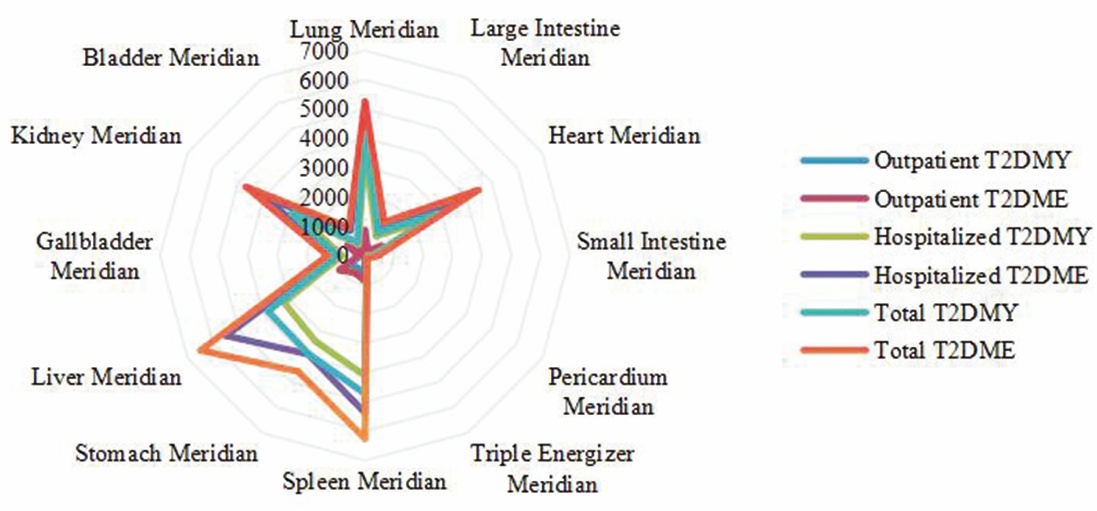
Figure 1 Radar map of the meridians of herbs
Figure 1 Radar map of the meridians of herbs

Figure 2 Radar map of the frequency of herbal medicine belonging to the four properties and five flavors attributes A: four properties radar map of herbal medicine; B: five flavors radar map of herbal medicine. T2DMY: type 2 diabetes in adolescents and young adults patients; T2DME: type 2 diabetes in middle aged and elderly patients.
Figure 2 Radar map of the frequency of herbal medicine belonging to the four properties and five flavors attributes A: four properties radar map of herbal medicine; B: five flavors radar map of herbal medicine. T2DMY: type 2 diabetes in adolescents and young adults patients; T2DME: type 2 diabetes in middle aged and elderly patients.
Table 7 Proportion of syndrome distribution in different genders (%)
| Syndrome type | T2DMY (n = 975) | T2DME (n = 975) | |||
|---|---|---|---|---|---|
| Male | Female | Male | Female | ||
| Dual deficiency of Qi and Yin | 45.93 | 42.16 | 40.41 | 40.42 | |
| Phlegm Damp trapped Spleen | 8.28 | 6.97 | 1.16 | 0.70 | |
| Phlegm and blood stasis blocking collaterals | 8.87 | 7.32 | 14.24 | 14.63 | |
| Dampness-heat internal retention | 5.96 | 3.14 | 7.27 | 2.44 | |
| Spleen deficiency with dampness encumbrance | 4.51 | 5.23 | 2.47 | 2.44 | |
| Blood stasis blocking collaterals | 4.36 | 4.18 | 11.63 | 7.67 | |
| Yin deficiency and hyperactivity of fire | 5.38 | 1.74 | 3.49 | 1.39 | |
Table 7 Proportion of syndrome distribution in different genders (%)
| Syndrome type | T2DMY (n = 975) | T2DME (n = 975) | |||
|---|---|---|---|---|---|
| Male | Female | Male | Female | ||
| Dual deficiency of Qi and Yin | 45.93 | 42.16 | 40.41 | 40.42 | |
| Phlegm Damp trapped Spleen | 8.28 | 6.97 | 1.16 | 0.70 | |
| Phlegm and blood stasis blocking collaterals | 8.87 | 7.32 | 14.24 | 14.63 | |
| Dampness-heat internal retention | 5.96 | 3.14 | 7.27 | 2.44 | |
| Spleen deficiency with dampness encumbrance | 4.51 | 5.23 | 2.47 | 2.44 | |
| Blood stasis blocking collaterals | 4.36 | 4.18 | 11.63 | 7.67 | |
| Yin deficiency and hyperactivity of fire | 5.38 | 1.74 | 3.49 | 1.39 | |
| 1. |
Lascar N, Brown J, Pattison H, Barnett AH, Bailey CJ, Bellary S. Type 2 diabetes in adolescents and young adults. Lancet Diabetes Endocrinol 2018; 6: 69-80.
DOI URL |
| 2. | Li Y, Teng D, Shi X, et al. Prevalence of diabetes recorded in mainland China using 2018 diagnostic criteria from the American Diabetes Association: national cross sectional study. BMJ 2020; 369: 997. |
| 3. | Xie J, Wang M, Long Z, et al. Global burden of type 2 diabetes in adolescents and young adults, 1990-2019: systematic analysis of the Global Burden of Disease Study 2019. BMJ 2022; 379: e072385. |
| 4. |
Bjornstad P, Drews KL, Caprio S, et al. Long-term complications in youth-onset type 2 diabetes. N Engl J Med 2021; 385: 416-26.
DOI URL |
| 5. |
Xu L, Zhao W, Wang D, Ma X. Chinese Medicine in the battle against obesity and metabolic diseases. Front Physiol 2018; 9: 850.
DOI PMID |
| 6. | Nie Q, Chen H, Hu J, et al. Arabinoxylan Attenuates Type 2 diabetes by improvement of carbohydrate, lipid, and amino acid metabolism. Mol Nutr Food Res 2018; 62: e1800222. |
| 7. |
Pang B, Lian FM, Zhao XY, et al. Prevention of type 2 diabetes with the traditional Chinese patent medicine: a systematic review and Meta-analysis. Diabetes Res Clin Pract 2017; 131: 242-59.
DOI URL |
| 8. |
Nie Q, Chen H, Hu J, Fan S, Nie S. Dietary compounds and Traditional Chinese Medicine ameliorate type 2 diabetes by modulating gut microbiota. Crit Rev Food Sci Nutr 2019; 59: 848-63.
DOI PMID |
| 9. |
Magliano DJ, Sacre JW, Harding JL, Gregg EW, Zimmet PZ, Shaw JE. Young-onset type 2 diabetes mellitus-implications for morbidity and mortality. Nat Rev Endocrinol 2020; 16: 321-31.
DOI PMID |
| 10. |
Huo X, Gao L, Guo L, et al. Risk of non-fatal cardiovascular diseases in early-onset versus late-onset type 2 diabetes in China: a cross-sectional study. Lancet Diabetes Endocrinol 2016; 4: 115-24.
DOI URL |
| 11. | Lin SF, Xiao Y. Mechanism of “homotherapy of different diseases” in hedysarum multijugum maxim and Radix Salviae in the treatment of diabetic nephropathy and hypertensive nephropathy based on network pharmacology and molecular docking. Zhong Guo Yi Yuan Yong Yao Ping Jia Yu Fen Xi 2024; 24: 1429-33. |
| 12. |
Willemsen G, Ward KJ, Bell CG, et al. The concordance and heritability of type 2 diabetes in 34 166 twin pairs from international twin registers: the discordant twin (DISCOTWIN) consortium. Twin Res Hum Genet 2015; 18: 762-71.
DOI URL |
| 13. | Newton KP, Hou J, Crimmins NA, et al. Nonalcoholic steatohepatitis clinical research network. prevalence of prediabetes and type 2 diabetes in children with nonalcoholic fatty liver disease. JAMA Pediatr 2016; 170: e161971. |
| 14. |
Hannon TS, Arslanian SA. The changing face of diabetes in youth: lessons learned from studies of type 2 diabetes. Ann N Y Acad Sci 2015; 1353: 113-37.
DOI URL |
| 15. |
Arslanian S, Bacha F, Grey M, Marcus MD, White NH, Zeitler P. Evaluation and management of youth-onset type 2 diabetes: a position statement by the American diabetes association. Diabetes Care 2018; 41: 2648-68.
DOI PMID |
| 16. |
Wang J, Ma Q, Li Y, et al. Research progress on Traditional Chinese Medicine syndromes of diabetes mellitus. Biomed Pharmacother 2020; 121: 109565.
DOI PMID |
| 17. |
Chao CL, Huang HC, Lin HC, Chang TC, Chang WL. Sesquiterpenes from Baizhu stimulate glucose uptake by activating AMPK and PI3K. Am J Chin Med 2016; 44: 963-79.
DOI URL |
| 18. |
Li C, Zhang K, Liu L, et al. Study of the mechanism of Astragali Radix in treating type 2 diabetes mellitus and its renal protection based on enzyme activity, network pharmacology, and experimental verification. Molecules 2023; 28: 8030.
DOI URL |
| 19. |
Su M, Tang T, Tang W, Long Y, Wang L, Liu M. Astragalus improves intestinal barrier function and immunity by acting on intestinal microbiota to treat T2DM: a research review. Front Immunol 2023; 14: 1243834.
DOI URL |
| 20. |
Sun L, Yang Z, Zhao W, et al. Integrated lipidomics, transcriptomics and network pharmacology analysis to reveal the mechanisms of Danggui Buxue decoction in the treatment of diabetic nephropathy in type 2 diabetes mellitus. J Ethnopharmacol 2022; 283: 114699.
DOI URL |
| 21. | Tong X, Xu J, Lian F, et al. Structural alteration of gut microbiota during the amelioration of human type 2 diabetes with hyperlipidemia by metformin and a traditional Chinese herbal formula: a multicenter, randomized, open label clinical trial. mBio 2018; 9: e02392-17. |
| 22. |
Wang J, Wang L, Lou GH, et al. Coptidis rhizoma: a comprehensive review of its traditional uses, botany, phytochemistry, pharmacology and toxicology. Pharm Biol 2019; 57: 193-225.
DOI PMID |
| [1] | LIN Kaifeng, ZENG Zhongliao, SUN Yan, SUN Fangzhou, ZHANG Han, SUN Jing, JIANG Ling, Jeffrey D. Deng, LI Min, LIANG Bocheng. Traditional Chinese Medicine for the prevention and treatment of adolescent idiopathic scoliosis: scientific understanding and a multimodal therapeutic approach [J]. Journal of Traditional Chinese Medicine, 2026, 46(3): 745-756. |
| [2] | Shikha Agrawal, Adarsh Kumar, Ankit Kumar Singh, Harshwardhan Singh, Suresh Thareja, Pradeep Kumar. A comprehensive review on pharmacognosy, phytochemistry and pharmacological activities of 8 potent Prunus species of southeast Asia [J]. Journal of Traditional Chinese Medicine, 2024, 44(3): 620-628. |
| [3] | LI Shuoqi, GUO Rong, LIU Chunjing, ZHAI Jiali, LI Keke, LI Shiming, YU Wenbing. Effects of moderate-intensity aerobic exercise combined with acupuncture on attention function of mentally-retarded adolescents: a randomised controlled trial [J]. Journal of Traditional Chinese Medicine, 2023, 43(1): 154-159. |
| [4] | Kamal Dawood, Roohullah, Rabbi Fazle, Naz Attiqa, Bilal Muhammad. In-vitro and in-vivo pharmacological screening of Iris albicans [J]. Journal of Traditional Chinese Medicine, 2022, 42(1): 9-16. |
| [5] | Rabbi Fazle, Zada Amir, Nisar Amna, Adhikari Achyut, Ullah Irfan, Ur Rahman Shafiq. Detailed approach toward the anti-hyperglycemic potential of Sterculia diversifolia G. Don against alloxan-induced in vivo hyperglycemia model [J]. Journal of Traditional Chinese Medicine, 2022, 42(1): 17-22. |
| [6] | Garima Singh, Ajit Kumar Passari, Marcy D Momin, Sakthivel Ravi, Bhim Pratap Singh, Nachimuthu Senthil Kumar. Ethnobotanical survey of medicinal plants used in the management of cancer and diabetes [J]. Journal of Traditional Chinese Medicine, 2020, 40(6): 1007-1017. |
| [7] | Sun Chen, Wang Li, Sun Jing, Wang Zheng, Tang Zhishu. Hypoglycemic and hypolipidemic effects of rutin on hyperglycemic rats [J]. Journal of Traditional Chinese Medicine, 2020, 40(4): 640-645. |
| [8] | Kyeong-Han Kim, Sang-Chul Lee, Young-Bae Park, Young-Jae Park. Cardiff acne disability index: cross-cultural translation in Korean and its relationship with clinical acne severity, pathological patterns, and general quality of life [J]. Journal of Traditional Chinese Medicine, 2017, 37(05): 702-709. |
| [9] | Lv Heli, Zhu Li, Chen Zhiqiang, Jin Huijuan, Jin Lei. Physical and mental health conditions of young college students with different Traditional Chinese Medicine constitutions in Zhejiang Province of China [J]. Journal of Traditional Chinese Medicine, 2015, 35(06): 703-708. |
| [10] | Wei Hui, Xu Jinyuan, Jiang Zhong, Ye Shuliang, Song Hongquan, Ning Xitao, Huang Huanmin, Chen Wei, Pei Jianwei, Jiang Nengyi, Chen Shao, Du Honggen. Effect of a Traditional Chinese Medicine combined therapy on adolescent idiopathic scoliosis:a randomized controlled trial [J]. Journal of Traditional Chinese Medicine, 2015, 35(05): 514-519. |
| Viewed | ||||||
|
Full text |
|
|||||
|
Abstract |
|
|||||