
Journal of Traditional Chinese Medicine ›› 2025, Vol. 45 ›› Issue (6): 1423-1434.DOI: 10.19852/j.cnki.jtcm.2025.06.020
• Guideline • Previous Articles Next Articles
Clinical practice guideline for Traditional Chinese Medicine: cervical radiculopathy
FENG Tianxiao1, QIN Xiaokuan1, SUN Kai1, WANG Xu1, XIE Yanming2, GE Long3, SU Youxin4, WANG Peimin5, MA Yong6, ZHU Liguo1( ), WEI Xu1()
- 1 Wangjing Hospital, China Academy of Chinese Medical Sciences, Beijing 100102, China; Beijing Key Laboratory of Orthopedics of Traditional Chinese Medicine, Beijing 100102, China
2 Institute of Basic Research in Clinical Medicine, China Academy of Chinese Medical Sciences, Beijing 100700, China
3 Evidence-Based Social Science Research Centre, School of Public Health, Lanzhou University, Lanzhou 730000, China; Department of Social Medicine and Health Management, School of Public Health, Lanzhou University, Lanzhou 730000, China
4 Fujian University of Traditional Chinese Medicine, Fuzhou 350122, China
5 Department of Orthopaedics and Traumatology, Affiliated Hospital of Nanjing University of Chinese Medicine, Nanjing, 210029, China; Jiangsu Province Hospital of Chinese Medicine, Nanjing 210029, China
6 School of Chinese Medicine, School of Integrated Chinese and Western Medicine, Nanjing University of Chinese Medicine, Nanjing 210023, China
-
Received:2025-03-12Accepted:2025-07-10Online:2025-12-15Published:2025-11-24 -
Contact:Prof. WEI Xu, Wangjing Hospital, China Academy of Chinese Medical Sciences, Beijing, 100102, China; Beijing Key Laboratory of Orthopedics of Traditional Chinese Medicine, Beijing 100102, China. weixu.007@163.com, Telephone: +86-10-84739223; +86-10-84739223;
Prof. ZHU Liguo, Wangjing Hospital, China Academy of Chinese Medical Sciences, Beijing 100102, China; Beijing Key Laboratory of Orthopedics of Traditional Chinese Medicine, Beijing 100102, China. tcmspine@163.com -
About author:Feng Tianxiao and Qin Xiaokuan are co-first authors and contributed equally to this work -
Supported by:National Traditional Chinese Medicine Inheritance and Innovation Team Project: Innovation Team for Traditional Chinese Medicine Prevention and Treatment of Degenerative Bone and Joint Diseases(ZYYCXTDC-202003);2022 Young Qihuang Scholars Training Program (The letter of Department of Personnel and Education, National Administration of Traditional Chinese Medicine [2022] No. 256);Cross Cooperation Project of Beijing Nova Program of Science and Technology: Research on High-Precision Digital Traditional Chinese Medicine Manipulation Therapy Combining Medicine and Engineering(20220484228);Special Project on Evidence-based Clinical Research of Traditional Chinese Medicine in the High-level Traditional Chinese Medicine Hospital Construction Project of Wangjing Hospital, China Academy of Chinese Medical Sciences: Research on the Dose-Effect Regularity of Cervical Rotation Traction Manipulation in Treating Cervical Radiculopathy and Its Mechanism of Regulating Peripheral Muscle-Cerebral Cortex Hemodynamics(WJYY-XZKT-2023-05)

Cite this article
FENG Tianxiao, QIN Xiaokuan, SUN Kai, WANG Xu, XIE Yanming, GE Long, SU Youxin, WANG Peimin, MA Yong, ZHU Liguo, WEI Xu. Clinical practice guideline for Traditional Chinese Medicine: cervical radiculopathy[J]. Journal of Traditional Chinese Medicine, 2025, 45(6): 1423-1434.
share this article
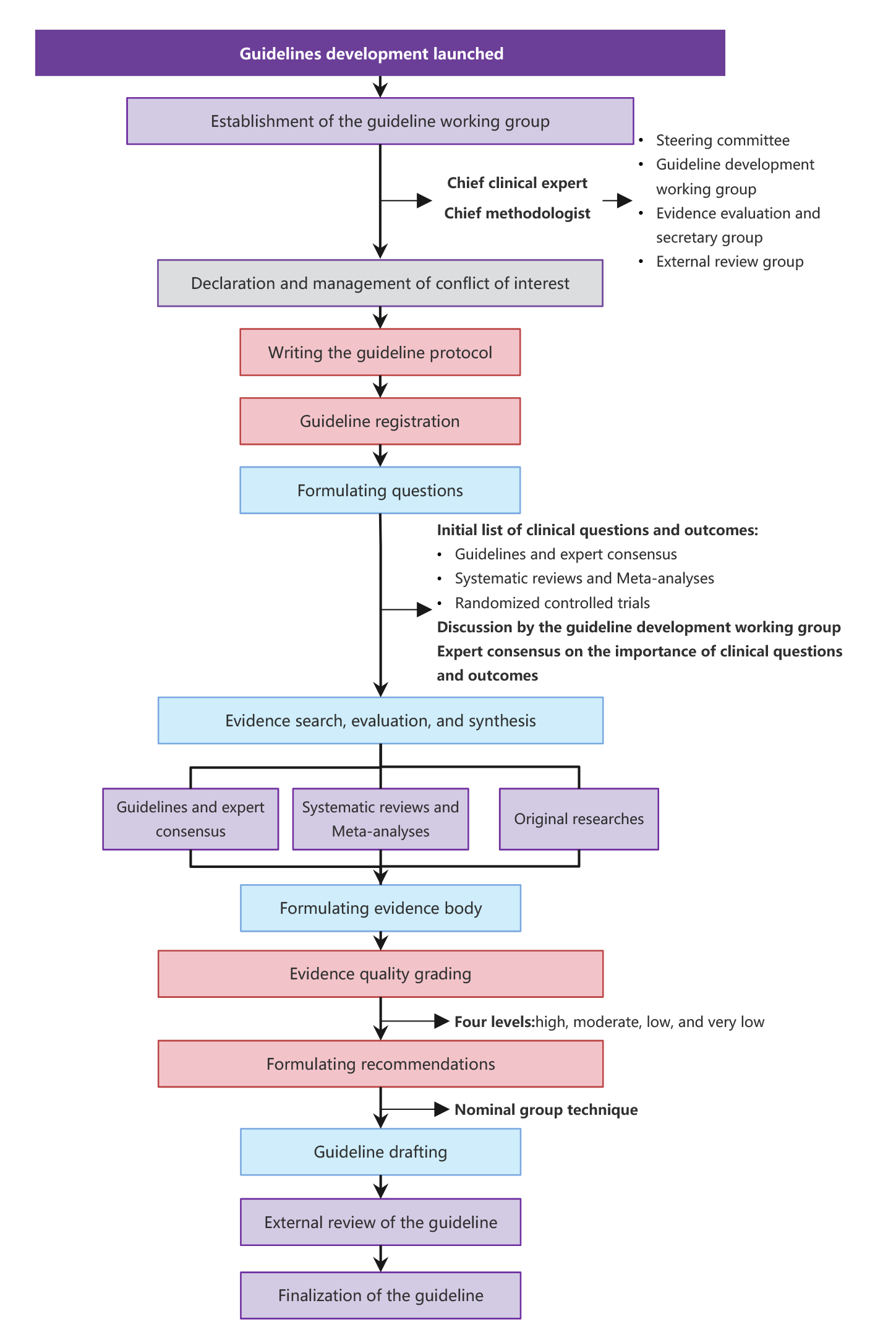
Figure 1 Guideline development process
Figure 1 Guideline development process
Table 1 Evidence quality grades and strength of recommendations
| Item | Definition |
|---|---|
| Evidence quality | |
| High (A) | We are very confident that the true effect lies close to that of the estimate of the effect. |
| Moderate (B) | We are moderately confident in the effect estimate: the true effect is likely to be close to the estimate of the effect, but there is a possibility that it is substantially different. |
| Low (C) | Our confidence in the effect estimate is limited: the true effect may be substantially different from the estimate of the effect. |
| Very low (D) | We have very little confidence in the effect estimate: the true effect is likely to be substantially different from the estimate of effect. |
| Recommendation strength | |
| Strong (1) | When the desirable effects of an intervention clearly outweigh the undesirable effects, or clearly do not, guideline panels offer strong recommendations. |
| Weak (2) | when the trade-offs are less certain — either because of low quality evidence or because evidence suggests that desirable and undesirable effects are closely balanced — weak recommendations become mandatory. |
Table 1 Evidence quality grades and strength of recommendations
| Item | Definition |
|---|---|
| Evidence quality | |
| High (A) | We are very confident that the true effect lies close to that of the estimate of the effect. |
| Moderate (B) | We are moderately confident in the effect estimate: the true effect is likely to be close to the estimate of the effect, but there is a possibility that it is substantially different. |
| Low (C) | Our confidence in the effect estimate is limited: the true effect may be substantially different from the estimate of the effect. |
| Very low (D) | We have very little confidence in the effect estimate: the true effect is likely to be substantially different from the estimate of effect. |
| Recommendation strength | |
| Strong (1) | When the desirable effects of an intervention clearly outweigh the undesirable effects, or clearly do not, guideline panels offer strong recommendations. |
| Weak (2) | when the trade-offs are less certain — either because of low quality evidence or because evidence suggests that desirable and undesirable effects are closely balanced — weak recommendations become mandatory. |
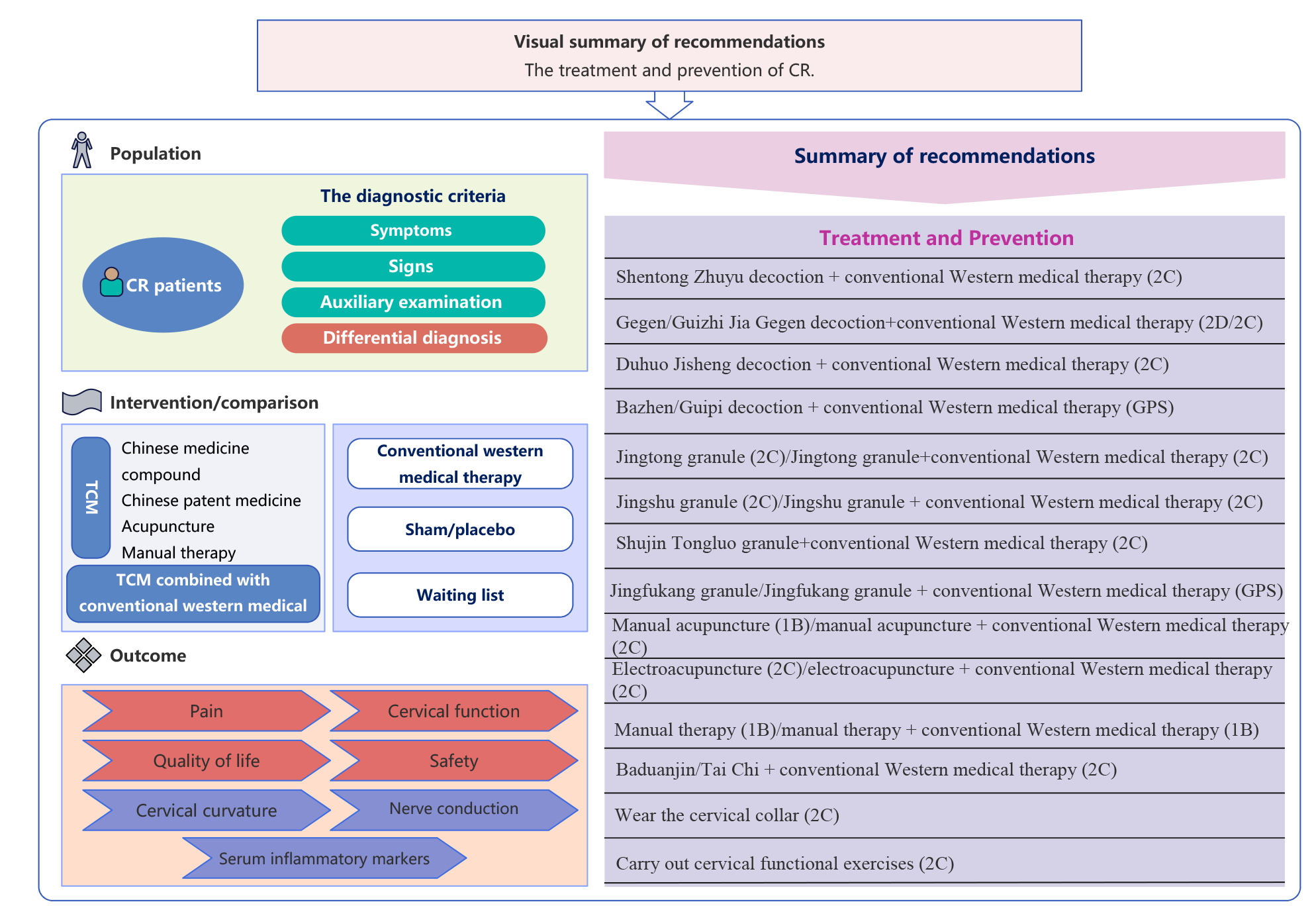
Figure 2 Visual graphic of recommendations CR: cervical radiculopathy; TCM: Traditional Chinese Medicine; GPS: good practice statement; 1: strong; 2: weak; B: moderate; C: low; D: very low.
Figure 2 Visual graphic of recommendations CR: cervical radiculopathy; TCM: Traditional Chinese Medicine; GPS: good practice statement; 1: strong; 2: weak; B: moderate; C: low; D: very low.
Table 2 The TCM syndromes types of CR
| TCM syndrome type | Primary symptom | Secondary symptom | Tongue and pulse |
|---|---|---|---|
| Syndrome of Qi stagnation and blood stasis | Experience tingling and numbness in the neck, shoulders, and affected limb; encounter fixed pain; exhibit aversion to pressure; heightened pain during nighttime. | Display a dark complexion; observe localized petechiae on the body. | Manifest a purple and dark tongue with petechiae; demonstrate a tense and rough pulse. |
| Syndrome of wind and cold obstructing collaterals | Report pain and numbness in the neck, shoulder, and affected limb, exacerbated by cold and alleviated by warmth. | Express a fear of cold and wind; note limbs feeling cold; experience sweating or lack thereof. | Present a pale tongue with thin white fur; exhibit a floating tight or slow pulse. |
| Syndrome of liver and kidney insufficiency | Describe dull pain and numbness in the neck, shoulder, and affected limb. | Complain of soreness and weakness in the waist and knees; note dryness of the eyes; report dizziness, tinnitus, insomnia, and dryness of the throat and mouth. | Show a thin and red tongue with little or no fur; demonstrate a tense thin pulse or thin rapid pulse. |
| Syndrome of Qi and blood depletion | Experience pain and numbness in the neck, shoulders, and affected limb; observe muscle atrophy in the hand. | Report dizziness; describe palpitations; note shortness of breath; present with a pale face; express alarm and restlessness; observe sunken nails without luster; report dry and itchy skin. | Display a pale tongue with little fur; manifest a thin weak pulse. |
Table 2 The TCM syndromes types of CR
| TCM syndrome type | Primary symptom | Secondary symptom | Tongue and pulse |
|---|---|---|---|
| Syndrome of Qi stagnation and blood stasis | Experience tingling and numbness in the neck, shoulders, and affected limb; encounter fixed pain; exhibit aversion to pressure; heightened pain during nighttime. | Display a dark complexion; observe localized petechiae on the body. | Manifest a purple and dark tongue with petechiae; demonstrate a tense and rough pulse. |
| Syndrome of wind and cold obstructing collaterals | Report pain and numbness in the neck, shoulder, and affected limb, exacerbated by cold and alleviated by warmth. | Express a fear of cold and wind; note limbs feeling cold; experience sweating or lack thereof. | Present a pale tongue with thin white fur; exhibit a floating tight or slow pulse. |
| Syndrome of liver and kidney insufficiency | Describe dull pain and numbness in the neck, shoulder, and affected limb. | Complain of soreness and weakness in the waist and knees; note dryness of the eyes; report dizziness, tinnitus, insomnia, and dryness of the throat and mouth. | Show a thin and red tongue with little or no fur; demonstrate a tense thin pulse or thin rapid pulse. |
| Syndrome of Qi and blood depletion | Experience pain and numbness in the neck, shoulders, and affected limb; observe muscle atrophy in the hand. | Report dizziness; describe palpitations; note shortness of breath; present with a pale face; express alarm and restlessness; observe sunken nails without luster; report dry and itchy skin. | Display a pale tongue with little fur; manifest a thin weak pulse. |
| 1. |
Carette S, Fehlings MG. Clinical practice. Cervical radiculopathy. N Engl J Med 2005; 353: 392-9.
DOI URL |
| 2. |
Theodore N. Degenerative cervical spondylosis. N Engl J Med 2020; 383: 159-68.
DOI URL |
| 3. |
Iyer S, Kim HJ. Cervical radiculopathy. Cervical radiculopathy. Curr Rev Musculoskelet Med 2016; 9: 272-80.
DOI PMID |
| 4. |
Plener J, Mior S, Atkinson-Graham M, Hogg-Johnson S, Côté P, Ammendolia C. Information is power: a qualitative study exploring the lived experiences of patients with degenerative cervical radiculopathy. Pain 2024; 165: 347-56.
DOI URL |
| 5. | Tampin B, Slater H, Briffa NK. Neuropathic pain components are common in patients with painful cervical radiculopathy, but not in patients with nonspecific neck-arm pain. Clin J Pain 2013; 29: 846-56. |
| 6. |
Xie K, Wang Z. A predictive model for the risk of recurrence of cervical spondylotic radiculopathy after surgery. Pain Ther 2023; 12: 1385-96.
DOI PMID |
| 7. | Mansfield M, Smith T, Spahr N, Thacker M. Cervical spine radiculopathy epidemiology: a systematic review. Musculoskeletal Care 2020; 18: 555-67. |
| 8. | Radhakrishnan K, Litchy WJ, O'Fallon WM, Kurland LT. Epidemiology of cervical radiculopathy. A population-based study from Rochester, Minnesota 1994; 117: 325-35. |
| 9. |
Schoenfeld AJ, George AA, Bader JO, Caram PM Jr. Incidence and epidemiology of cervical radiculopathy in the United States military: 2000 to 2009. J Spinal Disord Tech 2012; 25: 17-22.
DOI PMID |
| 10. | Plener J, Csiernik B, To D, et al. Conservative management of cervical radiculopathy: a systematic review. Clin J Pain 2023; 39: 138-46. |
| 11. | Buser Z, Ortega B, D'Oro A, et al. Spine degenerative conditions and their treatments: national trends in the United States of America. Global Spine J 2018; 8: 57-67. |
| 12. | Cook C, Roman M, Stewart KM, Leithe LG, Isaacs R. Reliability and diagnostic accuracy of clinical special tests for myelopathy in patients seen for cervical dysfunction. J Orthop Sports Phys Ther 2009; 39: 172-8. |
| 13. |
Woods BI, Hilibrand AS. Cervical radiculopathy: epidemiology, etiology, diagnosis, and treatment. J Spinal Disord Tech 2015; 28: E251-9.
DOI URL |
| 14. |
Guyatt GH, Oxman AD, Vist GE, et al. GRADE: an emerging consensus on rating quality of evidence and strength of recommendations. BMJ 2008; 336: 924-6.
DOI URL |
| 15. | Graham R, Mancher M, Miller Wolman D, Greenfield S, Steinberg E. Clinical practice guidelines we can trust. Washington: The National Academies Press, 2011: 1-266. |
| 16. | World Health Organization. WHO Handbook for Guideline Development. 2nd ed. Geneva: World Health Organization, 2014: 1-167. |
| 17. | Chen Y, Yang K, Wang X. Guiding principles for the development/revision of clinical diagnosis and treatment guidelines in China (Version 2022). Nat Med J Chin 2022; 102: 697-703. |
| 18. | Brouwers MC, Kerkvliet K, Spithoff K; AGREE Next Steps Consortium. The AGREE Reporting Checklist: a tool to improve reporting of clinical practice guidelines. The AGREE Reporting Checklist: a tool to improve reporting of clinical practice guidelines. BMJ 2016; 354: i4852. |
| 19. |
Schünemann HJ, Mustafa R, Brozek J, et al. GRADE Guidelines: 16. GRADE evidence to decision frameworks for tests in clinical practice and public health. J Clin Epidemiol 2016; 76: 89-98.
DOI PMID |
| 20. |
Canfield SE, Dahm P. Rating the quality of evidence and the strength of recommendations using GRADE. World J Urol 2011; 29: 311-7.
DOI PMID |
| 21. |
Chen Y, Yang K, Marušic A, et al. A reporting tool for practice guidelines in health care: the RIGHT statement. Ann Intern Med 2017; 166: 128-32.
DOI PMID |
| 22. | World Health Organization. Declaration of interests for WHO experts, 2014-09-25, cited 2021-09-05; 2 screens. Available from URL: https://www.who.int/about/ethics/declarations-of-interest. |
| 23. | GRADEpro GDT. GRADE your evidence and improve your guideline development in health care, 2013, cited 2022-12-25; 2 screens. Available from URL: https://gradepro.org. |
| 24. | Shea BJ, Reeves BC, Wells G, et al. AMSTAR 2: a critical appraisal tool for systematic reviews that include randomised or non-randomised studies of healthcare interventions, or both. BMJ 2017; 358: j4008. |
| 25. |
Hopp L. Risk of bias reporting in Cochrane systematic reviews. Int J Nurs Pract 2015; 21: 683-6.
DOI PMID |
| 26. |
Balshem H, Helfand M, Schünemann HJ, et al. GRADE guidelines: 3. Rating the quality of evidence. J Clin Epidemiol 2011; 64: 401-6.
DOI PMID |
| 27. | Li C, Zhao C, Chen Y, Hu J. Development of grading criteria on recommendations in clinical guidelines/consensus for Traditional Chinese Medicine. J Tradit Chin Med 2020; 61: 486-92. |
| 28. |
Bono CM, Ghiselli G, Gilbert TJ, et al. An evidence-based clinical guideline for the diagnosis and treatment of cervical radiculopathy from degenerative disorders. Spine J 2011; 11: 64-72.
DOI PMID |
| 29. | Chinese Association of Rehabilitation Medicine. The Guideline for diagnosis, treatment and rehabilitation of cervical spondylosis. Beijing: Chinese Association of Rehabilitation Medicine, 2010: 1-22. |
| 30. | Expert group on standardized diagnosis and treatment of cervical radiculopathy. Expert consensus on the standardization of diagnosis and treatment of cervical radiculopathy. Zhong Hua Wai Ke Za Zhi 2015; 53: 812-4. |
| 31. | China Association of Chinese Medicine. Cervical radiculopathy (ZYYXH/T409-2012). Feng Shi Bing Yu Guan Jie Yan 2013; 2: 78-80. |
| 32. | China Academy of Chinese Medical Science. Evidence-based Guidelines of Clinical Practice in Chinese Medicine·Specific Disease. Beijing: China Traditional Chinese Medicine Press, 2011: 65-89. |
| 33. | Wei X, Fang SJ, Sun K, et al. Advances in the study of Chinese medical syndrome of cervical radiculopathy. Nanjing Zhong Yi Yao Da Xue Xue Bao 2021; 37: 632-6. |
| 34. | Bu G, Sun X, Yang N, Wang SL. Clinical analysis of cervical traction combined with oral administration and external application of Chinese medicine for patients with cervical spondylotic myelopathy. Shi Jie Zhong Yi Yao 2018; 13: 885-8. |
| 35. | Zhao FC. Effect of cervical traction combined with internal and external application of Traditional Chinese Medicine on patients with cervical radiculopathy. Zhong Guo Bao Jian Ying Yang 2019; 29: 357. |
| 36. | Liu CY. Effect of Shentong Zhuyu Decoction on 43 cases of cervical radiculopathy treated by internal and external application combined with cervical traction. Lin Chuang Yi Xue Yan Jiu Yu Shi Jian 2016; 1: 108-9. |
| 37. | Yang JJ. Therapeutic effect analysis of Gegen decoction combined with divergent shock wave in the treatment of cervical spondylotic radiculopathy (wind-cold-dampness type). Hubei: Hubei University of Chinese Medicine, 2022: 1-58. |
| 38. | Zhu YF, Li WQ, Wu SX. Treatment of 94 patients with cervical radiculopathy with modified Gegen decoction combined with percutaneous direct current stimulation. Guang Ming Zhong Yi 2019; 34: 359-60. |
| 39. | Lu XC. Clinical observation of Gegen decoction combined with shock wave in treatment of cervical radiculopathy. Neimenggu Zhong Yi Yao 2020; 39: 119-21. |
| 40. | Liu ZF, Li J, Wang DB. Observation of curative effect of integrated Traditional Chinese and Western Medicine on cervical radiculopathy. Shi Yong Zhong Yi Yao Za Zhi 2019; 35: 1122-3. |
| 41. | Hu JH. Clinical observation of cervical traction and "Gegen Decoction" in treating cervical spondylotic radiculopathy. Shanghai Zhong Yi Yao 2010; 44: 62-3. |
| 42. | Zhao XL, Feng KH, Shen JJ, Si YL, Wang GH, Wang GD. Observation on the clinical effect of Gegen decoction combined with traction in the treatment of cervical radiculopathy. Gan Su Ke Ji 2022; 38: 108-10. |
| 43. | Ding ZQ. The clinical effect observation about cervical spondylotic radiculopathy of the cold dampness type treated by Guizhi add Gegen decoction. Sichuan: Chengdu University of Traditional Chinese Medicine, 2016: 1-55. |
| 44. | Zhong JS, Zhang L, Yao HM. Clinical observation on the teatment of nerve-root-type cervical spondylosis with Guizhi Jia Gegen Tang and traction therapy. Feng Shi Bing Yu Guan Jie Yan 2015; 4: 21-3. |
| 45. | Lin CJ, Zou LF, Luo YY, Zhang TT. Clinical effect of Duhuo Jisheng decoction combined with celecoxib on patients with acute cervical radiculopathy. Zhong Cheng Yao 2021; 43: 3552-5. |
| 46. | Li ZK. Clinical study of modified Duhuojisheng decoction in the treatment of cervical spondylotic radiculopathy. Tangshan: North China University of Science and Technology, 2018: 1-43. |
| 47. | Zhu L, Gao J, Yu J, et al. Jingtong granule: a Chinese patent medicine for cervical radiculopathy. Evid Based Complement Alternat Med 2015; 2015: 158453. |
| 48. | Liu SF, Chen Y, Wan RJ, Chen MM. Clinical observation on cervical radiculopathy treated by Jingtong granule. Zhong Guo Zhong Yi Ji Zheng 2013; 22: 1967-8. |
| 49. | Jin XH, Niu HF, Li H. Clinical observation of Jingtong granule treating acute attack of cervical radiculopathy. Zhong Yi Zheng Gu 2008; 20: 15-6. |
| 50. | Liu JM, Zhang J. Observation on the effect of Jingtong granule oncervical radiculopathy. Zhong Yi Zheng Gu 2008; 20: 11-3. |
| 51. | Zhou J, Liu F, Jiang W, Hu M. Cost-effectiveness of Jingshu granules compared to placebo for the treatment of patients with cervical radiculopathy in China: a decision-tree model based on randomized controlled trial. J Altern Complement Med 2019; 25: 1183-92. |
| 52. | Yang Z, Lin XQ, Zheng Z. Clinical observation of 48 cases of cervical radiculopathy treated by Jishu granule. Hunan Zhong Yi Za Zhi 2020; 36: 58-60. |
| 53. | Meng JH, Zhou HZ, Ren SJ, Li YF, Gao X. Clinical observation of shockwave combined with Jingshu granules on cervical spondylosis of nerve root type (Qi Stagnation and Blood Stasis Type). Zhong Guo Zhong Yi Ji Zheng 2021; 30: 1590-2, 1601. |
| 54. | Li N. Efficacy observation of Shujin Tongluo particles in treatment of cervical spondylotic radiculopathy. Zhong Guo Yi Yao Ke Xue 2013; 3: 105-6. |
| 55. | Liang D, Cui JC, Zhang HJ, Duan WJ. Clinical observation on 2170 cases of cervical spondylosis of nerve root and vertebral artery type treated with Shujin Tongluo granule. Zhong Yi Za Zhi 2016; 57: 1226-30. |
| 56. | Wang Y, Chen X. Clinical observation on acupuncture at neck pain points and neck Jiaji points in treatment of nerve root type of cervical spondylosis. Hubei Zhong Yi Yao Da Xue Xue Bao 2020; 22: 96-8. |
| 57. | Yan WW. Clinical research of using acupuncture and dermal needle on treatment of cervical radiculopathy. Yunnan: Yunnan University of Traditional Chinese Medicine, 2016: 1-70. |
| 58. | Peng R. Effect of acupuncture on 60 cases of cervical radiculopathy. Xin Zhong Yi 2013; 45: 113-4. |
| 59. | Zhou P, Li GA. Clinical study of the effect of acupuncture on trapezius muscle tension in cervical spondylotic radiculopathy. Shanghai Zhen Jiu Za Zhi 2010; 29: 28-30. |
| 60. | Wan BJ. Clinical study on the treatment of cervical radiculopathy with acupuncture. Hubei: Hubei University of Chinese Medicine, 2006: 1-33. |
| 61. | Zeng ZR. Clinical study on acupuncture Jiaji therapy in the treatment of nerve root cervical spondylosis. Guangdong: Guangzhou University of Chinese Medicine, 2010: 1-57. |
| 62. | Fu LQ. Clinical research on treating cervical spondylotic radiculopathy with cervical Jiaji points and dragon-tiger contending method. Fujian: Fujian University of Traditional Chinese Medicine, 2019: 1-46. |
| 63. | Deng YQ, Guo QY, Xie LF, Yang X, Lin YX, Han M. Clinical observation of 30 cases of cervical radiculopathy treated by hysteretic acupuncture. Hunan Zhong Yi Za Zhi 2017; 33: 77-9. |
| 64. | Zhao XT, Fang YT, Lin MH, Xie YY. Clinical observation of 45 cases of cervical radiculopathy treated by acupuncture at Houxi point combined with traction. Zhong Yi Yao Tong Bao 2015; 14: 59-60. |
| 65. | Cao L, Zeng Z, Li PF. Clinical study of floating needle combined with maxilloception traction in the treatment of cervical spondylotic radiculopathy. Hunan Shi Fan Da Xue Xue Bao (Yi Xue Ban) 2022; 19: 69-73. |
| 66. | Da NL, Xia ZX, Zhang XL, Zhu DH, Duan X. Effect of traction combined with nape eight-needle on cervical spine function and pain in patients with cervical spondylotic radiculopathy. Fan She Liao Fa Yu Kang Fu Yi Xue 2022; 3: 37-9, 50. |
| 67. | Wang JW, Han LB, Wang P, Ren T. Clinical observation of acupuncture combined with traction in treatment of cervical radiculopathy. Shi Yong Zhong Yi Yao Za Zhi 2020; 36: 239-40. |
| 68. | Lai MT. Clinical observation of the giant acupuncture combined with cervical traction in the treatment of cervical spondylotic radiculopathy in acute period. Fujian: Fujian University of Traditional Chinese Medicine, 2018: 1-51. |
| 69. | Liu XF, Wang F, Zhang WC, Yu WH. Thirty cases of cervical spondylosis of nerve root type treated with abdominal acupuncture therapy in combination with traction therapy. Henan Zhong Yi 2017; 37: 350-2. |
| 70. | Feng L. Clinical observation on upper limb pain of cervical radiculopathy treated with wrist and ankle acupuncture. Zhong Guo Zhong Yi Ji Zheng 2014; 23: 2356-7. |
| 71. | Chen HY, Xie YL, Yang XF. Clinical observation of electroacupuncture on cervical radiculopathy. Guang Ming Zhong Yi 2015; 30: 2180-2. |
| 72. | Jin ZH. Clinical observation on treatment of cervical spondylotic radiculopathy by electro-acupuncture on Jiaji points. Jiangsu: Nanjing University of Chinese Medicine, 2011: 1-34. |
| 73. | Zhang HL, Jin R. A randomized controlled trial of electroacupuncture and traction for treatment of nerve-root type cervical spondylosis. Zhong Guo Zhen Jiu 2003; 23: 637-9. |
| 74. | Zeng HT. Analysis of the effect of electroacupuncture combined with traction on cervical spondylotic radiculopathy. Zhong Yi Yao Lin Chuang Za Zhi 2022; 34: 2155-8. |
| 75. | Liu Z, Chen HL, Pang RM. Clinical observation of cervical three-needle electroacupuncture combined with cervical traction in treatment of single level radiculopathy of cervical spondylopathy. Zhong Yi Yao Dao Bao 2020; 26: 27-31. |
| 76. | Li H. Needling axillary nerve in treating 40 cases of shoulder-arm pain induced by cervical spondylotic radiculopathy. Xi Bu Zhong Yi Yao 2018; 31: 102-4. |
| 77. | Zhang YJ, Quan C. Analysis of the effect of axillary nerve acupuncture on shoulder and arm pain caused by cervical radiculopathy. Dang Dai Yi Yao Lun Cong 2019; 17: 42-3. |
| 78. | Mi ZX, Bi JW. Clinical observation on massage for cervical spondylotic radiculopathy. Xi Bu Zhong Yi Yao 2013; 26: 101-2. |
| 79. | Liu ZG. Clinical observation of treating cervical radiculopathy by massaging scalene muscle. Zhong Guo Zhong Yi Gu Shang Ke Za Zhi 2014; 22: 65-6. |
| 80. | Zhang HZ, Lin ZG, Chen SJ. Clinical observation of massage combined with cervical traction in improving pain symptoms of cervical spondylotic radiculopathy. An Mo Yu Kang Fu Yi Xue 2019; 10: 29-31. |
| 81. | Zhang JX. Clinical observation of the Sun’s Rotatory Manipulation about the treatment of the spondylotic radiculopathy. Guangdong: Guangzhou University of Chinese Medicine, 2008: 1-30. |
| 82. | Liang J. Effect of the massage treatment for cervical spondylosis of nerve root type. Zhong Guo Zhong Yi Gu Shang Ke Za Zhi 2012; 20: 24-5. |
| 83. | Bai J. Observation on the clinical effect of supine fixation manipulation in the treatment of cervical radiculopathy. Beijing: Beijing University of Chinese Medicine, 2012: 1-43. |
| 84. |
Jiang CB, Wang J, Zheng ZX, Hou JS, Ma L, Sun T. Efficacy of cervical fixed-point traction manipulation for cervical spondylotic radiculopathy: a randomized controlled trial. Zhong Xi Yi Jie He Xue Bao 2012; 10: 54-8.
DOI URL |
| 85. | Zhu W. “Treating neck three stages nine methods” treat nerve root type vertebrae cervicales disease clinical curative effect observe. Shaanxi: Shaanxi University of Chinese Medicine, 2013: 1-31. |
| 86. | Gao Y. A multicenter randomized controlled clinical study of Shi's "three steps and nine methods of neck consolidation" in the treatment of cervical radiculopathy. Shanghai: Shanghai University of Traditional Chinese Medicine, 2013: 1-74. |
| 87. | Li SB, Yuan H, Li ZX, Wang LX, Li XB, Zhang YC. Effect of spine fine adjusting manipulation in treatment of cervical spondylotic radiculopathy. Zhong Guo Xian Dai Yi Sheng 2014; 52: 116-8. |
| 88. | Liu WP. The clinical observation on the treatment of cervical spondylopathy radiculopathy with emei’s "Chang Qi Tong Luo" ManipuIation. Guangdong: Guangzhou University of Chinese Medicine, 2015: 1-37. |
| 89. | Zhang RC, Ma XW, Shen MQ. Cervical three steps nine manuevers in treatment of cervical spondylosis radiculopathy by randomized controlled clinical trial. Liaoning Zhong Yi Yao Da Xue Xue Bao 2015; 17: 81-3. |
| 90. | Yang M. Randomized controlled clinical application of Shi's "three steps and nine methods" in the treatment of cervical radiculopathy. Anhui: Anhui University of Chinese Medicine, 2015: 1-60. |
| 91. | Xue HX. Observation on the effect of lifting and wrapping manipulation in the treatment of cervical radiculopathy. Xian Dai Zhong Xi Yi Jie He Za Zhi 2015; 24: 2114-6. |
| 92. | Cui XJ, Yao M, Ye XL, et al. Shi-style cervical manipulations for cervical radiculopathy: a multicenter randomized-controlled clinical trial. Medicine (Baltimore) 2017; 96: e7276. |
| 93. | Liu Z. Clinical observation on the treatment of cervical spondylotic radiculopathy with balance chiropractic therapy. Shaanxi: Shaanxi University of Chinese Medicine, 2017: 1-39. |
| 94. | Zhang P, Yang M, Wang ZL. Clinical observation of 73 cases of cervical radiculopathy treated by three-point chiropractic operation. Hunan Zhong Yi Za Zhi 2017; 33: 94-6. |
| 95. | Zhu MJ. Clinical observation on chiropractic therapy of Traditional Chinese Medicine in treating cervical radiculopathy. Gui Yang: Guiyang University of Chinese Medicine, 2017: 1-68. |
| 96. | Li SP, Tang SD, Wang YN, Chen RB, Lian Q. Shangde bone-setting manipulation treatment of cervical spondylotic radiculopathy for young and middle-aged. Shandong Zhong Yi Za Zhi 2017; 36: 876-8. |
| 97. | Chen MS, Liu WP, Wang Z, Diao HH, Ling YQ, Yang RX. Clinical study on Emei Sect's "Changqi Tongluo" manipulation in the treatment of cervical spondylotic radiculopathy. Hebei Zhong Yi 2019; 41: 429-33. |
| 98. | Qiu WM. Observation on the effect of different directions of rotation manipulation on cervical radiculopathy. Yunnan Zhong Yi Zhong Yao Za Zhi 2020; 41: 69-71. |
| 99. | Wang HX. Clinical observation of cervical spondylotic radiculopathy treated by flexion rotation lifting manipulation. Jiangxi: Jiangxi University of Chinese Medicine, 2021: 1-51. |
| 100. | Xie HL. A randomized controlled study on the treatment of cervical spondylotic radiculopathy with three direction drafting method. Changchun: Changchun University of Chinese Medicine, 2018: 1-30. |
| 101. | Sun WQ, Xie XF, Wang JQ, et al. Clinical observation of the therapeutic effect of spine fine adjusting in treating cervical spondylotic radiculopathy and the conversion of cervical curvature. Zhong Hua Zhong Yi Yao Za Zhi 2010; 25: 1526-8. |
| 102. | Yang QX, Cao Z, Yang JB. Treatment of 50 cases of cervical radiculopathy by traction rotatory manipulation. Jiangxi Zhong Yi Yao 2012; 43: 41-2. |
| 103. | Chen ZL, Tang CQ. Clinical study of cervical radiculopathy treated by traction osteoplasty. Xin Zhong Yi 2013; 45: 138-9. |
| 104. | Liu JY. Clinically therapeutic effect of traction manipulation on cervical spondylosis with nerve root type. Zhen Jiu Lin Chuang Za Zhi 2015; 31: 49-51. |
| 105. | Xu JH. Effects of traction manipulation adjustment and simple traction in the treatment of cervical spondylotic radiculopathy. Lin Chuang Yi Xue Yan Jiu Yu Shi Jian 2018; 3: 122-3. |
| 106. | Guo ZB, Tan QN, Li GY, Li MM, Mo HY. Observation of therapeutic effect of sinew-bone balance massage on cervical radiculopathy. Zhong Guo Zhong Yi Ji Zheng 2021; 30: 1070-3. |
| 107. | Chen JS. Randomized controlled trial of cervical lifting-rotation manipulation in the treatment of cervical radiculopathy. Anhui: Anhui University of Chinese Medicine, 2022: 1-48. |
| 108. | Zhang WY. Clinical study of traction and bone setting manipulation treatment of nerve root type cervical spondylosis. Changchun: Changchun University of Chinese Medicine, 2014: 1-33. |
| 109. | Wang JX, Zheng HY. Clinical study of subtraction manipulation in treatment of cervical radiculopathy. Zhong Yi Wai Zhi Za Zhi 2020; 29: 12-4. |
| 110. | Tu JK, Li FF, Fu TF, et al. Effect of Modified First Three Postures of the Baduanjin Exercise in Patients with Cervical Spondylotic Radiculopathy. Zhong Guo Quan Ke Yi Xue 2022; 25: 3783-8. |
| 111. | Yang KP, Liu J, Yue F, Yin Q. The analysis of the therapeutic effect of Baduanjin exercises on cervical spondylotic radiculopathy. An Mo Yu Kang Fu Yi Xue 2021; 12: 14-6, 9. |
| 112. | Liu DZ, Chen JY, Chen SF. Effect observation of the application of simplified Chen's Taiji Exercise on cervical spondylosis. Yi Yao Qian Yan 2018; 8: 36-8. |
| 113. | Zang L, Hai Y, Fan N, et al. Cervical radiculopathy treatment experts' consensus to establish radiculopathy type by using the modified Delphi method. Zhong Hua Gu Ke Za Zhi 2015; 35: 890-7. |
| 114. | The Editorial Board of Chinese Journal of Surgery. The experts consensus on the surgical treatment and perioperative management of cervical spondylosis (2018). Zhong Hua Wai Ke Za Zhi 2018; 56: 881-4. |
| 115. | Kuijper B, Tans JT, Beelen A, Nollet F, de Visser M. Cervical collar or physiotherapy versus wait and see policy for recent onset cervical radiculopathy: randomised trial. BMJ 2009; 339: b3883. |
| 116. | Liang L. The study on the effect and mechanism of cervical rehabilitation exercise for cervical radiculopathy. Beijing: China Academy of Chinese Medical Sciences, 2020: 1-257. |
| [1] | LU Zhenkai, TAN Chang, ZHI Yingjie, ZHANG Xuming, XIE Yanming. Efficacy and safety of Compound E’jiao Jiang (复方阿胶浆) for treating leukopenia based: a systematic review and Meta-analysis [J]. Journal of Traditional Chinese Medicine, 2025, 45(5): 941-953. |
| [2] | LIANG Xiao, ZHANG Li, CHEN Junlu, DU Yuhan, JIANG Min, FAN Lijie, MA Huirong, DUAN Yancang, SONG Xuping, WANG Xiaohui, DU Huilan. International standard of Traditional Chinese Medicine techniques: clinical guidelines for dysmenorrhea (2022) [J]. Journal of Traditional Chinese Medicine, 2024, 44(6): 1277-1287. |
| [3] | YAO Yuning, CAO Kegang, ZHANG Genming, LIU Jianping, CHEN Wei, CAO Junling, YANG Wenming, YAN Yongmei, GENG Chang, JU Yi, ZHAO Dexi, QU Mia, LI Xiaoli, SUN Li, HAN Zhenyun, HE Liyun, CUI Fangyuan, FU Caihong, ZHOU Bo, LIAO Shuqin. International standard of Traditional Chinese Medicine Techniques: Traditional Chinese Medicine guidelines for acute primary headache (2022) [J]. Journal of Traditional Chinese Medicine, 2024, 44(4): 839-850. |
| [4] | WANG Yuhuang, ZHANG Le, ZHANG Zhengshan, YAO Zhi, LI Xiyao, SUN Luying, LIAO Xing. Characteristics and quality of clinical practice guidelines for diabetic kidney disease: a systematic review [J]. Journal of Traditional Chinese Medicine, 2024, 44(3): 609-619. |
| [5] | GUO Wen, LI Xuanlin, ZHAO Hulei, LEI Siyuan, XIE Yang, LI Jiansheng. Effectiveness of Chinese herbal medicine combined with conventional medicine on acute exacerbation of chronic obstructive pulmonary disease: a systematic review and Meta-analysis [J]. Journal of Traditional Chinese Medicine, 2023, 43(2): 212-220. |
| [6] | Haiyong CHEN, Wing-Fai YEUNG, Mingxiao YANG, Jinglan MU, Tat-Chi ZIEA, Bacon Fung-Leung NG, Lixing LAO. Acupuncture for low back pain: a clinical practice guideline from the Hong Kong taskforce of standardized acupuncture practice [J]. Journal of Traditional Chinese Medicine, 2022, 42(1): 140-147. |
| [7] | Liang Ning, Ma Yanfang, Wang Jingya, Li Huizhen, Wang Xiaohui, Jiao Liwen, Liu Bin, Ma Yan, Zhao Chen, Luo Xufei, Zhao Siya, Lü Meng, Cao Jin, Hu Wenpin, Zhang Hairong, Liu Guoxiu, Lu Cheng, Liu Mengyu, Li Li, Han Xuejie, Liu Yuqi, Wang Liying, Zhao Xueyao, Wei Dongfeng, Bai Jing, Sun Mingyu, Yang Yong, Wu Xiaodan, Chen Yaolong, Shi Nannan, Wang Yanping, Wang Yongyan. Traditional Chinese Medicine guidelines for coronavirus disease 2019 [J]. Journal of Traditional Chinese Medicine, 2020, 40(6): 891-896. |
| [8] | Luo Hao, Li Hui, Wang Yangyang, Yao Sha, Xu Wenjie. Clinical practice guidelines for treating headache with Traditional Chinese Medicine: quality assessment with the appraisal of guidelines for research and evaluation Ⅱ instrument [J]. Journal of Traditional Chinese Medicine, 2018, 38(03): 339-350. |
| [9] | Yang Jiao, Jianping Liu, Liangduo Jiang, Qingquan Liu, Xiaoli Li, Shunan Zhang, Baixiao Zhao, Tianfang Wang. Guidelines on common cold for Traditional Chinese Medicine based on pattern differentiation [J]. Journal of Traditional Chinese Medicine, 2013, 33(04): 417-422. |
| [10] | Yishan Liu, Xia Liu, Xiangyang Zhang, Hong Zhang. Extradural injections and manual repositioning of spine in treatment of megalgia caused by cervical spondylotic radiculopathy [J]. Journal of Traditional Chinese Medicine, 2013, 33(01): 74-77. |
| Viewed | ||||||
|
Full text |
|
|||||
|
Abstract |
|
|||||