
Journal of Traditional Chinese Medicine ›› 2025, Vol. 45 ›› Issue (3): 597-609.DOI: 10.19852/j.cnki.jtcm.2025.03.014
Previous Articles Next Articles
Pattern recognition-based analysis of the material basis of five flavors of Chinese herbal medicines in Lamiaceae
ZHANG Chuanyao1, WANG Xiao1, SHI Gaoxiang2, ZHOU Qing3, BU Feifei1, ZHANG Xiaojun1, WANG Peng4( )
)
- 1 School of Traditional Chinese Medicine, Anhui University of Chinese Medicine, Hefei 230012, China
2 School of Integrated Chinese and Western Medicine (College of Life Science), Anhui University of Chinese Medicine, Hefei 230012, China
3 School of Medical Information Engineering, Anhui University of Chinese Medicine, Hefei 230012, China
4 Graduate School, Anhui University of Chinese Medicine, Hefei 230012, China
-
Received:2024-08-22Accepted:2025-01-25Online:2025-06-15Published:2025-05-21 -
Contact:WANG Peng, Graduate School, Anhui University of Chinese Medicine, Hefei 230012, China. anhuiwangpeng@126.com,Telephone: +86-551-68129333
-
Supported by:National Natural Science Foundation of China: Research on the Identification of Cold-Hot Properties in Lamiaceae Herbs based on Infrared Spectroscopy Holistic Component Characteristic Markers(81673622);Anhui Provincial Natural Science Foundation: Research on the Extraction and Identification of Holistic Compositional Characteristics of Warm-Hot Properties of Lamiaceae Herbs(1508085MH202);Anhui Provincial Natural Science Research Project of Higher Education: Research on the Material Basis of Cold-Hot Properties of Lamiaceae Herbs based on Pattern Recognition and Energy Metabolism(2023AH050773)

Cite this article
ZHANG Chuanyao, WANG Xiao, SHI Gaoxiang, ZHOU Qing, BU Feifei, ZHANG Xiaojun, WANG Peng. Pattern recognition-based analysis of the material basis of five flavors of Chinese herbal medicines in Lamiaceae[J]. Journal of Traditional Chinese Medicine, 2025, 45(3): 597-609.
share this article
Table 1 Five flavors and material components of herbs in Lamiaceae
| Five flavors | CHM (main flavors) | Components (main flavors) | CHM (combined flavors) | Components (combined flavors) | |||||||
|---|---|---|---|---|---|---|---|---|---|---|---|
| Count | Proportion (%) | Count | Proportion (%) | Count | Proportion (%) | Count | Proportion (%) | ||||
| Light | 2 | 1.16 | 29 | 0.27 | 2 | 2.13 | 217 | 3.47 | |||
| Sweet | 21 | 12.21 | 1020 | 9.51 | 13 | 13.83 | 749 | 11.98 | |||
| Bitter | 57 | 33.14 | 3298 | 30.75 | 47 | 50.00 | 3110 | 49.73 | |||
| Pungent | 92 | 53.49 | 6379 | 59.47 | 31 | 32.98 | 2127 | 34.01 | |||
| Astringent | / | / | / | / | 1 | 1.06 | 51 | 0.82 | |||
| Total | 172 | 100.00 | 10726 | 100.00 | 94 | 100.00 | 6254 | 100.00 | |||
Table 1 Five flavors and material components of herbs in Lamiaceae
| Five flavors | CHM (main flavors) | Components (main flavors) | CHM (combined flavors) | Components (combined flavors) | |||||||
|---|---|---|---|---|---|---|---|---|---|---|---|
| Count | Proportion (%) | Count | Proportion (%) | Count | Proportion (%) | Count | Proportion (%) | ||||
| Light | 2 | 1.16 | 29 | 0.27 | 2 | 2.13 | 217 | 3.47 | |||
| Sweet | 21 | 12.21 | 1020 | 9.51 | 13 | 13.83 | 749 | 11.98 | |||
| Bitter | 57 | 33.14 | 3298 | 30.75 | 47 | 50.00 | 3110 | 49.73 | |||
| Pungent | 92 | 53.49 | 6379 | 59.47 | 31 | 32.98 | 2127 | 34.01 | |||
| Astringent | / | / | / | / | 1 | 1.06 | 51 | 0.82 | |||
| Total | 172 | 100.00 | 10726 | 100.00 | 94 | 100.00 | 6254 | 100.00 | |||
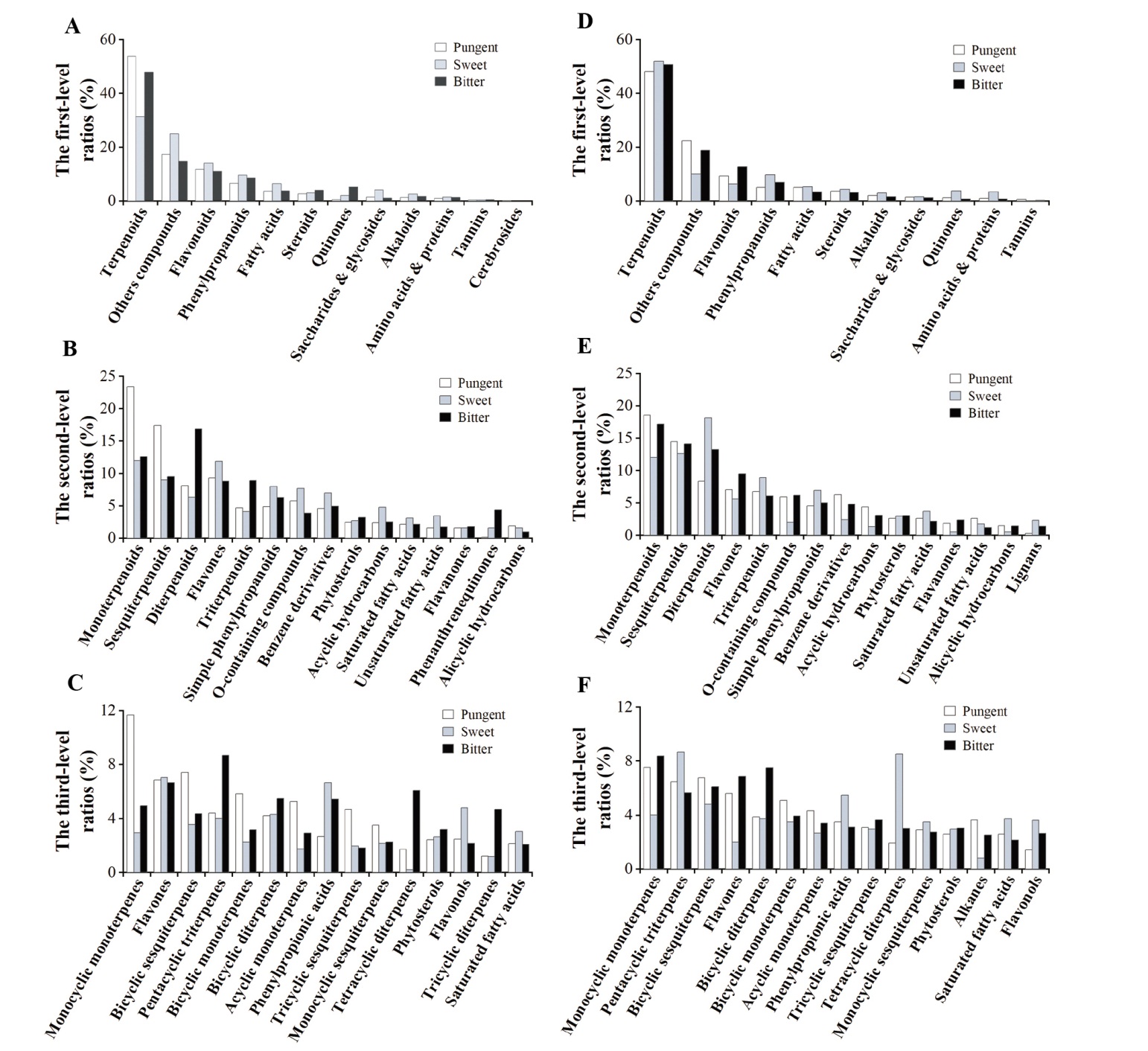
Figure 1 The material composition ratios for three levels of classification Only the top 15 items are shown in the figure. A: material composition ratios of pungent, bitter, and sweet flavors in the first-level classifications of main flavors; B: material composition ratios of pungent, bitter, and sweet flavors in the second-level classifications of main flavors; C: material composition ratios of pungent, bitter, and sweet flavors in the third-level classifications of main flavors; D: material composition ratios of pungent, bitter, and sweet flavors in the first-level classifications of combined flavors; E: material composition ratios of pungent, bitter, and sweet flavors in the second-level classifications of combined flavors; F: material composition ratios of pungent, bitter, and sweet flavors in the third-level classifications of combined flavors.
Figure 1 The material composition ratios for three levels of classification Only the top 15 items are shown in the figure. A: material composition ratios of pungent, bitter, and sweet flavors in the first-level classifications of main flavors; B: material composition ratios of pungent, bitter, and sweet flavors in the second-level classifications of main flavors; C: material composition ratios of pungent, bitter, and sweet flavors in the third-level classifications of main flavors; D: material composition ratios of pungent, bitter, and sweet flavors in the first-level classifications of combined flavors; E: material composition ratios of pungent, bitter, and sweet flavors in the second-level classifications of combined flavors; F: material composition ratios of pungent, bitter, and sweet flavors in the third-level classifications of combined flavors.
Table 2 Parameter results of the exhaustive method
| Consequent | Optimal parameter | No. of core groups | Logistic regression accuracy (%) | Single interaction accuracy (%) | |||
|---|---|---|---|---|---|---|---|
| Maximum number of antecedents | Minimum rule confidence (%) | Minimum antecedent support (%) | |||||
| Main flavors | Pungent | 5 | 65 | 25 | 12 | 72 | 82 |
| Sweet | 3 | 70 | 2 | 18 | 28 | 81 | |
| Bitter | 3 | 70 | 3 | 18 | 45 | 93 | |
| Combined flavors | Pungent | 5 | 60 | 11 | 14 | 54 | 83 |
| Sweet | 2 | 65 | 3 | 15 | 38 | 84 | |
| Bitter | 2 | 60 | 18 | 17 | 66 | 100 | |
Table 2 Parameter results of the exhaustive method
| Consequent | Optimal parameter | No. of core groups | Logistic regression accuracy (%) | Single interaction accuracy (%) | |||
|---|---|---|---|---|---|---|---|
| Maximum number of antecedents | Minimum rule confidence (%) | Minimum antecedent support (%) | |||||
| Main flavors | Pungent | 5 | 65 | 25 | 12 | 72 | 82 |
| Sweet | 3 | 70 | 2 | 18 | 28 | 81 | |
| Bitter | 3 | 70 | 3 | 18 | 45 | 93 | |
| Combined flavors | Pungent | 5 | 60 | 11 | 14 | 54 | 83 |
| Sweet | 2 | 65 | 3 | 15 | 38 | 84 | |
| Bitter | 2 | 60 | 18 | 17 | 66 | 100 | |
Table 3 Optimal conditions and values of the new parameter method
| Consequent | The best value of new parameter | Constitute elements of new parameter method | No. of core groups | Logistic regression accuracy (%) | Single interaction accuracy (%) | |||
|---|---|---|---|---|---|---|---|---|
| Coefficient of antecedents | Maximum support | Maximum confidence | ||||||
| Main flavors | Pungent | K7 | √ | 15 | 76 | 90 | ||
| Sweet | K7 | √ | 15 | 33 | 85 | |||
| Bitter | K1 | √ | 15 | 43 | 93 | |||
| Combined flavors | Pungent | K2 | √ | √ | 15 | 58 | 90 | |
| Sweet | K1 | √ | 15 | 46 | 76 | |||
| Bitter | K7 | √ | 15 | 68 | 100 | |||
Table 3 Optimal conditions and values of the new parameter method
| Consequent | The best value of new parameter | Constitute elements of new parameter method | No. of core groups | Logistic regression accuracy (%) | Single interaction accuracy (%) | |||
|---|---|---|---|---|---|---|---|---|
| Coefficient of antecedents | Maximum support | Maximum confidence | ||||||
| Main flavors | Pungent | K7 | √ | 15 | 76 | 90 | ||
| Sweet | K7 | √ | 15 | 33 | 85 | |||
| Bitter | K1 | √ | 15 | 43 | 93 | |||
| Combined flavors | Pungent | K2 | √ | √ | 15 | 58 | 90 | |
| Sweet | K1 | √ | 15 | 46 | 76 | |||
| Bitter | K7 | √ | 15 | 68 | 100 | |||
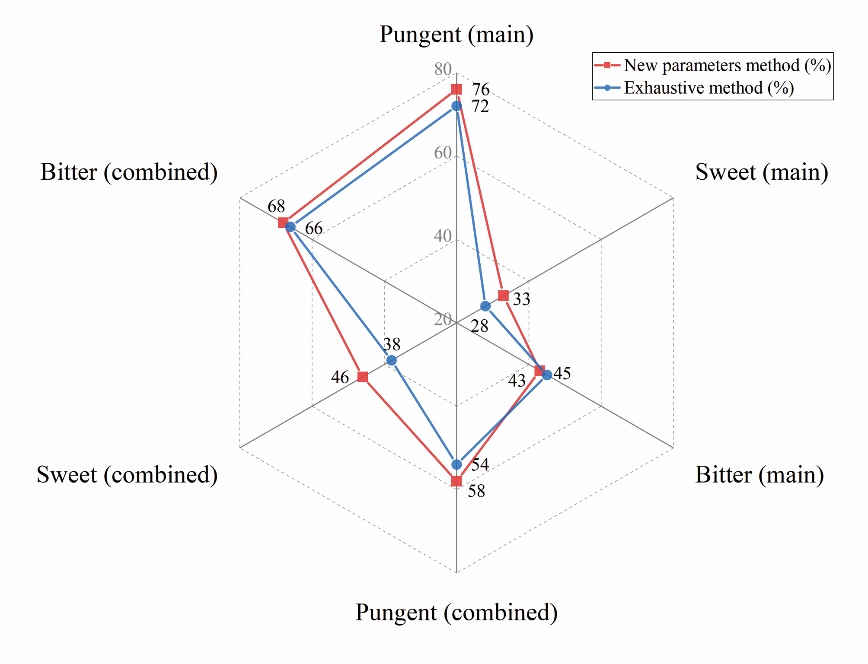
Figure 2 Comparison of the results of the exhaustive and the new parameter methods
Figure 2 Comparison of the results of the exhaustive and the new parameter methods

Figure 3 High-value groups and specific groups A: main flavors; B: combined flavors.
Figure 3 High-value groups and specific groups A: main flavors; B: combined flavors.
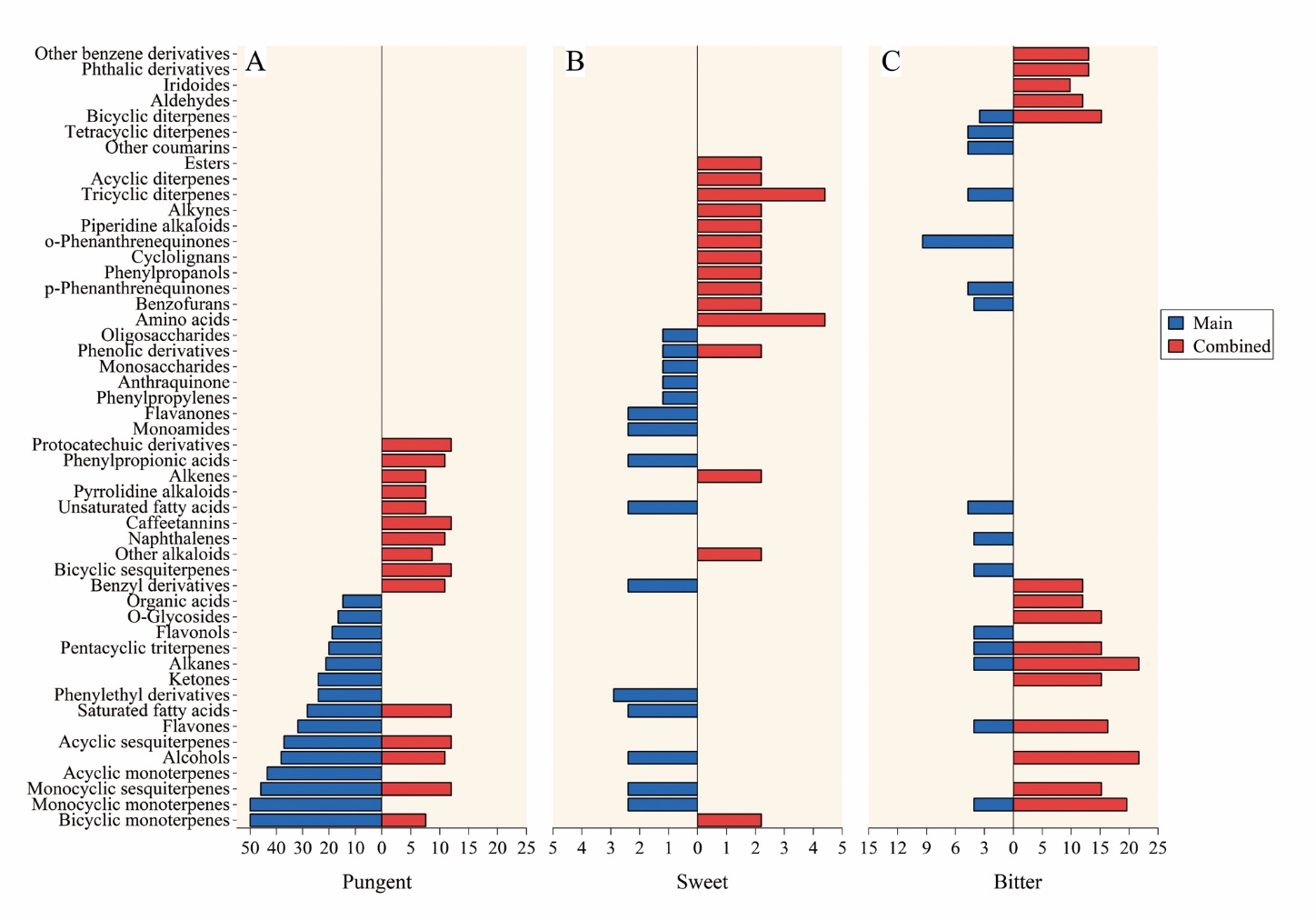
Figure 4 Differences in the material basis of main and combined flavors
Figure 4 Differences in the material basis of main and combined flavors
Table 4 Logistic regression modeling results of high-value groups
| No. | Consequent | Independent variables | No. of variables | Sig. (P-values) | Nagelkerke R2 values | Percent correct (%) | |||
|---|---|---|---|---|---|---|---|---|---|
| Pungent | Sweet | Bitter | Total | ||||||
| 1 | Main flavors | High-value groups | 34 | 0.000 | 0.617 | 84.8 | 61.9 | 70.2 | 77.1 |
| 2 | Main flavors | High-value groups+specific groups | 64 | 0.000 | 0.785 | 87 | 81 | 77.2 | 82.9 |
| 3 | Main flavors | High-value groups (single interaction) | 76 | 0.628 | 0.991 | 100 | 95.2 | 96.5 | 98.2 |
| 4 | Main flavors | High-value groups (all 2-way interactions) | 159 | 0.650 | 0.990 | 100 | 95.2 | 96.5 | 98.2 |
| 5 | Combined flavors | High-value groups | 39 | 0.000 | 0.929 | 90.3 | 100 | 93.8 | 93.5 |
| 6 | Combined flavors | High-value groups+specific groups | 75 | 0.001 | 1.000 | 100 | 100 | 100 | 100 |
| 7 | Combined flavors | High-value groups (single interaction) | 60 | 0.428 | 1.000 | 100 | 100 | 100 | 100 |
| 8 | Combined flavors | High-value groups (all 2-way interactions) | 88 | 0.428 | 1.000 | 100 | 100 | 100 | 100 |
Table 4 Logistic regression modeling results of high-value groups
| No. | Consequent | Independent variables | No. of variables | Sig. (P-values) | Nagelkerke R2 values | Percent correct (%) | |||
|---|---|---|---|---|---|---|---|---|---|
| Pungent | Sweet | Bitter | Total | ||||||
| 1 | Main flavors | High-value groups | 34 | 0.000 | 0.617 | 84.8 | 61.9 | 70.2 | 77.1 |
| 2 | Main flavors | High-value groups+specific groups | 64 | 0.000 | 0.785 | 87 | 81 | 77.2 | 82.9 |
| 3 | Main flavors | High-value groups (single interaction) | 76 | 0.628 | 0.991 | 100 | 95.2 | 96.5 | 98.2 |
| 4 | Main flavors | High-value groups (all 2-way interactions) | 159 | 0.650 | 0.990 | 100 | 95.2 | 96.5 | 98.2 |
| 5 | Combined flavors | High-value groups | 39 | 0.000 | 0.929 | 90.3 | 100 | 93.8 | 93.5 |
| 6 | Combined flavors | High-value groups+specific groups | 75 | 0.001 | 1.000 | 100 | 100 | 100 | 100 |
| 7 | Combined flavors | High-value groups (single interaction) | 60 | 0.428 | 1.000 | 100 | 100 | 100 | 100 |
| 8 | Combined flavors | High-value groups (all 2-way interactions) | 88 | 0.428 | 1.000 | 100 | 100 | 100 | 100 |
Table 5 Results of feature selection based on high-value groups
| No. | Main flavors | Combined flavors | |||
|---|---|---|---|---|---|
| Variables | P-values of 1-probability | Variables | P-values of 1-probability | ||
| 1 | Monocyclic monoterpenes | 1.00 | Caffeetannins | 0.98 | |
| 2 | Monocyclic sesquiterpenes | 1.00 | Bicyclic sesquiterpenes | 0.98 | |
| 3 | Bicyclic monoterpenes | 1.00 | Flavones | 0.96 | |
| 4 | Acyclic monoterpenes | 1.00 | Monocyclic monoterpenes | 0.95 | |
| 5 | Bicyclic sesquiterpenes | 0.99 | Other benzene derivatives | 0.93 | |
| 6 | Phenylpropylenes | 0.99 | Bicyclic monoterpenes | 0.88 | |
| 7 | Acyclic sesquiterpenes | 0.99 | Protocatechuic derivatives | 0.87 | |
| 8 | Alcohols | 0.99 | Alcohols | 0.84 | |
| 9 | Bicyclic diterpenes | 0.99 | Tricyclic diterpenes | 0.79 | |
| 10 | O-Glycosides | 0.97 | Benzofurans | 0.71 | |
| 11 | Phenylethyl derivatives | 0.94 | O-Glycosides | 0.71 | |
| 12 | Tricyclic diterpenes | 0.93 | Esters | 0.62 | |
| 13 | Ketones | 0.91 | Ketones | 0.61 | |
| 14 | Organic acids | 0.90 | / | / | |
| 15 | Tetracyclic diterpenes | 0.89 | / | / | |
| 16 | Flavanones | 0.84 | / | / | |
Table 5 Results of feature selection based on high-value groups
| No. | Main flavors | Combined flavors | |||
|---|---|---|---|---|---|
| Variables | P-values of 1-probability | Variables | P-values of 1-probability | ||
| 1 | Monocyclic monoterpenes | 1.00 | Caffeetannins | 0.98 | |
| 2 | Monocyclic sesquiterpenes | 1.00 | Bicyclic sesquiterpenes | 0.98 | |
| 3 | Bicyclic monoterpenes | 1.00 | Flavones | 0.96 | |
| 4 | Acyclic monoterpenes | 1.00 | Monocyclic monoterpenes | 0.95 | |
| 5 | Bicyclic sesquiterpenes | 0.99 | Other benzene derivatives | 0.93 | |
| 6 | Phenylpropylenes | 0.99 | Bicyclic monoterpenes | 0.88 | |
| 7 | Acyclic sesquiterpenes | 0.99 | Protocatechuic derivatives | 0.87 | |
| 8 | Alcohols | 0.99 | Alcohols | 0.84 | |
| 9 | Bicyclic diterpenes | 0.99 | Tricyclic diterpenes | 0.79 | |
| 10 | O-Glycosides | 0.97 | Benzofurans | 0.71 | |
| 11 | Phenylethyl derivatives | 0.94 | O-Glycosides | 0.71 | |
| 12 | Tricyclic diterpenes | 0.93 | Esters | 0.62 | |
| 13 | Ketones | 0.91 | Ketones | 0.61 | |
| 14 | Organic acids | 0.90 | / | / | |
| 15 | Tetracyclic diterpenes | 0.89 | / | / | |
| 16 | Flavanones | 0.84 | / | / | |
Table 6 Logistic regression results based on decisive groups
| No. | Consequent | Independent variables | No. of variables | Sig. (P-values) | Nagelkerke R2 values | Percent correct (%) | |||
|---|---|---|---|---|---|---|---|---|---|
| Pungent | Sweet | Bitter | Total | ||||||
| 1 | Main flavors | Decisive groups | 16 | 0.001 | 0.354 | 78.3 | 38.1 | 54.4 | 65.3 |
| 2 | Main flavors | Decisive groups (single interaction) | 61 | 0.490 | 0.922 | 88 | 90.5 | 89.5 | 88.8 |
| 3 | Main flavors | Decisive groups (all 2-way interactions) | 124 | 0.261 | 0.922 | 87 | 95.2 | 89.5 | 88.8 |
| 4 | Combined flavors | Decisive groups | 13 | 0.011 | 0.453 | 54.8 | 38.5 | 83.3 | 67.4 |
| 5 | Combined flavors | Decisive groups (single interaction) | 48 | 0.468 | 0.894 | 77.4 | 84.6 | 93.8 | 87 |
| 6 | Combined flavors | Decisive groups (all 2-way interactions) | 66 | 0.419 | 0.894 | 80.6 | 84.6 | 91.7 | 87 |
Table 6 Logistic regression results based on decisive groups
| No. | Consequent | Independent variables | No. of variables | Sig. (P-values) | Nagelkerke R2 values | Percent correct (%) | |||
|---|---|---|---|---|---|---|---|---|---|
| Pungent | Sweet | Bitter | Total | ||||||
| 1 | Main flavors | Decisive groups | 16 | 0.001 | 0.354 | 78.3 | 38.1 | 54.4 | 65.3 |
| 2 | Main flavors | Decisive groups (single interaction) | 61 | 0.490 | 0.922 | 88 | 90.5 | 89.5 | 88.8 |
| 3 | Main flavors | Decisive groups (all 2-way interactions) | 124 | 0.261 | 0.922 | 87 | 95.2 | 89.5 | 88.8 |
| 4 | Combined flavors | Decisive groups | 13 | 0.011 | 0.453 | 54.8 | 38.5 | 83.3 | 67.4 |
| 5 | Combined flavors | Decisive groups (single interaction) | 48 | 0.468 | 0.894 | 77.4 | 84.6 | 93.8 | 87 |
| 6 | Combined flavors | Decisive groups (all 2-way interactions) | 66 | 0.419 | 0.894 | 80.6 | 84.6 | 91.7 | 87 |
| 1. | Wang B (Tang dynasty) Huang Di Nei Jing. Beijing: Publishing House of Ancient Chinese Medical Books, 2003: 54-6. |
| 2. | Sun XY (Qing dynasty) Shen Nong Ben Cao Jing. Taiyuan: Shanxi Science and Technology Press, 2018: 2-18. |
| 3. | Tang SH, Yang HJ, Huang LQ. On the concept, formation and significance of medicinal properties of Traditional Chinese Medicine. Zhong Yi Zha Zhi 2010; 51: 293-6. |
| 4. | Zhang TJ, Liu CX. Identification of Chinese materia medica and its chemical biology characterization path on five taste theory. Zhong Cao Yao 2015; 46: 1-6. |
| 5. | Zhao YL, Wang JB, Xiao XH, et al. Study on the cold and hot properties of medicinal herbs by thermotropism in mice behavior. J Ethnopharmacol 2011; 133: 980-5. |
| 6. | Liu CX, Zhang TJ, He X, et al. Study on chemistry and biology based on five-tastes and function-efficacy of Chinese materia medica with invigorating blood circulation and eliminating blood stasis. Zhong Cao Yao 2015; 46: 615-24. |
| 7. | Liu CX, Zhang TJ. Innovative research and development ideas of Traditional Chinese Medicine based on correlation of substance-pharmacokinetics-effects. Zhong Cao Yao 2022; 53: 1-7. |
| 8. | Kuang HX, Wang YH, Wang QH, et al. A research model on the theory of TCM property and flavor based on TCM splittability and combinativeness. Shi Jie Ke Xue Ji Shu: Zhong Yi Yao Xian Dai Hua Za Zhi 2011; 13: 25-9. |
| 9. | Lyu CY, Lyu SW, Li GY, et al. Research progress on pharmacological effects of separation and combination methods based on Traditional Chinese Medicine property and flavor. Zhong Guo Zhong Yao Za Zhi 2018; 43: 2892-8. |
| 10. | Wang M, Sun YP, Wang ZB, et al. Comment and prospect of research on TCM nature and flavour theory. Zhong Hua Zhong Yi Yao Za Zhi 2021; 36: 625-8. |
| 11. | Wang ZG, Wang P, Ouyang B. Methodological frame of relativity research on TCM substance component and drug nature of cold and hot. Zhejiang Zhong Yi Yao Da Xue Xue Bao 2009; 33: 734-7. |
| 12. | Ouyang B, Wang ZG, Li F, et al. Hypothesis and demonstration of “property-response-component” for the four properties of Traditional Chinese Medicine. Shandong Zhong Yi Yao Da Xue Xue Bao 2008; 172: 182-3. |
| 13. | Xia YS, Wei GH, Wang ZG, et al. Review on research methods of cold and heat property of Chinese materia medica. Zhong Hua Zhong Yi Yao Za Zhi 2021; 36: 990-2. |
| 14. | Fu XJ, Wang ZG, Li XB, et al. Relationship between the nature and the structure of main compounds from Chinese herbs based on the similarity of chemical structure. Zhong Hua Zhong Yi Yao Za Zhi 2019; 34: 2657-61. |
| 15. | Wang PP, Ling X, Ma J, et al. Role and improving thought of tongue tasting method in the study on property of Chinese materia medica. Zhong Hua Zhong Yi Yao Za Zhi 2021; 36: 126-9. |
| 16. | Zhang P, Zhang Y, Gui XJ, et al. Study on superposition rule of bitterness of decoction of Chinese materia medica based on traditional human taste panel method and electronic tongue method. Zhong Cao Yao 2021; 52: 653-68. |
| 17. | Liu RX, Zhang XF, Li XL, et al. Drug evaluation of bitterness intensity by three kinds of THTPM. Zhong Guo Shi Yan Fang Ji Xue Za Zhi 2013; 19: 118-22. |
| 18. | Ma WF, Xu J, Han YQ, et al. Practice and progress on bionic technology in identification on five tastes of Chinese materia medica. Zhong Cao Yao 2018; 49: 993-1001. |
| 19. | Wang XP, Zhang L, Chen PJ, et al. Feasibility analysis of near-infrared spectroscopy technology applied to classification and identification of four kinds of taste in Traditional Chinese Medicine. Zhong Cao Yao 2023; 54: 1076-86. |
| 20. | Wang H, Gao RF, Liu J, et al. UPLC-Q-Exactive-based rats serum metabolomics for characterization of Traditional Chinese Medicine natures and flavors. J Ethnopharmacol 2023; 302: 115931. |
| 21. | Yang MX, Tian X, Zhang MT, et al. A holistic comparison of flavor signature and chemical profile in different harvesting periods of Chrysanthemum morifolium Ramat based on metabolomics combined with bioinformatics and molecular docking strategy. RSC Adv 2022; 12: 34971-89. |
| 22. | Guo H, Cui Y, Wang QH, et al. Overview on application of metabonomics in study on Chinese materia medica property theory. Zhong Cao Yao 2016; 47: 363-8. |
| 23. | Chen Z, Cao YF, Zhang YL, et al. A novel discovery: holistic efficacy at the special organ level of pungent flavored compounds from pungent Traditional Chinese Medicine. Int J Mol Sci 2019; 20: 752. |
| 24. | Zhang X, Qiao LS, Chen YK, et al. In silico analysis of the association relationship between neuroprotection and flavors of Traditional Chinese Medicine based on the mGluRs. J Mol Sci 2018; 19: 163. |
| 25. | Han YQ, Xu J, Gong SX, et al. Approaches and methods of property-flavour material basis of Chinese materia medica based on molecular docking technology of taste and olfactory receptors. Zhong Cao Yao 2018; 49: 14-9. |
| 26. | Li P, Chen YW, Ding LQ, et al. Application value of pungent herbs in treatment of "Xiaoke syndrome" and thinking of modern research on five-flavor theory of Chinese materia medica. Zhong Cao Yao 2019; 50: 5577-83. |
| 27. | Yang YN, Deng YT, Zang CC, et al. The gut microbial co-abundance gene groups (CAGs) differentially respond to the flavor (Yao-Wei) of Chinese meteria medica. Am. J Chin Med 2022; 50: 2223-44. |
| 28. | Yang YN, Wu CM. The linkage of gut microbiota and the property theory of Traditional Chinese Medicine (TCM): cold-natured and sweet-flavored TCMs as an example. J Ethnopharmacol 2023; 306: 116167. |
| 29. | Hao YL, Chen MR, Liu XH, et al. Recongniton attachment of five flavours and five phases based on Xiang thingking. Zhong Hua Zhong Yi Yao Za Zhi 2018; 33: 4793-6. |
| 30. | Jiang KY, Liang MX. Analysis of five-flavor theory of Chinese herbal medicine based on image thinking. Zhong Yi Za Zhi 2017; 58: 1351-4. |
| 31. | Cao J, Wang Y. Relationship between chemical constituents and herbs properties of relative plant herbs. Zhong Guo Zhong Yao Za Zhi 2013; 38: 453-8. |
| 32. | Yang HJ, Tang SH, Huang LQ, et al. Research on nature of Chinese materia medica in view of genetic relationship. Zhong Guo Zhong Yao Za Zhi 2008; 33: 2983-5. |
| 33. | Wang YY, Kuang HX, Su FZ, et al. Clinical value of four natures of Traditional Chinese Medicine and its relationship with five flavors. Zhong Cao Yao 2023; 54: 1329-41. |
| 34. | Zhang JY, Cao H, Gong SX, et al. Expression of salt-taste herbs and their applications in clinical compatibility. Zhong Cao Yao 2016; 47: 2797-802. |
| 35. | Sun YP, Zhang TJ, Cao H, et al. Expression of pungent-taste herbs and their applications in clinical compatibility. Zhong Cao Yao 2015; 46: 785-90. |
| 36. | Dou DQ, Kuang HX. Chemical characteristics and chemical science of Chinese materia medica. Shi Jie Ke Xue Ji Shu: Zhong Yi Yao Xian Dai Hua Za Zhi 2015; 17: 1753-8. |
| 37. | Kou RB, Guo M, Guo YF, et al. Research progress in medicinal chemistry of TCM. Zhong Guo Zhong Yi Yao Xin Xi Za Zhi 2022; 29: 142-6. |
| 38. | Sun Y, Xu G, Ma SC. Development of an overall evaluation system for Traditional Chinese Medicine. Yao Xue Xue Bao 2021; 56: 1749-56. |
| 39. | Xie HH, Chen C, Wang P. Correlation between object image and nature in Labiate herbs. Yunnan Zhong Yi Yao Da Xue Xue Bao 2017; 40: 91-3. |
| 40. | Zhou Q, Zhang CY, Wang P. Study on the correlation between the chemical components and cold-heat properties of 123 Labiate herbs based on support vector. Shi Zhen Guo Yi Guo Yao 2022; 33: 1761-4. |
| 41. | Zhang CY, Zhou Q, Wang X, et al. Study on the material basis of cold and hot properties of Traditional Chinese Medicines in Lamiaceae based on pattern recognition. Yao Xue Xue Bao 2023; 58: 429-38. |
| 42. | Guo Jia, Yao Dian Wei, Yuan Hui. Pharmacopoeia of the People's Republic of China 2020 (Volume 1). Beijing: China Medicine Science And Technology Press, 2020: 46-403. |
| 43. | Zhong Hua, Ben Cao, Bian Wei Hui. Chinese Materia Medica (Volume 19). Shanghai: Shanghai Scientific and Technical Publishers, 1999: 3-237. |
| 44. | Zhao GP, Dai S, Chen RS. Zhongyao Dacidian. Shanghai: Shanghai Scientific and Technical Publishers, 2005: 95-2094. |
| 45. | Wang GQ. Quanguo Zhongcaoyao Huibian (Volume 1). Beijing: People's Medical Publishing House, 2014: 78-696. |
| 46. | Xiao PG. Modern Chinese Materia Medica (Volume 1). Beijing: Chemical Industry Press, 2002: 579-1042. |
| 47. | Chang XQ, Ding LX. Zhongyao Huoxing Chengfen Fenxi Shouce. Beijing: The Academy Press, 2002: 306-2386. |
| 48. | Zhou CS, Zhu H, Xie LW, et al. Changyong Zhongyao Jiqi Huoxing Chengfen Shouce. Beijing: Chemical Industry Press, 2017: 137-567. |
| 49. | Zheng ZH, Dong ZH, She J. Modern study of Traditional Chinese Medicine. Beijing: the Academy Press, 1997: 1533-4706. |
| 50. | Hou XT, Deng JG. Zhongyaocai Huoxing Chengfen Huaxue Jiegou Tuji. Beijing: Beijing Science and Technology Publishing, 2017: 51-1042 |
| 51. | Yang B, Wang ZG. Literature study on the relationship between the cold-heat nature of Chinese herbal medicine and the single compound of organic constituents. Zhong Hua Zhong Yi Yao Za Zhi 2011; 26: 2774-7. |
| 52. | Wang XQ, Fan XX. Study on the correlation between five flavors, components and efficacy of rattan Traditional Chinese Medicine. Zhong Guo Zhong Yi Ji Chu Yi Xue Za Zhi 2010; 16: 821-2. |
| 53. | Ren YN, Feng WH, Li H, et al. Discussion on binary classification identification method of five flavors of drug properties based on artificial intelligence sensory and multi-source information fusion technology. Zhong Cao Yao 2023; 54: 3080-92. |
| 54. | Hofmann A, Coster MJ, Taylor P. Disseminating a free, practical java tool to interactively generate and edit 2D chemical structures. J Chem Educ 2019; 96: 1262-7. |
| 55. |
Akhondi SA, Kors JA, Muresan S. Consistency of systematic chemical identifiers within and between small-molecule databases. J Cheminformatics 2012; 4: 35.
DOI PMID |
| 56. | Li W, Wang ZJ, Lin XY, et al. Study on the substance basis of "property-taste-efficacy" of Liquorice and Rhizoma chinensis based on supramolecular system induced by weak bond. Yao Xue Xue Bao 2022; 57: 1901-8. |
| 57. | Zhang TJ, Bai G, Liu CX. The concept, core theory and research methods of Chinese medicine quality markers. Yao Xue Xue Bao 2019; 54: 187-96. |
| 58. | Li YY, He YX, Wu YQ, et al. Compatibility between cold-natured medicine CP and hot-natured medicine AZ synergistically mitigates colitis mice through attenuating inflammation and restoring gut barrier. J Ethnopharmacol 2023; 303: 115902. |
| 59. | Yang YN, Su WQ, Zang CC, et al. Traditional Chinese medicines (TCMs) with varied meridians (Gui-Jing) differentially alleviate the adverse impact of Coptis chinensis on gut microbiota. J Ethnopharmacol 2023; 307: 116256. |
| 60. | Hou XJ, Zhao F, Wang CD, et al. Literature research of passiflora incarnata and discussion of its Traditional Chinese Medicine properties. Zhong Guo Zhong Yao Za Zhi 2021; 46: 1943-50. |
| 61. | Wang XR, Cao TT, Tian XM, et al. Quantification of "cold-hot" medicinal properties of Chinese medicines based on primary metabolites and fisher's analysis. Comput Math Methods Med 2022; 2022: 5790893. |
| 62. |
Wei GH, Fu XJ, Wang ZG. Nature identification of Chinese herbal medicine compounds based on molecular descriptors. J AOAC Int 2021; 104: 1754-9.
DOI PMID |
| 63. | Su FZ, Bai CX, Zhang WS, et al. Study on drug properties of Arisaematis Rhizoma and Arisaema Cum Bile based on substance and energy metabolism in normal and cold/heat syndrome model rats. Zhong Guo Zhong Yao Za Zhi 2022; 47: 4682-90. |
| 64. | Tao X, Li BB, Wu GS, et al. Comparative study on short and long-term intervention impacts of six Chinese herbs with cold or heat property on lipid and energy metabolism in mice. Zhong Guo Zhong Yao Za Zhi 2022; 47: 1904-12. |
| [1] | Yang Xuming, Qi Mingyuan, Li Qian, Chen Li, Yu Zhongyi, Yang Lin. Information integration research on cumulative effect of 'Siqi,Wuwei,and Guijing' in Traditional Chinese Medicine [J]. Journal of Traditional Chinese Medicine, 2016, 36(04): 538-546. |
| Viewed | ||||||
|
Full text |
|
|||||
|
Abstract |
|
|||||
